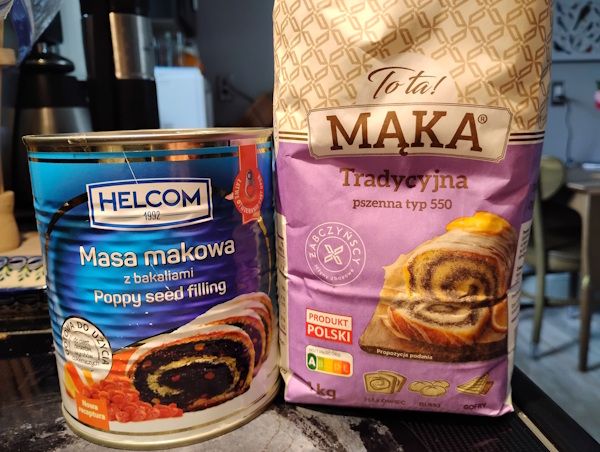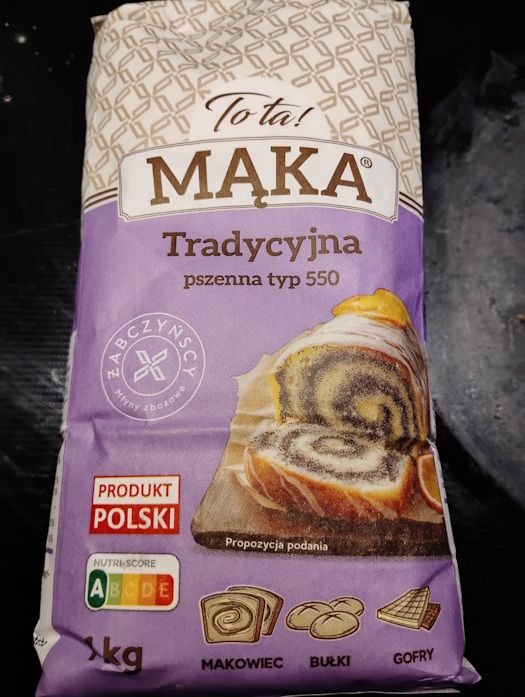
I was in the baking aisle looking at the various types of flours and noticed that most, if not all, of them had a number on the label. I'd heard of 00 flour for pasta but non-zero numbers were new to me. While I figured it had to do with the milling and was quite curious about this, I grabbed the above bag because my intention was to make makowiec and there is one right there in living color.
If I recall correctly, bags with a lower number had photos of delicate pastries on them and those with higher numbers had picture of dark, hearty, rib-sticking loaves of bread so I figured the smaller the number, the finer the flour.
The next day I did a little investigation and found that Western and Central Europe uses these flour codes - see here - and that the numbers refer to ash content. What is God's name is ash content?
Well, it's a measurement of the mineral salt laden ashes left when you incinerate a set amount of flour at 550 degrees Centigrade. As the above-linked site says:
...bran layers contain roughly ten times more ash than the starchy endosperm. As the miller extracts more bran into the flour, ash rises. As a result, ash content is a reliable proxy for extraction rate and, by extension, for flour colour, fibre content, flavour intensity, and mineral content.
And so the Polish T numbers on the flour bags indicates how much ash you get when you burn up 100g of flour. In my case type 550 means 550 mg ash/100g flour.
One reason I was looking into flour at the Polish store was that my ladyfriend experiences little to no gluten sensitivity when eating wheat in Europe but encounters some when eating American wheat and I thought it'd be nice to be able to bake something for her and not engender sore joints.
I've looked online for explanations for this phenomenon but have found no definitive answers. Is it the hard red wheat commonly used in our flours? Is it how it's processed?
Looking into this, the obvious became apparent to me: American flours, at least those from megacorps, only tell you the purpose of the flour but don't tell you what kind or kinds of wheats are in the sack. We don't have the gradations that they have in Europe. Here it's all-purpose, whole wheat, or a specialty blend such as self-rising or cake flour. I'm a King Arthur man and their labels indicate the flour is of hard red wheat. My rye flour is usually Bob's Red Mill but that gives no indication of what kind of rye variety may be in the bag nor of any indication of how finely it was milled.
As for as my ladyfriend's gluten sensitivity goes, I think once the weather gets down to more appropriate baking temperatures, I may give spelt and einkorn a shot and see if that affects her like hard red wheat. Lest anyone think I am violating a Kantian imperative, know that she will willingly sample tasty treats even in the face of potential discomfort.