21 July, 2021

The Offut Truth: Sea Salt & Vinegar Potato Chips by Spudlove

Like a great many people, I have been feeling a wanderlust lately. There are certainly places I have a preference for visiting but basically anywhere will do now after a year+ of isolation, social distancing, and fear of viruses. Sadly, while I have done some traveling, it has not been nearly enough to compensate for its near total absence in 2020 nor have I gone very far from home. And so I've been traveling vicariously via the Internet.

Unlike a great many people, I am not a tropical climate kind of guy. While I wouldn't turn down a free trip to Hawaii or the Caribbean or any other similar place, they just aren't high on my list of places to visit. No offense if sunny, sandy beaches are your thing; they're just not mine. I want to go north.

I want to travel above the Arctic Circle and take a stroll with the midnight sun shining down upon me. I want to sail the Arctic Ocean and make port so I can watch polar bears and penguins in their natural habitats. Or maybe I could go south to Antarctica. I think it would be extraordinarily neat to walk where Shackleton and his crew walked. To wander the vast stretches of snow and ice wondering if there are Elder Things slumbering beneath me. Now that's a vacation.

No trips to icy wastelands are planned at the moment but I was daydreaming one day about meeting up with Stellan SkarsgÄrd in the far reaches of Norway where he'd show me where Insomnia had been filmed and I could witness for myself how 24-hour daylight drives people mad. We'd have a few beers and talk about manly things as we men are wont to do.

As I was researching such a trip, I came across the world's most expensive potato chips. They were made for a Swedish brewery, St. Eriks, and for ~$56 you got a box of 5 potato chips. Yes, this was a publicity stunt but I guess some of the proceeds went to charity. The chips were made from rare Swedish potatoes grown on a steep, south-facing slope and harvested by hand. They were infused with even more boreal terroir by their seasonings which included mushrooms picked in remote northern areas of Sweden by virgins wearing cotton gloves and seaweed harvested near the Faroe Islands but only after skillfully avoiding the kraken. Oh, and a bit of the wort used to make their IPA too.

I hope that whoever paid good kronor for these chips enjoyed them and that charities made out like bandits. I'd eat one, if offered to me for free, but I certainly wouldn't pay for them as they're not salt and vinegar. Speaking of which…
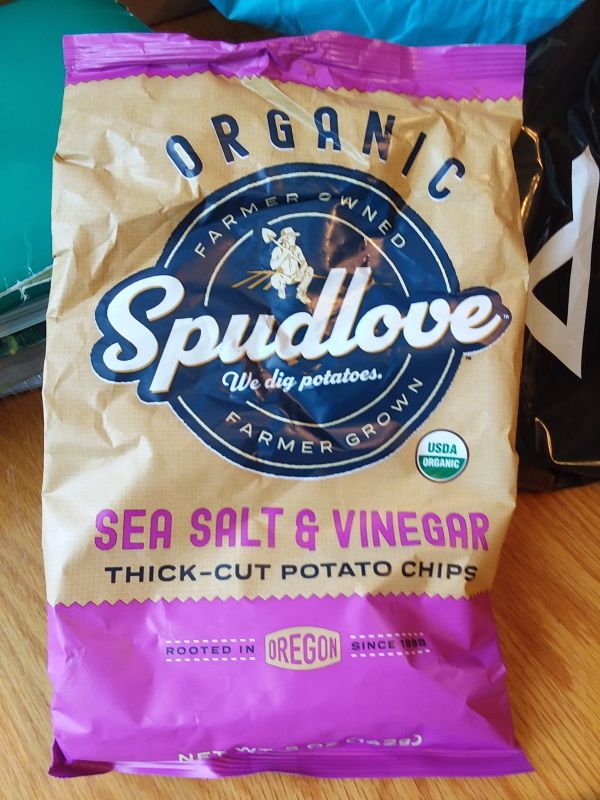

Things had gotten a bit desperate on the salt and vinegar front recently when I found myself straying from the course and buying my favorite snack flavor that wasn't on sliced and fried potatoes. So far, my editorial Reinheitsgebot remains intact and there are no plans to give these goodies a full review. But there will be commentary of some sort, I suppose.

However, I finally came across a new brand of chips while wandering the snack aisle at Woodman's: Spudlove. Truth be known, I looked at the bag and read "Spudlore", which I thought was a really neat name. After looking closer, I realized my error.

Spudlove appears to be very new – only about a year old. The company is out in Oregon and is owned by the farmers who grow the potatoes. Their chips are organic, non-GMO, and gluten-free. That's the story you get from their website and the bag.

I found an article that confused me. It sounds like "Spudlove Snacks" is the brand and that the company is actually Threemile Canyon Farms. The article notes that Threemile Canyon Farms is owned by R.D. Offut Farms which is described as being a "giant". The marketing material leads you to believe that Spudlove is wholly owned by a small cadre of farmers who grow the potatoes which are sent to the Spudlove processing facility where they are turned into potato chips by a group of dedicated potato chip enthusiasts. So who really owns what?

When I think of the leviathans of agri-business, I think of Archer-Daniels-Midland and Neil Young's favorite, Monsanto. But R.D. Offut lays claim to the title of this country's largest potato grower. They have potato fields in several states including here in Wisconsin, although I do not know where those are. It is no surprise that the company has run afoul of environmentalists. I don't claim to know all of the details, but alarm bells ring when I read pieces entitled "Op-ed:The High Cost of Cheap McDonald’s Fries". Apparently the company wants to expand its potato growing into some tribal lands in northern Minnesota and environmental watchdogs claim this will befoul the pristine areas.

Do I know exactly what would happen if those potato fields get the green light? No. Do I trust a giant multi-billion dollar company to do the right thing? Nope.
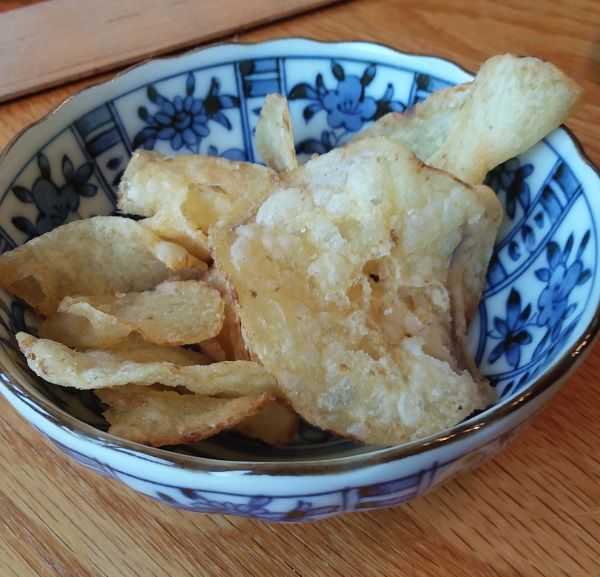

In addition to being organic and whatnot, Spudlove's chips are thick-cut and you can tell by looking at them that they are a few extra nanometers thicker than your normal chips. The edges were all brown so they leave the skin on. Color was less uniform than I am accustomed to as some chips had a more golden brown color than others.

Oil was the most prominent smell when I stuck my face into the back and took a whiff. Spud was next followed by a little bit of vinegar at the end.

If you didn't notice the thicker slice, you would definitely notice the big crunch. They are not advertised as being kettle cooked but they are instead "slow cooked". Presumably this contributes to the crunchiness as does as the spud's thickness. I did wonder as I was eating these chips if there's a difference between the crunch you get with kettle cooked chips and the crunch you get from a thicker cut. Or does a thicker cut necessitate a slower (i.e. – kettle) cooking method so the chips don't burn?

The salt level was average while the vinegar level was somewhere in the middle. I've had chips with more tang but also ones with less. These weren't exactly in the middle and instead leaned towards the light side. When I chewed the chips and let that potato paste sit on my tongue, I tasted a really nice roasty potato flavor. But that was underneath a taste that was like Worcestershire sauce. The label has "organic flavor" on it but Spudlove claim their chips are vegan. Perhaps they used an anchovy-less version of the venerable condiment. Regardless, the flavor was unexpected.

Offering only a medium-light dosage of vinegar drops these chips down in the rankings. Although I very much like Worcestershire sauce, I wish that flavor wasn't present here. Let the vinegar take pride of place and make another chip where it can shine. There was nothing unpalatable about Spudlove's take on my favorite snack but they deviated from the true nature of a salt and vinegar chip.

20 July, 2021

I Heard the Men Saying Something (R.I.P. Robby Steinhardt)


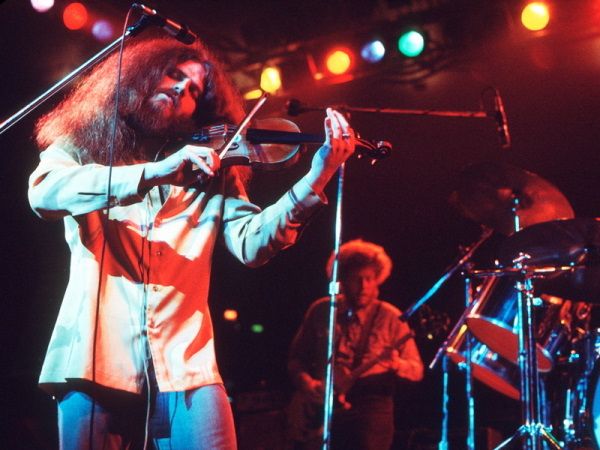
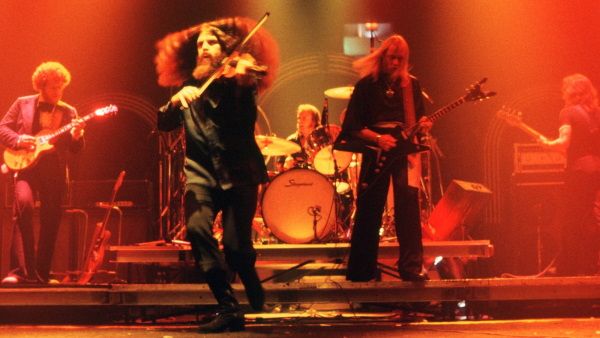
Former Kansas violinist, singer, and songwriter Robby Steinhardt died a few days ago. I know him almost exclusively for his work with that band over the course of nearly two decades. His first stint lasted from 1973 to 1982. He rejoined in 1997 and left again in 2006. While I am not the biggest Kansas fan around, I have been listening to them in the wake of Steinhardt’s death.

The genesis of Kansas the band goes back to Kansas the state in 1970 where they started out as a garage/bar band in Topeka. The group saw members come and go until a permanent line-up was found. They gigged and were eventually discovered by Wally Gold, an associate of record producer Don Kirshner. Kirshner was impressed and he signed the band to his own label. They released their debut, Kansas, in 1974.

Their sound was a distinctly Midwestern mix of British symphonic progressive rock and the hard rock of the 70s. The dual guitar attack of Kerry Livgren & Rich Williams blended with singer Steve Walsh's keys and there was also the lead violin of Robby Steinhardt, who, in addition to strings, contributed many lead vocals to songs as well. The band’s intricate melodies and odd time signatures certainly put them in the same category as Genesis and Yes much of the time. You can hear their influences in, for example, the opening of "The Spider" from 1977’s Point of Know Return which bears more than a passing resemblance to the opening of "Tarkus" by Emerson, Lake and Palmer. And the "Father Padilla Meets the Perfect Gnat" section of "Magnum Opus", from 1976’s Leftoverture, will easily bring "Broadway Melody of 1974" by Genesis to mind.

Despite the obvious English influences, Kansas had a very different flavor. If mid-70s King Crimson was the Bartok of prog and Magma its Orff, then Kansas was the genre’s Aaron Copeland. Take songs such as "Cheyenne Anthem" and "People of the South Wind", both of which deal with Native American peoples. The Cheyenne are natives of the Great Plains, which includes the entirety of the state of Kansas, while the latter song is about the Kaw people after whom the band's home state was named. These songs could never have been done by any of the prog heavyweights across The Pond. I suspect any attempt to do so would have sounded like an academic exercise.


I also greatly appreciate how the band were keen to reflect their roots. Just look at their name, for starters. Then there are those songs concerning Native American peoples from that part of the country which I’ve already mentioned. But there’s also the cover for their debut album, Kansas. It features abolitionist John Brown who made his name in the Kansas Territory. The scene is from a mural by Kansas native John Steuart Curry who, in a twist, moved to Wisconsin. While in Madison he was an artist-in-residence at the University of Wisconsin and some of his work can be found at various locations on campus as well as at the Chazen Museum of Art.

More generally, I think they had a Midwestern vibe which also helped to make them distinct from their proggy cousins on the other side of the Atlantic. "Song for America" and "Death of Mother Nature Suite" come to mind as songs with more of a pan-Midwestern feel to them as opposed to a Great Plains or Kansas specific one.

No doubt someone who is more familiar with the band’s work could elaborate upon the Midwestern qualities of their music. But judge for yourself. Their albums provide a natural starting point to become familiar with their whirling combination of guitar, organ, and violin plus the great harmony vocals of Steve Walsh and Robby Steinhardt. But I would also recommend listening to them live.

Their show from Pittsburgh on Halloween 1976 is a classic. It took place a mere 10 days after the release of Leftoverture and it opens with "Carry On Wayward Son" which had not yet been played to death by classic rock radio. The gig features a good selection of songs from all of their albums up through Leftoverture and demonstrates well the energy they infused the songs with. At times it's like bassist Dave Hope and drummer Phil Ehart are just daring the rest of the band to keep up.


A concert with a more local bent is this one recorded on 4 July 1979 at Alpine Valley in East Troy, Wisconsin. Another good selection of tunes here including some from 1979's Monolith.

19 July, 2021

The Corona Diaries Vol. 22: Yet Another Mediocre Muskrat Photo

I knew that the housing market here in Madison was going crazy after hearing tales of buyers paying $20,000 over asking and waiving inspections. But I read this recently:

Thompson said one of the most extreme measures he’s seen a home buyer take recently was a case in Deforest where people paid close to $400,000 over the asking price without ever entering the home.

Contingencies are also being waved and buyers need to submit a bid within hours of touring a house for any hope of it being considered. I now feel very lucky that we got away with our home purchase being contingent simply upon the owner upgrading the electric service from 60 to 100 amps. We'd be laughed out of town for that kind of thing now. That and offering only about $12,000 over asking price.

********

We have the HBO Max streaming service and, although I don't watch a whole lot of it, I am happy that it has Looney Toons Tunes. When the Frau first subscribed to the service and saw them listed, she immediately watched "One Froggy Evening". That's the one where the frog sings "Hello! Ma Baby". I hadn't seen it in ages. A classic.

********

Recently, I was cruising around the east side and made a detour over to Roselawn Memorial Park in neighboring Monona. To the best of my knowledge there is no one of any renown buried there. Wikipedia tells me that the closest thing to a famous person that Monona has produced is professional golfer Andy North who grew up there.

What it does have, though, is the Roselawn Tower of Memories which is visible from the street.


It's something I've seen while cruising by in my car before and always said to myself, "I wonder what that tower thingy is…" So, I decided to finally go check it out.


It provides a nice contrast to the ugly malls across the street to the south. Across the street to the north, however, is the Edna Taylor Conservation Park and I hiked around it for the first time after checking out the tower.

Edna Taylor was a farmer who sold a bunch of her land to the city of Madison for use as a park. Mainly the wetlands that she preserved which give us an idea of what the Madison area was like before European settlers arrived and started turning the land into fields for farming and, later, a city. It ain't called the Four Lakes region for nothing. There is a series of Native America effigy mounds somewhere in the park but I didn't see any signs indicating where they were on my hike. But I did see a lot of lovely scenery and many animals.


I encountered maybe 8 or so other folks walking the trails and 2 or 3 of them were wearing headphones and just walked right past me without acknowledging a fellow hiker. It was odd and sad. Why shut the bird calls out and distract yourself by listening to something instead of being attentive to the lovely natural surroundings?

People are strange.

While all of the ponds were full of life, one was particularly full. Downy feathers were scattered along the path so I was unsurprised to see two families of Canada geese taking a leisurely swim. The goslings were almost all grown up.


A muskrat was busy swimming around doing whatever it is that muskrats do. I've only ever seen a pair once and wonder if Ms. Muskrat is simply at home or if I usually see bachelors.

One of these days I will get a decent muskrat photo but this was the best I could do that day.


For reasons I do not understand, the pond on the other side of trail had more birds and I could hear frogs hidden in the tall grass on its shore croaking whereas the pond with the muskrat was much quieter. My gaze caught some red winged blackbirds that were fighting so I turned to see who would prove victorious as well as to listen to the frogs. When I turned back, I discovered this bird doing a bit of wading.


I think this is a Great Blue Heron.

While I could have spent hours just hanging out by the ponds watching and listening to all of the animals going about their day, I moved onwards.


It was really pretty and reminded me that I needed to buy a book on identifying the trees of Wisconsin. The second I thought of that, I chuckled thinking about that Monty Python sketch "How to Recognise Different Types of Trees From Quite a Long Way Away".

No. 1 – The Larch.

At one point I was walking a section of the trail which was at the base of a hill. I looked up and saw a couple deer having breakfast.


They didn't seem to mind the human. Although they saw me, they kept on eating. Perhaps I was downwind of them. I watched them for a few minutes and, as I was doing so, a guy comes walking towards me. Wearing earphones. He never looked at me or up the hill at the deer. He just kept looking and walking straight ahead oblivious to everything. Very odd.

I kept wandering and eventually got lost. When I ran into signs for the Aldo Leopold Nature Center, which is next door, I at least knew I was on the west side of Edna Taylor. And, since I am writing this, I did not die out in the wilderness.

I've never hiked the 40 acres around the Leopold Center so that's on the list now.

********

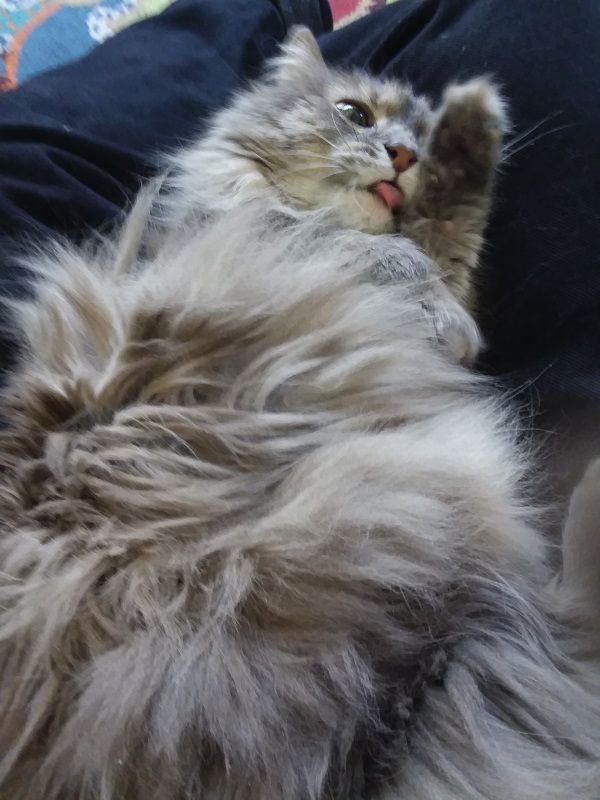
For this entry's bonus photo we have Grabby looking mighty fluffy and cute as she cleans herself.

14 July, 2021

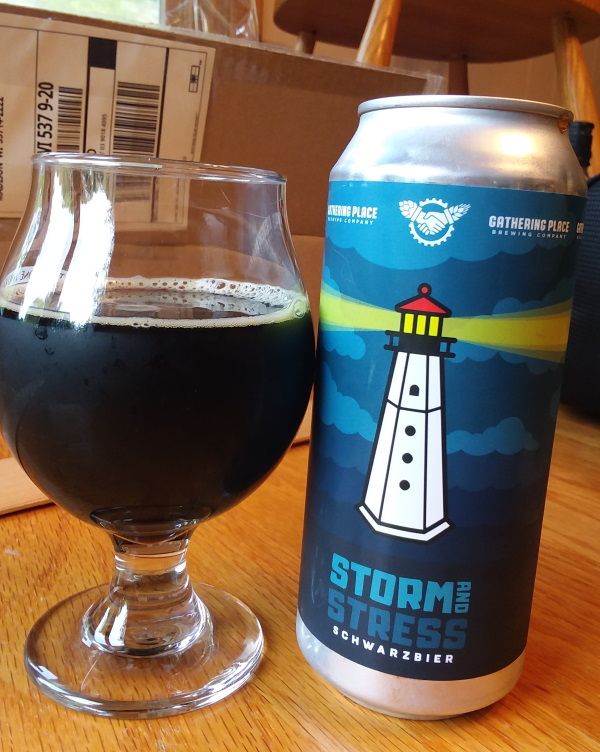
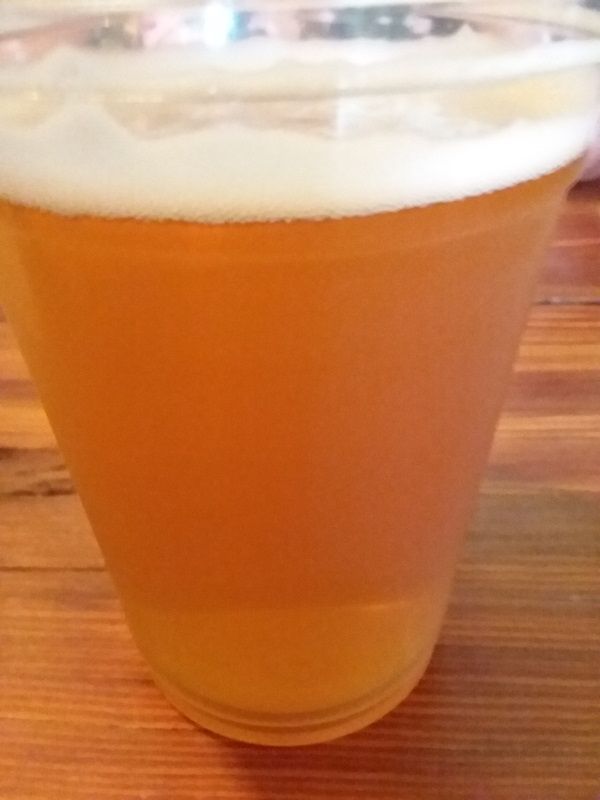
I see a yellow pils and I want it to turn black: Storm and Stress by Gathering Place Brewing Co.


American beer styles seem to be clearly delineated in a way that continental European styles are not. Take the American IPA for example. A NE/hazy IPA is opaque, looks like it was drained from an orange juice swamp, and tastes like Hawaiian Punch. On the other hand, a West Coast IPA is clear, the malt can be tasted, and it tastes like a Christmas tree. Black IPAs look, well, not pale, i.e. - black. And so on. All of these beers come from the same style family but the differences are rather dramatic amongst the individual styles.

But in mainland Europe, styles often have minor distinctions that separate them rather than glaringly obvious differences. In a previous entry I expressed confusion about the differences between Czech and German pilsners which apparently come down mainly to a little less or a little more malt and a little less or a little more hops. The differences are more subtle over there than here. (Please note that I am conducting some research in this area and bought some Pilsner Urquell for my experimentation.)

There's a similar confusion for me between the Dunkel and the Schwarzbier. And I suppose there are even more granular distinctions to be made between, say, the Munich Dunkel and its Franconian cousin. (I am unaware of regional variations in Schwarzbier although I don't doubt for one second that they exist.) But let's not go there because I'd get even more lost than I already am.

Ultimately, the problem is that I've never been to Germany to figure out the answer to this great mystery. More proximately is that I don't encounter much Schwarzbier brewed in Germany and, when I do, it's usually Köstritzer, although Krombacher Dark is becoming more common in these parts. Not that it is common, mind you, it's just that you see it occasionally whereas it was totally absent previously. With examples from the Heimat being a precious few, I've been weaned mostly on versions from the teat of American craft brewing.

From what I gather, a Schwarzbier is like a pils but darker. A lot darker. The name doesn't translate to "black beer" for nothin'. It has less of a bready malt flavor to it than its Dunkel cousin with some roasty tastes and medium hoppiness. In addition, it's got a lighter body and is drier than the Dunkel. This comports with my tongue's experiences drinking Spaten's Dunkel and Köstritzer's Schwarzbier. However, it doesn't match my experiences with, say, Sprecher's Black Bavarian, which they advertise as a Schwarzbier. Black Bavarian has the roasted coffee and dark chocolate flavors of a porter but with a heavier body. I do enjoy Black Bavarian quite a bit but it is far from being a dark pils.

Sprecher's Milwaukee neighbors, Gathering Place Brewing, have thrown their hat into the Schwarzbier ring with Storm and Stress - Sturm und Drang, auf Deutsch**. A brief search of the Internet gives me the impression that they've brewed it for a few years but only now am I getting around to trying it. I had a good experience with their Franconian lager, Spezial, and I am enamored of dark beers so I was looking forward to tasting Storm and Stress.


Having had a Dunkel recently which I felt was lacking in the forms that I think of a Dunkel as having, Storm and Stress started things out according to my expectations: it was black. Well, it was clear and really a very dark reddish brown but it had that Stygian gloom thing when you casually glanced at it. A small tan head came and went. It had a very pleasant aroma that was sweet at first - think plum - before some coffee and roasted grains came in.

Despite knowing better, my brain always thinks that Dunkels and Scharzbiers are going to be like motor oil because of their darkness which allows little to no light through my glass. I always have a brief moment of surprise when I drink the stuff and find that its color belies a much lighter body, like that of a pils. (There is surely a lengthy German compound word for being surprised at something you shouldn't be surprised by and it would make a fine name for a beer, whatever it is.) And so it was here. Although not particularly sweet, there was some maltiness to be had in addition to plum as well as some coffee. I could taste grassy hops underneath it all. Dark chocolate came out on the swallow. The finish was rather dry due to a nice, sturdy dose of fizz as well as the hops which took on spicy notes that let the bitterness build.

While I would have to have a Köstritzer for comparison, I think Storm and Stress is a little intense for the style. It's like you were expecting to hear Kind of Blue but the jukebox started playing Pangaea instead. That dark pils malt subtlety is missing here and was replaced with more of a porter profile. I think it'd be more to style to have less coffee flavor and more of a gentle roastiness.

Regardless of how true to style Storm and Stress is, it is a very tasty brew indeed. I really liked the plum and coffee flavors and how the beer's body remained light. The dry finish seemed to be out of the German pils playbook and made it quite refreshing on a recent hot and humid afternoon. Get it while you can.

Junk food pairing: Pair your Storm and Stress with a bag of Mrs. Fisher's Dark Chips. They're made with potatoes that have more sugar than normal so they're darker, richer, and full of melanoidin goodness.

**After drinking this beer, I listened to the In Our Time episode about the Sturm und Drang movement and learned that "Drang" really translates as urge and not stress.

12 July, 2021

It's a Boat, Silly: Muddy Tugger by 7 Hills Brewing Company


The Frau and I recently heeded Horace Greeley's exhortation to go west and made a trek to lovely Dubuque, Iowa. When we arrived, it was roughly high noon and our stomachs were indicating that it wouldn't be a bad idea for us to fill them. We made our way to the heart of the city's Millwork District and stopped in at 7 Hills Brewing Company. Apparently Dubuque thinks it's Rome as "7 Hills" is one of the city's nicknames.

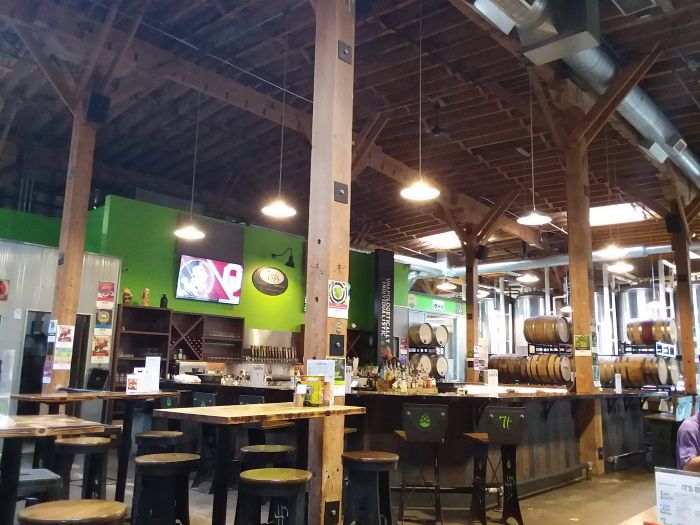
Being in the Millwork District, the building 7 Hills calls home has a manufacturing past -  it was a lumber warehouse in its previous life. And so it should come as no surprise that the brewpub has that repurposed industrial vibe with vaulted ceilings and exposed structural elements cozying up to finished walls and bar/restaurant accoutrement. The brewpub opened in the summer of 2017 and, from what I gather, it was an early adopter in an area that continues its transformation into a place where you can get a craft beer and a fancy meal instead of one where you'd get a new door or set of cabinets.


We ordered a 4 beer flight. Town Clock is an American pilsner made with corn. I was in Iowa. I had to get the beer with the corn in it – when in Rome, right? It was exactly as I expected and a sample glass proved plenty but it was crisp and refreshing in the 90 degree heat. It Gose Lick Swallow Suck is a margarita Gose which was fine in the heat but, again, a few ounces was plenty. Remedy, a cherry wheat ale, was more to my liking with a lovely fruity tartness. Lastly, there was Green Teatotaler, a cream ale brewed with green tea. The Frau really liked this beer and I agreed with her. Its herbal dryness was tasty and, like the earlier beers, just hit the spot on a very hot day.

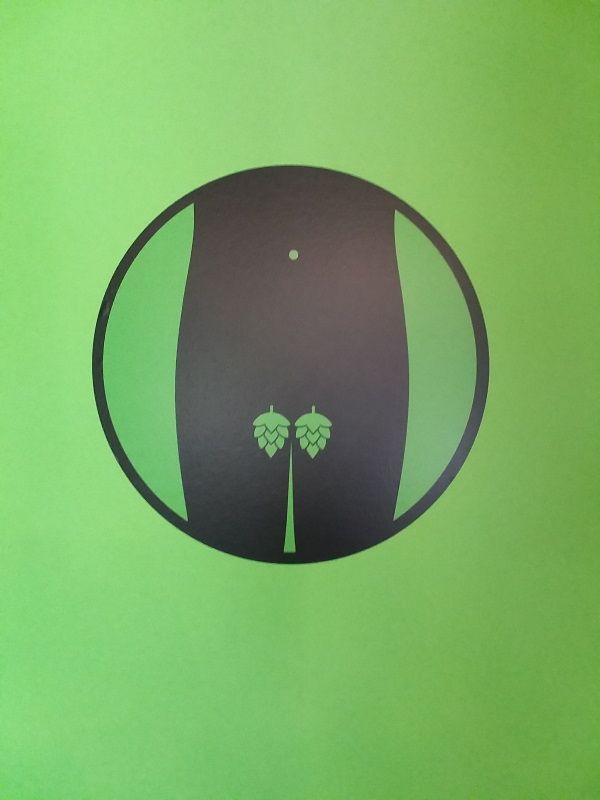
The food was good and the restrooms had hoppy signs.


On the way out, I picked up a mixed 6 pack so that we could bring some Green Teatotaler home and try some of their other brews including Muddy Tugger.

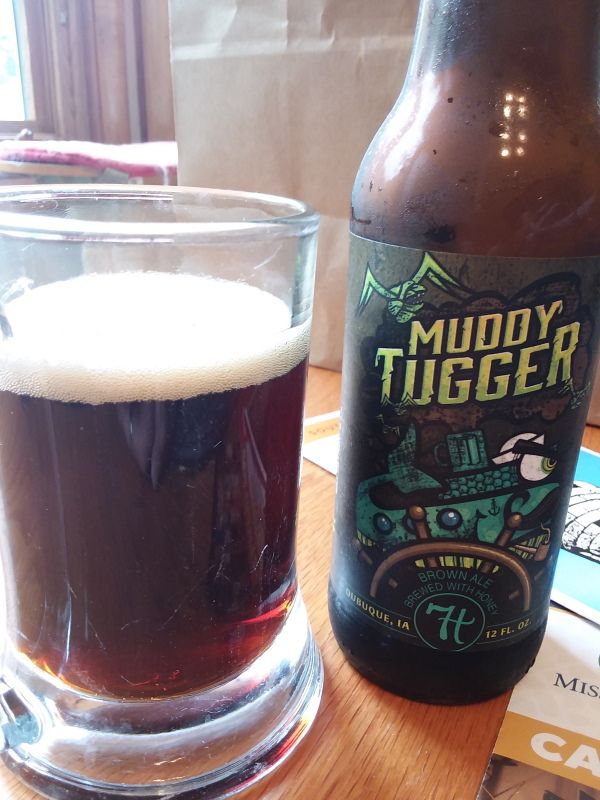
"Muddy Tugger" sounded like a mildly kinky name until I looked at the label closer and figured out that it referred to the boats that aid and abet shipping on the Mississippi River. It is a nut brown ale made with oats and buckwheat honey, neither of which are, to my knowledge, used much in the brewing of brown ale these days but I wouldn't be at all surprised to learn either or both were common ingredients back in the day.

The brown ale originated in England and has referred to various styles of beer through the ages and so the brown ales of today likely bear only a modest resemblance to the nut brown bowl belonging to little Sir John in the old folk song "John Barleycorn". While American brewing heritage owes no small debt to English traditions, no doubt brewers here usually brew something similar but not totally the same as what their cousins across the ocean do. I think of a brown ale as having some sweetness along with caramel flavor, a bit of roastiness, and some hops struggling to keep up.


Muddy Tugger filled my glass with a lovely mahogany liquid with a short but attractive tan head that stuck around long enough for me to get a photograph which does not do the beer justice. The beer smelled mainly of malty sweetness but also some honey, a bit of grainy roastiness, and a tad of spicy hops.

My tongue noted a nice firm fizz followed by roasted grain and malty sweetness with a some spicy/grassy hop flavors underneath. I didn't catch any tastes that I could discern as being from honey until the beer warmed up a bit at which point I think I did, but only just. I am unsure if I was simply unable to discern the honey flavor or whether it was genuinely buried in the mix by the generous malts like Steve Hackett's guitar on Seconds Out. Buckwheat honey has a distinctive grainy/malty taste which endows mead made from it with a flavor that stands in stark contrast to that made from other varieties. My guess is that it can easily get lost in a beer. At the finish, that malty sweetness faded to a spicy hop bitterness giving it a rather prominent dryness.

Despite not tasting much honey, this was a good little beer. It had a medium body which was fairly smooth owing to those oats, but it wasn't too sweet as that fizz helped steer it away from a syrupy overload. The dry finish was unexpected but welcome as it made for a nice contrast to the malty sweetness.

Junk food pairing: Since one traditionally pairs beer with cheese, grab a bag of some kind of Keto-friendly cheddar cheese crisps like Whisps. Their cheesy goodness will limit your carbohydrate intake and give you a healthy dose of protein while a delectable savory-salty combo will help cut through the beer's big malty flavor.

08 July, 2021

The Corona Diaries Vol. 21: The Coolest Shrine in Madison

Late June 2021

An entry or two ago I explained that the historic Wonder Bar here in Madison had closed and that the building was looking at an ignominious fate at the hands of a wrecking ball. So one Saturday earlier this month I set out on my bicycle to get a few photos of it before it was gone forever.

On my way south, I stopped at a beach on the shore of Lake Monona to take a look out onto the water. The sidewalk is up on a small hill that looks down upon the beach so you get a really nice view of the lake. This park has a few bespoke benches which I believe were made by a friend's sister who specializes in metal art.


I don't know why but they have this Victorian steampunk vibe to them in my eyes.


I continued on my way and soon enough I was at Olin Park. The area became a park in 1910. Before that in 1854 the Lakeside Water Cure was built here on the lakeshore.


It was apparently a health spa-resort venture where guests could receive hydrotherapy. I don't know what hydrotherapy entails, but the whole scenario makes me think of the movie The Road to Wellville. It failed and became the Lakeside House, a hotel which was quite popular. The winds of change kept shifting until the city bought the land and made it a park.

Not being in a hurry, I took the long way through the park which took me across Wingra Creek and along the lakeshore for a stretch. At one point I found myself at the entrance to Turville Point Conservation Park. Turville Point is a small peninsula that juts out into Lake Monona to form Turville Bay.

I could not recall ever having moseyed around Turville Point so I locked my bike onto the empty bike rack at the park's entrance and started walking.


While I could never quite escape the din of the expressway and/or John Nolen Drive, it was still rather calm and peaceful.

I disturbed a lot of birds as I strode down the path including this one. I am not sure what it is because, even though we own two copies of Birds of Wisconsin, I cannot find either of them. The only bird I know of with a green head like that is the grackle but that doesn't look like one.**


I took the longest path which was about 1.5 miles and went around the perimeter of the point. And so I got some nice views of the lake.


A mallard hen and her ducklings were cruising around while a muskrat was lazily floating through the algae bloom.

Madison parks are being overrun with invasive plants – mainly garlic mustard, methinks – and so, in addition to encouraging people to pick it, the city has been renting trips (yes, I looked it up) of goats and leaving them at parks to eat up all the unwanted plants. That day it was Turville Park's turn.


There was one black goat and of course it made me think of the goat Black Philip from the movie The Witch. Black Philip, of course, being Satan's disguise on earth as he torments a Puritan family.

My stroll around Turville Park was an unexpected but quite pleasurable detour. The Wonder Bar was only a couple of blocks away so it didn't take me long to pedal over there and take some photographs. I really hope that a space and the money is found to move the building.

I biked down the street a bit more and came to a house that is the only one I know of in town that has a belfry.


The bell is still there.


Either the person who built it was a bit of an eccentric or the building was a church previously. I wonder if the current owners get drunk occasionally and try to ring the bell.

I slowly made my way downtown and came across another duck with her ducklings. This time she wasn't a mallard and because of the above problem locating a certain reference book, I am unsure what type of duck we're looking at here. Regardless, those youngins are mighty cute.


I checked out a couple of recently completed buildings as well as a couple still in progress. And, sadly, I also rode by an old house where a former girlfriend had lived when we dated. It's one of seven to be demolished to make way for another shiny new apartment building. There's nothing particularly noteworthy about the house – I think it has been referred to as being in the Madison vernacular style or something like that - but I had many good times there and hate to see it go.

Like a fool I decided to head to the far east side to check out a couple of things that I'd been planning to see once biking season came around.

The first was of the few remaining farms left in the city limits.


I don't think it's a working farm but the barn still stands and I am sure the house has been added onto over the years but it's neat to see a bit of the area's agricultural history remain. It's a huge lot so someone has about as close as you can get to a back 40 in the city.

Just up the road was The Founder Shrine built in 1952. Now, it may have been less than a mile as the crow flies but it was all uphill and I thought I was going to go into cardiac arrest biking up that hill at about 1 M.P.H. I am surprised that I wasn't passed by any turtles. Anyway, it is a Schoenstatt Shrine, the first built in the U.S. I gather that they are all replicas of the original in Schoenstatt, Germany. According to Wikipedia, the Schoenstatt Apostolic Movement is a movement within the Roman Catholic Church that started there in 1914.

The area around the shrine was all trees and corn fields until fairly recently. Luckily the shrine is set back rather far from the road so it is still in a peaceful setting.

I'd never known about it until this past winter when I put in on my list of places to bike to come good weather.


Now, I am not Catholic but I did thank the Lord upon stepping inside because someone had been inspired to install air conditioning which was just what I needed on a 90 degree day. And it was turned up to 11 too as it was ice cold in there.


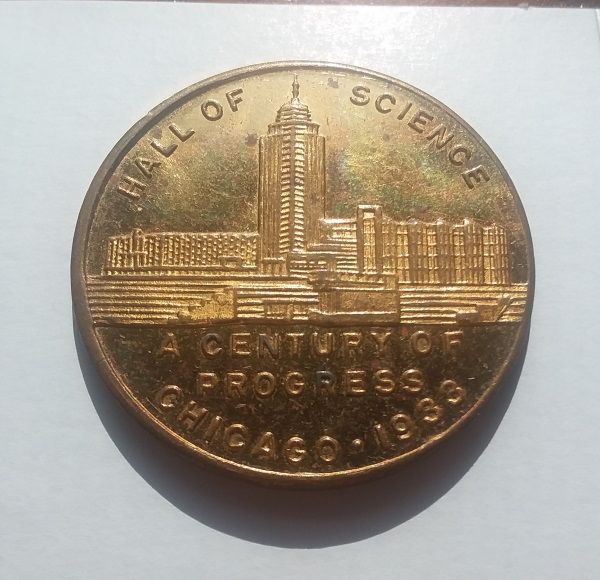
The bonus photo this time is of a Chicago Worlds Fair coin from 1933 that I found amongst the stash of coins I inherited from my father.


**Book found! Best guess is that it was a tree swallow.

07 July, 2021

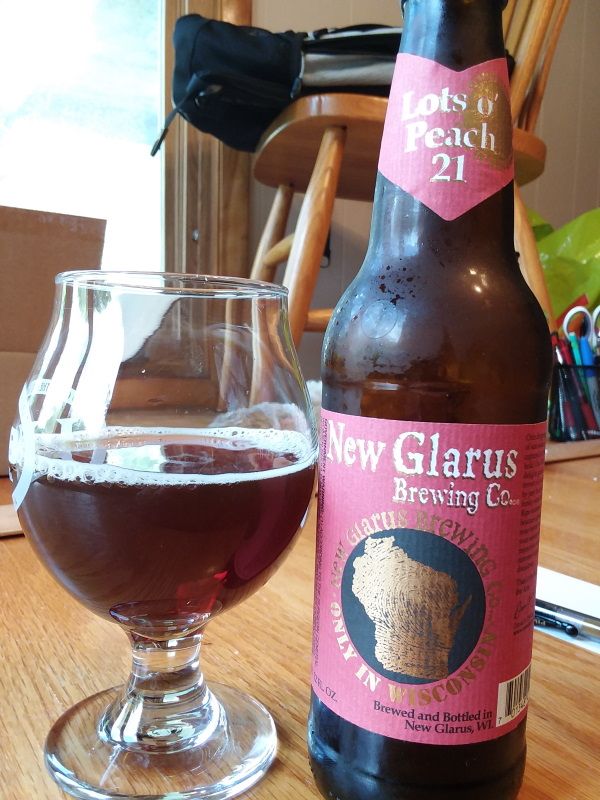
Drink a Peach: Lots o' Peach by New Glarus Brewing Company


It is an annual ritual for me to take part in the poll New Glarus does to solicit votes for what beers to brew the following year. Without fail, "Dunkel" and "Schwarzbier" are my write-ins and my votes go to Smoke on the Porter, Smoked Rye Ale, and Smoked Rye Bock. Those last two were in the Unplugged series which is now called the Thumbprint series and were simply outstanding beers. Full of smoky goodness with that spicy rye flavor underneath, combined, they mark what just may be the apotheosis of brewmaster Dan Carey’s brewing career.

I love the taste of rye and wish it was used more often in brewing but I can understand why it's not. The stuff soaks up several times its weight in water so you end up with gruel in your brew kettle. But here's a marketing tip for brewers that will make it worth the hassle: brew a rye beer, add some psilocybin, and call it St. Anthony's Fire. It would be a new style - the ergotic pils. "Great taste, less gangrene!"

Unsurprisingly, none of my choices are ever brewed and, looking at the New Glarus site today, I see that the Thumbprint forecast calls for mostly more fruited sours to complement the ones brewed year-round. This is disappointing for me but I just know that they’ll brew my smoked rye beers next year! OK, so they won’t but hope springs eternal, I always say.

It’s not that I dislike fruited sours. Indeed, I have been drinking their Belgian Red, a sour brown ale with cherries, since 1994, the year it debuted. It too is an outstanding beer. And any sour beer that New Glarus brews will stand head and shoulders above the fruited kettle sours that are so prevalent these days because Dan Carey crafts his beers so that they spend a healthy period of time in his Wild Fruit Cave where they soak up the terroir of south central Wisconsin. But, unlike smoked rye beers, I can generally only handle fruited sours in moderation. A goblet here and a tankard there is plenty fine for me, for the most part. 

Seeing bottles of their latest Thumbprint fruited sour, Lots o' Peach 21, for sale individually was nice because it meant that I didn’t have to invest in a 4-pack yet I would get to try it. I try every New Glarus brew that I can get my grubby little hands on because I’ve been drinking New Glarus for 27 years and I know Dan Carey is a great brewmaster. I may not like everything he and his coterie of brewers come up with, but I am always willing to buy the liquid and take the ride.

Lots o' Peach 21 was released quite recently. As I write, it is still early July and so it came out in late June or just within the past several days. I don’t understand the diablerie behind New Glarus’ fruited beers to any great extent, but I gather that it’s all Belgian techniques or Belgian-inspired, at the very least. They make a sour brown ale, add fruit, and let the beer age for a while longer in big oaken vats down in the Wild Fruit Cave. The sorcery gets more complicated when beers of different ages are blended together but I am unsure how many of their sours are prepared this way. The label for Lots o' Peach 21 gives no indication that it is the result of any such fusion, however.


My pour of Lots o' Peach 21 produced very little head – just a smidgeon of the off-white variety – and what there was departed rather quickly. The beer itself was a dark amber color that had a haze to it. If it hadn’t smelled primarily of peaches, I would have been disappointed. Beyond the fruit, I caught a dash of that wild yeast funkiness. This is all to say that it smelled really damn fine!

The first thing I tasted was – quelle surprise! – peach. Like fresh juice dripping down your chin and onto your new white shirt on a sunny day after biting into a peach peach. It was really sweet and this, combined with the beer’s medium body, reminded me of Libby’s Peach Nectar which I drank as a kid. There was a firm sourness to it along with a more moderate helping of that funky, horse blanket taste. Some light fizziness rounded things off. On the finish there was some lingering sour notes, peach (of course), and a flavor akin to grapefruit zest.

There’s a lot to like here even for someone like me that takes these kinds of beers in moderation. For instance, the sour taste was firm but not so strong that it feels like your teeth are melting. Additionally, it had the perfect level of barnyard funk to it. You can’t miss it but it doesn’t dominate all of the other flavors. And then there’s the peach. I mean, only a Philistine wouldn’t like a nice ripe peach. The peach taste here is simply wonderful. But…it’s just too sweet for me. There are more cloying beers out there but this was pretty syrupy stuff.

In short, the sour brown ale bits were perfectly proportioned, but the peach is too nectarous. Hopefully Pear 21, which is set to be released in August, will put things in a more harmonious state.

Junk food pairing: This being a Belgian-style brew, you’ll need a bag of Andy Capp’s Hot Fries to accompany your decent into peach madness.

01 July, 2021

The Corona Diaries Vol. 20: Meanwhile, Back in Dubuque

Mid-June 2021

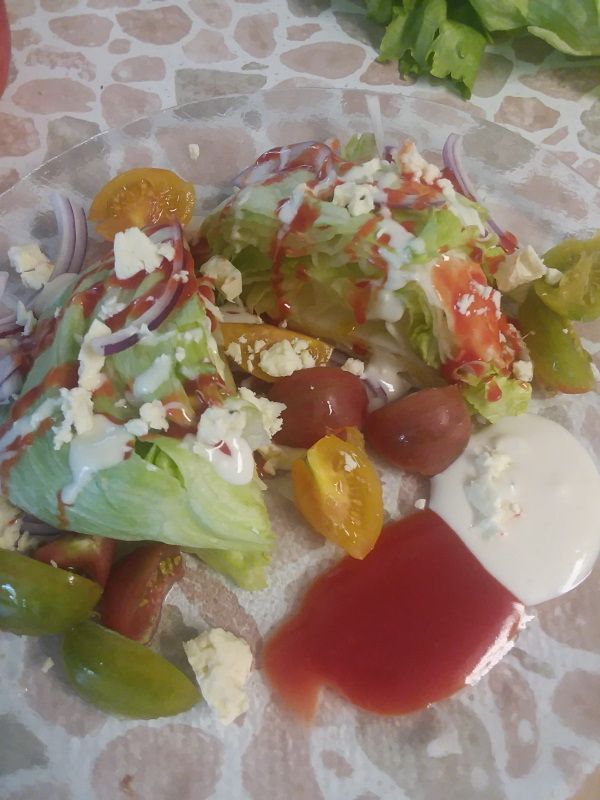
In my previous entry I noted that my Frau had become enamored of that steakhouse staple, the wedge salad and was determined to make them at home. And so she did. The one pictured below was merely the first of many and iceberg lettuce is now a permanent item on our shopping lists.

********

Also in my previous entry I noted that the Frau and I took a trip to Dubuque. When I left off, she had taken a rest while I wandered around downtown. She awoke in the late afternoon and then we ventured out into the heat for dinner. We ended up at Backpocket Brewing, a brewpub in the Millwork District that, like 7 Hills, was in a repurposed industrial building.

As an aside, every time I type "Millwork District" I chuckle to myself thinking that it's next to the Hammock District.


Back on track. Their air conditioning was in fine order, thankfully. We each had a couple beers and victuals. Because dunkels rule, I had a pint of theirs, Slingshot. It was OK. Not dunkely enough, though. But it did have its own virtues which I intend to elaborate upon in a post dedicated to the brew. Regardless of how far it strayed from style guidelines/my preferences, it was a good choice for the weather. I followed that up with a pint of Crispii Pils which was very good and the perfect choice for battling the heat. For her part, the Frau enjoyed her Belgian blonde quite a bit.


After dinner we ventured a few blocks to the west to Jubeck New World Brewing for a nightcap. It was in an old storefront and had a really nice ambience. There was exposed brickwork and the ceiling was pressed tin. It was a much smaller space than the other 2 brewpubs we'd been at and felt more mellow despite being closer to capacity. The vibe was more like a neighborhood watering hole than trendy tavern. I think it qualifies as a nanobrewery, judging by the brewing setup behind the bar which was quite small. My best guess is that they could brew one barrel at a time. Despite the small scale, they brewed my favorite beer of the trip.


Their Lavender Honey Wheat was simply wonderful. My former girlfriend from Dubuque loved lavender and I acquired my fondness of it from her. Just last year I learned that medieval washer women would lay clothes on lavender plants to dry and my Frau carries on this tradition with her lavender scented dryer sheets. I love flowers in beer generally so I couldn't not try it. The beer had a great, mellow floral taste that really hit the spot. It was simultaneously a fine digestif but also perfect for the weather.

Our final destination of the evening was an ice cream shop a few blocks from the hotel. We found that they served Chocolate Shoppe ice cream made here in Madison so it was a little taste of home with which to end the day. Their Zanzibar Chocolate is perhaps the best ice cream in all of Christendom. Plus I spied more ghost signs on the way there.

The next morning, we got up early hoping to do some more sightseeing before the heat settled in as it was to be another scorcher. They say breakfast is the most important meal of the day so we were at the door of Habits Coffee and Mini Donuts a couple minutes before they opened.


Across the street some masons were getting ready to start their day of restoration work on an old building. I did not take many photographs of old homes and apartment buildings but there were plenty. From what I saw, Dubuque has preserved most of its old housing stock, which was nice to see. Newer buildings around downtown and environs were generally offices, not homes. It gave the area a distinctly old-timey feel.

When the door was finally opened, the barista was greeted by me standing there like a barbarian at the gates. The coffee was still brewing when I entered. Doughnuts there are made to order and ours were all warm and greasy and absolutely delicious. I had plain ones while my Frau had Boston Cream and churro, if memory serves.


Our destination after breakfast was the Dubuque Arboretum & Botanical Gardens. It's on the northwest side of town and was a roughly 10 minute drive from the doughnut emporium. I was impressed at how streets lined with older homes stretched quite a bit farther from the downtown area than I expected. Although not all dated back to the late 19th century, we still were able to enjoy a fair amount of pre-war architecture before we entered a neighborhood populated with 1960s/70s ranch houses. 

Eventually we made it to the gardens and found that there were only a few cars in the parking lot. As we were pulling in, the Frau announced that there was no admission fee. Ausgezeichnet!

The entry:


An army of volunteers maintains the 56 acres and they have my gratitude. The gardens were exquisite and I was green with envy since I have a hard time keeping any basically any plant alive. Well, I have gotten pretty good at keeping cat grass alive.

Here we have a scene from the rose garden. 


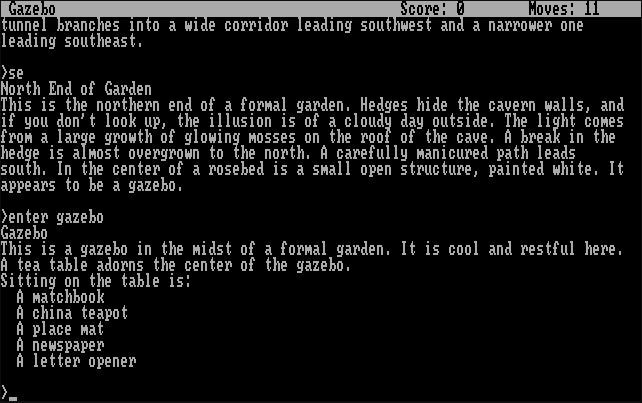
Not pictured is a gazebo. I had a flashback to the early 1980s and the videogame Zork II when I saw it. Zork II was a text adventure and featured a gazebo in a garden. And so I had this funny feeling stepping into this rose garden and seeing a gazebo before me. Here’s what the game looked like:


I believe this is the English garden. Seeing it gave me flashbacks to Peter Greenaway's film The Draughtsman's Contract, and, if truth be told, the video for Jethro Tull's "Kissing Willie" with that guy running around the garden holding that big and highly phallic log.


And this is a pond that was home to many koi who had been trained to assemble at the bridge for feeding when they heard a human on it.


Although there is a funicular that goes up and down the bluff at 4th Street, the Frau decided that it wasn't for her and I did not have a chance to take it when I was out and about on my own. Still, I did want to go atop the bluffs and check out the view. And so we left the gardens and made our way there. The views were spectacular.


Outside of Dubuque, my experiences with Iowa have been driving I35 down the center and a trip to Fairfield in the southeast part of the state. The middle of the state is, as near as I can tell, flat and full of corn. The area around Fairfield was prettier but Dubuque is by far my favorite bit of Iowa that I've seen so far. I never tire of crossing the Mississippi River or of spending time on and around its bluffs. When I worked at the Wisconsin Historical Society, I looked forward to the occasional drive out to historic sites upriver from Dubuque at Cassville and Prairie du Chien because the scenery was just so beautiful.

The Frau and I thoroughly enjoyed our time in Dubuque. I know just a smattering of its history but I presume that it took a hit in the 70s and 80s and saw a decline in its manufacturing base. Today old warehouses are home to your typical gentrified fare like brewpubs and restaurants so it seems that the city is doing alright. We left with a fair amount of tourist things undone so a return trip is likely in the cards.

********

Bonus photos seen on a walk this past spring.