22 April, 2026


21 December, 2025
R.I.P. Mick Abrahams
Mick Abahams passed a couple days ago. Ian Anderson has penned a tribute at the Jethro Tull site.
15 September, 2023
There's a beast inside my CD player
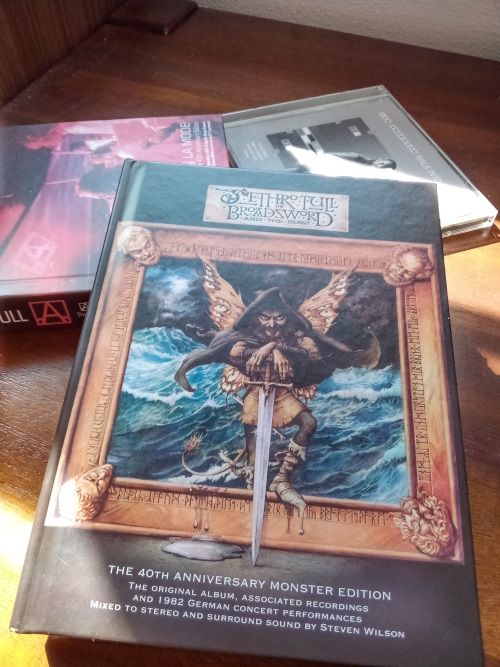
I've had the new Monster Edition, i.e. - 40th Anniversary box set of Jethro Tull's The Broadsword and the Beast for a couple weeks or so now and, while I've not yet heard to the whole thing, I have listened to most of it.
A few thoughts:
Firstly, the new remix of the album is nice. I didn't notice anything dramatically different but there seems to be more space between the instruments and Dave Pegg's bass seems a bit more up front. I've always been a bit ambivalent about Gerry Conway's drum sound on the album. The snare is usually quite a bit louder than the bass drum and toms. The drums just seem off kilter. That doesn't seem to have changed with the remix.
There's an alternate version of "Cheerio" here with a bunch of people singing instead of just Ian Anderson and what I presume is a Vocoder. I really like it as has a more cheerful feel, more of a last call at the bar vibe to it.
Apparently the portative pipe organ is what we hear at the beginning of "Pussy Willow". A nice throwback to the Songs From the Wood era.
The set features multiple versions of "Fallen On Hard Times" and it is neat to hear the song evolve and be molded into the classic we know from the album. A rough mix from 1982 stands out as the more ethereal synthesizer sound is at the fore. It would later get mixed underneath a synth sound that is more squishy, less organic in nature. The song remains largely the same otherwise - it still bops along at mid-tempo - but it definitely has a different, slightly darker feel to it.
A rough mix from 1982 of "Slow Marching Band" is also really neat. For the first verse, Anderson's voice is left untreated or largely so, anyway. No double-tracking and no reverb/echo that I can hear and he sings so well and it just sounds very natural and simply gorgeous.
The album has a reputation as being one where the synthesizer technology of the early 80s meets the classic Tull sound of electric guitars, flute, and mandolin and a, forgive the pun, synthesis is achieved bringing all of the elements together in harmony. This interplay is distinct and expanded here and is thrown into really sharp relief when you consider the early 1981 sessions. It seems odd that these same sessions that produced the very folky "Mayhem Maybe" and "The Swirling Pit" (by Dave Pegg), also produced synth heavy songs such as "Too Many Too" and "I'm Your Gun". But then you have those that straddle both worlds such as "Commons Brawl", "Jack Frost and the Hooded Crow", and the previously unreleased "Inverness Sleeper" with it jaunty mandolin and synth flourishes.
It is interesting to have all of these songs together and look at the lyrics. There is some really disparate subject matter. You have something like "Jack Frost and the Hooded Crow" which asks us to consider the plight of the poor and to extend our generosity to them and then there's "The Curse", a song about a girl having her first period.
One things that sticks out is the paucity of acoustic guitar. It's like the keyboards took over that spot.
Lastly, there's a bit in the liner notes about the making of the album cover by Iain McCaig. There's a really neat early drawing of the cover when the album was still to be titled Beastie. McCaig says that Ian Anderson gave him a tape of some songs and a list of titles that he was considering for the new album. Presumably this early cover idea was the result of listening to that tape. Curiously, the track listing on the back is:
Note that "Jack-a-Lynn" features the acoustic guitar. I do think that it and "Jack Frost and the Hooded Crow" are very strong songs that should have been included on the album. The really oddity is "Crew Nights". Anderson writes of it now, "Again, it's not one of the great Jethro Tull songs." How very strange that it was apparently considered for inclusion on an album. Did he just change his mind over the years?
It is amazing at just how productive 1981-82 was for Ian Anderson. There must be 3 albums worth of songs here. Two songs, "Half Hour Video" and "Ian's Office Song" were left off as they were backing tracks only, presumably much like "Mayhem Maybe" before it was finished in 1988. Plus, there's an instrumental version of "End Game" by the band hidden away on a DVD here that would be redone for Anderson's 1983 solo album Walk Into Light. What a period of creativity!
I am beginning to reassess Peter Vettese's playing the more I listen to this material. It gets more interesting with each listen. Anderson comments that Martin Barre really became a better guitar player at this time and that he was at the height of his singing ability here and I am beginning to appreciate what he means.
But that is for another time.
25 December, 2022
Jethro Tull, Overture Center for the Arts, Madison, Wisconsin (3 November 2004)
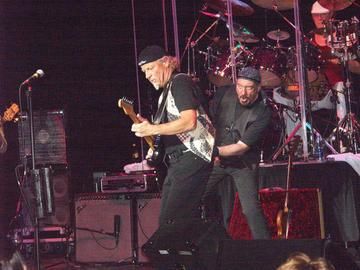
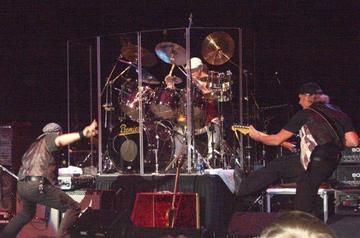
Jethro Tull's performance in my hometown in November was their first here in twenty years and one day. Then they were promoting their new album, Under Wraps, while in 2004 they had no new album to push. Instead they were touring with the promise to play some songs that hadn't been performed live in a long time, if ever. The first set was to feature Tull's acoustic side while the second would see Martin Barre's guitar put to full effect. In addition, it would be my first time in the newly-built Overture Center and nice way to beat my post-election blues.
The show began with "Life Is A Long Song" from an EP released in 1971. Not particularly rare but a good performance nonetheless. After it was finished, Ian Anderson began with his usual stage banter. He commented on the Presidential election the day before and how the new President looks a lot like the old one. This elicited many a boo from the liberal Madison crowd which was loud and boisterous most of the night.
The show continued with the perennial favorite "Skating Away on the Thin Ice of the New Day" from 1974's War Child album. More classics followed, including "Dun Ringill" and most of the acoustic songs from Aqualung. The set featured the second-ever performance of "Slipstream" as well as the live premiere of "I Raise My Glass to You" from Martin Barre's solo album, Stage Left.
While Anderson's antics have mellowed over the years, he still wandered the stage maniacally with phallic flute in hand. This line-up has been together for about ten years and it shows. Musically, they were tight and everyone seemed to be having a good time.
Each band member introduced at least one song and their comments lightened the mood and got the crowd laughing. A woman in the audience yelled "Hey, sexy knickers!" during the introduction to "Up the 'Pool'" which added to the revelry.
Keyboardist Andy Giddings may dislike "The Squeezy Thing" (a.k.a. - the accordion) but his playing on "Eurology" really warmed me up to the song. The highlight of the first set was Aqualung's "Mother Goose." Giddings and Barre added recorder and everyone got a chance to show off during the extended instrumental section. The first set closed with the latest arrangement of "Bouree" from their sophomore album, Stand Up.
As promised, the second set had the amplifiers turned up loud. Bassist Jonathon Noyce donned a University of Wisconsin hoodie and started out by playing the intro to "My Sunday Feeling" before Doane Perry's drums came crashing. "Cross-Eyed Mary" followed and showed the weakness of the set: it was weighted a little too heavily towards songs from Aqualung that have been live staples for most of the band's career. However, I can imagine that it isn't easy for a group that's been around for 36 years to devise a setlist that appeals to a crowd of mostly older fans but younger ones as well. Still, Tull's last two albums, Dot Com and Roots to Branches, are criminally underrated and it was disappointing that the band played nothing from either. Considering the results of the election and the wars on terrorism and in Iraq that were ongoing, I felt that songs such as "Roots to Branches" and "Valley" would have been highly appropriate in addition to being great pieces of music.
This is not to say that I didn't enjoy the second half of the concert. Towards the end, Tull brought out "Farm on the Freeway," a song about the loss of the family farm here in America. Many people in Wisconsin understand the situation all too well and perhaps some folks in the audience knew it first hand. Any political messages aside, the song stands as one of the band's best, with Barre's guitar sounding brash and loud while Anderson spits out plenty of licks from his flute. Hot on its heels came the most intense moment of the night, "My God." Probably Tull's angriest song, it is a classic with piano, flute, and acoustic guitar butting heads with the loud, acerbic electric guitar and drums. A shiver shot down my spine when Barre's electric guitar burst out after the flute solo in the middle of the piece. "My God," like "Farm on the Freeway," explored a political issue, in this case, the tension between the Islamic and Christian worlds today.
Tull brought the set to a close with rousing versions of "Aqualung" and "Wind-Up." The standard encore of "Locomotive Breath" followed. The band played an instrumental version of "Protect and Survive" from 1980's A, while Anderson tossed out balloons that were almost as big as he was into the audience. They were still bouncing around the theater as the band left the stage and the house lights came on. However, saddened one was with the election and the state of the world, it surely brought a smile to see two huge balloons caroming off of the balcony as Louis Armstrong's "What a Wonderful World" played softly in the background.
(This was originally published at The Green Man Review back in 2003-08.)
17 March, 2022
I Dig Heavy Metals
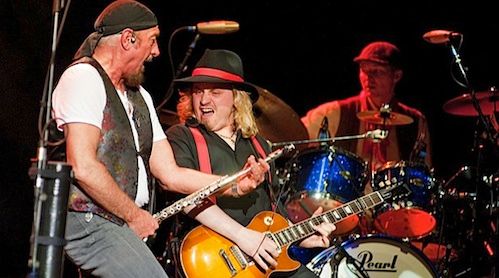
When Ian Anderson's musical career ends, Homo Erraticus will likely not be viewed as a classic by music historians and prog rock aficionados. Jethro Tull fans will, generally speaking, consider it a minor, if pleasant, album, if I may prognosticate here. Personally, I rather like it, though I do recognize its faults. With a new Jethro Tull album out, I've been listening to Anderson's more recent music, including Homo Erraticus. A song I keep coming back to is its second tune, "Heavy Metals".
Anderson picks out a very pretty melody on acoustic guitar while Scott Hammond keeps time with a bell (or so it sounds) that mimics a blacksmith at work with hammer and anvil. (Or this could be a synth sound.) John O'Hara contributes some tasteful keyboards that mainly add mood and fill in a sparsely arranged song, but he finds the room to throw in a flourish or two with a harpsichord-like sound.
Anderson's voice changed forever after some throat problems back in 1985 and he was in his late sixties when he recorded this song so age was a factor as well in his limited range. But his singsong style here is perfect to accompany the bouncy, folky guitar melody. And in 90 seconds Anderson encourages us to ponder how human nature persists through the ages.
"Heavy Metals" probably won't make any best-of collections where it would sit next to recognized acoustic Tull classics such as "Mother Goose", "One White Duck", or "Dun Ringill" and this is a shame. This is a late period Anderson gem.
13 October, 2006
Ears of Tin
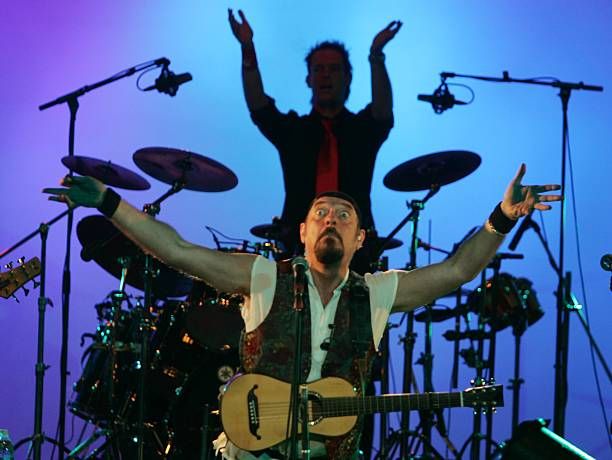
The latest issue of Madison's alternative weekly, Isthmus, has a little blurb about the tomorrow's performance by Ian Anderson of Jethro Tull here in town. The piece's author, Eric Lipton, wrote it in faux Elizabethan English. For example, here's the opening:
"Good morrow to ye, m'lords and ladies of Madisonshire. Pray sit as I give tell of a minstrel of goodly repute a-visiting our fine village."
On the one hand, I thought it was amusing. But on the other, I'm pretty sure that it was meant as an insult; to disparage a fairly major musician whose visit can't be ignored yet, at the same time, can't be embraced. There can be little doubt that Isthmus won't greet Bo Diddley's appearance here next week by writing a piece in faux Mississippi vernacular and ending by commenting on who built the stage upon which he is to perform. None of this should be surprising, however, as the music press has generally been hostile to progressive rock over the years.
Concomitant to Lipton's piece is The Onion's Inventory this which is a list of "17 Essential Books About Popular Music". The list has books by Greil Marcus, Dave Marsh, Lester Bangs, and Robert Christgau who, perhaps along with Simon Frith, could be considered to be the Founding Fathers of pop music criticism. None are (or were) particularly favorable to progressive rock with Marsh & Bangs, at least, having been quite derisive in the past decades.
Most of the animosity of the pop music press towards prog stems from the Marxist approach pioneered by the likes of the folks above. These critics argue that, since rock'n'roll stems from the music of the lower classes - blues/R&B; and country/bluegrass - then "good" or "legitimate" rock music (and pop generally) has very tenable links to the lower classes. From its beginning to its heyday (1969-1975), many and the most popular prog bands looked to Western art music for inspiration and adopted or adapted some of its forms. For critics who came of age during the rebellious late 1960s, the appropriation of the music of the bourgeois severed the links between this type of rock music and its plebian origins. While I don't have the quote at hand, Marsh once wrote something along the lines of "Progressive rock is divorced from the taproot of the music - blues and folk." This notion that prog is simply a translation of Bach into rock belies the fact that prog has always been a rather large tent that encompasses a variety of bands, many of whom didn't appropriate Western art music. Unfortunately, this approach to progressive rock became pervasive and I think that it still prevails today.
Going back to Lipton's piece, I do want to point out that attendees are not likely to hear "Songs From the Wood" as he writes. While it may be inserted into the set, the song has not yet been played on this orchestral jaunt across America. However, concertgoers will hear "Thick as a Brick" and "Aqualung". Interestingly, these 3 songs have absolutely nothing to do with the "Elizabethan rock" image that Tull acquired in the mid-70s. If there is a Jethro Tull album which would inspire you to start talking like Shakespeare, it would be 1975's Minstrel in the Gallery with its cover featuring a jester entertaining a group of courtiers. Aside from an album cover or two and Anderson's stage outfit from 1974-75, Tull's has had little to do with the late 16th century.
On other hand, Anderson has cultivated the jester image through most of his career even if he adopted the uniform for only a year or so. But his persona as well as his flute playing also owe a great deal to jazz musician Rahsaan Roland Kirk. Tull's music and Anderson's lyrics have never really been enamored of the Elizabethan Age. They started out heavily influenced by blues & jazz; they moved on to hard and then progressive rock; in 1982, they successfully fused rock and English folk with the then-new synthesizer; later Tull efforts have looked to the Asian Sub-Continent for inspiration and color. So, while sounding like Shakespeare is somewhat apt in a comedic sense, it's unfortunate that a discussion, however brief, of the wonderful and varied music that Anderson and Tull have made for nearly 40 years escapes most writers.
20 November, 2003
Tempests in Teacups and Breaking Butterflies on Wheels
---John Erskine, The Moral Obligation to Be Intelligent
I spent some time a few nights ago engaging in my daily routine of checking email and surfing over to various web sites to keep updated on the activities of my favorite rock bands. I had read last week that Phil Collins was to make a revelation on Monday so I first I went to Genesis' web page to get the straight dope. (He was announcing a farewell tour, of sorts.) After giving the forum there a once over, I headed to Jethro Tull's home on the web. At the top of the page was a link to something Ian Anderson had written about some previous comments of his regarding the American flag. Funny. I hadn't heard anything about any such comments. Hastily, I clicked on the link and read. I was shocked.
Shocked that he felt the need to issue a public apology. So I went out onto the Net and found the full article which has caused the commotion. The part which seems to have stirred the ire of many of my fellow Americans was:
"I hate to see the American flag hanging out of every bloody station wagon, out of every SUV, every little Midwestern house in some residential area. It's easy to confuse patriotism with nationalism."
After having read the article, I felt clueless as to why there was all the hub-ub, Bub. I'm an American and I also happen to live in the Midwest. It seems that I would be a prime candidate for taking offense at the comments. But I took no offense whatsoever. What I did offense at, however, was the knee-jerk reactions of some of my fellow country(wo)men.
The apology echoed sentiments expressed in the interview itself, namely, that he has great respect for Americans and at the end of the statement, Anderson asked fans to share their ideas about what can be done to improve the image of Americans in the eyes of non-Americans. To do so, one could email him directly or go to the message board at Tull's site. Reading the messages, I got the impression that most of the poster were engaged in a concerted effort to avoid any attempt at amelioration. I was hard-pressed to find anything that wasn't rebuttal by epithet.
I would urge my readers to read the article in its entirety and it can be found below. Anyone with even a modicum of intelligence will read the article and understand that his remarks were not anti-American, American bashing, or whatever jingoistic piece of bullshit you want to call it. He clearly states that he has the "highest regard" for the American people in contrast to much of the world. His line of reasoning begins with two problems: 1) A great portion of the world's population hates Americans and 2) that there is a war going on in Iraq which he sees as being unjust. For Anderson, these two problems are intertwined. In addressing the first issue, nowhere does Anderson indicate he has any animosity towards Americans generally. The bit about the flags here people, relates to the perceptions of others, specifically Europeans. He addresses the issue of displaying the flag and contrasts when/where Europeans do so with American displays. Europeans have a slightly different history when compared to us Americans and thusly the exhibition of the flag takes on different meanings for them. Ergo, when every SUV and house in America has a flag waving from it, some people associate this behavior with less than savory elements of humanity's past.
Nowhere does Anderson make any blanket statement about Americans being a bunch of maroons or any such thing. What he does say is that, in order to help their own cause, Americans might think about how the display of the Old Glory is perceived by foreigners. For the long run, what's the best way to get people to not want to fly planes into your buildings? Is it by killing them or putting them into perpetual fear of being killed? Or perhaps by building bridges and understanding one another to reach, at the least, détente?
In the aftermath of 9/11, the company I worked at gave out pins with the American flag on them. It became increasingly rare to find a lapel that was not adorned with such a pin. Outside of the workplace, the flag popped up everywhere, as Anderson noted. Were these people being patriotic? To be sure. Was there also an attendant attitude, on the part of some of these people, that this gave the U.S. carte blanche to, as Ann "Thrax" Coulter said, "...invade their countries, kill their leaders and convert them to Christianity"? Most definitely. For many, even most, I dare say, of my co-workers, shrouding oneself in the flag was like their fulfillment of any perceived sense of civic duty. Trying to understand why terrorists would want to fly planes into the WTC was unnecessary. Looking into the long, tense history of the relationship between Islam and Christianity was unthinkable. For these people, donning the Stars & Stripes was enough. But Anderson is right, it's not enough.
As I read the posts at the Tull message forum, I was saddened. A certain Ryan White finds it necessary to yell "God Bless America" at the end of his posts as well as to label anyone who disagrees with him a "liberal". He goes on in one post to generalize about all of these so-called "liberals" by saying that they love to commit "ad hominum" (sic) attacks only to finish his comments by labeling another poster a "moron". Aside from Mr. White's blatant lack of intelligence, two things disturbed me greatly. The first was the prevalent attitude that, once Osama bin Laden is brought to justice or killed, the terrorist problem is effectively solved. This is curing a symptom but not the cause. Terrorists are not born, they're made. Al-Queda is not the lone repository of people willing to kill Americans. This is what Anderson was alluding to in his comments. No one person is the cause of anti-American sentiment in the world thusly it's gonna take a long time and the efforts of millions, including we Americans, to change the situation. For better or for worse, the United States is the most powerful country on this planet. By saying, "These are powerful forces that folks are playing with. To have that power is something you can't take lightly. You have to realize there are people out there whose lives you may affect by what you do.", Anderson is imploring the American government to take on the role of a steward and not that of a bully. His opinion on the matter hasn't changed since 1978 when he said: "That's one thing money buys: the right to acquire responsibility for things or people or animals or whatever."
To answer his question about what can be done, I would say that the most important thing is for Americans to be intelligent.
1) Approach those who are different than you as a chance to learn something, to experience something new.
2) If you go abroad, don't rush to the nearest McDonalds, for Christ's sake. Be open-minded and engage the local culture.
3) Think critically for a change and don't believe everything you hear. Just because CNN or Faux News says something doesn't mean it's so. Did you really lose your job to a foreigner or are you taking Rush Limbaugh's word for it?
4) Understand that what we Americans do collectively has an impact around the world. Pollution does not discriminate upon whom it has effects.
5) Realize that a government and its people are distinct in many ways.
6) Stop calling people with whom you disagree names as a first resort.
7) Stop thinking that 9/11 was the worst fate to befall a nation ever. It wasn't. So quit bitching about any perceived lack of sympathy from the rest of the world. We Americans have no problem drowning ourselves in schadenfreude when it comes to our own. Witness Martha Stewart, Michael Jackson, et al It was a tragedy whose causes go beyond OBL and we have to comprehend this to make sure it never happens again.
The Genesis of the Controversy

The following is an interview with Ian Anderson, leader of the band Jethro Tull printed in the Asbury Park Press. Some of the more ascerbic sentiments expressed herein brought the opprobrium of many flag-waving Americans down upon him. Anderson has since written a clarification and apology which can be found at Tull's web page.
The Interactive Ian Anderson
By Mark Voger, Staff Writer
"Americans are in a dreadful pickle at the moment, being they're the villains of the planet as far as roughly half the population of the world is concerned. Half the world pretty much hates Americans."
Ian Anderson -- the Scottish-born, English-bred singer-songwriter who usually leads Jethro Tull, but is now in the midst of a thought-provoking solo tour -- insists he isn't America bashing. He's just telling it like it is.
Anderson will admit, though, to being less than a fan of President Bush -- or British Prime Minister Tony Blair, for that matter.
"Bush and Blair haven't got the faintest clue what a real war is," Anderson says. "As a couple of guys who have at their disposal considerable forces in the way of weapons of mass destruction, it seems somewhat cynical to be engaging in an act of invasion on foreign soil without the sanction of the international community and with guns blazing. Frankly, I hope both of them have an early demise."
Why is the flute-twirling rocker behind the '70s FM classics "Aqualung," "Locomotive Breath" and "Bungle in the Jungle" suddenly waxing political? Actually, it isn't so sudden. Anderson has always been that most rare of rockers -- an articulate one -- as evidenced by his lyrics, interviews and song introductions. His "Rubbing Elbows With Ian Anderson" tour, coming to Red Bank on Friday, is the musician's chance to finally let it rip verbally.
In each city, Anderson will invite a local radio or TV personality and several audience members to join him onstage for an evening of conversation and music. There'll be Q&As, acoustic performances of Tull songs and, most interestingly, a local musician performing an original song backed by Anderson's band.
The format sounds either novel or nutty. Anderson says it can be a little of both. "It is very much an improvised situation," he says. "It works around a format, but we don't know what the content is going to be. We try and find a local singer-songwriter who can get up on stage and is looking for a good backing group for the evening. We try to fulfill that need."
How did Anderson come to create the format?
Says the musician: "As a direct result of 35 years of doing radio station visits and the occasional TV thing, you do build up a catalog of experiences. I thought it would be interesting to take that visit as a guest in somebody else's domain, turn it around and bring the radio guys into my world. And to give the audience -- rather than the radio listener or TV viewer -- the opportunity to participate to some little extent in the show."
Anderson meets with the local radio or TV personalities on show days to go over the format. "It's important that they're relaxed," he says. "The first two or three minutes of the show are rough, because they're a little anxious walking out in front of a live audience. Even though many of them have done this before, it's usually limited to, 'Hey, Cleveland, let's hear it for Jethro Tull!' You know, the rabble-rousing DJ moment that you get before a lot of rock concerts. "But beyond that, to actually have to think and provide intelligent commentary and take questions from the audience is something they may not be used to."
A Missed Rehearsal
The musical guests present a different set of challenges. "So far, it's all worked out apart from one person," Anderson recalls. "He was supposed to be there for 5 o'clock rehearsal to run through his song, which we'd carefully written out and learned. At the last minute, we were informed, 'You know, I can't get off work 'til 7 p.m.' "At 7 p.m., the doors open and the audience walks in the theater! It's a little bit late. So that poor, unfortunate guest couldn't make it. Luckily, we had a stagehand, a girl who just happened to be a singer-songwriter. With about five minutes of quick rehearsal, she was shoehorned into the show. She was great.
"It's really rewarding to see these folks' faces light up when they finish their song. I mean, it's a mixture of relief, abject terror and sort of orgasmic release. "It's been always a great little part of every show, giving our musical guest the opportunity to feel good for four minutes. And then," Anderson adds with a laugh, "back to their wretched, miserable, struggling-musician lives."
Anderson's co-host in Red Bank will be Terrie Carr, program director at WDHA in Cedar Knolls. "It sounds like it's going to have almost like a 'Storytellers' vibe," Carr says (referring to the VH1 program of that title). "Ian's such an intelligent, witty guy. I'm looking forward to the spontaneity of it."
The musical talent will be Jeff Gaynor, Dumont, who gigs in the Bergen County area. "Over the moon doesn't begin to describe it," Gaynor says of his response to this opportunity. "Ian Anderson is one of my greatest musical heroes. Just to meet him would have been incredible, but to actually perform with him is beyond description."
The question of which topics emerge during the "Rubbing Elbows" chat segments is what sets Anderson off on a diatribe about the ongoing American-led war in Iraq. "I like to sound the audience out a little bit," Anderson says. "I usually bring your president into the conversation at some point, and perhaps Tony Blair. I like to hear the audience divided, as they always are, over the pros and cons of Bush policy and the Iraq so-called war."
Anderson scoffs. "I mean, you know, to call it a war is to attempt to dignify a spurious invasion as something that sounds rather grand. As a career-molding war for you-know-who. I mean, to call it a war is just a disgrace. "But that's not an area that I go into in any depth (during the shows). For a lot of people, that's dangerous talk, because they are keen supporters of flag-waving nationalism and, dare I say, retribution and revenge, which is what they see this as being. I find that utterly deplorable.
"I hate to see the American flag hanging out of every bloody station wagon, out of every SUV, every little Midwestern house in some residential area. It's easy to confuse patriotism with nationalism."
Overseas View
This, Anderson warns, is one reason America has become unpopular overseas. "Unfortunately, the way the world sees it," Anderson says, "we don't look kindly on the flag-waving stuff anymore. In Europe, the only time you see flag-waving is at soccer games when people beat the (excrement)out of each other. A lot of flag-waving goes on there. "But most of the time, we keep the flag-waving out of normal society these days, because we know that it just engenders old animosities -- we old Europeans who are a little sadder and wiser as a result of having the (excrement) beaten out of us a number of times, and our cities and national monuments destroyed. We're probably a little more sanguine about this than the very sensitive American psyche, which has not experienced or had to endure these offenses on its home turf."
Some Americans may disagree in the wake of the Sept. 11, 2001 terrorist attacks on the Pentagon and the World Trade Center, though 56-year-old Anderson is referring to the bombing of England and other European countries during World War II.
'Good Ambassadors'
"I sympathize with the American people," he says, "who I have the highest regard for as being warm, invitational and mostly pretty good ambassadors around the world. The fact that they, we, count them as being the bad guys -- flag-waving ain't gonna do it.
"We have to work over the next two or three generations, not the next two or three months or two or three years. We're talking about a multi-generational, skillfully worked job of re-education, of stepping out into the world gently and showing a kinder and a more human face. We have to correct the misunderstandings. We have to correct the prejudices. And we won't correct them by sending in the tanks and the guns and the bombs and the missiles. We are all going to have to learn that sad lesson -- that what was done in Iraq is the wrong thing. We had Saddam Hussein pretty much under control. The lesser of evils at the time was to play the game; send the weapons inspectors back in; do the stuff via the United Nations. To do what was done by Blair and Bush is, I think, a great sin for which I suspect both of them will pay in terms of career and reputation in the way that it is written up in history.
But some folks, just like Sigfried and Roy, will do anything for the show-biz buzz. And the show-biz buzz of being out there doing the big, spectacular Las Vegas show with a bunch of poor animals -- you know, so Bush and Blair will do the same thing for the different buzz that comes with the power of political leadership.
"These are powerful forces that folks are playing with. To have that power is something you can't take lightly. You have to realize there are people out there whose lives you may affect by what you do."