Showing posts with label Virgin New Adventures. Show all posts

19 February, 2024

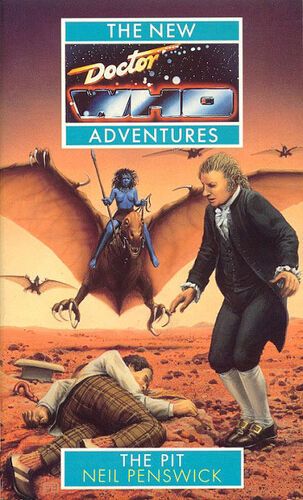
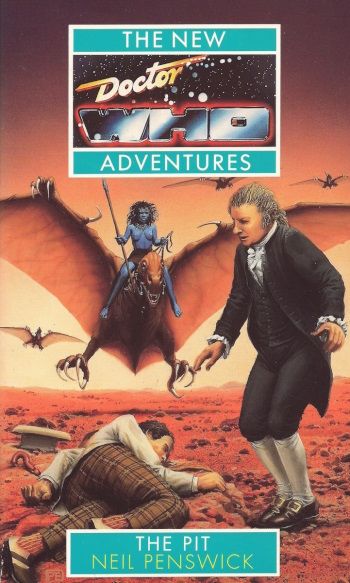
The Apocryphon of Neil: Revisiting The Pit


It’s been 11 years or so since I began my marathon trek through the Virgin New Adventures, those books chronicling the life and deeds of the Seventh Doctor after Doctor Who went off the air in 1990. I wrote about the first 9 books before setting aside any attempt to write about each of the rest of the stories. I don’t recall why. Perhaps because it was simply a rather large undertaking.

I did my level best to avoid summaries of the novels, much less spoilers, before I read them. However, after I’d read a book, I did seek out the opinions of fellow fans. The 12th VNA, Neil Penswick’s The Pit, was generally loathed. Received fan opinion of it was (and remains, I assume) that this tale is one of, if not the, worst VNA and is even in the top 2 of most horrible Doctor Who novels.

Baying packs of budding literary critics spewed their bilious commentary from blogs and forums alike and their words took me by surprise as I found that I rather liked The Pit. I didn’t find it to be the greatest Doctor Who tale ever nor the best VNA. There were definitely faults but all of the sheer derision heaped on the novel was unwarranted, in my opinion.

After a while of hearing and reading all of the vitriol, I vowed to re-read The Pit and reassess it. Had I been that far from the mark? A second reading always brings out new things in a text for me, elements that I hadn’t been looking out for because I was too busy trying to keep the plot in order. My vow, which was in truth more like an aspiration, was made several years ago but now, in 2024, I have finally fulfilled it.

As noted above, The Pit is #12 in the VNA series and I admit that I do not have an encyclopedic knowledge of everything that transpired in the 11 books that precede it. So I am hoping I didn’t forget something relevant. It’s Benny’s fourth appearance as companion. But, if I recall correctly, Ben Aaronovitch didn’t know much about here when he wrote Transit, her second outing, so she had a Nyssa pulled on her and was basically sent away for that story. And didn’t she just cruise around with some guy in The Highest Science? Her character got off to a slow start.


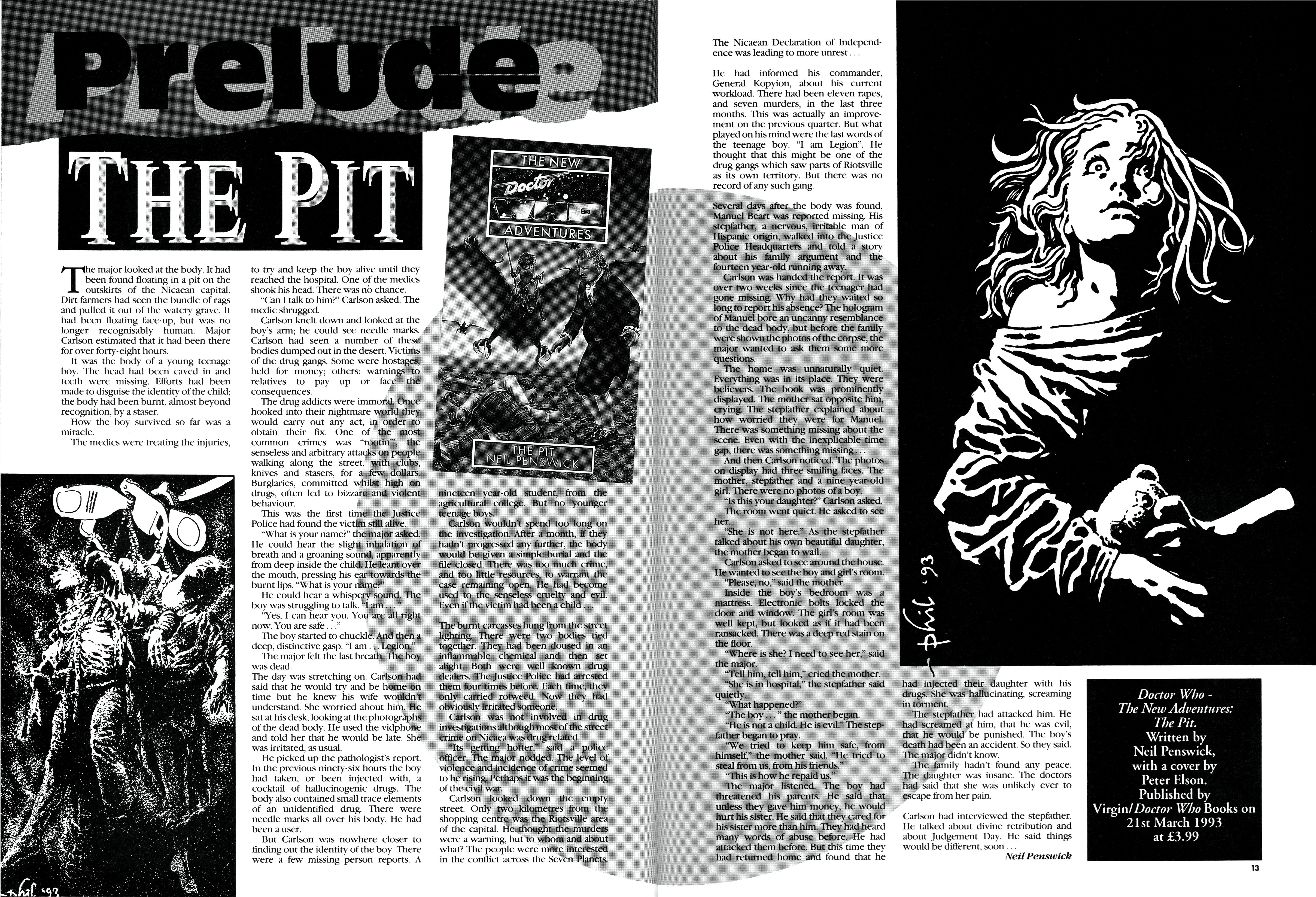
A prelude to The Pit was published in Doctor Who Magazine and it is a very dismal affair. A Major Carlson is at a crime scene where a body has been found. A teenage boy was discovered with his head bashed in and his body having been burned by a staser. Miraculously, he is still alive, though barely. Carlson asks the boy his name and he chillingly replies, “I am…Legion.”

Bible reference noted.

The prelude is short and gives us a brief introduction to the planet Nicaea (a city where the early Catholic Church did some important business) where drug use is rampant and murder on the rise. It ends with a grieving stepfather talking “about divine retribution and Judgement Day.” More Biblical allusions.

The novel begins, unsurprisingly, with a Biblical quotation - from Isaiah chapter 14. Verse 19 reads:

Yet thou shalt be brought down to Hell,
To the sides of the pit

Although Lucifer is mentioned in the verses here, I think they’re really about earthly kings, though perhaps there’s an analogy to be had. Whatever the case, “the pit” is a bad thing. (The concept, not the novel!)

A prologue introduces us to a Gallifreyan veteran of the Eternal Wars which saw the Doctor’s people fight the Monsters back in ancient times. This is Atraxi and he is the sole survivor of the horrendous conflict. Everyone from commanding General Liall a Mahajetsu on down to the lowliest infantryperson is dead except him.

This depressing intro gives way to the first chapter which takes place in the last several hours of DAY THREE, though we don’t know day three of what. The Doctor is behaving erratically and Benny decides it would be neat to investigate a solar system that mysteriously disappeared called the Seven Planets. The Doctor has never heard of it and neither hide nor hair of it is to be found even in the capacious TARDIS databanks. Off they go.

Nicaea is the capital planet of the system and things aren’t going well. Major Carlson, we learn, is a member of the Justice Police and there’s no shortage of work for him. Society on the Seven Planets is falling into disorder and chaos. There are food shortages, rampant drug use, and crime is on the rise, including a serial killer. To make matters worse, Carlson’s wife leaves him.

Carlson’s superior is named Kopyion and the leader of the Seven Planets holds the title Archon. The society is ruled over, not only by the Archon, but also a deliberative body called the Academy which seems to be a reference to Plato and not just the name. Philosophers, priests, and military personnel comprise the membership of the Academy.

We learn that chess has fallen out of favor and that the types that populate the Academy have turned instead to Snakes and Ladders. Chess demands skill but Snakes and Ladders best represents real life - the vicissitudes of existence and the capriciousness of Fate.

We also meet an antiques dealer named  Bulbir Singh Mann who is out to obtain a book of poetry by one William Ashbless using less than legal means. His buyer is Academician Brown who, in addition to being a scientist and member of the Academy, is also the leader of the opposition to the Archon’s rule.

The Doctor and Benny land on a planet but they’re not alone. A group of four androids are air dropped onto it to apprehend two shapeshifters, Butler and Swarf, who’ve absconded with the most powerful weapon in the Archon’s arsenal, “Pandora’s Box”. Also on the nameless planet are a scientist named Jarak and his wife Ell. They are there even though the planet has been declared off limits. Jarak is conducting some mysterious research.

An ominous red stain begins to spread across the planet like a nasty crimson weed. Anything caught in it freezes as if time stops for it and death quickly follows.

The Doctor and Benny run into Spike, the head commando android who was separated from his fellow troopers. At one point, our Time Lord hero suddenly disappears leaving his companion to stand there mouth agog. He literally is there one moment and gone the next. We eventually learn he has fallen through a wormhole and ends up in another world. In addition to running into the 18th century English poet William Blake there and becoming Virgil to his Dante, he also encounters a group of primitive people with skin painted blue and who ride pterodactyls. If that wasn’t enough, they also speak ancient Gallifreyan...

And so the plot fractures into several storylines. The Doctor and Blake ride the wormholes to various points in time and Earth history where they encounter various cultists wearing amulets featuring a snake wrapped around a globe; Benny is stuck with Spike on the mysterious planet; the remaining androids continue their mission and seek out the shapechangers; the shapechangers have enslaved some creatures called khthon who lug the Pandora’s Box around to its final destination, a castle. To make things interesting, the leader of the enslaved khthon, Chopra, can read the minds of others and see into the future. Lastly, we have storylines on Nicaea where Carlson is out solving murders and piecing together the sinister machinations of Kopyion.

For a book that falls just shy of the average VNA length, it sure has a lot of characters and many things going on. It’s a bit like Robert Altman decided to do Doctor Who with his pal David Lynch. Fans critical of The Pit for being convoluted perhaps have a point. Others note that certain matters were left unexplained. For example, how did Blake get to that other world? We never find out.

If Penswick’s propensity to not always adhere to typical storytelling conventions particularly closely is something that cannot be overcome, well, that’s fair. The Pit does have this feeling of trying to do too much without ever quite completing anything.

But on this second read, I think my initial take on the book was confirmed. Whatever it may lack in narrative acumen is more than made up by an uncanny vibe and various allusions that prop up a moody meditation on the eternal conflict between good and evil.

Whatever failings Penswick may have as a writer developing characters or making plot lines complete, his prose moves along at a nice clip and is dotted with humorous bits. One way this comes through is that the book is littered with instances of humor. Because the Doctor doesn’t say much to Blake and what he does say is mysterious, if not completely nonsensical, the poet thinks our hero to be an idiot. In another scene, Spike, the android commando, looks at Benny as if she were an idiot. Elsewhere we learn that on Nicaea there is an apartment complex named after Mikhail Gorbachev. Ah, the 1990s.

In another scene, Benny, Ell, and another android named Thomas have been locked up by one of the shapechangers. The jailers are the khthons and one of them falls for the old movie trick of having someone pretend to be sick and yell for help only to knock out the guard when he comes in to investigate.

“’I don’t believe it,” Bernice said, coming to the conclusion that the khthons didn’t have many cinemas.”

Towards the end of the book, there’s a spot where the severely damaged Spike closes his eyes. A couple carriage returns later we are back with the Doctor and Blake and witness the poet open his eyes. A minor match on action, true, but things like that make for more pleasurable prose.

Benny has a good reputation amongst fans and is considered by many to be one of the best things about the VNA’s. Fair. But, while I like Benny, she often times comes across as a dated 90s figure for me. That decade saw popular culture subsumed by irony and cynicism. It felt like everything had to imbued with snark and snideness and related in the most smarmy way. I spent my young adulthood here in Madison, home of The Onion, after all.

As I got older, I got tired of everything in pop culture being laced with sarcasm and sought out the genuine and the authentic. I wanted to hear what people felt in their hearts instead of insults. I didn’t want life to be a South Park episode.

For me, Benny’s sarcasm harkens back to that part of the 90s. In small doses, it’s funny and witty and I enjoy Benny. But when it becomes her primary contribution to a story, then I get turned off.

Penswick found a nice balance, for my taste. We get some sardonic commentary but also heartfelt emotion. She pokes fun at Spike but also fears him and, later, mourns for him.

The characterization of the Doctor, on the other hand, didn’t go so well. He’s not the kindly, avuncular mentor of the TV show who helps Ace mature but he’s also not the pragmatist who plays realpolitiks on a chess board. He begins cool and closed before a descent into a moody, sullen teenager who is either shrouded in silence or is spouting enigmatic phrases.

For a book that tackles the weighty topic of good vs evil (with an emphasis on the latter), I think the Doctor could have added more to the conversation. Instead he spends most of his time leading Blake through time, communicating in cryptic remarks and occasionally yelling at Blake to run. I’ve thought about it but cannot see how this quiet, brooding Time Lord adds to the themes of the story. He and Blake have some interesting conversations but they're few and far between.

When Kopyion reveals himself to be General Liall a Mahajetsu, the Doctor immediately prostrates himself before the ancient Gallifreyan. Why the submissiveness?

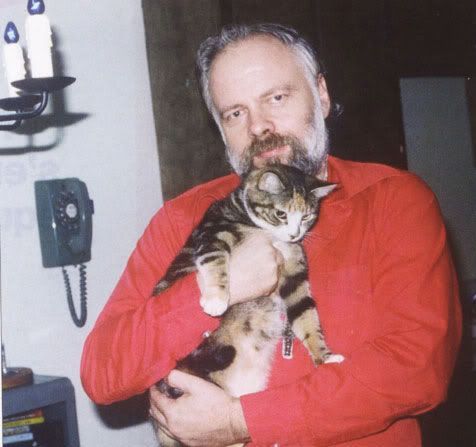
There are a lot of religious references here along with a few to the work of Philip K. Dick. Blade Runner came to mind several times (OK, it’s a PKD adaptation) including one instance where Spike, who initially thought Benny was one of the shapechangers, regards Benny as she sleeps. He wonders about her instead of simply feeling suspicious of her and views the archaeologist as perhaps something more than either an obstacle or a device to be used to fulfill his mission and then discarded, i.e. – killed. Roy Batty came to mind.
Immediately following this scene, Carlson reflects on his life and has to defiantly exclaim to himself that at least he’s better than androids. He comes across as rather pathetic in contrast to the androids which show more and more human traits over the course of the story.

There is even a reference to androids dreaming, though not about electric sheep.

It’s no coincidence, I think, that Spike, of all the characters, refers to the deities of the people of the Seven Planets and does most of the praying here. The androids seem to have more religious faith than the humans.

I’m not exactly sure what to make of a lot of the religious references here. Blake questions the Doctor about the existence of God but the Time Lord defers to faith and offers that the search for that being is a task taken at an individual level. The poet then asks how a benevolent God could allow the pain and suffering he has witnessed to which the Time Lord can only admit he doesn’t know.

Blake comments on the Fall of Man and says he seeks to understand it. At one point he tells the Doctor that humanity struggles against its own nature and its fall from grace. Perhaps he’s there to illustrate that there is a bit of the divine within us but a darker side as well. And perhaps if I were to read his Milton: A Poem in Two Books I might understand his inclusion here.
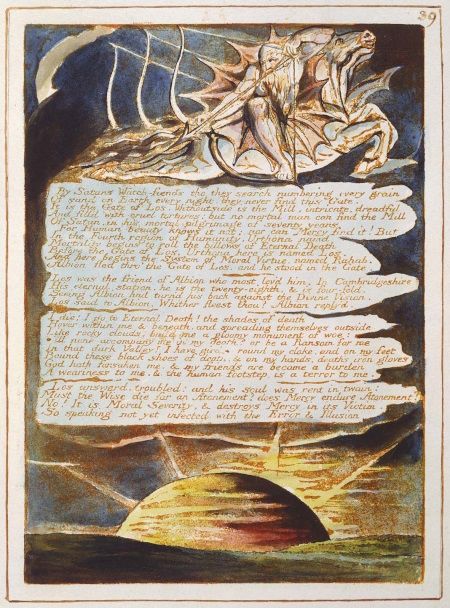

Blake’s sentiments are echoed by Academician Brown who, after explaining that men are mere animals that live for a time and then die, leans into human darkness and notes that “The Book” says we’re the product of original sin.

This leads me to note that the main supernatural religious figures here are the Prime Mover (God?) and the Form Manipulator (Satan?). I got big Gnostic vibes throughout the story but I suspect they mainly come filtered through Philip K. Dick and his VALIS period because I am not a scholar on the subject.
References to illusion, to reality being hidden abound here and I think it’s those that really give the story a Gnostic feel. I concluded that the Prime Mover is the demiurge. I dunno if there is a Satan figure in Gnosticism or a being that seeks to hide the truth behind of veil of illusion. Brown hypothesizes that “there’s a more powerful force in this universe than the Prime Mover” which lends credence to my own assertion that the PM is a Gnostic demiurge and that a more powerful deity - the real Big Wig - remains hidden.

Ooh! I learned that an archon is basically a handmaiden of the demiurge in Gnosticism and we’ve got one of those.

Chopra, the mind-reading khthon enslaved by the shapehangers, says he can see "beyond the veil of illusion". Later, the Doctor and Blake are in a truck and have driven through the wormhole to escape a baddie’s evil clutches. The Doctor notes that their environment is an illusion as the truck hasn’t yet run out of gas. The nameless planet is a fake. Behind the tree bark are wires and the giant snake turns out to be an android manufactured by Mirage Enterprises. During an argument with Academician Brown, Kopyion declares, "This is all appearance."

Another PKD reference comes when Ell is seemingly possessed by the bad guys and calls herself the “Empire That Never Ends” and Death. The Empire That Never Ends is a direct allusion to Dick’s VALIS.
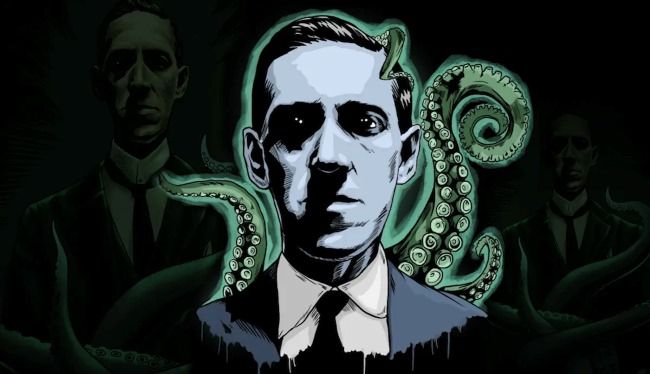

As for the main theme, good vs evil, it’s probably best realized in Kopyion’s fight against the Monsters, a.k.a. – the Yssgaroth, which seem to be The Great Vampires from State of Decay and given a very Lovecraftian name. There’s even a reference to something seeming to be a castle atop a rocket. He continues to battle against their intrusions into our universe and remains vigilant for cultists who wear necklaces that have a snake wrapped around a globe. To defeat his mortal enemies here, this ostensible good guy must kill millions by destroying the Seven Planets.

The Doctor decries the taking of innocent life but soon concedes the point. Besides, he cannot change history. Kopyion tells Doctor to never interfere with his work (to keep Vampires from entering our universe) again or he shall pay the ultimate price.

The Pit ponders humanity and illustrates our good sides and our hearts of darkness. Another example comes to mind: while there is civil unrest and rampant drug use on the Seven Planets, we also find out that Carlson is essentially a good person and that his wife left him and has gone and volunteered to provide medical aid to those hurt in the unrest.

Kopyion is perhaps doing the ultimate good by protecting our universe but he kills a lot of people in that pursuit.

Penswick deals with some weighty topics here, good & evil, human nature, the meaning of life. He does so in a thoughtful way, even if not within the confines of a conventional Doctor Who story. You know, the TARIDIS lands somewhere, the Doctor and his companion(s) become separated, and the Doctor eventually saves the day. 

I find The Pit to be flawed but fascinating. It has a great uncanny feel to it and Penswick doesn’t reveal things too early. He lets the mystery ride until near the end. I had a wonderful time trying to figure out what was happening and teasing out meaning from metaphysical tidbits. Plus, there was the simple fun of characters in peril and reading onwards to discover their fates. Some say the prose here is simplistic and boring; I say it's generally taut and well-paced. Harumph.

I had no problem with The Pit being a kind of morality tale where ideas take precedence over causality. How did Blake end up in the other world? Who was Benny’s guardian angel that mysteriously appeared in her dire moments of need? What were those mini-typewriters with messages for Benny? Products of a Great Deceiver? We never find out and these questions are really unimportant in the end. To need every loose end tied up neatly and for logic to win the day is the miss the point here. This story is a novelistic game of Snakes and Ladders where chance and random encounters abound.

I'm glad I read this a second time and I found that I enjoyed it even more. Perhaps its flaws were also thrown into sharper relief but I think I spent less time reading it as a VNA and took it more on its own terms.

The Pit is anything but your typical Doctor Who tale and it turns a lot of readers off because of this. But I enjoyed the mood and the interplay of ideas here. Like we humans, it’s imperfect but I found it easy to buy the ticket and take the ride.

11 February, 2024

Return to The Pit: Prelude Dismal

I've decided to revisit The Pit, a Doctor Who Virgin New Adventure novel. Featuring the Seventh Doctor, it's generally reviled and often held up as the prime example of the series at its worst. I rather enjoyed it on first read and am going to see if my initial impression holds up.

I began by reading the prelude from Doctor Who Magazine.

This must be the bleakest prelude of the bunch. It begins with a teenage boy who has been mutilated and burned and ends with his stepsister having been driven mad after being forced to consume drugs.

Uff da!

01 October, 2023

Chicago TARDIS 2023 Panel Suggestion

I have submitted my (first?) suggestion for a panel at this year's Chicago TARDIS:

The Pit: Great or Just Not Bad?

28 September, 2013

Love Hurts - Doctor Who: Love and War


Paul Cornell's Love and War has a very good reputation amongst Doctor Who fans. Indeed, it is just short of legendary and is generally considered one of the high points of the entire Virgin New Adventures series. Ergo I was very keen on digging into the novel. Once I was done I wished that I had never read about the NSAs. I knew too much about the story from having read DW forums and blogs. I can only imagine what it would have been like to have devoured this book upon its publication in 1992 oblivious to its dramatic revelations and unaware of the reputation it would gain in the years to come.

There will be spoilers in this post so anyone wishing to preserve a little bit of the bliss of ignorance would do well to leave now. I would also admonish folks who are contemplating making their way through the NSAs to, not only avoid my reviews, but to also steer clear of any chatter of them on the Internet. I don't mean to sound melodramatic here but, having read this book knowing a fair amount of what gives it its reputation, I feel that its impact was dulled a bit; like watching a film after seeing a trailer that gave away too much. You have been warned.

Love and War is a rather dark tale. It begins with Ace attending the funeral of her friend Julian and recalling a particular drive out in the country they took together. This tender, if bittersweet, moment gives way to the fate of a couple patrol ships in the far future on the look out for Daleks when they are attacked by one of the more eerie creations seen in DW, a giant sphere made of dead flesh and skin.

The Doctor and Ace land on the planet Heaven, which is rather bucolic until you find out that it's a necropolis. Humans and Draconians had been fighting for ages and the planet was declared a neutral zone where the war dead could be buried and their remains rest peace. The Timelord is keen on heading to the library as he wants to get his hands on a copy of The Papers of Felsecar. For her part, Ace is intrigued by a band of space hippies who wouldn't have been out of place at a Grateful Dead concert. They are gathered in a marketplace of Joycetown selling wares and making music. Our young companion finds herself smitten with one of them, a man named Jan.

Also on Heaven is Professor Bernice Summerfield who is digging up the ruins left behind by the original inhabitants. Curiously enough, neither she nor anyone else have ever found any remains of the Heavenites themselves. Bernice is a woman of 30 and, in addition to being in possession of a sharp tongue, she can also ride horse, acquit herself well in swordplay, and loves a stiff drink.

But all is not well on Heaven as we learn early on when a priest of the Church of the Vacuum, Phaedrus, sacrifices his friend Piers. Eldritch fibers are nourished by his blood and make their way into the gaping wound. In almost no time Piers' body is transformed into a Hoothi, a large fungoid creature covered in more of those filaments and writhing tentacles to boot. The Hoothi have tremendous psychic powers and are like the Borg in that they are a gestalt race. And if you thought that Sawyer from LOST was well-versed in the long game, well, he's got nothing on the Hoothi who are looking at the end game of a plan that has been in motion for a thousand millennia.

One of the elements that gives Love and War its reputation is that The Doctor keeps his cards close to his chest and is highly manipulative. He lets on what he knows in spurts and fits and just when you think he has finally shared everything, you find out that he still had a plan simmering on the back burner. Here, things get very bad as the Hoothi long game nears fruition. Filaments are infecting people left and right and even the dead, of which there are many, are reanimated by them and the Hoothi's vast powers. The Doctor devises a plan which involves sacrificing Jan to the Hoothi to get him aboard their necro-dirigible and appealing to his conscience so that he activates his superpower (summoning flame) to take out the mothership a la the Hindenburg.

This doesn't go down well with Ace who had fallen in love with Jan. She is furious with The Doctor and cannot even face him. When he approaches her, she threatens him. Cornell portrays her anger very well. It was truly sad and disturbing to read the passages showing how their relationship – the one I've enjoyed for literally decades – had been split in two. Ace can longer bear to be in his presence and so leaves The Doctor. You can read about how the TV show's writers had planned to have Ace leave had the show not been canceled and it was a million miles away from the grand betrayal here.

Considering all I've read about the NSAs, including this book, and how The Doctor becomes darker, more manipulative, and so on, these events, while shocking, didn't feel new. The Doctor did much the same thing on TV in “The Curse of Fenric”. In that story he forces Ace to confront her past and engages an enemy who has its own long game. He hurts Ace with insults to get her to lose faith in him to defeat Fenric. Now, that's not the same as sending Jan off to die but it's manipulation in both cases. It's a difference of degree, not kind.

Bernice ends up becoming The Doctor's new companion. It's a nice change. Bernice is not a teenage girl and has a different perspective on life. She is a woman of action and can hold her own in verbal sparring matches with the Timelord. I look forward to reading how she develops and fits into the adventures.

Love and War certainly lived up to its reputation. Quite aside from The Doctor and Ace's friendship being torn asunder, it is notable for delving into Ace's character. There's a lot of scheming to be done so The Doctor is busy concealing that and so we get a peek into Ace's heart. She falls for Jan, even if it feels more like a teenage crush than true love. While the whole love at first sight thing felt forced, I thought that Cornell handled it well from then on. I thought he captured the confusion surrounding teenage attraction.

Relationships set this book apart from the TV show. In addition to Ace's crush, Jan is also in love with a fellow space hippie named Roisa who is in turn in love with the group's priestess, Maire. So you've got Ace's crush, polygamy, and a homosexual relationship and, while this is an action/adventure tale at heart, all of these relationships and their attendant emotional complications give depth to the story. The agonies seem genuine even if the relationships aren't fully realized on the page.

An aspect of the story found interesting was how Cornell foreshadowed the actions of our two heroes. In Ace's case, her relationship with Julian prefigured the one she had with Jan. For The Doctor this came in an odd passage in the guise of one of Ace's dream in which he meets Death again, the first time having been in Cornell's previous NSA Timewyrm: Revelation. Here Death accuses the Seventh Doctor of having “killed” the Sixth Doctor by maneuvering the TARDIS into the Rani's tractor beam (in the TV story “Time and the Rani” - the first to feature the Seventh Doctor. This will be contradicted in 2005's Spiral Scratch.) so that he may regenerate and become Time's Champion while Sixie becomes the Valeyard. (This the first story to refer to The Doctor as Time's Champion.) The Doctor offers his life for Ace's, saying that he'd be good company for the Eternals. I guess this Death is an Eternal, a race we first met on TV in “Enlightenment” with the Fifth Doctor. Unfortunately for Jan, Death rejects The Doctor's offer and asks if he has a suitable replacement. Presumably all of this myth-making will be relevant in future stories.

In addition to all of the tweaking of established Doctor Who conventions, Love and War also succeeds because of Cornell's writing. On one hand this is a fairly standard DW story. It has the feel of a Fourth Doctor horror story and has a base under siege segment. We are strung along as to the nature of the bad guys and their stratagem while we are also kept in the dark as The Doctor schemes away. This is the war part of the title and Cornell contrasts this with love. There are the romantic entanglements as described above but there is also Ace's love for Julian and the Platonic love that she and The Doctor feel for one another. Cornell deftly wove these competing yet complementary strands together for an utterly engaging adventure with great emotional resonance.

21 September, 2013

Regrets, I've Had a Few - Doctor Who: Nightshade


Nightshade is the first Virgin New Adventure to not be a part of a mini-series. No Timewyrm and no silver cat. Instead Mark Gatiss gives us a straight-ahead stand-alone episode. Fans of the Nu Who will know Gatiss as having starred as Professor Lazarus in “The Lazarus Experiment” and Gantok in “The Wedding of River Song”. In addition, he has penned several Nu Who episodes as well as having written various Doctor Who audio dramas. Having become a fan at as kid, he must be living the DW fan dream.

The book's prologue features the First Doctor, described as having “piercing eyes” and a “haughty mouth”, stealthily detaching himself from a group of Time Lords and stealing a TARDIS. Although this was shown in last season's finale, I believe that this is the first time our beloved hero's departure from Gallifrey was ever described or portrayed.

The action then moves to the town of Crook Marsham in 1968 where Jack Prudhoe is drowning his uxorial sorrows down at the pub. While nursing his drink, he notices a figure in red outside in the rain. He looks closer and sees that it's his wife but as a young woman. Back in the days when they were happy. Jack rushes after her but meets an untimely demise out on the moors. Over at the Crook Marsham retirement home actor Edmund Trevithick, best known for his role as Nightshade (Americans - think Carl Kolchak, the Night Stalker), is living out his remaining years. One night as he lay dreaming, he is awoken as the windows of his room are blown out and a sinister voice whispers, “Nightshade...Nightshade...”

Amidst these strange happenings, the TARDIS materializes. Ace is in a good mood but The Doctor isn't. The torpor of the previous novel, Cat's Cradle: Witch Mark, has reemerged. He is irritable and listless. He scolds Ace in an unusual outburst when she tries on grey tunic with a Coal Hill School badge and demands she take it off. (That would be the school uniform of his granddaughter, Susan.) And so, when they head out into the town, Ace heads to the local pub and The Doctor seeks some quiet and solace at the local church and monastery.

Ace heads into the same pub frequented by Jack Prudhoe. Ace she whiles away the time, Vijay Degun, an assistant at the local radio telescope pops in and enquires about using the phone as the lines at the telescope are out. Oddly enough, the pub's phone is dead too. Intrigued, Ace hitches a ride in the trunk of Vijay's car. For his part, The Doctor engages the abbot who offers him a book with some history of Crook Marsham. During the English Civil War, the town's castle was destroyed after an eldritch light burst through its wall scaring the bejeezus out of Loyalist and Roundhead alike. The castle is long gone and the site was merely a vantage point for admiring the area's natural beauty until the radio telescope was erected upon it.

Ace finds that things at the telescope are a bit hectic. They are getting enormous energy readings that are pushing needles into the red but none of the scientists can figure out what this energy is nor exactly where it's coming from. Back in town, Betty Yeadon is drawing a bath when the corpse of her brother Alf, who was killed in the Great War, slowly emerges from the tub...

Nightshade is classic Doctor Who. More people die after confronting a memory from their past and eventually the main characters hole themselves up in the telescope facility giving us a tried and true base under siege story. That the baddie lurks in the earth and messes with those on the surface reminded me of the great Hammer film Five Million Years to Earth.

While a good sci-fi horror story, Nightshade does some nice work thematically as well. Gatiss does a nice job of drawing characters who are in some way haunted by their past and thereby make good prey for the presence lurking underneath the soil. And it's not just the townspeople who are confronted by their pasts but also The Doctor who meets an apparition of Susan. The book may be written in a style that younger DW fans can handle, but the notion of reflection upon one's past and how the past can influence the present is a theme that only adults can truly appreciate. Nightshade may not be up there with Greek tragedy as commentary on the human condition but it does offer some grist for the mill.

In Cat's Cradle: Witch Mark The Doctor was fed up with always having to be the hero. Here that trend continues but is marked by a more pensive Time Lord. The classic TV series didn't find The Doctor engaging in much omphaloskepsis but here we find him contemplating his past on a personal level and being forced to confront it. Ace doesn't contrast with the TV very much. She is her usual spunky self rallying the troops and enthusiastically confronting evil. I suppose that she does come across as being a bit more independent than she did on TV. While she continues to look to The Doctor for answers to questions beyond her ken, she is very proactive and does a lot more on her own. “Remembrance of the Daleks” came to mind as Ace finds herself attracted to Robin Yeadon, Betty's son, just as she had a crush on Mike Smith in that TV story. Nightshade also harkened back to “Remembrance” with the racism of Professor Hawthorne who works at the telescope. In the TV show the issue was brought up by a sign in a boarding house whereas here Hawthorne becomes very outspoken in his dislike of non-whites and Vijay in particular.

For the most part, Nightshade revels in the conventions of Doctor Who and, insofar as these go, it's a fun stab at horror. But it also builds upon elements of the classic show incrementally, especially with regards to Ace. The big change is in the portrayal of The Doctor. He isn't just a crusader for good that can make snap judgments on the fates of millions, but he is also an individual that must deal with his past on a personal level. Here he seems to feel regret at how his relationship with Susan turned out.

What puts Nightshade a cut above the average DW story is that Gatiss not only gives us a dark, rainy, and isolated Crook Marsham as the setting for a creepy tale of horror, but also characters whose hearts are like that with shadows casting a pall over them. I suspect that this more troubled, introspective Doctor will continue to be explored in the New Adventures.

02 September, 2013

The New Adventures Continue: Cat's Cradle Trilogy


Doctor Who's New Adventures began with the Timewyrm quadrilogy and continued with the Cat's Cradle trilogy. The three stories here are linked much more loosely than the previous series with only a silver cat being the common thread.

Cat's Cradle: Time's Crucible gets things going. It was written by Marc Platt who also wrote “Ghost Light”, one of my favorite stories from the television series. That episode began life as a much different story which involved The Doctor returning home to Gallifrey. The story was radically changed for television although Platt would later adapt his original idea into Lungbarrow, the fin*-al New Series adventure, still five years down the road.

But Platt didn't let go of his affinity for Gallifrey and threw some history of the Time Lords' planet into this novel. We get a glimpse of ancient Gallifrey as its Enlightenment is just beginning. The Pythia rules with an iron fist, abetted by her gift of second sight. But her days are numbered as Rassilon and his cohorts are looking to overturn the hegemony of faith and superstition and replace it with an ideal of reason and science. The Gallifreyans are not yet Time Lords but Rassilon has begun the process of mastering the fourth dimension. A proto-TARDIS has been constructed and is ready for its first mission.

Meanwhile The Doctor and Ace are enjoying lunch in England when reality suddenly begins to twist and contort around them. A mysterious silver cat appears and lures them back into the TARDIS where an alien creature of some kind has breached the ship's defenses and lies between the inner and outer doors. The Doctor runs off into the interior of the TARDIS in an attempt to expel the intruder but his plan goes awry when the TARDIS collides with the Gallifreyans first time ship, the Time Scaphe.

Ace finds herself in a city of eldritch buildings that are abandoned. She runs into what turns out to be the crew of the Time Scaphe. One of the them, Vael, is arguing with the rest. Vael has betrayed his fellow Chronauts and pledged his allegiance with The Process, a large slug-like creature with a mouth full of vicious-looking teeth at one end that curls up and rolls around, leaving a trail of slime wherever it may roam. The Process has enslaved the Chronauts and has them seeking out a stolen future.

For his part, The Doctor is nowhere to be found and Ace sets out to find him. She runs into a teenage boy named Shonnzi who communicates with The Doctor in his dreams. Ace also discovers that the realm she is in is bordered by other duplicate realms which are offset in time. And so, while the Chronauts she first met are older and have forgotten who they are and where they came from, there are younger versions who have just arrived. It turns out that the landscape around everyone is the TARDIS split asunder and that silver cat is a corporeal form of its warning system.

Platt has a myriad of good ideas here but the story just doesn't gel. I really enjoyed the parts of the story on ancient Gallifrey. It was nice to get a view of The Doctor's homeworld that wasn't a narrow view of a stodgy and aristocratic hierarchy. Plus we witness the ascent of Rasillon. Unfortunately the rest of the book is a mess. For one thing, the Process is a rather bland villain. It, well they, actually, as there are two of them – the same being from different times – don't do much beyond roam around leaving slime trails and mindlessly yelling about the necessity of finding the future. They are petty tyrants instead of either complicated, fully-realized actors or wonderfully diabolical bad guys who chew the scenery like there's no tomorrow. And while I loved the notion of multiple iterations of a city all existing in different time streams yet physically abutting one another is a very neat idea, as is multiple groups of the same people being displaced in time, the story just doesn't do anything interesting with these ideas. The interesting elements of the story are relegated to the background while Ace wanders and runs into people who complain and bicker and a bland villain issues threats and blathers on. Cat's Cradle: Time's Crucible is just never able to fully-realize all the wonderful elements that Platt came up with.

Cat's Cradle: Warhead was written by Andrew Cartmel, the show's script editor during the Seventh Doctor era. I think the novel marks the first time Cartmel has produced a Doctor Who story of his own instead of editor those of other writers. The cover is highly reminiscent of that of Iron Maiden's Somewhere in Time which put me in a dystopian, Blade Runner-esque frame of mind. Indeed, the earth of the near future in Warhead is dystopian. Pollution ravages the environment and, instead of the Tyrell Corporation, we have the ominous and powerful Butler Institute.

The book begins with The Doctor laying a trap. He visits Shreela, a science journalist, who lies in hospital dying from the poisons now common in the environment. He asks her to do one last thing before she passes and that is to publish a story that links certain proteins in the blood to telekenesis. In publishing this story, The Doctor hopes to get the head of the Butler Institute, Matthew O'Hara, to make a move.

The Doctor breaks into the offices of the Butler Institute in New (New New?) York to gather information. There he meets Maria, a cleaning woman, who helps him. In a nice, albeit mournful, digression, Cartmel gives us Maria's backstory. She grew up in California where partied as a youth but found her life thrown into chaos after the death of her love, Jerome. She moved to New York but she found her life plans hindered by economic migration laws. Tragically, she would die a prolonged death owing to both the toxic air outside and the poisonous cleaning chemicals she used everyday.

In another tangent, Cartmel has The Doctor meet up with a serial killer named Bobby Prescott who has a bit of information that our hero needs. Again, we get a nice, although very disturbing, digression. Prescott's tale, relating how things used to be better, emphasizes the corrupt nature of the society in which the story takes place. With this information, The Doctor sends Ace on a mission to Turkey where she recovers a drum. Drum as in barrel, not percussion instrument.

Inside the drum is a teenage boy named Vincent who has been embalmed in some kind of chemical cocktail. Vincent has the unique ability to channel the mental energy of others and focus them into a burst of telekinetic power. He too has a role in The Doctor's plan which is to foil the machinations of Matthew O'Hara.

Cat's Cradle: Warhead is an unqualified success. Cartmel constructs a believable dystopian future that sees the characters roaming multiple locations around the world in a way that the television series never could. Yet he also connects his story to the TV show. Shreela is a friend of Ace's that we met in “Survival” and the evil Butler Institute and Matthew O'Hara brought the Third Doctor story “The Green Death” to mind. There are some fun action sequences and a good old fashioned shoot out. But what stands out most is characterization. The Doctor is scheming and manipulating and makes for a nice parallel to O'Hara who is less an embodiment of evil than a man who has lost his moral compass and is using his power for the wrong side. Ace is an action hero here alternately dodging bullets and letting off a few rounds. The real treat is how subsidiary characters like Maria, Prescott, and Vincent are all given backstories. Warhead arguably doesn't twist or stretch the Doctor Who formula but it is a fun story that fleshes out characters who, on television, would have been little more than cardboard cut outs.

The trilogy comes to a close with Cat's Cradle: Witch Mark and see the series venture into fantasy territory.

The TARDIS lands in the Welsh village of Llanfer Ceirog which The Doctor has apparently visited previously as he knows Old Hugh and his wife Janice. All is well and bucolic but, being Doctor Who, the pleasantness can't last for long. And it doesn't. Ace wanders the countryside and finds a mysterious stone circle but is chased away by an ornery Emrys Hughes upon whose land Ace was trespassing. She returns and tells her story to everyone. At first The Doctor is keen on R&R and refuses to investigate but, upon hearing that a village was once located on Hughes' property, he becomes intrigued and has Ace take him to investigate. They arrive at night to find the stone circle populated with lights.

But unexplained lights in the middle of the night are the least mysterious things happening. A bus has crashed on the M40 (not quite sure where this is exactly other than a more populated area not too far away) and no one survives. There are a couple odd things about this tragedy. First is that the only person the police can identify is the driver, Selwyn, who is Emrys Hughes' brother. Secondly, all of the passengers are wearing new clothing, are carrying suitcases full of cash, and some of them have a peculiar birthmark on their necks. Back in Llanfer Ceirog the local veterinarian delivers a foal and notices that the mare has a wound on her forehead. Poking around the hay he discovers a horn. Back at home, he calls a number in an ad asking for people to report any sightings of strange animals. The ad was placed by Inspector Stevens, a paranormal investigator and the laughing stock of Scotland yard who is also investigating the bus crash. Lastly there's a couple of American boys who are hitchhiking around the UK. They wander through the forest surrounding Llanfer Ceirog and find an injured centaur. After reporting what they've found to the local constabulary, the pair are shocked that he merely pours gas on the creature and burns it alive.

The Doctor figures out that the stone circle is actually a teleportation device and he and Ace find themselves whisked off to a land called Tir na n-Óg. It isn't long before they are taken prisoner by a group of humans and taken to their leader. The leader, Dryfid, explains that there is discord in the land now that the sun has disappeared. A delegation had been sent to the home of the god Goibhnie to ask that he restore the sun but it didn't go particularly well. And so they have devised a plan to use the stone circle/transmat device to take them to Earth. Wanting to remain oblivious to the folks on Earth, they have decided to leave the other residents of Tir na n-Óg behind and they are none too pleased. These include unicorns knows as Ceffyl and the Firbolg which are centaurs.

Dryfid refuses to let The Doctor and Ace return to Earth but he does let them seek out Goibhnie who turns out not to be a god after all...

Witch Mark is another fun entry in the New Adventures. Inspector Stevens reminded me of Fox Mulder although the novel pre-dates The X-Files. The storyline that takes place on Earth had the vibe of The Wicker Man though it was inverted a bit as Stevens was not a skeptic. The scenes taking place in Llanfer Ceirog were really classic DW with strange events and weird creatures in a rural village. The adventures in Tir na n-Óg are less successful as the build-up of strange, unexplained events is replaced with expository scenes and action but author Andrew Hunt gets credit for letting the mysteries unfold in their own time. A lot of DW stories reveal everything too soon leaving a large chunk of time with The Doctor and his companions, if they're not imprisoned, running around from dead end to dead end until a window of opportunity presents itself for the final victory. Here the Earthly conundrums give way to one cental mystery, namely that of Goibhnie's identity. In the end, the central problem is wrapped up a bit hastily but there's no denying the fun had along the way.

20 August, 2013

And So It Begins: Doctor Who's New Adventures


After Doctor Who went off the air in 1990 Virgin fiction editor Peter Darvill-Evans obtained the rights to publish original stories for the series. The Virgin New Adventures kicked off in 1991 with the promise of "stories too broad and deep for the small screen". The series continued for six years and 61 titles. Some of the authors were associated with the TV show in its final years: Andrew Cartmel was teh script editor for Sylvester McCoy's era; Ben Aaronovitch wrote Remembrance of the Daleks and Battlefield for the small screen while Marc Platt is responsible for one of my all-time favorite Doctor Who stories, Ghost Light. Virgin also recruited some authors who eventually work on the new series. Indeed, Russell T. Davies, the man who resurrected the show in 2005, contributed Damaged Goods to the NAs. Paul Cornell adapted his NA, Human Nature, for the Tenth Doctor and Martha while Kate Orman's Night of the Living Dad became "Father's Day". But it all began with the Timewyrm Quadrilogy.

Timewyrm: Genesys by John Peel was the first NA to be published. The Doctor and Ace travel to ancient Mesopotamia where they meet up with Gilgamesh and the titular villain. The Timewyrm was once a woman Qataka from the planet Anu. Her experiments with mind control were not welcomed by her people and so she was put to death. Before her execution, however, she managed to offload her own mind into a snake-like cybernetic body which fled Anu. Qataka's people followed her and managed to destroy her ship but she was able to get away in an escape pod. The pod landed in ancient Mesopotamia and she adopted the name Ishtar.

While the Timewyrm is a pretty neat villain, the rest of the story is very middling. The Doctor and Ace don't resemble the ones walking across the field in the end of Survival that much. At times their bickering read more like Sixie and Peri than Seven and Ace. The story involves a lot of running back and forth between the cities of Kish and Uruk and visiting the temples at each. Dealing with Gilgamesh here and having skirmishes with the Timewyrm there. Frankly, I didn't find very much breadth or depth here. Gilgamesh is a hyper-generic cliché who wants nothing more than to eat heartily, fuck all the maidens he can, and smite his enemies. On the plus side, he has a Neanderthal named Enkidu as his companion who reminded me of Nimrod from “Ghost Light” which I had watched not long before reading the book. While Enkidu is not a particularly well-developed character, he does have a couple conversations with Ace about his loyalty to that goombah Gilgamesh. Ace reacts very badly to the social mores of the time she finds herself in and these conversations at least hint at something interesting, namely, the relativity of cultural norms. It's not a theme that is deeply probed by any means but it was nice to see it pop up.

For the most part the characters here are cardboard cut-outs and the cities of Uruk and Kish are Potemkin villages. Peel doesn't manage to make these places come to life. Uruk was the metropolis of its day yet the book is unable to convey this and sticks to a couple buildings and various hallways just like the classic series did. Indeed, most of Timewyrm: Genesys comes across like a very generic story from the 1970s. About the only things here that would have felt out of place in the TV show was Ace using a wee bit of profanity and an adolescent priestess named En-Gula wandering around in a profound state of undress.

The story ends with the consciousness of the Timewyrm escaping into the TARDIS circuitry which is ejected by The Doctor. Unfortunately for him, the Timewyrm melds with the circuitry and takes on the ability to travel in time and space.

While Timewyrm: Genesys was not a good start to the NAs, Timewyrm: Exodus improved matters considerably. DW stalwart Terrance Dicks does a nice job of writing the Seventh Doctor and Ace, characters which he never wrote for television.

The TARDIS takes our heroes to London in 1951 but they find that things are not as they were recorded in the history books. Here Hitler won World War II and Britain is something like a Nazi protectorate. Paramilitary Freikorps units roam the streets hassling Jewish merchants and basically acting like they own the place. The Doctor resolves to find out how history was diverted and put it back on the right course.

The Doctor and Ace have a run-in with the Freikorps but manage to bluff their way out of arrest with The Doctor posing as a Nazi official. They then witness a man being stabbed who passes an envelope to The Doctor before plunging into the Thames. They are eventually turned in by an informant and meet one Lieutenant Hemmings who figures into a later book. Hemmings tries to get the travelers to talk and admit they are with the resistance but fails. Instead The Doctor and Ace go free posing once again as a Nazi official and his assistant. Curiously enough, a (the?) TARDIS materializes near him at one point, he enters, and is whisked away.

In order to kickstart the process of getting history back to where it should be, our pair travel back to 1923 where they find Adolf Hitler during the Beer Hall Putsch in Munich. Much to Ace's incredulity, The Doctor saves the future führer. They meet up again in the 1939 of this alternate timeline in Nuremburg and The Doctor becomes an aide to Hitler.

Timewyrm: Exodus is something of a sequel to the Second Doctor television story “The War Games” in that it features the return of The War Chief, a fellow Timelord, who is disguised as Doktor Kriegslieter here. He is out to mess with history yet again. Like The War Chief, the Timewyrm had the same idea but her plans took a turn in the wrong direction when she became trapped inside of Hitler.

Unlike the previous book, the dashing back and forth around Germany and London here is a lot of fun. I mean who doesn't like to see Nazis and their sympathizers being deceived at every turn and imploding? The characterization is a bit thin but Dicks manages to bring Hitler to life well. He's not portrayed as simply being evil incarnate but as a human being with foibles like the rest of us who is extremely evil. That The Doctor aids Hitler brings up a lot of moral questions but, unsurprisingly, the book avoids them. While Dicks may not mine the moral landscape here, he does treat The Doctor's actions with some seriousness. They didn't feel cartoonish and Dicks at least acknowledged the dilemma.

Timewyrm: Exodus may not be a great story but it was genuinely a lot of fun. It had a brisk pace but not too brisk. It was a hoot to read as The Doctor toyed with Adolf Hitler. In addition we had The War Chief's machinations and Dicks kept us guessing about how the Timewyrm fit into things. In the end The Doctor frees her from Hitler's body and sends her off into the Time Vortex.

In Timewyrm: Apocalypse the TARDIS again brings The Doctor and Ace to a new world in pursuit of the Timewyrm. This time it's the planet Kirith. The natives live seemingly perfect – too perfect, perhaps – lives. Their history says that the previous inhabitants destroyed themselves in nuclear war and that they, the current inhabitants, were rescued from a primitive state by the Panjistri and given civilization.

The Doctor and Ace rescue a young man named Raphael who had been pondering his memories of a friend that he supposedly never had. Ace befriends Raphael and they eventually head out on a little adventure to the harbor where they discover a Panjistri genetics lab with a very large and very mean experiment inside. Meanwhile The Doctor is shown some ancient ruins that are, in fact, not particularly ancient. The Panjistri have obviously pulled the wool over the eyes of the Kirithians.

It turns out that Kirith and its inhabitants are merely part of a grand experiment being carried out by the Panjistri who reside on the planet's nearby moon. The Panjistri are led by The Grand Matriarch whose body is inhabited by the Timewyrm and is trying to delay the destruction of the universe as predicted in the prologue of the book which dealt with the mathematicians at Logopolis. Of course her plans are foiled by The Doctor and she is once again banished into the aether.

Timewyrm: Apocalypse just never really clicked with me. Kirithian society was rather bland – just another bunch of “primitives” for The Doctor to enlighten. The Grand Matriarch is something of a badass and had a suitably convoluted stratagem for achieving universal domination but she and the Timewyrm come into the story too late for them to rescue the story from its doldrums.

Timewyrm: Revelation completes the quadrilogy and establishes an identity for the New Adventures that is all its own. The first three novels were essentially souped-up stories from the television series but this novel takes Doctor Who somewhere new. It has an antecedent in The Ultimate Foe but it takes that adventure in The Matrix to a whole new level. Imagine if The Pilgrim's Progress had been written by Philip K. Dick. This is Doctor Who's The Lamb Lies Down on Broadway.

It opens on Gallifrey where a hermit sits underneath a tree tending a flower before moving to the village of Cheldon Bonniface in 1992 and St. Christopher's church. Inside the Reverend Ernest Trelaw converses with two new parishioners, Peter and Emily Hutchings. Oh, and St. Christopher's is inhabited by a spirit, an intelligence named Saul who is familiar with The Doctor. No one there, including Saul, can shake the feeling that The Doctor will arrive soon. And in a Perivale schoolyard, a bully named Chad Boyle has decided that he's had enough of a classmate named Dorothy – our future Ace – and so he kills her by bringing a brick down on her head.

With the introductory material out of the way, the TARDIS lands in Cheldon Bonniface sometime in the middle of the nineteenth century. The Doctor reacquaints himself with his old friend George, an innkeeper, over a game of chess as Ace retires for the night. Her sleep is disturbed when she is attacked by a figure clad in an astronaut suit – I couldn't help but think of “The Impossible Astronaut” here. Ace flees into the woods but soon finds herself on the surface of the Moon. For his part, The Doctor discovers that George is in fact Hemmings from Timewyrm: Exodus whom we last saw entering a TARDIS which immediately dematerialized. Hemmings believes he is in the employ of a Norse god while the astronaut turns out to be Chad Boyle who is intent on stalking Ace. Plus St. Christopher's is brought to the Moon for good measure.

And thus it begins.

I will forgo any more plot synopsis and instead focus on author Paul Cornell's writing. The rest of the book only gets more surreal and I really appreciated the bizarre tale he wove here. There is a scene early on in the TARDIS which foreshadows the rest of the story. In it The Doctor enters the room with a couple of mugs of hot cocoa and he converses with Ace about dreams. Our Time Lord is very pensive and the scene has a patina of melancholy that gives it a fragile beauty. There's no running down corridors here but instead it just has a mood that I can relate to.

As Ace evades the murderous intent of her childhood nemesis, The Doctor is forced to confront his conscience in the form of his previous incarnations. If you think the new series pioneered The Doctor having any sense of guilt or affection for his companions, think again because it's all in here. At one point The Doctor concludes that the only way to make things right is to have Ace die but he relents and resolves to find another way as killing her, even for the greater good, is simply not the right thing to do. He cannot let that happen after having seen the fates of Adric, Sara, and Katarina. The Doctor dealing with pangs of guilt provides a relatable emotional core for the story around which the surreal action can take place.

On a stylistic note, I really like the presence of St. Christopher's and its inhabitants on the moon. They make for something akin to a Greek chorus. Scenes there occasionally heighten the tension but also provide some respite from the action, the emotional turmoil, and the surreality of the main story. They provide welcome breaks allowing the reader to contemplate the tale and add their own little brand of weirdness into the mix.

All in all the Timewyrm saga is a mixed bag. I am hoping that the New Adventures continue in the vein of Revelation which delves into The Doctor's psyche, his relationships with his companions, and throws in a surreal tale to boot. These elements make for a far more interesting “adult” vision of Doctor Who than merely adding some nudity and profanity.

Next up is the Cat's Cradle trilogy.