02 February, 2007

Going Underground: Mulholland Drive TV Pilot (4)

Heading into the homestretch of the pilot, the casting agent and her assistant lead Betty out of the room where the audition took place. Betty is taken to the set of Adam's film and this scene plays out as it does in the film. Next is the incredibly spooky scene with Betty and Rita going to visit Diane Selwyn. It too is much like its counterpart in the film but with some differences. The shot of the red-haired woman having her bags put into the trunk of a taxi is missing. Plus there are some additional shots of items in apartment #17 – a stairway and a painting.


Back at Aunt Ruth's apartment, the whole deal with Rita's hair unfolds as in the film. But a shot is present here that is not in the film. It's a panning shot of the money on the table followed by Rita's purse. The camera stops on the purse and moves inside to reveal the blue key.


The pilot ends with a final Steadicam shot. It is night and the camera winds its way behind Winkie's Diner to reveal the creepy homeless man (played by a woman) sitting next to a fire.


This is a different shot than the one in the film. A quick fade and a nod to the production company.


And that is the last glimpse we get of what might have been. How would the series have continued? From this article:

Lynch did hint to the executives that Adam and Betty would have a romance, which reassured them, and said that in the course of the first year Betty and Rita would "cross": Betty would be sucked into the city's underbelly, and Rita would be redeemed. And, in response to politely insistent queries, Lynch promised that when Rita's identity was finally revealed it would only open up other mysteries.

The article also indicates that at least some of the Club Silencio material was shot for the pilot as well. Of course the hot lesbian scene was done in 2000 as was the one with the old couple's reappearance.

I haven't found anything indicating exactly how the series was to progress excepting the above and Lynch never really says what his films are about so who knows what the TV series would have been like. Considering how the film turned out and that Lynch was coming off Lost Highway at the time, I highly suspect that at least some of the double-identity thing would have been present. Regardless, we fans ended up with a kick-ass film and I am now really psyched to see Lynch's latest, Inland Empire, on Sunday as I and The Dulcinea will be trekking to Chicago for the occasion.

Thanks to DavisDVD. Keep an eye on their site for their MD pilot section to be reinstated in the Miscellaneous section under "Alternate Cuts".

Going Underground: Mulholland Drive TV Pilot (3)

Back at Aunt Ruth's apartment, Rita explains that she thinks her name is Diane Selwyn. Looking through the phonebook, a number is found and she calls it. Unfortunately, the voice on the answering machine is not hers.

We then cut back to Adam's house where a big mobster tough guy enters looking for Adam. The pilot adds several shots here that are not present in the film. To begin with, there's cuts to Lorraine and Gene lying unconscious on the floor after Kenny, the big guy, is finished with them.


We also see Lorraine's attempt to clean her jewelry.


Before Kenny leaves, he breaks some golf clubs over his knee. We also witness him return to the limo and tell the passenger in the back seat of Adam's absence.


It is noteworthy that the song "Bring It On Home" by Sonny Boy Williamson plays during this scene in the film but not in the pilot.

It is now night and we find Adam at a sleazy hotel and he is told by Cookie that two guys have been looking for him. After this conversation, he calls Cindy where is finds out the The Cowboy wants to speak with him. Cut then to Betty and Rita looking at a map trying to find out where Diane Selwyn lives. Another cut to the outside of the apartment and a boom shot which takes us to the apartment above where Wilkins lives with his hound. Adam calls seeking a place to crash and Wilkins offers his.


This scene is completely missing from the film and is replaced with the one featuring Louise coming to Betty's door and telling her that she isn't Betty. Also, Coco delivering the fax is missing from the pilot. Presumably this was shot in 2000.

Next up is Adam's encounter with the mysterious Cowboy. This scene is the same here as it is in the film except that the shots of Adam driving and approaching the corral are backed by a martial snare drum instead of the eerie music in the film.

Back in Hollywood, Rita helps Betty rehearse her lines for her audition. Missing here is the scene with Coco coming to the apartment and noticing Rita. A scene then follows that is absent from the film. Detective Domgaard enters McKnight's office bearing the wallets of the men from the wrecked limo. They are hand-stitched Italian full of phony credit cards and no IDs. Domgaard offers that 1 of the men is still alive and under the care of a Dr. Scott and he proceeds to go into this great Lynchian description of the guy's wounds and makes Scott out to be rather odd.


The next day Betty goes to her audition. The pilot features some old movie music while the film has what I noted as "generic strings". Missing here is Betty's cab ride to the studio.

The penultimate commercial break enters here.

Going Underground: Mulholland Drive TV Pilot (2)

Coming back from commercials, the pilot picks up with Ray, whom we saw at the meeting, walking up a short flight of stairs.


On the wall of the landing is a keypad and he punches in a code. After that he turns around and walks up another short flight of stairs and opens a door which leads into a long hallway. Walking to the end, Ray then punches in another code and he enters an elevator. He ends up in an office and encounters Mr. Roque's receptionist who tells him that he can go right in.


The chat between Ray and Mr. Roque is slightly different. Here Ray asks, "You want him replaced?" instead of telling Roque that Adam won't take the replacement. Plus Camilla Rhodes' name is never mentioned. As they speak, we cut to a brief shot of the Castigliane brothers leaving by the same stairs we saw Ray enter.


After this scene in the film, we see the one with Joe and Ed. But in the pilot we see the Castigliane brothers return to find their limo with a smashed windshield and are picked up by a replacement. The orchestral hits return in this scene.

Back at the apartment, Betty and Rita contemplate the contents of the purse. At roughly this time in the film is the earlier apartment scene with the initial discovery of the contents of the purse.

The pilot then cuts in the sequence of phone calls. But, instead of ending on the phone next to the red lamp, it ends with a shot of a strange rectangular phone atop a blue mat.


Next is the short scene of Joe, the hooker, and another guy walking to the van parked out back of the hot dog stand. The reviewer at DavisDVD notes that this scene is a few frames longer here than in the film but I didn't notice this.

The pilot then cuts back to Betty trying to help Rita regain her memory. They resolve to call the police and find out if there was an accident on Mulholland Drive the previous night. Next is the scene with Adam driving home and talking with Cindy on the phone. He finds out that his set has been closed. The following scene with Adam discovering his wife in bed with the pool guy and the ensuing fight has an extra shot of the Asian gardener watching as Adam leaves.


Back at what viewers of the film will recognize as Winkie's, Betty calls the LA police and confirms that there was an accident on Mulholland Drive the previous night. The voice of the police officer is not heard here as it is in the film. They go into the diner where Diane waits on them. Her nametag jars Rita and causes her to remember something.

Then we're off to another commercial.

Going Underground: Mulholland Drive TV Pilot (1)

While many folks are familiar with David Lynch's 2001 opus Mulholland Drive, few people are aware that it started life as a television project. It was to be Lynch's foray back into TV after the failure of On the Air. Lynch made a pitch to ABC in August 1997 and the network commissioned a 2-hour pilot episode. Shooting began in February and a 125-minute cut was delivered to ABC who rejected it the following month. The network found it to be too slow and confusing so Lynch scaled it back to 94 minutes. ABC found this version too violent in light of the Columbine shootings and rejected the show for the fall '99 season. Lynch went back and shot an ending for European television as he did with Twin Peaks. Then in early 2000, the French company Studio Canal Plus convinced Lynch to turn it into a feature. Studio Canal bought the pilot from ABC and another $7 million to transform the pilot into the 147-minute feature length film with which most people are familiar.

Earlier this month I acquired a copy of the 94-minute version of the pilot and I sat down one night and watched it. This viewing was followed by one of the film. My notes are copious and only fairly legible. For some goofy reason my copy of the pilot will not play in my computer and so I feared that this entry would never happen because I couldn't get screenscrapes. However, I found what you see here on a page up at DavisDVD that is no longer there. It is rather lucky because the reviewer there has a better copy of the pilot than mine. While the reviewer and I picked up on most of the same stuff, he or she noticed some things that I didn't and vice versa. Once the DavisDVD site is updated once again with their take on the pilot and you can read it, you'll notice that my contributions here have to do with the soundtrack and editing. I want to also mention that I'm assuming readers are familiar with the film.

The differences between the pilot and the film are noticeable from the start. The film begins with a jitterbug dance sequence followed by one showing a bed with red sheets with the camera closing in on a pillow and fading to black. Both of these scenes are absent from the pilot and were filmed in 2000. At this point the two versions converge with title sequences but there are some minor differences. Firstly, the titles in the pilot fade in in the middle of the screen and then move upwards as if they were street signs being passed.


The film, having to squeeze more titles in, features additional footage of LA whereas the pilot sticks to shots of the car driving through the night.

The car crash scene in the pilot features a couple different shots and omits one of the kids racing. In the film, the man in the passenger seat says, "Stop here" and we cut to the kids racing. However, in the pilot, the car stops and Rita is told to get out of the car before we see the kids. The additional shots are of Rita locking the door and of her assailant looking in at her through the window.


At this point the cars crash.

Next a dazed Rita makes her way from the scene of the accident to Franklin Street where a police car with lights flashing passes her. The car's sirens are heard in the pilot but not in the film. Also present here is a brief burst of what sounds like a dramatic score from a 1950s movie. After Rita falls asleep underneath a bush, we cut back to the accident. The dialogue between Detectives McKnight and Domgaard is a bit longer here than in the film with mention of the blind corner and someone who witness the kids drag racing. The POV shot of McKnight looking at the ground before turning his gaze upwards to the city is also a tad longer here.


The above shot comes next in the pilot but is missing from the film and it shifts time in the story to the next day when Rita steals into Aunt Ruth's apartment. At this point in the film we get the scene at Winkie's Diner with Herb, Dan, and the freaky bum out back in the alley. This scene is absent from the pilot although it was shot for it. I'm not sure if it was included in the original 2+ hour version or not but I suspect that it was.

The pilot then cuts to some establishing shots of LAX that are not in the film.


The speaker intones: "Attention travelers, you are not required to give money to solicitors. This airport does not sponsor their activities. Thank you." This scene unfolds in both the pilot and film pretty much the same except that the film has the scene of the old couple in the back of the limo, which wasn't shot until 2000. Between the Winkie's Diner scene and Betty at the airport in the film, we see Rita sleeping, Mr. Roque calling someone and saying, "The girl is still missing", and the chain of phone calls which ends with a shot of a phone sitting next to a red lamp. This scene appears later in the pilot and slightly altered.

Going back to the pilot, another shot of the Hollywood sign follows the LAX scene and we follow Betty as she arrives at her aunt's apartment complex and meets Coco. There is an extra shot of the dog feces here that ABC felt was inappropriate and it never returned in the film. As Betty wanders around the apartment, there is some music playing that I describe as "sparkly" in my notes. This is omitted from the film as is a shot of her touching the furniture.


After Betty discovers Rita, the pilot then cuts to the scene with Joe and Ed in Ed's office which comes much later in the film. The dialogue here is truncated with the small talk about times being tough omitted. Present here but missing from the film is a short sequence with the fat woman that Joe has accidentally shot yelling "Get away!" forcing Joe to wrestle her onto the floor again.


Next comes the boardroom scene. We see Adam arriving whereas we don't in the film. There is some extra dialogue present here between Adam and his manager too. Luigi curses the espresso in Italian instead of saying, "Shit" as in the film. Plus the shots of Mr. Roque watching the proceedings is absent here.


Also note that the photo of Camilla Rhode is different.


We get to see the Castigliane brothers leave in the pilot and there is more of Adam to be had with him yelling about how his picture will be locked away in a vault so no one can touch it. He leaves and then proceeds to bash the Castigliane brothers' limo with his golf club. The limo-bashing scene is visually the same in both versions but the pilot includes some jarring orchestral hits on the soundtrack.

The pilot then cuts back to Betty and Rita at the apartment. Betty is lying on a couch talking to her aunt about Rita. A Steadicam shot leads us to the bedroom where Rita wakes up clutching her head. Betty comes in and comforts her. They then rifle through Rita's purse and find lots of cash and the blue key.

The scene fades to black. Time for commercials.

01 February, 2007

Perfume: The Story of a Murderer

Before too much time passes, I want to write something about Perfume: The Story of a Murderer. It is based on Patrick Süskind's novel of the same name from the mid-1980s. It tells the tale of Grenouille, our brooding anti-hero born into the squalor of 18th century Paris to a mother working at a fish stall. As she beheads fish, she takes a moment to give birth to Grenouille only to abandon him to die. Passersby notice the infant and exert their wrath onto his mother by hanging her. The child is sent to an orphanage of Dickensian proportions where the youngsters there try to smother the boy when he begins crying. Luckily he is saved. As he grows up, we find that Grenouille has the most incredible sense of smell and, shunned by his fellow orphans, he builds his obsession with taking in the scents of things around him. The boy is eventually sold to a dreadful-looking tanner and he not only learns the trade, but also is placed into whole other world of scents. John Hurt provides voiceover narration here early in the film to fill in the details and give background. It works just fine but, since director Tom Tykwer used it only when he needed to save time, the narration's appearances are uneven. However, this doesn’t distract from the film.

The pivotal moment in Grenouille's life comes when he catches a whiff of a young woman selling fruit in the streets. He follows her, reveling in the sweet scent of her tender, pale skin. Thinking that something was amiss, she stops and turns around at one point only to find Grenouille's nose hovering not even an inch away from neck. This upsets her and she angrily takes evasive action. But Grenouille's nose is too good and he finds her sitting on a bench enjoying a sample of the luscious fruit she proffers. Grenouille approaches and eventually kills the woman. He drags her body away from the sight of anyone who might walk by and tears her dress open so he can have her scent all to himself. Truth be told, I found this scene to be very erotic and I suspect that Tykwer shot it that way because he occasionally cuts to the face of the lifeless woman as if to remind the viewer that there's actually something disgusting going on before our eyes. Having inhaled the woman, Grenouille's obsession is fully unleashed.

He begins by talking his way into being an acolyte for Baldini, a perfumer who is past his prime. Baldini is played by Dustin Hoffman who is either dreadfully miscast or gives a performance that is so over the top that it's great – your choice. From Baldini, Grenouille learns how to distill essential oils and, perhaps just as importantly for his ends, that there are 13 components to the perfect scent. The apprenticeship goes downhill when Grenouille is caught trying to distill the essence of a cat and he leaves Baldini for Grasse, in Southern France. The area is supposed to be the apex of perfumery and folks there have a secret method for obtaining scent. Our anti-hero weaves his way into the community and begins his endeavor of compiling the 13 components of the perfect scent.

I absolutely loved this film and was completely flummoxed when I read a review stating that Tykwer wasn't able to capture the olfactory aspects of the story on film. In fact, wrote the reviewer, film is in capable of such a feat. Yet this person credited the book with being able to do so despite the paucity of scents in that medium. To my estimation, Tykwer did a great job of visualizing the sense of smell. For instance, take the beginning of the film. While the squalor of the Paris streets are perhaps not hyper-historically accurate, the scenes are rendered with no grime or grit spared. I thought the film did a good job of porting the olfactory to the visual. There's a nice mix of shots of the objects being smelled & their surroundings and shots of Grenouille's facial expressions, close-ups of his nose, &c.

I've never read the book but a lot of people who have are critical of the film for an element of the original story that was deemphasized in the movie. This is the fact that Grenouille has no scent himself. The novel apparently uses this to explain Grenouille's pariah status within society and, while the film mentions this, it does so mostly in passing. While this condition is central to the novel, it isn't revealed until much later in the film. Having never read the book, I don't want to get too far into this. Instead I'd prefer to ask whether or not the film made sense as it is. Are Grenouille's motivations explained well-enough so that his actions make sense? To me, they are. The film is a story of a weird, sick, twisted bastard and I loved it.

Plajia


The next band who sent me unsolicited email is Plajia, a Canadian band. I was part of a mass mailing by them just shy of a year ago and have finally listened to the songs at their website and I can honestly say that I like them quite a bit. As with their fellow Canucks, Rush, the band are a trio, though not a power trio. There's little in the way of fat, distorted guitars to be found. Instead there are more clean tones and acoustic as well. OK, there's some fuzziness to be had but that's it. "The Party" has lots of jangly guitar and singer Patrick Pleau's voice initially struck me as a kind of cross between Roger Hodgson and Billy Corgan singing like Thom Yorke. At 6:16, the tune is their epic statement and it's great. There are several guitar overdubs and they are orchestrated really well – full but not obtrusive. I was reminded of early to mid70s Pink Floyd. The song kind of meanders with the dynamics being very subtle. The song slowly builds with orchestrated guitar parts becoming layered and the tempo hastening just a bit. Great stuff. "Am I Magician" features more dynamic parts and some great soloing. Keyboards are also present to bolster the sound. "Cecilia's Children" sounds like the band's homage to surf music with its beat and a staccato solo. But there's also some great 12-string guitar work and the chorus is just blatantly catchy. Next we have "Singers Being All Alone". The Thom Yorke singing style really comes to the fore here for me. Radiohead is no doubt an influence on the band and a good starting point for their sound. But Radiohead with most of the snyths replaced by jangly 12-string guitar and some of the ambient replaced by the catchy pop of The Beatles. It's like The Byrds doing Radiohead. "What Is Your Sign?" sounds like it was recorded at a different time than the above songs as the bass drums are right up front and it sounds like they went with the Bob Rock style that he developed for Metallica. But the songs are nothing like Metallica, mind you. Though there is some busy fuzzy guitar to be had here. A bit more rockin' than the rest of the stuff but still good. The first two-thirds of "Gifted Suns" has much the same feel as "Feel So Low" by Porcupine Tree. It's a slow, tender song with heavily-processed vocals. Then there's a triangle fill and the drums enter the scene with a nice upbeat slow jam to end the tune. Finally there is "Sleeping". It features a faux string section and is perhaps the most straightforward song of the bunch.

Plajia have a trio of EPs to their credit with Sitis (from 2003) having been expanded into an album in 2005. I didn't notice any of the songs available for download being on a previous release so hopefully they've got a new album in the works.

Wylde Bunch


Occasionally I receive unsolicited email from bands under the strange impression that I can help them make the big time. I somehow even ended up on one group's mailing list. None of these folks ever bothered to check out this site because, if they had, they'd know that I am not a traditional mp3 blog and that the focus here is live music. Some are from bands who are promoting themselves while others originate with a marketing company. I've let all these emails fester in my mailbox until now and have actually been listening to samples.

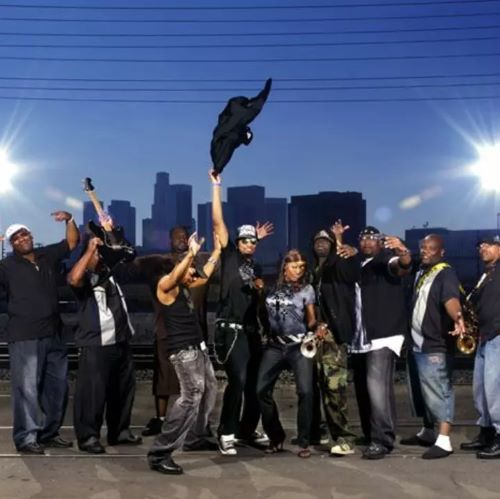
Wylde Bunch is described as an alternative hip hop band. An 11-piece outfit, they hail from Los Angeles and, oddly enough, this proghead finds himself mostly enjoying the songs they have available at their MySpace page. Their tunes “Yeah Yeah (Stomp The Bleachers)” and "On Top" have been appropriated by Fox Sports and ABC/ESPN, respectively, for television broadcasts. Although these are the weaker of the 4 songs available to sample, each has something interesting about it. "On Top" has some fuzzy guitar and a little piano to close it out; "Yeah Yeah", with its soaring chorus, is made for sports TV but I liked some of the little things. For instance, the horns are great and the song has more than a touch of Sly and the Family Stone in it. Plus there's that marching band snare too. "Clash" sounds like a classic 60s rock song with its piano and harmonies. Kinda like "One" by Three Dog Night during the verses. "Lose It" sounds most like what people think of when they think of hip hop, but with some heavy guitar.

The brief nods towards rock work really well and the horns are great. Plus acoustic drums are predominant. There's a certain swing with a live drummer that's lost when rhythm is programmed rather than played. What really shines through in their music is fun. "Yeah Yeah", on the one hand, sounds like it was tailor made for a sports broadcast. But on the other, it's just relentlessly joyous in a more general way. Lyrically, these folks are optimists and when they turn inwards, it comes across as as genuine and not overwrought. Plus their trumpeter, Janey, is a looker.

31 January, 2007

Mid-Winter Brews

This is my first beer entry of 2007 and I've missed a month! I will start out with announcing a local tradition, Capital's 10th Annual Bockfest, will be held on Saturday, 24 February. Welcome the bock and catch some fish.


Our first entry comes from the Point Brewery and is their Spring Bock. I grant you it doesn't fee like spring right now, but this'll give you something to look forward to when you see the word "spring" plastered across your drink.


The folks at Falls Brewing apparently have a new flavor on the horizon, Hot Tail English Style Pale Ale. Not sure when it's going to be available. To accompany the pulchritudinous figure on the label comes this description:

Falls Hot Tail Ale would be respected on the streets of 19th century England. Maybe. Traditional in all respects. The warm copper color is the result of our use of pale malted barley, with small additions of caramel and biscuit malt. Falls Pale uses lower hopping rates than the American West Coast cousin to the English Pale. The result is what we consider a more widely accepted beverage. Only English hops are acceptable. A creamy tan, long lasting head rests atop. A great brew to drink while watching the Badgers trounce Ohio State. Also great with a burger and fries.

From Tyranena Brewery's brewmaster Rob Larson comes this news:

Currently aging the Devil Made Me Do It! Coffee Imperial Oatmeal Porter with coffee beans from Sumatra (Indonesia really, but Sumatra sound cooler to me as I am a big fan of the game Risk) and Costa Rica roasted by an old friend over at Berres Brothers Coffee in Watertown. Planning on bottling next week.


Tis the season for Sand Creek's Pioneer Oderbolz Bock.


Out east in Milwaukee at Lakefront, they are readying for Mardi Gras with their Big Easy Beer, a blonde doppelbock. No Snake Chaser this year, I guess.


Also on the shores of Lake Michigan is Sprecher Brewing and they are (or shall be shortly) offering their Irish Stout in anticipation of of St. Patrick's Day.


Down in Janesville at Gray's, they are no doubt readying their Irish Ale.


From the venerable Leinenkugel's comes their spring seasonal, Big Butt Doppelbock.


From up north at the Viking Brewery, we have a trio of brews. January saw the releases of Mørketid, a Schwarz beer, and Invader, which is a Dopplebock and is the brewmaster's favorite style of beer. Next month, which is but a day away, will see the return of J.S. Bock, a Helles bock and is perfect for Lent.

The last update is from New Glarus brewing. There are some pictures of their expansion available at their webpage. Things look to be coming along nicely. February brings the next installment of Dan Carey's Unplugged series and this time around it's Belgian Quadruple:

Inspired by the Trappist brewers of Belgium, our heavyweight Quadruple tips the O.G. scales at 25 degrees P. Master Brewer, Daniel Carey, sourced the Brett yeast that boldly frames this refined and complex strong ale. First coddled in our Oak lager tanks and then slowly matured in bourbon barrels. This is a bold beer that sips like a refined cordial of nutmeg, dried cherries and vanilla.

It'll be like Christmas all over again.

A couple notes for folks looking to buy brews in Madison. Firstly, my usual source for Viking beers, Star Liquor has been having a hard time in recent months stocking their product. I have found that both Woodman's West and Jenifer Street Market both carry several Viking varieties. In fact, Jenifer Street Market recently finished some remodeling and now have a walk-in beer cooler and Wisconsin brews are exceptionally well-represented. By this I mean that the more micro microbreweries from the central and northern parts of the state get a lot of shelf space. In addition to Viking, Falls is there plus South Shore Brewery. And it's not just 1 or 2 beers by these breweries, but rather every flavor the distributor could get his or her hands on. A truly wonderful selection.

I'd also like to note that Woodman's West carries a large selection of products from White Winter Winery up in Iron River, not too far from South Shore Brewery. Woodman's has the dry, sweet, & black meads, all of their melomels, and the cyser. No bracket/braggot, unfortunately.

Finally, I recently tried a new brew:


Holzfass-Bier's Appenzeller is a Swiss beer and apparently has been available here in the States for less than a year. It is aged in oak barrels for a few months and this comes out in the flavor. It is very mild, almost flat, and so I was disappointed. While it wasn't bad, it wasn't anything to go to Switzerland for either. Next foreign beer I'll be sampling comes from Finland. Stay tuned.

Word of the Week

bluestocking (BLOO-stah-king) n. a woman having intellectual or literary interests

30 January, 2007

Caveat Vinegar Emptor

Unlike the past couple years, I haven't chosen a particular cuisine to explore here in 2007. This is due to the fact that there are several cuisines I'd like to try my hand at and I'm too lazy here early in the year to pick just one. I got a wonderful new mortar & pestle for Christmas so I'm ready to start pulverizing things. Last night I decided that I wanted to try some recipes from Food and Drink in Medieval Poland and began thumbing through the book and found some tasty things to whip up such as Zrazy po Cyprjsku and Szynka Duszona z Ogorkami. The problem is that they require Ocet Kubebowy or cubeb vinegar. The ingredients for this stuff are all attainable but it takes 3 months for the marriage of the flavors to be consummated. So I found a couple recipes without the stuff to try and hope to get the vinegar going tonight. Cubeb vinegar requires sherry vinegar or vino cotto vinegar so I asked The Dulcinea where I can find a store on the west side (where I work) that has fancy vinegars. One place was very close to work - Grape and Company so I called them up. I got Linda, the proprietor, and asked if they had the vinegars I need. She launched into a wonderful description of their vinegar selection which even talked about the varieties of grapes each used. She seemed to be under the impression that I was doing some Italian cooking so I informed her that I was, in fact, recreating 14th century Polish recipes. Her response was one of excitement and we ended up chatting. I made the mistake of telling her that I used to cook for a living and that my recent ventures have mostly involved German and Polish cuisine. And so, when I head over to the store during my lunch break, she is going to try and talk me into teaching a cooking class there. Linda said that she is Italian and that she teaches the occasional class in which she imparts some of her grandmother's most beloved recipes. But, since there are a lot of Germans and Norwegians around, she'd love to have some classes dedicated to those cuisines. I hesitated because I am no chef – just someone who likes to cook (and eat). But she wouldn't take no for an answer and soon I found myself swept up in her enthusiasm. While I didn't commit to anything, I have a feeling that I'll be dragging my spätzle maker there at some point this spring. I can just see it now. There I am pounding pork cutlets and some old Grossmuter is going to lay into me about my technique. I sure hope Linda isn't expecting that I would make anything that is acceptable to today's "healthy" eaters cuz that ain't gonna happen.

While my vinegar ages, I am going to try and make Kurczak Pieczony z Suszonymi ?liwkami which is Chicken Baked with Prunes. Not only does it not require cubeb vinegar, but it also uses bacon. Mmmm…bacon…The dish also involves shredded cabbage and I think I'll get that done on the cabbage shredder I inherited from my dad who used to make sauerkraut. For dessert I plan on making Gruszki Duszone z Ogórkami i Figami which is Pears Stewed with Cucumbers and Figs. It not only sounds tasty but uses rosewater and I have about a gallon of the stuff to use up before I'm 80 and it's all evaporated away.

My last bit of things culinary is that my friend Jason and I have tentatively scheduled next Thursday for a Chicago meat run. You can read about our last venture here. In addition to the usual joints (the Polish places in Jefferson Park and Devon Ave/Little India), I am hoping to make a stop at Paulina Market where they have more salami than you can poke a stick at. Plus the guys there give us Cheeseheads lots of free samples! I hope to have lots of mouth-watering pictures. Speaking of which, I took my camera into the shop just after Xmas and found out yesterday that Nikon is going to fix it for me absolutely gratis.

Lastly (truly lastly), I want to brew another batch of beer and I would like to do a lager. I'm not sure if I'm going to do it from grain, even though I now have a mill. But I want to age it in this crawlspace in our basement. While not exactly a cave, it's basically how my German ancestors did it and that's how I wanna do it.

The Nominees Are

The Academy Awards are anon and the nominees have been announced. Well, for the categories that most folks are interested in, that is. Other than cinematography, I really don't pay much attention to them. I will say, however, that I don't understand how Little Miss Sunshine got nominated for Best Picture. While fun, it was a pretty basic assemblage of clichés. And so on to the cinematographers who were nominated.

Vilmos Zsigmond for The Black Dahlia

Emmanuel Lubezki for Children of Men

Dick Pope for The Illusionist

Guillermo Navarro for Pan's Labyrinth

Wally Pfister for The Prestige

I've seen all of these films excepting The Black Dahlia and I thought the cinematography in each was fantastic. It's a tough call but I’m kind of rooting for Lubezki for his long takes in Children of Men. While the 9 or 10 minute scene in the refugee camp may have been digitally stitched together, it doesn't matter. It and the scene in the van (which apparently wasn't stitched) were brilliant. It's the stylistic choice that counts, not necessarily the technical way it was accomplished. I just get a hard-on for long takes. I don't know what originally attracted me to them, but I've grown to love them as an antidote to the waaaaaaaaay overused MTV style of constantly cutting every 2 seconds. After seeing Children of Men, I got this sudden urge to watch Red Psalm again.

In addition to Best Cinematographer, the Scientific and Technical Awards interest me. The winner have been announced already and these folks get a small ceremony couple weeks before the big event that folks watch on TV. A lot of these awards are for SFX tools but there's also a few for wireless control of remote lens systems. That means the guys named above can place cameras where no camera operator can go and still have the focus pulled precisely for some great shots. It makes me wonder what the opening of Touch of Evil would be like if Welles were making it today. Perhaps it's time for me to rent Writing With Light as it's been a while.

Frontline - 30 January 2007

Tonight's Frontline is "The Cell Next Door":

FRONTLINE/World and the Canadian Broadcasting Corporation go inside a terror cell -- believed to be the most serious homegrown cell -- accused of planning mayhem and mass murder in Atlanta and Toronto. Self-proclaimed Muslim fundamentalist Mubin Shaikh, who spent seven months inside the cell as a police informant, describes the cell's plots and politics, and the film follows these radical Islamists to the training grounds of Pakistan.

It airs at 9pm on WPT.

29 January, 2007

On the Gramophone

This week at my podcast I feature Clarence "Gatemouth" Brown.

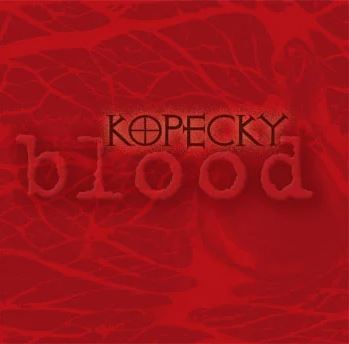
Kopecky: Blood


Listening to Blood, the latest effort by Kopecky, I am reminded just how frustrating it is to have a great progressive rock band right here in Wisconsin that has never set foot in Madison. Kopecky hails from Racine yet they play outside the States while avoiding Madison, just a couple hours away, if that. Hopefully the plans of a certain former music rag editor will come to fruition and Madison will host a prog festival featuring the brothers Kopecky. Until then, I'll have to be content with CDs and jaunts east.

The band features Joe, William, and Paul Kopecky on guitars, bass, keys, & sitar, and drums, respectively. (There's a few commas for ya.) Formed in 1999, Blood is the group's 4th studio effort. Being an instrumental outfit, Kopecky has incorporated varied elements into their brand of heavy prog which kept things interesting and helped keep their music from drifting into mindless soloing. It didn't take me long to appreciate Serpentine Kaleidoscope, my first exposure to the band. My initial reaction was that they were sort of a cross between Djam Karet and Rush. They drew from the well of prog metal but also threw in sitar, Middle Eastern elements, and the occasional weird bit in a nod to experimental music. It turned out to be a great mix with solid playing, great melodies, and enough variety to keep me from missing vocals.

With Blood, the brothers have pared down to your standard power trio arsenal of guitar, bass, and drums. The smaller tonal palette gives the album a rawer, heavier sound, though the Kopecky approach remains intact. This is apparent from the opening "Garden of Immolation" with Joe's guitar alternating between a very sludgy tone ala John Petrucci (of Dream Theater) in "The Glass Prison" and a very dense Robert Fripp sound circa 1973. The song is an aural assault that deftly shifts from section to section over the course of 7+ minutes.

"Infernal Desire Machine" follows. Joe scratches at a melody allowing William's bass to meander as the song slowly builds up from a nice, shimmering melody into all it's infernal glory. At 4:58, it's tied for the shortest cut on the album and is a taut, compact summation of the Kopecky aesthetic with its dynamics and grinding guitar. "Moontown" and "Windows" see the band stretching out again. There are some great lyrical passages with a relatively clean-sounding guitar and William gives the bass a workout with some fusiony work on the fretboard to a percussive style like Les Claypool's. As a kid Joe listened to a lot of Eddie Van Halen and Yngwie Malmsteen and there are times when this influence is obvious, most notably when he tries to put lots of notes in a bar. But the bulk of "Windows" has Joe soloing with fewer notes and more sustain and it is absolutely wonderful. The song is probably the highlight of the album.

"Eden's Flow", the other song clocking in at just under five minutes, begins with great drum beat that sort of skips along before Paul really starts to hammer the skins. This section last only a bit more than a minute and, although it is reprised briefly, I wish it were longer. I liked the mood it created because it stood in contrast to pretty much everything that comes before it. Still, there's some great bass drum work here as well. The penultimate song is "The Red Path" that starts with some restrained guitar and cymbal work. It then suddenly kicks into gear with some hefty guitar work and the bass slithering underneath. This song is textbook Kopecky will slower and faster/heavier parts juxtaposed against one another.

The closer, "Opium", clocks in at nearly 13 minutes. An ominous chord hints at what will unfold. Drums enter as do some unintelligible voices, which are not so much singing as discordantly wailing. Everything here just hits an appropriately trippy note. This goes on for about half the song and the listener is left for several minutes listening to a rather creepy close. Lonely guitar echoes over an eldritch throb which sounds like a fanfare for the arrival of Cthulhu himself.

Blood has been getting a lot of spins in my CD player since I got it a week or so ago. Repeated listenings have proven rewarding but I still have reservations. My first criticism here is that for about half the time, the band is too eager to move from one section to another in the songs, especially when it means moving from a slower to amps turned up to 11. "The Red Path" and "Eden's Flow" are the most noticeable victims here. Unlike in, say, "Infernal Desire Machine", the arrangements in these songs don't let the slower parts develop enough for my taste. The build ups weren't long enough and the changes too abrupt. As I wrote above, I loved the drums at the opening of "Eden's Flow" with its open hi-hat work. It has such an open, carefree feel to it and I wished that the band had fleshed it out a bit more before abandoning it. My second gripe it that, while the sitar may have been used on only 1 song per album in the past, its addition added great variety. Not only with just the sound of the sitar itself, but in how Joe played against it. His playing took on more of a rhythm role which provided a breather, of sorts. Keyboards were never a huge part of the band's sound but the embellishments really fleshed things out for my ears. The absence of these instruments and, in my opinion, a more restrained role for the bass, has turned the band's sound towards a more guitar solo extravaganza direction. Thusly some great ensemble playing has been lost. I am thinking right now of "Magic Room" from Serpentine Kaleidoscope and how the guitar would begin a thought and then the bass and/or drums would finish it. Nobody is soloing and the whole is greater than the individual parts.

Despite the disappointments, Blood is a good album. There's some great guitar soloing, plenty of time changes, and William's bass playing is always a treat, even if it is underused. Hopefully the band will play Madison sometime this year.

26 January, 2007

The Guy Could Put Them Away

I suppose it goes without saying but holy fecal matter could Andre the Giant drink a lot!!


To wit:

First, consider the number 7,000. It’s an important number, and a rather scary one considering its context, which is this—it has been estimated that Andre the Giant drank 7,000 calories worth of booze every day. The figure doesn’t include food. Just booze.

You won’t find it in the Guinness Book of World Records, but Andre the Giant holds the world record for the largest number of beers consumed in a single sitting. These were standard 12-ounce bottles of beer, nothing fancy, but during a six-hour period Andre drank 119 of them. It was one of the few times Andre got drunk enough to pass out, which he did in a hallway at his hotel. His companions, quite drunk themselves, couldn’t move the big man. Fearing trouble with cops, they stole a piano cover from the lounge and draped it over Andre’s inert form. He slept peacefully until morning, unmolested by anyone. Perhaps the hotel people thought he was a piece of furniture.


Uff da!

The First Doctor Who News of '07


Mother Beeb has confirmed rumors that Doctor Who will get an animated spin-off.

David Tennant and Freema Agyeman will star in The Infinite Quest, a 13-part animated adventure that will run weekly in the second series of Totally Doctor Who.

Totally Doctor Who is a show that runs on a BBC network for kids but I'm not familiar with what the show is about. Looks like it'll be an even busier spring of downloading than it has been the past couple.

In other Who news, Sir Derek Jacobi has been tapped for a role in an episode in season 3. He will play the Professor who is trying to save the human race.

Lastly, this season will feature the Daleks once again. In the 1930s. In New York City. THAT should be cool.

Pan's Labyrinth

Pan's Labyrinth was fantastic. The Dulcinea and I went to see it last night and were joined by Charles and Buke. Although I am a review behind, I'm going to talk about it since it is still fresh in my mind.

The film concerns Ofelia, a girl who looks to be just shy of her teens. The time is during the Spanish Civil War and Ofelia is being driven, along with her pregnant mother, out into the country to a military outpost where her new stepfather, Captain Vidal, is stationed. Ofelia's father had been killed in the war and her mother, Carmen, married Vidal and is now heavy with his child. During the drive there, Carmen feels uneasy and has the convoy of black sedans stop so she can get out and walk around a bit. Ofelia wanders away from the cars and finds a stone with some kind of picture engraved in it. She walks some more and finds this big, upright stone that is ornately carved. There is a face on it and it is missing an eye. Ofelia places the rock she found into it and makes the face whole again. We viewers waited for something to happen and something did – a large bug crawled out of the mouth. The convoy gets moving again but the bug follows.

Back at the outpost, Vidal is angry that they are 15 minutes late. He is disdainful of Ofelia and only slightly warmer towards Carmen. He seems more concerned about the unborn child which Vidal is sure is a boy. We also meet Mercedes, the Captain's servant, and Dr. Ferreiro. It turns out both are aiding the Loyalists who are hiding out in the woods nearby. Ofelia meets up with the bug again in the middle of the night and it turns into a fairy, just like the one pictured in her book of fairy tales. It leads her out to a labyrinth behind the farmhouse which has a large hole in the center with stairs leading down. Ofelia makes treads the stairs to the bottom where she meets an eldritch faun who tells her that she is really Princess Moanna, daughter of the King of the Underworld. She is lost in the world of mortals and, in order to return home, she must perform 3 labors. These take Ofelia underneath a giant tree where she must retrieve a golden key from the stomach of a giant frog and to an encounter with a hideous creature of pale skin that barely hangs onto its boney frame and whose eyes are on the palms of its hands. And it eats babies.

As Ofelia adventures in her wonderland, Carmen's pregnancy takes turns for the worse and Captain Vidal gets wind of traitors in his midst. While the creatures that Ofelia encounters are scary, it is Vidal that is the true horror. For example, a patrol captures an old man and his son thinking that they are Loyalists. Vidal sorts out the situation by discovering that they are just as they claimed – hunters looking for food. But he shoots both of them dead and not before smashing the younger man's face in. Cinderella suffered at the hands of an evil stepmother but here the gender is reversed.

While Carmen insists that Ofelia is too old for fairy tales, Pan's Labyrinth is certainly one of the old school variety, in addition to being a film for adults. Long before Disney, "Little Red Riding Cap" was eaten by the wolf; "Goldilocks" was an old crone who intruded upon the bears' home and paid for this by being impaled on a church steeple; and in some versions of "Sleeping Beauty", the prince rapes our heroine as she slumbers and Sleeping Beauty is awakened by one of her infants suckling at her breast. Pan's Labyrinth uses enchantment in the same way as some of the old school tales – to describe the ascent into adulthood. I don't know much about director Guillermo del Toro, but I suspect that he is a fan of fairy tales. The film is self-referential in that, not only is it a fairy tale, but it also examines them from the outside. Ofelia may be forced to lose the innocence of her childhood because of circumstances beyond her control, but she summons the courage to overcome adversity and the strength to make the transition from a fairy tale.

Being an ignorant American, I am sure that there were things that I missed because I am not Spanish and don't speak the language. In addition, I am woefully ignorant of all but the most basic elements of the Spanish Civil War. Conceding this, the film noticeably didn't try to hit the viewer over the head with allegory and or make any obvious allusions to the present day.

Bruno Bettelheim is famous for his analyses of fairy tales through a Freudian lens. So, for example, when the color red appears in "Snow White", he argues that it is a metaphor for blood, keeping in mind menarche. While I don't think del Toro has constructed a film around such an approach to fairy tales, I do think that he put a lot of food for thought into his movie. For instance, take Captain Vidal. Besides being a cruel, sadistic bastard, he is also an embodiment of masculinity or at least a vision of it. He is certain that Carmen will give birth to a boy, allowing him to pass down his and his father's name; although he denies a story about his father wherein the man broke his watch so that Vidal would know what time he died, the captain still carries that watch. And he looks at the watch frequently. Is it merely because he wants to know the time? Or is he looking for a reminder of his father? Perhaps Vidal is fatalistic. Regardless, Vidal as a character embodies notions of father & son and is a parallel to Ofelia. Where Ofelia is moving from child to adult, Vidal is moving from son to father. Pan's Labyrinth is really the story of Ofelia *and* Vidal.

I am reminded of George Steiner's 5 "constants of conflict in the condition of man" when I think about this: the confrontation of men and of women; of age and of youth; of society and of the individual; of the living and the dead; of men and of god(s). While Steiner wrote about how they are embodied in Greek tragedy, I think they're applicable here as well.

Pushing all the theorizing away, Pan's Labyrinth was simply a touching, well-crafted story. The acting was excellent and the photography suitably eerie. Director Guillermo del Toro and the film deserve all the accolades they have received. Go see it as soon as you can.

Remixing the Past

(Photo found here.)

Genesis producer/engineer Nick Davis has spent the past few years taking his time and remixing the band's catalogue into 5.1 surround sound. I found a recent interview with John Burns, Genesis' producer/engineer back in the early 1970s. He is responsible for how Foxtrot, Selling England by the Pound, and The Lamb Lies Down on Broadway sound. Burns was asked: "With Nick Davis going back and remixing those early Genesis albums you were involved with, what are your thoughts on that as a fellow engineer? Does it bother you that another engineer who was not involved with those sessions is essentially going back and revising your work?" And here's the reply:

Well, to be honest, I haven’t heard the new mixes, so I’ll have to wait to comment. I mean, he probably copied it as close as he possibly could. It’s such a different way. I mean, all of these albums were mixed by hand. There were no digital desks or computerization or anything like that. You literally had to move the faders and switch the buttons yourself and echoes and everything else had to be done as is. I generally mixed only by my hands. I didn’t have the whole band with me. I mean, with The Lamb Lies Down, they all buggered off at ten o’clock and left me to mix… apart from Phil a few times. A few times he stayed on and was encouraging.

If I made a mistake, like I forgot to switch a tambourine in or a backing vocal, because there are so many different things on different tracks, I would go back ten seconds, roll tape again, put that switch in, and just edit it together.

Some tracks may have many edits, it depends how clean they were… the bits and pieces on them. With Selling England, which like Foxtrot was only 16-tracks, you had to do that. There are only 16-tracks, but you had tambourines, flying geese, guitar solos and flute all on the same track. So, it was quite a handful to get all the motions together. I’m more interested in getting the balance of the band than kicking the drums where they needed kicking.

Obviously, if it’s none now, digitally, you don’t have to do editing the old fashioned way. Balance is so important. Because it was so hands on, you were leaping around a desk. I used a desk like an instrument back then. You had to play it. It would be 24-tracks with my ten fingers! You’d have to work it. I think Nick has really got his work cut out for him. To try and follow what I did is near on impossible. I could probably remember if I sat behind a desk, but even that would probably take some work 30 years later. I think I would remember, but he doesn’t know what the hell I was doing and the different echoes and different delays…

It must be very difficult to recreate, because we were so limited with equipment, on “The Colony of Slippermen” song, before I cut the album I wasn’t happy with it. So I put it through an echoplex, which is like a delay echo. So, I mixed the echoplex in mono into the middle of the stereo. I put the whole track though it with the stereo out the side but the echoplex signal coming out of the middle. It just boosts it. He wouldn’t know how the hell to do that. He wouldn’t know what I had done. I don’t think the band knew, I just did it. It was two hours before I had to go and cut it. It might have been 16 bars; I’d have to listen to it. The poor guy’s got his work cut out for him!


When asked about this, Davis replied:

all i can say is that i hope he likes it.

i have tried to recreate all the effects i heard, but that doesn't mean i am foolproof. so far the comments of the lamb mixes from the platinum collection have been positive so fingers crossed. for your info- i still do my mixing on an analogue desk. i do not use the computers for mixing at all, just as a tape machine.


I am looking forward to hearing the 5.1 mixes. Reading this reminded me of the controversies surrounding the director's cut of Blade Runner and George Lucas going back and redoing episodes 4-6 of Star Wars films. While certainly not on the same level in that Davis is not adding new instrumentation, the original is being tinkered with and altered. Some of his remixes ended up on The Platinum Collection best-of set a couple years ago and there were some noticeable differences. Minor but they were there. Some of these differences were songs that had longer fades or faded out later so you ended up with more of the song. In others, the drums, which had previously sounded like they were recorded in a cardboard box, are up front and sound more like drums should sound. "Duchess" is a good example of this. The ride cymbal is more prominent and the sound is more open and there's more space between the instruments. Plus there are songs where you can here a tambourine or something similar in the background that wasn't very audible previously. "Keep It Dark" comes to mind here. During the instrumental section at the end, you can clearly hear Collins playing a melody by hitting the rims of the drums with his sticks. It's a sound that is heard early in the song in the verse about the guy being let go because he had no money. There's a burst of synth at 1:10 and it's back to just hi-hat and snare. They re-appear at about 2:27 as Collins intones "...about a world so bright" and he actually plays a little part. "Keep It Dark" is a scenario where the remix works really well, in my opinion. Being able to hear the rim shots clearly adds something new to the song for me. It's minor, but it adds something nonetheless.

Another thing the interview brings up is the notion that whomever mixes an album is actually contributing to it creatively and that the process is an art form. It's one listeners rarely think about. How a song is mixed contributes to how you hear it so, if you're used to hearing the drums way in the background, as with "The Cinema Show", and then you hear them up front in a remix, it changes the song, even if just slightly. In the case of "The Cinema Show", the remixed version has a lot more energy because the drums don't sound like they're just skipping along in the background barely noticed. When Collins hits a snare, it makes an impact now. Plus you can actually hear the bass drums now too, which is great. Overall, it adds to the dynamics of the song quite nicely. I think Davis did a great job, especially in comparison to the remixes of classic Jethro Tull songs that appeared on their 25th anniversary box set.

Most of those songs sound like the only thing done was to bring the drums up front and it doesn't work in every case. "Cross-Eyed Mary" works well. The bass drums now have some balls, the tambourine is nice & clear, and the overall muddiness of the original mix is gone. On "Songs From the Wood", however, this works to a disadvantage. While it's nice to be able to hear bits of percussion and keyboards that were previously hidden, the warmth of the original song is lost when the snare pierces through. And Jeffrey Hammond-Hammond's bouncy bass becomes all muddled in "Cold Wind to Valhalla". So it's really a mixed bag.

I guess we'll just have to wait and see when the new mixes are released.

25 January, 2007

Children of Men

The second film I saw at the cinema this year was Children of Men. I had heard many good things about the film but hadn't (and still haven't) read the book by P.D. James upon which it is based. Director Alfonso Cuarón was familiar to me only via Harry Potter and the Prisoner of Azkaban and so I was in unfamiliar territory as far as that whole auteur thing goes.

The story takes place in England some 20 years in the future. Theo Faron, played by Clive Owen, is attempting to get a cup of coffee at a local café but the place is bursting with patrons watching the television above the counter which has a news program reporting that the youngest person alive had died. The individual was only 18 years old. You see, the women had become barren in this world. This is never explained in the film and it's all the better for it. With the clock ticking down on humanity's time left on Earth, people became quite angry and most countries have suffered devastating attacks. Only England survives more or less intact. This being the case, the country is cracking down on immigrants hoping to maintain order and perhaps the true blood of the Britons.

After extricating his coffee from the overly-crowding café, Theo steps out outside, takes a few steps, and is jolted when the coffeehouse explodes. There are radicals afoot. Radicals that demand that the government treat immigrants humanely and let them stay. We learn that Theo used to be a radical but now he has drifted into selfish indifference and is an office drone. Still, he maintains a friendship with Jasper (Michael Caine), the terminally groovy hippie who lives in bucolic seclusion with his catatonic wife. Jasper adds some comic relief to an otherwise bleak film that is awash in grays and browns, just like Cuarón's Harry Potter effort. With this film, cinematographer Emmanuel Lubezki has perhaps found a commercial enough film to stake his claim as the heir to Vittorio Storaro. (But he's gonna have to fight it out with Janusz Kaminski.) In addition to desaturated colors, there are (very) long takes and some masterful Steadicam work here.

Theo gets tapped by former lover Julian (Julianne Moore) to help out the radicals. Julian and Theo were together back in the day fighting The Man together. While Theo has opted out, Julian remains committed. She has Theo approach his wealthy cousin to get travel papers for them. This scene is notable for progressive rock fans as we get a healthy dose of "In the Court of the Crimson King" by King Crimson on the soundtrack. In addition, the view from the cousin's home overlooks the Battersea Power Station and Cuarón was nice enough to throw in the giant inflatable pig from Pink Floyd's Animals. Theo gets the requisite paperwork. And more. He must accompany whomever it is that the radicals want to hide.

This ends up being Kee (Claire-Hope Ashitey) who, against all odds, is pregnant. What follows is a chase and after some double-crossing, Theo and Kee find themselves fleeing, not only the authorities, but also the radicals. The final act takes place in a seaside internment camp where Kee delivers her child, is kidnapped by the radicals, and rescued by Theo. This part of the film is tense, action-packed, and all in one shot. The Steadicam operator earned his or her pay that day because the shot lasted for like half an hour. In the scene, the radicals, having captured Kee, hole up in a tenement which is then laid siege by the army. Theo sneaks in to rescue her. The scene where he leads her down the stairs and out of the building brought tears to my eyes. Kudos to Cuarón for not ruining it with sappy music. While I normally don't like the kind of ending that we have in Children of Men, I thought it worked alright and perhaps couldn't have been any other way. Humanity wasn't quite saved.

The film has much to recommend it. The acting was great (although I thought Julianne Moore was miscast) as was the cinematography. Lubezki has also shot, amongst others, Terrence Malik's The New World, Lemony Snicket's A Series of Unfortunate Events, and Tim Burton's Sleepy Hollow. I will go see any movie he shoots, regardless of director or actor. The guy is fantastic. If you've seen Harry Potter and the Prisoner of Azkaban then a shot or two will look familiar. Think the wanted poster for Sirius Black at one end of the screen and Harry Potter at the other.

I'm trying to figure out just how hopeful the films is. On the one hand, it ends with the intimation that humanity is saved. But on the other, most of the major characters who hold out hope and show kindness & humanity as humanity fades away are killed.

There is also a thing with non-human animals. I'd have to watch the film again to really get it down to notice a pattern but it was obvious that our furry friends were not affected by whatever it was that stole the fecundity from women. At the first safehouse that Theo and Kee end up at, there is a dog. A guard says that the dog doesn’t usually like people but it does like Theo. Later in the film, he and Kee are waiting at an abandoned school to meet up with a police officer who will help them get into the internment camp. While wandering the long-abandoned hallways, Theo hears a noise which turns out to be a deer. And the gypsy woman at the camp has one of those little yapper dogs that I find so annoying. A reviewer somewhere called Children of Men the "Blade Runner of the 21st century" or some such thing but it really isn't. In the latter, animals were extinct so electric ones had to be made. The animals here are all fine and they can reproduce. I'm not sure – I'll have to watch again to get this down.

Perhaps it is Jasper that is the real beacon of kindness and hope. After all, he maintains a sense of humor and geniality but, more importantly, he cares for his catatonic wife despite the government having issued suicide kits. And I think that the only scenes that aren't drab and gray are those with him. Theo is the protagonist and, through circumstances, he regains inner strength and the best in him is eventually brought out. But Jasper never lost that strength in the first place.