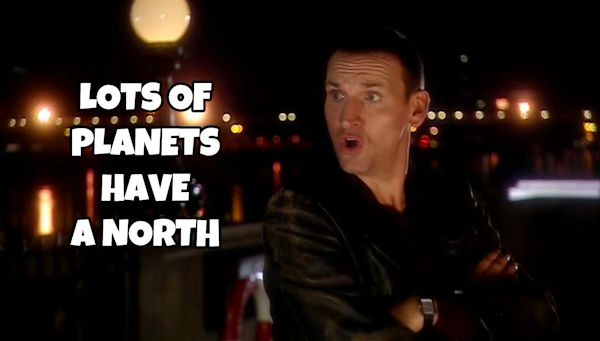
Our trip as originally planned wasn't going to include Manchester but the hotel rate there was just too good to pass up. And so we went from an itinerary that was a lot of London, a dash of Leicester, and a bit of York to one that was largely to be spent in England's third largest city. It would be my first time in the north and this made me think of the Ninth Doctor's quip where he sounds all defensive, "Lots of planets have a north!" It occurred to me that I didn't know where the north begins. Is it north of a motorway like here in Wisconsin?
As I discovered when pondering England's geography, Christopher Eccleston is from Salford, a city in the Greater Manchester area that abuts Manchester itself to the west/northwest. Hence the rebuttal to Rose. Whoo. It's difficult to get a grip on all the English regional accents. Last year a gentleman from Wolverhampton and my tour guide from Birmingham both agreed that there are Black Country accents that they can barely understand. This is akin to someone from Milwaukee being unable to understand the accent of someone from Washington country. I guess when you have a small country, things get squished together and regional variations exist cheek by jowl.
Despite York holding the promise of medieval goodies galore, I didn't mind the change of plans. My ex-Frau and I had planned on going to Manchester back in 2024 but a combination of her mental health issues and the severe deterioration of our marriage put paid to our vacation plans. Going there with my ladyfriend would close the circle on a real low point in my relationship with my ex-Frau and the missed opportunity that resulted from it.
In preparation for the trip, I picked up a book on the city.
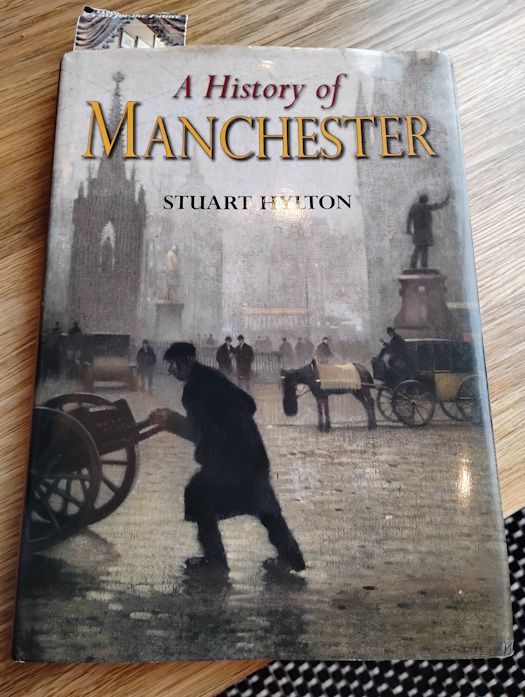
I do not recall why I chose Hylton's tome but tend to think because it was on the shorter side and would simply give me a good overview of the city's history as opposed to a more lengthy, perhaps more definitive, text. Start small and move on from there. Because British Airways didn't load my suitcase onto our flight from Manchester to London, I do not have the book before me as I type. But here are some of the highlights for me.
Manchester started out as a Roman outpost. During the Middle Ages it was a market town and processed wool. Despite being Britain's third largest city today, it was a backwater town for most of its life which surprised me. We get some stories about the city taking the side of the Parliamentarians during the English Civil War but, generally speaking, things don't get moving until the industrial revolution.
As Hylton notes, Manchester became a, no the, powerhouse of England's cotton industry. The cool, damp air was good for spinning as it made the threads less prone to breakage. Growth was rapid and the factory work drew people from rural areas. A large section of the book is dedicated to describing the plight of these early factory workers.
They lived in slums and the owners of the means of production were proud to be putting rather young children to work in their dark satanic mills. The living conditions were appalling for many of them with cellars being particularly bleak as there was often no windows to be had and no way for fresh air to circulate. Rain accumulated on the dirt floors as did raw sewage from their neighbors above. I was thoroughly unsurprised to learn that Manchester is the subject of Friedrich Engels's The Condition of the Working Class in England in 1844 and Hylton provides some choice quotes that, alas, I cannot reproduce here.
In addition to factory workers (lots of them being Irish) living in squalor, all the coal being burnt turned the city's air into a nasty miasma. Manchester sits in a hollow so it's pollution was never in a hurry to go anywhere and so it was happy to infest people's lungs and cover the city in a layer of soot. If I had the book at hand, I would provide some colorful quotes that describe just how nasty the air was.
The city didn't get a Minister of Parliament until 1654 when Cromwell and pals were in power. However, as soon as the king was restored, the seat went away and Mancunians didn't get a representative again until the 1830s, a fact that really bolstered the backwater image in my mind. The Peterloo Massacre was described and this brought the Doctor Who story of the same name to life now that I had the backstory.
One thing I didn't know was that the American Civil War affected Manchester greatly as the city's cotton industry got a lot of its raw material from the South. The North's blockade really put a spanner in the works for Manchester.
The city built a completely man-made canal to hasten the process of getting goods to and from the port of Liverpool. An early railway was built to take on the canal industry. In addition to goods, it found success (eventually) in hauling passengers as one of the very first passenger rail services.
The book is a bit light on the 20th and 21st centuries but it read a lot like the sorry tales of so many American Rust Belt cities with deindustrialization hitting it hard. I don't recall the book mentioning population totals during this period but I found a website indicating it went from a high of around 725,000 people around 1930 down to around 400,000 in 2000. It has since rebounded to somewhere in the vicinity of 590,000.
At first, the text along with some commentary from my tour guide in Birmingham last year gave the impression that Manchester is a very blue collar city, rough around the edges, and perhaps not quite as friendly as England's second largest city. (Although I've not yet written about it, I found Birmingham to have a surfeit of Midwest nice.) I got the impression that it would have a Milwaukee-like vibe to it. But, as the book notes, the city went from a manufacturing powerhouse to an economy largely based on commerce and business services which sounded very much like Chicago's transformation.
Hylton includes Mark Twain wry comment, "I would like to live in Manchester, England. The transition between Manchester and death would be unnoticeable." Would the city be dull and lethargic? Was it still the Naptown of Britain? If so, would a bargain hotel rate be worth it?
********
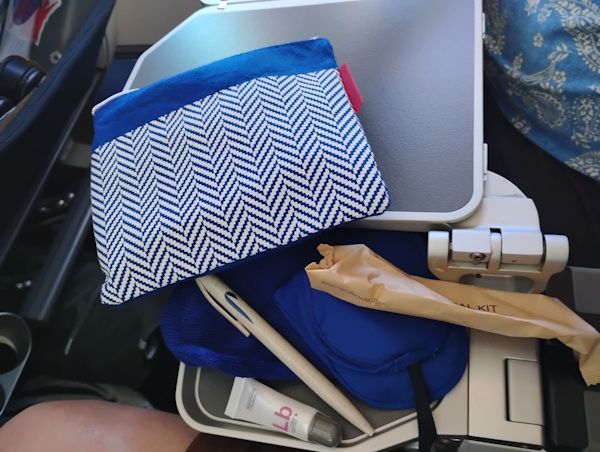
A couple days before my ladyfriend and I were set to leave, I got an email saying that British Airways was looking for people to take a different flight than the one we booked as they had overbooked it something fierce. With approval from my travel companion, I chatted with an agent got us onto a flight that left O'Hare a couple hours earlier and got us upgraded to World Traveller Plus (pronounced ploos) which is luxury economy class.
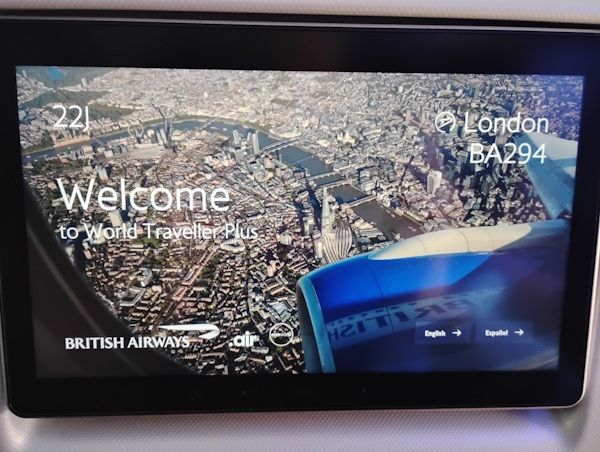
Never having flown in anything other than a seat for the impecunious proles, I was looking forward to the upgraded amenities, whatever those ended up being.
First and foremost among them was lots more legroom. My knees would not have to be pressed against the seat in front of me as they had about 6" of clearance. Ooh la la!
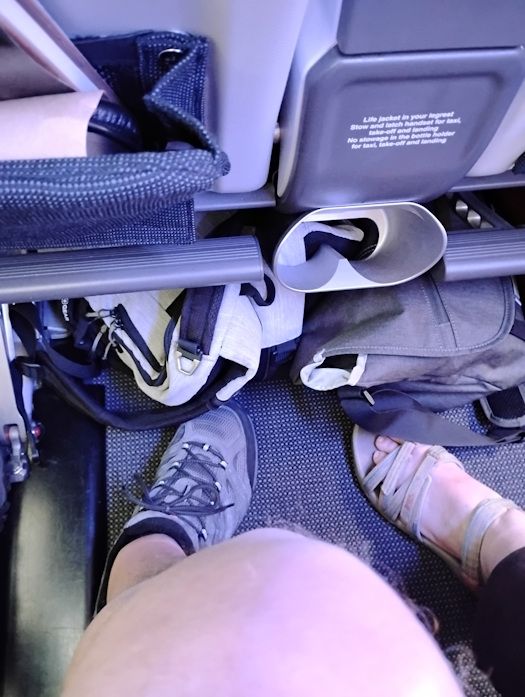
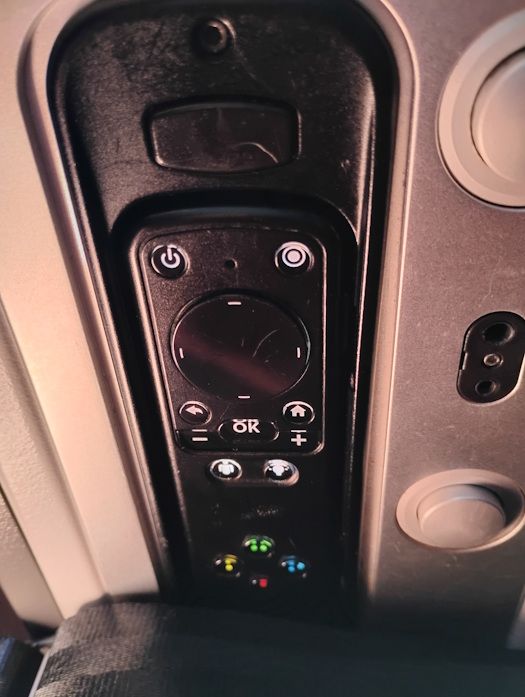
Each seat had a remote control for the screens that were a mere foot or so away from our noses. The ultimate in economy class luxury. We would truly have a flight of ease.



No comments:
Post a Comment