A series of ropes tied together make a “spider web” that students can lie down on; a “music garden” with a variety of noise-making tools allows students to create their own rhythms and beats; a jumble of tree stumps and logs create a “ninja course” for students to hop across; and a “construction zone” once filled with sticks and branches for students to play with is now a towering tree fort.
These spots make up Lake View’s nature stations, which are part of the north side Madison school’s outdoor education programming. With the help of volunteers and grant funding, Lake View’s five-acre campus has transformed over the last decade into a collection of vibrant outdoor learning spaces.
I think it's absolutely wonderful that kids have so many opportunities to spend time in non-man-made environments and to explore some of the things nature has to offer. (Plus the kids get away from f*cking computer screens.) It only seems right in a town with such strong ties to Aldo Leopold.
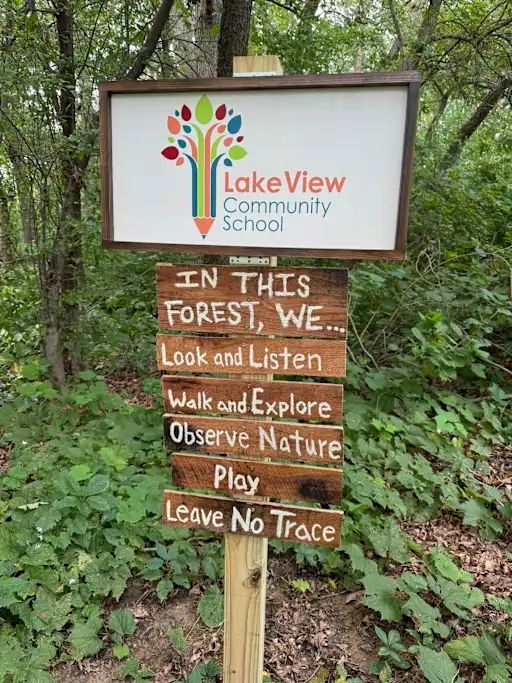
The school's principal, Nkaujnou Vang-Vue, was recently named the 2026 Administrator of the Year by the Wisconsin Association for Environmental Education for her promotion of environmental education. Congratulations, Ms. Vang-Vue!
Not long after running across this article, I learned of a study published back in 2012 which looked at the illustrations in Caldecott Medal winning books from 1938 through 2008. The Caldescott is awarded for to the "most distinguished American picture book for children". The study found that illustrations of non-man-made environments have decreased over the years.
Researchers looked at whether images depicted a natural environment such as a jungle or a forest; a built environment such as a house, a school or an office; or something in-between, such as a mowed lawn. They also noted whether any animals were in the pictures – and if so, if those creatures were wild, domesticated or took on human qualities.
Their results, Williams said, visibly exhibited a steady decline in illustrations of natural environments and animals, as well as humans’ interactions with both. Meanwhile, images of built environments became much more common.
...
“This does not mean, of course, that environmentalism is not an important part of American culture, but it does suggest that the current generation of young children listening to the stories and looking at the images in children’s books are not being socialized, at least through this source, toward greater understanding and appreciation of the natural world and the place of humans within it,” the authors wrote.
It's good to see that we have places like Lake View Elementary and the Aldo Leopold Nature Center to help foster an appreciation for the natural world in the youth of today - and tomorrow too.


No comments:
Post a Comment