Witness a machine turn coffee into pointless ramblings...
12 November, 2026
Yes, the post-Jon Anderson Years: A new Jon
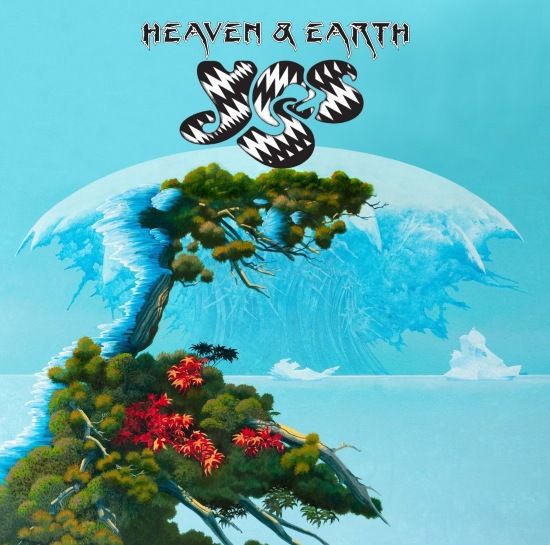
Coming off essentially twoalbums of music that sounded fresh and exciting, Yes came out with this clunker. It's a real shame because Roger Dean was killing it with the album covers. I love the icy blue that dominates Heaven & Earth's cover with the mushroom cloud iceberg off in the distance standing in stark contrast to the evergreen branch in the foreground. Plus the YES logo has a lovely black and white southwestern (America, that is) look to it.
The big change here is that Benoît David has been replaced by Jon Davison who had been with the Volunteer State prog stalwarts Glass Hammer. I feel badly for David as Yes cast him as the Nikolai Yezhov of the group in 2018 when they released Fly from Here – Return Trip, their only album with him (at the time) reworked musically a bit but also with David's vocals replaced by Trevor Horn's. Ouch! He didn't seem deserving of such an insult and Fly from Here wasn't broken so why try to fix it?
It is difficult for me to separate the music on Heaven & Earth from the late summer of 2014 when I got a copy and spent hours on my front porch absorbing it and assessing the new singer. At the time my relationship with my significant other was at a nadir. She spent little time with me and was instead to be found at the tavern keeping a barstool warm. With a new Yes album something to celebrate, I spent much time on the porch with Heaven & Earth as my company. Oh, and our cats too.
Having divorced the aforementioned significant other earlier this year, the album has a certain bittersweet quality for me.
Beyond the turmoil in my life when I was introduced to Heaven & Earth the album is notable to me for the rather numerous songwriting credits that Davison gets here. He gets a writing or co-writing credit on every song save one. It impresses me that the other guys in the band were happy to consider what Davison had to offer and not only that, but to utilize his material.
The problem here, as the folks at Tabletop Genesis would say, is mid-tempo bloat. "Believe Again", which opens the album, is a prime example. Steve Howe opens the song with this echoey, gentle-on-the-attack guitar sound as Geoff Downes adds these staccato synth notes that have a strings-like tone. White sounds like he's playing the hi-hat while Squire's bass adds to the lumbering pulse. It all has a vague reggae lilt to it.
While I am unsure who wrote the lyrics here, Davison is in fine form and sounds wonderful as he sings words that are more Jon Anderson-like than any found on Fly From Here.
Is there a vision here Woven to touch and all to capture light? Surely the stream of consciousness Flows to the sea
His voice is just beautiful. However, as the song builds and the chorus is upon us, the tempo hasn't moved. Davison's harmonizing with Squire and Howe is exquisite and White moves things along with some snare work but it's a shift in tone, not tempo. I like Howe's solo in the middle and the synth flourishes - there's even some drums like congas too - but the song plods along for most of its 8 minute duration.
Everything sounds great here, the playing, the melodies, and especially the vocal harmonies but the song just never seems to find its feet. It feels half-baked, almost a demo. This is a problem that plagues the majority of the album and it saddens me that White's drumming is so lackluster here.
There's some great piano on "The Game" and the vocal melody is gorgeous with bits having been rescued from "The Gift of Love" from back in 2010. Downes is in fine form but the song just seems to drag. The rhythm section never propels it along as White and Squire did so well on Fly From Here.
"To Ascend" has some lovely acoustic guitar and piano to complement an equally pretty vocal performance from Davison. It's a slower song by design and so when the drums enter, they genuinely transform things by going from gentle acoustic to something a bit bigger. Downes just impresses the heck out of me here with piano and string sounds and synths and more legato piano. A truly beautiful song.
"In a World of Our Own" just seems to plod along while "Light of the Ages" threatens to add excitement, but it never does. Downes orchestrates a tense, striking opening for "Subway Walls" but the drama peters out. However, the ending really picks up the pace and, as Howe solos, the song kicks into gear for the album's only true moment of excitement.
There are a couple songs here that I think transcend (haha!) the mid-tempo trap by virtue of being fairly simple, direct tunes that are just blatantly catchy.
The first is "Step Beyond", a Howe-Davison joint. It opens with this bouncy synth line that moves across the stereo field that should come across as being the cheesiest moment on the album but it somehow is just fun & catchy instead. Howe comes in and White sets a steady beat that may be mid-tempo but it somehow manages to take the lead in pushing ahead. I love the refrain of "Beyond" in the bridge and the return of the first verse after Howe's solo is just gorgeous. The harmony vocals are magical throughout with Squire on the top of his game.
The second song that stands out for me is Howe's "It Was All We Knew". It has a lazy summer feel to it which mirrors those summer evenings out on the porch listening to this album as my cats kept the neighborhood watch. Howe's playing is just so melodic and fun. Most, if not all of the vocals here are harmonized and the vocal melodies are just incredibly catchy. Somehow the chorus has this vague white proggy Caribbean lilt to it.
Listening to Heaven & Earth after Fly From Here is jarring. White's drumming is so tepid and restrained with none of the urgency that propelled "Into the Storm" or the previous album's title track. This goes a long way in explaining why these songs have an unfinished, demo-like quality. Roy Thomas Baker is the producer here and he also produced Yes' 1979 sessions in Paris before Jon Anderson and Rick Wakeman left the band which sound boring in a similar way to the songs here.
This album's surfeit of great melodies is largely wasted as, while they stand on their own well, they are never given the chance to really gel with one another nor given a beat that truly brings them to life. Heaven & Earth would prove to be Squire's last album as he passed away about a year after its release and I think of his vocals here as a parting gift of sorts. I simply love them. The harmony vocals are strong and impassioned throughout the album and their beauty lingers in my ears despite the general flatness that pervades most of the songs here.
Jon Davison earns his pay on this album. His singing is great and he does his best to let his voice animate the songs even when they head down a dull path.
While Heaven & Earth is the pratfall of the post-Anderson era, I like it more than many fans as I first listened to it during a fraught time in my life when I was trying to take refuge in the aural company of an old friend. And so it took on an emotional attachment for me. But I do recognize its faults.
It would be 7 years until Yes released a follow-up.


No comments:
Post a Comment