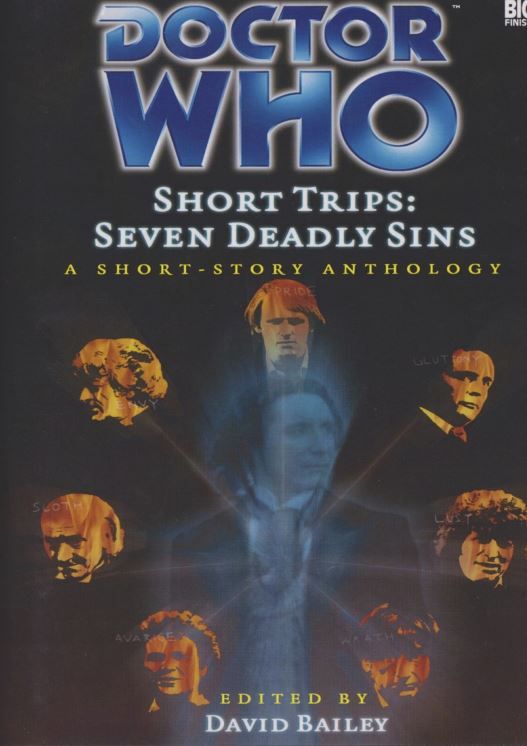
For anyone unfamiliar with Doctor Who, let me give a brief description of the show. It was an English television program first aired on November 23, 1963. Ostensibly a children's show, it followed the adventures of The Doctor, who belonged to a very advanced race called the Timelords who had mastered the science of time travel. Being an individualist and a renegade, The Doctor left his people to travel the universe in his ship called a TARDIS (Time And Relative Dimensions In Space). Besides being able to travel through both time and space, the TARDIS had a couple other interesting properties. Firstly, it looked like an old English police call box, essentially a phone booth. Secondly, it was quite a bit larger on the inside than on the outside. The Doctor had various companions accompany him on his adventures fighting evil wherever he encountered it. When the first actor to play The Doctor, William Hartnell, decided to leave the show, the producers devised a novel way to continue. They decided that Timelords could regenerate so when The Doctor is "killed," his body changes into another incarnation while retaining his mind. (Well, for the most part.) This is necessarily brief and I would refer readers wanting more to the show's official page at the BBC Web site or to its Wikipedia entry.
was finally taken off the air in 1989 with Sylvester McCoy playing The Doctor in his seventh incarnation. The show was resurrected briefly in 1996 as a made-for-TV movie starring Paul McGann as The Doctor. It was hoped that this would spur enough interest to launch the TV series once again but American ratings weren't as high as had been hoped for and the plan never came to fruition. However, the renewed interest in the show inspired former Doctor Who Magazine editor Gary Russell and Jason Haigh-Ellery to conceive the show as a series of audio dramas. As
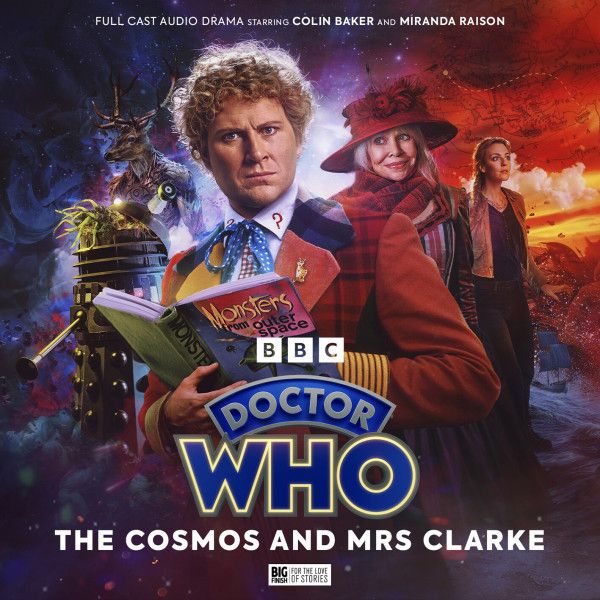
Big Finish Productions, they secured the proper rights from the BBC and recruited actors from the television show to star. The first episode, The Sirens of Time, was released in July 1999 and featured Peter Davison, Colin Baker, and Sylvester McCoy reprises their roles as the Fifth, Sixth, and Seventh Doctors, respectively.
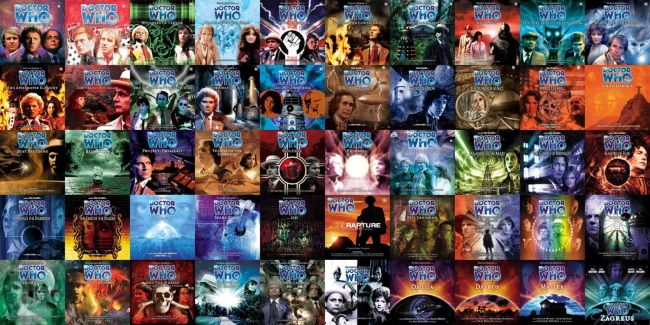
Big Finish has released eighty episodes as of this writing and this does not include spin-off series featuring various companions or arch-villains. Each month listeners are treated to a 2-CD show featuring either the 5th, 6th, 7th, or 8th Doctor. The dramas provide an opportunity for fans to hear Paul McGann become the 8th Doctor, instead of having to suffer with only the brief glimpse given in the TV movie. It also afforded the opportunity of hearing the 6th and 7th Doctor's characters develop more as Colin Baker and Sylvester McCoy's tenures were both cut short by the BBC, thusly bringing overarching plans for the characters to a halt. Peter Davison's return was icing on the cake.
Producer Gary Russell explained the idea behind the series: "Right from the beginning we were only interested in creating new adventures. We didn't want to adapt old books or existing scripts, because that would have been a bit pointless. We looked at what had been done before, like Paradise of Death, and were determined to use material that was specifically written for the medium." Some episodes adhere to the formula established by the television show while others deviated and covered dramaturgical territory that couldn't be tread on TV. The audios are aimed squarely at pre-existing fans of the show. Anyone unfamiliar with Doctor Who would be quite confused just jumping in here, but the same could be said of the television show. The adventures are faithful to the period of the TV show in which they take place. They build up on the TV show but don't require a comprehensive knowledge of it to appreciate the dramas.
Usually in the range of two hours, they're subdivided into four parts with a cliffhanger at the end of the first three which features either The Doctor or his companions facing impending doom just as in the TV show. Many conventions are preserved in the transition from one medium to another. The Doctor goes back in time only to meet famous historical figures. Someone will ask The Doctor leading questions so he can explain what is happening. There are all manner of evil villains, some old, some new. And the whole universe is in peril with The Doctor saving it at just the last minute. Of course, sight gags, facial expressions, and foam alien tentacles are out, but it's not hard to make up for their loss with imagination.
Since I would need a book to give an account of all eighty audio adventures, I'll try to give an overview of the trends and highlight certain episodes that I think are particularly noteworthy.
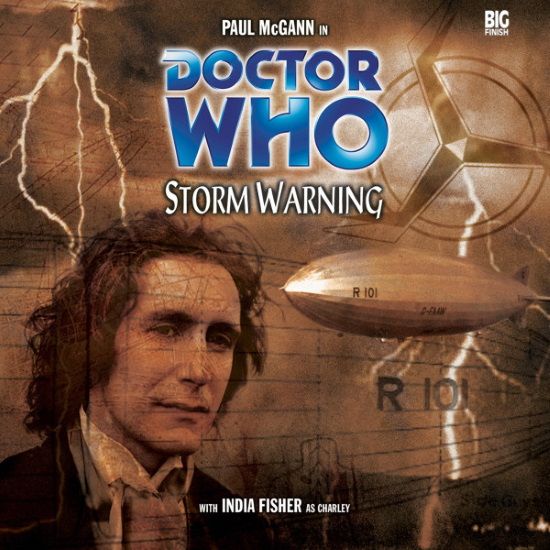
As I said above, Paul McGann played the 8th Doctor in a TV movie that did not immediately spawn a rebirth of the television series. However, the sixteenth Big Finish release, Storm Warning, saw McGann return to the fold. It is a great mix of classic Doctor Who mixed with the new. The first thing one notices is a completely new version of the theme song. A bit darker and more foreboding than recent versions. The Doctor is in the TARDIS when he encounters some problems traveling through the Time Vortex. A creature called a Vortisaur breaks into the TARDIS and becomes a companion, of sorts. The scene shifts to October 1930 aboard His Majesty's Airship R101, but not before a brief mock-radio broadcast introducing the R101. We are introduced to Charley, who will become The Doctor's new companion. All seems to be normal but we find out that the design of the airship was modified in a hurry and who is the mysterious passenger in cabin 43?. I won't spoil the plot for anyone, but I must say that it is a fantastic listen. The airship's engines are a persistent hum in the background and the thunderclaps when it enters a storm create a wonderfully moody backdrop as mysteries are solved and the story comes to a climax. At the end, The Doctor plucks Charley from Earth and they go off adventuring. But removing Charley from her timeline has serious repercussions. The original plan had been for a three or four season story arc but this was cut short due to the resurrection of the television series by the BBC in 2005. Despite this, the 8th Doctor has some prime adventures.
Sword of Orion follows Storm Warning, bringing the return of The Doctor's long-time enemies, the Cybermen. The beginning of this episode is quite scary, as it takes place on an abandoned space ship. At least it was thought to be abandoned. Invaders From Mars injects a bit of humor as The Doctor and Charley fend off an alien invasion in New York City on Halloween 1938, just before Orson Welles broadcasts his famous version of War of the Worlds. Welles is a character in the story, which made for a real treat for this film fanatic. Following on the heels of Invaders from Mars comes The Chimes of Midnight, one of the best adventures in the whole Big Finish canon. With its minimalist story, it's creepy and engaging. The TARDIS lands in an abandoned Edwardian mansion. Scenes of The Doctor and Charley investigating the house are intercut with those portraying the servants of the house preparing for dinner on Christmas Eve. Slowly the relationship between these two lines of events becomes apparent and they merge. Once our heroes are transported into the "other" house, things really begin to get spooky. The household help are found murdered but once the clock strikes twelve, time goes backwards and the dead rise. The characters then act out the previous scenes again. The story takes place solely inside the mansion and the repetition of scenes with minor variations is immensely effective. This story, with its intimate setting and repetition of scenes, likely would never have made it onto television. Chimes of Midnight is a great example of how Big Finish tinkered with the Doctor Who formula and produced some compelling drama.
After a brush with The Doctor's archenemies, the Daleks, we come to Neverland. It is here that the act of plucking Charley from her time line proves consequential. The Web of Time is breaking and is proving disastrous for the entire universe. This episode hails the return of Romana, as played by Lalla Ward. Formerly a companion of the 4th Doctor, she is now President of the Time Lords. Neverland is merely a setup for Zagreus, which celebrated the 40th anniversary of Doctor Who. It featured the 5th, 6th, 7th, and 8th Doctors, plus it brought back many of the actors who have played companions, although they often voiced other roles. While the concept, a showdown with the ancient Time Lord, Rassilon, was good on paper, the actual episode was a mess. The end result was that The Doctor and Charley find themselves sans TARDIS in The Divergent's universe struggling to find their way out.
The first adventure in this new universe is Scherzo. Penned by Robert Shearman, who also wrote Chimes of Midnight, it is another excellent play against the show's conventions. The Doctor and Charley find themselves in a sensory-depriving world of white where they have no sense of time nor space. It is all about dialogue, and, again, could never have been a TV episode. The relationship between The Doctor and Charley becomes quite strained but they eventually come to terms with their predicament and reaffirm their affections, however platonic they may or may not be, for one another.
The story arc in The Divergent's universe ended seven episodes later with The Next Life. Along the way, The Doctor takes on another companion in C'rizz, a chameleon-like humanoid of the Eutermesan race. These episodes are a mixed bag, with the highlights being The Natural History of Fear and Faith Stealer. The Natural History of Fear takes place in the dystopian City of Light. Our heroes have no recollection of who they are and act out the parts of rebels. This is one of the most disturbing Doctor Who's ever. Faith Stealer is a more traditional romp which takes place in The Multihaven, a marketplace of religions. It is a good mix of humor, drama, and suspense. The Next Life itself is in many ways a rehash of Zagreus, in that it retains its predecessor's bloated feel and rather aimless plot.
Of the episodes since The Next Life and the end of the Divergent's universe story arc, Terror Firma stands out, as it features the Daleks once again, along with their heinous creator, Davros. It also gives some striking revelations about The Doctor's past.
Despite some misfires, the 8th Doctor is, in my estimation, a success. Paul McGann's performances became more confident as his tenure wore on and he really has taken on the role and made it his own. Along with The Doctor's pedantic side, McGann has brought out a more human side of the character with his relationship with Charley. He has moved beyond being a paternalistic figure and become a true friend openly displaying affection for his friends. In addition, I loved the multi-season story arc, even if it wasn't pulled off as well as it could have been. There are still many revelations to come.
Colin Baker's tenure as the 6th Doctor on television was cut short by the BBC and the "masterplan" for his character never came to fruition. His character was derided as being overly-abrasive and fans generally loathed his multi-colored patchwork Edwardian coat, which I happened to love. Moving to the audio world alleviated fans from seeing the coat and allowed the 6th Doctor to mature.
His adventures are a mélange of traditional Doctor Who episodes, along with some very unique adventures. Whispers of Terror features TV companion, Peri, as played by Nicola Bryant. The story takes place in the Museum of Aural Antiquities and this scenario takes full advantage of the medium with eerie whispers winding their way from the left to right channels of your stereo. Baker really shines here, with his caustic TV personality giving way to one of bombast.
In The Marian Conspiracy, a new companion is introduced -- Evelyn. A kindly history professor, she is the oldest companion The Doctor has ever taken on. She proves an able foil as she is more than willing to confront The Doctor instead of sheepishly accepting his proclamations as gospel. The venerable Brigadier returns in The Spectre of Lanyon Moor, a more traditional episode. The Holy Terror introduces Frobisher, a companion from the Doctor Who comic strip, to life. He is a Whifferdill, a race that can change shape. And here he is in the shape of a giant penguin. The Holy Terror is at once dark and funny and is another great effort from writer Robert Shearman.
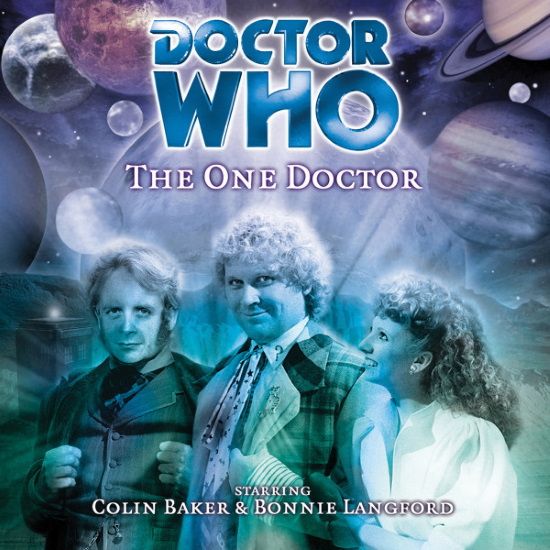
The One Doctor is nearly a slapstick comedy. The Doctor and Mel land on a planet in the Generios system and find that a con man is running around pretending to be The Doctor, along with a dimwitted companion named Sally-Anne. They fake an impending invasion and then arrive on the planet to save the day and abscond with their reward. This is truly a laugh-aloud episode which parodies many a
Doctor Who convention. Doctor Who and the Pirates features, of all things, The Doctor singing! He and Evelyn tell the story of one of their adventures to a grieving student of Evelyn's. The result is part
Doctor Who, part Pirates of Penzance.
The highlights of 6th Doctor episodes are many. . . .ish is a linguphile's dream. It's a murder mystery set at a lexicographers' conference. Full of ingenious wordplay and discourses on language itself, it utilizes the medium perfectly. Project: Twilight and its sequel, Project: Lazarus, are disturbing vampire stories which are extremely violent (for Doctor Who, anyway) and are perhaps the first stories not particularly suitable for children. The events cause a rift in the relationship between The Doctor and Evelyn which takes a few episodes to be healed.
The 6th Doctor episodes really allow Colin Baker to stretch his talents. The caustic personality he was forced to cultivate on the TV show has mellowed, allowing his humor and even tenderness to come through. Evelyn proves a great companion that The Doctor sees as an equal, in many ways. Baker benefits from some great scripts. Those written for him on TV seemed forced and stretched the formula too thin. In the audio realm, there's new life to him in the conventional tales and those that go against convention are remarkably effective and entertaining.
Peter Davison had the unenviable task of becoming the 5th Doctor after the enormously popular Tom Baker, who played The Doctor for seven years, the longest of any actor. For many, Baker IS The Doctor with his bug-eyes, mop of dark, curly hair, a 13-foot scarf, and total disregard for propriety. He also injected a big dose of humor into the role. Davison, on the other hand, was the opposite of Baker. A less imposing figure, he sported straight blond locks and wore a cricket uniform. Whereas Baker would march into danger cocksure and defiant, Davison seemed to stumble into danger and with much less confidence.
Davison's Big Finish adventures generally stick close to established formulas. Despite this, there is some great, moody drama to be had. The Land of the Dead and Winter for the Adept do a great job of evoking their cold, snowy settings. So much, in fact, that I actually felt quite chilly while listening to them. Phantasmagoria and The Council of Nicaea are serviceable, but fun, treks through Earth's history. The Eye of the Scorpion takes place in Egypt in 1400 B.C.E. and it is here that the 5th Doctor takes on a new companion that didn't appear in the TV series, Erimem. She's a feisty, headstrong lass who adds a new dynamic to the TARDIS family. I haven't totally warmed to Erimem but she has become less annoying as I listen to more adventures with her.
Loups-Garoux features TV companion Turlough. It's set in the year 2080 in Rio de Janeiro during Carnival. The wealthy heiress, Illeana de Santos, has an ill son and fears the return of the "Grey One." This is a werewolf tale, adeptly told so as to make it a thrilling listen. Davison sounds quite confident here. Spare Parts and The Mutant Phase see Davison battling a couple of his archenemies, the Cybermen and the Daleks, respectively, and his foes are in fine form here.
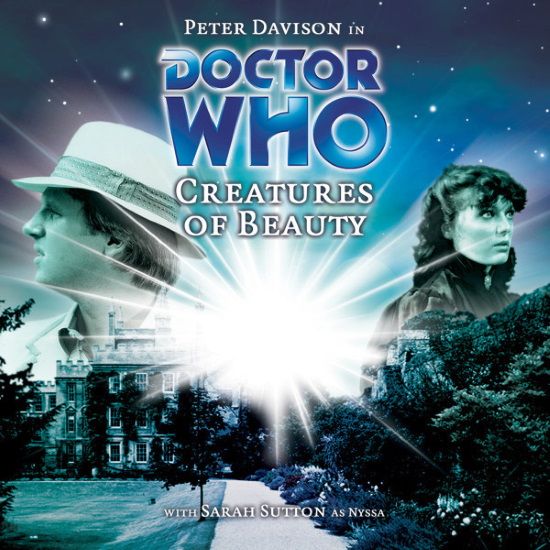
An exception to the rule that the 5th Doctor adventures don't deviate from convention is Creatures of Beauty. When The Doctor and Nyssa arrive on the planet Veln, they find that its inhabitants have been suffering from a genetic disease foist upon them a hundred years ago by a race called the Koteem. The disease disfigures those it afflicts and, in the intervening time, the scarred, mutated appearance of the Veln has become the norm. However, the wealthy can afford cosmetic surgery which restores their features and incurs the ire of those who cannot afford such procedures who deride the rich as "beauties." The Koteem, meanwhile, have tried to make reparations for the disaster they unleashed but the Veln rebuke their efforts. It is a meditation, of sorts, on morality with The Doctor donning the hat of Socrates and asking, "What exactly is the 'right thing'?" The narrative of Creatures of Beauty is completely fractured. The same events are told from different viewpoints in a Rashomon-like fashion. This technique allows for a more thorough examination of the characters' decisions and motivations and, thusly, their morality. It's another instance of Big Finish going where the BBC could not, they've come up with a dense adventure that draws fantastic performance from all involved.
When the BBC cancelled Doctor Who in 1989, Sylvester McCoy had finally settled into the role and the show was in media res of a story arc involving the past of his companion, Ace, which revealed a more manipulative side to The Doctor. The last few stories of the 7th Doctor were some of the best the series ever produced, in my humble opinion. Luckily Big Finish appeared to continue the story with McCoy's brogue and rolling Rs.
Unregenerate features a virtuoso performance from McCoy. The Doctor has seemingly lost his mind and is locked up in an asylum. Meanwhile his companion, Mel, is stuck on Earth after the TARDIS returns empty. Who is the mysterious figure in the asylum known as K-14? How will Mel reunite with The Doctor? Although listeners know that all will turn out well in the end, McCoy's babbling is genuinely disturbing and Unregenerate is one spooky story. The Genocide Machine is a favorite of mine. As an avid reader, I appreciated that the story took place at Kar-Charrat, a library and one of the wonders of the universe. It also doesn't hurt that the story features the Daleks.
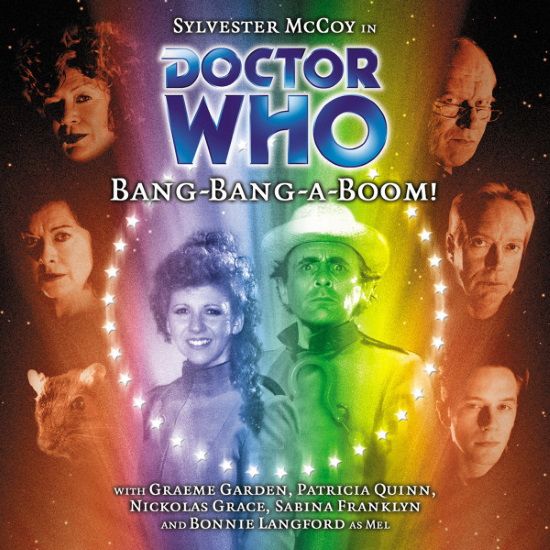
Bang-Bang-A-Boom! is a great comedic effort that parodies reality TV, specifically American Idol and its ilk. Flip-Flop is unique in that one can listen to either CD in either order yet the story makes complete sense. Using the concept of time travel, the story tells of the planet Puxatornee and its fate. Just as with Creatures of Beauty and The Chimes of Midnight, Big Finish has used an untraditional narrative to great effect.
In the lead up to the 40th anniversary show, Zagreus, the 5th, 6th, and 7th Doctors were each given a chance to confront an old foe. Davison encountered Omega, Baker confronted his nemesis Davros, and McCoy had an extended conversation with The Master, another renegade Time Lord who, unlike The Doctor, is pure evil. Master is yet another instance of the audio series taking
Doctor Who where the TV series could never go. The story opens with The Doctor telling the tale to a would-be assassin. It continues and we are taken to the planet Perfugium where we find that the Master has lost his memory. He lives on Perfugium as Doctor John Smith. It is the tenth anniversary of his arrival on the planet and he invites his friends Victor and Jacqueline Schaeffer over for dinner. Hearing the Master as a kindly gentleman is quite disturbing. The Doctor is more a narrator here than protagonist as his role is rather limited. There is very little action in Master. No heroic escapes nor last minute tinkering with a computer. Instead the story unfolds slowly, with plenty of dialogue meditating upon the topic of the nature of evil. As the ideas are being batted about, we find out what drove the Master to become the cruel, malicious man that we know. (Knew?)
The Big Finish audio adventures are a rousing success. Not only do they allow us to wallow in a familiar past, they also give us the chance to experience stories that would have been impossible for the television series. The return of familiar voices is treat enough but to have the 8th Doctor brought to life is a joy indeed. Fans who may not have liked the TV adventures of these Doctors would do well to listen to the audio dramas. Characters are fleshed out and given more substance. In many ways the Big Finish productions move Doctor Who away from being a series for kids. There's a small amount of mild profanity, for instance. But there's also some very intense violence and situations. Plus when the stories tackle weighty issues or when they turn narrative conventions upside down, most of the thematic material will go over the heads of younger listeners.
In addition to the regular monthly releases above, Big Finish has other series in the Doctor Who universe. Villains such as the Cybermen and Daleks get their own series as does former companion of the 3rd & 4th Doctors, Sara Jane Smith. There is also Doctor Who Unbound, which features various actors playing the role of The Doctor in one-off episodes. The role is even played by a woman in one. Plus there's several Special Releases featuring the familiar Doctors and companions that are given away with Doctor Who Magazine or to subscribers to the audio adventures. Big Finish has truly done a great job in recreating and expanding this old favorite.
(This was originally published at The Green Man Review back in 2006.)