Showing posts with label Boston Beer Company. Show all posts

16 July, 2022

Sam's Wicked Summer: Summer Ale by Samuel Adams


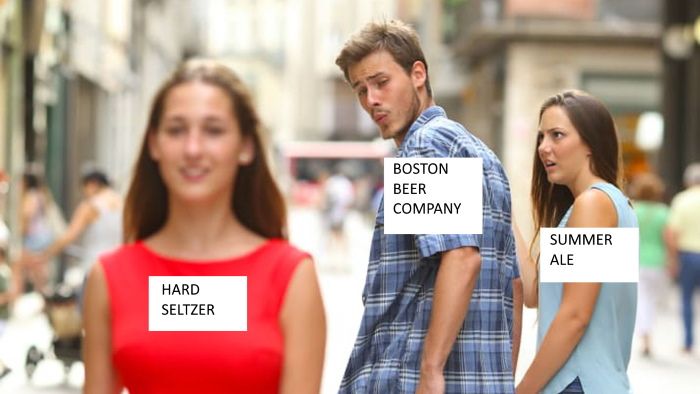
For a business named "Boston Beer Company", they sure do produce a lot of boozy drinks that are not beer. It appears that their Truly hard seltzers are all the rage these days and make up the bulk of their sales. This taken together with their also popular Twisted hard iced teas and Angry Orchard hard ciders means that poor Sam Adams beers make up a rather small percentage of total sales for the company. And now they're making alcoholic Mountain Dew which is apparently rather popular.

While beer isn't the big performer, I don't know if Boston Beer is brewing less of it or if they're simply brewing a lot more seltzer and whatnot.

Their beery line-up is in near constant flux seemingly because of a need to jump on every craft beer bandwagon. I don't keep a sharp eye on their offerings but it feels like every time a particular variation of an IPA becomes popular, Sam Adams is all over it like a fly on shit and releases 3 or 4 versions. Beyond IPAs, Sam Adams has some fine beers. I like Boston Lager quite a bit, though I've heard they have tweaked it. Sam ’76 (which appears to be called Wicked Easy now) led me onto the path of refreshment a few summers ago when I was in Indianapolis and it was quite balmy out. I suppose my favorites, though, are their winter seasonals. Winter Lager and Alpine Lager are fine brews for snowy days. The former as well as the white ales they offer in the colder months feature the fruits and spices we associate with Christmas cookies and mulling and so they have that holiday taste which offers a nice break from hops.

But those beers are months away and 80+ degree highs are here. That means it is time to drink Oktoberfests. Ha! I keed, I keed. I recently took a break from my summer standards (mainly Bubbler and Kid Kölsch) and bought some Sam Adams' Summer Ale for the first time in a while.

Summer Ale, a wheat ale, is like the younger sibling of their winter seasonal Cold Snap, also a wheat ale, which features a whole host of ingredients beyond the ones we usually think of when we think of beer. It has citrus zests, bits of flowers, and spices such as the highly uncommon Grains of Paradise. Summer Ale pares the unusual ingredients list down to the citrus zests plus some Grains of Paradise.

Grains of Paradise are the seeds of a West African plant that is a member of the ginger family. They taste a bit like ginger but with more of a woody component, to my tongue. I've purchased them at The Spice House in the Milwaukee Public Market but have never seen them for sale in Madison, though they must be around somewhere.

There is much about beer chemistry that escapes me. I learned way back in the olden times that wheat, as a rule of thumb, produces a bigger head than barley. Proteins or some such thing. And so, with that little tidbit of knowledge I have since gone on and assumed every wheat beer will have this big fluffy pillow of foam on top and, without fail, I am shocked – SHOCKED! – when a wheat beer doesn't despite it having happened countless times.
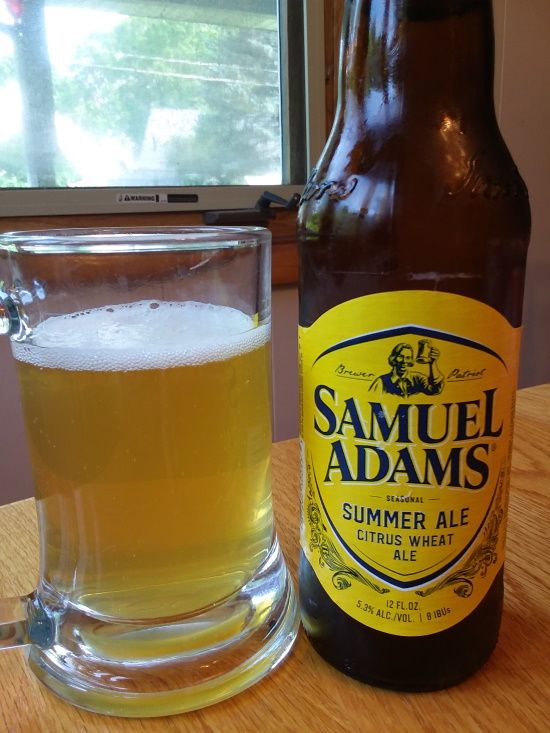

Well, count Summer Ale in this group that shocks. The head was naught but a small, white disc of foam. Otherwise, the beer looked delightful with its refulgent yellow hue that had a slight haziness to it. For me, the beer smelled of wheat and the woody bit of Grains of Paradise with a little citrus underneath.

As expected from a summer beer, it had a fairly light body along with ample fizz. Again, wheat and Grains of Paradise were most noticeable with the spice having a more gingery flavor to them in addition to the woody/earthy aspect. The citrus was more prominent than in the aroma with an emphasis on the lime. I didn't taste much in the way of hops until the finish when a little peppery hop flavor was joined by a mild bitterness. The citrus came closer to the front and gave my sip a bit of tartness at the end.

I quite like this stuff. It's mellow and refreshing with the citrus being an accent flavor instead of sitting front and center. And the Grains of Paradise are novel and tasty and they work well with the wheat and fruit. I like it that there's something different here that isn't simply a tropical fruit pulled from obscurity on some island for the sake of novelty. Refreshing restraint at its finest.

Junk food pairing: Pair Sam Adams Summer Ale with a bag of Flamin' Hot Cheetos.

07 December, 2020

Tis the Season for Weihnachtsbier

While winter has not started yet here in Wisconsin, the temperatures have fallen and highs are generally in the 30s. The ground is bereft of snow so I am hoping for a few inches to cover up all of the leaves I didn't bother to rake up last month. As the weather gets colder, beers usually get stronger.

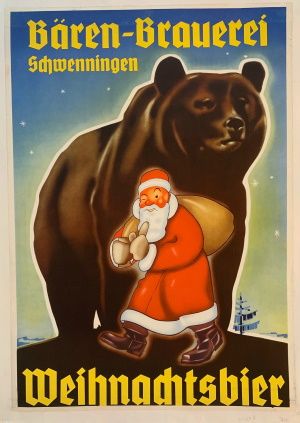
I believe that Weihnachtsbiers - Christmas beers - are a Bavarian thing. My understanding is that they're dark amber bock biers with an A.B.V. in the 6-8% range and that they become available by 4 December so that one can have a few and terrorize the neighborhood kids on the eve of St. Nicholas Day in your Krampus costume. Or for mellower folks to have a little warmth while strolling around a Christkindlmarkt.

The Germans are an orderly people and surely have well-defined parameters for what constitutes a bock and a doppelbock. (Or maybe they're all simply Starkbiers.) Now, whether the Weihnachtsbier is similarly defined or not, I don't know. It could be that merely slapping "Weihnachtsbier" on your label makes it so. Does it count as a doppelbock if it's not "Weihnachtsbierator"?

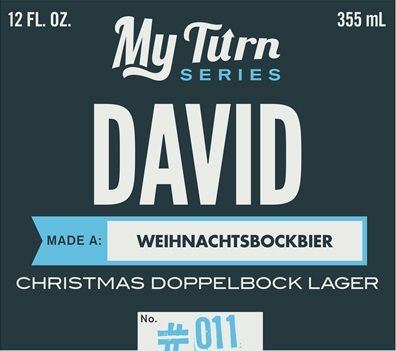
For all of the German heritage here in Wisconsin, I don't know of any breweries that proffer a Weihnachtsbier. Lakefront brewed one several years ago in their limited My Turn series because an employee named David chose the style.


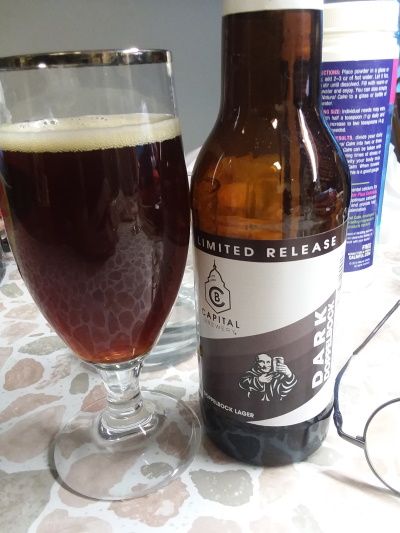
Despite the absence of Weihnachtsbiers, there are plenty of bocks to be had. Zum beispiel, Next Door has Integrator, a doppelbock, albeit one with a Lenten bier name. And Capital has doppelbocks aplenty as it has for years. Varieties available now are apple, pumpkin spice, and this classic:


It's a weird world where a brewery with Kirby Nelson at the brew kettle doesn't have a doppelbock ready for patrons seeking a respite from the chilly weather. Perhaps he brews one now and again but the Wisconsin Brewing Company webpage is bereft of them. It's a shame that he has seemingly abandoned the style. Recall that Kirby's Manoomator, a wild rice doppelbock, was wonderful. Personally, I think a wild rice bock would be a great late fall brew. You can get your fill of Oktoberfests from July into Oktober but, when Halloween is around the corner and Thanksgiving on the horizon, a wild rice bock would really hit the spot after raking leaves. (If you do such a thing.) Plus wild rice is largely an upper Midwestern crop so it would be a regionally specialty that could sit nicely next to a cranberry lambic or a venison hazy IPA.

So what to drink when winter settles upon the Land of Cheese?

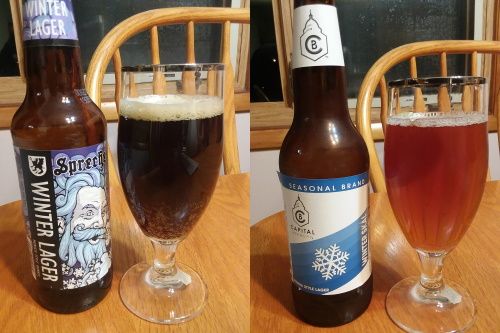
The old standbys for me are:


The funny bit is that, although Sprecher and Capital declare these to be their winter seasonal brews, they're not particularly heady beers. Winter Lager is a Bavarian Dunkel while Winter Skål is a Vienna lager. Each brewery has an annual, Black Bavarian and Wisconsin Amber, respectively, that I feel are more appropriate for this season. To my taste, Black Bavarian has a bigger body than Winter Lager while Wisconsin Amber is sweeter than Winter Skål, though slightly less potent. I would lobby for Winter Lager and Winter Skål to be available year-round after being christened with less frosty names.

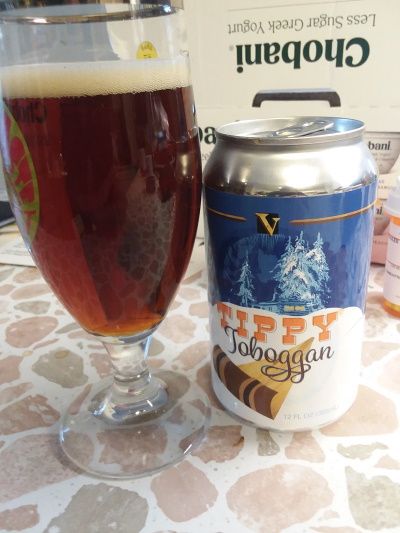
Another bier that I look forward to every year when the leaves have fallen and snow is immanent is Tippy Toboggan from Vintage Brewing. It's a bock strength Roggenbier - think a weissbier with rye brewed to bock potency.


It's got that taste of banana and clove flavors that is familiar to weissbier drinkers the world over but it also has some spicy, earthy rye flavor. And I love rye. Just a great beer.

These are my holy trinity of winter brews. New Glarus' Back 40 Bock is a runner-up as it's not brewed with regularity. This time of year also brings a slew of beers flavored with various spices and sometimes fruits. I find these beers to be fine, if drunk in moderation. Great Lakes' Christmas Ale seems to be held in high regard but I am unsure if it's ever been in my mouth. I do like Sam Adams' Winter Lager, though.

While the Wisconsin Brewing Company neglects the bock at wintertide, they did brew a Pfeffernüsse spiced ale a few years back. Did anyone try this?

Can you recommend a good winter brew?

17 February, 2018

A Smoked Lager by Any Other Name: Smoked Lager by Sam Adams


A couple months ago I wandered lonely as a cloud through my local grocer's liquor store and came upon Sam Adams' American Craft Lagers Variety Pack. As a lover of lagers it was quite refreshing to see an assemblage of beers that had been given a generous amount of time to age, weren't barrel aged, nor described as "juicy" yet had a plethora of flavors on offer. Many breweries whose stock-in-trade is the IPA throw in a pils or unleash an Oktoberfest in the autumn seemingly to demonstrate that they are not some one trick pony but lagers generally don't get a lot of love. And, truth be told, a lot of these black sheep of the brewery lagers are just not very good.

The variety pack was lead by Sam Adams' flagship Boston Lager. Filling in the ranks were Noble Pils, Fresh as Helles (a helles with orange blossom), Coffee Black Lager, Kellerbier, and Smoked Lager. The last one was especially pleasing to find as smoke beers are close to my liver and like the Brigadoon of the brewing world. Not only was I blessed with a plethora of lagers but my purchase entitled me to a free ham. You don't get porcine lagniappes with those trendy hazy eyepahs.

One notable aspect of the variety pack that didn't occur to me until I got it home was how utilitarian the names are. (Did Peter Singer do the labels and marketing?) "Smoked Lager", "Coffee Black Lager" – not even "Al's Smoked Lager". If someone ever remakes Repo Man for the craft beer age, they will surely hire whoever came up with these names as production designer.

And the labels. They are moderately spartan with an image against a mostly solid background. Other beers get a scantily clad woman who adheres to conventional conceptions of beauty or a pistol-wielding cat riding a unicorn. Here the Kellerbier label has a rendering of what appears to be Delicate Arch out in Utah. Huh? On the other hand, the Fresh as Helles label has an appropriate Pantone shade of orange and I must admit to liking the absurdity of a bear holding a coffee cup on the Coffee Black Lager label. If only it was extending it ursine equivalent of a pinkie finger. Overall, though, the look of this variety pack just feels thrown together.

But what's truly important is what lies beneath the label and behind the glass when the lip of the bottle is between my lips.

Smoked Lager is a lovely deep amber hue and quite clear. My initial pour produced a rather small tan head although my subsequent attempt at getting the beer in my glass provided a much more generous topping of foam which was more befitting of a fine lager. Inside there was a lot of bubbles which, again, pleased the aesthete in me.

I was surprised by just how sweet the beer smelled. Some caramel, some stone fruit. The smoky scent registered as medium on my highly unscientific syringolic scale but was oh so nice. To round things out was a touch of grassy hops.

Thankfully Smoked Lager proved to not actually taste particularly sweet and the honeyed aroma belied a light-medium body. While there was some sweetness there, the rich smokiness stepped forward. It was paired with a gentle bread flavor as toasty and earthy tastes hovered in the background. A dash of peppery hops and generous fizz added to the crisp lagery goodness.

The finish was dryer than I expected and more bitter as well. Again, it was the fizz and spicy hops. But some smoke lingered as well. Schaumhaftvermoegen levels were at Defcon 3 with several streaks of foam lining my mug.

This is a very good beer. Bamberg, Germany's Schlekerla is the standard bearer for smoked lagers even if only because theirs are most commonly found on store shelves here with the other brewers in Bamberg choosing to keep things local, generally speaking. Sam Adams' take on the style isn't as smoky as Schlenkerla's but by no means is it merely an accent. To the fore yet still something that an open-minded non-rauchbier drinker wouldn't immediately flee from in terror. The smoked malt was done so using beech wood. This variety is very common though I am not sure why. Perhaps an Old World legacy?

The one thing that didn't thrill me about Smoked Lager was the carbonation. A tad too much fizz. It gave the brew a sharpness that detracted from the smoke whose mellow richness should be allowed to shine. But this isn't a fatal blow.

Junk food pairing: Presumably the free ham deal is over and has moved on to pretzels or cheese. So pair your Smoked Lager with some Lay's Barbecue Ham or Kettle Brand's Maple Bacon potato chips.

And remember, smoke is the new haze in 2018!

01 May, 2016

Swarming With Flavor: Honey Queen Braggot by Boston Beer Company


My brackett mini-marathon continues today with a braggot from Sam Adams - Honey Queen. It's part of their Small Batch Collection which comes in bombers. I've really enjoyed a few of the Small Batch brews including a rauch bock and a sahti so of course I've not seen them since those first highly pleasurable dates. I'm not sure if this is because they're no longer being brewed or they just aren't available in Madison or if I am simply looking in all the wrong places.

My previous brackett review was of a c. 2009 brew and I was saddened to taste that it had gone south. My bottle of Honey Queen was of a much more recent vintage – 2014. The bottle explicitly says "Enjoy now or age it to further develop rich and unique flavors" and this, combined with the fact that the bottle had been away from light in my cellar, made me mildly hopeful that I'd have a drinkable beverage upon decanting.

Honey Queen pours a dark yellow. I was surprised to find that it was a touch hazy. I don't know why but such was the case. My pour produced a nice head that left my glass adorned with a brilliant white and very creamy head. It didn't last a particularly long time but long enough- perhaps 20 seconds or so. There were some scattered bubbles inside my glass going up.

I was a bit anxious putting the glass to my nose for the first time. However, I was greatly relieved when I smelled slightly sweet honey but, more importantly, a distinct absence of vermouth. There are hops and chamomile in this braggot and they came across as a pleasant mild herbal scent. Beneath this sweet, floral-herbal mélange was some crackery malt. A dramatic improvement over the senescent brackett from a few days earlier.

By no means am I a braggot expert. How much should one taste like mead? How much like beer? I suppose that as long as you have some of each, you're in like Flynn. Honey Queen had a rather big floral and slightly fruity honey flavor up front. However, it was only slightly sweet. Underneath it was a light, biscuity malt flavor. And tacking its way through the two was a mild herbal & floral flavor which was hops and chamomile in concert. The herbs gave a little bitterness.

That great semi-sweet honey flavor lingered at the finish and was then joined by a swelling of herbal flavor along with a modicum of bitterness that made for a pleasantly dry ending. Honey Queen left some nice lacing on my glass with a scattering of spots and a couple large patches.

I was quite relieved to find that my bottle of Honey Queen hadn't gone bad. Indeed it was a real treat. Sam Adams says that it was made with three kinds of honey – Clover, Orange Blossom, and Alfalfa – but the differences amongst these varieties is beyond my ken. (Any honey sommeliers out there?) But I can tell you that they made for a fine floral sweetness on my tongue. Honey Queen has a deceptively light body that feels a bit heavier when the honey sweetness is at its height. There are also three kinds of hops - East Kent Goldings, Strisselspalt, & Aramis – and they, along with the chamomile, add a pleasant, mellow bit of herbal flavor and just enough bitterness to make for a noticeable contrast to the honey.

Honey Queen is 7.5% A.B.V. so it's either a big beer or a small wine depending on your preference. Regardless, it is extremely tasty.

Junk food pairing: I like to pair braggots with foods that emphasize the honey. Try some of your favorite honey mustard pretzels with Honey Queen.

28 April, 2016

Maybe you'd like it back in your cell, your Highness: Escape Route by Sam Adams


The Boston Beer Company, brewers of Sam Adams beers (and other adult beverage brands), made the news recently for all the wrong reasons: sales, profits, revenues – the whole shootin' match, basically, went down in the first quarter of this year. No doubt there is a goodly amount of schadenfreude in some circles over this news. I have read various people unleash streams of invective against the company, its beers, and its founder, Jim Koch, and I just don't understand the ill will.

While I am certainly not inviting anyone to feel sorry for Boston Beer Company, I must admit that I have something of a soft spot for Sam Adams. Having been formed in 1984, Boston Lager was a prominent fixture of my formative microbrew landscape back in the early 90s and I still enjoy it today, though not often. But there are times when I'm at a chain restaurant or perhaps in a city that isn't overly attached to microbrews yet Sam Adams is there.

Beyond earnings statements, Sam Adams has been in the brewing news as of late for its Rebel IPA series and its line of nitro brews in cans. I've not tried any of these beers and, as you see from the photo above, I have been drinking a rather different Sam Adams beer - Escape Route, an unfiltered Kölsch-style bier. Sam Adams bills it as being a "Limited Release" but, for a company that brews 2+ million barrels of beer annually and distributes nationwide, how limited could it be? I suppose it refers to the bier not being available year-round and instead released only in the depths of winter. Presumably the release of a light, easily quaffable brew when it is cold and dark outside in Boston and most of the rest of the country is simply Sam Adams getting a jump on seasonal releases.

As I said, Escape Route is a Kölsch-style bier that is unfiltered. My understanding is that such a bier in Cologne, the style's home, could not legally use the "Kölsch" appellation. And so, while Escape Route's lovely brilliant gold is quite Kölsch-like, its slight haze is most certainly not. Sadly, I had no stange for this review as mine are all packed away. I think that if I'd have had one, my ¼" head would have become a bit taller. Still, my glass had a respectable loose white topping of foam that hung around for a little while. On the other hand, with all those bubbles in the bier, a stange would have gussied up the presentation a little bit.

Escape Route's aroma was delightful and had everything that I expected. There was a really nice crackery maltiness to it that was accented by that characteristic fruity aroma from the yeast which was berry-like but with a touch of citrus. A faint bit of grassy hop lingered in the background.

The bier was light-bodied with a fairly delicate biscuit flavor that nonetheless managed to be big and up front. I absolutely adore this flavor and it's one that golden ales that try to pass themselves off as Kölsches usually don't have. The bubbles I spied earlier added a fizzy bite yet it was not so harsh as to obscure the rather subtle fruitiness from the yeast. It had a nice crispness to it too which complemented the mostly clean flavor.

Those biscuity malt flavors lingered on the finish until they were greeted by a moderate dose of hoppy flavor of the grassy/herbal kind and their attendant bitterness.

This is a very tasty bier. I believe that Sam Adams says the name refers to an escape from winter to spring. But it's also an escape from trendy barrel-aged sour double IPAs. This is not a big bier however you approach it. 5% A.B.V. is a moderate strength; the Strisselspalt and Aramis hops don’t assault you with tropical fruit tastes and are not particularly bitter; the malts give a light, biscuity flavor just as the yeast gives a light fruitiness to the proceedings. My bottle indicated that it was best buy June but I think the hops suffered a bit due to age. They just seemed a bit flat and lacked a fresh sprightly character which would have been nice to have tasted.

Still, Escape Route was, for me, a solid, flavorful Kölsch. It hit the right notes and just needs to be available fresh in the summer.

Junk food pairing: Because the Kölsch is not a big, bold brew, try something lighter with Escape Route such as Classic Ranch Fritos.

15 April, 2013

The Benedict Arnold of Beer: Double Agent IPL by Sam Adams


Sam Adams has taken the plunge into hop-fordwardness with their Hopology Collection, a series of beers that emphasize humulus lupulus. Double Agent is an India Pale Lager, a style which aims to mimic an IPA while retaining some lager characteristics, i.e. – very hoppy yet lean and crisp.

Double Agent pours a light amber and is very clear. I got a nice head which settled but still left a luscious bed of foam to get caught in my moustache. As the beer made its way from the glass to my gut, it left some nice Schaumhaftvermoegen. The aroma was a nice combination of the malt which had a plum-like sweetness and the hops which contributed grapefruit/citrus tones as well as a nice pine scent.

The taste was a lot like the aroma. There was a definite malt backbone to be had that had a peach-like sweetness. But the story here is the hops and Sam Adams used seven here: Zeus, Simcoe, Citra, Ahtanum, Cascade, Centennial, and Nelson Sauvin. You can taste grapefruit flavors first, which I presume is the Citra coming through, followed by a piney hop flavor which I believe is the Columbus hops. Mouthfeel is medium light which confounded my expectation considering the beer's color but it was just right considering the flavor. The resiny hop flavor gives way to a nice dry finish.

I was disappointed that, unlike the other IPL I've had, Coney Island's Sword Swallower, Double Agent didn't balance flavors well. It is certainly not a bad beer and hopheads should enjoy its medley of hops but I thought Sword Swallower hit the right notes in terms of melding hops and malt. Double Agent tasted more like a concession to the IPA trend than a unique riff on the well-known style. Still, I'd rather drink one of these than most IPAs when I find myself needing to overdose on American hops. And at 5% ABV, it is still quite sessionable unlike its ale cousins.

My guess is that most hopheads couldn't tell this IPL from an IPA. The differences are subtle. Since hops are the raison d'être of an IP-whatever, the lack of fruity esters may escape notice. Double Agent has a clean taste in this respect. The sweetness is of grain and not of yeast. As far as I know, the IPL isn't its own style in beer judging manuals. Whether it gains the honor or not remains to be seen but, to oversimplify on the basis of two beers, it really comes across to me as a pilsener brewed with American hops instead of Noble ones. Double Agent has 43 IBUs which is the high end for pilseners from Europe. In large measure, it's just the hop flavors which differ.

Junk food pairing: Quaff your Double Agent with some lime chili tortilla chips. Guacamole is highly recommended.

09 February, 2013

Sam Adams Winter Lager


Having heard about this stuff, I was keen to give it a go and I guess I lucked out because there were only a few singles left on the store shelf. This is because it's still winter which means that now is the time for summer seasonals. From what I've read, the dastardly phenomenon of seasonals coming out a season or two early is due to Sam Adams so thank you Sam Adams. (He says sarcastically.) On the other hand, SA makes some good beers and they make lagers to boot.

Winter Lager is a wheat bock brewed with spices, namely cinnamon, ginger, and orange peel. N.B. - this is a bock brewed with wheat as opposed to a Weizenbock which is 1) a strong version of a weizen and 2) an ale. So were not talking that tasty clove-like flavor given by the yeast used in weizens. At 5.6% ABV, Winter Lager will not warm you up on booze alone but is certainly hardier fare than your typical pale lager.

It's a very pretty beer with a deep amber color. The head was moderate and dissipated quickly. On the nose there was a warm, caramelly aroma with just a hint of fruit which may have been the orange peel. While the beer smelled pretty tasty, the aroma was, overall, rather faint. I thought it was be a bit more pungent considering the color and the spices.

On the tongue, Winter Lager has a subdued sweetness akin to milk chocolate along with roasted grain flavors. I was very surprised that I couldn't taste any of the spices. This is perhaps simply due to it being the middle of winter and my stuffy nose. Still, I let the beer warm up just a tad yet I couldn't discern any cinnamon or ginger. There is, however, an earthy taste which rounded off the malt sweetness before the hops hit my tongue and I presume this is where the spices come into play.

The beer had a great mouthfeel. It was stout enough to provide some midwinter sustenance yet not thick and filling. Very quaffable and refreshing after a bout of snow shovelling. It finished with a moderately low lingering hop bitterness that was herbal/grassy. I'd swear that I could also taste the orange peel, but only just.

Winter Lager is a good beer but I was disapponted that the spices were hidden. Coney Island's Albino Python used a similar clutch of spices in a paler lager which worked very well and I was keen to taste how they'd work in a maltier beer. It was not to be. Nonetheless, WL was tasty. It goes down easily yet is heady enough to fend off the chill. New Glarus' Back 40 is still tops as far as winter bocks go for me, but Winter Lager is not a bad substitute.

Junk food pairing: grab a handful of garlic cracker nuts.