This came to mind after seeing how much my wife wants in maintenance. Ha!
Showing posts with label R&B. Show all posts
Showing posts with label R&B. Show all posts
03 March, 2026


21 June, 2023
29 January, 2023
18 October, 2022
01 November, 2007
Review: The Dynamics - First Landing
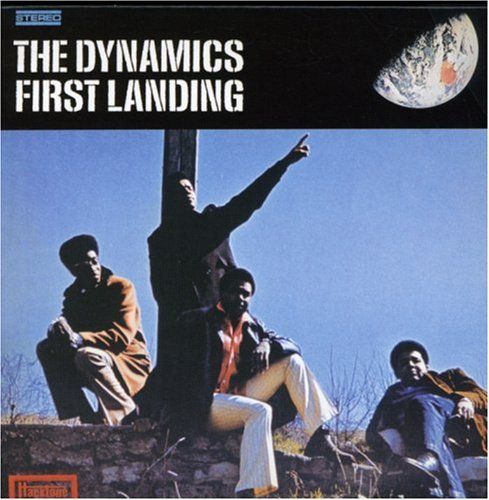
I want to admit that I don't know very much about the state of R&B; these days. But, if the occasional song I hear on the radio courtesy of my roommate is any indication, then I must say that it's for shite. There is the odd exception such as "Crazy" by Gnarls Barkley but, for the most part, R&B; these days hurts my ears. Thusly I was happy to receive First Landing by The Dynamics.
The Dynamics were 4-piece vocal group from Detroit populated by George White, Fred Baker, Zeke Harris, and Samuel Stevenson. They hooked up with Aretha Franklin's husband Ted White who got them onto the Atlantic subsidiary Cotillion and took them to Memphis to record this, their debut effort. "Ice Cream Song" proved to be a minor hit but, after this album, the band disappeared into the miasma that was late-60s. The album was first released in 1969 but has been given new life thanks to the folks at Hacktone Records. They recreated the original release's artwork even to the point of putting the CD in a paper inner sleeve.
"I Don't Want Nobody to Lead Me On" is a strong opener with Zeke Harris' confident vocals holding court. Harris handles the lead on the first five tracks and 8 of the 12 songs in total, though White and Baker get a chance to step up. He does another impassioned take on "Ain't No Love At All" but the song is marred by the melodrama of the strings. I've always been of the mind that strings are anethema to R&B; songs and there's nothing here to change my mind. With a beat oozing funk and punchy horns, why drain the dynamic with syrupy sweet strings? "Ain't No Sun" is a cover of a song by the band's Detroit brethren The Temptations and shows why an army of violins aren't needed to imbue a sense of drama into a song. These guys certainly had the pipes and they use them to great effect halfway in as the song slows down. What was side 1 closes with George White's falsetto on "What Would I Do" which emphasizes the blues in R&B.; White's pleading is just so smooth that it's a great shame that all the soul is drained from the performance by the strings.
Side 2 opens again with White handling the lead vocal chores on "The Love That I Need". There's a great melody here and I can imagine The Rolling Stones having covered this. What they would have done was to give it some more muscle which is lacking here. "Since I Lost You" is Fred Baker's lone contribution at the helm but he makes the most of it. In fact, the music struggles to keep up with his frenetic singing. And that's the general problem with the second half – it's too mellow. Somewhere along the way most of the energy got drained and there is a distinct lack of funk. "Murder in the First Degree" recharges the battery a bit but it's too late as it closes the album.
First Landing is a breath of fresh air in these days when R&B; generally means drums machines and synthesizers. It's not a perfect album but more traditional-minded R&B; fans will be glad this was pulled from the vaults and dusted off.
Review: Sterling Harrison - South of the Snooty Fox
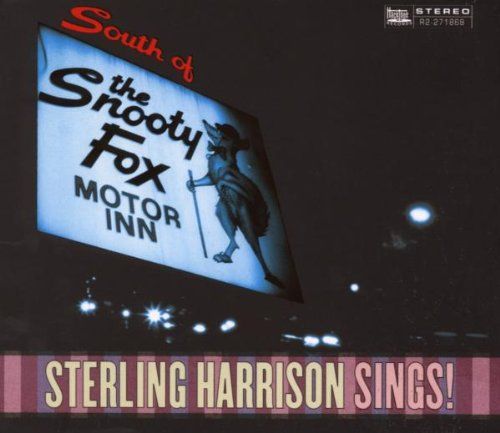
Hacktone Records is getting a reputation for releasing comeback albums by R&B; artists who had faded into relative obscurity. (See Arthur Alexander.) This time around it's Sterling Harrison's South of the Snooty Fox.
Harrison passed away in 2005 and this album was to be his chance to step up from the second tier of soul singers and show off his not inconsiderable talents. In his 40 year career, he had played with the likes of Otis Redding, Wilson Pickett, and Etta James but he was never able to strike out on his own and find more mainstream (i.e. – white) success. Snooty Fox was mostly recorded in 2001 and then polished over the succeeding few years until Harrison's death. It was not until this year that it saw the light of day.
Steve Berlin of Los Lobos was co-producer and he managed to get a nice sound that recalled the R&B; heydays of the 1960s while being planted in the 21st century. Harrison's fantastic baritone is up front leading the music as it should be. All of this means that the album has a nice raw sound that lets the singer ply his trade instead of being bogged down by the production which killed Alexander's comeback effort.
If a guy can take a Tom Waits song and make it his own as is the case here with "The House Where Nobody Lives", then there's something special going on. And indeed there is. "Ain't Nobody Home" may be most closely associated with B.B. King, but the version here is the perfect opener with the classic R&B; beat and Harrison's soaring vocals. O.V. Wright's "A Nickel and a Nail" changes the pace a bit before the booty-shaking of "Seven Days" with its scratchy guitar riff and some sax work from Berlin. "You Left the Water Running" leans towards funk and has some tasty organ work. Perhaps the highlight is the slow-burning "I'll Take Care of You" which showcases guitarist Larry Johnson at his finest. It's a Bobby Bland song which Harrison stretches out to nearly eight minutes of tense seductive flirtation with the listener.
It is a crying shame that Harrison was taken away by cancer because South of the Snooty Fox shows just what an immense talent he was – certainly the equal of the legendary peers he opened for over the years.
04 October, 2007
Arthur Alexander - Lonely Just Like Me: The Final Chapter
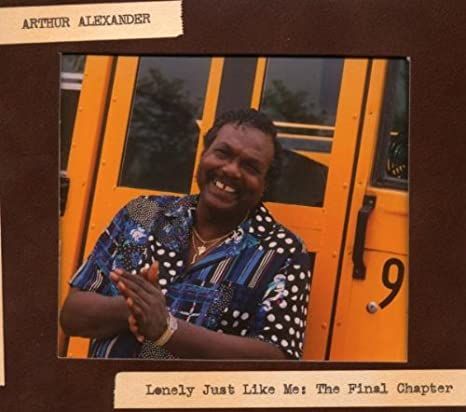
Last month saw the re-release of Arthur Alexander's comeback album Lonely Just Like Me: The Final Chapter by HackTone Records. Originally issued in 1993, the album marked Alexander's return to music after a 15 year absence. He had helped pioneer southern R&B; during the 1960s and his songs were covered by The Beatles, The Rolling Stones, and other rock pioneers of that time. Along with great fame came alcohol and drug abuse as well as an inability to find a good manager. He saw little reward for his work and he dropped out of music in 1977 and apparently sustained himself by being a bus driver. In 1992 some old friends convinced Alexander to give music another go and the result was Lonely Like Me which was released on Elecktra. Tragically, Alexander died only three months after the album's release and in the midst of a triumphant comeback. This final chapter collects the original album and adds demos and live performances from the time.
Alexander had a fondness for not only R&B; but also country and so the twang and the pedal steel that emerges halfway through the opening "If It's Really Got to Be This Way" might make a listener think they've wandered into Charlie Pride territory. While country and the blues arguably emerged from the same mother lode and they are not mutually exclusive, the song sounds more like the glossy power country of Garth Brooks and his ilk of the early 90s than a gritty derivation of folk. Most of the rest of the album suffers a similar fate with producer Ben Vaughn's emphasis on polish instead of heartfelt performance. With its home organ drum box, "Lonely Just Like Me" sounds like something from a Holiday Inn motel bar instead of genuine heartbreak. It's nearly impossible to discern the genius that inspired the first British Invasion here.
There is the occasional moment of relief, though. The sparse piano of "All the Time" makes for a rare moment of intimacy and the bluesy "Sally Sue Brown" is a bit ragged in the best way. Unfortunately, these moments are fleeting and the bulk of Lonely Just Like Me is just too safe without any jagged edges.
The real music starts 13 songs in with the bonus material on this release. First we are treated to Alexander's appearance on NPR's Fresh Air program. Here he tackles three cuts from Lonely Just Like Me and his classic "You Better Move On", which was covered by The Rolling Stones. The newer material benefits exponentially from the stripped down instrumentation. Alexander's limited range is at home against a backdrop devoid of bells and whistles. Just compare live "Genie in the Jug" to its studio counterpart. They are poles apart and, when he sings "She ain't never comin' back to me", it actually sounds like he means it instead of the line coming across as a pleasant approximation of feeling suitable for folks who buy music at WalMart.
You can also compare these two versions of "Genie in the Jug" to a third which is a demo recorded in a hotel room by producer Vaughn. It's just Alexander and an acoustic guitar. This performance really cuts to the bone and exposes his blues roots. It's simple, plaintive, and has more depth of emotion than the entirety of Lonely Just Like Me. The album ends with a live rendition of "Anna" recorded at the Bottom Line in 1991. This show got Alexander his record deal with Elektra. It's just guitar and organ along with voice. It's a shame that the potential heard in this sparse arrangement was lost in the transition to major label debut.
Subscribe to:
Posts (Atom)