14 April, 2026
A floral state of mine: Moorvolution by Revolution Brewing & Moor's Brewing
03 December, 2025
My refrigerator is full of beer
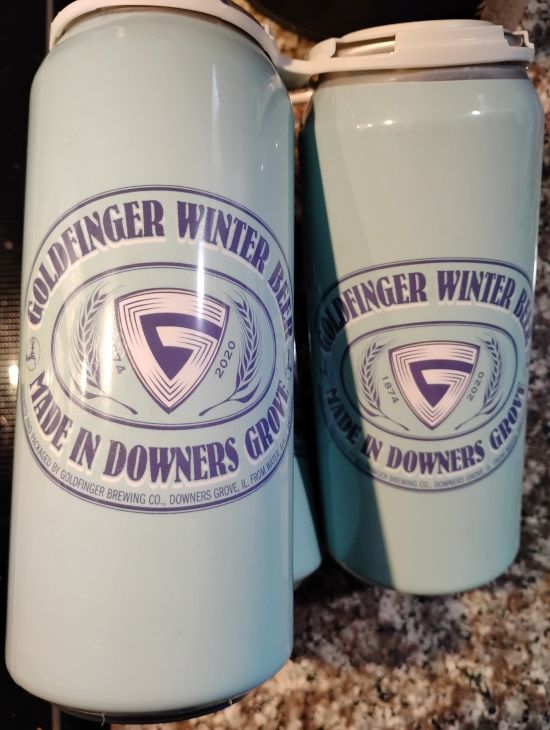
While down in Chicago's western suburbs last week, I went a bit overboard in my beer buying. I had a list of brews to seek out with Goldfinger's winter seasonal at the top of the list. It is a rye lager and I just could not resist. My stop at Binny's yielded nothing but I would not be denied. So I drove to the brewery one evening but they too were out. Thankfully I found some at Sal's Beverage Emporium or whatever it's called.
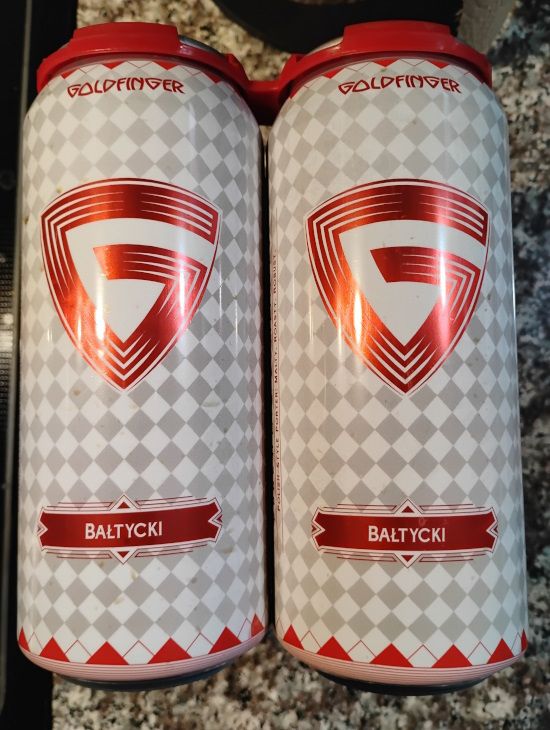
While Goldfinger was out of rye lager - not even a drop to be had on tap - they did have another brew suitable for winter, Bałtycki. Why yes it is a Baltic porter.
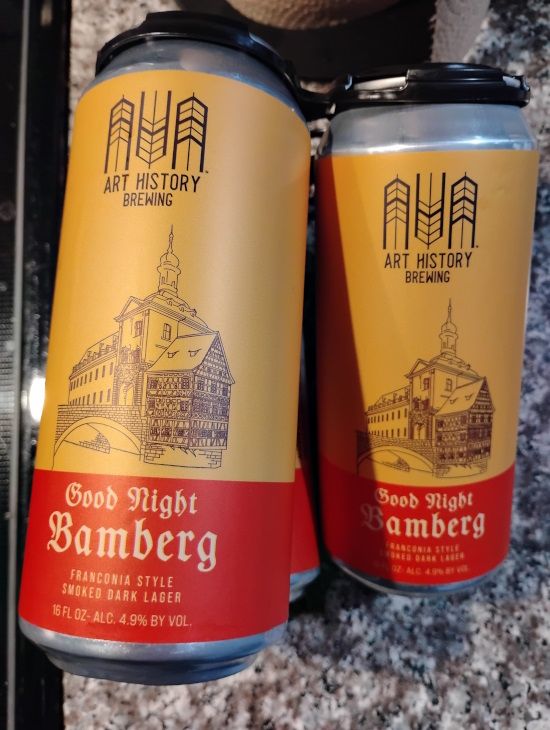
I also found Rauchbier, my first ever brew from Art History, I do believe.
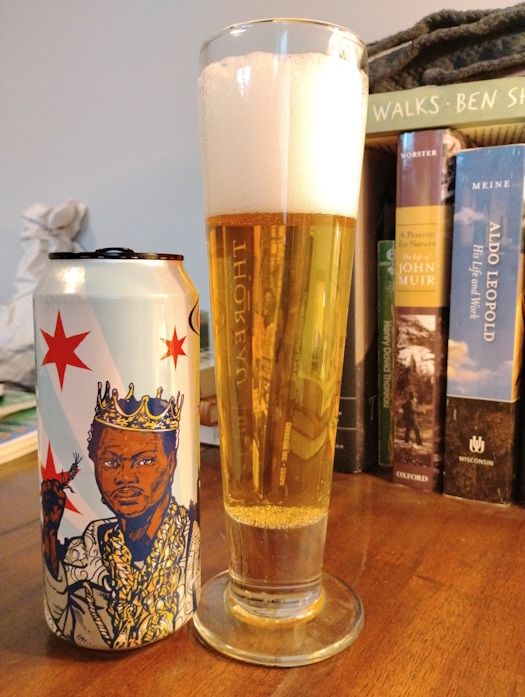
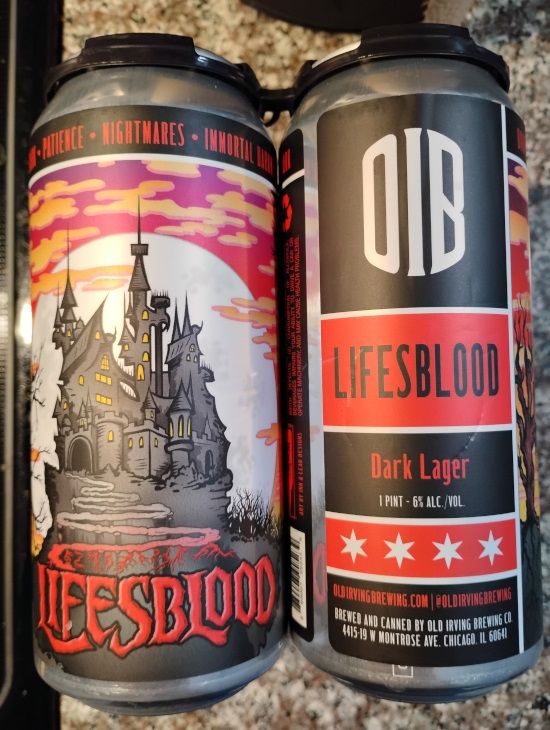
Old Irving Brewing is a new favorite of mine. While they brew IPAs that hold no interest for me, they do other styles more appealing to my tastes and do them well. I also think it helps that they are in a neighborhood near where I grew up.
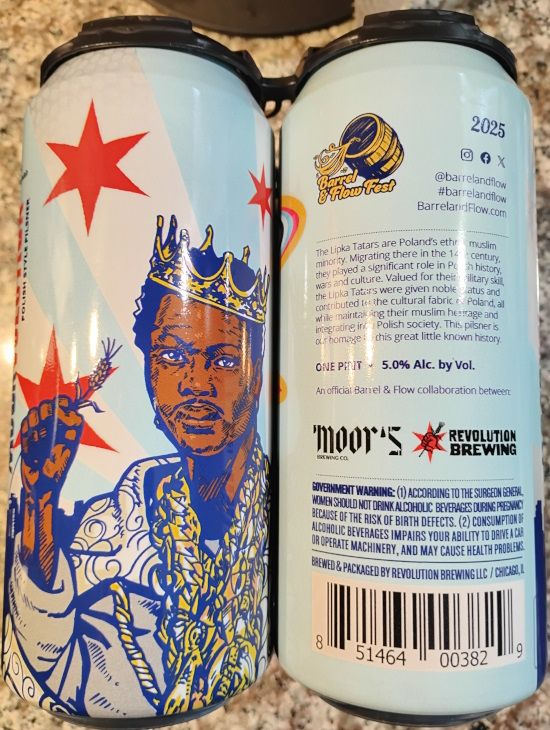
Lastly, I grabbed a 4-pack of this Polish-style pilsner from Revolution in concert with Moor’s Brewing whom I'd never heard of until I saw this beer. A leftover from the summer, it was a mere $5.97.
07 June, 2025
Back to the woods: Oakriginal Lager by Goldfinger Brewing Co. & Revolution Brewing
Has it really been nine and a half years since I've had a wood aged beer, Heart of Oak by Leine's? Bourbon barrel aged brews don't count as I think the idea is to infuse your beer with a spirit rather than a strictly arboreal flavor. While I'm on the subject, kudos to Lakefront for Wendy, a doppelbock which utilized bourbon-soaked oak chips that imparted a more subtle bourbon taste that complemented rather than overwhelmed the beer.
Plain, unspirited/unwined barrel/wood aged beers are hard to come by. Even more rare than Rauchbier. It's not exactly a mega popular flavor and dealing with wood must be a pain. You don't want any microbial thingies on your chips, staves, logs or whatever that would give your brew an off taste. Wood is a major flavor in wine so why isn't it in beer? And, as barrel aging goes, why is oak so popular?
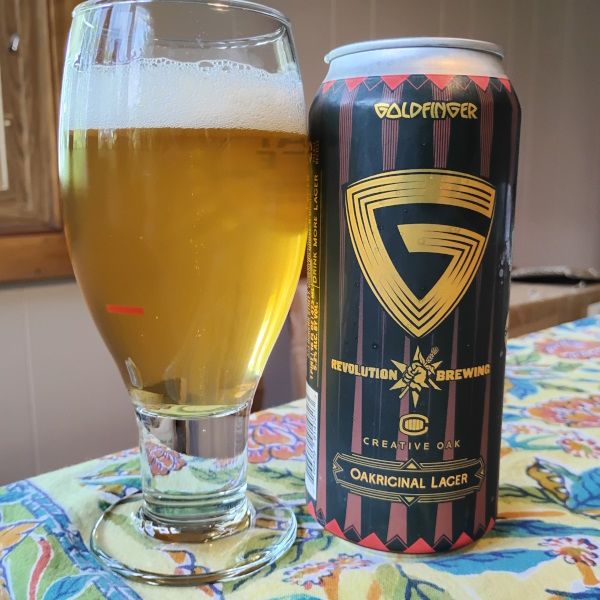
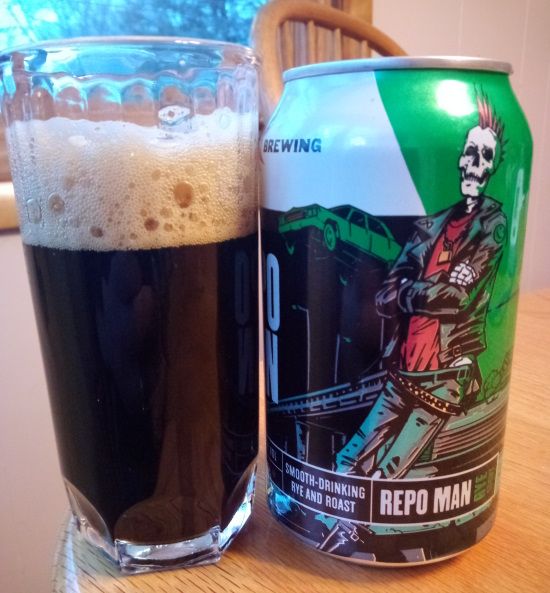
When I saw this wood aged beer sans bourbon, a collaboration between Goldfinger and Revolution, I just had to try it. Goldfinger is a great brewery that combines care and tradition to make very tasty lagers. While Revolution dances with many an IPA, they brew other beers more to my taste. For example, not only did they throw my favorite grain, rye, into a stout, they also put some neat Repo Man artwork on the label.
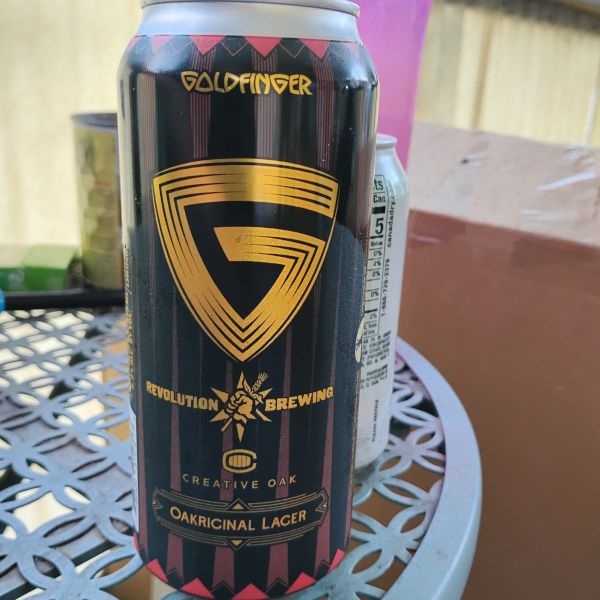
The Oakriginal can doesn't say exactly how this beer got its oak flavor. Was it aged in oak barrels? Were oak chips involved? Did the brewmasters head to the woods with Husqvarna in hand, cut down a random oak, and throw some of the resulting cordwood into the fermenter? Now that I look closer, I see that Creative Oak is listed on the label and this California company's website notes the work of their master coopers.
The can does note, though, that "single forest French oak" was used. If horizontal lagering tanks weren't enough, this is definitely getting into hoity-toity wine territory. French oak apparently has more tannins than American oak which perhaps explains its use in winemaking. In addition to bitterness, oak has a clovey, vanillay, and, well, woody taste. How will these flavors fare in a Helles?
My pour produced a big, white head that I could hear. The bubbles churned away in a micromaelstrom like they do in soda, my cat's pleading meows for dinner were barely heard above the din. As with any Helles, the beer was a lovely yellow but had a slight haze which I presume was protein whatever you call it as Goldfinger's lagers have always been clear as day as is conventional. Maybe something is imparted by wood that gives a touch of cloudiness. There were a few bubbles here and there inside. My first sniff caught a luscious bready scent followed by wood, and then grassy hops.
My first sip revealed a medium-light body with the perfect fizz. Those Maillard reactions done good as I tasted that precious toasty bread flavor along with those grassy hops. A fine Helles indeed. Then I tasted the oak underneath it all. It was rather mellow but it added a smoothness that took the edge off the hops a shade, I think. Plus I like the flavor of oak so it had that going for it as well.
On the finish, the malt and oak flavors had one final flourish and then quickly faded as the hops, now with a herbal, almost minty, taste, made things fairly dry and slightly less bitter.
Goldfinger makes great beers so I was totally unsurprised that this was a mighty tasty Helles. The oak was subtle but easily discernible and its taste accented the grain flavor very well. Same with the hops. The oak gave flavors unlike the ones hops do yet they played nicely together. An excellent brew.
Junk food pairing: Pair Oakriginal Lager with Jays Hot Stuff potato chips. Their earthy flavors complement the oak while the Helles with soothe the burn.
15 May, 2025
I've got wood...
...aged beer.
This is tasty stuff. It's nice to see a helles(?) given a twist that doesn't involve fruity-tasting hops.
01 March, 2023
Revolution's Repo Man Redux
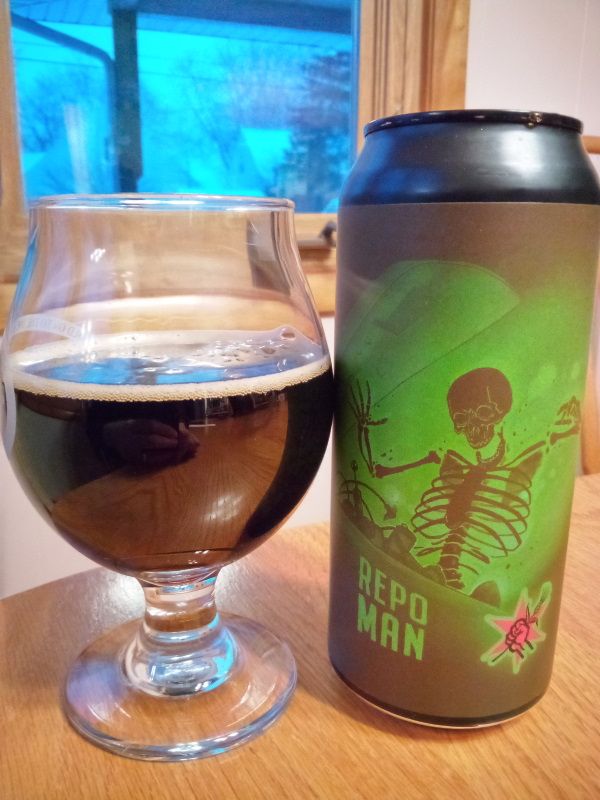
I thoroughly enjoyed Revolution Brewing's Repo Man Rye Stout last year and was happy to see it in stores again. This is a mighty tasty brew.
More rye beers are needed.
14 February, 2022
If there's a stopper in your bung hole, don't be alarmed, now: Ryeway to Heaven by Revolution Brewing
If memory serves, my first encounter with barrel aged beer was a brief one. It was at the Great Taste of the Midwest sometime in the mid- or late-90s. A brewery, which I cannot recall (but I suspect it was from northern Illinois. Freeport, perhaps?) announced it would pour their new bourbon barrel aged stout at a particular time. I wandered over to the brewery's neck of the woods at the appointed hour and found a gentleman removing the cork from a magnum. He was, like many of the attendees, on the large and burly side with a rather long beard and a bardolphian countenance.
Upon removing the cork, he hoisted the magnum onto his shoulders and began pouring as he turned around slowly in a circle so that the throng of beer nerds that had gathered around him could get a taste. I, being over 6 feet tall and having long arms, was able to easily get a pour by reaching over a couple of shorter geeks. While I recall enjoying the beer, I have absolutely no recollection of what it tasted like.
My current attitude towards the style was formed during the inaugural Madison Craft Beer Week back in 2011. A friend and I were at Jan's Unfriendly Tavern where O'so Brewing, whose HQ is up in Plover, were doing a tap takeover. At some point a gentleman took up a spot by a window and began preparing to pour samples of the brewery's first ever bourbon barrel aged beer, which I suspect was their Night Train porter given the treatment, from growlers. Unlike the guy from the Great Taste, he seemed to be of average height and weight and did not have a beard that would put Rip Van Winkle's to shame. My friend and I each got a sample and, upon our first sips, our faces contorted in agony as if we had suddenly found ourselves sitting next to Satan in the ninth circle of Hell as he nommed on Judas Iscariot. Once the pain had abated enough for us to speak, we proclaimed simultaneously, "They forgot to take the booze out of the barrel!"
On a recent listen to an episode of The Beer Temple Podcast I learned that barrels arrive at breweries with 2+ gallons of bourbon or whatever spirits they held soaked in the wood. (As I recall, anyway.) That's a lot of potential for an extra flavorful beer there. But that booze is also a monster waiting to subsume your beer like Satan chowing on traitors and hide its malty goodness behind a wall of spirits. My own preference is for barrel aged beers that still have some semblance of beer instead of bourbon that has had the edge taken off of it.
For example, there's Tyranena's excellent Rocky's Revenge, a blend of barrel aged and unsullied brown ales. And there was Lakefront's Wendy, a doppelbock aged on bourbon-soaked oak chips. Both of these beers featured the unmistakable taste of bourbon but their beery pneumas were still able to come through. But these seem to be the exceptions so I am more than a bit shy when it comes to barrel aged beers. Taking up valuable space for extended aging in specially acquired vessels, these beers are rather expensive and I'd hate to invest in some only to find that a few drams are plenty enough for me.
My highly inexhaustive search for the first time beer was commercially aged in a bourbon/spirit barrel reveals that Goose Island is commonly credited with that feat having done so back in 1992. And the subsequent Bourbon County line of barrel aged beers would go on to become the stuff of craft beer legend. Somewhere along the way, however, Bourbon County would lose its luster, perhaps after Goose Island was acquired by corporate brewing behemoth AB-InBev.
With the progenitor of the style having fallen out of the good graces of many drinkers, the enterprising folks at Chicago's Revolution Brewing stepped in to fill the void. My impression is that, around the Midwest, at least, Revolution's barrel aged beers are considered the ne plus ultra of the style, having taken the crown from Goose Island. These brews, collected in the Deep Wood series, are renowned for their high tastiness quotients as well as for not being brewed by a multinational corporate leviathan. I am unsure if it's always been the case, but, these days, Revolution staggers the release of their barrel aged beers over the course of a few months.
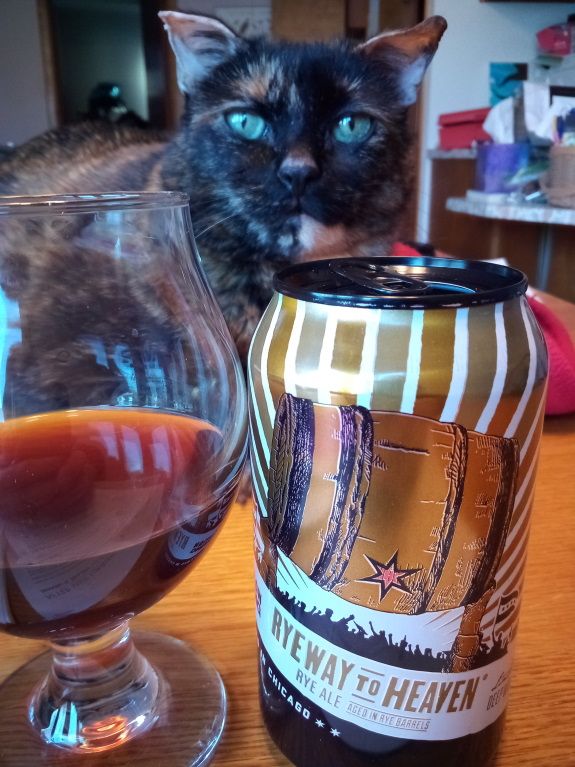
This year they are offering Ryeway to Heaven, a rye ale aged in rye barrels. If Revolution was going to come out with both, um, barrels blazing with secale cereale, then I would overcome my wariness of beer aged in the former home of a spirit.
I have come to the conclusion that ethanol is bad for foam. These big beers always produce a small head that never sticks around. Such is the case here where a diminutive tan bit of foam was here and gone in no time. The beer was, as I think my photo actually illustrates for a change, a lovely reddish brown. A cloud of rye (the spirit) vapors hit my nose despite it being several inches from my glass. (It is 15.8% A.B.V.) When I finally got the courage to stick my proboscis into the glass and take a whiff, it smelled that rye (the spirit), tobacco, and a hint of plum.
Despite the paucity of foam, the beer had a firm fizziness to it which was a good thing because it was thick and heavy bodied. It featured a trifecta of honey, caramel, and malt flavors all adding sweetness as well as a deep smoothness. The marketing division of Revolution must have been reading about understatement the day they designed the label because it says, "(Share and)** Enjoy an ample body that suggests sweetness..." That's a bit like saying that the Atlantic Ocean suggests wetness. This stuff tasted not unlike a syrup. It tasted boozy too. Really boozy. The sweetness and booze stood in stark contrast to one another on my tongue.
The marketing division may be been doing something else that day because the front of the can says "Aged in rye barrels" while a 45 degree turn reveals the claim that the beer was aged in rye and bourbon barrels. Harumph.
After swallowing, the sweetness lingered for a while before giving way to a modicum of hoppy bitterness which was followed by a big, boozy burn.
The key, I found out, was to let this brew warm a bit. The sweetness remained cloying and the rye (the spirit) retained its potency, but, instead of these tastes having a purely antagonistic relationship in my mouth, they reached a kind of détente. Everyone mellowed out just a bit and the flavors didn't seem quite so...antipodal. They had melded into something more accommodating.
Ryeway to Heaven didn't turn me into some kind of barrel aged beer junkie, but I appreciated half a can on cold evening in February. It definitely warmed me up.
Junk food pairing: You're gonna need a bigger chip! To cut through this big, sweet brew you're going to need a potent snack. I suggest a bag of Ruffles Cheddar and Sour Cream Potato Chips. They're thicker than your average chip and so carry more fat and dairy goodness to further mellow your tongue.
**OK, I put that in there.
27 January, 2022
Pint or Stout, or Pint o' Stout: Repo Man by Revolution Brewing
Rye is a hardy plant. It's so stout, in fact, that you can
grow it in relatively poor soils and even as far north as the Arctic Circle. If
you go back to medieval Europe, you'll find lots of poor people eating rye
bread while those who were better off ate wheat. And the really well-heeled got
to eat white bread because they could afford flour made from wheat that was
shorn of its bran or whatever bits of the wheatberry gave a brown tint. Thusly
it's quite ironic that white bread today here in the States is cheap and
plentiful.
Today rye is most prevalent in northern and eastern Europe
with Poland and Germany, which only started growing more wheat than rye in the
1950s, being the largest producers. Now, I love rye so is it mere coincidence
that 50% of my genetic inheritance is Polish and German? Or that the great
majority of my ancestors hailed from northern and eastern Europe? I ask you.
Then we can eat
Secale cereale
Sorry there, Sting.
With my taste for rye, it is sometimes frustrating that
there are so few rye beers. I think every brewer I've ever broached this
subject with gave me the same riposte: rye is a pain in the ass to brew with. It
turns into this thick sludge like oatmeal so brewers need to be extra vigilant
and stir and stir until they can stir no more. Plus, I guess it's also a pain
to clean up. This behavior is apparently due to the pentosans, a type of
carbohydrate, in rye which can absorb a lot of water.
Today's brewers are beset with demands for ever more fruit
flavors and this, combined with rye's intractable brewing behavior, means that
there are precious few rye beers around. Not being much of an IPA drinker, I
largely avoid beers of that style including the ones made with my beloved grain
which means the precious is even rarer. So, when I heard that Chicago's
Revolution Brewing was going to release a rye stout last autumn, I made sure to
keep an eye out for it during my treks to Chicagoland during the holiday season.
I don't know much about Revolution but they seem to be the
New Glarus of Chicago. I believe they brew more beer than any other craft
brewery down there that isn't owned by AB-InBev so they're like the top dog of
the Chicagoland brewing scene. They brew a lot of IPAs and a lot of barrel-aged
stouts and their reputation is mostly based on these brews. Or so it seems to
me. Neither of these styles can accurately be called my jam so I have mostly
avoided Revolution's beers. But I've had a few of their other brews and I found
most of them to be good.
Repo Man is one of their limited release beers and was
apparently brewed back in the early days of the brewery. The name and its
funkadelic label refer to the classic 1984 film of the same name by Alex Cox
and starring Harry Dean Stanton and Emilio Estevez.
16 May, 2016
Let Them Drink Pils: Rev Pils by Revolution Brewing

On a recent trek to Chicagoland my cousin helpfully noted a fine liquor store around the corner from my aunt's home. And so The Dulcinea and I made a trek over there before heading back to Madison. We ended up bringing home, amongst other beers, some Rev Pils from Chicago's Revolution Brewing.
I've always heard good things about Revolution, most recently on The Beer Temple Insiders Roundtable, and wanted to give them another try after drinking their Oktoberfest last summer(?!) and not being particularly impressed. Now that I think about it, I did sample their wares at a pre-Great Taste event a few years back and enjoyed them. And now that I think about it some more, the wife picked up a can of one of their stouts back in the autumn and it too was tasty. Anyway, I wanted to make up for the fact that I avoid Revolution when I am shopping in Chicagoland. I tend to seek out other Chicago area beers as well as those from breweries that don't distribute in Wisconsin. Plus imports that never see Madison shelves like Helles Schlenkerla Lager.
Revolution was established in 2010 and seems to have become the Big Daddy of Chicago breweries – at least of those not owned by A-B InBev. My understanding is that they are growing at a rapid pace and, well, they just always seem to top lists of Chicago breweries whenever I encounter one. When I talk to people on this side of the Cheddar Curtain, Revolution is always (along with Pipeworks) one of the top two breweries people would like to have distributed here. Revolution appears to be the Chicago beer scene's big kahuna, the top dog, the big cheese, the head honcho, number one...and so let us find out if their pils lives up to their reputation.
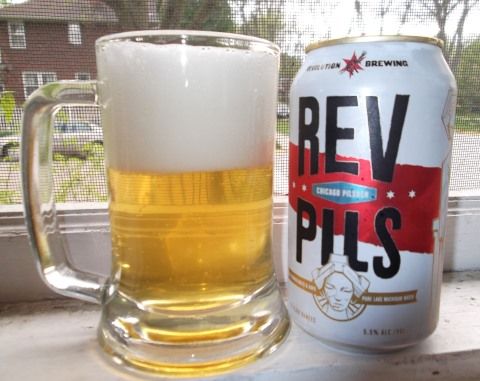
I must apologize to Rev Pils for not having the proper glassware because it would have been a beauty. It was a light gold hue and just ever so slightly hazy, which was odd. Is this one of the qualities of a "Chicago Pilsner"? My pour produced a big, frothy cloud white head that stuck around. There was a fair amount of effervescence which would have looked much better in a pils glass.
My can was dated 3/14/2016 so it was a just under two months old when I sampled it. While not extremely fresh, I did expect it to not have deteriorated too much. My expectations were met with the aroma which was a delightful blend of hops. Revolution uses German hops here - Select, Saphir and Hallertau Gold – with my understanding being that Saphir is the newest variety and that it mimics trendy American hop varieties with floral and fruity characteristics while the others are more traditionally Noble tasting with earthy and spicy aromas and tastes. The result was a big floral and grassy melange that I could smell when the glass was a foot away from my nose. Underneath that was a just little bit of fruitiness.
Rev Pils has a nice light body with a modicum of cracker maltiness which means that all those hops are going to have pride of place. Floral flavors were right up front with some melon fruitiness just behind it. Further back those non-Saphir hops provided a little grass/straw flavor along with some bitterness.
Those floral & fruity flavors lingered a while on the finish until the grassy hop taste swelled and took on more of a spicy complexion. And then things got really dry and bitter. There was precious little Schaumhaftvermoegen - just a few spots.
Rev Pils just has big hop flavor all-around with floral tastes taking the lead followed by a good dose of fruitiness and then a bit of grass trailing behind. Until the end when a more traditional German spicy hop taste kicks in. I thoroughly enjoyed – no adored – I adored the mix of hop tastes in this beer. This is far and away the best use of Saphir hops that I've come across. The problem is that there is little malt footing. The beer's body is too light and thin to support all those hops. Consequently Rev Pils tastes rather watery. You can taste something underneath all the floral/herbal hops but it's almost more of a presence than discernible flavors.
This is a real shame because Revolution really hit the nail on the head here with their blend of floral/fruity and earthy/spicy. The best pairing of these tastes in an American Nova-Pils/IPL I've had yet.
Junk food pairing: I like pairing Rev Pils with a bag of Chili Cheese Fritos as I like the contrast of the hops to the gentle spicing regimen of the chips.