Showing posts with label Helles. Show all posts

07 June, 2025

Back to the woods: Oakriginal Lager by Goldfinger Brewing Co. & Revolution Brewing

Has it really been nine and a half years since I've had a wood aged beer, Heart of Oak by Leine's? Bourbon barrel aged brews don't count as I think the idea is to infuse your beer with a spirit rather than a strictly arboreal flavor. While I'm on the subject, kudos to Lakefront for Wendy, a doppelbock which utilized bourbon-soaked oak chips that imparted a more subtle bourbon taste that complemented rather than overwhelmed the beer.

Plain, unspirited/unwined barrel/wood aged beers are hard to come by. Even more rare than Rauchbier. It's not exactly a mega popular flavor and dealing with wood must be a pain. You don't want any microbial thingies on your chips, staves, logs or whatever that would give your brew an off taste. Wood is a major flavor in wine so why isn't it in beer? And, as barrel aging goes, why is oak so popular?

When I saw this wood aged beer sans bourbon, a collaboration between Goldfinger and Revolution, I just had to try it. Goldfinger is a great brewery that combines care and tradition to make very tasty lagers. While Revolution dances with many an IPA, they brew other beers more to my taste. For example, not only did they throw my favorite grain, rye, into a stout, they also put some neat Repo Man artwork on the label.

The Oakriginal can doesn't say exactly how this beer got its oak flavor. Was it aged in oak barrels? Were oak chips involved? Did the brewmasters head to the woods with Husqvarna in hand, cut down a random oak, and throw some of the resulting cordwood into the fermenter? Now that I look closer, I see that Creative Oak is listed on the label and this California company's website notes the work of their master coopers.

The can does note, though, that "single forest French oak" was used. If horizontal lagering tanks weren't enough, this is definitely getting into hoity-toity wine territory. French oak apparently has more tannins than American oak which perhaps explains its use in winemaking. In addition to bitterness, oak has a clovey, vanillay, and, well, woody taste. How will these flavors fare in a Helles?
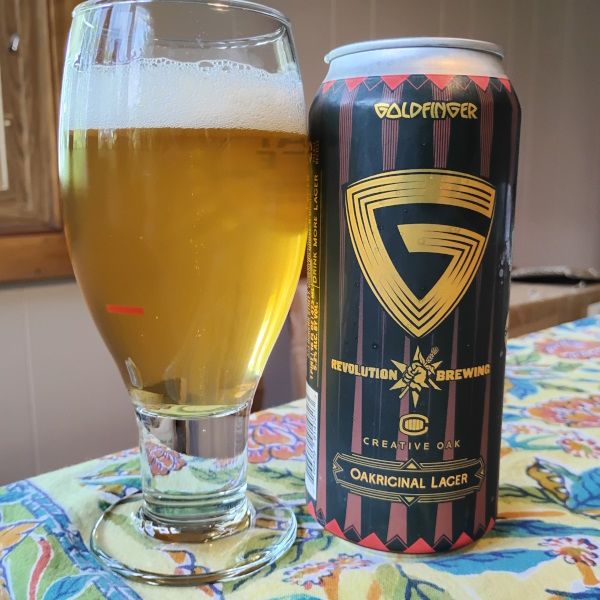
My pour produced a big, white head that I could hear. The bubbles churned away in a micromaelstrom like they do in soda, my cat's pleading meows for dinner were barely heard above the din. As with any Helles, the beer was a lovely yellow but had a slight haze which I presume was protein whatever you call it as Goldfinger's lagers have always been clear as day as is conventional. Maybe something is imparted by wood that gives a touch of cloudiness. There were a few bubbles here and there inside. My first sniff caught a luscious bready scent followed by wood, and then grassy hops.

My first sip revealed a medium-light body with the perfect fizz. Those Maillard reactions done good as I tasted that precious toasty bread flavor along with those grassy hops. A fine Helles indeed. Then I tasted the oak underneath it all. It was rather mellow but it added a smoothness that took the edge off the hops a shade, I think. Plus I like the flavor of oak so it had that going for it as well.

On the finish, the malt and oak flavors had one final flourish and then quickly faded as the hops, now with a herbal, almost minty, taste, made things fairly dry and slightly less bitter.

Goldfinger makes great beers so I was totally unsurprised that this was a mighty tasty Helles. The oak was subtle but easily discernible and its taste accented the grain flavor very well. Same with the hops. The oak gave flavors unlike the ones hops do yet they played nicely together. An excellent brew.

Junk food pairing: Pair Oakriginal Lager with Jays Hot Stuff potato chips. Their earthy flavors complement the oak while the Helles with soothe the burn.

03 January, 2023

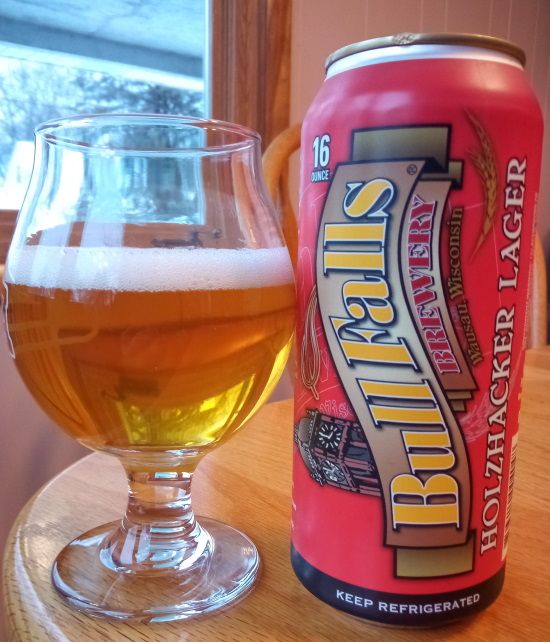
Will they read of us with sadness for the IPAs that we let grow?: Holzhacker Lager by Bull Falls Brewery

While an IPA drinker won't die of thirst up north, I have noticed on my journeys to those parts these past couple years that the style seems less prevalent at breweries there than they do at their southern brethren down here in Madison. Just as the Romans could never subjugate those beer swilling barbarians beyond the Danube, it seems that the Simcoe-Citra-Mosaic Empire cannot quite bring amber ales and dark lagers to heel on the other side of the Wisconsin River.

Perhaps it’s a rural vs. urban kind of thing. At the risk of sounding like an old fart showering my bitterness on today's youth, I suppose age may also play a role here as I believe that the southern part of the state – with the bigger cities – tends to be younger than the northern part and so maybe younger people lean towards trendier, fruitier beers while less sweet tasting brews are closer to the hearts of the older crowd. 

A glaring exception to this rule is Brewing Projekt in Eau Claire which seems to jump on every bandwagon that passes within 100 miles (and makes me think that King Crimson is involved somehow). I suspect that they go through lactose and marshmallow compound #3020 by the truck load in addition to Simcoe-Citra-Mosaic by the ton. I wonder if Brewing Projekt’s eagerness to make their beers taste sweet and fruity helps explains why they are distributed in the southern part of the state while most other breweries in their region are not.

One of those breweries up north that does not distribute down here is Wausau’s Bull Falls. At least I don’t think they do. A while back their beers were to be found around town. And then they disappeared from shelves only to reappear…and disappear again. It's a real Elizabeth Taylor-Richard Burton kind of affair. To the best of my knowledge, Bull Falls brews are not on shelves nor in tap lines down here. 

It’s not surprising, really. While they do offer an IPA for those inclined to drown in fruity gluttony and a barrel aged stout for anyone in the spirit, their line-up is mainly non-fruity, traditional German and English styles (but no ginseng brews anymore which you'd expect from a brewery in Marathon County), i.e. – those not favored by the yuppies who fill the apartments on East Washington Avenue. My own experiences with their beers has been a mixed bag. I found their Schwarzbier to be lacking the Cimmerian hue demanded by the name and watery in taste. On the other hand, I enjoyed their Oktoberfest, which was brewed using the life-giving, er, I mean melanoidin-giving decoction method, according to Isthmus beer expert Robin Shepard.

Looking back at my previous Bull Falls reviews, which go back 7-8 years, I read that I have tried the beer at hand previously. However, I have no recollection of doing so. Was this because the experience was lackluster? I suspect not as I wrote that “I very much enjoyed” it. Perhaps my memory fails me because the experience was fleeting and several years ago. I can only recall that, upon the return of the brewery’s beers to Madison shelves, Holzhacker Lager was not to be found, by me, at least.

Last month I made a trip up to Steven Point to visit friends. While there, I stopped in at a grocery store to see if there were any northern brews that I could take home with me. I was happy to see some Bull Falls there and quickly snagged a 4-pack. I later looked up what “Holzhacker” meant and was thoroughly unsurprised to find that it was German for "lumberjack".

Holzhacker is a Helles and I was eager to try it again.

Surprisingly, I had another good pour for a review here after getting a nice, large head for my photo of another brew which I have yet to review. Holzhacker rendered a nice, just off-white head of loose foam. The loveliness was ephemeral as it dissipated quickly. The liquid was clear and of a light gold hue. Just gorgeous. A modicum of bubbles was to be seen inside. The aroma featured a luscious bready scent accompanied by that of grassy hops. My can dated back to June so it was nearly half a year old and I sat their imagining what it would have smelled like on the summer solstice.

My tongue was greeted a medium dose of fizz which was joined by a wonderful bready flavor (Maillardy goodness!!) which I figured was lovingly decocted from the malt, a herbal/spicy mix of Hallertau and Tettnang hop flavors, and a slight malt sweetness. Again, I pondered just how sprightly those hops must have tasted in the early summer.  On the finish, the malt flavors faded quickly like summer after Labor Day allowing a moderate hoppy bitterness to come through as well as a mellow dryness.

As I did back in 2015, I very much enjoyed this beer. It is a fine Helles. The melanoidin-laced toasty bread flavor was a bit more restrained than in Dovetail’s version of this style but it was still quite tasty and its restraint may have been due to age. Despite not being the freshest beer, Holzhacker still held up. Just a wonderful brew.

Junk food pairing: Holzhacker Lager is well complemented by Lay’s Spicy Hot Pot flavored potato chips. The malt flavors and fizz cut through the oily spiciness of the chips for the perfect pairing.

06 July, 2022

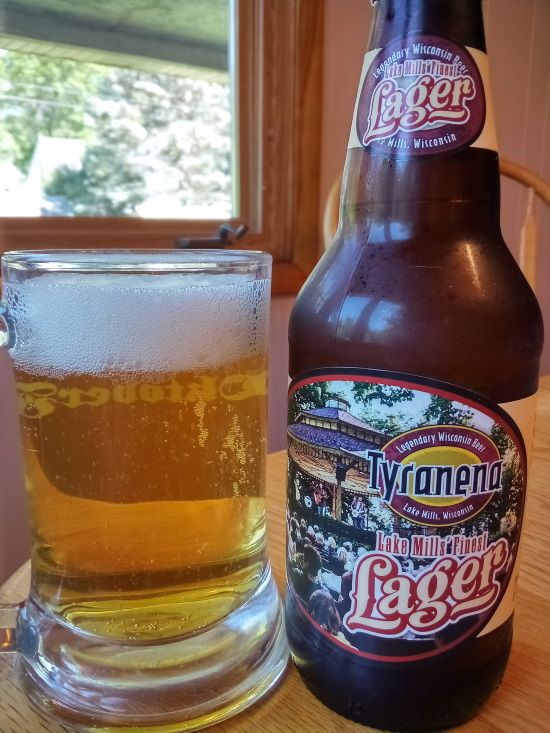
Helles of the Gods?: Lake Mills' Finest by Tyranena Brewing Co.

Realizing I was early, I decided to seek out some breakfast. At the time I worked for the Wisconsin Historical Society and was in the Dells to work on the computers at the H. H. Bennett Studio. Either I’d completely misread the site’s hours or had discovered that the people who worked there had a more European view of punctuality during the off-season and so I was left with some time to blow before the doors would be opened. I drove around looking for a diner but there wasn't one to be had amidst the Tommy Bartlett signs and goofy tourist attractions which lure young Russian women with the promise of prosperity and Illinois vacationers with the siren call of water slides and bumper cars. Tired of cruising the streets of Wisconsin Dells like a desperate junkie in need of a bacon fix, I spied a Denny’s and hastily made my way there despite my better judgment.

Walking in, I found the host, a man in his early 20s, at a lectern. He looked me in the eyes as I said, “A table for one, please.” His gaze was then drawn down to my chest and my work ID which was hanging there on a lanyard.

“So, you work for the Historical Society?” he asked.

“Yes,” I replied, shaking off a perplexed look as I just realized then that I was wearing my ID and that he was not, in fact, endowed with psychic abilities. Little did I know that I'd just run into a subscriber to the Fortean Times.

With a bit of excitement in his voice he said, “My friends and I have a paranormal group here in town.” His eyes widened as he eagerly continued, “And we’ve got a lot of stuff on haunted houses and Bigfoot. Would you have any interest?”

If eye rolls made noise, mine would have made a sound audible back at my office in Madison. A Triumph the Insult Comic Dog-like commentary began running through my brain which asserted that this Egon Spengler wannabe’s mom surely drove him and his friends around in an old station wagon loaded with cameras and homemade ectoplasm detectors to the supposedly haunted houses. Having made a snap diagnosis, I briefly thought about telling him that the recommended course of treatment is to get laid but kept my own counsel.

Instead, I excused myself by pleading that I was merely an IT drone and have nothing whatsoever to do with Wisconsin or history. The look of disappointment on his face almost made me feel bad. He seated me, I had breakfast, did what I needed to do to those computers, and then drove back to Madison.

I related this little tale to a co-worker of mine whose job seemed to mainly consist of telling the Department of Transportation whether or not the new highways they always want to build would destroy, say, a Native American effigy mound, pave over a Native American burial site, or trash anything of historic value in the name of shaving .002 seconds off someone’s trip to Menards. Little did I know that he encountered members of the Erich von Däniken fan club on a regular basis.

“Pfft. That’s nothing,” he scoffed. “A couple weeks ago, a guy called me to say that he’d been out walking in the boonies when these spirit orbs just suddenly appeared and he wanted us to investigate. I asked him what he'd been smoking because I wanted some but he insisted he was sober as a judge. I said, 'They're will-o'-the-wisps,' but he kept saying they were spirit orbs.” If eye rolls made noise, mine would have been a mere peep in contrast to the Stentorian roar his eyes would have sounded out and been heard throughout the Upper Midwest.

He continued, “And then there’s this other guy that calls me every couple of months or so saying he’s got photographic evidence of pyramids in Rock Lake. They’re just fucking piles of rocks!”

Rock Lake is in the town of Lake Mills, about 25 miles east of Madison. Also in Lake Mills is the Tyranena Brewing Company which has brewed the beer that is the subject of this blog post, Lake Mills’ Finest. It is rather unhelpfully billed as simply a lager. This laconic description, that would never be foisted upon an ale, has burned me in the past and I have come to learn that, when an American craft brewer calls something simply “lager”, it’s generally their take on Miller and Bud. It’s a light American lawnmower lager.

I was weary when I first saw Lake Mills’ Finest thinking it fell into this category. But local beer scribe Robin Shepard described it as a Helles in his review and sang its praises, so I figured I’d give it a shot. Besides, brewmaster Rob Larson is a brewer of no mean talent and, although he focuses on ales, I’ve enjoyed his lagers through the years. The taproom at the brewery is really nice and cozy and you don’t see industrial equipment until you go to the bathroom. Also, I appreciate how their beer names and labels reflect Lake Mills and small town life more generally. They even had a pale ale called Stone Teepee in tribute to those pyramids that lie submerged in the depths of Rock Lake waiting...dreaming...

Lake Mills' Finest was a lovely, brilliant yellow and clear as day. My pour produced a nice head of frothy white foam that stayed around long enough for me to get a picture of it. And there were plenty of bubbles. It looked tempting. The aroma was green. My initial sniff caught a big dose of grass or hay followed by a little cracker and a bit o’ honey. There was also a faint berry fruitiness too.

Those bubbles translated into a hearty fizz. The malt had a biscuit flavor and a mild doughy sweetness. Grassy hops could be discerned in the background and no doubt kept the malt in check. On the finish it was exeunt malt and hello hops which were again a bit grassy, perhaps slightly white peppery tasting. The hops were mild, though, providing just a touch of bitterness and dryness.

I really liked this beer. It had a nice, gentle malt flavor with just enough hops for balance. (Had things been any gentler, we would have been in Miller/Bud clone territory.) In addition to its easy going crisp and clean flavor, it’s something like 4.5% A.B.V. which means it would be a most genial companion at your local biergarten in the summertime. (I believe this is a summer seasonal.)

Junk food pairing: When you’re down at the biergarten slaking your thirst with a Lake Mills’ Finest, be sure to have a bag of Snyder’s Honey Mustard & Onion pretzel pieces with you and a can of Easy Cheese at the ready.

21 June, 2022

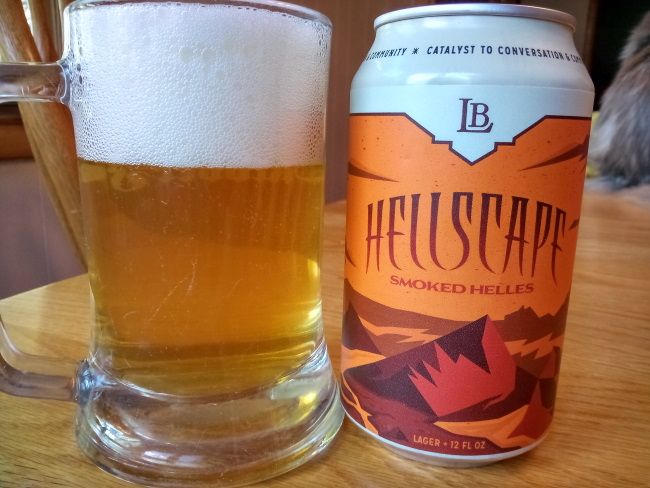
In Heaven There Is No Rauchbier: Hellscape by Lion Bridge Brewing Company

 
"So, what do you think of the Hellscape?" asked a voice to my left.

My Frau and I were sitting at the bar at Lion Bridge Brewing Company in Cedar Rapids, Iowa enjoying a flight of 5 of their beers, including Hellscape. The voice belonged to a gentleman a couple stools away who turned out to be an employee of the brewery.

“It’s very tasty,” I replied.

For the next few minutes, I chatted with him about sundry beer-related topics. His demeanor alternated between someone expressing pride in playing a role - I neglected to ask what his job duties were but he noted he worked there 2 days a week - in getting the beers we were drinking into those sampler glasses and that of a used car salesman. After learning we were from Wisconsin, he proceeded to give me a brief overview of the Iowa beer landscape. I have forgotten much of it but I think he said Toppling Goliath was the big dog. The New Glarus of Iowa, if you will. After that he mentioned Backpocket and Big Grove as, if I recall correctly, being on their heels. (Later that afternoon I saw Big Grove beers available in a refrigerator in the lobby of our hotel in Iowa City.) He then mentioned a few other Iowa breweries that weren’t familiar to me but perhaps I had come across them at the Great Taste of the Midwest.

This got me thinking. Why do so few Iowa breweries distribute in Wisconsin? Toppling Goliath does but that is the only one that I can think of. Maybe the stuff flows across the Mississippi River into Grant and Crawford counties like, well, a river but simply makes it no farther east. Are Wisconsin drinkers and/or distributors hostile to Iowa beer? Is there some ancient law that makes distributing Iowa beer here particularly burdensome?

Tangent: I went to a grocery store in Iowa City and, upon entering their singles cooler, was taken aback by the prices. A simple 12oz can of regular (i.e. – not barrel-aged, not hopped 20,000 times, not brewed by virgins with ingredients only found on North Sentinel Island, and so on) craft beer was $4. Onerous taxes? The fact that it was a small, Whole Foods-like store? Uff da!

I didn’t write much about Lion Bridge in my review of Živá Voda so I will say that it was in what looked to be an older building in Cedar Rapids’ Czech Village that had been extensively remodeled. It was open and sunny but had an industrial vibe with the brewing equipment behind walls of glass. The beer garden looked nice. The people were friendly and our bartender heartily endorsed the jalapeno beer cheese and was not wrong as it went well on a fine hamburger.

So why did my interlocutor strike up a conversation by asking about Hellscape, their smoked Helles? I don’t know but perhaps it was because Rauchbiers are untrendy as fuck yet there we were drinking the stuff. It was offered in cans so of course I brought a sixer back for home use.

I poured my Hellscape rather vigorously so I got a nice, big head of lovely white foam. Beneath lay a beer of a bright yellow hue that had a faint haze. It could have been chill haze as my cans were towards the back of my refrigerator where leftovers are encased in ice. Just as with its Czech-American cousin, there were many a bubble to be seen inside. The beer had a relatively simple aroma with a lovely biscuit smell complemented by the precious smoke courtesy of beechwood smoked malts from Weyermann over in Bamberg, Germany, the Rauchbier homeland.

My tongue felt a generous dose of fizz on my first sip before the savory smoke flowed over my tastebuds. Mmm…The medium-light body also held a light bready taste with just a smidgeon of spicy hops below. The hoppiness really came to fore on the finish as the malt flavors receded to let a firm bitterness and a hearty dryness take centerstage.

My glass was left with some fine lacing as I enjoyed sipping my way to the bottom of it. The smoke level wasn’t off the charts but it was certainly more than a mere accent. I adore smoke beers so I wouldn’t have said no to more smoky goodness. While I could have done with a little less of that astringent taste, I really liked the dry finish. With its fairly light body and at 5.2% A.B.V., it went down easily. It’s your hot weather Rauchbier.

Junk food pairing: there are many people who think smoke beers should always be paired with a complementary junk food like BBQ flavored things. That’s fine but don’t be afraid to counterprogram your snack choices with something that nothing to do with meat. Go with a bag of Herr’s Cream Ranch & Habenero chips. The heat makes for a nice contrast with the smoke in addition to the ranch.

10 September, 2021

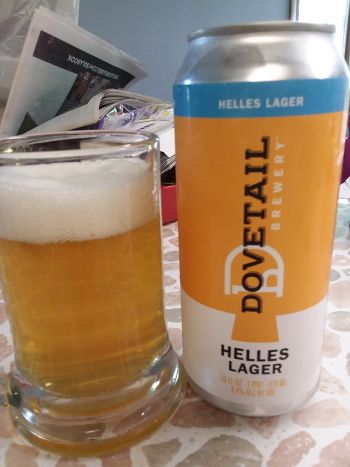
They deococted the mash - It was a Ravenswood smash: Helles Lager by Dovetail Brewery


This summer I investigated the cream ale a little bit as I was looking for something to add to my repertoire of aestival brews. They were light. They had a reputation for being crisp and refreshing. Just the thing! Along the way I learned that the venerable style was invented by American brewers in response to the German and German-inspired pilsners which were beginning to dominate the American beer world back in the latter half of the 19th century. "They want light and crisp?! Well, we'll give them light and crisp, dammit!"

And now I have learned of another brew that was invented as a response to the popularity of the pilsner. In this case, however, it was the OG pilsners of Bohemia that prompted a zymurgylogical riposte. It seems odd to me that a Czech brew would run roughshod over Germany's beer scene because, as we saw with the invention of the cream ale, it is the Germans who like to do the blitzkrieging over others.

From what I gather, Gabriel Sedlmayr II, who inherited the Spaten Brewery in Munich along with his brother Josef, devised the Helles in 1894 after he'd already come up with the Märzen. That's a 1-2 punch right up there with that of the guy who invented the hazy IPA and then followed it up with the juicy IPA.

While it's easy to find articles on the internet that maintain the Helles was the German answer to increasing Bohemian pilsner sales within its borders, I haven't found anything that gives firm numbers. Just how badly was German beer losing this Bierkampf to their neighbors to the east? And was pilsner on the rise only in the Munich area in 1894? Bavaria? The whole of Germany? We may never know. Well, not until Ron Pattinson and/or Andreas Krennmair investigate the subject and then blog about it.

However the history actually transpired, Sedlmayr's concoction is one of my favorite bier styles. It has a rich, bready grain flavor complemented by Noble hops or Noble-tasting ones, anyway. My love for the Helles started back in my freshman year of college when one of my new-found friends on my dorm floor offered to share his stash of German brews. And I don't mean a smattering of stray Beck's and St. Pauli Girl bottles he had snagged from some small town liquor store that was happy to sell to underage kids. He had spent his final semester of high school in Deutschland and smuggled some precious liquid bread back home. My memory tells me he and I drank all of the beers ourselves because everyone else to whom the offer of some fine imported suds was extended to refused on the grounds that there was still yeast in one of the bottles and that another was dark instead of light yellow like Miller and Bud.

What made me fall in love with those beers was all of the melanoidins. Those delectable molecules give beer that lightly toasted bread flavor, for want of a better way to put it. Apparently decoction is the way to create those molecules and the Germans love to decoct. Americans generally don't which is likely why I find most domestic versions of the Helles to be inferior. It's like brewers here think that if they just brew a pils but use less hops than they normally would, they've made a Helles.

I've already celebrated a few beers from Chicago's Dovetail here and I believe I noted at some point that they engage in more than a little decoction. So, when I opened my first can of their Helles, I figured that developing a fondness for this beer was a fait accompli.


As my cat Grabby looked on, I poured some in my mini-mug. I got a lovely frothy, white head that proved to be in no hurry to go away. Beneath it the beer was clear and yellow and the whole thing looked much better than my photograph portrays. Taking a whiff, I smelled fresh bread and hops that were mostly grassy but also slightly floral. Simply wonderful.

Upon taking a sip I was not disappointed. Melanoidin galore! While the beer was medium-light (leaning towards the light side) on the tongue, it had a great, rich malty taste full of toasty bread and a more general graininess. There was just a hint of sweetness. All of those malt flavors were complemented by some hops which had a slightly peppery flavor and provided a gentle bitterness. Swallowing I found that the malty flavors faded while the hoppy ones remained. The fizz dried things out just a tad making for a delightfully clement finish.

I will get down to brass tacks: this is the best American Helles I have ever tasted. Drowning in that decocted goodness on my first sip reminded me of that fateful day in the dorm when I learned what good beer tasted like. I could write an encomium to the toasty essence of the grain flavors here but I won't. Instead, I want to say that I also loved the hops. That fresh, green grassy/floral scent – oh, man! That is such a wonderful aroma. Evocative of summer and its verdant landscapes with life in full bloom.

Hopefully, as Dovetail's distribution here in Madison widens (and let us also hope it deepens with Rauchbier), their brews will be featured at a tap takeover at Olbrich Biergarten because that is how nature intended for them to be consumed. You just can't go wrong with Dovetail and the Biergarten is close to home.

Junk food pairing: With such a kickass beer decocted with ruthless German efficiency, go big on the junk food. I heartily recommend a central European theme by pairing Old Dutch Onion & Garlic potato chips (the bag is yellow just like Dovetail cans!) with Heluva Good!'s Bacon Horseradish dip.

04 August, 2021

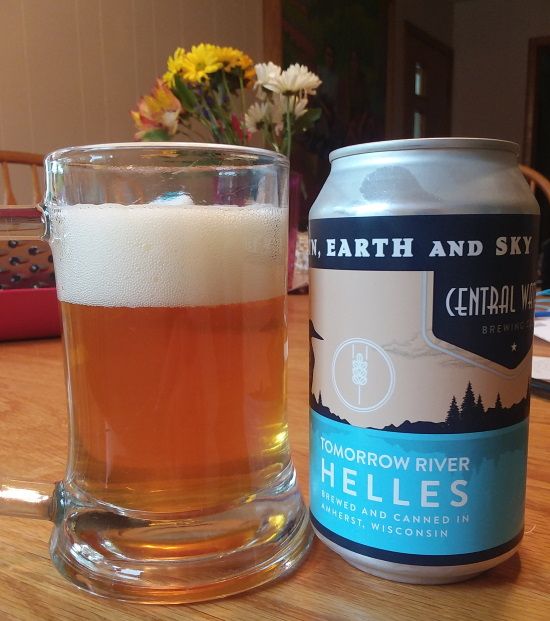
Up a River That Snaked Through Portage County Like a Main Circuit Cable: Tomorrow River Helles by Central Waters Brewing Co.


This is the second Helles in a row that I have purchased with a slight bit of apprehension. In the last go round, I bought one by Young Blood Beer Company, a brewery here in Madison with a reputation for IPAs, fruited sours, and milkshake things. Well, that's their reputation in my mind, anyway. I found their Helles to be more of a Pils, as it was lacking in malt richness. Indeed, the label said that the malt was to play a supporting role in the background. And this time I was buying one from a brewery known for its barrel aged beers – Central Waters Brewing.

The brewery is located up in Amherst in the middle of Wisconsin. Having been founded in 1998, it is part of a cadre of Wisconsin breweries that seem to be going through a mid-life slump. I'd put Tyranena, Ale Asylum, and O'so into the group as well. Perhaps Milwaukee Brewing Company too. I have absolutely no idea what the bottom lines of these companies are like nor their production volumes. They all have good reputations, as far as I can tell. But their popularity and growth seem to have stagnated.

For example, remember when Ale Asylum built their new brewery that had an easily detachable south wall to accommodate future expansion? I believe the brewery is the same size as it was when built. And back in the day Tyranena was poised to be the IPA king with citrus-flavored IPAs before that trend was widely embraced but seems to have remained largely a south-central Wisconsin phenomenon. For their part, Central Waters made quite a name for themselves with barrel aged beers before a couple batches of their Peruvian Morning, a barrel aged Imperial stout with coffee, were recalled due to infection. This seemed to really take the wind out of their sails.

No doubt the rising number of craft breweries slowed the growth of these established outfits. At some point the novel became fetishized and so the tried and true were often passed over in favor of the new and this surely affected these more established brewers as well.

All of these breweries make some very tasty beers and perhaps they are not looking to grow by leaps and bounds and are instead more or less contented with their size. More or less, I say, as Central Waters recently announced that they're opening an outpost in Milwaukee.

Last autumn I visited friends in Stevens Point, near Amherst, and we made a trek out to Central Waters HQ on a whirlwind tour of the area's zymurgological attractions. There was a Helles on tap then and of course that was my choice. It was unremarkable, to my taste, and I found their barrel aged barleywine to be much better. But I believe in second chances and was happy to try the beer again thinking that perhaps the recipe had been tweaked.

But I can grab a Spaten Münchner Hell or a Dovetail Helles, iterations both of the Platonic ideal of a Helles, and drown in melanoidin gluttony so why should I settle for an inferior beer? Maybe the fault lies not with the brewers but with me. Am I making the best the enemy of the good? It is this profound Cartesian doubt I have that leads me to keep buying lagers from breweries that don't seem to make a lot of them despite my experience that such breweries don't brew them well.

Or do they simply not brew them to my taste?

Damn you René! Damn you to hell!

Tomorrow River Helles is named after a river that flows into Amherst and emerges on the other side as the Waupaca River. Or some such thing. I'm no fluvial expert.


After pouring some into my trusty glass, I found that it had a large crown of loose, white foam. Very nice. The beer itself was light gold and slightly hazy. I could see small specks of beer detritus floating inside evenly dispersed. Chill haze? Those bits were joined by the occasional bubble. The beer did not have a prominent aroma as my nose caught only a little bread and a sweet scent that was slightly floral but mostly smelled like berries. Odd.

The medium-light body was in line with an almost benign biscuit taste and a mild spicy/grassy hop flavor. There was a hint of honey sweetness as well. The finish was surprisingly dry with some spicy hop bitterness joining a lingering sweetness.

This was a very mellow beer to me. It was slightly watery as every flavor can be adequately described as having been "mild". It was a bit like an American pilsner without the corn. The promised rich maltiness of the Helles was nowhere to be found. I don't recall the version of this beer I had last fall at the brewery tasting like this. Granted, it wasn't a hotbed of Maillard activity, but it wasn't this watery either.

I looked at the bottom of the can and it said that it was canned on 1/29/21 so it was just shy of 6 months old when I sampled it. Was I simply tasting the results of age? When I think of beers that are too old, I think of them as having oxidized. The beer tastes like wort with a large dose of vermouth added to it. That wasn't the case here. This isn't to say that what I tasted wasn't age, merely that it, if it was, it was a new set of stale flavors for me. Perhaps it wasn't stored at the right temperature at some point in its life.

Anyone else out there try this beer?

Junk food pairing: Pair your glass of Tomorrow River with a box or Ritz Bits Cheese. These mini crackers sandwiches with cheese stuff in the middle will give the beer a grainy boost. And it's Wisconsin so you need cheese.

28 July, 2021

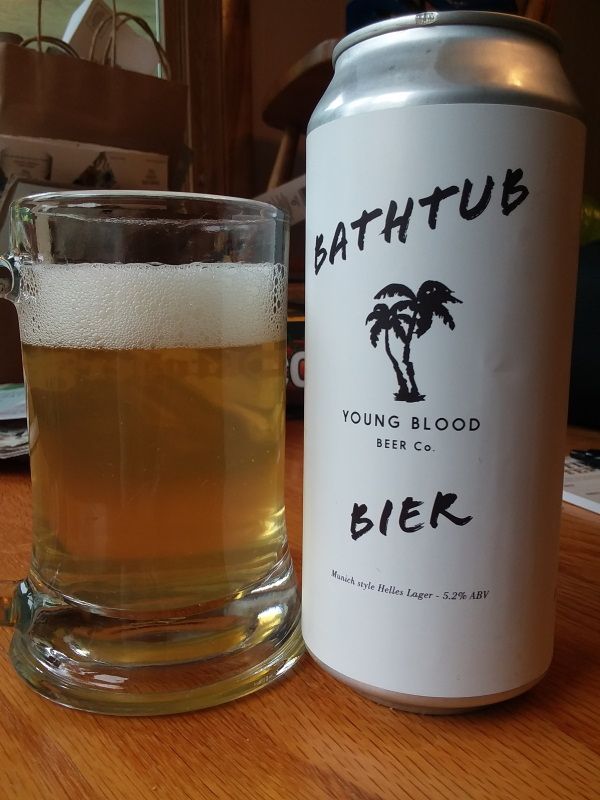
Swank and Hoppy Vibes: Bathtub Bier by Young Blood Beer Co.

Whenever I'm at the store and see cans of Young Blood Beer Co. beer, I can't help but think of Jack and Jim Youngblood, the unrelated defensive end and linebacker, respectively, who played for the Rams in the 1970s. I saw their football cards just too many times as a kid not to have that surname etched into my memories. It is also the case that, when I see cans of Young Blood Beer Co. beer, I tend to see lots of fruited sours and IPAs and lactose and guava – every trendy style and additive is represented. These are beers that I have no interest in drinking, alas. However, I recently came across the brew formerly known as Shower Bier, a Munich Helles they have concocted for people like me. Bathtub Bier is the new name because the former one was already taken by some brewery out east that apparently had a litigious streak and so the name was changed to another bathroom fixture. (I think a brown ale called "Bidet Bier" should be next.)

I was hesitant to try this beer, to be honest. If a brewery cranks out mostly IPAs and fruited sours, I tend to have little faith in their ability to brew lagers. Earlier this year I remarked to a friend who works in the brewing industry that I’d had a Spaten Hell for the first time in ages and that it was remarkably tasty. He replied to the effect of, "Well, no shit. They’ve been brewing it for 100+ years. They’ve got the process down, they’ve got a house yeast strain they know inside and out, and so on. It had better be good." Which is why I avoid the lagers from haze factories that let a beer mature in cold temperatures only slightly more frequently than the appearance of Halley’s Comet. I just have to question if they know what they’re doing with so little practice apparent to me.

Last year, for instance, I noticed a rye lager of some kind on the shelves from Drekker Brewing. All I’d ever seen by them up to that point were milkshake this and slushie that. I love rye lagers but they’re as scarce as hen’s teeth. In the end, though, I passed on this rare brew. I was not inclined to spend $16 on a 4-pack by a brewery that had, as far as I could tell, never brewed a lager in its life. Hell, it’d probably have traces of passion fruit in it, I reasoned. Another factor was, quite frankly, that I did not want to give my money to them. They’re a foreign brewery (out of Fargo, North Dakota) that helps clog the shelves at my local bottle shop with beer I consider to be a novelty, at best. I simply do not want to be party to the Hazy Milkshake Slushie Industrial Complex. (And while I generally have good will towards men and women and the rest of humanity, there is surely a special place in Hades for people who make exploding cans of fruit beer and blame the customer.)

Young Blood got a pass because A) they’re local and B) I was able to buy a single can instead of investing in a 4-pack. In addition, I’d heard generally good things about them and there are exceptions to every rule, after all.

When I read the label, my heart sank. Well, just a tiny bit because beer labels really shouldn’t be a source of distress. It read, in part, "…with a slightly bready malt background." Huh? I thought the whole point of a Munich style Helles Lager was that the bready malt part was in the foreground. Imagine reading the label of a hazy/juicy/NE IPA that read, "…with faint notes of guava, passion fruit, and mango in the background." Odd.


Bathub Bier looks really nice. It is a brilliant light yellow (unlike my photograph) and my glass had a big, lovely, white head on it. The bier was a tad hazy (chill haze?) but I could still see bubbles inside running ever upwards. I was surprised at how unsmelly it was. Maybe it wasn't very fresh – there was no date on the can. (It did, however, have "DANK AND DRIPPY VIBES" printed on the bottom.) I couldn't smell anything when the glass was waved in close proximity to my nose and I had to stick it up close. When I did, I caught a nice bready aroma accompanied by some grassy hops scents and a slight citrus something. Either this beer was lacking in the aroma department or my nose was having on off day.

Things got better on the tongue as I found a nice, light body and that the label did not lie. It had a delicate breadiness to it with more herbal and spicy hop flavors on top giving a moderate bitterness. It was clean and crisp and had a nice firm fizz to it which really hit the spot one summer day. The finish was on the dry side with the hops getting spicier and the fizz ably assisting.

It seems weird to me that a Helles would have so little malt flavor. This tasted much more like a German pils with its malty background and largely Noble hop flavors more to the fore. Don't get me wrong, I enjoyed this bier but calling it a Helles just isn't right in my book.

Junk food pairing: Pair Bathtub Bier with a bag of Vegan Rob's Brussels Sprouts Puffs. The sorghum will make up for the lack of malt and the delicate green vegetable flavor complements the bier's hoppiness well.

31 December, 2020

2020: A Year in Beer


As 2021 approaches, there are many Best of 2020 lists going around. A fellow Cheesehead who started a beer blog just this week made sure his first post was a list of his favorites from this year. I too thought I'd take a look back at some of the best suds I've had in 2020.

I drank many beers that I really enjoyed over the past 12 months. Certain brews, such as Tippy Toboggan, a Roggenbier by Vintage Brewing here in Madison, would make my list every year. It's just that tasty. I have sung its praises here previously so, while I drank my fill this year, I excluded it from the list. Looking back at the beers I drank from 2020, I see many that I've had in years past. They're good so I return to them. I even had a Sierra Nevada Pale Ale for the first time in ages.

New Glarus' Coffee Stout, one of, if not the, first of its kind remained highly tasty in 2020 as did Rocky's Revenge from Tyranena which is one of the first barrel aged beers I ever had and it remains a favorite. As a lover of smoked beers, I have to say Karben4's smoked porter, Night Call, is really great even if it is merely lightly smoked. I could go on in this vein for a while. But I won't.

Before I get to the list, let me add a few random observations:

1) The only Madison-area brewery that went out of business this year (due to Covid) was Rockhound. (To my knowledge, anyway.) I'd been there only a few times but I enjoyed their hefeweizen and thought they had good food. R.I.P.

2) Sprecher's Maibock and Oktoberfest stand out from those of other Wisconsin breweries because they have wonderful bready flavors instead of letting malt sweetness run amok. The new owners don't appear to have changed things too much out there in Glendale but they have brewed an NEIPA and it looks like they're continuing Sprecher's move towards being a beverage company as opposed to a brewery.

3) Breweries in the northern half of Wisconsin get too little coverage down here in the southern part of the state. While it's to be expected that they don't dominate beer chatter in the 608, it nevertheless sometimes feels like there are no indigenous breweries outside of the Milwaukee and Madison areas. To be fair, some joints up nort have limited or no distribution here. And I'm ambivalent about this. On one hand, I'd love to have some more boreal beers available here on Madison shelves. On the other, it's nice to be presented with something new and different when I travel north.

Now, on with the show.

I have both kinds of beer on my list: pale and dark. We will start with the former.

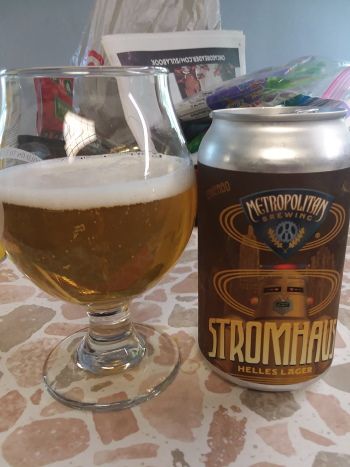
On a summer trek to Chicago I picked up Helles by Dovetail and Metropolitan, Windy City breweries both.


Helles is a fairly rare style these days for Wisconsin breweries, as far as I can tell. Capital stopped brewing their Bavarian Lager in 2010, or thereabouts and its replacement, Lake House, just isn't the same to my taste as it lacks the toasty malt flavor. Wisconsin Brewing Company had one called Ol' Reliable that went the way of the dodo. I see one from various breweries every so often but they generally taste like the amateur zymurgological experiments of a novice cicerone.

Two of our neighbors to the south each have a Helles that just oozes melanoidin-y goodness. These are the best Helleses I've had from American breweries and, if I didn't have to travel to buy them, they'd (mostly) obviate the need for those Paulaner Lager purchases I make. But, pursuant to #3 above, they do make for a nice treat when I go to Chicagoland.

Now onto the dark side.

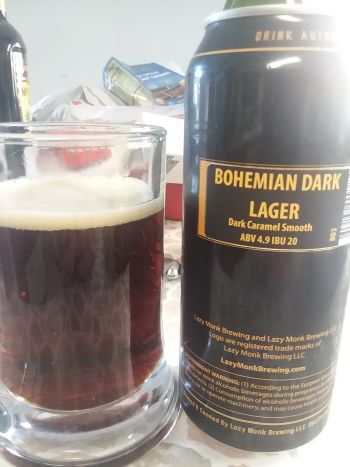
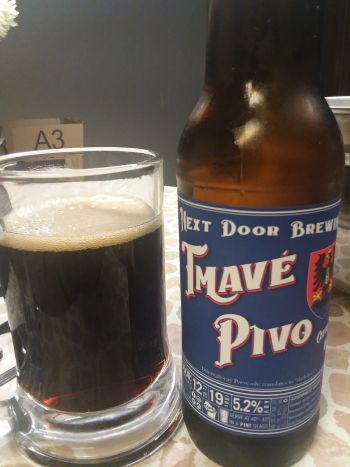
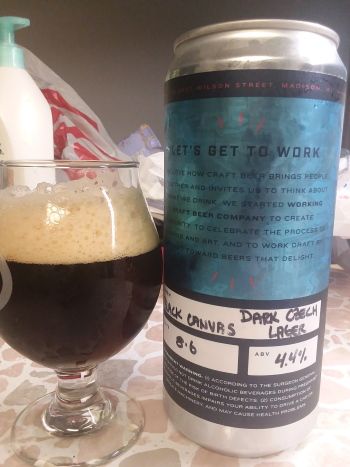
I cannot honestly claim to know much about Czech beer styles. And beyond a Bohemian or Czech-style pilsner, the Czech Republic, sadly, doesn't seem to inspire American brewers the way Carmen Miranda's hats do. Reading Evan Rail's descriptions of Czech brews makes me thirsty but those beers have been very much a mystery to me. This year, however, I got to sample three different breweries' takes on Tmavé Pivo, or Czech dark lager.


Now, whether any of these tasted like something I'll find in Bohemia when I visit, I cannot say. Leos Frank of Lazy Monk Brewing up in Eau Claire is Czech by birth so I have some reason to believe his brew has a measure of authenticity. And, truthfully, Next Door and Working Draft's piwos were very similar to Frank's with highly roasted malt flavors that ranged from coffee and chocolate to slightly burnt/fuliginous.

As a dark beer lover, this near cornucopia of piwos of a style new to me was sheer delight.

These brews stood out, not only for their sheer deliciousness, but also because they are rare or rarish styles. I certainly consumed other beers that were very delicious, but I have chosen to observe some brevity for this post.

And so that's my list proper. However, I do want to mention a couple runners up from smaller, lesser known breweries.


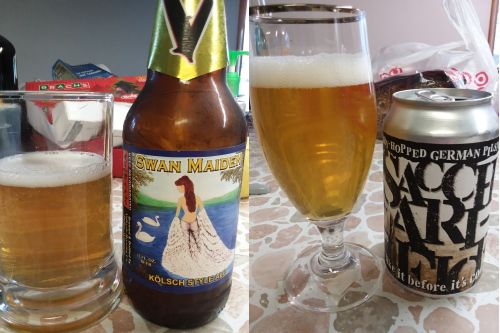
Valkyrie's Swan Maiden is a Kölsch-style beer and was really good. Located up in Dallas, brewmaster Randy Lee still brews on converted dairy equipment, to the best of my knowledge. When I visited the brewery there were no computers nor automated grain hoppers. Just Lee dumping sacks of grain into vats before grabbing a paddle to stir. Homebrewing writ large? Perhaps. But Swan Maiden was a wonderful beer with a delicate malt flavor and a light fruitiness from the yeast. Indeed, it was better than most examples of this style from American brewers who have much larger and more heavily automated facilities. Valkyrie's beers are a great bonus when I am in the northwest part of the state.

And then we have Saccharifice, a German Pilsner from Parched Eagle here in Madison. Brewmaster Jim Goronson has a small brewhouse in the basement of the building he rents that must surely qualify as nano. Lacking the space for extended lagering, Goronson still managed to produce a really good pils with a light malt touch accented by the fruity flavors of Hüll Melon and Mandarina Bavaria hops. The fruit taste is not overpowering and there's still some bitterness to be had.

(My podcasting partner and I interviewed Jim and you can find that episode here.)

There are some of my highlights of 2020. 2021 begins soon and we shall see what it brings. I predict lots of alfresco quaffing welcome in the spring.

15 July, 2016

(My) Turn It On Again: Howard by Lakefront Brewery


Howard, surname unknown, is the Maintenance Manager at Lakefront Brewery and I'd bet he is one of the unsung heroes of the brewery. Presumably he's not dictating Citra hopping schedules and so gets none of the glory from the eyepah addicts but he has probably fixed the brewing equipment on more than one occasion, jury rigged the bottling line, and any number of things to make sure Lakefront's brew gets into its customers mouths.

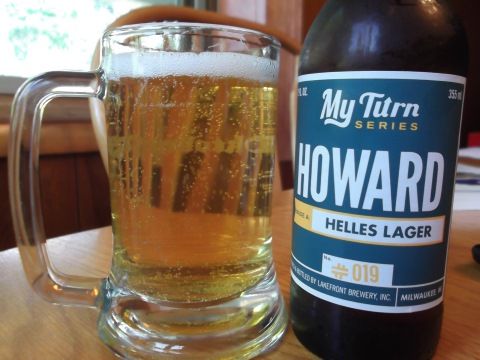
The brewery's My Turn series is a chance for everyone at Lakefront, including non-brewing types like Howard, to choose a beer to be made. It all began back in 2011 and here in 2016 Howard's namesake beer is #19. The bier he has vouchsafed we non-hopheads is a helles.

The helles is a pale lager that originated in Bavaria in the late 19th century. Apparently the brewers of Spaten in Munich decided to engage in a little counter-brewing in order to challenge the escalating popularity of the pale pilseners from Bohemia. Exactly how that ur-helles tasted is perhaps lost to the ages so I'm not sure if its descendant, Spaten Lager, is at all as the style was conceived or not. But they came up with a pale lager that was light colored like the pilseners being concocted across the border but less hoppy.

Yeah, that's probably more than a bit of an oversimplification but the deemphasis of hops is the important bit. I personally like the helles because of this and because its corollary is that the malts step to the fore – melanoidin-laced malts forged by Maillard reactions to give that rich, toasted, bready flavor. It is, perhaps, the apotheosis of grist.

I've had brewers tell me and tell me that decoction – taking some of the grain/water mixture that brewers heat and boiling it separately before returning it to the original mix – is the only way to produce that melanoidin malt taste. Others say that it's all in the malt. I have a toe or two in the decoction camp mainly because I generally taste The Taste in beers that have had decoction mashes. It could be psychological in that my brain tastes what it desires after having read the word "decoction" on a label. Another possibility is that I have had beers that would traditionally have The Taste but were brewed by folks who just aren't good at brewing lagers. Or perhaps the brewers intentionally brewed a beer that would traditionally have The Taste but avoided it purposefully. I certainly need to do more research into this topic, preferably at a bier garten in Bavaria.

Howard gave a bright, cheerful salutation with its light gold/medium yellow hue and brilliant clarity. My pour may have simply been poor but I managed only a small white head of very loose foam which was gone in a New York minute. However, the bier was quite effervescent with bubbles aplenty inside the liquid making their way upwards.

The aroma was as heavenly as it was simple: bread. It smelled like bread. There may have been other aromas to be had but I smelled fresh bread when I first inhaled and I think I just got excited and fixated on it.

As befitting a helles, Howard shown a spotlight on the malt. There was fresh bread along with some toasted grain, and even a little doughy sweetness, but just a smidgen. The Taste in spades. Behind it lay some herbal hoppiness that added some botanical contrast and a faint bitterness.

All of those bready flavors lingered on the finish as a grassy hop flavor slowly ascended. The lupulin never became very strong, but strong enough to give the remain grainy tastes a run for their money and even add a mild bitterness with its attendant dryness. Sadly, There was no Schaumhaftvermoegen to be had. It all slid down the side of the glass and into the nectar to be subsumed by The Taste.

This is one tasty bier! Howard has a light body which makes it instantly quaffable, a "lawnmower" beer, if you like. But it also has a slightly heavier mouthfeel (I'm looking at you, Beer Baron) which challenges the drinker to discern all of the malt flavors and to savor them as well. I don't know if Lakefront did a decoction mash here or not. Regardless, Howard has a great clean taste is chock full of those rich, toasty bread flavors that come courtesy of Maillard reactions.

While the hops have a lesser role, I really liked the herbal and grassy flavors they added. They provide contrast and make an attempt at balance but they also complement the malt flavors in a way that peppery/spicy hops could not.

Ausgezeichnet!

Junk food: Howard is a straightforward rendition of a traditional style and as such deserves to be paired with simpler, more traditional German-esque fare. I recommend a bag of Lay’s Beer ’n Brats or one of Herr's Classic American Hot Dog potato chips. Root vegetable and meat stuffed into a casing. Teutonic and perfect for summer.

15 June, 2016

Smokin' in the Barroom: Kindled Spirits by Vintage Brewing Company


The helles is one of my favorite bier styles and also one that has largely been forgotten in today's microbrew milieu. It is neither hop-forward nor extreme. Instead it relies on subtlety of flavor – a gentle maltiness accented by hops. Being a lager, the malts take pride of place and brewing up a clean, understated bit of malty liquid gold must be no small feat.

I am also a fan of the rauch or smoked helles and the way they balance the bready malt flavors of the traditional helles and the smoky goodness. There are precious few of these around and I have been able to review only two - Luther from Milwaukee's Lakefront Brewery and Helles Schlenkerla Lagerbier from Schlenkerla in the motherland of the rauchbier, Bamberg, Germany.

Over the course of a few months earlier this year I politely asked Vintage Brewing's brewmaster Scott Manning to brew me a rauch helles a few times. (He, however, maintains that I "pestered" him for "several" months. We find ourselves at a Rashomon-like impasse.) And then one day last month I received a missive which began "Brewed yer damn Rauch Helles today."

Christmas came early this year.

I helpfully suggested the name "This Beer Kills IPAs" but this was rejected for reasons unknown. Later I was told that the bier had been christened "Kindled Spirits". The brewmaster himself most kindly brought over a couple of crowlers. These, however, did not last long. And so I made a trek out to Vintage to fill up a growler. My plastic vessel was rejected on the grounds that it wouldn't survive the heat of a plastic hoolie being shrink wrapped on the cap. Vintage kindly gave one of theirs free of charge. Now that's customer service.

I poured my Kindled Spirits into a mug and was surprised to see the sides of the glass covered in bubbles. This is a tell-tale sign that your glass is dirty. In my case it was my first time using my new dishwasher and so I'm going to blame it for improperly rinsing the mug. Still, Kindled Spirits' lovely light gold hue and brilliant clarity were obvious. Behind all those bubbles on the side of the glass I spied a goodly number of bubbles going upwards.

The bier's aroma was smoky. It is common to describe rauchbiers as smelling and tasting like bacon. While I don't feel that this is totally off the mark, I have to say that, the more I drink rauchbiers, the less they taste like bacon and the more they taste like, well, smoke. Now hold that thought. I think that the bacon/smoked meat comes across more in the smell – from a compound called syrnigol. Kindled Spirits had a fairly prominent smoke aroma endowed with some of that smoked meat scent.

Where does smoke flavor come from? In large measure from a compound called guaiacol, apparently. As I said above, the more I drink rauchbiers, the more they taste like smoke. My hypothesis is that the bacony aroma and reading/hearing the piety that rauchbiers are like bacon have made people predisposed to tasting bacon in them. When people eat smoked chicken or turkey they taste fowl, not bacon; and when people eat smoked beef brisket, they taste smoke and beef; when they eat smoked cheese, they taste smoked cheese, not bacon. Because there's some smoked meat in the aroma, I'd expect the taste to have some of it but I think the whole bacon taste is exaggerated.

Kindled Spirits has a really nice smoky flavor that isn't particularly bacony and neither is it very strong – at least compared to a Schlenkerla Märzen or Ur-Bock. Scott used beech-smoked malt imported from Heidelberg. You can't miss the smoke flavor but it strikes a nice balance with the unsmoked varieties here. There's North American pilsner malt und Vienna malt from Bamberg and the bier has a wonderful bready flavor underscored by a little doughy sweetness. There's even a touch of fruitiness here – stone fruit, that is. Yes, this is a malt fest but there's also some grassy hop hovering just below the surface.

A wisp of smoke remains on the finish as that grassy taste, courtesy of Tettnang hops, takes on a little spiciness, also courtesy of the Tettnang, leading to a mild dryness on the end. There wasn't much Schaumhaftvermoegen to be had aside from a few spots.

While I am biased to be sure, I love Kindled Spirits. It has a medium-light body with a touch of carbonation which lends itself well to the warmer weather we are now experiencing. Being a helles, the malts are up front with the gentle smoke and grainy flavors living together in malted harmony. (Side by side in my gla-ass, vom fass, why don't we?) There's nothing extreme here – just a nice, easy going dose of smoky nectar of the gods. If you are not a rauchbier fan, give this bier a shot. Try to taste the smoke instead of simply tasting bacon as a self-fulfilling prophecy.

Junk food pairing: Sadly, Cheez Its Smoked Cheddar and Monterey Jack crackers are now a thing of the past. Luckily smoked gouda potato chips are a trend, however minor and Cape Cod's are quite tasty. But the trend appears to be ephemeral. If you cannot find some of these limited edition chips, grab some Chipotle Cheddar Pretzel Crisps instead. And don't be afraid to dip them in bacon & horseradish dip.