Showing posts with label Sprecher Brewing Company. Show all posts

12 May, 2023

Ancient Grains and Pseudocereals - Heritage Flakes


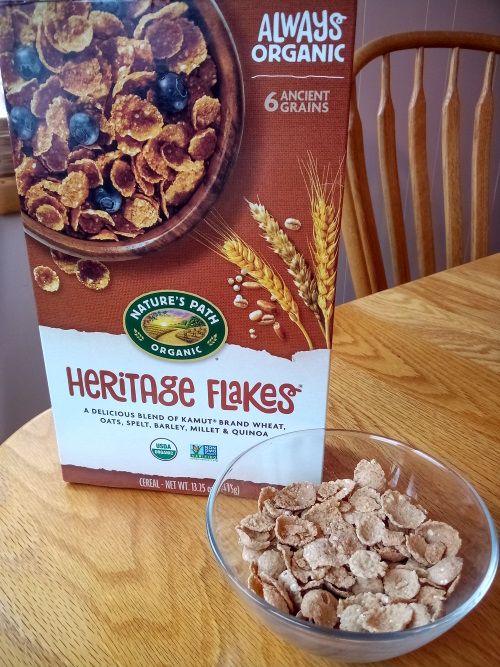
It's been a while since I started eating these Heritage Flakes from Nature's Path but I do believe that it was the rather uncommon grains on the label that initially caught my attention. I think everyone is familiar with barley and oats but what's spelt? Millet? Quinoa? Kamut Khorasan wheat?

Like Kamut Khorasan, spelt is also a wheat. Common wheat, the stuff we are all familiar with, has the taxonomic name of Triticum aestivum. Spelt is Triticum spelta and Khorasan wheat Triticum turgidum. So they're all seeds of related grasses. It sounds like spelt used to be the most common variety in the European and American diets until about 100 years or so ago when, as Wikipedia puts it, "spelt was replaced by bread wheat in almost all areas where it was still grown." It doesn't say exactly why, though. Other sites posit various theories but it seems that a general difficulty in growing the stuff mixed with the need to rid the seeds of their pesky hulls led to the widespread adoption of common wheat.

This breakfast cereal has 6 grains in it and I am not sure how or how much spelt contributes to its taste. I don't recall ever having eaten something like spelt bread where its flavor would stand out. Tangentially, Vintage Brewing here in Madison offers a beer called Jinja Ninja which is brewed with spelt and described as a "spelt-based, ginger-laced amber double witbier".

Khorasan wheat - "Kamut" is a brand name - is about twice the size of common wheat and, Wikipedia says, is rather rare, as in not many acres are devoted to growing the stuff worldwide. This surely explains why I've seen the odd spelt beer here or spelt bread there but Heritage Flakes are the only product I've ever seen made with Khorasan wheat. Legend has it that its seeds were brought from Egypt to Montana after World War II and that is why we have the stuff here today. It is described as having a "rich, nutty flavor."

Unlike all of these varieties of wheat, quinoa is not a grass. It's called a "pseudocereal" because its seeds are processed like those from grasses, such as wheat. South America is home for quinoa, having been domesticated in the area around Lake Titcaca 7,000+ years ago.

Titicaca. (hee hee)

The Incas loved only potatoes more. Quinoa is easily found in grocery stores here and some restaurants serve it as part of a salad or in place of rice. I haven't eaten it untainted by something else in a while but seem to recall it having a mellow, kind of green vegetal taste.

We're back to grasses with millet, though it's unrelated to wheat. I tend to associate millet with Africa though it's also grown in parts of Asia. It doesn't require a lot of water so it's a popular crop in more arid spots. It seems to be as common as spelt around these parts. Perhaps a little less. Or just found in different foods. There are some millet products at the grocery store but not so much in restaurants, it seems to me.

I'm going to take another tangent into beer here and note that Sprecher Brewing in Milwaukee was way ahead of the curve with gluten-free beers. In 2006-2007 they introduced a couple African-style ales called Shakparo and Mbege both of which used millet. (And sorghum, I believe.) I recall enjoying both of them. Too bad Sprecher is now a soda company that makes beer on the side instead of being a brewery.

So how are these Heritage Flakes?
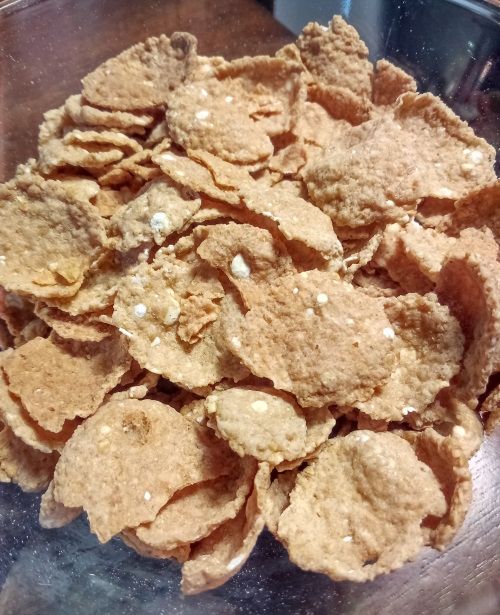
They are thicker than your average flakes from Kellogg's, General Mills, or any other major breakfast cereal maker. I am not sure what the white dots are. Specs of oats?

The Khorasan wheat seems to be the big daddy here as these flakes are rich and have a very pronounced nutty flavor. Lots of crunch to them as well, even after soaking in milk for a time that would wilt the heartiest of corn flakes. Just enough sugar and salt to accent the grains but not overwhelm them.

It's not clear to me just how ancient the grains and the pseudocereal here are. I mean, the grains in other cereals date back a long time too. Common wheat and corn weren't invented yesterday. So, is the spelt here more or less the same stuff my German ancestors were eating in 1200? Is the quinoa more or less equivalent to that which the denizens of Machu Picchu ate to break their fasts?

I don't know. Regardless, Heritage Flakes are tasty and offer a good flavor that just isn't found elsewhere.

28 December, 2022

A Brace of Dunkels from Milwaukee

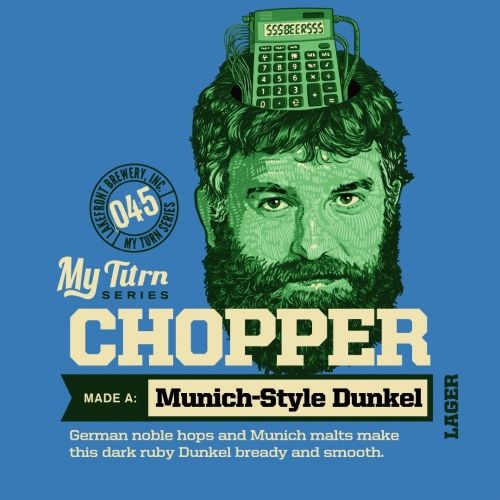
The latest My Turn brew from Lakefront in Milwaukee is a Munich-style Dunkel from a fellow named Chopper.

And don't forget that Sprecher's Winter Lager is also a Munich-style Dunkel.

Jeepers. Sprecher's website is now almost wholly dedicated to soda with beer getting but a single page under the About menu. It's like their beers are an afterthought. Only the regular releases are listed there. The On Tap page lists a Doppelbock but they are sure in no hurry to promote it. I have to wonder if Sprecher is going to get out of the beer business altogether as they seem to have almost given up on it.

28 September, 2022

Take the Summer Off: Festbier by Sprecher Brewing Co.

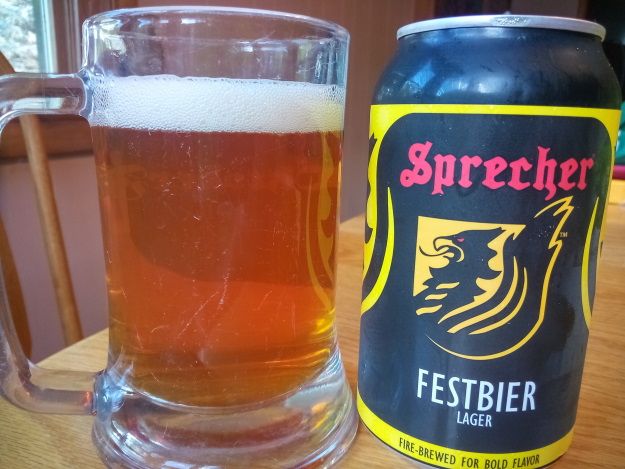
Back in the summer Sprecher Brewery released Festbier, a…um…festbier, I guess. To the best of my knowledge, this is the first time Milwaukee’s oldest microbrewery has brewed this type of beer. So what exactly is a festbier?

Bueller? Bueller?

“Oktoberfestbier” seems to be a trademarked appellation, not unlike Kölsch, Champagne, and Bubbler, for the brews made by the 6 Munich breweries that have the right to serve their beers at the festival. Or are Oktoberfestbiers the only beers allowed to be served in a certain part of the festival grounds? It’s not clear to me. Festbier, on the other hand, appears to have a more nebulous meaning.

Here’s what I have been able to piece together after years¹ of research:

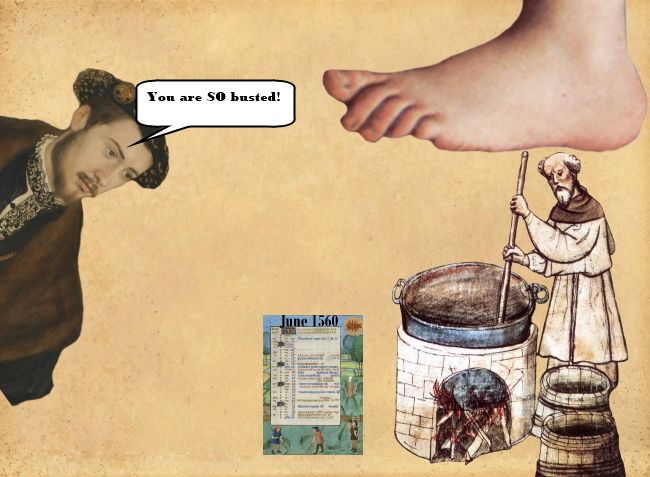
If you take a little trip back to Bavaria in the mid-16th century, you will find that the brewers there decreed that one could brew only between 29 September and 23 April. Or it was Duke Albrecht V that issued this edict? Why would whoever it was do such a thing? Well, the main reason cited by all the sources I found was because brewing beer involved boiling and boiling means fire and fire means Danger, Will Robinson! - as in your whole town with its fine wooden buildings could burn down.

While I can understand the summer months being of particular concern for fire hazards, the German love of beer runs deep. The Roman historian Tacitus noted this proclivity back in the first century C.E. so those Bavarian public awareness campaigns must have been hardcore and/or ubiquitous. I am picturing Smokey Bär dressed in Lederhosen – “Nur Sie can prevent the whole town from burning down!”

Presumably this fire hazard existed long before this brewing decree so why did they wait so long? The mills of Bavarian bureaucracy ground slowly but exceedingly fine, apparently.

The new brewing restrictions gave way to a new beer. If you brewed a whole lot of bier in, say, Märzen (March) and let it age the requisite 8 weeks or so, you will have liquid refreshment available just as the season of no brewing kicks in and the biergartens open. And if you made it a bit stronger, the stuff could last until the autumn where it would be quaffed by revelers at autumnal festivals. Hopefully you’d have enough to last until fresh batches could be made. I bet every brewery started brewing at exactly midnight on 29 September with whole towns aglow from the boilers firing up.

These Märzen beers became the standard at Oktoberfest at some point because, well, they were available...? I guess they started out with very dark due to the kilning technology of the age but eventually became the amber and the new standard. In 1953, Augustiner, one of the 6 official Oktoberfest breweries, introduced a pale Oktoberfestbier which has gone on to replace the amber colored one. According to Ron Pattinson, it’s the beer’s strength that makes a Märzen a Märzen. So today you’d be served a Helles Märzen at Oktoberfest whereas prior to 195X you’d have gotten a Bernstein (amber) Märzen.

I haven’t found anything explaining why Augustiner decided to go with a Helles Märzen after decades of the Bernstein stuff. Was it cheaper to make? Maybe they just wanted to shake things up after 100 years.
 
It seems that here in the United States, we think of the Märzen/Oktoberfest as being a strong amber lager and a style unto itself with the festbier being Märzen-like with a strong malt flavor but more of a golden color and in its own stylistic category.

Festbier – Sprecher’s brew, that is – was a welcome surprise. After I learned of the brewery’s sale back in early 2020, I was filled with trepidation. One article had some quotes that sounded like they came from a venture capital Krampus ready to beat the poor brewmaster until every mash tun and brite tank was filled with IPA. It was all money man talk of growing the brand with the goal of making a lot more product within a few years or some such thing. Then Refresh Button IPA came out and it seemed like my worst fears were coming true. "Soon there’ll be exploding cans of fruited sours and ad copy that used the word 'crushable'," I lamented.

Thusly seeing Festbier in the cooler was a delightful surprise. Sadly, it seems that Festbier has replaced the excellent Summer Pils as their summer seasonal. You can’t have everything.

Festbier is a lovely deep gold color and clear as day. My pour had a smallish disc of loose, white foam on top. A larger head would have been nice but the paucity of foam was probably due to bad pouring skillz on my part. On the plus side, the foam lasted quite a while. I spied a goodly number of bubbles inside. The aroma was largely honey-like and sweet but the hops were present too adding a little grass here and something floral there.

For a summer brew, it was heavier than I expected. Not the liquid bread of a doppelbock but medium-heavy. While there were definitely honey and caramel flavors here, the beer wasn't overly sweet. A faint roastiness stayed in the background along with some spicy, Saaz hoppiness. Perhaps those hops were meant for a summer pils and just had to be used up when plans were changed. The fizz was firm and gave a noticeable astringent bite.

All of that malty sweetness slowly faded for the finish allowing the spicy hop flavors to come to the fore. They offered a solid dose of bitterness and sturdy dryness.

My experience with Helles Märzen is limited to Paulaner's Oktoberfest Wiesn which is now called Oktoberfest Bier, at least here in the States. Think of it as a bigger Helles - in malt, hops, and alcohol. Sprecher's Festbier is 5.3% A.B.V. so it's between a Helles and Helles Märzen on that front. I think. It also tastes less bready than Paulaner's brew. Still, Sprecher has made a very tasty beer here. A bit too heavy on the mouthfeel for my summer drinking taste when it's 90 degrees out, but it has the virtue of not being too sweet. And the malty flavors are well complemented by those spicy Saaz hops. A fine late summer treat.

Junk food pairing: Sprecher's Festbier pairs well with pretzels and I found gustatory nirvana by snacking on some Snyder's Snyderfest Beer Cheese Pretzel Pieces.
 

¹ i.e. - minutes

07 December, 2020

Tis the Season for Weihnachtsbier

While winter has not started yet here in Wisconsin, the temperatures have fallen and highs are generally in the 30s. The ground is bereft of snow so I am hoping for a few inches to cover up all of the leaves I didn't bother to rake up last month. As the weather gets colder, beers usually get stronger.

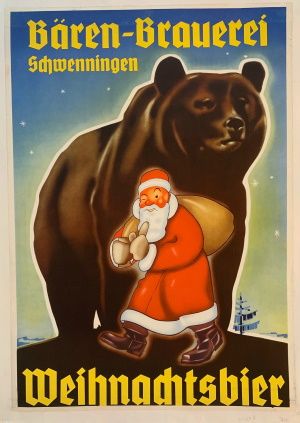
I believe that Weihnachtsbiers - Christmas beers - are a Bavarian thing. My understanding is that they're dark amber bock biers with an A.B.V. in the 6-8% range and that they become available by 4 December so that one can have a few and terrorize the neighborhood kids on the eve of St. Nicholas Day in your Krampus costume. Or for mellower folks to have a little warmth while strolling around a Christkindlmarkt.

The Germans are an orderly people and surely have well-defined parameters for what constitutes a bock and a doppelbock. (Or maybe they're all simply Starkbiers.) Now, whether the Weihnachtsbier is similarly defined or not, I don't know. It could be that merely slapping "Weihnachtsbier" on your label makes it so. Does it count as a doppelbock if it's not "Weihnachtsbierator"?

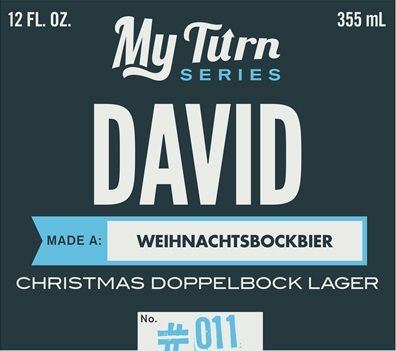
For all of the German heritage here in Wisconsin, I don't know of any breweries that proffer a Weihnachtsbier. Lakefront brewed one several years ago in their limited My Turn series because an employee named David chose the style.


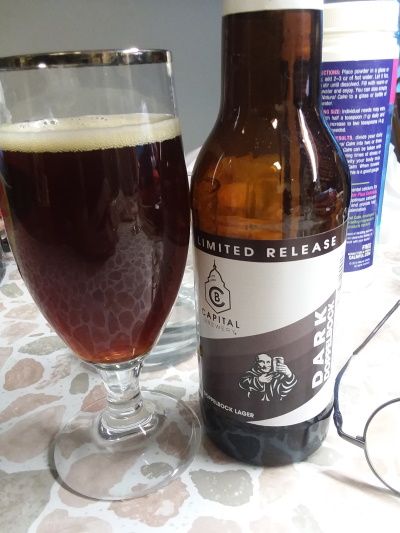
Despite the absence of Weihnachtsbiers, there are plenty of bocks to be had. Zum beispiel, Next Door has Integrator, a doppelbock, albeit one with a Lenten bier name. And Capital has doppelbocks aplenty as it has for years. Varieties available now are apple, pumpkin spice, and this classic:


It's a weird world where a brewery with Kirby Nelson at the brew kettle doesn't have a doppelbock ready for patrons seeking a respite from the chilly weather. Perhaps he brews one now and again but the Wisconsin Brewing Company webpage is bereft of them. It's a shame that he has seemingly abandoned the style. Recall that Kirby's Manoomator, a wild rice doppelbock, was wonderful. Personally, I think a wild rice bock would be a great late fall brew. You can get your fill of Oktoberfests from July into Oktober but, when Halloween is around the corner and Thanksgiving on the horizon, a wild rice bock would really hit the spot after raking leaves. (If you do such a thing.) Plus wild rice is largely an upper Midwestern crop so it would be a regionally specialty that could sit nicely next to a cranberry lambic or a venison hazy IPA.

So what to drink when winter settles upon the Land of Cheese?

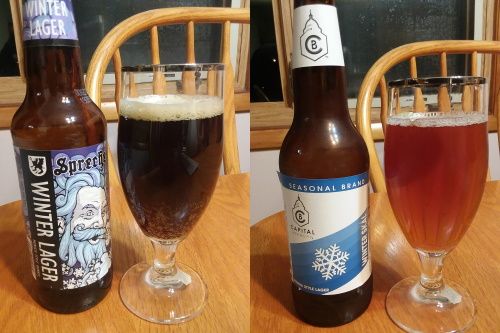
The old standbys for me are:


The funny bit is that, although Sprecher and Capital declare these to be their winter seasonal brews, they're not particularly heady beers. Winter Lager is a Bavarian Dunkel while Winter Skål is a Vienna lager. Each brewery has an annual, Black Bavarian and Wisconsin Amber, respectively, that I feel are more appropriate for this season. To my taste, Black Bavarian has a bigger body than Winter Lager while Wisconsin Amber is sweeter than Winter Skål, though slightly less potent. I would lobby for Winter Lager and Winter Skål to be available year-round after being christened with less frosty names.

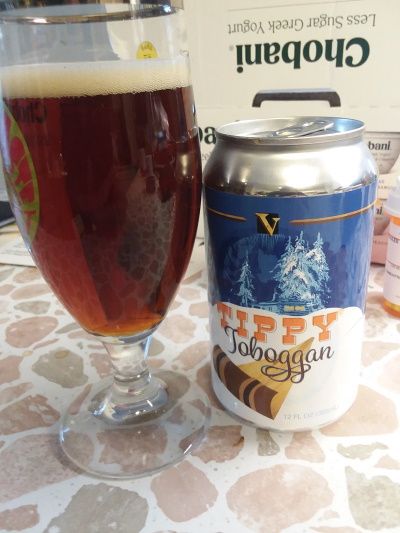
Another bier that I look forward to every year when the leaves have fallen and snow is immanent is Tippy Toboggan from Vintage Brewing. It's a bock strength Roggenbier - think a weissbier with rye brewed to bock potency.


It's got that taste of banana and clove flavors that is familiar to weissbier drinkers the world over but it also has some spicy, earthy rye flavor. And I love rye. Just a great beer.

These are my holy trinity of winter brews. New Glarus' Back 40 Bock is a runner-up as it's not brewed with regularity. This time of year also brings a slew of beers flavored with various spices and sometimes fruits. I find these beers to be fine, if drunk in moderation. Great Lakes' Christmas Ale seems to be held in high regard but I am unsure if it's ever been in my mouth. I do like Sam Adams' Winter Lager, though.

While the Wisconsin Brewing Company neglects the bock at wintertide, they did brew a Pfeffernüsse spiced ale a few years back. Did anyone try this?

Can you recommend a good winter brew?

23 June, 2016

Orange is the New @!$#: Orange Radler by Sprecher Brewing Co.


Glendale's (Milwaukee) Sprecher Brewery is one of the founding fathers of Wisconsin's microbrew scene having been established in 1985. Chris Welch of Trixie's Liquor here in Madison noted last month that the venerable brewery derived 70% of its sales from soda. I don't know where he got that number from but I've heard for some time that Sprecher sells more soda than beer.

This is a real shame considering that Sprecher makes some mighty tasty brews. There are the stalwart Amber (one of my all-time favorites) and Black Bavarian (another classic) plus their seasonals are great too including the current one, Summer Pils.

But for better or for worse – OK, for the worse, in my opinion – Sprecher has seemingly put more effort lately into malternatives than into beer. I am referring to their series of "Hard Craft Soda(s)" which began with root beer – what else? - and has now expanded to six flavors including Hard Apple Pie. And more recently Sprecher has released a line of radlers. It certainly fits the brewery's German image and the radler would seem to be the perfect marriage of libations for a brewery that excels at lagers as well as sodas.

And so I recently purchased some of Sprecher's Orange Radler with grapefruit, peach, and mango rounding out the host of flavors on offer.

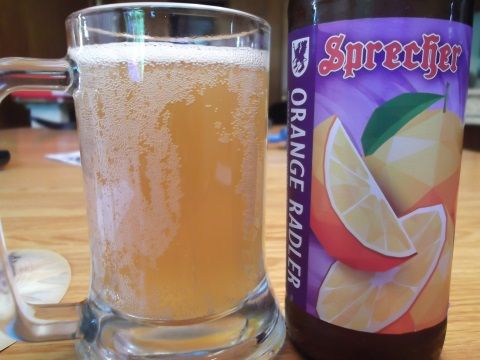
Orange Radler poured a lovely light gold hue and was extremely cloudy. The haze was no doubt from the wheat. Yes, Sprecher's radlers are wheat ales with "natural flavoring". Well, the orange one was, anyway. It had a very soda-like head in that it wasn't very foamy and it disappeared quite quickly. There was a fairly large number of bubbles inside heading on up.

As I was diligently examining my glass and the liquid therein visually, I could not miss the brew's aroma. It must have been what John Glenn smelled while orbiting the Earth in a Mercury capsule and needing to quench his thirst – Tang. Nothing says craft thirst quenching goodness like 1950s convenience food.

I was not looking forward to drinking this stuff but I had committed myself to a run of radler reviews so I had to. And actually it could have been worse. Orange Radler was light on the tongue and had a nice fizziness. At first there was the Tang drink mix flavor but it was followed up by a more natural orange juice taste. There was also a bit of tartness that, along with the carbonation and the cold serving temperature, took the edge off the sweetness which was not cloying to begin with. Once the natural flavoring had had its say, it was the beer's turn. A relatively prominent grassy/spicy hop flavor took me by surprise. I mean, any recognizable hop flavor amidst a sea of orange flavoring and juice would stick out like a sore thumb. Lastly there was a little bit of grain to be had as well.

For the finish a mild hop bitterness mingled with the mix of orange for a drier finish than one had any right to expect.

It both saddens and flummoxes me that a brewery which makes such great lagers and great sodas would play against their strengths and come up with this. A grand disappointment. There are some good things here, however, such as the tingly carbonation, the way the beer slyly sneaks into the picture just as the orange flavors think they've got the place to themselves, and that it's not overly sweet. But I should not be tasting instant drink mix here! Sprecher brews a fine orange cream soda already; why do I not taste the orange half of that drink here? Or even better, an orange soda that utilizes juice and tastes more natural. Surely they can brew a fine helles and mix it with their fine soda. Instead they add natural flavoring to a nondescript wheat ale for a brew that comes to 4.5% A.B.V. when it should be much lower, to my mind.

Junk food pairing: When consuming Sprecher Orange Radler, get a bag of Fritos Scoops and fill them with generous amounts of Dean's Sriracha dip.

03 May, 2016

Heorot Awaits It: Braggot by Sprecher Brewing Company


Three – three braggots!! Ah, ah, ah, ah!

Number three comes courtesy of Sprecher Brewing in Milwaukee.

Sprecher is one of the granddaddies of Wisconsin microbrewing having been around since 1985. Sadly, I've read that they make more soda than beer these days and lately they've been making hay with the hard soda trend. And even more recently they've released a bevy of radlers to jump on the shandy/radler bandwagon that Leinenkugel built.

This is a shame became Sprecher Amber is a fantastic bier and I used to drink it by the gallon (it seemed) back in the 1990s when I spent more time than was healthy at the Paradise Lounge. Black Bavarian is also extremely tasty and I enjoy their seasonals quite a bit too. Yet I feel that the brewery is perceived as something of a one- or two-trick pony. An Amber or Black Bavarian when taking a brief respite from hoppy pale ales but that's it and only occasionally.

Yet Sprecher introduced two gluten free brews back in 2006 or so and have a line of fresh hop beers; a Belgian quad for an anniversary brew and sundry ales. I just view Sprecher as being a very good brewery with many tasty offerings that has more going for it than Bavarian-style biers but just hasn't been able to find its beer niche in a world of IPAs, sours, and barrel aged brews. Perhaps they are doing better than I realize and just fly under the radar without a trendy beer that causes a brouhaha upon release. If I'm right, then hopefully moving to 12oz bottles and some new labels that shed much of the traditional German imagery will appeal to younger drinkers or simply drinkers who ignore them.

Anyway, onto the braggot!

Back in 2014 Sprecher released their first ever braggot. I picked some up and have finally gotten around to dragging one out of the cellar and busting it open. As with my previous two bracketts/braggots, Sam Adams' Honey Queen and Viking's HoneyMoon, Sprecher's extolls the virtue of aging right on the bottle: "This product can benefit from extended aging when properly stored." I aged mine about two years in my cellar away from light and in at least moderately cool temperatures. You will never hear me brag about my cellaring prowess but I feel that Sprecher's brew was treated well.

It poured a deep yellow that was as cloudy as all get-out. I don't know if this is normal but I'm not afraid of some haze. I did not get any head in my glass and the braggot was so turbid as to be opaque so I couldn't judge the brew's effervescence. At this point I was unsure if I completely ruined the braggot in my basement and was about to go 1 for 3 or if all was well and these were just the meady equivalent of crow's feet and laugh lines.

I felt relief when I got a billow of honeyed sweetness up my nose. Braggot had a very sweet aroma overall with some bread dough in addition to the honey. Considering that the bottle had been in my cellar for almost two years and the brew had been aging in Sprecher's vats for something like 18 months, I was quite surprised to smell what I thought were hops – floral hops – that were accented really nicely by all the syrupy sugars.

It wasn't surprising to find that this hazy honey-colored nectar had a fairly heavy body. While it was not a sticky, viscous liquid like honey itself, it was much more hefty than the other braggots that I'd had. There was a luscious honey flavor yet there wasn't a whole lot of sweetness. Braggot has an A.B.V. of 11% so most of the honey sugar was eaten by the yeast and turned into alcohol but I expected a bigger malt sweetness. There was some but it tasted like the malt added more body than flavor. I also caught a little carbonation as well as a not insignificant burst of peppery hops which added an unexpected bitterness. Then the bitterness melded into a big boozy sting.

While there was a little lingering sweetness at the end, I mostly tasted alcohol heat. I think all the booze in Braggot chased away the lacing because there was none.

Sam Adams' Honey Queen was a balanced and gentle libation in contrast to this highly potent potable. Sprecher has come up with something that I could imagine being consumed in Hrothgar's hall where the king and his fighters drank it to forget about Grendel for an evening. I found Braggot to be harsh and abrasive – the Sam Kinison of beverages. The alcohol cut through the really nice honey flavor easily and left my tongue afire. I am hoping that the rest of my stash of Braggot mellows out with more aging.

Junk food pairing: Get some Chicken in a Biskit crackers and slather on a generous portion of honey butter.