20 April, 2007

Blogging The Great War: Part 1 - A Peace That Wouldn't Last

(Introduction)

I was taught the usual stuff in school about how World War I began. You know - it started with the assassination of Archduke Ferdinand, heir to the throne of the Austro-Hungarian (Hapsburg) Empire, on 28 June 1914. While his death was ostensibly the cause of the war, after having done some reading and watching, it is perhaps better thought of as a catalyst. I mean, The Great War didn't just arise from a vacuum. Indeed, as we shall see, war didn't break out for a month afterwards.

The documentary I've been watching, The First World War, begins by looking at the state of affairs in Europe immediately prior to that fateful day in June that led Gavrilo Princips, a Bosnian Serb, to kill Ferdinand. It focuses on the tensions and downright hatred between the Hapsburgs and Serbia, which was an independent state at the time. But in his The First World War, historian John Keegan takes a broader view, both in time and space. So let's pull back from southeastern Europe for a moment.

In his first chapter, Keegan describes something I didn't expect – a virtual Pax Europa. Age-old tensions were present (Huns and Slavs had never gotten along too well), to be sure, but in the summer of 1914 the countries of Europe and Russia as well were in a state of economic interdependence that had never been seen previously. Populations were booming and the spread of empires in Africa and Asia meant that markets, both internal and external, were vastly increasing in size. The introduction of electricity and the automobile boosted industrialization. Steamship and rail were moving goods further and faster while the nascent telecommunications technology was, as we often hear about the Internet today, making the world smaller. The financial institutions and economies of European countries were dependent upon one another as never before.

This interdependence also led to cooperation. With the scale of international commerce ever increasing, bodies were established to standardize transactions. The gauge of rails for trains was standardized in Europe, for instance. (Though Russia, for some reason, just had to have a larger gauge.) Countries got together to allocate the newly-revealed airwaves so as not to interfere with each other's broadcasts. I mean, if you're a German, you don't want your broadcast of the Kaiser extolling bier und oompah music to suddenly cut out and be replaced with some French guy explaining how to make quiche. And the idea of stamped mail was born as well so all the new middle-class tourists could send postcards home.

Outside of commerce, countries got together to check the spread of disease and even regulate the sale of liquor and drugs. The countries of Europe also grew together culturally: "Europe's university graduates shared a corpus of thought and knowledge and, tiny minority though they were, their commonality of outlook preserved something recognizable as a single European culture." Perhaps most surprising to me was that in 1899, Tsar Nicholas II convened an international conference to limit armaments and to establish an international court at The Hague. My surprise is certainly born of ignorance but also of the knowledge of what was to come. A massive, bloody war is on the horizon yet countries are at peace and even talking about a neutral setting for settling disputes. What the hell happened?


(A larger map can be found here.)


Turning back to the political and that map above, let's start with Serbia. Serbia was part of the Ottoman Empire starting in the mid-15th century until 1876 when the Serbs drove the Turks out. In 1978 the Treaty of Berlin gave international recognition to Serbian independence. While Bosnia was also freed from the Ottoman Empire at this time, the treaty ceded the country to Austro-Hungary. The Hapsburgs, Russia, and the Ottomans all wanted control of the Balkan peninsula. Add to this the fact that Germanic peoples looked down upon Slavs and second class human beings and you have a situation fraught with tension.


(Some Serbian gentlemen taking a stroll.)


Serbia wanted the break-up of the Austro-Hungarian Empire as it encompassed many lands of Slavic peoples. Though a part of the empire, Slavs held almost no power within it. Many Serbs held as the ultimate goal a unification of Slavic countries into a single state – Yugoslavia. Ethnic kinship meant that Russia was sympathetic to the Serbian cause. Looking at the map, you'll see that Russia and Serbia are both purple. But so is France. This is because it and Russia began an alliance in 1882 and one upshot of this was that, should one country be attacked, the other would come to its aid. You can see where this is going.


(Emperor Franz Josef of the Austro-Hungarian Empire.)


The German and A-H empires are green. The two had common interests, common racist assumptions, and common ethnicity. Along with Italy, they formed the Triple Alliance. Ignoring the map for a second, understand that Belgium and the UK were basically neutral prior to the war.

Moving back to Eastern Europe, racial tensions flared within the A-H Empire in the first part of the 20th century. There were nationalist demonstrations in Vienna in 1905 and riots in the streets of Budapest in 1912, for example.


(Quelling the riots.)


Sitting here in 2007, it's easy to look back and see this situation as one fated to lead to war. But this wasn't necessarily so at the time as nationalism and ethnic strife do not necessarily equate to war. Keegan notes Norman Angell and his book The Great Illusion in which the British author noted the futility of a war in Europe. (Jean Renoir's classic 1937 film, The Grand Illusion was named in tribute to the book.) Conflict would cause a massive disruption to international credit so the powers that be had plenty of motivation to avoid it. And, if war did break out, it would be short-lived to minimize economic damage for everyone. Keegan quotes a speech Angell gave on 17 January 1912 entitled "The Influence of Banking on International Relations":

…that there must be confidence in the due fulfillment of mutual obligation, or whole sections of the edifice crumble, is surely doing a great deal to demonstrate that morality after all is not founded upon self-sacrifice, but upon self-interest, a clearer and more complete understanding of all the ties that bind us the one to the other. And such clearer understanding is bound to improve, not merely the relationship of one group to another, but the relationship of all men to all other men, to create a consciousness which must make for more efficient human cooperation, a better human society.

Reading this I found myself rooting for peace. I guess my brain was somehow able to ignore the fact that the fate of the world in 1914 was sealed long ago.

Black Gold

Black Gold, a movie about the struggles of Ethiopian coffee growers, will be screened on 30 April from 6-8PM at the Two Degrees Coffeeshop. It is located inside A Room of One's Own Feminist Bookstore.

The folks at Just Coffee are co-sponsoring the event.

19 April, 2007

On the Gramophone


This week at my podcast I feature The Decemberists. The show is their performance from Luther's Blues here in Madison on 21 September 2004.

The Gift of Second Site

Whether or not you agree with John McNamara's assertion that Willy Street Co-op members should vote no to a second site, you have to admit that he's right when it comes to what he labeled "propaganda". Here's what he wrote:

Lately, the uttering of management and the board seem like so much propaganda (keep in mind that they all get a significant discount for their food, so maybe they are guilty of not really knowing how much things cost). Recently I visited the 400 member People’s Grocery in Toledo, Ohio. The feel of the place was so incredibly different. It felt like a coop, not the mega-mart that Willy Street feels like. The General Manager ran the cash register. They only time that I see the Coop’s management staff is at the Crystal Corner (often with the GM holding court) after work or before a board meeting (not that there is anything wrong with that--in fact, I admire their choice of taverns). I have never seen the GM on the floor of the store!
The ballot area only has positive statements about the second site. This, in my mind, is a violation of the Cooperative principle of Education and Democracy. How can members make an informed choice if they are only offered management’s talking points through the mouths of directors?


I think the last bit is the most relevant here. I have the ballot sitting here right in front of me and it seems like management considers the second site to be a foregone conclusion. Just as the ballot area at the store only has positive statements about a second site, so it goes with the ballot itself. General manager Anya Firszt and Opportunities Committee Member Ingrid Rothe both get considerable space in which to express their support for the measure but no arguments opposed are given room. Firszt writes, "I encourage you to become informed about the issue". Well, if McNamara is right and the ballot area in the store has nothing but comments in favor, what is the best way to become informed about the other side of the story? (Manufacturing consent, anyone?) If you do become informed and decide to vote against the second site, the ballot itself has space for you to explain your deviation from the management-approved position. Just don't make a go of trying to be nuanced like McNamara. The ballot gives but you a line about 3" long. (Which I now see that McNamara pointed out.)

Honestly, I don't shop at the co-op much anymore and this is for a multitude of reasons. One is that I no longer work downtown. When I did, the co-op was on the way home and so it was convenient. Now that I work on the far west side, it is less so. Another is that my tastes and cooking habits have changed. I found out that the co-op was not the optimal place to shop for exploring Polish and German cuisines nor for going about recreating medieval recipes from hundreds of years ago. To be sure, the co-op was great for certain ingredients – most vegetables, barley, butter, et al, but not for many others. A large aisle of potato chips and other organic junk food to the contrary, there seems to be an unwritten rule at the co-op which states that non-Western cuisines, medicine, and ways of living are, in general, better than those of the West. There's a distinct lack of ethnic foods that aren't from the East; countless herbal supplements from an industry that has neither to prove the safety or efficacy of their products which are purported to be ancient remedies from the mysterious past of some Eastern country; plus there's lectures and demonstrations on varieties of homeopathy.

Regarding the ethnic food selection, I take that as a matter of course. No big deal – they're just catering to members' preferences and I cannot begrudge them for this. As far as promoting homeopathy, I don't have that great of a problem with it but I do hope that people don't forsake Western medicine completely. The only time I really have a major problem with homeopathy is when it comes to herbal supplements. I think the co-op ought to be ashamed of its promotion of them. When Wal-Mart hawks the stuff, consumers can see that the motive is profit. But when the co-op sells it, there's an endorsement of a certain lifestyle and ideology behind it. And I view it as one that denigrates science and paints a false picture of the manufacturers of these supplements. For starters this is the area in which the co-op most heavily endorses the fallacy that because something is "natural", it therefore must be good. Arsenic occurs naturally in the environment but it is hardly good for human consumption. Secondly, I think it makes hypocrites of the co-op. For all the bitching about agricultural mega-corporations, herbal supplement makers are hardly different. Smaller than ADM? Of course. But these supplements are not made by mom-and-pop apothecaries. The makers are corporations that have lobbyists making sure that the FDA stays off their backs so that they do not have to prove the safety or efficacy of their products. They can slap whatever herbal concoction they want into a pill and sell it as long as they don't say it cures or is intended to treat a specific ailment. Thusly the labels on the bottles are almost pure puffery. If Kraft started marketing food with no FDA oversight, you can bet the co-op community would cry foul – and rightly so. But when it comes to "natural" products, companies get a pass.

Along similar lines is the co-op's campaign to instill fear into its patrons regarding genetically modified foods. This can best be seen best by the use of the term "frankenfoods" in the store and in the newsletter. Last year when E.O. Wilson gave a speech here in Madison, someone asked about such foods. When he replied that he thought they could be part of the solution to global hunger, there was an audible groan from the audience, many of whom were, no doubt, co-op members. Because the evil hand of humankind was involved, they are deemed "unnatural" and therefore are bad. This is not to say that we couldn't stand to learn more about these foods but using a derogatory name serves only to cease discussion & investigation. Hence the manager's comment noted by McNamara - folks will eat this "crappy food and get cancer".

I don't shop at the co-op much anymore out of lack of convenience but also out of ambivalence. On the one hand, they do have wonderful products and I appreciate the emphasis on organics and stuff from local growers and producers. Cooking classes, music – there is in fact much to be positive about. But, the co-op encourages consumers to look at the big picture when it comes to foods they eat. Where did it come from? How much gas was used getting it to the store? Were chemicals used during growing or processing? That there are many consumers who considering these questions is something the co-op can justifiably be proud of.

But when I look at the big picture I also see that shopping there means supporting Luddites, of a sort, who engage in fear/smear tactics. It also means giving tacit support to "alternative medicine" and the herbal supplement industry which, to me, means that I'm lending support to snake oil salesmen.

Plus the place is really goddamn expensive.

18 April, 2007

What Are the Mi-go Up To?

So wondered a Cthulhu fan when confronted with this:


This hexagon is above Saturn's north pole. Now, before anyone thinks this is the work of Richard Hoagland, let me assure this is from NASA.

Cthulhu Pet

So simple, even an acolyte can do it!

17 April, 2007

"State failing to properly manage costly computer upgrades"

Or so says or so says a report from the Legislative Audit Bureau. I bet no state IT worker saw this coming...

The state has failed to properly oversee several complex, troubled computer projects, which are expected to cost taxpayers some $292 million, a legislative audit has found.

Since late 2003, the state agency charged with monitoring these projects across state government hasn't done so because it was consumed with dealing with its own boondoggles, according to the report released today by the Legislative Audit Bureau. Those included an effort to consolidate backroom computers called servers that could run as much as six years past its original deadline of May 2006.


See also this article.


(/sarcasm)

Battle in Heaven

If spending hours and hours at the Wisconsin Film Festival last week wasn't enought, last night I watched Battle in Heaven (Batalla en el cielo), a film by Mexican director Carlos Reygadas. I'd read some very positive comments about it when it played in Chicago a few months ago and so I was eager to check it out for myself.


Battle in Heaven begins with a close-up of a man's scruffy face. His blank expression and the absence of any sound betrays nothing. The camera slowly moves down over his bare chest and plump belly. Soon the long locks of a woman's hair move into frame and we can see that she is performing oral sex. We stay locked in this shot for a brief time before the camera gracefully moves in and around to the right. It closes in on the area below the man's waist. Suddenly the scene cuts and our view is from behind the man. Again, the camera begins moving in and around until we see the beautiful young woman slowly fellating the man's penis. Her eyes are shut and the scene is almost solemn. Moving in further, the woman turns her face towards the camera until it fills the screen. Opening her eyes, she stares at us for several seconds. Then black.

Aside from the graphic oral sex, this opening prepares us for the rest of the film with its slow camera movement and lingering shots. We are also introduced to the main characters – Marcos and Ana. We next see Marcos with his also plump wife propped up against a bright blue wall in a sterile, noisy environ. An irritating beep drones in the background as chatting people walk by. They have a small area staked out to sell snacks and nick-knacks in a corridor of a subway stop. Both of their faces are blank as they follow the commuters walking by them. The dialogue is sparse but we learn that a woman named Viky has lost her baby. Soon Marcos must leave for the airport.

Marcos meets Ana there. She is from a wealthy family and he is her chauffeur. Despite (because of?) her family's standing, Ana works as a prostitute at a brothel. Marcos takes her there and she offers to set him up with one of the ladies. "Fatso can't get it up," one of the women says, "He is asking for you," meaning Ana. She goes upstairs to find Marcos removing the condom and getting dressed. Sitting down next to him and asks what's wrong. He tells her that he and his wife kidnapped a baby earlier in the day and that it died. Ana lays back on the bed and the camera glides over her flat belly up to her face and pauses on it. The camera loves Ana or her body, at least and this kind of shot is repeated later in the film when she and Marcos are walking down the sidewalk. A man in a wheelchair being pushed by a nurse unexpectedly appears in front of them and we get a shot from the man's point of view. The camera shows us Ana's belly once again and it slowly moves up to her face again. In these shots, it's as if the camera is caressing her.

Contrast this with how Marcos, man grappling with the pangs of guilt and interminably lost in thought, is treated. There are several scenes which resemble the end of The Passenger. Take the one after Ana and Marcos have sex upstairs in an anonymous apartment. We voyeuristically look at them through a window and then the camera turns towards the urban landscape of Mexico City. It does a full 360 and returns to the characters still in the same position they were in when the shot began. Just as with Marcos' thoughts, the camera wanders and he gets lost from view. But, just as he is found again as the camera movement brings him back into the frame, so too does his mind return.

Blood is shed near the end of the film but I felt that Marcos finally found himself. It wasn't a happy reclamation of his mind and heart, but at least his tragedy came to an end. The very end of the film is a mirror of how it began but with one crucial difference – he smiles.

16 April, 2007

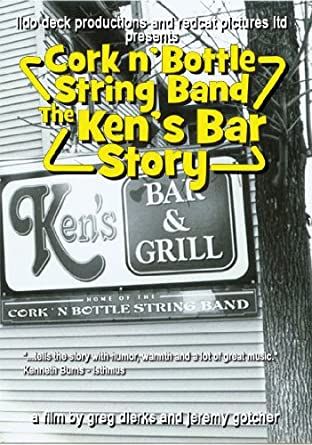
WI Film Festival - Cork n' Bottle String Band: The Ken's Bar Story


If Cork n' Bottle String Band: The Ken's Bar Story ever makes its way outside the friendly confines of Madison, the opening mock newsreel showing the band as USOers circa 1942 keeping American wartime spirits high will serve as a good introduction to folks unfamiliar with Madison's original slapstick bluegrass band. The movie started out as a video scrapbook of the CBSB's six-year run at the now-defunct Ken's Bar off the Square on Butler Street. It ended up as a feature-length bit of nostalgia and tribute to the power of music, friends, and beer. I saw CBSB at Ken's a few times back in 1997/98 when I lived not to far from the liquor store which gave the group its name and the archival footage and photos brought back some good memories.

The band's genesis is at the aforementioned liquor store where a few of the future band members worked and the rest shopped. Spruce Tree Music was next door and so bluegrass was an oft-covered topic. On New Year's Eve 1995, the guys decided that they'd form a bluegrass band. This necessitated not only obtaining instruments, but also learning how to play them. With the assistance of bartender Jeremy Smith, the band landed a gig at Ken's Bar on Wednesday nights which would last until November 2002 when Ken's closed. The allure was being able to get together with friends once a week to have some fun – and drink free beer. Did I mention that the guys like beer? I think every shot with a band member in it had them drinking the stuff except when guitarist David Landau is being interviewed as he drives around town. Even then, a can could have been in the cup holder just out of the frame.

As the members' abilities on their instruments grew, so did the crowds at Ken's. The first gig attracted a few stragglers but by the end of Ken's, the joint was packed beyond the reach of any safety code. There were countless regulars and some of them appear in the movie while even more were in the audience Saturday night. No doubt many viewers either saw themselves or at least someone they knew in the old photos or grainy footage from Ken's. The band members told many a story such as the time some hippies got their dreadlocks stuck on a newly varnished wall or when mandolinist Greg Dierks kicked a particularly annoying fan that was standing a bit too close. But from the occasional gasp or whispered comment it seemed like there were several audience members who had tales of their own to add to the story. They were an integral part of the Ken's experience too, after all.

Country music historian and WORT DJ Bill Malone adds some commentary and it was especially funny to hear the author of the definitive book on country music opine on the band one moment only to see them do Bluegrass TV Cribs (one of a few staged sequences) the next. For the record, I swallowed my gum laughing during that scene. But aside from comedy, the CBSB became great musicians. Featured were some great performance footage including "Big New", "Old Joe Clark", and "Pig In a Pen". "The Auctioneer" sung by Landau as if he were doing one of those old Federal Express commercials drew a large round of applause and cheers from the audience.

Cork n' Bottle String Band: The Ken's Bar Story has a built-in appeal for fans of the band but it should also find an audience with general music lovers and beer drinkers too.

WI Film Festival - Radio On

Radio On from 1979 was recently restored by the British Film Institute. Directed by Christopher Petit but co-produced by Wim Wenders, the shadow of the latter's existential style looms large over the film. Taking place in late 1970s England, it wallows in the decaying landscape that birthed that bit of nihilism known as punk rock.

A marvelous handheld shot opens the black & white film with the camera creeping up and into an apartment. We catch a glimpse of a man's legs in the bathtub but the camera soon moves on and meanders throughout the flat. At one point it stops on a piece of paper affixed to the wall which has some writing on it. It begins: "We are the children of Fritz Lang and Werner von Braun…" The shot returns to bathroom with the lifeless figure in the tub and the radio sitting on the ledge.

We finally meet the film's protagonist, Robert, who is a DJ. He's a silent and dour figure. When his wife (or girlfriend?) leaves him, it seems to barely register with him. His demeanor barely changes when he learns of his brother's death which sends him on a road trip to Bristol to find out what happened. Preparing for the journey involves having lots of road music and we see him open an envelope that contains a trio of tapes from Kraftwerk. Music is important in this movie. It has one life when there's tune playing on the car's stereo and other in its absence which usually means near-silence. There's a scene in which Robert is driving around and, when the camera is in the car, we hear the music cranking. When the scene cuts to a viewpoint outside, the silence is almost deafening. Music seems to be how Robert navigates his workaday world and adds color to its greys.

This is a road movie but one that most Americans will find odd. Robert picks up a hitchhiker. Without a job or hope, the man joined the army only to desert. And a young Sting plays an aspiring musician living in a trailer behind a gas station whose hopes of making a go at the music business seemed to have been dashed long ago. All of the encounters Robert has end up being dead ends. These people are like the abandoned factories that Robert drives by on his way to Bristol.

When Robert finally gets to his brother's apartment, he finds that he had been living with a woman and she is not the least bit interested in so much as talking to him. There are no remains, no items left behind for him to take home. His goal turns out to be just another dead end.

I enjoyed the cinematography and the film's slow, quiet pace even if I did get a bit bored with repeated shots of Robert brooding as he looks out the window. Being a big fan of music myself, I appreciated not only the soundtrack itself (David Bowie, Kraftwerk, Robert Fripp, Devo, et al) but the use of music in the film. It seemed to breathe life into the lifeless and give a sense that there's something beyond the dull, drab landscape of the film's visuals.

Although I think one can certainly get something out of Radio On without knowing anything about what was happening at the time in England, but I feel I got more out of it knowing about such things as the factory closings, IRA bombings, and the "Protect and Survive" pamphlets & films which instructed citizens on what to do in case of a nuclear attack which were produced at the time. Knowing about these things helped me understand not only the bleak terrain passing by through the car windows, but also the sullen landscape in Robert's head. While knowledge of modern English history helps in understanding Radio On, there are certainly enough universal ideas and feeling here for everyone to understand the ennui.

15 April, 2007

WI Film Fest - Cinematographer Style

Film geeks and curious onlookers filled room 4070 of Vilas Hall yesterday for the showing of Cinematographer Style, a film which looks at, as the name implies, cinematographers and their craft. If you've read this blog before, then you know that I fall into the former camp. I get all excited thinking about the legend that Gregg Toland carried a strip of film in his pocket demonstrating a shot with a depth of field from one inch in front of the camera to infinity. And so I was really looking forward to this film. The Dulcinea accompanied me and, although she had taken an intro to film class at MATC last year, I think she was tagging along more to be with her geeky boyfriend than for any interest in film.

When a movie begins with a shot of long-time Bernardo Bertolucci collaborator Vittorio Storaro holding a light bulb, I know I'm going to like it. And I did. Interviews with one hundred and ten cinematographers were utilized to give viewers a sense of how they do their job which, as one of them noted, was both a craft and an art. Veterans such as Storaro and Haskell Wexler were along side of newcomers like Matthew Libatique, best-known to me through his work with Darren Aaronofsky.

The film begins with the directors of photography introducing themselves and one of them was from Eau Claire. There were funny anecdotes about how they got into the business and lots of nebulous takes on how these people create their own unique visual styles. Storaro chimed in with his customary metaphysics of light & energy while others remained a bit more pragmatic by describing how they read scripts repeatedly and looked to artists such as Monet for inspiration.

Intended for a wide audience, Cinematographer Style largely avoided technical terms but there was a nice sequence with Roger Deakins who extolled the virtues of wide angle lenses and their more "natural" perspectives. Part of the scene was shot with a very long (telephoto) lens while the other was done with a shorter (wide angle) lens and the audience could see the difference for themselves. Along similar lines, there was Storaro and his light bulb. He showed how mood was created depending on where the bulb was placed around his head. And his metaphysics of color was demonstrated onscreen as the shot had a blue tint when he spoke about his use of the color in The Conformist. Another highlight was hearing one of the interviewees give a brief encomium for focus pullers.

Perhaps the most important thing a non-film geek can get from the film is that cinematographers have a huge role in making what audiences see on the screens at their local mulitplex. The relationship between the director and cinematographer is described as a marriage by one person. DPs don't just point and click, they craft scenes very precisely. Not only do they do so on a technical level so that the film is exposed correctly, but they also create elements of scenes that help tell the story in ways that the dialogue cannot. For example, the angle at which a person is shot and the interplay of light & shadow all direct the viewer's feelings towards the characters. That filmmaking is a collaborative process was also illustrated by comments from a few of the DPs about how they get together with the production designer to make sure the sets and costumes are just right.

If I had any complaints it was that I would have liked to have seen more of the demonstrations that I mentioned above. Film is a visual medium so show us, don't just tell us. A decision had been made not to show any excerpts from the films these folks had shot so illustrating the comments as I described is helpful to a lay audience. I know that The Dulcinea appreciated them.

There was a Q&A session after the showing with a gent whose name I cannot recall (sorry!) and someone asked about the paucity of women who were interviewed. The answer was that this is an accurate representation of the membership of the American Society of Cinematographers. One woman's work that I am going to keep an eye out for is Amy Vincent. Knowing that she worked on Natural Born Killers and Lemony Snicket's A Series of Unfortunate Events piques my interest. Her latest is Black Snake Moan.

Walking out of the theatre, The Dulcinea remarked that she enjoyed Cinematographer Style much more than she thought she would and that she learned quite a bit. And so the film accomplished what it set out to do on at least one person.

14 April, 2007

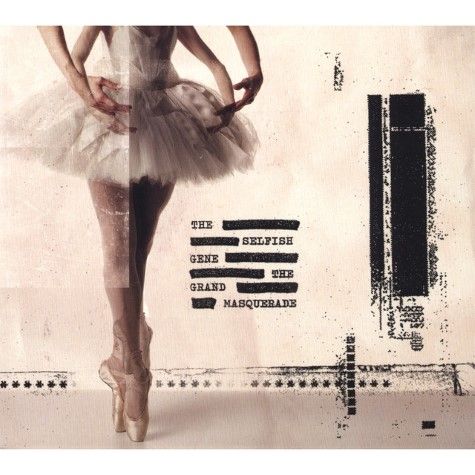
The Selfish Gene - The Grand Masquerade


Now what else is the whole life of mortals but a sort of comedy, in which the various actors, disguised by various costumes and masks, walk on and play each one his part, until the manager waves them off the stage?
~~~~~Erasmus


The Grand Masquerade is the sophomore effort by Madison's The Selfish Gene. The press release notes that album's lyrics involve "Orwellian concepts of deception, false identity, and doublespeak" and so the title implies that we mortals (we Americans?) don masks to hide ourselves from our fellow men. Musically the album is a bit of sonic alchemy with the band having mined the classic rock vein for substances to manipulate. While many influences are obvious, it rarely degenerates into being a copy of the original. Had The Grand Masquerade been released 30 years ago, folks would no doubt be talking about the melodicism of the first side and the more disparate and more somber second.

"A Grand Masquerade", which kicks things off, is a short string-laden prelude which builds to a climax amidst flailing backwards tape loops. "Weight of Light" is the first proper song and it opens with a bit of strumming that sounds like a lonely beacon struggling to be heard in the silence. Once the tune gets going, it turns into a pop song replete with a big build-up to the chorus. It runs the risk of sounding bombastic but manages to snare just the right amount of drama. The album's theme is evident from the get-go with the line "And our world, rarely viewed in true color".

"Overboard" is based around a perambulating guitar riff from Matthew Allen and the song features the band's wonderful vocal harmonies. (Three of the four members contribute their voice.) The admonishment "They're watching you" is contradicted in the next song, the Beatles-esque "Autopilot" which notes, "So sad, lost all surveillance". The more I listen to it, the more I love "Bad About It". The music has a touch of menace but it's almost light-hearted because the song's melody is so catchy. Plus Eric Andraska's nimble bass work here is a real treat.

Moving to the second side of the album, we encounter "Evolver" which is a flattering stab at late-period Electric Light Orchestra. Reviews often note a prog rock influence on the band's music but it's not really until "Bidding War" that this takes centerstage. The song would have almost sounded at home on Jethro Tull's Benefit. Also of note is the singing which is grittier with a hint of mania that recalls Van der Graaf Generator's Peter Hammill. "Archipelagos" opens with a fat drum beat clashing with synthesizers. It settles in a groove with rap-like singing. The guitar riffing is noticeably absent in the verses with sustained notes coloring the soundscape. "Foxhole" begins with the sound of howling wind as someone trudges along. A door opens and the footsteps continue down a hall until yet another door opens. Then a circus-like organ cuts in. I was reminded once more of the influence of The Beatles, specifically "Being For the Benefit of Mr. Kite". But instead of describing a circus, the lyrics vaguely invoke war and, more broadly, alienation. At the end of the song, the narrator is shot (or was the wound self-inflicted?), with his/her brains splattering on the wall. The backwards tape looping from the opening of the album returns for a chaotic finale as our victim walks toward the light.

Respite is found in the closer, "Wonderfall". It's a bit of sing-a-long on acoustic guitar with tambourine that ends with the hopeful line, "Give it a little more time."

The Grand Masquerade shows that The Selfish Gene's reach exceeds their collective grasp. "Archipelagos" was the low point for me with its attempt to sound current amidst all the tributes to 1970's touchstones. But the high points are numerous. These guys have a great ability to craft songs which are blatantly catchy yet have enough twists and turns to keep things interesting. Plus there's a certain exuberance here that's hard to pin down. The playing is solid throughout and the vocal harmonies are one of the band's great strengths, especially on "Idioum" which recalls the layered interlude in Yes' "South Side of the Sky". With all the diverse influences, one can easily imagine the band in the studio adding a bit of this and a touch of that until they had taken their rough ideas and transmogrified them into gold.

The Grand Masquerade will be released on 1 May and the album's release party is tonight at the Orpheum.

It's Happiness: A Polka Documentary


After stopping for Nepali food and some ice cream from the Chocolate Shoppe, it was off to the Historical Society on Saturday night for the first of two music-related films - It's Happiness: A Polka Documentary. It had been almost a year since I first wrote about the film and I was fired up to finally see it. The lecture hall was jam-packed and there were several folks clad in the yellow t-shirts emblazoned with the film's logo. No doubt some of them were featured in the film. I was reminded of seeing another documentary about Wisconsin at last year's festival - Triviatown. That screening too had a joyous atmosphere as a group of cheeseheads were going to witness their own at play. The filmmakers gave a brief intro and the lights went down.

Our eyes were assaulted with scenes from an instructional video on how to dance the polka which brought many a laugh. Interspersed with the opening credits were shots of people laughing, drinking, and dancing as well as commentary from folks such as polka legend Jimmy Sturr. Amidst the scenes of happiness was more sober commentary about how many consider polka to be a joke and that the accordion just isn't sexy. The struggle to get this musical embodiment of happiness into the public consciousness is one of the core elements of the film.

With the credits done, the scene shifts to Milwaukee and Art's Concertina Bar. We see shelves lined with concertinas and a crowd enjoying some live music. The owner, Art Altenburg, gets in on the action by lining up a row of liquor bottles and playing along with a pair of drum sticks. Watching the bar's patrons laugh and dance, the sense of communal revelry drips off the screen.

A couple familiar faces (familiar to me, anyway) make an appearance here too. UW folklore professor Jim Leary chimes in humorously and says that the polka was a Czech misinterpretation of a Polish folk dance. Rick March, the Traditional and Ethnic Arts Coordinator of the Wisconsin Arts Board, is also given some screentime. (Leary and March collaborated on the radio series "Down Home Dairyland".) The pair were used sparingly in the film giving the focus over to non-academic fans. But don't be fooled. I've met Prof. Leary and heard him speak and he's anything but a dispassionate observer of Wisconsin folk culture – it runs in his veins.

We briefly meet Greg Durst, a record collector with the largest collection of vinyl in the state and a huge polka fan, before being whisked off to meet John Pinter and the Wisconsin Polka Boosters. At a membership meeting, Pinter notes the group's low membership numbers and that most of the members are retired folks. The film perhaps lingers on Pinter's absentmindedness a bit too long, such as when he pulls his minivan out of his driveway with the side door still open. But it's his single-mindedness in promoting polka which is given centerstage. We also meet Vi Bergum, who lobbies to get polka taught in Wisconsin's schools.

With Milwaukee's ethnic neighborhoods changing, polka has moved out of taverns and into festivals such as Polish Fest and Pulaski Polka Days. Here we meet younger polka enthusiasts as well as some older, rowdier party people. We're also introduced to the invention of one woman, the Shot Ski. It's a ski with holes drilled into it to accommodate shot glasses so that multiple people can swig at the same time. The film introduces us to many colorful characters who are all out having fun in their own quirky ways. And there's a polka mass too.

While most of the interviewees were in common agreement about the film's subject, there were a couple instances of difference of opinion. The first that I recall was when LynnMarie, who combines polka with pop music, commented that, while she longs to be able to play her beloved Slovenian-style polka music, younger people have no interest in it and so she has to "compromise" to reach a wider audience. Hot on the heels of these comments come those of Ms. Bergum, methinks, who says that there is absolutely no reason that "purer" polka cannot find mass acceptance. It was quite a change from the norm to hear age being hopeful & optimistic while youth was more pragmatic. The other instance was when someone (Willie Nelson?) remarked upon Jimmy Sturr as basically being the living embodiment of polka while another person then said that Sturr really isn't polka. I personally am inclined towards the latter opinion as I find his style to be overly slick and too polished. But that's me.

The low point that evening was during a scene when Pinter is sitting at his computer pecking away at the keyboard with two fingers. In his voice-over, he relates the massive amount of time he puts into getting the WI Polka Boosters newsletter together each week. The audience laughed heartily and that seemed inappropriate. It really irritated me that most people saw this scene as a cue to mock someone's inability to type as opposed to seeing it as an illustration of a man's love of and dedication to polka.

The filmmakers returned for a brief Q&A session after the screening. One question was why there wasn't more polka featured in the film. DiBiase answered by saying that earlier cuts had more music but it was decided to focus on the people involved rather than the music/dance. Honestly, this question never occurred to me. Even if the film leaned towards character study, there was no paucity of the music. In his review for Isthmus, Kenneth Burns takes the film to task by asking "Why not try to convey what makes it so irresistible?" The filmmakers answer the question of what makes polka irresistible to its fans with the film's title – it's happiness. And so I have to wonder just exactly how much footage of people dancing and smiling one needs in order to understand that. Does a neuroscientist have to come on and explain how a 2/4 beat induces chemical reactions in the brain that make us happy? The question is not why do all the happy people on the screen love polka, it's why the number of people like that is so small. The film touches on the issue mainly with comments from Prof. Leary when he describes polka as a form of ethnic identity and how it was booted from the hit parade by rock'n'roll.

Another person asked the filmmakers if they knew how to dance the polka and producer/director Craig DiBiase replied, "Of course we do." Vi Bergum came out of the audience and ambled onto the stage with DiBiase which prompted the audience to burst into "Beer Barrel Polka".

It's happiness indeed.

I interviewed producer/director Craig DiBiase after the screening and you can download an mp3 of our chat here.

(Originally from April 2007)

Jesus Christ, That's Good Beer!


The King of the King of Beers - Jesus Beer!

"Cheese!"

Aardman Features, the British studio behind my favorite turophiliac and his hound – "Wallace & Gromit" – has disassociated itself from DreamWorks Animation and inked a deal with Sony. Apparently Flushed Away didn't make enough money so the two studios parted ways.

DreamWorks pulled out of its five-picture deal with Aardman in January following a hugely disappointing performance for last fall’s "Flushed Away," a CG toon the two co-produced. Jeffrey Katzenberg-led studio had to take a writedown on the pic, which cost more than $130 million and grossed only $179 million worldwide.

I am genuinely surprised at this considering that The Dulcinea and her kids have each seen the film multiple times and now have it on DVD. So, how will this deal affect us fans?

Aardman co-founder and exec chairman David Sproxton said: "We know from experience that we create our best work when we do it from our home base here in Bristol, using first-class talent from the nation and around the world."

That’s a reference to Aardman’s less-than-satisfactory experience making "Flushed Away" in partnership with DWA in Los Angeles. Both sides were creatively frustrated even before the pic opened.

British studio made clear, however, that it expects to have less creative input and interference from Sony than it had from DreamWorks.

Sony and Aardman have not yet settled on their first movie, although Aardman execs say four scripts are already in advanced stages of development, including a "Wallace & Gromit" sequel from director Nick Park.


Woo hoo!

13 April, 2007

WI Film Fest - Killer of Sheep

Immediately after work yesterday I headed downtown to begin the Wisconsin Film Festival. Things got off to a nostalgic start as I found myself in room 4070 of Vilas Hall where I'd spent many an hour in Comm Arts classes as a student at the UW. It got even more nostalgic when Jim Kreul, a former TA and co-founder of the festival, got up on stage to greet us and introduce the film we were to see. Kreul's sartorial sense has shifted since the mid-90s and he was clad in dress shirt, jacket, and slacks – a far cry from his jeans/grey hoodie days. Jim, leave the professorial get-up in North Carolina and bring back the hoodie!

Last night's showing was of Charles Burnett's Killer of Sheep. Shot in 1972-73 as a student project, it was not released until 1977. While it won awards and much acclaim, it never saw commercial distribution due to the fact he never secured the rights to use 22 songs on the soundtrack which were by some very well-known artists. In 2000, Dennis Doros of Milestone Films heard about the restoration of Killer of Sheep at the UCLA film archives and he set out, with a healthy donation by Steven Soderbergh, to secure the music rights so the film could be re-released. His quest was successful and Killer of Sheep is now making the rounds.

Burnett's aim was to portray the lives of black people in L.A. in a realistic manner; to show well-meaning but also comparatively well-off whites that their ideas for helping the poor black communities perhaps needed a bit of rethinking. He has stated that the film was meant to be shown to communities privately and not for commercial distribution. Killer of Sheep looks at the life of Stan, a family guy who lives in Watts, which still shows the scars of the riots there just 7 years previously. Stan works at a slaughterhouse and the sturm und drang is making him numb to his family and life, generally.

The film lacks a 3-act plot and is more akin to Italian neo-realism with it's slice-of-life story and use of non-actors. Scenes with Stan at work are set against those with him at home where he can only muster a thousand-yard stare in the face of his wife's sexual advances. She also notes that he never smiles anymore. Stan's lethargy is contrasted by the activities of the neighborhood kids. They seem ostensibly happy as we see them running around, having rock fights, and playing on the railroad tracks amidst the vacant lots and dilapidated buildings.

The pace here is slow and deliberate. A two-minute scene of Stan and his friend are carrying an engine down a couple flights of stairs would be a 3-second shot in your average Hollywood movie. I really loved the cinematography with its judicious use of wide angle lenses and a great tracking shot of two thieves hauling a stolen TV down an alley. The way I'm describing this probably sounds like the film is a very fractured view of a man, his family, and the neighborhood they live in and I suppose this is true, in a way. But Burnett keeps things together with scenes in Stan's home. It's a modest house but it's a home for the characters. The shot composition varies so it never seems like the many scenes that take place in the kitchen are the same. And the scene with the girl singing to Earth, Wind, and Fire was absolutely charming. It's not Stan's home life which is the problem, it's his job killing sheep.

The music, which kept the film from commercial release for 30 years, is also very important here. Songs by Paul Robeson, Scott Joplin, Elmore James, Dinah Washington, et al not only add commentary to the scene in which they appear, they also serve to remind the viewer that the situation in which the characters find themselves are historically contingent. The Watts ghettos didn't just arise out of a vacuum in the wake of the riots of 1965.

The shot that sticks with me is one in the slaughterhouse. Two Judas goats are in the foreground while a herd of sheep are in the back blissfully unaware of their collective fate. I found this is be a very potent picture and actually feared for Stan after seeing it.

Killer of Sheep was declared a national treasure by the Library of Congress and it was put into the National Film Registry and deservedly so. The film is an antidote to the Blaxploitation films fetishized by the Quentin Tarantinos of the world and stands as a great American film.

12 April, 2007

Wie sagt man "bullshit" auf Deutsch?

I am not sure how to say "bullshit" in German but the Pope's latest book seems to be full of it. His popeness has a new book out called Creation and Evolution in which the former Nazi-in-training spews his bullshit. Here's the best quote:

"But it is also true that the theory of evolution is not a complete, scientifically proven theory."

Bullshit there Fritzy von Scheiskopf! That's why it's "Theory of Evolution" with a capital T, not "theory of evolution". He continues.

Benedict added that the immense time span that evolution covers made it impossible to conduct experiments in a controlled environment to finally verify or disprove the theory.

"We cannot haul 10,000 generations into the laboratory," he said.


Puh-lease! What a tool. He has no problem believing in this weird deity that fights sea monsters, makes his children eat their own shit, and has an inexplicable vendetta against shellfish without a shred of proof but, when it comes to evolution, well, that's just something Darwin rode hard and put away wet.

Talk about papal bull.

Kurt Vonnegut Is No More

Kurt Vonnegut has died.

Madison To Host an Armed Madhouse


Lefty types Laura Flanders and Greg Palast will be at the Barrymore here in Madison later this month. Click here for more info. Palast is out promoting the updated & expanded version of his last book, Armed Madhouse and he's bringing his friends along. From his latest missive:

The House Judiciary Committee just released two emails, dated February 5 and 7, from inside Karl Rove’s office, in which the Rove-bots gloat that no US media have picked up the investigations of “that British reporter Greg Palast” found in my book Armed Madhouse. I couldn’t make this up.

Moving away from politics we have:


In the heat of the summer, head over to Milwaukee to hear a debate about the merits of pornography with anti-porn crusader Craig Gross and The Hedgehog himself, Ron Jeremy. It's at the Pabst Theatre and there's more info here.

11 April, 2007

On the Gramophone

By request this week, it's The Groundhogs.

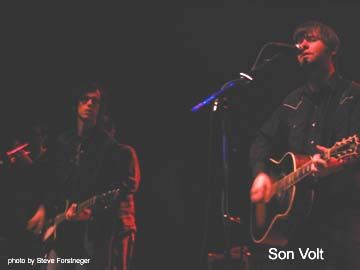
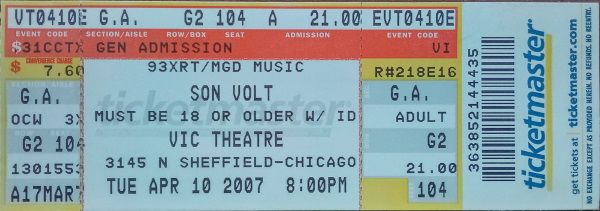
Son Volt @ the Vic Theatre

(Photo found here.)
 
There is perhaps no better way that doesn't involve alcohol to begin your pre-concert experience than with pierogi and a cute Polish girl. Such was the case last night in Chicago where The Dulcinea and I went to see Son Volt at the Vic Theatre.

We made good time getting into the Big City and stopped at The Pierogi Factory a block from the theatre. With 15 flavors of pierogi, kielbasa, cabbage rolls, and blintzes, methinks Madison needs one of these. Nothing like Polish fast food. If you get the chance, get the spinach-meat variety as they were great. After shoveling a super-sampler platter into our gullets, we headed over to the theatre.

It had been almost 2 years since we were at the Vic. The last time was for the final show of Wilco's multi-night stand where they filmed the performances for a DVD release that never materialized. Last night the joint was full and the Miller Lite flowed steadily for many a concertgoer. Opening the performance was Jason Isbell. I discovered 2 or 3 songs in that he had been in the Drive By Truckers, a band I'd heard of but never heard. Unfortunately, I probably won't check them out in the near future as I was not impressed with Isbell. His voice sounded too much like that of a turbo tonker out of Nashville and the music was unremarkable. During their set, Son Volt keyboardist Derry deBorja wandered around in front of us.

Son Volt took to the stage a bit after 9 and opened with "Automatic Society" from their latest, The Search. It got things off to a rockin' start and they proceeded to play a large chunk of new material. "Satellite" and "The Search" followed immediately. New guitarist Chris Masterson fit in well and added some well-crafted slide work. For "The Picture", a live horn section was added. "Underground Dream" and "Circadian Rhythm" came off well as did the two tunes from the album that can claim alt-country heritage, "Methamphetamine" and "Highways and Cigarettes". I missed the vocals of Shannon McNally who appears on the studio version of the latter. Andrew Duplantis' mic needs to be turned up a bit for his backing vocals. The former is an unlikely sing-a-long but I found myself singing it anyway as the chorus is amongst Farrar's catchiest.

My main complaint here was the two guys standing in front of me who, at about 6'5" each, were obstacles to be reckoned with. But it's not their height that irked me, but rather the fact that they just had to carry on a conversation with each other for most of the time.

After this initial blast from The Search, the band stepped back in time, if only to 2005's Okemah and the Melody of Riot. It soon became apparent that Son Volt Mk II would be the emphasis this night. "Bandages & Scars", "Jet Pilot", and "Who" were all trotted out. A guy to our right got really excited by hearing "Jet Pilot" and starting getting down. Well, as much as we white guys can. He began shouting for "Endless War" which didn't bother me a bit. It was good to see someone there who enjoyed the newer tunes and wasn't there purely to hear "Windfall" and "Tear-Stained Eye". His request was not fulfilled but the boys did do a killer version of the Eastern-tinged "Medication". This part of the set served as a reminder as to just what a great album Okemah is and how much power the songs gain in the live context.

A couple Farrar solo tunes got thrown into the mix as well – "Damn Shame" and "Barstow". After this diversion, the crowd got an unexpected treat in the form of "Exurbia". It's a song left off The Search but available on iTunes and the vinyl version of the album as well. It found Farrar with his acoustic guitar strapped on and is a mid-tempo number. Think along the lines of "Gramophone". Somewhere around this time they played "Tear-Stained Eye" and, well, my eyes teared up. They always do when they play this song. Too many memories of ex-girlfriends and of driving home along the Mississippi from Louisiana after my father's death. "Action" brought back the raga rock of "Medication" for a bit and heavy "Route" got the crowd ready for more older songs and they got "Drown". "Afterglow 61", another new classic, ended the set on a (very) high note.

It wasn't long before the guys returned to the stage and launched into "Windfall". Farrar then started cranking out the reggae riff of "Armagideon Time" but the lyrics were wrong, yet oddly familiar. They turned out to be "Life Worth Livin'". A blazing "Chickamauga" – now with even more feedback – finished the night off.

On their last tour, Son Volt, played a heady mix of old and new songs along with a hefty dose of Jay Farrar's solo material. Perhaps this was calculated to reintroduce themselves to fans after a lengthy absence. And with that being done, the band is concentrating on newer songs. While I think Wide Swing Tremelo is a vastly underrated album and missed hearing anything from it, I respect the band's decision. The past two albums have been strong and so there's plenty of great material to showcase. My main quarrel is with the order of the setlist. I wish they hadn't segregated songs from different albums as much as they did as the material from Okemah would have fit very well along side the newest crop of tunes.

Despite my quibbles, Son Volt put on a great show. It was nice'n'loud as my ringing ears proved last night. Most importantly, the new material stood up well. Given time, songs like "Methamphetamine" and "Action" will become classics.
 

A Review of Fear of a Blank Planet


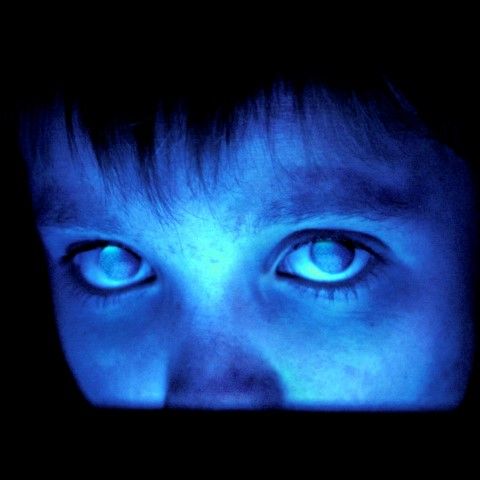
Last month I gave a preview of the forthcoming Porcupine Tree album, Fear of a Blank Planet, which is due on the 24th of this month. That peek looked at a couple studio tracks and a mediocre live version of the album recorded last fall. Now that I've heard the album in its entirety, I want to revisit it.

"Fear of a Blank Planet" opens the album and begins with the sound of typing on a keyboard followed by an indiscernible blast of voice. Presumably someone brought up some audio or video from the Internet. The song then begins properly with an urgent riff on acoustic guitar. A few bars of this and the drums enter followed by the rest of the band. The Tree continue in the vein of their previous album, Deadwing, and this song is reminiscent of that album's title track with a fairly straightforward and very insistent rhythm. There is, however, some really fuzzy guitar work here that sounds like the bass from "The Lamb Lies Down on Broadway" by Genesis. There are a few different sections which build a sense of drama throughout the song and the presence of Mellotron-like strings adds to this. There's a slow bit in the middle where the opening riff is played on electric guitar which is followed by some really heavy guitar soloing. This section winds down slowly over the course of nearly 2 minutes.

Lyrically the song addresses disaffected youth with its imagery of a kid sitting at a computer while a TV blares in the background. "Xbox is a god to me", Wilson sings. The kid has overdosed on pornography to the point where it only bores him. He is medicated for bipolar disorder and finds sex to merely be another one of the "empty ways of using up the day".

"My Ashes" is the second song and it begins with some of that rather odd sounding guitar (or is that keys here?) that we first heard on "Revenant", a leftover from the Deadwing sessions. A single note on piano and strummed acoustic guitar enter as does Wilson's doleful singing. Lyrically it has a similar feel to parts of Lightbulb Sun, especially "Winding Shot (Summer 1981)" with its chorus of "And my ashes drift beneath the silver sky/where a boy rides a bike", which sees Wilson looking back to the innocence of childhood. There are some nice washes of strings (real or artificial?) and some dissonant bursts of guitar. It sort of lumbers along and is a bit like "Collapse the Light Into Earth" from In Absentia. The song is a beautiful, peaceful interlude between the title track and what comes next.

Until the official title was announced, "Anesthetize" was known as "The Beast" because it weighs in at about 17+ making it the longest song by The Tree in ages. Gavin Harrison gets things going with his work on the toms while a pointed guitar scrawls out something like a riff underneath. Think "A Saucerful of Secrets" but melodic and spacey instead of chaotic. Wilson does some real singing here, sustaining words as he does. His voice sounds purer here and on the album as a whole – he's decided to let it go without the effects and processing that he has used in the past. It builds slowly to a simmer and Rush's Alex Lifeson contributes a solo with his usual combination of long, sustained notes and fast playing. Wilson eventually cranks his detuned guitar up a bit as a drum box or sequencer kicks in with what sounds like a distorted hi-hat beat. The guitar here plays an almost mechanical riff which, along with the drum box, provides a martial backdrop for some soloing. Barbieri does put his own mark down here as well. Nothing Keith Emerson fast, but he leads the tune along as Wilson warms up. And when he's ready, Wilson busts out and the band move the closest they ever have into Opeth territory. With the rigid rhythm and the guitar hitting you over the head, one can hear why the song was given its title. The pace slows a bit with the guitar revving underneath and the vocals return. "My head in the clouds and I'm zoning out". There's just something menacing going on here. Wilson's voice gets its effects treatment back and there are parts where it is the grittiest I've ever heard it. Rather than the wonderful voice he uses in the remarkable Beach Boys-like finish to "Mellotron Scratch", it is strained here as if he can barely contain anger. After about 11 minutes when you think you've heard the heaviest metal The Tree have ever made, a burst of mayhem breaks out which might leave some long-time fans wondering whom they're listening to. I mean it's all out thrash with the dual bass drums and manic everything. The heavy metal gives way to moody synths and, when the first guitar notes arise, it's a bit like those from "Shine On You Crazy Diamond". This section harkens back to the more Pink Floyd-like PT sound of the 1990s. A respite from the pandemonium with some very welcome harmony vocals.

"Sentimental" comes next and starts with a fairly jaunty piano line which, I believe, Wilson played. Harrison plays a rhythm on the hi-hat and snare. Or is that a drum machine? The vocal line is really catchy, though I can't make out all the words, with some jangly guitar to boot. Some synth fills in the spaces in the background and piano helps the song move along as a kid ponders his life and the pain inside. A rare acoustic guitar solo is all-too brief. This is the "Lazarus" of FoaBP.

"Way Out of Here" follows. It begins slowly – kind of like "Stop Swimming" - with moody synth and what sounds like a loopy guitar. Robert Fripp adds his Frippertronic soundscapes to this song but I'm not sure if they're here at the beginning or not. It soon kicks in with some big guitar. After a few bars of riffing and a soaring chorus, things slow down a bit and Wilson's voice sounds unprocessed again. The rhythm almost stutters along giving an irritated feel. Wilson also gives a great solo before the song almost comes to a halt. Wilson picks out a riff and then the listener runs up against another monster riff. Drummer Gavin Harrison then proceeds to go bonkers. With dual bass drums pounding, he just starts flailing and hits everything in reach. The chorus returns and Colin Edwin's bass moves things along.

"Sleep Together", is the final track on FoaBP. The band are breaking a long tradition here of closing albums with a slow, moody track to contrast with the also traditional very big, heavy penultimate song. A slithery synth line worthy of Ozric Tentacles opens the song and, when Wilson begins singing, some piano is added. The drums eventually kick in and it seems that the bass drum is brought much more to the fore in the mix here than on previous albums. Here's the chorus:

Let's sleep together
right now
Relieve the pressure
somehow
Switch off the future
right now
Let's sleep forever

After the chorus, swells of the Mellotron choral and string sounds build and bubble up plus Gavin Harrison adds some great bass drum work as the song heads back to the verse. After a slow bit in the middle featuring that splooshy synth, the band returns and the song closes with a great instrumental section featuring some great soloing from keyboardist Richard Barbieri. Considering the band's move towards heavy metal in the past several years, Barbieri's contributions to this song not only stick out, but are also fantastic. The solo at the end features the string sound which is bent and twisted and just great.

This album has a lot of listening left before it truly becomes a part of the Porcupine Tree canon in my head, before I know all the lyrics, and the exact moments when a guitar comes crashing in or a synth part begins wavering somewhere in the background. But, at this point, I can say that it very much follows in the steps of Deadwing. There are more Opeth-like moments but the boys haven't packed their bags for Stockholm and became agents of death metal because, concomitant to this, there's also more acoustic guitar than we're used to. I personally appreciate some of the new synthesizer sounds here. They fit well within the songs and contrast nicely with the more organic sounds of piano and Mellotron. The songs are full of the drama that we prog fans know & love. As an album, it's carefully crafted to maximize that drama on a larger scale. Heavy and light are juxtaposed both within and between songs. You'll be hit over the head and left wondering exactly what could come next.

The band is largely covering familiar territory here but it adds something here and tweaks something there. The drums propel the songs forward here like no other PT album before it and the triangle at the beginning of "Anesthetize" is a nice touch, for instance. Current followers of the band will automatically love FoaBP and their continued flirtation with metal will no doubt draw more fans of that genre. But there is no commercial potential here (I say this as a positive thing) and I wouldn't be surprised if the band's label here in the State, Atlantic, dumps them in the near future. Still, it is heartening to see them playing some larger venues this time around and it seems like Chicago is a bastion of PT fans as it's the only city getting 2 (non-consecutive) stops on the first leg of the upcoming tour. The Dulcinea and I will be seeing them at the first Chicago date and the last U.S gig in Milwaukee. Dogger and Mel will be accompanying us in Chicago. The humor value of Dogger and I headbanging will be enormous.

Why We Geeks Make Better Lovers

The 10 Real Reasons Why Geeks Make Better Lovers. A couple highlights:

Geeks are hot…
...and wear the coolest glasses.

Geeks know kinky people

Geeks haven't just seen a variety of positions, kinks and fetishes in blue movies. They know (or are) people who enjoy those things, so they don't dismiss entire categories of sexual interests as the sole province of a bunch of weirdos in San Francisco.

09 April, 2007

Ushering in Spring - Polish Style!

A couple weekends ago the Polish Heritage Club of Madison had its annual Spring Festival. Being a member of the club, I thought it would be fun to go and, being a club officer, I had to. Having been a cook in a previous life, I was destined to help out in the kitchen.

The festival is ostensibly a prelude to Easter. Poles are very Catholic and even have this thing called Święconka in which the Easter food is blessed. And so every on Holy Saturday Poles throw a ham, kielbasa, cakes, eggs, etc. into a basket and bring it to their local priest. I guess this is a symbolic offering to Yahweh in hopes that the new year which is arising shall be healthy, happy, and prosperous.

Since Holy Saturday was still almost a week away, other we had to indulge ourselves in other traditions. One of these was the creation of Pisanki which are eggs decorated in the old Slavic way. Like a doofus, I didn't get any snaps of the eggs themselves so follow the link above. But I did grab one of this young lady following in the footsteps of her ancestors.


And I don't say that she followed in footsteps lightly. Slavs have been decorating eggs for centuries and it has traditionally been an activity done by women and girls. I believe that instrument she has in her hand is a Kistka. One alternately applies wax and dye to the egg shell and, when you've got enough layers of different colors, you melt patterns into it. Pretty slick, if you ask me.

As evidenced by Święconka, we Poles are a crafty folk. This extends into the realm of jewelry as well.


And we are all about amber which is to be found on the coast of the Baltic Sea. I'm not a huge fan of amber although I discovered that The Dulcinea is. (More on that later…)

Speaking of The Dulcinea, she and her youngest, M., showed up around 11:30. I found them looking at some really nice pottery.


I was tempted to purchase some as there were some great serving dishes and bowls but decided to wait until my raise came through before I invested in them. The stuff is imported from Poland by way of Chicago. I guess none of our members are potters although there were a few women there with whom I'd like to reenact that scene from Ghost. Being 7 years old, M. took to the coloring books and was drawn to the heraldry, especially those bits involving axes or other weapons. I can foresee anger management classes in his future.

I spent most of my time in the kitchen helping make sure there was enough kraut, kielbasa, and pierogi for everyone. At one point we ran out of ice so I made a trek to Woodman's and was given some money for beer which was a good thing because I had only brought 2 bottles along for myself. Upon getting back, 3 or 4 of us men-folk holed ourselves up in the back of the kitchen and had a few brews.


I have no idea where that Miller Light came from.

In addition to crafts, there was a country ton of baked goods for sale. Here's my friend Tekla hawking poppy seed rolls:


Kolacky


Paczki


There was also music. My knowledge of Polish folk music is quite limited and but I can recognize a waltz when I hear one and they played a few. I'm not sure who these gents are, exactly, but one is Bob. The photo is an active link so you can download a 2' clip of them performing a song.


But the most important thing about the Spring Fest is this:


People getting together and enjoying one another's company. Wandering around I constantly saw people shaking hands, hugging, and remarking how they hadn't seen one another since last year's festival. The face of the PHC membership is generally older and many folks aren't able to get out of the house as often as they'd like. So PHC events provide good opportunities for folks to get out of the house and see friends. That's Leon there in the sharp gray suit on the right. I met him as he came into the hall and he had the biggest smile on his face. He is truly one of the nicest people I've ever met. I hope that I'm as cheerful as he when I'm his age.

When I was a boy and living in Chicago, my mother was in a Polish heritage club and I remember going to some of the events. (This whole turning into your parents thing is more than a bit disconcerting.) And so I felt old seeing the kids there running around and not knowing quite what to make of everything. The whole affair reminded me of dual role that the PHC has. It has an older membership to cater to and so a lot of things the club does appeals to their sense of nostalgia and attempts to recreate elements of their collective childhood in Polish-American families during the 1930-50s. While there is certainly nothing wrong with this, there are times when I wish the club was able to address the concerns & interests of us younger folk that are perhaps not shared by the older generations. For instance, aside from the last pope, the club doesn't really address what Poland is like today. What is life like in Poland now? How did things change after the collapse of the Soviet Union? Cultures aren't static and, in a way, the PHC focuses on particular traditions that relate to a certain time. It focuses on things that its aging membership remembers from its childhood. No doubt club members would have little interest in, say, Polish hip-hop. I have little interest in the music myself but I am interested in knowing more about how Polish culture has changed over the past 15 or so years. How are age-old traditions holding up against McDonalds and Wal-Mart?

I don't foresee any major changes in the PHC which will draw in younger members but I will say that Tekla is on the right track with her proposal for a Polish drinking club where we quaff Polish beer, wine, and vodka.

Towards the end of the festival as I was cleaning in the kitchen, Marie, who had been selling jewelry, approached me bearing a ring. She remarked that my girlfriend really, really liked it. I got the hard sell. Unlike her husband who is very laid back, Marie is not someone to mess with and so I immediately agreed to purchase the ring. The Dulcinea is no longer allowed at PHC functions.

Blogging The Great War: Intro

A few months ago I was wandering a bookstore aimlessly and ducked into the history aisle. For some reason I turned to the shelf with books on World War I and ended up pulling John Keegan's The First World War from its spot and purchasing it. I'm not quite sure why I suddenly wanted to learn about WWI but I did. Keegan's text had all kinds of excerpts from positive reviews on it indicating that it was the best single-volume history of the conflict so I went with it. Plus it was from 1998 and so elements from modern scholarship would no doubt be included.

The book languished on a shelf of my own for some time until I cracked it open this past weekend. This was partly due to being in the middle of other books and wanted to finish them first and also due to the broadcast of the multi-part series The First World War on the Military Channel. I thought it would make a nice long-form bit of blogging to comment on the war as I read a book on it and watched a documentary as well. This would also afford me the chance to include pictures!

My dad was a big World War II buff (especially the Pacific Theatre) who had shelves and shelves of books on the conflict. Thusly it's no surprise that my brother and I became interested in the subject. But there were few, if any, texts on World War I. Books describing the genesis of WWII never failed to mention The Great War, especially how the harsh terms of the Treaty of Versailles, which ended WWI, made Germany fertile ground for the deadly nightshade of Nazism. I entered high school knowing all about Pearl Harbor, The Battle of Leyte Gulf, Iwo Jima, etc., but virtually nothing about WWI. My history teacher was a big Civil War buff so we spent weeks covering it. When the early 20th century came around, we spent maybe a day on WWI and got the usual lectures – the assassination of Archduke Ferdinand which got the whole thing going; the introduction of new weapons such as the submarine & mustard gas; the Battle of Jutland and the trenches which set the scene for Remarque's All Quiet on the Western Front; the United States entered the war largely due to the sinking of the Lusitania and so on. As I type, I'm 3 chapters in and have watched the first of ten episodes of the documentary. I can tell you that I've learned an extraordinary amount thus far. I have newly learned, for instance, that war didn’t break out until about a month after the assassination. So this should be a great learning experience. Also, I hope my girlfriend, who refuses to watch any of the documentary with me, reads the posts as I think there is much here to engage her.

Let me end with a couple technical notes and a song.

Firstly, the documentary is based on Prof. Hew Strachan's The First World War Volume I: To Arms. At 1250 pages, it is a lengthy tome and it is but the first of a planned trilogy which promises to be the most complete and the gold standard history of the conflict when finished, at least in English. His one-volume The First World War is said to stand along Keegan's work as a definitive book for the layreader. Considering that Strachan has devoted an entire book to how the war was financed and another to the overlooked campaigns in Africa, he is probably the English-language authority on the war. And so, I have some direction if I care to pursue the topic further.

Lastly, a song. Folks familiar with my podcast know that I love me some music and that I am a progressive rock geek. And while WWI is not exactly well-worn ground for prog bands, IQ did write a song about it. They had a live version recorded in 2004 up at their website until very recently. Since they were giving it away, I shall do the same.

"Common Ground (live)"

Long Takes in Children of Men

Film geeks will dig this. It's a look at how the long takes were done in Children of Men. Presumably this is from the DVD.

06 April, 2007

Ducks in a Tree

I woke up last Sunday to find ducks hanging out in the tree in the backyard. They were joined by a squirrel.


If only Robert Burns had written a poem about ducks. He could have called it "To A Duck, On Seeing Her Up In A Tree With A Squirrel".

Wee, sleekit, quackin, tim'rous beastie,
O, what a panic's in thy breastie!
Thou need na start awa sae hasty,
Bickering like a horn!
Squirrels wad be laith to rin an' chase thee,
Wi' murd'ring acorn!

At the Sinny - The Lives of Others


On Tuesday night The Dulcinea and I saw The Lives of Others (Das Leben Der Anderen). Not since Children of Men have I watched a film that was so grey. I suspect that the color scheme was more than just a metaphor for the zeitgeist of East Germany in 1984. We are immediately introduced to Gerd Wiesler, a Stasi agent. Through intercutting, we see him alternately interrogating a man as well as teaching a class about interrogation to new Stasi recruits using a tape of his work in the other scenes. Wiesler is cold and all business. After what we presume to be several hours, the man being questioned, who's been forced to sit on his hands the whole time, is ready to pass out for lack of sleep. Wiesler eventually gets the man to reveal a name and tops off his victory by saving the seat cushion that the man sat on for future use when dogs may have to follow his scent.

When approached by his friend and boss, Anton Grubitz, Wiesler's workmanlike demeanor is pushed to its limits and he relents to an invitation to the theatre. There Grubitz gets to schmooze with Minister Bruno Hempf and Wiesler is given his next assignment: to investigate the man who wrote the play they just watched, Georg Dreyman, despite his clean record and nominal dedication to the state. In this scene, we find the minister is pure fat-cat while Grubitz is an opportunist looking to climb the ladder. Wiesler is ready to tow whatever party line is thrown at him while Dreyman, seen kissing his girlfriend, actress Christa-Maria Sieland, is portrayed as the only one to display any positive human traits, as if he were the only one to feel anything as opposed to purely making calculated moves.

Dreyman's apartment is duly bugged and a command center is setup in the attic where Wiesler listens in on the playwright and his girlfriend, taking notes all the while. It was a rather unnerving watching as the Stasi crew placed the bugs in the apartment in the daylight, barely pretending that they were there for another purpose. When a neighbor across the hall sees what's happening through the peephole on her door, Wiesler approaches her and reminds the woman to stay quiet lest her daughter's position at the university be in jeopardy.

Clad in headphones as above, Wiesler listens in on the lives of others and our voyeur slowly becomes more emotionally involved with his prey. As the tape rolls and reports are written, we learn that Dreyman is a bit of a fence-sitter. On the one hand, he keeps company with radical artists, some of whom are not afraid to speak their minds. But, on the other, Dreyman himself is unwilling to speak critically of the state, at least not openly. He prefers a more apolitical stance. His own personal life is revealed to consist mostly of going home to a dull, drab apartment to be alone with this routine punctuated by visits from a prostitute who, upon being asked to stay a bit longer, tells him to schedule more time for the next visit. Wiesler proceeds to get the hots for Sieland and follows her to a tavern one night just to be in her presence. But she has no lack of men in her life for, in addition to Dreyman, Sieland succumbs to the sexual advances of Minister Hempf.

During the film it seemed like the main characters were simply trying to live their lives. Some just wanted to practice their art while others just did their job. While the ending of the film is not one where everyone lives happily ever after, it's still a happy one. By the time the credits roll, Wiesler, the man with the ever-stoic face which rarely betrays any emotion has gone from just trying to do his job to doing the right thing. We witness him undergo a change of heart. He helps Dreyman escape the wrath of the Stasi, but there's a price to be paid. I appreciated that the change was not like Ethan Edwards' in The Searchers where John Wayne's character has a sudden revelation that blood is thicker than Injun water. The conversion is slow and when our Stasi agent finally steps up and takes action, he doesn't do so in an ostentatious manner; he's not a hero who steps into the spotlight. Rather he does his good deed exactly how he committed his bad deeds – in secret and away from the eyes of others. He makes the journey from state automaton to person by helping out Dreyman who undergoes his own metamorphosis. He spent his time trying to be apolitical and avoid the prying gaze of the authorities which also means that he watched as close friends, who chose the side of freedom and stood up for something, fell victim to the Stasi's influence while he did and said nothing. Finally finding courage, he stands up by writing a piece for the West German media which draws the attention of the authorities.

I recently listened to an interview with Philip Zimbardo, the psychologist who led the Standford Prison Experiment. He talked about good people can be set down a path to commit evil and how the social surroundings abet this process. Factors such as the status quo, the expectations of authority figures, dehumanization, et al. Zimbardo also talked about the evil of inaction. The Lives of Others was a nice illustration of this and, more importantly, of the inverse. Instead of merely documenting people taking on the roles expected of them by society and maintaining the status quo, we see rare individuals opting out of the evil encouraged by their society. Wiesler changes his actions while Dreyman overcomes his fear and decides to take action.

However hackneyed, The Lives of Others is a great tale about the human spirit and the ability of people to change for the better. But it's subtle and almost meek instead of being overwrought and flashy.

03 April, 2007

Godless Goodness

Newsweek has debate between Sam Harris and Rick Warren. I found it interesting that, after blathering on about talking to Yahweh on a quotidian basis and seeing Yahweh everywhere, Warren brings it all down to Pascal's Wager:

We're both betting. He's betting his life that he's right. I'm betting my life that Jesus was not a liar. When we die, if he's right, I've lost nothing. If I'm right, he's lost everything. I'm not willing to make that gamble.

In order to help your youngin's grow up to be good reasonable godless heathens, may I suggest pre-ordering Richard Dawkins' latest DVD, Growing Up in the Universe. The DVD is a series of lectures that Dawkins gave in 1991 to schoolkids and Douglas Adams even showed up as a special guest. Here's the trailer:

What's Out at Post?

I went up to Post today to read about Tommy Thompson's alleged mistresses and found that the site has changed a bit. What happened to the outPost section where entries of note by local non-Post bloggers were featured? Does this have anything to do with the revelation that Jesse Russell, editor of Dane101, has turned down a position there? And how is the print version going? I haven't been anywhere near a joint that has a rack of them recently and, last I heard, most folks would rather spend a night drinking Pan-Galactic Gargle Blasters than read the thing. Surely it has improved.

Now, as far as those mistresses go, my source at the state Division of Health told me that the flings were at the Inn on the Park, not The Concourse.

Now Where's My Scarf?

As long as I mentioned Doctor Who in my last post...

I think I might have to give this a go. David Tennant dresses up like The Doctor in the sack for his girlfriend.

'Doctor Who' star David Tennant has confessed that he dresses up as the Time Lord for steamy sex sessions with his girlfriend.

The actor revealed that his actress lover Sophia Myles loves it when he puts on his Doctor costumes in the bedroom.

David told BBC DJ Chris Moyles: "I don't want to give away all my bedtime secrets. All I'm saying is Sophia likes it when I'm dressed up as The Doctor!"


I've got the Tom Baker scarf. I wonder if The Dulcinea would dig that...? Asking her if she wanted a jelly baby would take on a whole new meaning.


I've been listening to the Doctor Who audio drama "No Man's Land" the past few days. It's a 7th Doctor adventure with Ace and Hex, who appears in the audio dramas only. The story begins with our heroes waking up dazed in a hospital in Northern France during World War I. They are brought before the commander of the unit, Lieutenant-Colonel Brook and he reveals that there are orders awaiting The Doctor. They state that he is in charge of investigating a murder at the hospital – a murder which has yet to happen. Our adventurers delve into the hospital and the men who inhabit it in a bid to prevent the killing. This leads them to discover an incident shrouded in mystery which happened at a church near the front lines.

I've listened to a bit more than half of the story and am enjoying it very much. It doesn't take long to realize the strengths of "No Man's Land". Firstly there is the sound design. There is little, if any, incidental music which is a scheme that I really like. A martial drum roll serves as an occasional transition between scenes but diagetic sounds carry the day along with some great performances by the actors. For instance, take the scene early on in the story where The Doctor and his companions have gathered in Brook's office and are receiving their rather odd orders. As The Doctor reads them aloud for Ace and Hex to hear, one might expect some moody cello to heighten the ominous feeling that someone knows a murder is going to happen and that a friendly Timelord happened to be in the neighborhood. But all the listener gets is the crackle of the fireplace, the ticking of a clock, and the rolling Rs of Sylvester McCoy's Scottish brogue which betrays puzzlement along with The Doctor's usual brash attitude towards stepping into harm's way in order to solve a mystery. Plus the scenes in the Hate Room where the recovering Tommies are whipped into a frenzy which ends with them firing blanks at a dummy dressed in a German uniform are positively disturbing and they too are sans music.

The other strength here is McCoy's performance. If you have watched the TV episodes with the 7th Doctor then you know that McCoy's character changed quite a bit as the series wore on. He went from this avuncular jester figure who played the spoons to something much darker. There were times when he knew more than he let on and one got the impression that he is toying with Ace, manipulating her for reasons unknown. McCoy's final season in 1989 was also the final season of the classic series. It saw the return of The Brigadier and The Master; "Battlefield" and "The Curse of Fenric" were epic and foreboding; and the more intimate "Ghost Light" stands as one of my favorite episodes ever. Quite frankly, that season was perhaps the series' strongest ever. It is this dark, almost sinister Doctor from the TV series that McCoy reprises here.

Concomitant to this is Ace. Instead of being merely a rebellious teenager who likes to blow stuff up, she has matured. While there are still times when you can tell that she feels The Doctor is being an old fuddy-duddy, she is now more apt to heed The Doctor's wisdom and be more prudent. Not only does this make Ace a bit less annoying, but it also frees The Doctor up to engage the plot and the mystery more often because he doesn't have to assume the role of a parent quite as much or, at least, not one who has to monitor his kid's behavior all the time.

"No Man's Land" is a great Doctor Who story and I highly recommend it. It also serves as a nice prelude to an endeavor I hope to begin soon in which I blog World War I. I've got a book ready to have its pages cracked and a 10-part documentary series on the conflict that has been tivo'd.

For a taste of what Doctor Who might have been like had the BBC not cancelled it in 1989, listen to the audio drama "Night Thoughts". The story would likely have been made in 1990 for the show's 27th season. It is fantastic and the scene in the attic scared the bejeezus outta me!

Supernatural Saturday

BBC America is turning the first day of the weekend into Supernatural Saturday. This means folks here in the States who don't do torrents will have some good programs from across The Pond:

And from the creators of Doctor Who, spin-off series Torchwood, follows a team of modern day investigators as they use sci-fi technology to solve crimes in both alien and human worlds. Returning series include all-new seasons of time-travelling Life on Mars, spine-chilling Hex and sci-fi favorite Doctor Who.

I have seen the first episode of Hex and, except for seeing the lead actress in her underwear, it was for shite. Will the profanity be retained? How about nudity?

On the Gramophone


This week I feature Bob Dylan's concert from here in Madison last Halloween at the Kohl Center.