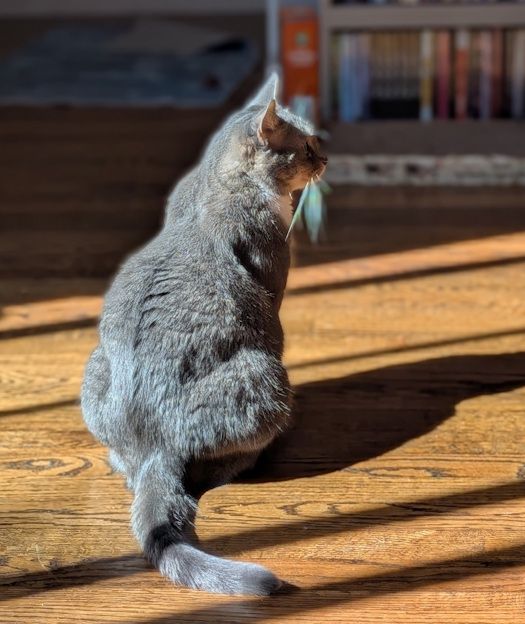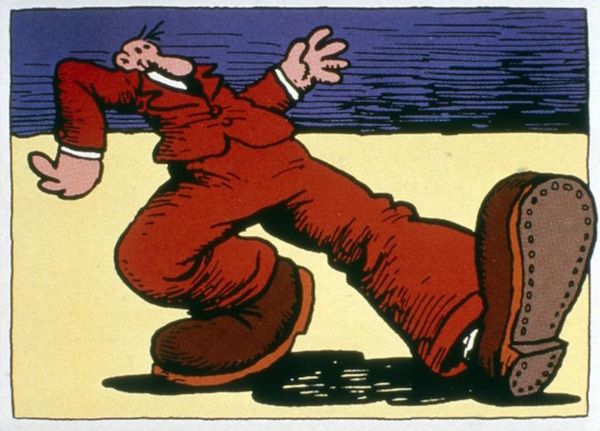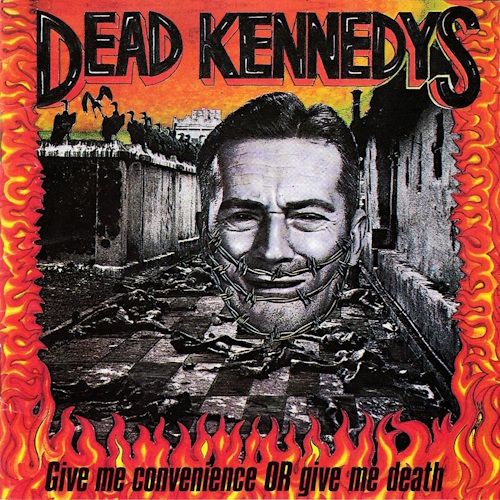
Seen at Flix before a screening of Catvideofest 2026. What can I say? I laughed aloud multiple times and drowned in cuteness overload at the sight of all those kittens. 70 minutes well spent.
Fearful Symmetries
Witness a machine turn coffee into pointless ramblings...
12 August, 2026
Coming soon, 25 Juli 2026
Seen at Flix before a screening of Her Private Hell which I enjoyed. I liked how the fog has settled upon the neon city with no explanation. It jumps between Elle's life and the dream world(?)/flashbacks(?) of Private K and I loved how they merged towards the end on the crystal world.
Since I enjoyed Under the Silver Lake I figured that David Robert Mitchell's latest, The End of Oak Street, would have a little sumpin sumpin arty to it but, after seeing the trailer, I became convinced that it was just summer blockbuster schlock.
Tell me, Christopher Nolan, of the man of many turns
The email arrived in the morning, about 7 hours before I was to see The Odyssey on glorious 70mm IMAX.
Unfortunately I have some bad news. We encountered an issue with our film system lamp before our first show of the day today and had to cancel the show. The nature of the issue requires in depth technical repairs that will effect all further shows for today.
Dammit!
I was in Indianapolis for Gencon and decided to avail myself of the opportunity to see Christopher Nolan's latest epic on the big-big screen and on genuine film, the way he and his cinematographer, Hoyte van Hoytema, intended. Back in 2023 I saw Nolan's Oppenheimer on 70mm IMAX there and was looking forward to further Nolanian celluloid revelry. But cruel Fate intervened which meant I was relegated to seeing it projected digitally onto the IMAX screen at the Indiana State Museum which, I should add, has an exhibit going on now about cats and dogs.
Well, I will have to be content with looking forward to Nolan's next summer blockbuster on 70mm at a Gencon coming soon. (When the Signia by Hilton Indianapolis is open and I get a hotel room downtown again. Rant over.)
Truth be told, I am not a Nolan fanboy. I respect his love of film, the IMAX format, and practical effects quite a bit but his output after The Prestige - what I've seen of it - has been hit or miss. I love that he loves film but I don't necessarily love his films. Going into the theater last month my main concern was peeing as much as possible before taking my seat as The Odyssey is nearly three hours long and I wanted to see every byte of every digital frame. I am incredulous that men in middle age or older make these 3 hour epics and don't include an intermission. L-A-M-E. I get it, it's your movie and you can sit around in an editing bay and hit pause at your leisure to take a leak. However, I do not have that luxury.
Beyond prostate issues, my hope was to simply have a good time watching Homer's poem brought to life on a ginormous screen. On that count, The Odyssey delivered.
It had been several years since I'd read the poem (Robert Fagles' translation) so it was not exactly fresh in my mind as the lights went down but I recalled various plot elements from the written work that Nolan had discarded as I watched.
I want to add that there was one trailer at this screening. Well, not a trailer, really, as it was a few minutes of Dune 3 or whatever it's called. Basically a bunch of futuristic flying Higgins boats land on some planet. Ramps open and space infantry run out looking for shelter on some kind of Herbertian version of Omaha Beach. Laser cannons make mincemeat of many of them before a giant worm emerges from the ground and basically it's real shit show for the poor space infantry.
I am not someone who maintains that Nolan had any obligation to slavishly adhere to the source material but some of the things he excised disappointed me. The Odysseus in the movie wasn't as clever as Homer's hero, e.g. - where was the "nobody" subterfuge? Odysseus is supposed to be hubristic - he didn't tell the cyclops his real name in the movie, did he?
Instead it seems that Nolan crossed Homer with The Deer Hunter. Matt Damon's Odysseus is suffering from PTSD after the Trojan War and 10 years of wandering doesn't help. Speaking of the wandering, Scylla was really neat and Charybdis looked fantastically menacing on the IMAX. Those giant armored warriors - weren't they cannibals in the poem? I suppose the main point was that Odysseus lost a lot of men and was left with but one ship. Still, that scene feels incomplete, a bit random.
The Odysseus of the film is a bit one note - he's got shell shock. His cleverness doesn't get the attention it deserves, although the Trojan Horse scene is really neat. It gave you a taste of his ingenuity and a large dose of the horror of war that has so traumatized him.
The Circe sequence in the film was great fun and the transmogrification of Odysseus' men into pigs was simply fantastic. The way they gorged themselves with the stew and how she massaged them and put her hand in their mouths to mold their faces into porcine visages was at once entrancing and grotesque.
Didn't Odysseus schtup Circe and Calypso in the poem? He is oddly asexual in the film.
I recall being rather appalled at the graphic violence in the poem as Odysseus puts paid to the hopes of the suitors by terminating them with extreme prejuidice. If I recall correctly, Homer describes evisceration and a pecker or two being lopped off. Odysseus is absolutely vicious. While he is definitely out for blood in the movie, it's mostly stabs and slashes with no viscera falling out.
Robert Pattinson is a fine actor to my mind and he is generally good as the venal, arrogant jagoff of a suitor, Antinous, in the movie. Yet I had to wonder why Nolan had him verbalize what we were able to so plainly see in the scene where Odysseus returns. The weapons that line the great hall are stowed in a room upstairs so that they're inaccessible to the suitors who are locked in when Odysseus appears to take his revenge. But one of those who sought to gain entry into Penelope's knickers and purse enters the store room and busts a hole open in the floor down which he drops weapons for those confronting Odysseus. Every time he drops a spear or some kind of melee weapon, Antinous is shown in close-up urging someone to take up the newly available weapon.
A spear drops down so he says frothing at the mouth, "Get the spear!" Then a sword falls to the floor and we again cut to the suitor in close-up who shouts, "Use the sword!" It made for a weird, superfluous kind of play-by-play.
And there's Athena. Rather than a goddess of war & strategy who favors Odysseus because of his cunning and actively intervenes on his behalf, she's just this robed apparition in the movie that glumly stares at our hero for a spell before disappearing. And she's not clad in armor nor does she have a shield nor a helm nor any weapon of any kind. She appears in robes looking more like a sullen Aphrodite than a bad ass who wields an Olympian croupier stick as she plots of the fates of men. It's like having Thor appear in a suit & tie with no hammer.
OK, so Nolan's movie is missing a lot of the cool bits of the poem. But as far as spectacle goes, it was, um, spectacular.
The Trojan Horse was really neat. Rather than standing upright on all four and being on wheels, it has its two front legs up in the air with no helpful wheels. And so it's a hard slog pulling it into Troy meaning Odysseus and his men are thrown about as the horse is dragged inside the city walls and they relieve themselves in situ. The sack of Troy was exciting and visceral. And horrific too so it's no wonder that Odysseus agonizes once the war is done.
As I said before, the scene with Scylla and Charybdis was thrilling. The long shot of the whirlpool churning away amongst the rocks was gorgeous on the IMAX and made me feel the peril in my bones. The sequence where Odysseus' men are slaughtered by the giants was heartrending. This bit also benefited from the IMAX format by emphasizing the large size difference between Odysseus' men and the badass islanders. The heroes of the Trojan War are puny in contrast to the warriors who are built like Tiger tanks and you just know they're doomed from the start.
Circe was cool but I felt that the scenes with Calypso didn't get across just how long he had been there very well. But I think Nolan gets away with combining the nymph and the Lotus Eaters.
I felt that The Odyssey was an old school Hollywood epic full of beautiful actors with lots of dramatic conflict, thrilling action, and a fairly simple good vs. evil binary. Trading the wily, horny, hubristic hero of the written word for a shell shocked warrior rendered a more simplistic Odysseus. Nolan's hero is imperfect but not flawed.
I've been thinking about theme here. Zeus' Law™ is invoked multiple times during the course of the film, - the concept that people should welcome visitors and treat them well and, in turn, guests should treat their hosts with kindness. Odysseus sees the Trojan Horse episode as a violation of it in that he treated his hosts poorly. Really poorly. The sack of Troy here is a lengthy sequence full of Greeks committing atrocities. It is quite intense as we see that women and children are not spared.
And so he feels tremendous guilt - a bit like the subject of Nolan's previous film, Oppenheimer, dare I say. I'd need to watch The Odyssey again to get this straight but I think our hero sees Zeus' Law™ breaking down everywhere in his homeland and he is exiled at the end of the movie for dishonoring the ultimate law of hospitality in a scene that reminded me of the end of The Lord of Rings, like he's being sent to the Valinor Home for Naughty Kings.
Odysseus sees the Bronze Age coming to a close and a dark age, of sorts, beginning because Zeus' Law™ is being ignored. And he has contributed to this.
Does this, along with a generic "war is bad" thing count for deep thematic content? It's a general exhortation/admonition that we should be nice to one another. I suppose this is the true modernization of the tale.
Before I end, the soundtrack deserves mention. Nolan eschewed the conventional orchestral accompaniment with sweeping washes of strings for music that sounded like it had one foot in the ancient world and the other in 2026. Were replicas of ancient instruments used? Sampled? The music aimed to manipulate the audience just like a typical soundtrack would but it felt older, more period. Good stuff.
Despite some shallow characterization and missing source material I simply had a good time watching The Odyssey. It was wonderful to see so much of the epic brought to life on a very large screen. Watching Antinous get what was coming to him was extremely satisfying while seeing Argos lying on a dung heap tugged at my heart strings.
However flawed Christopher Nolan's The Odyssey may be, it is still full of thrills and a lot of fun.
Rhiannon Giddens covers Elizabeth Cotten
Rhiannon Giddens has released another track from her upcoming album, Hope Is the Thing with Feathers, which comes out next month. It's her take on "Freight Train" by the great Elizabeth Cotten.
Song of the day, 12 August 2026
NPR's All Songs Considered recently did a multi-part Grateful Dead extravaganza so their music has been floating through my brain lately. While there are surely some fine live versions of "Terrapin Station", I don't believe they ever played the entire song live. However improbable, the strings and horns rarely seem cheesy or get in the way for me.
I just like the way it wends its way through the various sections. It feels purposeful and adds some dynamics to the tune. Let's hear all 16+ minutes.
Stay off the Yahara River in early November
The Dave Matthews Band will be in town for a show on 4 November so put those canoes and kayaks away until they're safely out of town.
11 August, 2026
Song of the day, 11 August 2026
I just learned that The Mindbenders were from Manchester. Brings back memories of high school dances where Phil Collins' version was played many a time.
10 August, 2026
Song of the day, 10 August 2026
More Mancunian music.
I didn't know Van der Graaf Generator were formed in Manchester until recently. Here they are at Shank Hall in Milwaukee back in 2009. I was at this show and "Interference Patterns" (heard here) and "Man-Erg" left me gobsmacked.
09 August, 2026
Just when you thought the war on the Eastern Front couldn't get any worse
I'd swear that I've read a book dedicated to Operation Barbarossa or, at least the Battle of Stalingrad but cannot for the life of me recall which one. I scanned my bookshelf a couple times but nothing on the topic that I have already read.
What a horror story. The whole, um, shootin' match, so to speak. If two armies fighting isn't bad enough, there's life on the front with lice and boot shortages, and so on. Winter settles in and everyone - combatants and civilians alike - suffer from frostbite, if they don't freeze to death. In Stalingrad civilians endured the horror of urban warfare. If there weren't bombs being dropped on them, there were artillery shells. If death wasn't coming out of the sky, it was coming from Wehrmacht soldiers out on the street attempting to take the city block by block.
And then, when the Germans retreated, they raped and pillaged and destroyed what they could on their headlong flight back to the Fatherland. The Poles suffered horrendously when the Wehrmacht was making their way east and did so yet again with the surviving armies in retreat. Desperation, starvation, ripping fetuses out of pregnant women's bellies - the sheer horror and depravity boggles the mind.
And so I had some background going into Geoffrey Megargee's War of Annihilation.
The book's subtitle is "Combat and Genocide on the Eastern Front, 1941" and Megargee brings in the Nazi's attempts to kill the Jews they encountered as they plunged into the Soviet Union, a tact that I had never encountered before.
The photograph above doesn't really betray it, but the tome is fairly short - about 150 pages of exposition. It begins with the proximate origins of German antipathy towards Jews and Slavs.
Put simply, by 1900 many Germans had come to believe in their complete superiority over other peoples, while they also felt that Germany stood under threat from all sides. Foreigners, and especially the Slavs and Jews of central and eastern Europe, became the focus of increasing distrust and hostility.
This is followed by a section demonstrating how the Wehrmacht commanders capitulated to Hitler's demands regarding racial matters.
Let me back up a bit. Megargee notes how the history of Operation Barbarossa has come down to us in large part via the memoirs and testimonies of German commanders, that the losers have written a lot of the history here.
Thus, for reasons both innocent and insidious, their accounts constitute a mix of truth, half-truth, omission, and outright lies that has been difficult to untangle. Professional historians, for their part, skeptical though they were, often did not pick up on the problems in the Germans' accounts.
Wehrmacht generals, not unsurprisingly, blamed Hitler for basically everything. They were just following orders. But Megargee shows how the upper echelons of the Germany military had defied civilian authorities in the past yet they went along with Hitler's genocidal policies in World War 2. Their views were in accord with Hitler's.
What was new to me here was that the German invasion of the Soviet Union wasn't merely about Lebensraum and natural resources such as oil from the Caucasus.
This was to be, quite literally, a Vernichtungskrieg, a war of annihilation, in which the army would take an active role in pursuing National Socialism's racist goals.
The book proceeds to give a very high level overview of Operation Barbarossa in 1941 punctuated with episodes demonstrating how the horrific Nazi racial attitudes and polices were put into practice.
While there were field commanders who had no interest in pursuing the Nazi's genocidal intentions, very few protested. Some individual soldiers risked their lives showing kindness to the civilians caught up in the battles, but they were few and far between.
It's difficult to find words that have the emotional impact to describe the events in the book. So many people call those with whom they have a disagreement with "Nazis" that it feels like most people have little to no idea about real Nazis, what they stood for and what they did. Someone called J.K. Rowling a "nazi" for advocating for women-only spaces - biological women, that is.
This is what real Nazis did:
Here we see an SS death squad murdering a Jewish family in Ukraine. Can you imagine how deranged one must be to shoot a woman holding her child like that?!
Megargee documents the treatment of the countless Russian soldiers who surrendered to the Germans. The injured were left to die in agony, some were just shot on the spot, while others were sent back to Germany to fill the labor gaps left by the men sent off to fight the war. We learn of how some POW camps had no shelter whatsoever from the elements so Russian soldiers curled up fetal on the ground totally exposed to the elements. With food becoming an ever precious commodity in Germany, rations for the Russian laborers was constantly being lowered.
SS Einsatzgruppen, that is Nazi SS death squads, followed the Wehrmacht east to carry out Hitler's sadistic policies to eliminate Jews and they often times enlisted the help of the Wehermacht as well as local police to do their dirty work. The numbers are absolutely appalling.
The Einsatzgruppe, together with a battalion of Order Police, also killed another seven thousand Jews in the Mogilev (present day Belarus) ghetto on October 2-3 and 19. Fewer than one thousand of the inhabitants remained alive to be placed in a forced labor camp. Another seven to eight thousand Jews in Polotsk and seven thousand Jews in Borisov were also killed. To those figures one can also add over 1,500 mental patients that the Einsatzgruppe killed in improvised gas chambers in Mogilev.
The use of Zyklon B was pioneered during Operation Barbarossa.
In the Ukraine in addition to mentioning the shootings at Babi Yar (Ukraine) the previous month, Ensatzgruppe C reported killing 3,145 Jews in Zhitomir...A further 410 Jews were killed in Cherson...The report, which also included Einsatzgruppe D's operations, mentioned the liquidation of 4,891 Jews in the region east of the Dnieper - and actually we know that the figure only covers the first half of the month.
...
Other murder squads, for example, killed ten to twelve thousand Jews on October 12 in the city of Stanislau, in Galacia. The next day, Higher SS and Police Leader Jeckeln had an Order Police battalion shoot approximately eleven thousand Jews in Dnepropetrovsk. Including those figures, even this incomplete accounting brings the number killed in October to over ninety thousand, most of them Jews, and not including prisoners of war or civilians whom the army eliminated.
At one point Megargee describes how Wehrmacht commanders had to remove their soldiers from their grisly genocidal duties because killing thousands and thousands of civilians was taking its mental toll on the men. I cannot imagine what that does to a person.
German war planners used language in their correspondence filled with euphemism such as "necessary harshness" and "special tasks". Despite their hatred of Jews and pride at being part of Hitler's machine, many Nazis were reluctant to plainly describe their genocidal orders.
********
So much food for thought here. Let me begin with the banal.
While Operation Barbarossa brings to mind divisions of Panzer tanks rolling across the steppes creating safe passage for the German equivalent of deuce and a half's, the Germans used hundreds of thousands of horses for transport. The number 160,000 sticks out but I cannot recall if that was the number killed in 1941 or for the entire campaign. Perhaps even for a single month in 1941. Regardless, Operation Barbarossa was not kind to our equine friends.
Another observation of the mundane: why did the Germans seek to replace the rail track in the Soviet Union instead of just capturing Soviet rolling stock? (I think German tracks were of a narrower gauge.) Jesus, laying thousands of miles of track was an enormous undertaking. No wonder it took ages for supplies and reinforcements to arrive. Not enough Soviet locomotives and rail cars?
Concomitant to this is Megargee's observation that German war planners gave logistics an inferior position beneath operations. They were outlining what they wanted to do on the battlefield heedless of whether the soldiers doing the fighting had enough ammo, food, or clothing. It's easy in retrospect to look at the Nazi's mistakes and say "Duh!" but I am very glad they made them.
Reading War of Annihilation reminded me that anyone linking someone to the Nazis - the real Nazis - over political disagreements is a fool who deserves all the slander and libel lawsuits that the law in their country allows. Their ideas are not to be taken seriously and should be viewed simply as someone out to hurt those with whom they disagree and not someone who has anything substantive to contribute to a conversation.
Secondly, I was reminded of the great capacity of your ordinary average non-megalomaniac to both ignore and to perpetrate the most heinous deeds. Most people aren't August Landmesser.
Most people are happy to go along with prevailing winds and very few are willing to risk tacking their own course. Good men do nothing all too often.
Lastly, a police officer killed a suspect last month here in Madison and the police chief's press conference was interrupted by protestors, at least one of whom yelled "Zero power to Zionists...." I find this injection of "Zionism" into a situation not all related to Israel to be profoundly disturbing. If we in the United States have our own Kristallnacht, it will be lead by zealots of the Left bearing placards featuring George Floyd's face and, I fear, a lot of good people will do nothing.
I wanted a new chip, and for my sins, they gave me one.: Weston's Family Farms Sea Salt 'N' Vinegar Potato Chips
Song of the day, 9 August 2026
Prepping for Manchester: Re-watching Life On Mars
Comestibles
03 August, 2026
Who cares
Why is the genesis of the bar's name relevant? The movement, however small, to save the place is about its history and the people who frequented it, not about how the place got its name. Why write an article to shit on the name "Wonder Bar"? Grasping at straws.
27 July, 2026
Blue Eyed Blonde gone grey
A surfeit of serranos
My serrano plant is proving to be very fecund. I have picked three batches of chilies so far, if you count a mini cull of just 2.
With my latest haul, I've been trying to put them in everything but I think I shall freeze some for the fall chili season instead of these frenzied attempts to use them up quickly lest they go bad.
This weekend I put one in a corn & black bean salad which gave it just a touch of heat. The dressing has perhaps more coriander than is safe in it. Mmm...
Dapper cat
Oddly enough, she didn't seem to mind the collar and bow tie too much. I didn't keep it on her for a long stretch, though, either.
24 July, 2026
Snake sighting
Chops a must
It's not a number, it's a wheat flour!
Take me down to the Lake City, where the walls are blue and the girls are pretty
Last weekend I went to the Lake City Books grand opening at their new digs with my ladyfriend who is a big fan of the store. The move wasn't far - just across the Square - but the new space is much larger and, in the grand Wisconsin tradition, has a bar.
The place was hoppin' when we got there. The staff were busier than a one-eyed man at a burlesque show as folks perused the shelves in a search for their next read. There were quite a few families there with parents ushering their young ones towards the children's section as well as lots of people standing around chatting.
I liked the blue color scheme and the limnological decorations.
I was hoping for more space dedicated to books (I adored Shakespeare's Books back in the day with its towering shelves and enough barely lit aisles to get lost in a la the scriptorium in The Name of the Rose) but the rather tiny non-fiction section yields more space for sitting & reading on couches and socializing and, I guess you could say, for people to make it their third space. And I am told the expanded space with make author events easier on a number of fronts. Speaking of socializing, the bar looked like a typical Friday night at any local tavern.