Showing posts with label Gose. Show all posts

31 August, 2025

Altbier aber keine Gose

Very tasty stuff!

I really enjoyed the herbal-floral character of the hops. Methinks this one is more than deserving of a review.

When I was at Steve's Liquor, which is where I bought this bier, there was a Delta Beer Lab marketer pouring samples. I asked that he ask the brewmaster to brew their Gose again.

"The plain Gose?" he asked.

"Yes," I replied eagerly. "I want to taste coriander, not fruit." 

He proceeded to explain that the delicious elixir didn't sell well enough to warrant another batch. Sad. Maybe if they marketed it as an India Pale Gose - IPG - it would gain a following beyond me.

03 April, 2025

One word for craft brewers

CORIANDER

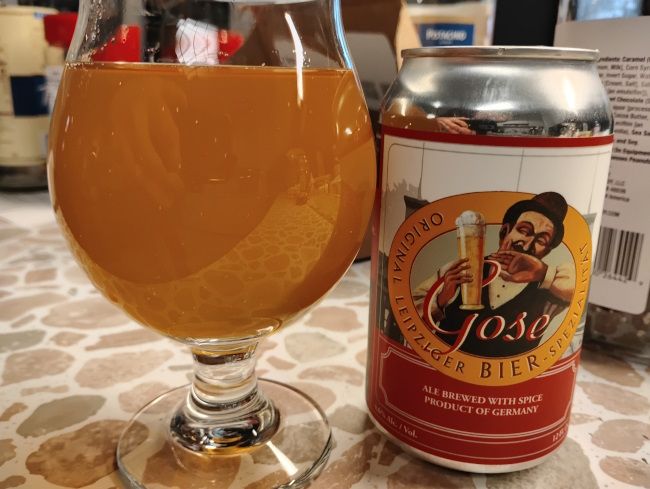
Leipziger Gose is such a tasty beer. Let it warm a bit and the coriander really shines.

Locally, outside of Delta Beer Lab, it's nigh on impossible to find a non-fruited gose. Skip the lime and let the spice flow!

07 January, 2024

Down at Starkweather Brewing

A friend and I did our best imitation of the Charge of the Light Brigade earlier this week when we went into Starkweather Brewing and proceeded to place dead last in their trivia contest. On the plus side, there was good company and fine beer.

I first ordered a sampler, followed by a 12 oz. pour, of Sweet Heat Mango, a Gose with mango and scorpion pepper.

Neither the mango nor the chili was prominent. Instead they accented the citrusy sour of the beer well. While I continue to prefer my Gose unadulterated so I can taste the coriander, Sweet Heat Mango was nonetheless a nice diversion on a winter's night.

This was followed up by a pint of Atarashī Bīru, a Japanese lager given a dose of Koji rice.

It was tasty and I found that the rice added a fruity-floral earthiness to it. I have since discovered that Koji rice is rice that has been laced with a mold called Aspergillus oryzae. Given that the lager seemed to be of the American light variety, it acted as a showcase for the rice's intriguing flavors. An interesting brew which made me wonder what the Koji rice would taste like in a beer with a fuller body.

17 December, 2022

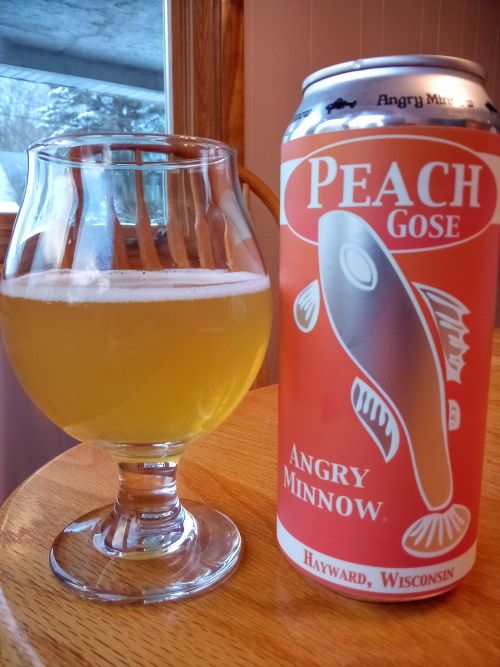
Got that peach body, you a tarty: Peach Gose by Angry Minnow Brew Pub

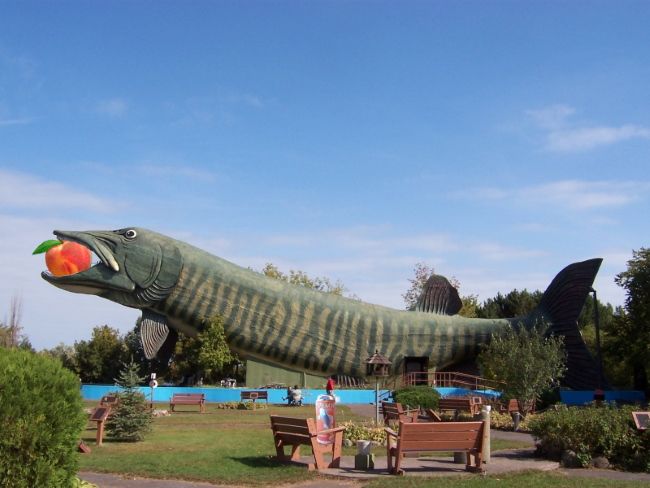
As I was driving south on Highway 27 from Hayward, I realized that I had completely forgotten to take any pictures of the giant fiberglass muskie there at the National Fresh Water Fishing Hall of Fame.

Oops.

On the plus side, I had been able to stand in the front window of Tremblay's Sweet Shop and stare at two women making some kind of brittle. The last time I stood there peering into those windows, Ronald Reagan was in his first term as president. I smiled when I saw that their shirts referred to them as “fudge packers” and no doubt my roughly 12-year old self would have giggled himself senseless at this.

In addition to buying treats down on Main Street, I also stopped in at the Angry Minnow Brew Pub as I noted in a previous post. A pint of their Oaky’s Oatmeal Stout made fine companion to a bowl of chili on an overcast day that was keen to remind you that winter was nigh. I struck up a conversation with the barkeep who had no one else to attend to but me as I believe I had arrived just after they opened. My eagerness for a chat was aided by the fact that I hadn’t actually seen another human being that wasn’t behind the wheel of a car for several hours. I had driven out into the boonies to do some hiking and I think that last person I saw not in a car was the clerk at the hotel as I left just after dawn.

Now that I think about it, I hadn’t had a conversation with anyone since the previous day so a little basic human communication was most welcome. This was made easier by the fact that the barkeep was a nice woman probably a few years younger than me. She had an open, easy going demeanor and a warm, friendly face so it was easy to chat with her.

Our conversation turned towards the Minnow’s taps as she tried to sell me on the various brews on offer. I told her that I wasn’t a hophead and she remarked that their brewer was also more inclined to malt and less extreme beers which led me to believe that the barrel-aged offering and the obligatory IPA were more nods to popular tastes than a lived aesthetic.

I could be wrong, however.

But it got me thinking about how the breweries and brewpubs of the northwest part of the state of which I was familiar do not, generally speaking, have beer lists that consist of 99-100% trendy styles. (Eau Claire’s Brewing Projekt is a notable exception.) They all brew an IPA but not 40 of them. Fruited sours? Sure! But, again one instead of one for every kind of tropical fruit their local produce distributor carries. Pastry/barrel-aged stouts? You betcha but a precious few only.

Does this reflect the tastes of the brewers? Or are the clientele up north not demanding dozens of IPAs? Perhaps a bit of both.

When I had finished pondering beer styles, I took in my lovely surroundings. As noted previously, The Angry Minnow is located in the former offices of the Northern Wisconsin Lumber Company, built when William McKinley was president. There are vaulted ceilings, stained glass windows, and lovely wooden everything. I loved the atmosphere and it made me think of the other brewpubs/brewery taprooms that I’ve been to in the northwest part of the state.

The taprooms up there feel like a third space to me, like an extension of my living room as opposed to a place that needs to disguise its dark, industrial nature. Up north I found hygge instead of the cold, metallic vibes that seem common here.  For instance, Delta Beer Labs makes a wonderful Gose (with no fruit!) but their taproom is clinical and sterile to my taste. In cinematic terms, I don’t want my taproom to have the cool surliness of The Andromeda Strain’s Dr. Ruth Leavitt, but rather the earthy demeanor and sultry curves of Willow from The Wicker Man.

With my navel gazing and my meal over, it was time to head back to my hotel. I was determined to bring some beer back home and got a mixed 4-pack. I knew that some of their stout needed to make the journey but what else?

Not all of their beers were canned and a couple were right out as they were styles that I don’t care for. Despite summer being long gone and having a strong preference for unfruited sours, I took a sample of their Peach Gose and decided that it too would journey south with me.


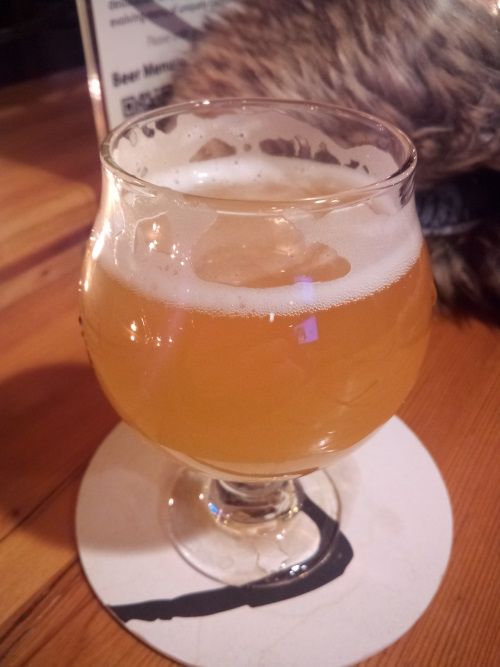
When I opened the can, there was a loud pfsssssss sound and I could hear lots of bubble action and could smell the beer despite the can being several inches from my nose. It appeared that I had a kinetic brew on my hands. Somehow I managed a pour which produced only a modicum of head. The foam was loose, white, and noisy like Rice Krispies and dissipated quickly. The beer was brilliant yellow and very hazy, presumably from a large amount of wheat used in brewing it. Despite the haze, I could see a few bubbles inside my glass. It smelled really nice with a small blast of lemony citrus, a moderate dose of peach, and a generic sour aroma.

My first sip caught a big wave of sour that got mellower very quickly. This was not a one of those Xenomorph blood sour beers that quickly eats the verdigris off of pennies. While the peach was up front, it didn't taste like it was in competition with the beer's sourness. Instead, the fruit came to complement the tartness, not to bury it. Well, maybe take a bit of the edge off of it. A firm fizz gave a little extra bite as the beer's light body yielded some wheat and a dash of citrus.
 
The sour/fizzy bite lingered on my tongue as did the peach which took its time in fading away.
 
Just as my conversation with the bartender had portended, Peach Gose was not an extreme beer. The sourness was firm but never attacked my palate. Similarly, the peach added some balance but never tried to smother the tartness. My own preference is for tasting coriander instead of added fruit when it comes to the Gose, but this was a nice little diversion. With its light body and fizzy fruitiness, Peach Gose is a better summer beer than for these below freezing temps, but needs must when the Devil drives. I would definitely have this again on a summer trek up north.

Junk food pairing: until the lighter flavors of the supper club experience are synthesized in a lab and sprinkled on a chip, pair your Peach Gose with a big bag of Harvest Cheddar Sun Chips.

07 April, 2021

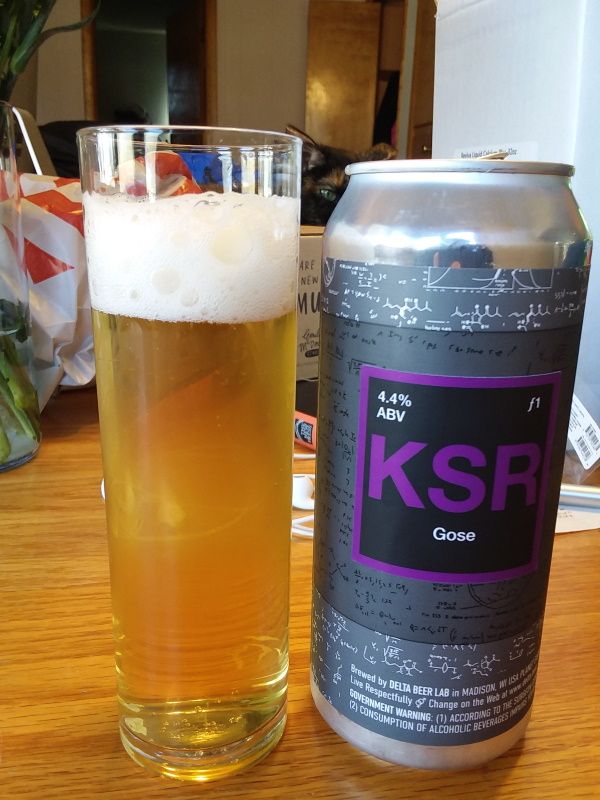
The Spice Must Flow: Gose by Delta Beer Lab


Previously on this very blog I chronicled how a botched batch of Moroccan shrimp prompted a purge of my spice rack that would have made Joe Stalin himself envious. The difference is that I didn't replace the spices that met their fate that Bloody Wednesday with a bunch of aromatic apparatchiks. Instead, the replacements were of, at least, good quality. I have now cooked with juniper berries more in the past few weeks than the past many years.

That shrimp recipe called for coriander and so it's a good time to return to the seeds of the Coriandrum sativum plant which were the genesis of this mess in the first place. It also allows me to make good on actually making a trip to Delta Beer Lab, something I figured was a swell idea back in December when I reviewed a cranberry gose and lamented the paucity of the unfruited variety of the beer. While Delta's beer is on store shelves, I've only seen their mango gose and not their gose gose at my local bottle shop. Granted, it took four months but I finally lost my Delta Beer Lab virginity.

The gose is a sour wheat beer that originated in the German town of Goslar at some point in the Middle Ages. Water sources apparently gave the beer a bit of salinity and it was flavored with coriander. What I think of as less reliable sources say the High Middle Ages but ones I trust more dates it to the Late Middle Ages. For a long while it was a local delicacy until the first half of the 18th century when it made its way to neighboring Leipzig where the inhabitants took to the beer style like a junkie to the needle. While popular for a good, long while, drinkers would turn away from it more and more as the years progressed with World War II and the Cold War doing it no favors. Eventually it died out in 1966. But 20 years later it was revived in Germany and seems to be hanging on to dear life in its homeland with a handful of German breweries making it.

Gose became something of a trend for American craft brewers around 2013 or so. I don't have numbers but it seems that it is less popular today. Even if true, there are still examples of the beer that are easily available such as Otra Vez (which has been reformulated, I see) from Sierra Nevada, Kirsch Gose by Victory, and a variety of gose iterations from Anderson Valley with their Blood Orange probably being the most well-known of them. I suppose it's arguable whether a gose remains a gose if you add citrus fruit, cactus, or agave to it in lieu of coriander. The addition of salt to a kettle soured beer is pretty much all it takes to be a gose in the States today, it seems. But the fact remains that Sierra Nevada has a beer on shelves year-round that says "Gose" on the packaging which is a lot of visibility for a beer style that was all but dead not long ago.

I have nothing against the fruited gose per se and have enjoyed those beers listed above, but in the rush to make everything that isn't an imperial stout taste fruity (the stouts get laced with lactose, coffee, vanilla, and so on), American brewers have made the ordinary non-fruited variety something of a rare bird. This is a shame because I am rather partial to coriander.

Thankfully the folks at Delta Beer Lab offer a more traditional take on the style in addition to one that's in the cult of tropicality.


The beer is a lovely light gold color with a slight haze to it. My pour produced a big, white head that made quite a racket as the bubbles burst. It was like listening to Rice Krispies. But louder.

It smelled first and foremost of that lemony sour from the lactic acid which gives the beer its sour taste. I also caught a little coriander and just a wee bit of sweetness – like honey.

While I have had beers that were more sour, Delta did not skimp on it here. It was very sour but fell short of a xenomorph blood level of acidity, thankfully. As you can imagine, it was good 'n fizzy with the salinity having an almost spectral presence. It didn't taste salty but I could tell it was there enhancing the other flavors. It adds a certain overall fullness. The coriander wasn't prominent but was there playing its role in generating tastiness. Some wheat and a slight grainy sweetness rounded things out. With all that sourness, some lingered on the finish and made it rather dry but I was also left with a wheaty taste and I could just discern some salinity too.

As Darth Vader once remarked to his son, impressive.

I really enjoyed this beer. It was good and sour, it had just the right amount of salt to enhance flavor, and a goodly amount of coriander. That is, I would have been happy with just a smidgeon more of the spice but it complemented the wheat very well and was still quite tasty.

Junk food pairing: I recommend pairing your Gose with some Carada rice ball cuttlefish flavored snacks. The beer's citrus sour complements the cuttlefish flavoring while also acting as foil to the snack's sweetness.

19 December, 2020

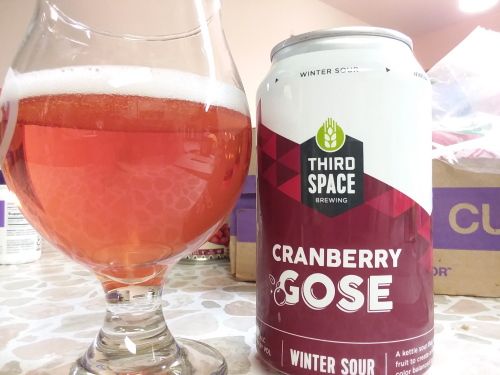
Getting to Third Space: Cranberry Gose


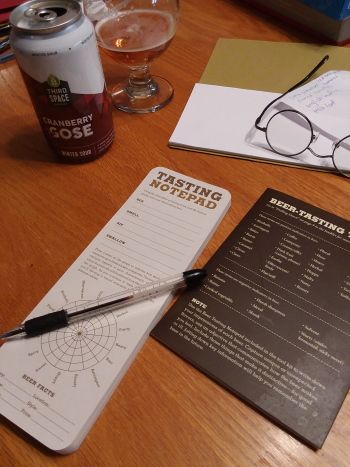
On a recent trip to the liquor store, I made what I think is my first purchase of a brew by Third Space Brewing in Milwaukee. It looks like they've been around for about four and a half years and, according to the BeerBaron, Third Space is one of Wisconsin's best breweries. They sure have a lot of IPA's which just about disqualifies them from being a "best" brewery, for me, but I did find their winter sour, Cranberry Gose, intriguing. Perhaps it would prove be a pleasant alternative to the heavier beers normally consumed during this time of year.

Gose is a German ale that uses a lot of wheat and is "traditionally" flavored with coriander in addition to a mild dose of hops. If your water source isn't salty, then salt is usually added. The style dates back to the 16th century and the city of Goslar in north central Germany although it really took off in Leipzig, some 200 miles to the southeast. Tradition being more mercurial than we give it credit for, you can either use salt and coriander or not as you please and still claim your brew is "traditional". From what I've read, neither was added far back in the beer's history and are instead more recent additions, though I'm not sure when exactly. As the beer's name hints at, Third Space replaced the coriander with cranberry, though the salt remains.

For my tasting, I used Jeff Alworth's Beer Tasting Tool Kit which was a gift from last Christmas that I have finally gotten around to opening.


Cranberry Gose – quelle surprise! – is red. It's a lighter shade and a bit dull. I thought it had a slight orange tint to it and a hint of haziness. The pour made a small white head that disappeared quickly. It smelled astringent with a prominent citrus scent from all the lactic acid used to make it sour.

As expected, it had thin body which was made up for in tartness and sourness. Again, my sources on the Internet tell me that the Gose, say 50-100 years ago, was really, really sour. Like xenomorph blood sour. Third Space didn't quite go that far but it is rather acerbic with a nice lemony taste. The cranberries add a piquant tartness and berry-like flavor.

When I cook, I don't measure salt - I do it by eye. And I have this vision of a brewer at Third Space clutching a big 40# sack of salt and casually pouring the crystals into a kettle and saying at some point, "That should do it." They then reconsider the situation with their eyes darting back and forth between the kettle and the sack. After due consideration, they add just one more pinch. Regardless of how it was done, they got the salt level just perfect, for my taste. You can tell it's there enhancing the flavors but it falls just short of tasting particularly saline.

This is a well-carbonated beer. All those bubbles look pretty running up through a sea of red in your glass. Plus, they make your tongue tingle as you quaff which makes for a rather dry finish.

No Schaumhaftvermoegen was to be found on my glass.

While I liked this beer, I felt that there was a bit too much carbonation. You've got your lactic sourness, the tartness of the cranberries, and then you top it off with a generous portion of CO2 – an acidic overload. I enjoyed Cranberry Gose but one serving was enough. I do give Third Space credit for using cranberries, though. Wisconsin grows more cranberries than any other state in the Union so their use in this beer makes for a nice regional touch.

For anyone looking for a non-fruited Gose, the only place around Madison that I know of is Delta Beer Lab. I've not had it but intend to do so. Next Door Brewing has brewed a Gose in the past but I am unsure if they've done so lately.

Junk food pairing: Pair Cranberry Gose with a bag of white cheddar pork rinds. Let the smooth, creamy cheese dust mellow your tongue after those blasts of sour.

04 February, 2018

You might say the secret ingredient is salt: Lulu Peach Gose


Like many countries around the world Poland has jumped onto the craft brewing bandwagon. Or so I've read. Here in Madison it's easy to find Okocim's pale lager and I see Żywiec's lager on the odd occasion but, by and large, Polish piwo doesn't demand much shelf space here in Madison. Chicago, on the other hand, is a different story. With its large Polish and Polish-American population, there is much more Polish beer to be had. Warka and Tyskie are a couple other brands that come to mind that are commonly seen down there. Plus you find porters and bocks instead of simply pale lagers.

My guess is that most of the brands I see on Chicago shelves are owned by larger breweries and likely ones that are owned by a multi-national conglomerate. But I've seen increasingly more Polish piwo in Chicagoland stores that aren't pale lagers labeled with familiar names. It's entirely possible that some/most/all of actually brands owned by bigger players but it seems like at least some would pass muster with the Polskie Brewers Association as being "craft" or "independent".

I am interested in Polish piwo not least because I am part Polish. But there's also the fact, or so I've read, that Poles smoke beer in a way that Americans generally do not. Alas, I've not yet found any Polish smoke beers but did recently come across a some goses from Poland and came home with one - Lulu Peach Gose.

When it comes to goses, I've become pretty snobbish about the salt. On one hand you've got those where it acts like the shake or two that one would put on a meal: it enhances the flavor of whatever you put it on or in. Over at the other side there are goses that taste salty or, rather, where you taste salt. I've not encountered one that, if left out, would attract deer, but it tastes salty. In between is my sweet spot. I like a fairly prominent mineral flavor. If you were to add just a pico-mole more of NaCl molecules it would actually taste salty. A sub-saline kind of taste, I guess you could say.

Owing to recent controversy about sexist beer labels and sexism within the craft brewing industry, I took especial notice of Lulu's labels. They all feature women but manage to portray them in a way that doesn't give you the impression that their underwear is at their ankles. I saw no words that could lead the drinker to think that, by consuming the piwo in hand, they would get laid by a comely Polish maiden. However, I can neither confirm nor deny the existence of a Lulu Boyz Instagram page.

Well, onto piwo.


Lulu pours a hazy light gold. Although my poor photography doesn't really get it across very well, a nice white head atop the honeyed liquid made for a very pretty sight. There were lots of bubbles inside while the head was alive with activity. I could hear the white noise of the fizz as bubbles burst. I rather like an aural component to my beer.

Moving on in the panoply of senses, the aroma was replete with fresh peach. (Peach pulp is used here.) It smelled really nice. Some lemony lacto and a touch of salinity were also present.

The taste was pleasantly peachy – juicy even, as is the new parlance. I was surprised at how mild the tartness was. A little citrusy with a mild tang. Nothing like many American versions which can also be used to remove calcium deposits from tile. Coriander lurked in the background along with a hint of graininess. On the saline scale, it was right where it should be with a good mineral taste but not really salty.

This is a 3.5% A.B.V. beer and was very light-bodied. But the recipe includes oats and so Lulu had a smoothness to it I've never tasted in a gose. It contrasted nicely with the tartness as well as the generous fizz.

Lulu tartens up at the end as the peach fades, though never entirely goes away. I even caught a little spicy hoppiness here too. Overall, a fairly dry ending.

A few spots and a couple short streaks were all my glass was left with.

While I grant you that this was a beer better suited for summer, it was very tasty nonetheless on an evening in the depths of winter. It was light and fizzy with a gentle tartness and plenty of fresh-tasting peach flavor. And they got the salt just right too. It made for a wonderful sweet and sour taste. The standard bearer for fruited goses, in my humble opinion.

Junk food pairing: Pair your Lulu Peach Gose with some salt & vinegar potato chips for an intense gustatory experience.

01 July, 2017

Beltane's Flower: Hibiscus Gose by Boulevard Brewing Company


Kansas City's Boulevard Brewing Company began distributing to Wisconsin back in the spring. I must admit that when I first heard the news, I wasn't excited. But this wasn't due to Boulevard, whose beers I was not familiar with; rather it was because of Pavlovian conditioning. I mean, it seems that the other breweries who have begun distributing here all brought an arsenal of eyepahs. (I'm thinking particularly of Golden Road.) Strolling down the beer aisle at Woodman's I'd see stacks of eyepahs by breweries new to the state – session, double, juicy, New England – the whole lot. And so when I heard about Boulevard's immanent arrival I couldn't help but think "Do these people not realize we already have dozens of native eyepahs that are just as bitter/juicy/fruity/cloudy as something imported from distant lands?"

Then I did a little reading and discovered that Boulevard brews a hibiscus gose and a little excitement began to well within. Suddenly I recalled having had a hibiscus goes Dexter's one time but soon realized that it was Marionberry Hibiscus Gose by Widmer Brothers.

Hibiscus is, perhaps not exactly trendy, but certainly much more common than when I first had a beer infused with the flower. This was back in 2009 or thereabouts which means I was oddly on the bleeding edge of beer trends for what is likely the first and only time. This was at the home of Joe Walts (he of Ale Asylum fame) when he introduced me to a hibiscus saison that he had created with Robyn Klinge (she of Madison Craft Beer Week fame). It was an extremely tasty brew and, though Joe never opened his brewpub, the recipe found a home at Vintage Brewing when Robyn was their beer ambassador (or whatever her title was.)


While I expected Boulevard's Hibiscus Gose to be pink it was more orange – almost amber. Not sure how to explain that. Also curious was the fact that the bier was clear. Being a wheat brew it's normally a touch hazy but I suppose filtering highlights the color. I got a medium-sized white head which stuck around for a little while. Inside there was a modicum of bubbles.

The aroma had that lovely floral scent of the hibiscus as well as some citrus from the lactobacillus.

My tongue was greeted with a fairly big dose of sour that was moderately lemony. Then the hibiscus kicked in with a firm bit of the floral. The flowers also lent a tangy bitterness. I'd swear I caught just a hint of coriander, an ingredient I wish was generally more prominent in goses. Similarly, there was a tad of cracker underneath. The lacto and carbonation gave the beer a pleasantly acidic patina.

The finish was wonderful with a hint of the hibiscus accompanied by a lingering tartness from the flower. It was here that the salinity became noticeable and it helped bring the coriander out of the botanic malaise and to the fore. Sadly there was no Schaumhaftvermoegen to be had.

Delicious! I appreciated that the bier didn't have a lethal sourness. The lacto and hibiscus kept things nice and tart, though. Aside from adding some tartness, the hibiscus adds a tasty floral accent to the gose. I know some folks who are turned off by flowers in their food and drink. Unlike say, rose hips, hibiscus, at least in the beers I've had, has a taste that is brighter and less richly aromatic. The sour along with a light body and low alcohol – 4.2% - made it extremely refreshing on a hot day. This is a great bier and it was quite fortuitous that Boulevard began distributing here when they did as Hibiscus Gose is a spring seasonal. I look forward to next year's batch already.

Junk food pairing: Pair Hibiscus Gose with something that tastes of warmer climes such as lime flavored tortilla chips or guacamole Takis.

30 August, 2016

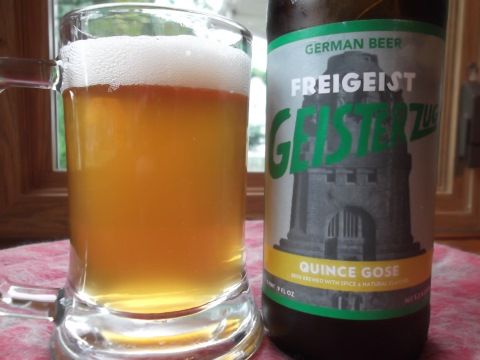
I Dined on Mince and Gose of Quince: Geisterzug Quince Gose by Freigeist Bierkultur


Another bier from Freigeist!

I have previously enjoyed Sebastian Sauer's spruced gose as well as one laced with rhubarb. He takes a – how shall I phrase it? - German approach to brewing gose. Rather than upping the sour to levels that would corrode metal or extreme doses of other flavors, Sauer retains the spirit of, in his words, "the classic, very balanced and nuanced beer" that is the traditional German gose. However, as you can see, he is happy to ignore any "purity" laws that would prevent him from using fruit or other flora.

This time around I have Sauer's Geisterzug Quince Gose. From what I've read, the quince is native to central Asia but gained popularity in the West during the Middle Ages. I gained a taste for it when I came across a Renaissance era recipe for quince marmalade and made it in my kitchen. Apparently it was fairly common here in America back in the day but now it seems to be more of a specialty/"ethnic" item. I don't believe that I have ever seen a quince for sale in Madison. Indeed, the fruit is so rare in these parts that even quince & apple, a local purveyor of preserves, offers none of the former. But quince's profile may very well have changed over the past several years as more ethnic grocery stores have opened.

Geisterzug Quince Gose is a lovely light gold color and hazy. My pour yielded a nice, frothy head. The white crown decided to stick around for a little while which made for a pretty sight as did a fair helping of bubbles inside.

The philosophy of brewing balance was apparent with the aroma. Lemony lactic sour came first. It was, however, not deathly pungent and found itself on equal footing with that wonderful floral apple-pear fragrance of the quince. My nose also discovered a slight sweetness here too.

Gentle carbonation joined a measured citrus flavored tartness making for a firm, but not overpowering, acidic tang. Again, balance is the key with the quince complementing the sour in strength while its floral fruity sweetness made for a nice contrast to the sharper citrus tartness. I also tasted a mellow spiciness which may have been coriander.

My sips finished with the quince fading and the tang filling the void. The salinity became apparent here as well. Lastly, my mouth was left with a mild fizzy acidic feel. Schaumhaftvermoegen came as a clutch of thin foamy streaks as well a smattering of spots.

Another fine brew from Freigeist. I suppose that going in with a taste for quince went a long way in predisposing me to enjoy this bier. Beyond that, however, I appreciate Sebastian Sauer's application of balance which allows sour to co-exist with sweet in harmony allowing each its place in the sun. As the bier warms the quince comes ever forward yet you never forget that you're drinking a sour bier. The balance, the light body, and the relatively moderate 5.2% A.B.V. all add up to an excellent brew.

Junk food pairing: Pair Geisterzug Quince Gose with lighter fare such as plain potato chips or, because we're talking German bier making pork almost mandatory, plain pork rinds.

18 August, 2016

Diane, if you ever go to Algonquin, that Gose is worth a stop: Sweetie Pie by Scorched Earth Brewing Company


On a recent trip to Chicagoland The Dulcinea and I stopped in at a liquor store on our way out into the exurbs. My intention was to grab a six pack or two of brews unavailable here in Madison, especially Hoss which, sadly, has been demoted from year-round to seasonal. While I saw no Hoss, I did end up bringing home quite a bit more beer than I had planned.

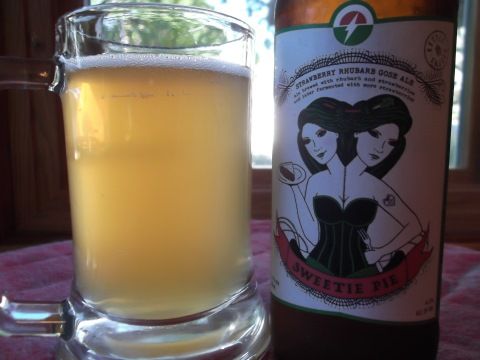
One of those brews was Sweetie Pie, a strawberry rhubarb gose from Scorched Earth Brewing. While I'd heard of and a bit about Scorched Earth, this was the first time I can recall encountering their beers. I think that at least part of the reason is that they don't distribute widely in the city. Chicagoland is very large, after all. They are out in Algonquin, which is a northwest suburb/exurb.

This was my second strawberry rhubarb beer with the first being New Glarus' Strawberry Rhubarb. While the brew from Little Switzerland is a wild ale, Scorched Earth's is a kettle soured gose. The same fruits being taken in similar yet different directions. Sweetie Pie, being a gose, has had salt added. In this case it is pink Himalayan sea salt. Beyond the normal NaCl qualities, I do not know what the blushing mineral has going for it.

Sweetie Pie is bright yellow. It was also quite hazy which surely is the because of the wheat in the bier. Goses are traditionally made of 50%+ wheat although I don't know the percentage here. The ¾" head on my glass was soda-like with bubbles jostling for attention when they weren't popping rather loudly. There was also a fair number of bubbles below the surface. Overall quite pretty, though I'd have like the head to have stuck around a bit longer.

The aroma was pleasantly fruity. First there was the sharp, lemony smell of the lactic acid which was followed by sweet, aromatic strawberry. The citrus was fairly strong while the strawberry was just a RCH less pungent.

On my first sip my tongue felt like German Sixth Army in 1942 as it was routed by a blast of lactic tartness. Contrary to the aroma, it didn't taste particularly lemony. The sour lessened on subsequent sips and my tongue recovered to taste that the rhubarb adds its own tartness which was not as sharp as the lactic variety. The strawberry was fairly sweet but not overwhelming and made for a tasty contrast. The wheat stood out and was joined by some more of a barleyed grain flavor. Just as the label boasts, the grains bear more than a passing resemblance to the crust of a pie. The lactic acid and carbonation combined to give the bier a nice bite and and overall acidulous taste. I couldn't really taste the salt as a distinct flavor but it added a fullness to the flavor and likely helped the wheat stand out.

The tartness lingered on the finish along with some of that wheat flavor. The latter I think was helped out again by the salt which became more apparent. Ixnay on the Schaumhaftvermoegenscray.

This is a very fine bier. After the initial salvo of sour, it mellowed a bit and found the perfect middle ground. (I only wish there was more of a citrus flavor to the sour.) While the strawberry was only able to temper the tartness a small amount, it's a testament to the brewers at Scorched Earth that it still stood out in its own right instead of bowing completely to the sourness. The whole sweet and sour dichotomy, the Jungian thing, if you will, was darn near perfect here. And they put just the right amount of salt in. It enhanced the flavor overall and left just a hint of salinity at the end for a unique finish.

It's like having the month of June in a glass.

Junk food pairing: I like to really savor the fruit and veg in this bier and so avoid big, bold flavors in accompanying food. Try some plain old potato chips. If you must have added flavoring, keep it mellow with something like sour cream and cheddar.

02 August, 2016

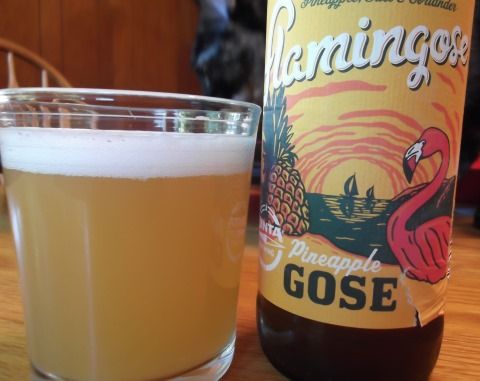
Sunny, Tropical Leipzig: Flamingose by Uinta Brewing


What compels you to place your faith in a brewery?

My run-ins with Salt Lake City's Uinta Brewing have all been pleasant experiences. Far from being a den of Mormon misfits eschewing brews, Utah's capital is home to some really good beers. After a fantastic black lager and a fine rauchbier, Uinta earned my faith and trust. And so I let them take my tongue on a tasty detour with a cucumber saison.

If someone were to say that two beers is not nearly enough to place one's trust in a brewery, I'd say that's a fair cop. Unless you are a new brewery, two beers is a small and likely unrepresentative sample of your brewing acumen. Just because a brewer masterfully whips up batch after batch of [insert style modifier] eyepahs doesn't mean that he or she can automagically concoct a good helles. So, statistically speaking, I had no good reason to put my tongue in Uinta's hand, if you will. Yet I did.

Earlier this summer I heard that Uinta was going to release a pineapple gose called Flamingose. I like goses; I like pineapple. It sounded like a great combination.

I should really unpack my beer glasses as I've been using all of two types of glasses for reviewing purposes since I moved. While I don't want to, I might have to use one of those ubiquitous shaker pints for a little variety if I can't quit being lazy.

Flamingose poured a dull medium yellow. The gose is brewed with no small amount of wheat so I didn't expect this stuff to be clear but it was, like, totally turbid. There was about an inch of fluffy white foam in my glass and it lasted a good long while. My gaze could not penetrate the haze so I couldn't tell how effervescent it was.

An inviting aroma had a surprisingly restrained pineapple scent as well as a little tartness that was vaguely citrus-like. I was not expecting to smell hops. Sure, the gose is traditionally brewed with hops but they are generally faint. Here I caught a little dank hay and a goodly amount of tropical fruit. Ruh ro, Raggy!

Although I was unable to see any bubbles inside my glass, I could sure taste them as Flamingose has a nice fizziness to it. My tongue and nose agreed: the pineapple was pretty mild all around. The tartness was also toned down in contrast to most goses I've head. Even German imports are more sour than this. The salt wasn't tasted as much on its own as was its effect on the other flavors. Sure, there was a hint of salinity but everything else had a fullness to their taste that one wouldn't normally get with such a light bier. A dash of coriander brought up the rear while tropical fruit and melon flavors from hops led the charge though they didn't add much bitterness.

For the finish there was more of those fruity hop flavors and they lingered as a mild bitterness settled in. There was Schaumhaftvermoegen aplenty with many a thin foamy streak lining the glass.

My wife said it best after tasting it, "I don't like this stuff at all." Well, perhaps not the best because I really think there's a good, if understated, gose underneath all the Ballast Point trappings. The nouveau hops used here are Galaxy and – quelle surprise! - Citra but they are not listed on the label, although they do appear at the bier's webpage. While Flamingose is not very bitter, I do find the fruity hop flavors to be cloying. It has a nice medium-light with an emphasis on the latter body (it's 4.2% A.B.V.) but the paucity of tartness means there isn't much sharpness or zing to it because the carbonation can't do it alone. Instead it has a very muddled flavor - of fruit punch.

A big disappointment from Uinta but I have by no means given up on them.

Junk food pairing: Flamingose is a bier that deserves to be be counter-paired. Put those fruity hops in their place! Try something spicy like Kettle Brand Red Curry potato chips or just something potent like salt & vinegar popcorn.

20 April, 2016

Septemdecies Pro Cheeseheadibus: 17UP by Pearl Street Brewery


I recall making a trek to La Crosse while in high school and seeing the World's Largest Six Pack wondering all the while just how much beer the massive tanks could hold. At that time they were still painted to look like Old Style cans, Old Style being my starter beer back when I was a pre-teen. You see, the father of a couple friends of mine kept a refrigerator full of it and some of those cans made their way into our grubby little hands. While the glory days of G. Heileman Brewing are long gone, the Pearl Street Brewery is celebrating 17 years of microbrewing this year on the banks of the Mighty Mississipp.

I tend to think of Pearl Street as being a small brewery that generally flies under the radar. I've reviewed a couple of their beers and enjoyed them but they don't have a signature beer whose name transcends mere trends and is known throughout Wisconsin. Pearl Street doesn't have a Spotted Cow or Hopalicious. Or perhaps it does and I just don't know it.

Regardless, Pearl Street is doing quite alright. Indeed, it is looking to expand their business. And to celebrate the big 1-7, they've brewed a selection of special brews: Wakin' Bacon Breakfast Beer, Stressed & Bitter Belgian-Style Pale Ale, Citrye IPE, Haggis Barrel Aged Scotch Ale, and 17UP Anniversary Gose. That's my understanding, anyway. I've seen only Citrye IPA and 17UP in bottles, however, and I gave the latter a try recently.

It was perfect weather for a light-bodied, tart, citrusy beer, i.e. – perfect gose weather. But 17UP is no ordinary gose. Instead of the usual salt & coriander, this bier was brewed with "natural lemon and lime essences". As far as what constitutes "essences" with regards to food labeling, I'm not sure, but it doesn't appear that the brewer, to paraphrase Taggart in Blazing Saddles, went and got a shitload of lemons and limes.

17UP pours a very turbid yellow. I got a nice, albeit small, frothy white head which, sadly, went away rather quickly. There was a middling number of bubbles in the bier heading upwards. Unfortunately, my fancy-schmancy glassware has been packed so I didn't have a stange to make the bier look all pretty for you. Still, it appeared quite temptingly qauffable, if you ask me.

When you're thinking to yourself, "17UP. I get it. It's a play on 7UP." and then go to smell a bier, it's difficult not to smell the soda. Such is the suggestible nature of the human mind. And so my first sniff of 17UP smelled exactly like 7UP. Or how I remember it smelling, anyway. It was a big, sweet burst of lemon-lime. I also caught some citrusy lactobacillus sour in the background.

Unsurprisingly, the taste of 17UP reminded me of 7UP's except it wasn't sweet – thankfully – and tasted more like fresh fruit than the soda. Lime was the predominant citrus flavor. This is not a maxi-sour bier as the lactic tartness really took a back seat to the fruit essences. But the bier was still quite pleasingly tangy with a subtle lemony bite. I was able to taste the salt but only just. Coriander was M.I.A. but I'm not sure if this is because of my tongue or it was left out of the mix to give the lime and lemon gustatory supremacy. If it was there, it was mild.

17UP's relatively tame tartness lingered into the finish as did the dynamic lime-lemon duo. But what stuck around longest was a really mild salinity. No Schaumhaftvermoegen was left on my glass.

17UP's label notes "Back in 1999, our fledgling Brewmaster tried to offer sour beers like this one to the people around here and they mostly just spit them on his boots." It goes on to proclaim that times have changed. I hope so.

While I do wish that 17UP was a bit more sour than it is, with its sprightly flavor and light body it really hit the spot on a near-80 degree day. There was nothing extreme here – each flavor was doing its Midwestern nice thing – and they all just melded together nicely. The people of La Crosse would have to be crazy to spit this on someone's boots.

Junk food pairing: Eat soft pretzels with 17UP. But instead of salt, use a shake of Pleasoning before dipping into mustard.

19 April, 2016

Mama's little baby loves rhubarb, rhubarb: Geisterzug Rhubarb Gose by Freigeist Bierkultur


This year marks the 500th anniversary of the German Reinheitsgebot - the beer purity laws. There have been many articles written on the subject (mostly auf Deutsch, admittedly) including one published today at The Guardian called "Medieval beer purity law has Germany's craft brewers over a barrel" which caught my attention.

Now, I am certainly no expert on German bier and brewing laws, Reinheitsgebot and otherwise. And I have to admit that, the more I read about this topic, the more confused I become. The laws are like a mystery wrapped in riddle inside an enigma. If German brewers can't use anything but barley then how come there are weissbiers brewed with wheat? Roggerbiers brewed with rye? And how do brewers get away with adding salt and coriander to goses? Read the article above and try to guess what German law says can and cannot be labeled "bier". How does Germany's membership in the EU affect their bier/brewing laws? Why can't a German brewery brew a milk stout and call it "bier"? Do brewers in Bavaria operate under different laws than say their counterparts in Berlin?

One thing I found rather annoying about The Guardian article is that it gives the impression that German brewers have been adhering to Reinheitsgebot for the past 500 years when, in fact, many German brewers gladly ignored Reinheitsgebot or weren't affected by it because it was not the law of their land. They both adhered to tradition and innovated by using adjunct grains along with herbs, spices, fruits, et al for quite some time. Don't forget that there was no country called Germany until 1871 and the Bavarian Reinheitsgebot at issue here (there was more than one) didn't, if memory serves, have the force of law for the entire country until the early 20th century. And so there were all sorts of bier styles in Germanic lands for hundreds of years before the force of law turned the Bavarian way of doing things the German way of doing things. Check out the extinct and near-extinct German bier styles unearthed by Ron Pattinson and Andreas Krennmair.

And this leads me to today's bier, a Rhubarb gose from Freigeist Bierkultur, a German brewery that gleefully gives the Stinkefinger to the Reinheitsgebot. I've reviewed a handful of their biers previously and cannot recommend them enough. Geisterzug means "ghost train" and is the name given to their line of gose biers. Adorning the label is a photo of the Völkerschlachtdenkmal or Monument to the Battle of the Nations which commemorates Napoleon’s defeat in 1813 at the Battle of Leipzig. And Leipzig is the city most closely associated with the gose even though the style originated in Goslar. While this bier was brewed with rhubarb, the vegetable was added to Freigeist's base bier which is a spruce gose.

The bier pours a lovely gold and was quite turbid. My pour produced a small white head that was very loose and went away rather quickly. This stands in stark contrast to the non-rhubarb Geisterzug which had a big, firm, and lasting head. However, there was a goodly number of bubbles inside this bier.

Tartness reigned over the aroma. I could smell both the mellower rhubarb as well as the more sprightly citrusy sour from the lactic acid bacteria.

I noticed the carbonation on first taste before a wonderful, bitter rhubarb flavor kicked in. It was joined by some of that citrus lactic sour that veered towards lemon. This was not a sour overload and instead the sourness was on par with the other flavors. The spruce was prominent here and it often times threatened to overshadow the rhubarb and the lactic sour but, fortunately, it never carried through on it. Overall it had a really pleasant acidulousness to it – just a little lactic bite – and I suppose a touch from the carbonation as well. Unlike its un-vegetabled cousin, I didn't get much in the way of grain here. A hint of cracker but that was about it. Perhaps this was due to the age of either bier but I cannot say for certain. Salinity was moderate – I could just barely discern the salt.

On the finish that spruce flavor lingered well after any tartness had faded and the salinity stayed behind too. No Schaumhaftvermoegen was to be had.

This was a delightfully light, bitter, and tart concoction. A perfect drink for the warm weather we're having. At 5.2% A.B.V. it's not the lightest of brews around, but its bitterness, tartness, and resiny pine flavors all work well in warm weather. The Dulcinea didn't care for it very much, however. I think it was the spruce that turned her off and that she was expecting the rhubarb to be more prominent. I can respect that. Personally I enjoyed the piney flavor but wouldn't mind having it dialed back to allow the vegetable to take center stage. I mean, how often do you find rhubarb in beer? New Glarus' Strawberry Rhubarb is the only other one that comes to mind. (Hopefully Madison will have a rhubarb saison soon, though.)

Junk food pairing: What to pair with spruce? If it were simply rhubarb I'd suggest some kind of strawberry something but the spruce makes it more difficult. If there were such thing as reindeer flavored potato chips, I'd go with that. Since that's not available, try some Cape Cod Feta & Rosemary chips or Kettle Sea Salt, Rosemary, and Garlic chips. The rosemary will complement the spruce well while the fattiness will be pleasantly cut by the slight acidity of the bier.

12 February, 2016

In the Basement Bars: Suburban Beverage by Perennial Artisan Ales


The final brew of a trio of sour biers from the folks at Perennial Artisan Ales that I'm reviewing is called Suburban Beverage, a gose. After having tasted a couple of Berliner Weisses, Pineapple Kumquat and Hopfentea, I have concluded that the folks at Perennial enjoy tropical fruit flavor in their German style sours and that they aren't shy about making their brews tart. I will add that all three biers come in at 4.2% A.B.V. Perennial is quite consistent if nothing else.

Suburban Beverage may be a gose but it is far from traditional. While it does contain salt as is typical for the style, it was also brewed with orange peel, lemon peel and key lime juice which are highly irregular. The label also indicates "spices" so we shall see if that means the conventional coriander or perhaps something different. Also on the label is a bottled date of 7/2015 which means that this bier had been in my cellar for about 5 months before I consumed it.

Suburban Beverage pours a light gold. The bier is hazy. Unlike with Hopfentea, I managed to pour this brew and get a nice head. It was big, white, and loose and it stuck around for a little while. There was a goodly number of bubbles inside going upwards.

The aroma brought Fruit Stripes bubble gum to mind with its very sweet fruity scent. It wasn't a particular fruit but rather like a gestalt of all tropical fruits in one. And there was the lemony lactic tartness that I've come to expect from Perennial. Rather potent on the nose but not potent enough to subdue the sugary tropical sweetness.

As with the previous two Perennial brews, the first thing my tongue encountered was a dose of lemony lacto tartness that could fell a horse. The sour mellowed as I continued drinking but not by a whole lot. A brisk but not deadly bit of tartness carried throughout my session. Blending into it were the citrus flavors from the fruit components added with the lime juice standing out amongst its peers in the tartness. I am fairly particular when it comes to salt in my gose and I think Perennial did a nice job here with just the right amount to both accent the ingredients as well as to just barely come across as salinity. There must be cinnamon amongst the spices used here because it combined with the salt and grains in the bier to fool me into thinking that I was drinking a graham cracker.

Suburban Beverage finishes quite clean with a lingering tartness courtesy of the lactic acid as well as the lime juice. There was, sadly, no Schaumhaftvermoegen to be had

Perennial impressed me here not only with being able to produce the perfect amount of tartness in three sour biers in a row but also with the salt. It not only accented the other ingredients but was also a flavor of its own, if only just. I like to taste the salinity in a gose but it should definitely be low-key and not the zymurilogical equivalent of a salt lick. I liked the citrus flavors here quite a bit but I just couldn't get past the lime-flavored graham cracker taste of the bier. The cinnamon just didn't do it for me. I don't dislike graham crackers either. I just didn't think that the tartness went well with cinnamon. This is a shame because I otherwise really liked this bier, especially the lime juice had commingled with the lactic tartness.

Junk food pairing: Pair Suburban Beverage with some tortilla chips. The cinnamon goes especially well with mole flavored chips.

20 January, 2016

A Prickly Situation: Otra Vez by Sierra Nevada Brewing Co.


I reviewed several Sierra Nevada brews last year and was quite impressed with the their takes on lagers/German bier styles. Some adhered to tradition while others tweaked the tried and true. Then news came that the venerable brewery would be adding a gose to their year-round line-up. But not just any gose, a cactus grapefruit one. The gose is a light, refreshing bier – perfect for summer – so it seems odd that Sierra Nevada would choose to release it in the bowels of winter. I grant you, it's nowhere near as cold in California as it is here in Wisconsin, but it's still not exactly balmy out there.

This new brew, Otra Vez, started appearing around Madison earlier this month. And now that we are looking at sub-zero temperatures, I decided to pull out a bottle and pretend I was drinking the self-styled "perfect warm weather beer" in warm weather. It was packaged on 29 December.

The gose is a German light-bodied sour wheat bier that is traditionally flavored with salt and coriander in addition to a modicum of hops. Sierra Nevada has seemingly eschewed these flavors and instead opted for the tastes of California with grapefruit and prickly pear cactus.

Otra Vez (which apparently means "again" in Spanish) pours a straw hue. It had just the lightest haze to it. My glass was capped with a big, frothy, white head that stuck around for quite a while. (I presume the head was courtesy of the wheat proteins. Regardless, it looked really nice.) The bier was quite effervescent as I spied with my little eye many a bubble inside working its way up.

As I was ogling my glass I could smell the bier and it smelled lively and refreshing. Once I really put my nose to it I caught the grapefruit and a vegetable scent – the cactus. Now, I have had prickly cactus before in the form of nopalitos, sliced cactus pads. But it was some time ago in a dish along with many other ingredients and seasonings. Ergo I cannot recall what it tasted like. Here it tasted a lot like a cucumber with floral overtones. The grapefruit was unexpectedly subdued and not particularly tart while the carbonation was generous. Otra Vez is a bubbly brew, to be sure. While neither the Sierra Nevada website nor the bottle gives salt as an ingredient, I thought I tasted it. Not a lot and not really a taste in its own right – it was more like the cactus flavor was accented by it.

Unlike the goses I've had lately, Otra Vez did not make my lips pucker. Indeed, it had just a touch of lactic acid tartness which melded into the grapefruit's own, albeit restrained, acidic bite.

And it was these tart flavors which lingered throughout the finish. Sierra Nevada says that Otra Vez was brewed with two kinds of experimental hops but only has 5 I.B.U.s and I don't know that I could taste them. There was not much Schaumhaftvermoegen to be had with only a few spots of foam left on my glass.

Otra Vez was a definite change of pace for me as far as goses go. It has a nice light body and is 4.5% A.B.V. so this is no imperial/double/gose-on-steroids. It's not sweet and does not taste like a Jolly Rancher nor eucalyptus. I really enjoyed the grapefruit/cactus combination, although I wouldn't have minded if there was more grapefruit. But the cactus added a nice, juicy savory melon flavor which I'd bet is spectacular on hot summer days. I'd also enjoy a bit more tartness as well.

Still, I enjoyed the bier's restraint. There's nothing imperial or double about it yet Otra Vez is not a simple brew. It has a multitude of flavors that come in moderation and are placed in balance with one another. I can see myself drinking this again (and again).

Junk food pairing: Otra Vez is a light bier so pair it with similarly easy going food such as lightly-salted & thin cut potato chips. It will also go well with Oriental puffed rick cracker snack mixes that have a touch of seaweed in them.

14 January, 2016

A Taste of Summer in the Depths of Winter: Briney Melon Gose by Anderson Valley Brewing


This post will complete a trifecta of reviews of goses by Anderson Valley Brewing. It began with their traditional gose, continued with a blood orange version, and now we finish with their Briney Melon Gose, watermelon-infused take on the style. The Anderson Valley website has no page dedicated to the brew that I can find but I read earlier this month that the bier sold well since being introduced last summer and is going to be canned. Cans will be available in March.

Although it was introduced in bottles and on draft back in the summer of 2015, I don't recall ever having seen it available here in Madison. I bought my 22oz bottle in Chicagoland back in November and sampled it earlier this month. Like too many brews I review here (something I hope to correct soon), this was not the freshest bier when I bought it and got around to drinking it. But, being a gose, I was not expecting the passage of time to have degraded the bier very much. Tartness is the main component here so it wasn't like I was going to encounter a dull, drab hoppiness as if this were an antiquated IPA.

Briney Melon pours a brilliant yellow hue, even if this is no apparent from my photograph. The bier was just a touch turbid but you would be hard pressed to notice this if you weren't a dork holding his up to the light and staring at it intently. I got a big, white head that dissipated rather quickly. There was a modicum of bubbles inside going up. Some of those bubbles were on the side of my stange which likely means that I need to do a better job of dishwashing.

As I mentioned in my previous review of a gose, I probably like more of a saline character in a gose than is traditional. From my understanding a gose should have enough salt to accent flavors and not really be tasted. Personally, I like to be able to taste just a hint of the salt – enough to know it's there. With the word "briney" being in the name of this bier, I was not at all surprised to be able to catch salinity in the aroma. Not a lot, mind you, but it was there. Briney Melon is watermelon-flavored but the fruity smell was less watermelon specifically and more melon-y in general. I couldn’t pinpoint a specific fruit, just that it was melon. There was also some mild graininess – like cracker - to be had in the nose.

Anderson Valley were not shy about making this a tart brew. I can just imagine what my face looked like upon taking my first sip and getting a blast of tartness that was moderately lemony tasting. The watermelon flavor was slightly sweet and potent enough to make its way through the lip-puckering sour and establish itself as a prominent taste. And, unsurprisingly, Briney Melon was briney. It had just enough salt to aid and abet the other flavors and also to let you know it's there. A bit of light graininess hung in the background while a hint of carbonation nipped at my tongue.

The bier finished dry with the melon flavor fading to more tartness. I couldn't discern any hops. Alas and alack, there was not much Schaumhaftvermoegen to be had beyond an occasional small streak of foam.

Briney Melon had a lot to love including a heady tartness that is exhilarating yet not tiring. It has the perfect amount of salt, to my taste. It brought out the other flavors of the beer very well and I could taste the salinity, though only just. The problem was the melon flavor. Watermelon seems like a wonderful addition to a gose but the "natural flavors" here made the beer taste like a Jolly Rancher. I was reminded of Leinenkugel's Berry Weiss or Sunset Wheat in how the fruit flavors in these beers don't taste like real fruit.

This is a real shame because I really like this bier otherwise. It's got a nice, light body – it's 4.2% A.B.V. – and is easy drinking and quite refreshing. Yet there's a lot going on here with the fruit, salinity, and tartness.

Junk food pairing: I like to keep the Southern cooking motif going when pairing with Briney Melon. Try some Chicken in a Biskit crackers with mild cheddar Easy Cheese and/or some deep fried mac & cheese bites.

08 January, 2016

Should You Choose to Drink It: Mission Gose by Evil Twin Brewing


A few days ago I had a gose that Evil Twin conspired with Two Roads to brew. Now I have a solo effort from the Danish-American gypsy brewing concern - Mission Gose.

Mission Gose is brewed with eucalyptus. This is quite ironic because both Evil Twin's collaboration bier and a Scandinavian gose, Förgås, that I reviewed last week both had a minty herbal flavor that I described as tasting like eucalyptus. I've apparently stumbled upon a new trend in microbrewing. At least amongst northern European microbrewers.

Evil Twin is a so-called "gypsy brewery" meaning that there is no Evil Twin beer factory. Instead proprietor Jeppe Jarnit-Bjergsø uses the facilities of others to brew his recipes. In this case, Mission Gose was brewed in South Carolina at the Westbrook Brewing Company. The bier was released last spring although I purchased my bottle back in the autumn. I don't recall seeing it prior to that here in Madison but that could have simply been myopia on my part as opposed to preternaturally slow distribution.

Going into this endeavor, I had some idea of what a gose with eucalyptus or eucalyptus-like flavor tasted like so I was not really occupied with the novelty of this combination but rather with how well the bier was brewed. The gose is a light, sour wheat ale that is traditionally flavored with coriander and salt that sit behind the tartness and the style's generous effervescence. It's a zesty, fizzy sour delight. Or is supposed to be, anyway. Would Evil Twin adhere to tradition, more or less, or would it dismember the style ingredient by ingredient and reassemble them into a trendy Frankenstein gose-like beverage to appeal to craft drinkers who don't understand words like "balanced" and "subtle"?

I took it as a good omen that the label said that Mission is a mere 4% A.B.V. At least this was not an imperial double quad triple that could fell a horse with one sip. It poured a lovely gold hue which was much darker than I expected. It was quite clear although there was sediment at the bottom of the bottle which came out in my terminal pour. Huge was the dull white crown atop my glass. The head was frothy with fine bubbles. The action inside was no less busy as there were a lot of bubbles going up from the bottom. Very pretty.

The dull, herbal mint smell of eucalyptus was front and center in the aroma. It combined with the lemony/citrus scent of the lactic tartness and gave off this wonderfully mellow, fruity melon-like smell. I've never encountered such a thing in a beer's aroma before. Very nice.

That lemony tartness exploded out of the gate upon taking my first sip. As per normal, the puckering potential diminished a bit as my session went on and my tongue acclimatized itself to the acidity while the carbonation dried out the flavor a bit as well. The eucalyptus wasn't particularly strong but it was no slouch. Here the herbal aspect was most prominent with the mintiness being a bit dull.

Exactly how much salinity a gose should have is a matter of debate. I think I profoundly irritated someone at Next Door Brewing by suggesting their gose wasn't salty enough, amongst other sins. My impression is that there should be enough salt to accent the flavors, to boost them, but not so much that the drinker would say that the beer has been salted. My personal preference is that I should be able to taste the salt but only just. I like to taste the barest hint of salinity in my gose and Mission does just that. Very tasty.

At the finish the lemony tartness and some dryness from the carbonation lingered along with a bit of the eucalyptus. Aside from a couple spots, there wasn't much Schaumhaftvermoegen as it slid back into the bier.

Mission was a wonderful surprise for me as it just hit all the right notes for me. It had a lactic tartness quotient that was big yet never approached deadly. A nice light body was complemented by plenty of fizz for a lively, refreshing treat. While I cannot definitively say that there is no coriander, another trademark of the gose, I can tell you that I didn't taste any. Regardless, I enjoyed the eucalyptus as it works well with the light body and carbonation. And it had just the right salinity. Mission isn't a balanced beer but it gets the right flavors in the right proportions.

Junk food pairing: Pair any remaining bottles of Mission Gose you may have with something fairly light such as plain potato chips. I've read that gose was often paired with some Kümmel back in the day, also try some chivda with your glass.

04 January, 2016

From the Land of Ice and Snow: Geyser Gose by Evil Twin and Two Roads Brewing Companies


I must admit to being familiar with neither Evil Twin Brewing nor the Two Roads Brewing Company. While I've certainly seen the former's beers on store shelves, I am not sure that I've ever tasted their beer. Evil Twin is a gypsy brewery. Proprietor Jeppe Jarnit-Bjergsø doesn't own a brewing facility and instead formulates beers and then has someone else brew them to his specifications. In researching the company I discovered that Jeppe is the identical twin brother of Mikkel Borg Bjergsø, the owner of Mikkeller, the renowned Danish microbrewery, which is also a gypsy outfit.

From what I have gathered, Geyser Gose is a collaboration between Evil Twin and Two Roads and not simply the latter following the recipe of the former. Indeed, the can features the likenesses of both Bjergsø and Two Roads' brewmaster Phil Markowski. Well, half a likeness each, anyway. This being the case, Geyser Gose served as an intro for me to both breweries and a rare chance to try a Two Roads brew as the Connecticut brewery only distributes in New England.

Geyser Gose pours a hazy yet brilliant yellow color. I got a big, foamy white head that took an average amount of time to dissipate. I spied a few bubbles making their way up inside the beer.

The Two Roads website notes that the beer was brewed with "Icelandic moss, rye, herbs, sea kelp, skyr (Icelandic yogurt) and birch-smoked sea salt". I have to admit to being a tad leery of such everything-including-the-kitchen-sink kind of ingredient lists for beers. These lists sound gimmicky plus, if you put just one crystal of birch-smoked sea salt in your batch, then you can list it as an ingredient. I don't mean to impugn the reputations of the breweries at hand but I look at that list and ask myself, "Well, what kind of moss? Surely there's more than one type of moss in Iceland. What does moss taste like?"

Most of those ingredients will mean exactly nothing for the vast majority of people who drink this beer. While I don't doubt the accuracy of this list, it comes across more as some opaque braggadocio rather than helpful description.

Going in with the expectation that I'd be smelling something akin to Icelandic curry, I caught a crackery grain smell, some lemony tartness (Was this from the skyr?), and a nice herbal bouquet that was dull and minty - like eucalyptus, if I may reuse a description from my previous post. Geyser Gose has a fairly simple aroma yet it was decidedly pleasant. It was alluring in a rather conventional gose manner and not one of olfactory overload that made me want to find out just what the hell is going on with the beer.

Considering all of the ingredients used to make this beer, it was a bit surprising to me just how little I could taste of what I would think was moss or kelp. There were a couple different tart flavors. First was a moderate lemony/citrus one followed by a flavor that was like green apple and verjuice. The light body yielded a restrained cracker/graininess. I couldn't taste any salinity nor could I detect any smokiness. The closest thing to kelp and moss I tasted was the return of the herbal from the aroma. On my tongue it was a nice grassy mint flavor. Geyser Gose's carbonation plus the variety of tart flavors gave the beer a rather sharp, fizzy acidulousness that surrounded the rest of the flavors.

For the finish, the tartness flared up and then lingered with salt coming in at the very end. There was little Schaumhaftvermoegento be had with just a few spots and streaks to be had.

I will admit to being slightly disappointed that all of those exotic Arctic ingredients added up to a mere bit of herbal flavor. On the other hand, I thought that that minty herbal flavor made a nice departure from the traditional coriander. The variety of tart flavors was a real treat and they imbued the beer with some zestiness which was curiously invigorating on an overcast winter day.

Junk food pairing: Pair you Geyser Gose with some mild salt & vinegar potato chips as these will boost the tartness quotient. On the other hand, some rye chips will add salt and a spiciness that will both boost and provide contrast to the herbal flavors in the beer.

31 December, 2015

Swedish Delight: Förgås by Dugges Ale- & Porterbryggeri AB


FörgÃ¥s is the first beer I’ve had whose name contains both an umlaut and a ring. This is because it’s Swedish. Online translators tell me that it means “perish” and I’m in no position to dispute this. I am lead to believe that the name is a joke which makes sense to Swedes or that there is some cultural understanding that I lack because the label shows a person dealing with assembling a box from printed directions which is perhaps IKEA inspired. This is the front. On the back that same figure stands proudly next to a building that it apparently constructed which appears to be a church (parrish?) with “DIY” in a box above its head. Exactly what perishing has to do with anything here is above my pay grade.

Regardless of the name, FörgÃ¥s is billed as a Scandinavian Style Gose Ale. I am not sure what this means exactly – lingonberries? fish? reindeer? - but the beer was brewed in Sweden by Dugges Ale- & Porterbryggeri AB although Stillwater Artisanal Ales is listed on the label. A collaboration of some kind? I believe that the beer began appearing here in the States over the summer. I bought my bottle in October or November and popped it open recently.

It pours a very pretty light gold hue and was crystal clear, which was non-traditional as goses aer usually a bit hazy. I got a big, frothy off-white head and there were lots and lots of bubbles inside. Apparently my stange was dirty because there were clumps of bubbles adhering to the side. Oops. Despite my poor glass washing, FörgÃ¥s looked really nice and inviting. It was bright & shiny and the effervescence gave the impression of there being a hive of activity that the drinker couldn’t help but want to be a part of.

How much does appearance contribute to one’s beer drinking experience? I’ve had some tasty brews that were not charismatic and some that proved the maxim that all that glitters is not gold. There is also the American habit of thinking that dark beers are heavy and viscous. This attitude is likely changing but I’d bet that it is still quite prevalent.

All of this comes to mind because I listened to an episode of the wonderful Human Zoo recently in which it was revealed that it’s easier to get people to accept global climate change if there’s a dead or dying plant in the room than if there was a healthy, verdant one off to the side. I think this was in the back of my mind when I was sampling FörgÃ¥s because I gave extra consideration to its appearance. The beer’s refulgence and effervescence really lured me in and made me want to try it.

My aside aside, FörgÃ¥s had what I thought of as being a fairly typical, non-Scandinavian aroma. There was a big grainy smell with some citrus/lemony tartness lurking underneath. It didn’t smell particularly salty nor was I able to discern any coriander. On the first taste a pronounced lemony tartness hit my tongue followed by the carbonation. It was a bright blast of dry, acidulous tartness that was quite a jolt. The sour flavor subsided on subsequent sips which allowed the grainy flavor to come through along with just a hint of salinity. FörgÃ¥s also had a herbal and slightly minty flavor which I thought of as being eucalyptus-like. I suppose there could have been some juniper in there as that’s a spice not unfamiliar to Swedes. Whatever it was, it gave a nice contrast to the sharper flavors.

The finish was dry and tart with the lacto-lemon lingering along joined by the herbal flavor. Schaumhaftvermoegen was in abundance with webbing lining my stange.

My first foray into the world of the Scandinavian gose was quite a treat. In addition to its good looks, FörgÃ¥s is a very tasty brew. It has a nice, light body yet this is not a thin beer. It is quite flavorful with the style’s trademark tartness sitting well next to a nice and rather more substantial grainy flavor than I was expecting. I loved the herbal component here too – that eucalyptus/juniper flavor was singular in my gose drinking experience.

Junk food pairing: The gose is a light beer so find delicate food pairings for your Förgås. Try some yoghurt-covered pretzels or some of those shrimp chips that are like Shrinky Dinks until you fry them whereupon they poof up to a light and tasty companion.

14 December, 2015

Ridin' On a Ghost Train: Geisterzug by Freigeist Bierkultur


I have another bier from Freigiest Bierkultur here - Geisterzug, a spruced traditional gose. "Geisterzug" means "ghost train" and I'm not altogether sure what the name means. My guess is that since "geist" means "ghost" in addition to "spirit", it's a reference to the brewery. And the train part refers to Bayerischer Bahnhof, one of the last remaining gose breweries in Leipzig which is located in a former train station. This just can't be right so, if anyone out there knows the truth of the matter, please do divulge.

The building on the label is the Völkerschlachtdenkmal or Monument to the Battle of the Nations which commemorates Napoleon’s deafeat in 1813 at the Battle of Leipzig. Presumably this is the building that the city is famous for and the one everyone knows. A bit like the Capitol here in Madison, I would imagine.

And seeing that building the (German) drinker will presumably realize that the style is associated with Leipzig which indeed the gose is. Freigeist claims that Geisterzug is "Based on a recipe dating back at least six hundred years" and I have no reason to doubt this. Bayerischer Bahnhof brewed some spruce gose some of which made it to Madison this year. I had a glass at Hop Cat although someone at Freiburg Gastropub said that they too would be getting a barrel. That version was very tasty. The bier itself was heavier than an unadulterated gose with a deeper yellow color that was almost gold. Its bigger body played host to a big spruce kick. Unexpected but delicious.


I could tell that Freigeist's take was not going to be as bold. It poured a yellow hue that was turbid. This dull yellow bier may not win any beauty contests but was redeemed aesthetically with a big, firm, white head that was in no hurry to go away. I spied a few bubbles going up the glass but that was it.

The aroma was Himmely with a spalsh of lactic lemon scent that melded perfectly with the resiny spruce. Underneath these more piquant smells was a bit of cracker graininess. This was an appropriate prelude to the taste. My tongue caught the citrus/lemon tartness first. It was not a big blast of sour but instead provided a nicely tempered zestiness. Considering the bier's color and light body, I was surprised at the relatively prominent bready flavor here that was tinged with just a hint of sweetness. The spruce was, like the tartness, moderate, but it certainly helped to maintain a balance amongst the various tastes.

Malt flavors come to the fore towards the finish but quickly fade and yield to a new trinity of sour, spruce, and a newcomer – herbal hoppiness. There isn't much bitterness, mind you. These elements are well-balanced although that resiny spruce taste lingers long after the other flavors have gone. My glass had some nice Schaumhaftvermoegen with some thick webbing to be had.

Fantastisch! Geisterzug was very easy drinking yet the grains weren't hidden in the background. I think this was due in large part to the salt. There was enough of a malt backbone to play the foil to the tartness and spruce which were not overwhelming and complemented one another very well. Coriander was minimal, however, and seemed to get lost in the spruce. The trinity of grain, spruce, and sour were in perfect balance here. These flavors were given enough room to breathe yet never dominated one another. This moderation and harmony of flavors meant that I had no problem quaffing the half litre bottle by myself.

Junk food pairing: Try some Cheez-It Duoz Smoked Cheddar & Monterey Jack crackers with Geisterzug. Alternatively, the bier will pair well with sausages so hot dog flavored potato chips are a good match as well.