Showing posts with label Alt Country. Show all posts
Showing posts with label Alt Country. Show all posts
09 October, 2026
Song of the day, 9 October 2026
While I haven't given the new Son Volt the proper listening to that it deserves, the lead off track is an instant classic.


28 September, 2026
Zip-a-dee-doo-dah, zip-a-dee-ay
My, oh my, what a wonderful day!
I got not one, but two new albums courtesy of MadCity Music - the latest by Rhiannon Giddens and Son Volt. What would it sound like if Giddens and Son Volt teamed up and made some tunes together?

25 August, 2026
Song of the day, 25 August 2026
The first single from Son Volt's new album which comes out later this week, methinks.
22 July, 2026
A couple more new Son Volt tunes
Jay Farrar is in full Woody Guthrie mode these days.
"Raw power at the root and heart of evil"
"Skeleton at the Feast" is vaguely Rolling Stones flavored with that slide guitar.
The latest came out only today and sees the band musically doing a tribute to Neil Young with a very -"Cortez the Killer" kind of tempo and feel. Plus more Guthrie-esque lyrics about life under Trump.
27 June, 2026
Play me my song, 27 Juni 2026
Moonchild!
Hear the
Silence
Moonchild!
Open the
Blurp blip - static - silence
Moonchild
Me: Goddammit!
A few months ago the headphone jack on my phone started to act wonky. The merest twist of the cord or slightest shift of the device would cause my headphones to fall silent. Since I could still call my mother, text people, and MFA for work, I decided to just buy a cheap MP3 player instead of replacing my phone which hopefully has a couple to a few more years of life left in it.
Sadly SanDisk doesn't make them anymore which is a shame because I'd bought their MP3 players in the past and they were solid, if no frills, devices. So I get my new one and load it up with music, audio dramas, and podcasts. It was nice to be able to listen to something and not be tempted to look at texts or check my email or just find something online to distract me from giving my ears a good time. I know too many people who stare at screens for way too long, who can sometimes barely concentrate on what is before them without looking at their phone.
For these people, the briefest downtime must be spent looking at social media, conversations must come to a grinding halt so that the status of an Amazon order can be checked, the people next to them must be briefly ignored so that the texts of someone not there can be addressed, and so on.
I soon relearned the eternal verity "You get what you pay for." First I noticed that the thing doesn't read the Title metadata and instead uses the file name which meant I had a lot of "Track #"'s.
Then one day I put on Seventh Son of a Seventh Son. "Moonchild" played and I rocked out as one does to Iron Maiden. Expecting the wash of synth, melodic guitar, and gentle rim shots of "Infinite Dreams" next I instead got "Capital Letters (In Surgical Spirit Land)" by IQ. I had discovered that it only parses the first three characters of the album title. And so the songs from Seventh Son of a Seventh Son were intermingled with those of Seven Stories Into Eight. Trying to find songs from albums that begin with "The" was nigh impossible.
Navigating by artist proved to be a bit better but that list was clogged as I had the Intrigue compilation on there which meant 4 CDs worth of artist names who had but one song apiece on the album.
Despite the poorly designed menu navigation system, I got my fix of tunes and whatnot. Then it occurred to me one day that I have all these albums on there along with multiple audio dramas and I usually couldn't listen to an entire album nor finish an audio drama because I was always finding something else to listen to with such a large array of choices.
I was reminded of the days of yore when I had access to Netflix and a couple other streaming services. I'd become trapped in the indecision of all those menus consisting of seemingly endless lists of movies and programs. It was almost like being paralyzed by the enormous number of choices laid before me. Most of the time I'd scroll and scroll and just turn the TV off after a while because I didn't want to spend anymore time parsing potential viewing options. A waste of the time I have left on this planet.
It makes me sad that I have such difficulty listening to an entire album from start to finish since I used to do so effortlessly and frequently; that I am usually seeking something else even before whatever it is that has my what I thought was rapt attention is complete. I'd jump to another album even though I'd only gotten 2 songs in on the one I was listening to. Days would go by between listening sessions of an audio drama and, when I'd return to it, I'd find that I couldn't quite recall everything that had transpired up until that point.
As Thoreau implored, "Simplify! Simplify!" and so I have put a stop to it.
I deleted 18+ GB from my MP3 player just a day or 2 ago. I have but one audio drama on it that I shall listen to until completion before starting another. There are several podcasts on there and just a few albums of music. I thought that it would be fun to write about the Jon Davison era of Yes and so the 4 albums the band has made with him are on there and just another song or 2.
So far I can say that I definitely look at my phone less and often leave it in another room when unneeded. This means more time playing with Willow and giving my attention to more important things such as the people sitting right next to me. We'll see how the MP3 player saga pans out. Hopefully with a lengthy, erudite look at latter day Yes. Ha!
*******
Some new music of note. Some old stuff too.
Rhiannon Giddens has a new album out in September called Hope Is the Thing with Feathers and the first single, "Carolina Rain" is out now. A lovely tune. Sadly her tour plans don't call for her to get any closer than Minneapolis at this point.
The Hu also have a new album out soon - in July - called Hun. "Grey Hun" is on the Youtubes. Unfortunately their tour plans are on mega bills with a few other artists. Hopefully they'll come this way for a solo show soon.
The Two Steves, Hackett and Rothery - the progressive rock dream team - have done an album together called The Roaring Waves which comes out in August. Our first taste is "The Black Sea".
Deep Purple are not only still around, but they're still creating new music instead of resting on their laurels and simply playing "Smoke On the Water" over and over for aging boomers. The new album, Splat!, comes out next week. It's their second with guitarist Simon McBride who joined a couple years or so back. He seems to have given the venerable band an injection of energy as the singles that have been released thus far are just plain good hard rock. The songs are kinetic and don't betray that most of the band are in their 70s or 80s.
Another band of old codgers that won't put their instruments down are The Rolling Stones. Their latest, Foreign Tongues, is to be released in a couple weeks. I chatted with a pal of mine about newer Stones just a week or so ago when he and I went to see the Gregg Allman documentary. His experience with them ends with Steel Wheels and so I talked up Voodoo Lounge. It's a great album and the b-sides are wonderful and it's just a really fun rock album with catchy riffs and Mick Jagger being Mick Jagger.
They put out Hackney Diamonds in 2023 and I enjoyed the singles from that album and the ones from the new LP are a blast too. While these guys may not be breaking any new ground, they keep doing their thing and it sounds great still.
Jethro Tull release J-Tull Dot Com: Another Cast Of The Net in August. The box set features a remixed version of the 1999 album along with some outtakes and live tracks. "Spiral" has been remixed and it sounds very nice. I think the drums are up a bit in the mix and that there's more stereo separation - it sounds "wider".
Speaking of Tull, I've been listening to the alternate mixes of RökFlöte lately and really enjoying them. Everything is more up front in the mix it seems and there is more room between the instruments. The guitar and keyboards are no longer this mushy, soft rock amalgamate; the electric guitar is grittier, ballsier and the keyboards are allowed to step up and lead the charge too. I mean, these are songs about gods like Thor who brings down the thunder with his hammer, not Ratatosk, the messenger squirrel.
Thick as a Brick 2 and Homo Erraticus both deserve this treatment. Their restrained mixing aesthetic works fine for The Secret Language of Birds where the whole affair is turned down and acoustic instruments need to be at the fore. However, these later IA efforts deserve to be let loose.
I heard this fine stoner-doom-sludge-Sabbathy tune just today on All Songs Considered. Great riffing with some fine complementary synth work. Old school analogue Moog? Sure sounds like it.
Although released 20 years ago, I just heard music from this album yesterday. Accordion rulez!
Originally destined for Smile, "Cabinessence" eventually emerged on 20/20 with some overdubs, apparently. What a fantastic song. Late 60s/early 70s Beach Boys is great stuff. This was another subject of conversation with my music movie pal on the drive to see that Gregg Allman doc.
Son Volt has a new song out called "If I Could". It's Jay Farrar in Woody Guthrie mode.
A friend who is also a big SV fan poked at it by saying that the lyrics are too on the nose instead of having a more oblique critique of our times. The young man of the 90s in me has some sympathy for that position but I don't feel Woody Guthrie should lose points because his lyrics directly reference the Great Depression. Being open and direct has its virtues.
I wonder if there's something odd about my generation in that we enjoy direct, unopaque lyrics of the past but not of our own time. Does "Ohio" suffer today from directly referencing the Kent State Shootings? Did it in 1970?
Steve Hackett gets two mentions here because A) he's Steve Hackett and B) Mike and Tom from Tabletop Genesis just did a show about his third solo album, Spectral Mornings, which makes me want to listen to it.
This tune was apparently left off Dominion. Will it be on the next IQ album? Will they play new material when I see them later this summer?
07 April, 2026
07 December, 2023
14 December, 2022
Ralston - Carwreck Conversations
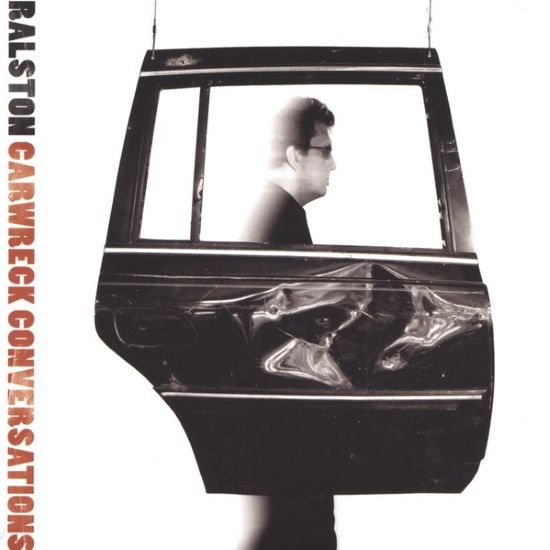
While it has been a while since any music by Townes van Zandt has graced my ears, Carwreck Conversations' opening cut, "What Kind of Friend" brought van Zandt to mind immediately. Although Ralston Bowles hails from Michigan and not Texas, he has more than a bit in common with van Zandt. Like him, Ralston falls most easily into the Americana camp and doesn't raise a lot of winsome smiles with his music.
In "Fragile," he tells us "I am not who I would like to be, I'm just who I am now." Sidestepping maudlin tales, Bowles instead offers observations about and questions of himself. In fact, I can't remember the last time I heard an album in which the singer asked so many questions of himself. "What About Me" could have been a sappy, overwrought piece of self-pity but, with its sparse arrangement, we instead get a tender look at a young heart. A plaintive guitar and simple, slow beat tread lightly with a hushed organ chasing from afar. It's also the first of a few songs in which Bowles looks back at youth before gazing at himself in the mirror. In "James Dean," he alternately contemplates the fast life and early death of the star with the fate of a woman who lost her mind after she took a fall, asking "When I go will it be like James Dean?" With a line like, "I don't want to die slow," it's clear he hopes to. Ralston's fascination with days gone by continues in "Being Young," a bluesy piece in which he laments the "curse" that is youth.
But not everything here is steeped in sadness. In "One More Holiday" Ralston Bowles fondly recalls singing to himself on trips out to the 'burbs of Chicago for the holidays on that icon of American folk music, the train. The insistent acoustic guitar doesn't so much give a sense of being on a speeding train as it does of youth rushing headlong towards something new and surprising. "Everybody But You" begins with rim shots and a choppy guitar. It's catchy, fun, and ends with a kinetic romp through Bo Diddley territory.
Musically speaking, Bowles shares more in common with the contemporary folk (whatever that is) of Steve Earle than with the singer/songwriter stylings of Townes van Zandt. While "Grace" may have a mandolin at the fore, there's no mistaking it for traditional folk and the organ which enfolds Ralston Bowle's voice in "Fragile" could be from a Procol Harum album. Well, almost. These aren't criticisms, mind you, just observations.
(This was originally published at The Green Man Review back in 2003-08.)
29 November, 2022
Uncle Tupelo - Anodyne
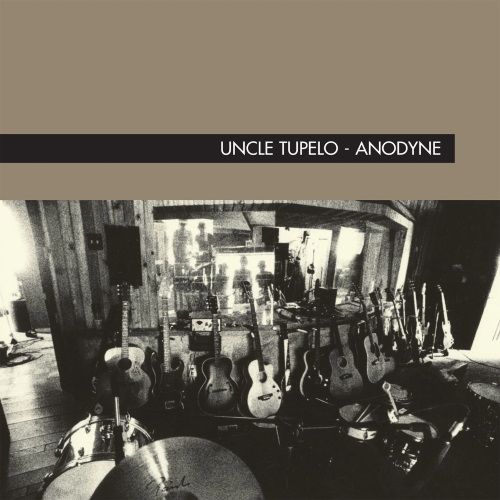
The members of Uncle Tupelo didn't know that Anodyne would prove to be their final album nor could they have known that history would look so favorably upon it. Nearly 10 years after its release in October of 1993, history regards The Tupes as pioneers of the alt.country movement and Anodyne as their finest hour. For those of you unfamiliar with the alt.country movement, a word of explanation is in order.
Like any genre in music, alternative country is fairly nebulous. It probably started sometime in the late 80's and, in general, encompasses artists who blend rock with country and/or American folk music as well as musicians who play something more akin to "traditional" country as opposed to the overly polished suburban-infused music that emanates from Nashville these days. Even No Depression, a magazine dedicated to the alt.country movement has the byline, "The Alternative Country (Whatever That Is) Bimonthly." “No Depression” is also another name for the alternative country movement and takes its name from Uncle Tupelo's first album of the same name which, in turn, was derived from the song of the same name by the Carter Family which appears on said album. Whew!
The Tupes, as they are fondly referred to, began in 1987 in Belleville, IL and consisted of Jay Farrar (guitar, vocals), Jeff Tweedy (bass, vocals), and Mike Heidhorn (drums). No Depression appeared in 1990 and was a blistering mix of punk and country. Their second album, Still Feel Gone, was released the following year. Relentless gigging and great songs garnered them critical praise and a dedicated following. 1992 saw the release of March 16-20, 1992. Produced by REM's Peter Buck, it was nearly bereft of overdubs with hardly a trace of electric instrumentation. It’s blend of original material and covers of traditional American folk songs proved successful and the band were signed by a major label, Sire. After March 16-20, 1992, Heidorn left the band and was replaced by Ken Coomer. Desiring to avoid overdubs again, they brought John Stirrat in on bass as well as multi-instrumentalist Max Johnston. In the spring of 1993 they retired to a recording studio in Austin, TX.
For Anodyne, The Replacements and The Misfits were replaced as touchstones by Neil Young and Creedence Clearwater Revival. This is not to say that there's no high-powered electric guitar to be found, just merely that slashing chords became transformed into melodic washes of fuzz. But, perhaps in a nod to March 16-22, 1992, the album begins with a couple acoustic numbers.
"Slate" lazily starts the proceedings with a plaintive guitar and mournful fiddle. Sung by Farrar, it's about loneliness ("can't find you now/didn't know you then") and it sets the tone for the rest of his contributions to the album. Tweedy's paean to healing power of music, "Acuff-Rose," follows. It's a sprightly tune with some manic mandolin and its lyrics stand in contrast to those of the preceding song: “Sometimes I get the feeling/that everything’s OK.”
The album counterpoints Farrar's intimate doses of melancholy with more hopeful slices of life from Tweedy, even if they are bittersweet.
In Farrar's fiery "Chickamauga" (named after the site of a Civil War battle), a bit of the old punk spirit shines through as the narrator waxes angrily over the end of a relationship. Lloyd Maines' pedal steel guitar underpins Farrar's pleas for an end to the pain in "Anodyne", but his playing also gives "No Sense in Lovin'" a playful feel in contrast to the lyrics. Tweedy covers the parting of lovers in "The Long Cut" but gives a hint of reconciliation: "If you wanna take the long cut/we'll get there eventually." Texan Doug Sahm joins the band in a cover of his "Give Back the Keys to My Heart." However, the Tex-Mex lilt is stripped leaving a stark plea, full of regret and remorse.
Every song here has a great melody and the playing is fantastic throughout. Lyrically, the band moved away from chronicling working-class/small town existence towards more universal themes. And they did so very well. Tweedy's take on the band's course in the music business wallows in irony while the insistent dobro of "Fifteen Keys" sits well beside a clutch of sibilant metaphors. Anodyne was surely the band's most mature album - too bad it was their last.
Rhino re-released Anodyne earlier this year remastered and with bonus tracks. The sound is crisper giving the performances an even greater intimacy. Of the five bonus tracks, two were previously unreleased. "Stay True" is a blistering rocker very much in the spirit of their first two albums. The dirge-like "Wherever" has an aching fiddle bolstering the sad imagery of watching a lover depart. A cover of Waylon Jennings' "Are You Sure Hand Done It This Way?" features Texan Joe Ely and remains a timely message to the Nashville establishment. Two live cuts from a promotional EP round out the CD. Terry Fell's "Truck Drivin' Man" is played as if fueled by amphetamines. It hardly seems that Johnston could play the fiddle any faster. Finally we have a great cover of the Dale Hawkins rockabilly classic "Suzy Q," which was also done by CCR. Laced with feedback and an infectious groove, it ends the album on a raucous, fun note.
(This was originally published at The Green Man Review back in 2003-08.)
17 November, 2022
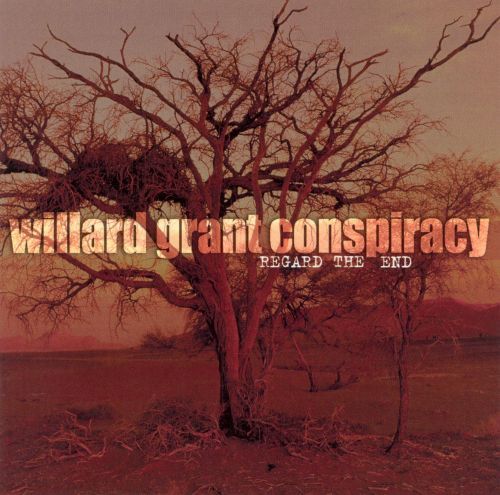
Willard Grant Conspiracy - Regard the End
If Grant Wood were to have been a musician instead of a painter, Regard the End would be a part of his discography. It smacks of Americana with its blend of folk, country, and blues. Instead the album belongs to Willard Grant Conspiracy. The core of the band was originally Robert Fisher and Paul Austin but this, their fifth album, finds Austin nearly out of the picture as he contributes to only two songs here. The bulk of Regard the End was penned by Fisher with the occasional contribution of a co-conspirator or the appropriation of a traditional song given the WGC treatment. In this case, it is applied by Fisher and 17 other musicians, including Austin. Far from being a hastily assembled group of sidemen, several of them have appeared on previous WGC albums or toured with the band. Part of the album was recorded in Slovenia so it should come as no surprise that there is a severe shortage of sprightly tunes here.
On the album’s dour cover is a near-barren landscape with a few scattered trees sans leaves. The inside of the CD tray features a photograph of an old house in the middle of winter covered with snow and frost. These images serve as preface to the music.
But as if to contradict this, the first song is almost a waltz. Lyrically, however, “River In the Pines,” reigns in any joy and replaces it with melancholy. It is a traditional song about the death of a Wisconsin boy while working on a river. His love, Mary, is so distraught over his death that she kills herself. The first half of the album is doleful with the penumbra of Josh Hillman’s violin hanging over them. “Ghost of the Girl in the Well” is a highlight. It tells the story of a teenage slave girl who falls down a well while fleeing from her owner who was looking to rape her once more. Kristin Hersh lends her vocal talents including a mournful wail.
Halfway through the album comes “Another Man Is Gone,” Fisher’s take on the traditional “Another Man Done Gone.” The song is sparse despite a bevy of instruments coming and going. A shrieking fiddle and piano vie for the listener’s attention while the low-key guitar and slide keep the song moving. At the crescendo, Fisher really lets loose and the result is spine-tingling. Tellingly, Fisher leaves out the verse: “He had a long chain on/He killed another man/I don't know where he's gone/I'm gonna walk your log.” Originally about a convict who escapes from a chain gang, Fisher prefers to downplay the story. Although the lyrics are in the third person, I get the impression that he’s singing about himself.
Fisher has a wonderfully rich baritone which is always centerstage. “Soft Hand,” which follows, seems antithetical. It begins with a drum loop and is followed with a catchy electric guitar riff. Reminiscent of The Tragically Hip, the track is woefully out of place. This is especially evident when the “Penny Lane”-like trumpet makes its entrance. Preceded by songs about a slave girl who falls to her death and the escape of a prisoner from a chain gang, lyrics such as “There I made you smile” sounds like a bitter joke.
But the album quickly returns to the more minimal and more subtle. “Fare Thee Well” is about the end of a relationship as the man lies on the bed in a rented room contemplating love lost and where to go next. Chris Eckman’s piano is understated but quite effective here. “Day Is Past and Gone”, at under two minutes, is too short but seems to offer a glimpse of sunlight with some uplifting mandolin by Simon Alpin.
The epic dirge “The Suffering Song” closes out the album. Nearly eight minutes long, it tells the tale of a family’s dissolution because of the death of the mother. Despite this, the narrator finds strength within himself to move forward: “I know there’s life beyond this ridge.” This seems to be the silver lining. Although the songs are soaked with sadness, they still find the characters finding some kind of hope. The narrator of “Fare Thee Well” tells us: “I look to the ceiling and find a reason/To carry on.” Mary may have committed suicide to escape pain, but she also joined her love in the grave.
Taking the out-of-place “Slow Hand” from the picture, Regard the End has a nice unified feel to it. Ensemble playing is prized above soloing giving Fisher’s voice a chance to really shine. If there is a gripe to be had, it is that Fisher rarely lets go. That the music is spare – almost minimalist in spots – is fine but its cue for the vocals to take up the slack is not picked up on. He seems content most of the time to let his vocals hang like a disembodied voice. Aside from his scream on “Another Man Is Gone” and a couple other spots, Fisher fails to get inside the songs. While not great, Regard the End is a good album for aficionados of roots music.
(This was originally published at The Green Man Review back in 2003-04.)
08 June, 2013
Son Volt @ High Noon Saloon, 6 June 2013
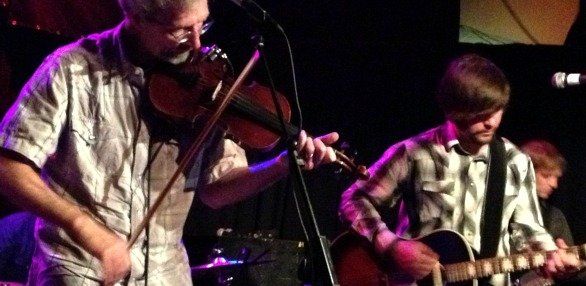
(Photo by Brent Stewart)
It was a sold out audience last Thursday at the High Noon Saloon for Son Volt’s first Madison appearance in a while. They were in town in support of the new Honky Tonk album which takes the band’s established acoustic side and throws in some George Jones and Buck Owens.
But first came the openers Colonel Ford which mostly seems to be a rotating cast of St. Louis-area musicians performing country classics. Last week the band consisted of Son Volt minus Jay Farrar, although Farrar has been playing pedal steel with them lately. They got the crowd warmed up with a treasure trove of great country tunes including George Jones’ “White Lightning” and “I’ve Got a Tiger By the Tail” by Buck Owens.
These days Son Volt is, besides Farrar, his long-time cohort Mark Spencer on keyboards and pedal steel, bassist Andrew Duplantis, who’s been with the band since it reformed in 2005, newbie Gary Hunt on guitar and fiddle, and drummer Jay Edwards who filled in for Dave Bryson. They played a set that concentrated on the less rocking side of the band with an emphasis on Honky Tonk and 2009’s American Central Dust.
“Down to the Wire”, a favorite of mine from American Central Dust, kicked things off and the mid-tempo numbers led by Farrar’s acoustic guitar kept on coming. Also from ACD were the beautiful “Dynamite” and the country-inflected “Dust of Daylight” which would have sounded at home on Honky Tonk. The shiny new “Wild Side” is a delicate shuffle in the studio but lost a bit of the maudlin and gained a little heft on stage. Going back a bit further, “Highways and Cigarettes” from The Search and Sebastopol’s “Barstow” fit in well despite their darker lyrics sprinkled with social commentary.
There were a few times when Farrar dispensed with the acoustic guitar and strapped on his Epiphone. “Hoping Machine” from New Multitudes, an album of new music with Woody Guthrie lyrics, provided a nice change of pace. It was a moody slow-burner that gradually built up to climaxes with some of the most beautiful singing of the night. The band pulled out “Drown”, the closest thing to a hit for them, to get the set moving to a close. It was followed by “Afterglow 61″, one of Farrar’s best rock songs.
The encore started with “Hearts and Minds”, the lead track from Honky Tonk. It gave way to two of Trace’s most beloved songs, “Tear Stained Eye” and “Windfall”. It finished with Waylon Jennings’ “Stop the World (And Let Me Off)”. The crowd was enthusiastic all night beginning with Colonel Ford. I figured that a set heavy with new songs would leave many disappointed and yearning for “Loose String” or “Live Free” but people seemed happy with steady honky tonk beats and country shuffles. Perhaps as a reward for the sustained enthusiasm, the band returned for a second encore and did “Medication” from Okemah and the Melody of Riot. I adored this song with its raga-like guitar melodies and dissonant jamming when I saw Son Volt in 2007 and it proved no less powerful this night.
07 May, 2007
Rancho Deluxe - Rancho Duluxe
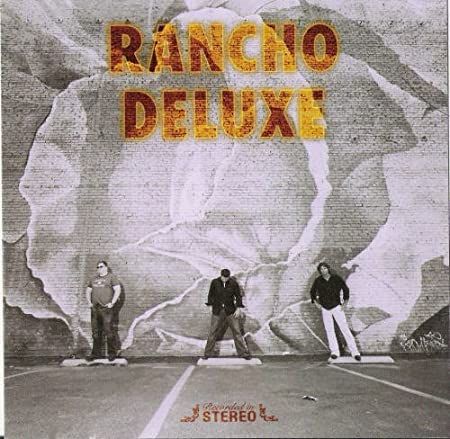
One can make an argument that country rock started in Los Angeles when Gram Parson became a hired gun for The Byrds back in 1968. One can also argue that another Los Angeles band, The Eagles, popularized country rock like no one else. And now in the 21st century another band from L.A., Rancho Deluxe, is treading down this familiar path. However, this should be no surprise considering that two-thirds of the group brothers Jesse Jay and Graham Harris are the sons of Greg Harris who was in Parson's Flying Burrito Brothers.
The band consists of the brothers Harris and Mark Adams. Graham holds down the bottom on bass while Jesse Jay adds guitars, mandolin, and backing vocals. Adams plays acoustic guitar as well but it's his rich baritone which takes center stage. For their self-titled debut, they got help from an all-star line-up including papa Greg Harris on banjo, JayDee Maness, formerly of the The Byrds, on pedal steel, and stalwart session drummer Don Heffington.
With enough talent for two bands, the group lays down the twang thick and heavy beginning with "Rock Bottom". If there's such a thing as a country rock frat boy anthem, this is it. If the solid beat wasn't enough, then the sing-a-long chorus seals the deal. Pedal steel and fiddle color the mid-tempo "Fall From Grace" while dobro races along in the instrumental shuffle of "On the Fence", easily the best song here. All of the songs are originals excepting a cover of Bob Dylan's "Tonight I'll Be Staying Here With You". The band updates the song, from Dylan's 1969 foray into country, Nashville Skyline, with aplomb and turns it into a chunky piece of twangy rock.
Ostensibly in the alt-country camp, Rancho Deluxe is really just a modern country band in as much as modern country music has appropriated rock music. The drums are up front in the mix and those rim shots in "Lonesome Home Security" are just too familiar. The album as a whole sounds too slick as if all the rough edges have been polished away. While Rancho Deluxe isn't off the country music assembly line in Nashville, it sure sounds like it.
26 March, 2007
Son Volt and The Search
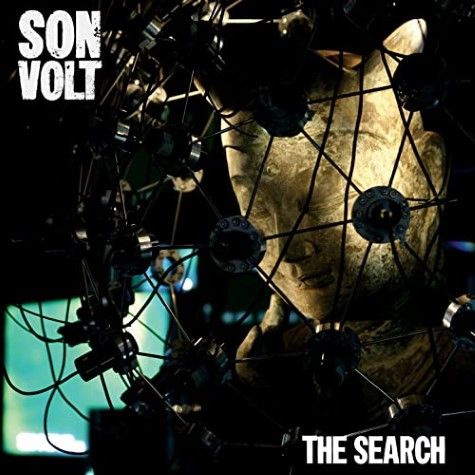
Son Volt's The Search was released a couple weeks ago and I've been meaning to write something about it but haven't really been in the frame of mind to do so until now.
The album sees this, the second incarnation of the band, move further away from the ragged alt-country strains that Farrar pioneered with Uncle Tupelo and Son Volt Mk I. This line-up debuted in 2005 with Okemah and the Melody of Riot. With Brad Rice's lead guitar work and the more propulsive rhythm section of Andrew Duplantis and Dave Bryson, the album was a heavier affair than anything produced by the previous incarnation of the band. For The Search, Derry deBorja was brought in from the touring band to contribute keys. This, along with Farrar's continued exploration of the piano, stretches the band's sound and helps make it fuller. The new sounds and textures tweak the Son Volt formula but never overshadow the guitar.
For too many folks, the band's first album, Trace, serves as a formula they'd like to see repeated. Long gone are the uplifting fiddle of "Windfall" and the lilting banjo on "Tear-Stained Eye". Today the band has a more muscular sound with washes of keyboards and Farrar's lyrics have become more opaque, a trend started on the band's third album, Wide Swing Tremelo. Still, the pedal steel of long-time Son Volt collaborator Eric Heywood is present on two tracks and these songs hark back to the band's first three albums.
I've read recent criticism of Jay Farrar's voice and it's quite true that he has a limited vocal range. But his plaintive baritone can emote much more than countless others with a much broader palette of octaves. Farrar has a rather simple style of singing that's always had more than a hint of resignation to it which suits his songs perfectly. It's difficult to imagine what someone with the voice of an opera star could lend to Farrar's songs which peer out through a windshield on Highway 61 and look at Middle America. Bob Dylan's limited vocal range never stopped him from revolutionizing rock music. Plus Alan Lomax's field recordings contain countless performances by folks who don't have the most adroit voices. It's not how many notes you can hit, it's what you do with the notes that counts.
While former bandmate Jeff Tweedy has become a darling of the indie rock crowd since the collapse of Uncle Tupelo for Wilco's constantly evolving style (and battle with the evil record companies), Jay Farrar hasn't stood still. Although both have moved further afield from their alt-country roots, Farrar alone seems eager to build upon those roots and twist them by experimenting in a solo context and then returning to the band to really mix things up. However, this may not be readily apparent with The Search's lead track, "Slow Hearse". A lilting piano melody, light brush work, and bass keep things rather muted at first but the song builds as Farrar repeats "Feels like driving around in slow hearse". Mellotron strings bubble in the background as a 12-string guitar joins in as well as some backwards guitar parts which could have come from "Tomorrow Never Knows". The keys and backwards guitar loops are far-removed from alt-country but the 12-string is a reminder of The Byrds. And, quite frankly, I love how the song marches forward with sounds piling on sounds until it slowly winds down to a stop. It might be easy to dismiss the song as throwaway but it's the overture of the album, in a way. It gives us a taste of the new sounds being introduced and that piano march returns as well. And, presumably, the rest of the album will tell how what it feels like to be driving around in a slow hearse.
The album's lead single, "The Picture", follows. With a sprightly horn arrangement, it's a million miles away from the preceding song. It's a catchy tune that's "Medicine Hat" 9 years later. The upbeat demeanor of the music stands in contrast to lyrics such as "When war is profit and profit is war" and "We'll know when we get there/If we'll find mercy". "Action" reminded me of "Right On Through" from Wide Swing Tremelo but with more balls and a guitar sound lifted from Led Zeppelin's "Ten Years Gone". This latest version of Son Volt adds more punch to their songs both with Dave Bryson's drumming and Brad Rice's guitar but, unlike a reviewer recently opined, the band does not try to emulate grunge.
Derry deBorja is now a full-time member of the group and his keyboards come to the fore in "Underground Dream". The string sound of "Slow Hearse" returns here in a prominent role as does the 12-string guitar. "Circadian Rhythm" opens with acoustic guitar but organ and some electric guitar ala Neil Young in "Like a Hurricane" soon join in. Oh, and there's more backwards guitar. The song weighs in at just over 5-minutes and, while Bryson opens his hi-hat and gets down a bit towards the end, it's a slow burn with surreal lines like "Thoughts for the plane with brown eyes waiting/Guitar callous whirlwind belief gets made".
"Beacon Soul" is a weak spot here. Not a bad song, by any means, but Farrar's singing always seems to be trying to catch up during the verses and it's only when Bryson slows the pace with rim shots does he get there. The title track makes up for this in spades. It chugs along in classic Son Volt style with a melodic guitar riff. Farrar's phrasing here is more concise and the fantastic chorus is bolstered by minimal but effective organ work. The song closes with a rousing guitar solo that is perhaps less melodic than one would expect but the straining notes keep pace with Bryson's frantic beating of his floor toms.
"Adrenaline and Heresy" slows things down with just some piano and Farrar's forlorn words dragging back the narrator of "Steal the Crumbs" from Farrar's days with Uncle Tupelo. The lyrics turn from oblique social observation to a love story: "She said I still love you/I don't know if I want to spend the/rest of my time with you". A martial drum beat takes the song away from Anodyne territory towards what is probably the first thing remotely resembling a happy ending in Farrar's catalogue. I find myself unsure what to make of the tempo change and Farrar intoning: "High on adrenaline/It's a new day". Did it turn out OK or was she out the door? With the pounding drums and repetitive piano & guitar flourishes, the ending sounds like Krautrock. The first time I heard it, I immediately thought of Faust's "It's a Rainy Day, Sunshine Girl".
"Satellite" is another rocker like "Action", and they both sound like they would have fit nicely on Wide Swing Tremelo. But they exemplify the new Son Volt sound with the more muscular rhythm section and the addition of organ which adds to the sonic palette. "Automatic Society", which follows, fits into the vein as well, but is a bit, well, grungier, with some good slide work. "Methamphetamine" is the first song to feature Eric Heywood and his pedal steel. It sort of lumbers along like "Left a Slide" or "Barstow" and tells covers familiar lyrical ground for Farrar with its images of working class life and broken dreams. The chorus is bursting with rueful longing and stands among Farrar's best. Every Son Volt album has had one song which stands out immediately on first listen as being just blatantly catchy. Trace had "Windfall" and Okemah had "Afterglow 61". The Search has "Methamphetamine".
The piano breaks in "L Train" are all-too short to lift it above being an average mid-tempo rocker. "Highways and Cigarettes" sees Heywood return and features Shannon McNally in close harmony which makes this a companion to "Barstow".
"Phosphate Skin" closes out the album and begins with another backwards guitar loop which gives way to Farrar's acoustic guitar and voice. If you don't listen to the vocals, one might swear it's a dirge. But the lyrics tell you that "It can only get better".
Having read several other reviews of The Search, it seems that response to the album largely fall along the lines of age. Reviewers writing for an older audience, say, The New York Times, praise the album and commonly refer to it as a "mature" work. The music is an expansion of Farrar's previous efforts both within the confines of Son Volt and solo while the lyrics are a treat to decode. On the flipside,
websites and publications directed at a generally younger audience find Farrar's lyrics embarrassing and the music lacking. Many of these reviewers note the failure of Farrar to live up to the promise of Trace and essentially say it's been all downhill since 1995. It is the lyrics that come in for a real drudging here, even to the point of all but ignoring the music and this is a real shame. Farrar has always had the keenest ear for melody and nothing has changed in that department. No matter how many washes of keyboards or backwards guitar loops there are, there's always a good, if not great, melody underneath that is being colored and to ignore this is irresponsible. Here the band combine Farrar's tunefulness with his inclination towards a diversity of sounds in a way that allows the two to meld perfectly rather than leaving the latter to be short sonic experiments as was the case on his solo albums.
On the lyric side, the third shift barstool fatalism of Farrar's lyrics with Uncle Tupelo was replaced by a more impressionistic view of Middle America in the first version of Son Volt. Starting with his first solo effort, Sebastopol, in 2001 and continuing up to the album at hand, he's taken a larger view of things. Instead of portraying restless youth at a dead-end job assuaging the pain with the bottle, he documents an automatic society with "planned obsolescence manufactured senselessness" where "special offer only facelift society's soul". Farrar has always had one foot in the past and one in the present. Uncle Tupelo's first album had the punk energy of "Before I Break" right next to a Carter Family cover. When I first listened to "Automatic Society" and thought about it, the traditional song "Peg and Awl" came to mind. It's not that the two songs have much of anything in common musically and the lyrics are very different. However, they both address a change in the winds, so to speak. One is about the effects of the Industrial Revolution while the other is about modern consumerism but each has someone looking at the world around himself and not liking what he sees. The lyrics here are certainly less-direct than in the past but this also makes them more evocative. Perhaps Farrar is just taking a page from the Jon Anderson book of lyric writing. There are times when I listened to the album and felt like a word or phrase was inserted because it fit the melody and/or evoked the right image as opposed to being the most direct way to express something. But for every verse with a line like "Wordsmiths and paintgangs 21st century/All mixed up in modern cacophony", there's a chorus with a simpler message such as "Always dreaming it's the search not the find/The door is open to change your mind". If this style of filtering Herbert Marcuse through Bob Dylan in a less than mercurial way doesn't suit you, so be it.
I take it as a good sign that, at the age of 40, Jay Farrar isn't content to merely tread old ground and try to recreate Trace. His acoustic leanings are still very much alive in Gob Iron, a project with Anders Parker which finds Farrar in Woody Guthrie mode. This, along with his solo albums, means that he is no longer defined by Son Volt. The band is now another place for him to stretch out and do something different. The folksy, alt-country core is still in there but it's now a springboard for investigating other paths. People who lament the fictional notion that the band has never been able to build upon Trace need to get over it.
Subscribe to:
Posts (Atom)