Showing posts with label Music. Show all posts

24 November, 2026

Song of the day, 24 November 2026

Will this appear on the next IQ album? Will they play in Leicester once again in September?!

23 November, 2026

Yes, the post-Jon Anderson Years: Epilogue
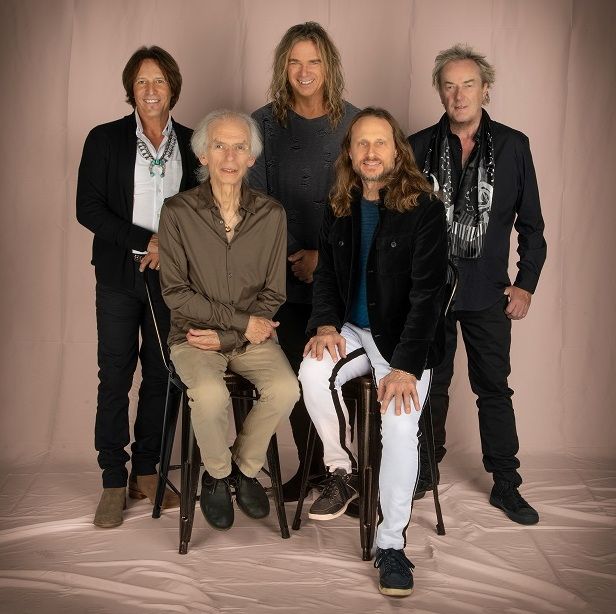

Just a few (hopefully) things to finish off my exploration of Yes's music c2008 until today.

Firstly, it's been a real joy getting to know Geoff Downes' playing. Going in, I knew his work on Drama and a couple Asia tunes, oh, and "Video Killed the Radio Star" but the guy is just great. While his chops really came to the fore on "The Ice Bridge", his playing isn't flashy or ostentatious, by and large. It's tasteful and contributes to the greater whole rather than shouting "Look at me!" Piano, organ, synths, Mellotron - he throws it all into the mix. They just need to make sure the orchestral parts don't crowd him out.

Oliver Wakeman's playing was great too, though there's much less of him on record. His playing was fun, melodic, and kinetic whether it be on piano, organ, or a synth that brings his dad's playing to mind. He has a large back catalogue that deserves to be investigated.

Steve Howe has a country ton of stringed instruments at home and I love that he isn't shy about using a large selection of them with Yes. His playing isn't new to me but it was a joy nonetheless to hear him at work, to have his guitar orchestrations grace my ears, and to feel those soaring steel guitars; to hear that Portuguese instrument which may or may not be a 12-string guitar add something different yet familiar and an array of mandolins bringing a folky twist. Yes songs feel a bit like a guitar masterclass.

The new Sherwood-Schellen rhythm section is a wonderful tribute to Squire-White. Sherwood honors Squire but does not imitate him. His bass gymnastics are such a joy to hear, a counterpoint to Howe that makes the whole better. Schellen brings renewed energy and his playing drives the songs forward. Furthermore he throws in great fills here and there that add excitement and help shift a song from one section to another.

Jon Davison has been with Yes for - what? - 14 years now. Tempus fugit, you might say. He dove in and contributed to songwriting duties from the get go and good on him. It seems like he played more instruments on Aurora than on previous albums. I've always liked his voice - it's a bit Jon Andersony but he also has his own style. I think with the last couple albums his singing has changed a bit. He seems happy to not sing lyrical lines in toto and is happy to split them up so you get half of a line, then a pause before the he sings the second half. What I presume are his lyrics are certainly in the Yes tradition of being positive and alternately humanistic and spacey.

R.I.P. Chris Squire and Alan White.

Roger Dean's album covers are still fantastic.

As someone of a mildly advanced age, I must admit that I listened to these albums many times in order to fully absorb them. Some songs took only a few times to worm their way into my brain while most required many more than a few listens. It's not easy for me to get into new music even when it's by a band that I have loved for decades. Patience is required and also dedication by which I mean sitting down and listening, giving the music my attention instead of consigning it to some kind of Eno-like background noise purgatory when I am working or futzing around online or cooking or cleaning.

I don't want to hurt my arm patting myself on my back but I am very happy that I was able to devote time to giving these albums deep listens. It's something I used to do quite frequently but not so much anymore.

Additionally, my work paid off as I got to know half a dozen albums and came to love many a song. Hopefully the band will take a chance and play some of them live.
 

19 November, 2026

Song of the day, 19 November 2026

My ladyfriend and I went to the planetarium last night. It served as a good reminder that Orion is once again in the night sky.

Yes, the post-Jon Anderson Years: The Revealing Cadence of Jon (Dance of the Dawn)

Sorry. I was listening to Tales From Topographic Oceans earlier and just had to.

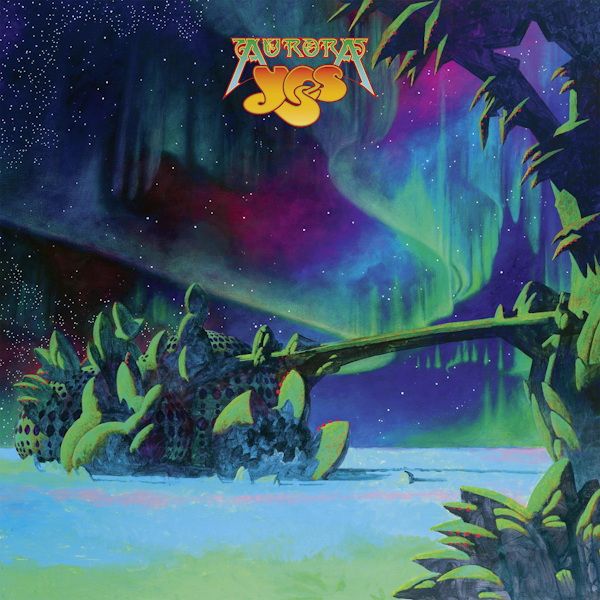
Aurora came out this past summer and, after a few listens, I thought I had it down. I took a shine to certain songs instantly while others just didn't work for me and I was content to leave it at that. However, subsequent listens opened up the songs that I at first felt were weak, insubstantial and revealed that there was more than meets the ear. I've really come around on these tunes.

Another great cover by Roger Dean that made me wish I had the record in front of me. Has anyone ever researched the experience of listening to music when you have a colorful and mysterious 12"x 12" print in front of you vs., well, not having one? I recall looking at Dean's covers while listening to Yes' classic 70s albums, for instance. But I never did so for 90125 or Big Generator. OK, it was and remains impossible to look at the Big Generator cover for very long with that "I was doodling on my Commodore 64 and had a fluorescent accident" aesthetic.  The band's logo here is much simpler this time around with just solid colors and no funkadelic patterns. The font for the title looks familiar but I honestly cannot recall if Dean has used it for an album cover in the past or not.

On paper Aurora looks to be much in the vein of its predecessor, Mirror To the Sky. There is a nearly 14-minute track along with a couple longerish tunes, though we're talking about 7 minutes rather than 9. Plus a smattering of shorter songs. Here that means they clock in at under 4 minutes rather than being 4-5. No line-up changes (yay!) excepting that the orchestral contributions are from a different orchestra.

Since that initial burst of listens, I've really come around on "Turnaround Situation", "All Hands On Deck", "Emotional Intelligence", and "Jambustin'". Shorter songs all.

"Turnaround Situation" follows the lengthier title track which begins the album. At first I simply had this issue with the refrain - it just sounded, for lack of a better word, quaint. As if it needed to be tweaked a bit to sound more adult, more proggy. Or something. Davison does the organ intro and plays rhythm guitar throughout.

At some point the chorus stopped bothering me and I learned to enjoy it. There's some fine fuzzy guitar that helped me get over my block. As lyrics go, what can be more Yes than:

Guiding every conscience home, the cosmic mighty Aum
To a full loop back to life
Back to light! 

?

Some lovely harmony vocals and a gentle steel guitar for the win.

Does anyone remember listening to Drama for the first time and going "Whoa!" upon hearing the big, heavy guitar on "Machine Messiah", that nod in the general direction of Black Sabbath? "All Hands on Deck" elicited a similar response from me with its big, ballsy hard rock riff from Howe that was bolstered by some organ. When was the last time there was such a riffy tune on a Yes album? The Trevor Rabin era? I was immediately reminded of a German band whose name I could not recall that played heavy psych, I guess you'd say, that reminded me a bit of Benefit era Tull. I think they came up as a recommendation on Bandcamp while I was listening to some Rosalie Cunningham.

Davison sings the verses while Howe does the chorus. Great synth solo followed by great guitar solo. A tad funky. Where did that come from? Lovely, though too short, organ/acoustic guitar bit to end it.

"Emotional Intelligence" seemed, at first, to have a bit of an affect to my ears. But the tuneful organ-piano opening grew on me. Maybe it was the acoustic guitar that filled in the sonic picture and, in some way, added something more genuine-sounding to my ears. Schellen's snare has a hollow, wooden sound to it instead of a forceful metallic snap so it accommodates the more acoustic, gentle feel of the song. Having said that, Sherwood's bass chugs along at a good clip there for a little bit. It even sounds rubbery and Rickenbackery. Nice steel guitar.

The last couple albums have had bonus tracks and Aurora is no different. The first of those, "Jambustin'", opens with a bouncy kind of alt-country riff that is paired with some spacey synths. Imagine The Bottle Rockets doing ELP to a surf beat. After the song slows down for the pre-chorus, it returns with a more muscular, straight-ahead beat that has shades of funk - especially that bass - even if only a couple. For a song that isn't even four and a half minutes, it goes through a few different moods and is really just a lot of fun.

What is Howe doing to his guitar on "Watching the River Roll", the other bonus track? Gah! It was used on at least one Beatles song but I cannot think of which one. It's like reverb and something to give it a watery sound like the ripples on the surface after you toss in a stone. This is Sherwood's first solo composition for the band and I loved it from the first listen. It has the feel of being on a raft as a gentle current takes you downriver at a lazy pace and not into a heart of darkness. There's a really nice synth solo that starts slowly and changes tempo all along the way. Lovely vocal harmonies and I really enjoy Sherwood's twists and turns on bass. I wish this were on the album proper but dunno what song it should replace, if any.

The title track opens the album overflowing with catchy melodies, orchestral swells, and a big, soaring chorus. A lone piano opens the song as the strings warm up in the background until they burst forth with the song's main melodic theme. Then the band tacks a rock oriented course gets and the tune starts zipping along at a good clip with Schellen's snare having that wooden sound that would be heard later. Mr. Howe is scratching out his rhythm while there's organ aplenty. Howe's soloing is tasty as usual and the orchestra gives us a big, bombastic close.

Schellen really shines on "Love Lies Dreaming" as he's all over the place during the minute and a half instrumental opening. Howe and Sherwood trade these speedy runs and it's just glorious. Overall, the sound is natural with piano and acoustic guitar being prominent. There's a soft, floating feel to the melody that reminded me of what it was like when I was on opioids. At a hospital under supervision of medical professionals, that is. A very pretty song.

"Countermovement" is the epic here and I knew this even before seeing its running time as it comes in 4 sections. The band waste no time with any kind of introductory noodling and launch straight into "Taro". Howe is soloing right out of the gate and builds his guitar orchestra as he goes on. Overall this instrumental prelude is upbeat and sprightly though the occasional dark thought creeps in. Schellen's snare has that wood sonority again and Howe just won't stop.

Some mellow synth brings us to the second section and yields to Howe's gently strummed acoustic guitar and vocals. Once the band comes in, Downes plays some really nice synth parts. Davison eventually (and thankfully) comes in to help Howe on vocals. What I think is a mandolin does its best laúd imitation as the venerable player of all things with strings invokes "Your Move" and is joined by some gorgeous harmony vocals.

The third movement slows us down as acoustic guitar is accompanied by flute. Seeing no flute in the credits I presume this is Downes wielding his Mellotron. Mellotron! The lyrics turn towards a distrust of technology and invoke the AI boogeyman.

In the age of AI, there goes you and I

Note the reference to the classic tune from Close to the Edge.

As the song slows a bit, a piano enters and struts along. Howe throws in a "Siberian Khatru"-like guitar line which left me wondering why there were all these references to early 70s Yes and then I listened to the lyrics.

I don't want to be a false identity
Simulation, imitation me
 
Downes does some fine synth work trading licks with Howe.

The final movement, "Freedom's Edge", has a slow marching beat over which Howe gracefully solos on steel guitar. It's vaguely ominous and quite the opposite of how the song began.

Another classic. And, yes, it should be played live when the band hit the road again. They cancelled their 2026 dates due to Howe's health problems. It sounds like they're going to be playing all of Fragile again so let's hope they leave room for "Countermovement" and other great songs from this album.

Ariadne was a Cretan princess that lent a hand to Theseus when he was in that Labyrinth, the one with the minotaur. A triumphant sounding orchestral section lingers before it is joined by guitar that Howe has given this weird, squeaky, warbly sound. It's almost as if he got a new effects pedal for Christmas as gave it a spin during the recording sessions. Then it's Davison singing over orchestra before more weird guitar. When the band comes in they are not messing around. The song really moves! The orchestra returns and I love how Sherwood's bass adds some low end as the strings recapitulate the main melody. Davison tells the princess' story with just the strings and it's quite pretty.

Howe joins the string section on acoustic guitar towards the end and the result is wonderful. Acoustic out, weird electric in briefly before it's a big orchestral ending.

"Outside the Box" is only a bit over 4 minutes yet has 2 discreet movements. The opener features some absolutely lovely a cappella singing that hearkens back to the early 70s which is joined by acoustic guitar. A snare fill quickly moves us onto the second movement where the electric guitar alternates between droney phrases that bleed into one and sharp, staccato stabs. Is that a phaser he's using? Some great bass lines running underneath as Downes' synth joins the fray. More fantastic vocal harmonizing. Schellen is great here with some nice work on the toms to heighten the vocals.

What an odd little ditty. It's like building a song by blending all the doo-da, doo-da bits in "Siberian Khatru" with perhaps a dash of the similarly wordless parts of "Leave It". I love the dynamics with the soft start being led into something weirder and rockin'. Everyone really shines here.

Aurora is another success for these venerable proggers. Davison continues to impress as he contributes on a lot more instruments here in addition to using his pipes and he plays marvelously. Howe's playing always impresses but his sounds here expand the Yes sonic palette, even if only incrementally. Nothing on Aurora sounds completely outside of the Yes wheelhouse like, say, "Owner of a Lonely Heart" did in 1983. Yet a dash of fuzzy riffing comes across as a bit novel here and it seems implausible that the trippy, phased metronomic slashes on "Outside the Box" that sound like they were being played by Gort and his band emerged from the same hands that fill Yes songs with soaring steel guitar passages that are the perfect soundtrack to souls being raptured unto Heaven .

Schellen's drumming continues to propel the songs ahead. The more I listen to his work with Yes, the more I do so just to hear him play. He is moving into that group of drummers whose playing makes me want to listen to songs paying special attention to the percussion.

Aurora and Mirror to the Sky establish this incarnation of Yes as a powerhouse. The music vibrates with energy while the lyrics resonate with hope and positivity just as strongly as those that Jon Anderson penned.

I think I have one more post about latter day Yes, an epilogue, of sorts.

18 November, 2026

Lamb: First and Last. Almost.
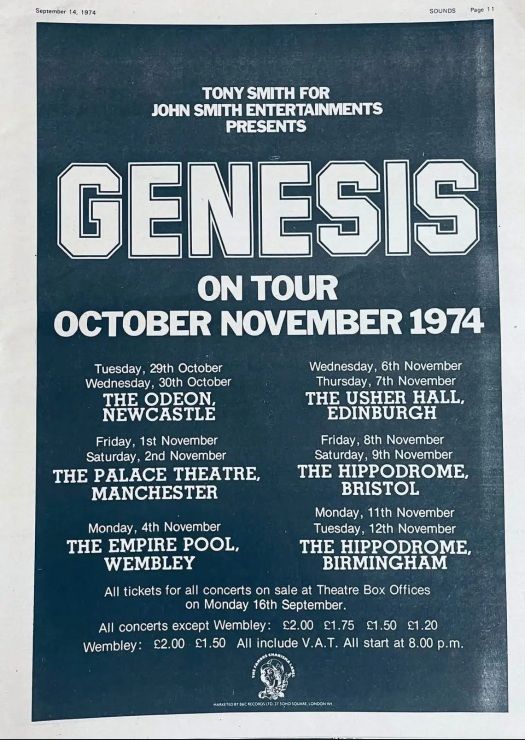

The first 11 gigs of The Lamb Lies Down on Broadway tour were cancelled because, as my friend noted, Steve mishandled the knife. Or broke a glass in his hand or something. Instead, the tour opened in my hometown of Chicago on 20 November 1974 at the Auditorium Theater. There are no known recordings of this show but there is one of the second night in Chicago and it's a nice open air mic tape.


Fate decided that the tour would end in a similar manner with the final show on the itinerary being cancelled. There is no recording of the new final show of the tour but there is one of the penultimate gig. A very mediocre recording, nonetheless it's historic and makes for a bootleg bookend to the tour.

The Evil Jam gets jamier

As the tour for The Lamb wore on, Genesis' performances of "The Waiting Room" got lengthier with more and more improv being thrown in.

Here's a great version from Dortmund on 7 April 1975 that comes in at 10 minutes.

More Lamb birthday goodness
As noted earlier, today is the 52nd birthday of Genesis' The Lamb Lies Down on Broadway so here's some more on that classic.

Here's a documentary on the album's making, etc. from Rael, the nom de Youtube of a fellow in England.


After seeing The Musical Box do The Lamb, I wondered where the slides came from. Who made them?

After some internet sleuthing, I discovered that The Lamb slideshow was made by Eventstructure Research Group in Amsterdam which seems to be the brainchild of Jeffrey Shaw and Theo Botschuijver. Shaw's page gives some details about their work for the band on that tour.

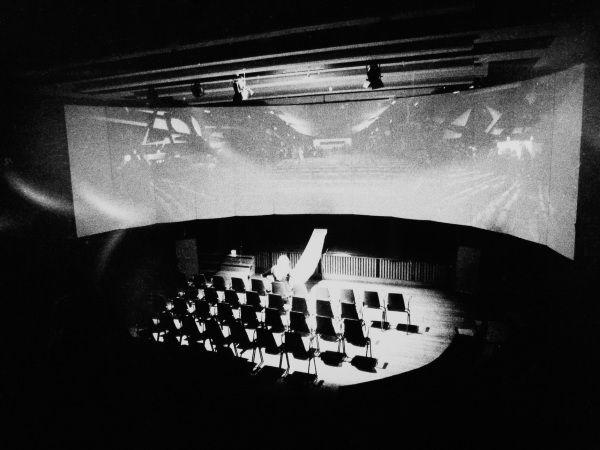
Also interesting was their production Diadrama which was exhibited in the Netherlands in March & April of 1974. It featured 3 projectors giving a panoramic view of, well, stuff to those seated in the auditorium.


Presumably someone in the band or who knew them saw this exhibit and recommended Shaw and Botschuijver to devise the projections for the Lamb tour as Diadrama is obviously the precursor.

From Nightwhale to Flames

Steve Hackett has announced that his new album arrives in February which seems likes years away but will be here lickety split. And here I am just getting acquainted with his last solo album, The Circus and the Nightwhale.

It is called Through A Sea Of Flames and he's been playing one of the songs all year - "The Sea Inside".

Happy 52nd to The Lamb Lies Down on Broadway!

That face getting closer was irksome enough and then you get the close-up with those triangular pupils. This song is so creepy live.

14 November, 2026

Song of the day, 14 November 2026

Yes, the post-Jon Anderson Years: Wanderer Beneath the Sea of Stars
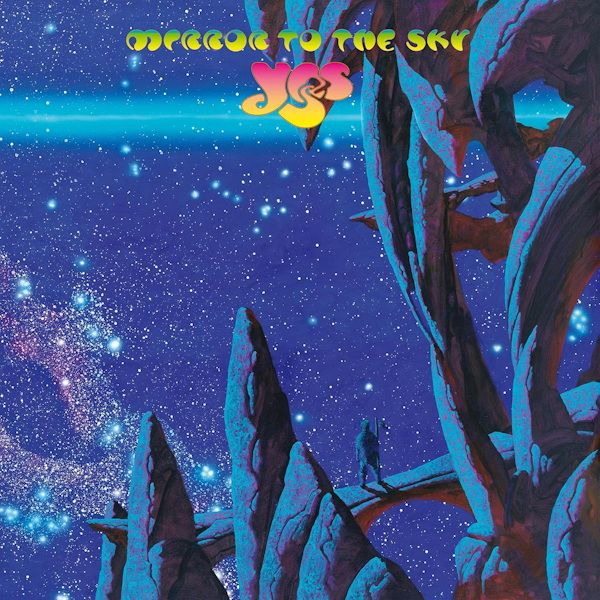

Truth be known, I did not give multiple proper listens to these Yes albums in chronological order. For example, when Mirror to the Sky came out in 2023, I had given The Quest the odd, hesitant hearing but had never attempted to truly get to know it. One day I decided to give this new, Alan White-less (he passed away in 2022) album a listen, a purposeful listen. As I wrote previously, I had a moment.

Roger Dean again provided the album cover and I love it. A deep blue night sky is aglow with oodles of stars, a gorgeous stellar landscape that was familiar to our ancestors but is virtually unknown to today's city dwellers. Standing there looking skywards in awe is a lone figure right out of that Caspar David Friedrich painting.

Jay Schellen took over on drums after White's passing. I do believe that I've read somewhere that the percussionist pair were friends. Schellen added percussion to The Quest and performed on most of the tour in support of that album due to White's failing health. Once again the band kept it in the family.

The cover is invoked on the opening track, "Cut From the Stars". The strings are back and briefly open the song before the band kicks in. Schellen makes an enthusiastic debut as Sherwood, co-writer here, gives us the bass gymnastics he was destined to play. Davison invokes the wonder and majesty of the night sky at international dark sky parks, places where the lights of civilization are kept a good distance away allowing folks to see the sky more or less as our ancestors did.

Howe adds sundry effects to his guitar sound that give a vaguely psychedelic feel that complements the spacey synths well. A (very) spirited start.

Howe and Downes combine for a brief introductory fanfare on "All Connected" before Schellen gets the proceedings going with his percussive kick. Howe's glissando on steel is soothing. At just over 9 minutes, this surely counts as a mini-epic. The song goes through multiple sections including a lovely chorus. While I dunno what "karmachromatic" means, it seems that Davison (or whoever wrote the lyrics) is getting all Jon Anderson-y with a made-up wordplay that simply sounds good or just fits. The soaring instrumental section midway through is all-too short. Great stuff! Also great here are the harmony vocals. I think Sherwood elbowed his way into the vocal recording room at the studio because it sounds like he sings more on this album.

The song ends with more lilting steel guitar. Listening to this song I am agog at the array of instruments that Steve Howe brings to Yes. Steel guitar, your standard 6-string electric, that Portuguese 12‑string or whatever that thing truly is, acoustic guitar with 6 strings - heck, there was a koto on The Quest. He's, if not an orchestra unto himself, a string section, at least.

"Luminosity" is another 9-minute mini-epic with a bouncy melody courtesy of the FAMES Studio Orchestra who also contributed to The Quest. A wonderful opening couple minutes slows down and Davison makes his entrance a cappella though what sounds like harp peeks in eventually. Did Jon Anderson sneak in?! I don't see the musical credit equivalent to Alan Smithee so it must have been the orchestra's harpist.

I recall really enjoying the chorus on this song on an early, if not first, listen. It's upbeat & positive without being gooey New Agey kind of stuff. And it has the virtue of being blatantly catchy. Schellen keeps things mid-tempo yet exciting. And Howe deftly orchestrates his army of stringed instruments. The orchestra returns towards the end to fill things in as Howe goes off on an extended solo on steel guitar.

Not only is this song simply gorgeous lyrically and musically, but it keeps things interesting for 9 minutes with various sections getting shoved up against one another as tempos hasten and then slow down. Plus there's lovely harmony vocals (go Mr. Sherwood!) and a great variety of sounds and tones. Howe plays about 20 different instruments, Downes is all over with piano, synths, and even celeste, and it's all held together with Sherwood's sinewy basslines.

After a couple 9-minute tunes, the band gives us a break with "Living Out Their Dream" which is about half that. The opening sounds a bit over-eager to me but the song eventually hits its stride. I must confess that the couplet "Living out their dream/Covered in ice cream" just doesn't land for me. Still, Schellen's muscular drumming here keeps the tune from lapsing into twee territory as does some spectacular bass from Sherwood. He's not as high up in the mix here most of the time as on other tunes but, if you listen, you will here some crazy runs.

I really have respect for Billy Sherwood. First for stepping into Chris Squire's shoes which no doubt has earned him the ire of many an old Yes fan. I am sure he knew what he was in for yet he took the plunge anyway so good on him. Second, he doesn't have a rubbery Rickenbacker tone. Lastly, he plays in a Squire-like way but his little flourishes and runs and all the stuff that leaves me amazed as a non-musician don't sound like they were composed by Chris Squire. Sherwood is putting his own spin on things. Brilliant.

The title track is the first song that really grabbed my attention. Howe's opening guitar refrain gently builds tension and then releases it. He's joined by piano and bass that kept me wondering where the song was going to go. At nearly 14 minutes, I expected to be taken places. After about 50 seconds Schellen comes crashing in. Downes plays what may be a simple organ part, but it adds a palpable excitement to the song which sounds like it has just taken off and is headed for the stratosphere. As the guitar takes on a menacing kind of feel, like Howe is summoning beasts from the earth itself, Sherwood is given room to have fun. It sounds like his hand covers every inch of the bass' neck.

This. THIS. This opening instrumental section just effin' rocks. It is some of the most exciting music Yes has ever made with or without Jon Anderson. As the kids say these days, it is just sick.

The song then shifts to an acoustic backdrop for Davison to starting singing the song's refrain, "Dreams of a sky without fire". It's just a plucked acoustic guitar and the orchestra for a verse or 2 before the band returns as does the song's main melody. Really nice harmony vocals precede Howe's soloing. We're 5 minutes in and the song has already taken us on several twists and turns.

The orchestra then kicks up a fast, lively rhythm for Howe to slowly build a solo upon. It's the first time that the orchestra really went beyond a novel bit of ornamentation for me and sounded fully integrated into the Yes sound.

About halfway through, the opening guitar motif returns briefly before a slow, delicate section takes the song in yet another direction. The orchestra inveigles its way back into the fray for one last hurrah before the song kicks back into a jam like the one that opened it.

If you've been reading my Yes reviews then you know what I am going to say next. "Mirror to the Sky" should be played at every Yes show. It would sit just fine in a setlist next to "And You and I" or "Heart of the Sunrise" or anything else. This song is bookended by some of the most fun and exhilarating music in the Yes canon. The orchestra is a well-oiled machine here and is at last fully integrated into the band's sound. Over the course of nearly 14 minutes I was taken on a musical journey as the song moved from section to section, everything held together with lyrical refrains and the melodic recapitulation.

Classic.

In the previous album's "Future Memories", Jon Davison sang "Time encircles time" and I guess in some proggy Möbius strip event, we get his "Circles of Time" to close out the album proper. 

It's a mellow tune, almost a lullaby, that brings us down from the frenetic jamming on the previous song. A very pretty song and I appreciate Davison's earnestness ("Not lost on me/How bittersweet the mockery of irony") yet it still feels like a bit of a let down after a slab of epic prog manna.

As with The Quest, Mirror to the Sky came with a 2nd CD of bonus tracks and we get 3 of them here. 

Some lovely acoustic guitar opens "Unknown Place" and is followed up by some tribal vocals as the song heats up. There's some nice soloing from Downes and Howe and the song never gets boring but it never really hits me like the other mini-epics here. Still, it's nice to hear more of Downes who seemed to get pushed out by the orchestra on occasion earlier. Also, the section about three quarters of the way through where the pipe organ comes in is great stuff. The song never seemed to be able to capitalize on the tension of that passage, though. Regardless, someone should Pro Tools that bit into the title song.

"One Second Is Enough" is a good enough song where Downes really gets to shine but it never gets beyond being just fine. Is Sherwood wielding a Rickenbacker here? "Magic Potion" feels much the same to me although Sherwood is doing something a bit funky in there. And I certainly cannot argue with the sentiment "It's a good day to be had by all". There's an 80's synth bit here too that got my attention in not a good way. At least it's a bonus track.

With this album the Jon Davison version of Yes really comes into its own by making good on the promise of The Quest. New drummer Jay Schellen acquits himself well by filling the rather large shoes of Alan White quite ably. There were times when it felt like he sat back biding his time as a steel guitar was wailing and then, when he'd had enough, he spat on his hands and it was off to the races.

It was great to hear such vitality in Yes again after so many years. Maybe the new guys lit a fire under the old duffers. The playing here is uniformly excellent, Davison's voice is again angelic and soaring, and the songs are well arranged with the individual sections of longer songs sounding like they belong together, binding into a dynamic whole.
 
How do you follow up a near masterpiece? 

13 November, 2026

Song of the day, 13 November 2026

The Claudettes return next month! Be there or be square.

Yes, the post-Jon Anderson Years: The Opposite of a Sophomore Slump
I remember hearing about Chris Squire's death in June of 2015. Rather unexpectedly, it hit me like a ton of bricks. No doubt my brother's death a couple months previously left me vulnerable, in a state of sadness and so Squire's passing was the second of a real 1-2 combo to the gut that left me reeling. 

I remember hearing about this album's release in the summer of 2021. It had been seven years since its rather milquetoast predecessor had come out and I was beginning to wonder if Yes was done. Luckily they were not. At the time, if memory serves, the Covid lockdowns were winding down and life had taken on some semblances of normality. A new Yes album seemed like something of a treat for having survived not only Covid but the lockdowns too.

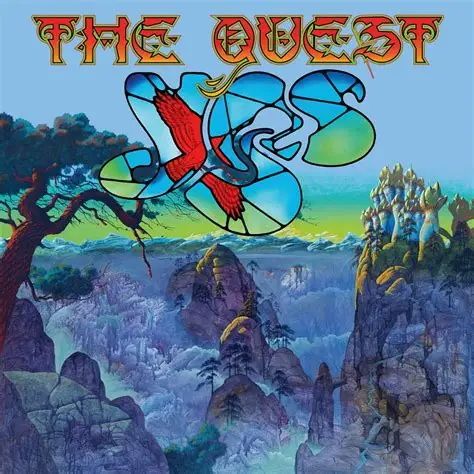
The album's cover was another doozy from Roger Dean. Rock formations as far as the eye can see with the title in something like Dwarvish runic script and the Yes logo rendered as a gorgeous bit of stained glass with a red bird inside. Looking at these fantastic covers, I have begun to miss listening to Yes albums on vinyl with the large renderings of the art and a sheet of lyrics & credits. Listening to Tales From Topographic Oceans was totally other than else. Opening the gatefold was like cracking open a grimoire with all those photos in Deanian frames adorning the mysterious lyrics and their arcane mumbo jumbo. And you got to see the whole painting.

I used to buy albums based on the artwork! I cannot recall the last time I did so.

So they had the album cover down. A good start. But I had questions on my mind. First, what would Billy Sherwood bring to the Yes sound beyond a bass tone? Second, would they be able to produce music that wasn't so tepid and uninspiring as most of the stuff on Heaven & Earth?

Sherwood was Squire's handpicked successor. He was family as he'd been involved with Yes or its members since the late 80s or early 90s. He helped out on Union, was second guitarist on the Talk tour, and mixed the Keys to the Ascension stuff. He was like a utility player for the Yes farm team who finally got called up to the majors when he became a fully-fledged member in the late 90s. That stint ended and it would not be until Heaven & Earth that we'd hear from him again as he did engineering and mixing duties for that album.

I didn't know what Yes with Sherwood on bass would sound like but at least I was comfortable with the guy filling Squire's shoes. It's not like he was some unproven schmo; he had proven himself already as being a more than capable player.

And so I wasn't worried about Sherwood like I was worried about this being another silver platter of mid-tempo bloat. Plus Davison was still something an of unknown quantity. I had no idea if he was responsible for the mess that is Heaven & Earth. Still, I took comfort that he was still in the band and hadn't been run out of town with brickbats. That he possessed a striking voice was proven; but could he contribute some good music to sing to? Could the band for that matter?

Shortly after The Quest was announced, "The Ice Bridge" was released as the first single. I think most prog fans had ELP's "Fanfare for the Common Man" come to mind with the first note or two. A drum fill and it's off to the races with a strong and steady beat. Yes! I mean, whew! Sherwood's bass was both rhythmic and melodic just like his friend's playing though the sound here was Sherwood's own. The lyrics had taken on even further shades of Jon Anderson with opaque lines such as "All eyes to the east, in a vision...Snowflower elder, he has walked forest green". I take the lyrics to be a call for humanity to stop shitting where we eat.

The final two and a half minutes or so feature Howe and Downes trading licks over a propulsive beat with Sherwood throwing a few tricks of his own in too. Howe's rapid fire notes cede to Downes' own machine gun bursts and around they go. This is just fantastic stuff! Another song that should still be in live setlists.

The excitement of the opener did not last as "Dare To Know" slows things down. The orchestration makes its first appearance here and it seems to come out of left field. On the plus side, it transitions out well. Not a great song but not bad. The harmony vocals are nice, Downes gets in some fine organ licks, and an acoustic guitar makes for a lovely outro. "Minus the Man" hears Davison teaming up with the new guy. It opens with Sherwood sliding down the neck of his bass and he does some fine bassy noodling here by which I mean he adds a lot of low end color instead of just keeping a beat. Lyrically it's about technology supplanting humanity and surely must contain one of the first prog mentions of AI. The strings seem to have driven out Downes on this one.

Coming in at just over 8 minutes and in 3 sections, "Leave Well Alone" is something of a mini-epic credited to Howe alone. The opening section is called "Across the Border" and, although it begins with a few lone plucks of a koto, the song eventually wends its way into a weird, proggy kind of strut. Lyrics such as "Taste the virtue of nothingness/Feel the motion from elsewhere" should disabuse anyone thinking that Jon Anderson was the source of all spacey, Zen-like lyrics for the band back in the day. The middle bit, "Not for Nothing", has a very faint R&B flavor to it while the final section, "Wheels", felt more than a bit like a slowed down "Würm" giving Howe a chance to solo the song to its denouement. Also, Sherwood's bass is loud here. I like it.

"The Western Edge" is about half as long as "Leave Well Alone" yet it too feels like a mini-epic. A slow opening comes replete with some solo Sherwood vocals as well as harmonizing. White picks up the pace and Howe's steel guitar soars as strings-like keys fill in the background. Sherwood is great here creating tension as the song seeks release. The big, soaring ending is warm and familiar, like the Yes of old.

"Future Memories" opens with Davison on acoustic guitar and he creates a slightly ethereal, moderately dark feel. Howe adds steel guitar flourishes. The sentiments of "Through all of life's complexities/I often miss the scenery" are perhaps, not so much dark as regretful, uncertain. No drums here but we are treated to some very nice harmony vocals. "Music To My Ears" follows and begins with some gentle piano and hushed guitar. The verses are achingly beautiful and the organ splooshes work well next to the descending sounds of the guitar.

The album proper concludes with "A Living Island", another triptych. An acoustic guitar fanfare yields to an intimate sounding piano that accompanies Davison. "A world gone mad, on the last plane out we flew/There's no one with whom l'd rather brave the storm than you" sounded like it could have been on Fly From Here. The song picks up a bit once White's drums enter and Downes goes on a great little excursion on his Hammond. In the middle we get a dose of wordless vocal harmonizing a la "South Side of the Sky". With the final few verses the meaning of the lyrics becomes clear: they're about the Covid lockdowns and Davison honors the folks who could not work from home: "Here's to the frontline saviors" as well celebrates our shared determination to weather the storm: "We're in this together, though together apart in isolation".

Starting with this album, Yes would include bonus tracks of songs that didn't make the final cut. Here we get a trio beginning with "Sister Sleeping Soul" which is the best of the bunch. Howe is on his Portuguese 12 string guitar while Sherwood plays some interesting bits underneath. Great vocal harmonies and plenty of tasteful synth work from Downes. Some more lovely wordless vocal harmonies close things out. And when I say lovely, I mean really, really lovely.

"Mystery Tour" is a quaint three and a half minute chronicle of the history of The Beatles. Some nice playing but a little too twee. "Damaged World" is another plea for humanity to get its act together. Unfortunately, Howe's voice is not able to carry the homily alone. Some nice playing by Howe and his trusty steel guitar gives a vaguely country flavor while Downes treats us once more to some nice solos, but the song is saccharine rather than sincere to my ears.

Yes' sophomore effort with Davison is quite an improvement over Heaven & Earth. They stopped sounding like Bread trying to be clever and produced a wonderful album that had energy. The band sounds frisky yet willing to be delicate when needed. The lyrics are a nice mix of those that are open and direct and those that require a hierophant to comprehend their meaning. Sherwood is a fine replacement for Squire. He plays in the dearly departed bassist's style but is not a slavish imitator. He lovingly adds little melodic runs as Squire did but they sound like Sherwood.

"The Ice Bridge" and "The Western Edge" both join the pantheon of latter day Yes songs that should be in their setlists today. Somewhere on this blog I opined that Jethro Tull had enough great post-throat problems material to assemble setlists that focus on this period rather than treading the waters of Aqualung and straining Ian Anderson's voice yet again. Yes certainly has enough great post-Jon Anderson material to quit playing Fragile and Close to the Edge in their entireties and we've still got a couple more albums to go.

I get why these bands rely so heavily on the songs of their heydays - people my age and older who ignore/dismiss newer material. But it also deprives me and people like me who enjoy the Benoît David and Jon Davison eras of the pleasures of songs like "Into the Storm" and this:

12 November, 2026

Yes, the post-Jon Anderson Years: A new Jon
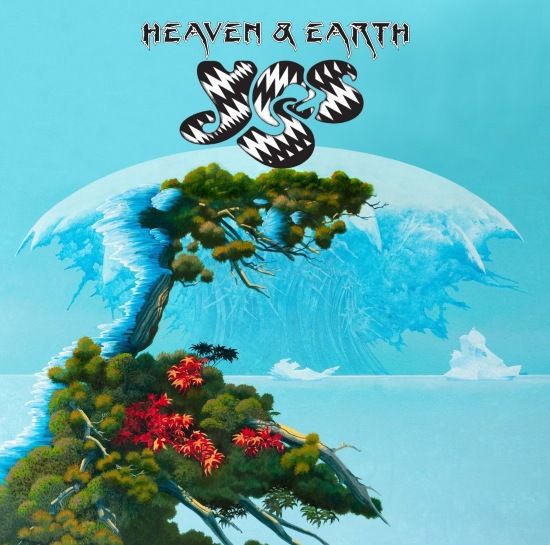
Coming off essentially two albums of music that sounded fresh and exciting, Yes came out with this clunker. It's a real shame because Roger Dean was killing it with the album covers. I love the icy blue that dominates Heaven & Earth's cover with the mushroom cloud iceberg off in the distance standing in stark contrast to the evergreen branch in the foreground. Plus the YES logo has a lovely black and white southwestern (America, that is) look to it.

The big change here is that Benoît David has been replaced by Jon Davison who had been with the Volunteer State prog stalwarts Glass Hammer. I feel badly for David as Yes cast him as the Nikolai Yezhov of the group in 2018 when they released Fly from Here – Return Trip, their only album with him (at the time) reworked musically a bit but also with David's vocals replaced by Trevor Horn's. Ouch! He didn't seem deserving of such an insult and Fly from Here wasn't broken so why try to fix it?

It is difficult for me to separate the music on Heaven & Earth from the late summer of 2014 when I got a copy and spent hours on my front porch absorbing it and assessing the new singer. At the time my relationship with my significant other was at a nadir. She spent little time with me and was instead to be found at the tavern keeping a barstool warm. With a new Yes album something to celebrate, I spent much time on the porch with Heaven & Earth as my company. Oh, and our cats too.

Having divorced the aforementioned significant other earlier this year, the album has a certain bittersweet quality for me.

Beyond the turmoil in my life when I was introduced to Heaven & Earth the album is notable to me for the rather numerous songwriting credits that Davison gets here. He gets a writing or co-writing credit on every song save one. It impresses me that the other guys in the band were happy to consider what Davison had to offer and not only that, but to utilize his material.

The problem here, as the folks at Tabletop Genesis would say, is mid-tempo bloat. "Believe Again", which opens the album, is a prime example. Steve Howe opens the song with this echoey, gentle-on-the-attack guitar sound as Geoff Downes adds these staccato synth notes that have a strings-like tone. White sounds like he's playing the hi-hat while Squire's bass adds to the lumbering pulse. It all has a vague reggae lilt to it.

While I am unsure who wrote the lyrics here, Davison is in fine form and sounds wonderful as he sings words that are more Jon Anderson-like than any found on Fly From Here.

Is there a vision here
Woven to touch and all to capture light?
Surely the stream of consciousness
Flows to the sea

His voice is just beautiful. However, as the song builds and the chorus is upon us, the tempo hasn't moved. Davison's harmonizing with Squire and Howe is exquisite and White moves things along with some snare work but it's a shift in tone, not tempo. I like Howe's solo in the middle and the synth flourishes - there's even some drums like congas too - but the song plods along for most of its 8 minute duration. 

Everything sounds great here, the playing, the melodies, and especially the vocal harmonies but the song just never seems to find its feet. It feels half-baked, almost a demo. This is a problem that plagues the majority of the album and it saddens me that White's drumming is so lackluster here. 

There's some great piano on "The Game" and the vocal melody is gorgeous with bits having been rescued from "The Gift of Love" from back in 2010. Downes is in fine form but the song just seems to drag. The rhythm section never propels it along as White and Squire did so well on Fly From Here.

"To Ascend" has some lovely acoustic guitar and piano to complement an equally pretty vocal performance from Davison. It's a slower song by design and so when the drums enter, they genuinely transform things by going from gentle acoustic to something a bit bigger. Downes just impresses the heck out of me here with piano and string sounds and synths and more legato piano. A truly beautiful song.

"In a World of Our Own" just seems to plod along while "Light of the Ages" threatens to add excitement, but it never does. Downes orchestrates a tense, striking opening for "Subway Walls" but the drama peters out. However, the ending really picks up the pace and, as Howe solos, the song kicks into gear for the album's only true moment of excitement.

There are a couple songs here that I think transcend (haha!) the mid-tempo trap by virtue of being fairly simple, direct tunes that are just blatantly catchy.

The first is "Step Beyond", a Howe-Davison joint. It opens with this bouncy synth line that moves across the stereo field that should come across as being the cheesiest moment on the album but it somehow is just fun & catchy instead. Howe comes in and White sets a steady beat that may be mid-tempo but it somehow manages to take the lead in pushing ahead. I love the refrain of "Beyond" in the bridge and the return of the first verse after Howe's solo is just gorgeous. The harmony vocals are magical throughout with Squire on the top of his game.

The second song that stands out for me is Howe's "It Was All We Knew". It has a lazy summer feel to it which mirrors those summer evenings out on the porch listening to this album as my cats kept the neighborhood watch. Howe's playing is just so melodic and fun. Most, if not all of the vocals here are harmonized and the vocal melodies are just incredibly catchy. Somehow the chorus has this vague white proggy Caribbean lilt to it.

Listening to Heaven & Earth after Fly From Here is jarring. White's drumming is so tepid and restrained with none of the urgency that propelled "Into the Storm" or the previous album's title track. This goes a long way in explaining why these songs have an unfinished, demo-like quality. Roy Thomas Baker is the producer here and he also produced Yes' 1979 sessions in Paris before Jon Anderson and Rick Wakeman left the band which sound boring in a similar way to the songs here.

This album's surfeit of great melodies is largely wasted as, while they stand on their own well, they are never given the chance to really gel with one another nor given a beat that truly brings them to life. Heaven & Earth would prove to be Squire's last album as he passed away about a year after its release and I think of his vocals here as a parting gift of sorts. I simply love them. The harmony vocals are strong and impassioned throughout the album and their beauty lingers in my ears despite the general flatness that pervades most of the songs here.

Jon Davison earns his pay on this album. His singing is great and he does his best to let his voice animate the songs even when they head down a dull path.

While Heaven & Earth is the pratfall of the post-Anderson era, I like it more than many fans as I first listened to it during a fraught time in my life when I was trying to take refuge in the aural company of an old friend. And so it took on an emotional attachment for me. But I do recognize its faults.

It would be 7 years until Yes released a follow-up.

11 November, 2026

Sounds from the north

Last weekend I returned to the Atwood Music Hall because Faroese music star Eivør had returned to Madison in support of her new album Tungl. Supporting her on tour was midori jaeger.
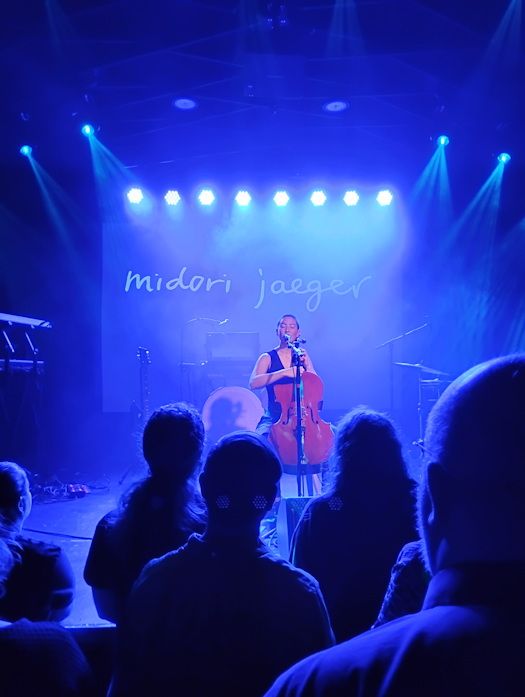
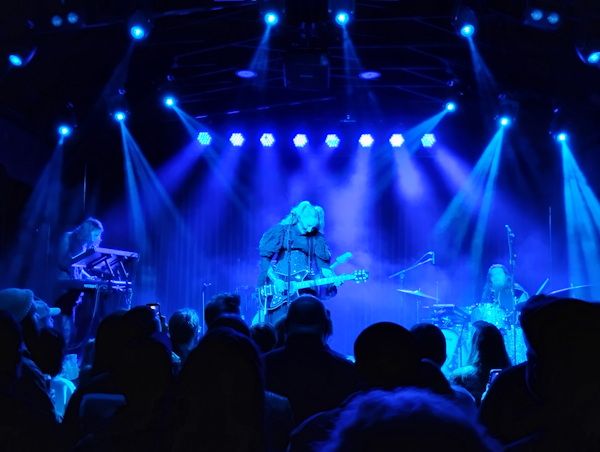
jaeger is a young lady from London who came armed with only her cello. Not a bow in sight, she plucked the strings to create melodies that were sometimes gentle, sometimes a bit more vigorous. It might have been during her intro to "dark green" when she noted that her mother was Japanese and her father American and that her childhood was spent in Japan as well as England. The song was about roots, planting them and uprooting them. Indeed, her recent EPs are called (Re)planted and (Un)planted.

I enjoyed her set. The songs usually had a steady beat and jaeger's lovely and, at times, ethereal voice was sensual and pleading. I should really check out her studio work. She seemed genuinely chuffed to be on stage before us and at the warm reception she was given.

It's a bit odd to me that Eivør has a devoted following here in Madison even if it's not a very large one.


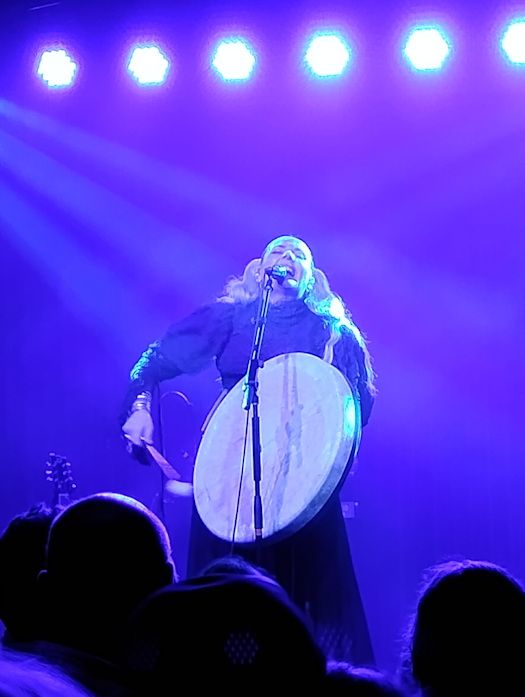
Her blond hair in long pigtails and wearing a corset adorned with spikes, she came onstage to a rousing fanfare. Looking around, I think I saw a higher percentage of blonde women in the audience than at shows where the artist did not hail from near the Arctic Circle. The crowd was not all of a type but many of the guys down front looked a lot like the drummer - a bit burly and clad in black. To me, he looks like a guy from a biker gang in a Nordic noir TV show that turns out to have a heart of gold.

No doubt there were many folks there who just loved Eivør's dark synth pop but I also suspect that the Madison area's neo-pagans that follow a Norse path were out in full force that night.

Eivør and her band - a drummer and 2 keyboardists, one of them occasionally playing bass - play a darker toned music shaded by synths and adorned with her guitar that was usually adding a layer of fuzzy drone. There were a couple times where I was reminded of Nine Inch Nails but Eivør's music is generally less angry and feels more like she has a steely determination to make it through a long winter.

Her voice is incredible. Sometimes it is pulsing and trance-like while at others she really lets loose and sounds like she's calling down the ancestors.

The crowd got giddy with anticipation when they saw her pick up her Valkyrie drum.


Those songs had an added emphasis on rhythm that made the synths follow instead of the rhythm laying a foundation for the keys.

Just like her show last year, "Enn" was a highlight with the drummer pounding out a primal beat as throbbing synthesizer lines and washes of fuzzy guitar made it feel like they were ushering us across Bifröst. The tribal feel was mesmerizing.

Eivør and her bandmates put on another great show full of entrancing grooves and haunting melodies.

midori jaeger's set was captured in full and can be found up at Youtube. There are snippets of Eivør's performance there too.

Song of the day, Veterans Day 2026

It seems weird to wish someone a happy Veterans Day. Today I am thinking about my grandfather and great uncles who served in World War II. Some came back and got on with life well - more or less - while others turned to the bottle to forget what they had experienced.

Since the day was originally an observance of those who were in World War I, that'll be today's theme.