Showing posts with label Polkaholics. Show all posts

22 January, 2024

The Corona Diaries Vol. 104: Mazomanie Needs a Coffeehouse

(mid-August 2023)

(Dance to the prelude.)

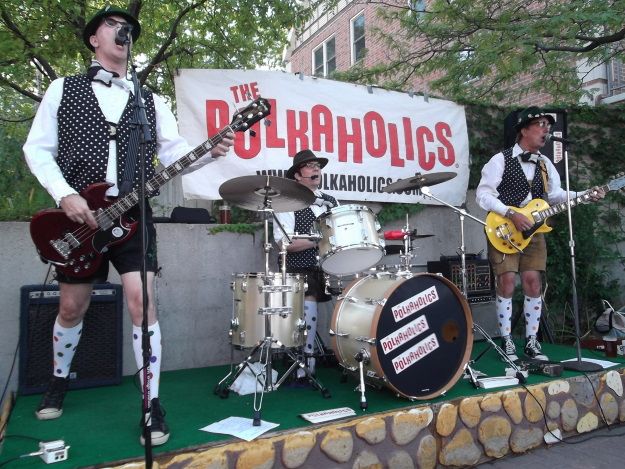
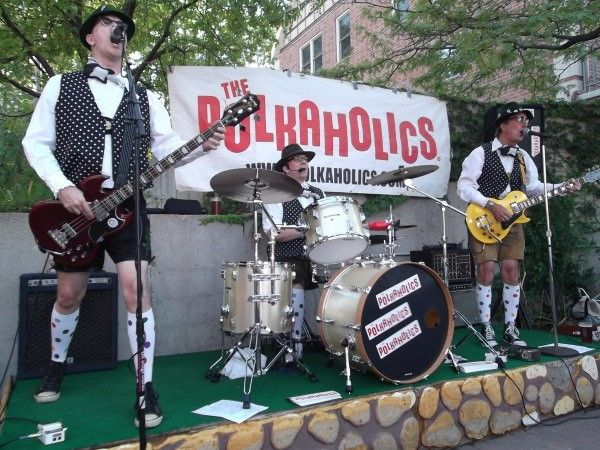
A few days ago thirsty beer geeks from around the country descended upon Madison for the Great Taste of the Midwest, the best beer festival in all the land. Although I didn’t attend, I did go to the Essen Haus, a German restaurant, the evening before as The Polkaholics, Chicago’s renowned polka-rock band, were playing.
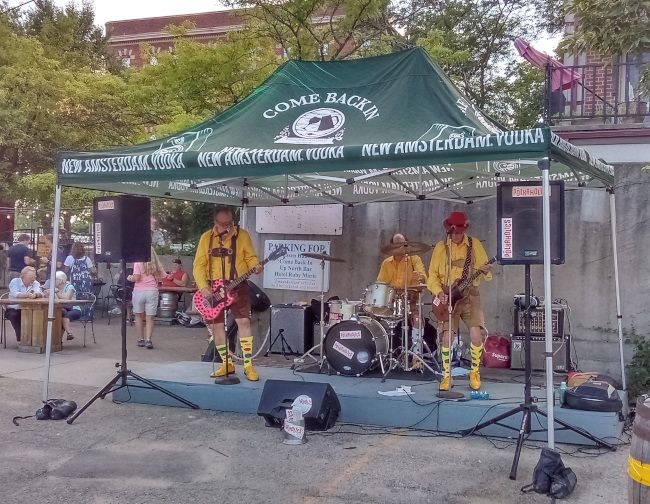

As usual, they put the crowd to shame with their haberdashery as they were dressed in the finest Lederhosen complemented by the sexiest socks of any band, polka or otherwise. I had my Polkaholics t-shirt on and Dandy Don, the guitarist/singer, spotted me right away in my stylish outfit. I’d made a music mix for the road trip to Gencon which featured a couple Polkaholics tunes and I was hoping to hear them live. I found that “Paul Konrad Polka”, a tribute to the WGN weatherman in Chicago, was already on the setlist and so I requested the other song, “Sound (of the Beer) Garden Polka”. This one is a musical chimera worthy of Victor Frankenstein himself which fuses the alternative rock of 90's stalwarts Soundgarden with a steady 1-2 polka beat to great melodic (and humorous) effect.

When the sun is a black hole
The beer will be ice cold

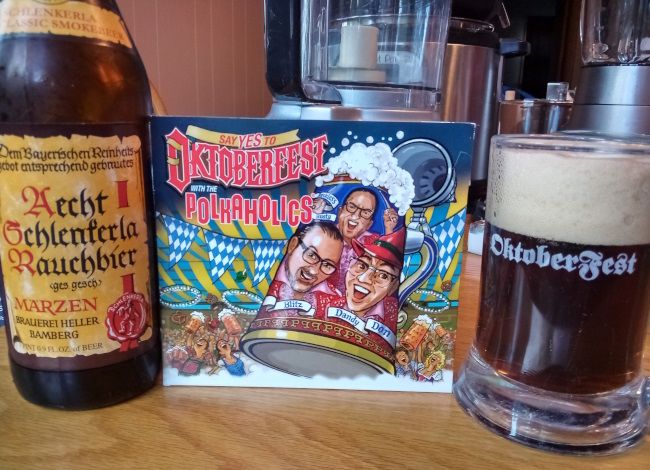
Classic stuff. Ooh! And they had a new album out too – Say Yes to Oktoberfest. It is a Dionysian ditty, a concept album, of sorts, about beer, drinking, and Oktoberfest revelry. You bet I bought the CD.

I ran into a fellow whom I knew via Twitter and had met in-person a couple of times. We chatted about craft beer, camping, the sorry state of Twitter, and whatever else came to mind. It was nice to see him again and to meet his wife whose existence I’d learned of online but had never encountered in real life.

********

A few (or is it several?) entries ago, I wrote about walking around Morton Woods. I’d randomly chosen it as a destination for a hike after looking at a map of county parks. Now, if I hadn’t gone there, I would have instead headed to Walking Iron County Park, just north of Mazomanie which is 25 miles west of Madison. A full week of work after spending 5 days down in Indianapolis on vacation at Gencon was sheer hell so, when the weekend finally rolled around, I needed a hike out in nature and headed west to Walking Iron.

For the drive there, I traveled much the same route as I did going out to Morton Woods. Taking the back roads meant I would not feel compelled to drive 55+ and instead cruise along at 35-40 so I could enjoy the scenery from the tops of the many rolling hills out in the Driftless Area.

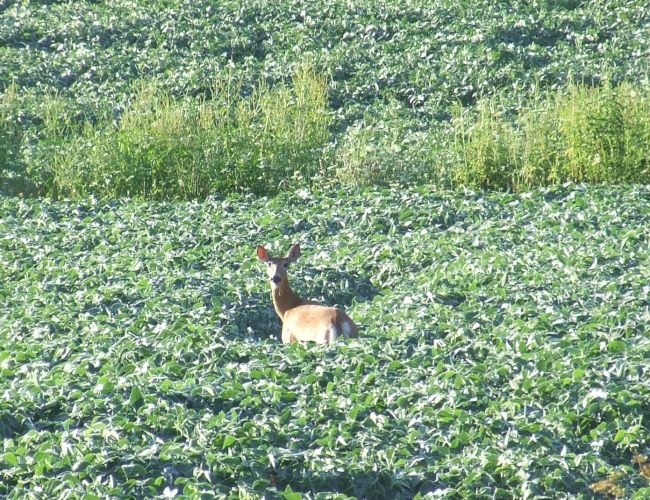
One advantage of a nice, leisurely pace is that, if I spot a deer in a field, I can actually pull over to take a photograph rather easily as I did on this occasion. 
I drove through a little of Black Earth before turning onto another scenic county road which would take me to Mazomanie. Mazo isn’t very large and, before long, I was outside of town and at the park. It was a lovely, sunny morning.

The initial section of the trail ran along the edge of some woods on one side with prairie on the other.
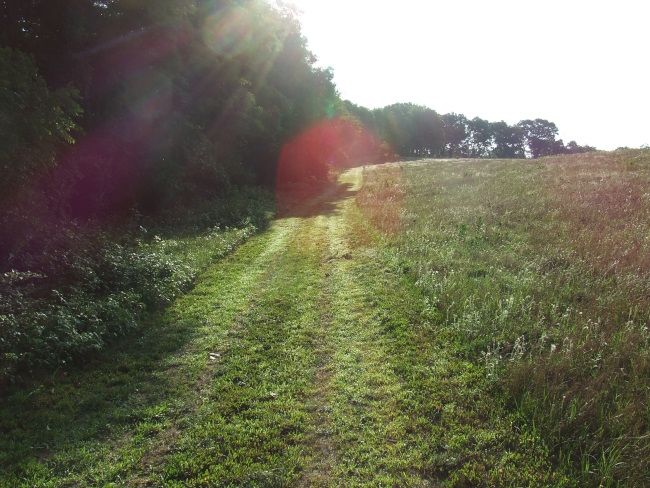
There was birdsong coming from all sides – it was avian surround sound. I would occasionally catch a glimpse of the tiny members of the chorus but that was about it. There were many calls and songs that were completely unfamiliar to me. This shouldn’t be surprising, though, as I only know the basic city slicker repertoire – robins, cardinals, and red-winged black birds. Oh, and red-bellied woodpecker too.

At one point, I came to a spot with some pine trees which scented the air quite nicely.
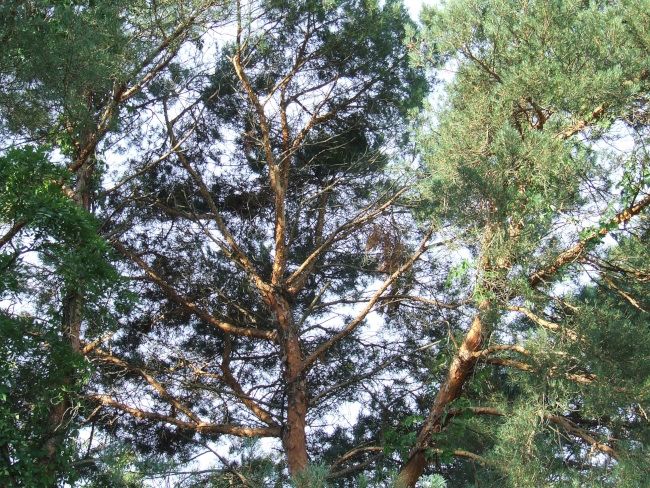
Soon I came upon a trail that led off into the woods.
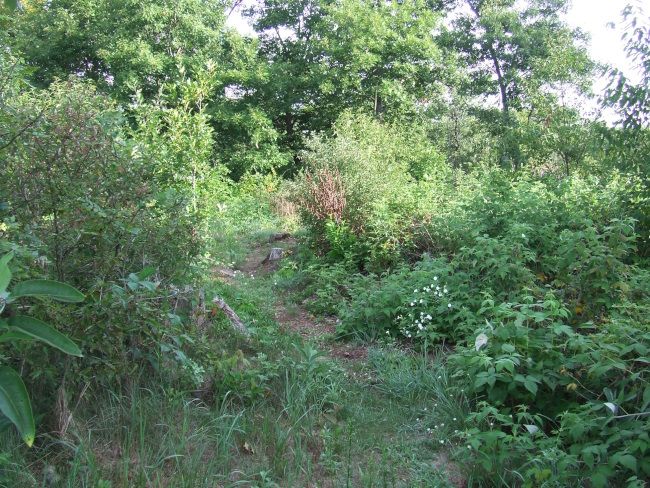
Despite knowing this is exactly the kind of thing that got Hansel & Gretel into trouble, I followed the path into the trees where I discovered that it wended its way down to a creek and ran along side it for a stretch.
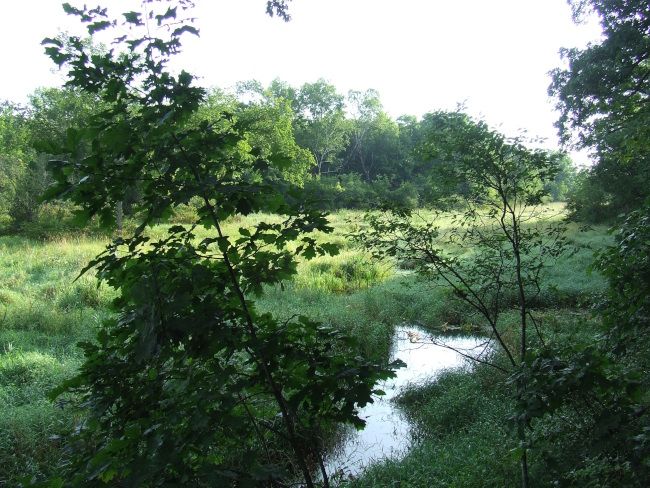
The trail through the trees was pleasantly cool but all-too short and soon enough I was back on the path that straddled woods and prairie.

Some parts of the trail straddled farm fields.
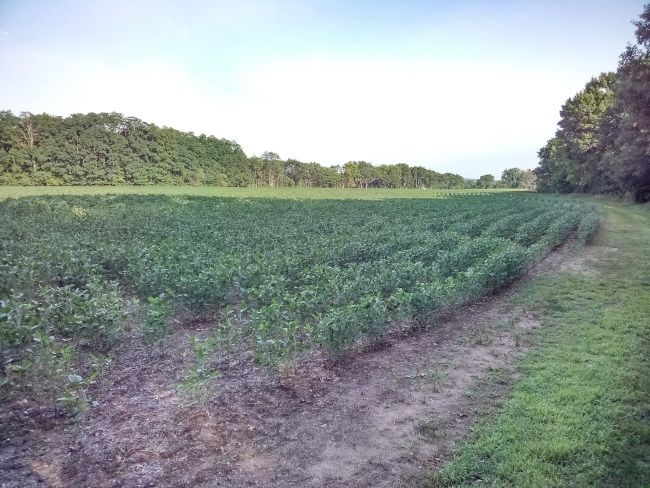
The scent on these stretches was all fresh & verdant, to start, and I took in the air thinking to myself how wonderful the countryside is. As I traipsed further along, however, that other scent of the countryside began to creep in: manure. Now, I can handle cow manure just fine. (Chicken shit is a whole different matter, though.) But then the noxious smell of chemical fertilizer kicked in and the combination was really quite bad. I hastened onwards to escape the miasma.

Towards the end of my hike, I found myself at the Pasque Flower Prairie where birds were zipping around from ground to tree, tree to tree - just everywhere.
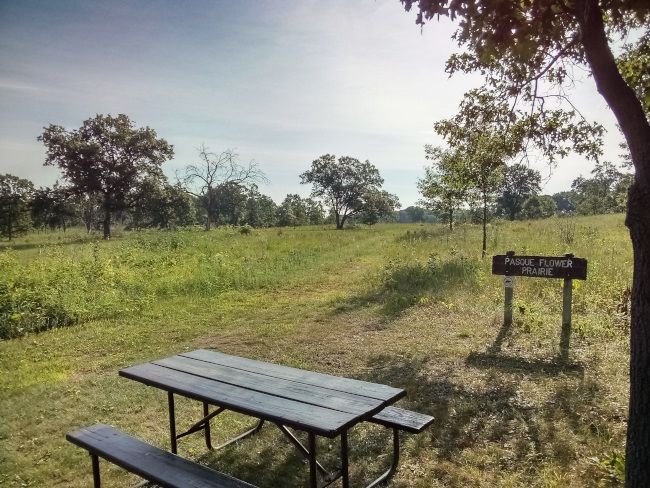
They wisely kept a good distance between themselves and the human so I wasn’t able to get a decent photograph. However, I was able to see that many of them were blue on top, though they had white or tan bellies.

These weren’t blue jays and the only other bird of that hue that I know of in these parts is the indigo bunting but I thought they were of a deeper blue color and were completely blue, belly and all. After consulting that handy Birds of Wisconsin, my best guess is that they were Eastern Bluebirds.

The walk being done, I headed into Mazomanie for something to eat as I was famished. And maybe a refill on my coffee too.

I hadn’t been there since 2002, when I accompanied the woman whom I was dating at that time to a dance studio in the old part of town. This was where Madison’s Cycropia Aerial Dance had a rehearsal space and my girlfriend was intent on spending some time hanging from ropes, spinning in circles, and learning a little about aerial dancing. Think Julianne Moore in The Big Lebowski but without the paintbrush.

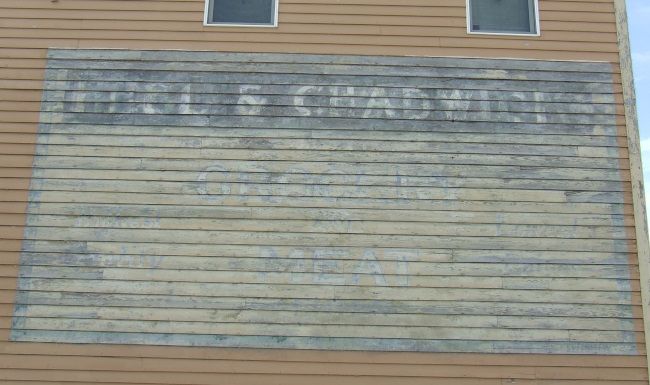
In addition to not immediately finding a coffeehouse as I cruised into Mazo, I also didn't find anyone out and about. It was a bit spooky, as if I was in that episode of The Twilight Zone where the guy wanders around the town only to find it abandoned. I chose a parking spot largely based on its proximity to this neat ghost sign for what appears to have been a grocery store from back in the day.
Wandering around town on foot, I ran into an old blacksmith shop that was now home to the Midwest Micro Car Museum.
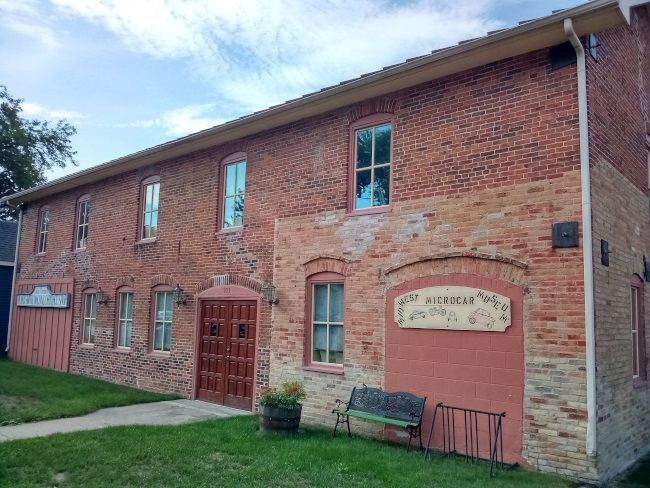
I don’t know if it is dedicated to those very small cars like the one Mr. Bean drives or just a very large collection of Matchboxes.

An area where rail tracks ran through town was rather neat. The old freight and coal buildings still stood but, in the field abutting them was a bandshell.
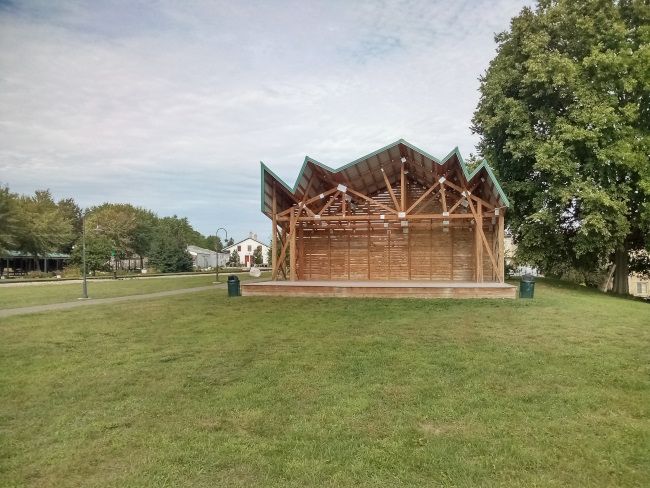
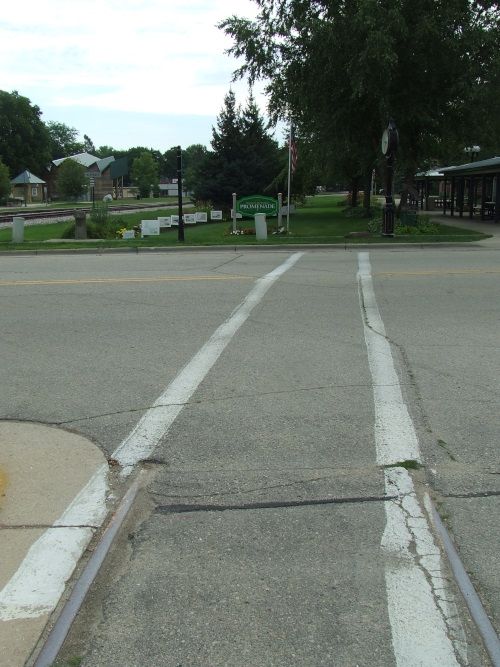
And across the remaining track was a promenade.
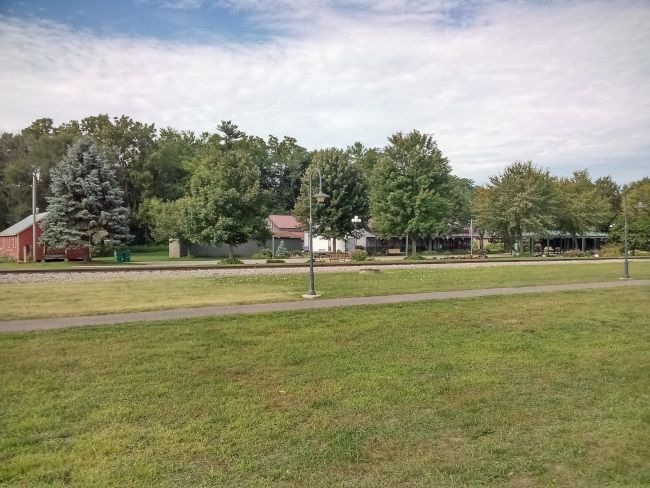
The old feed mill was now a fancy restaurant while various other buildings that would have served the trains and/or passengers had been converted into stores along with covered seating areas for music and other festivities.

From the remaining buildings and the layout of the area by the tracks, it seems that Mazo was something of a rail hub back in the day.

Continuing my walk, I discovered that the town’s historical museum was in an old electric power plant.
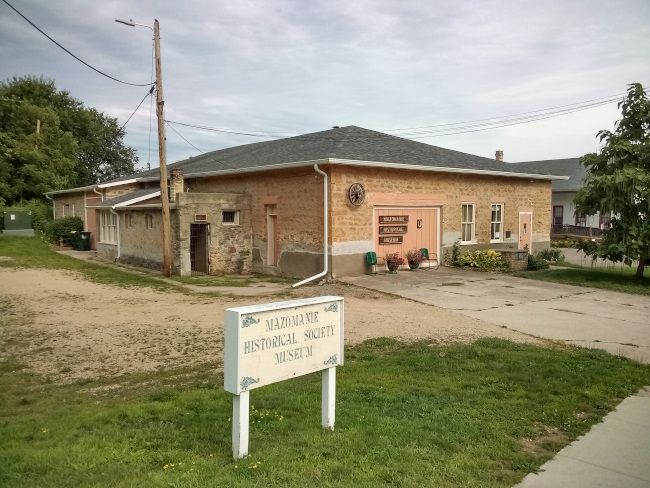
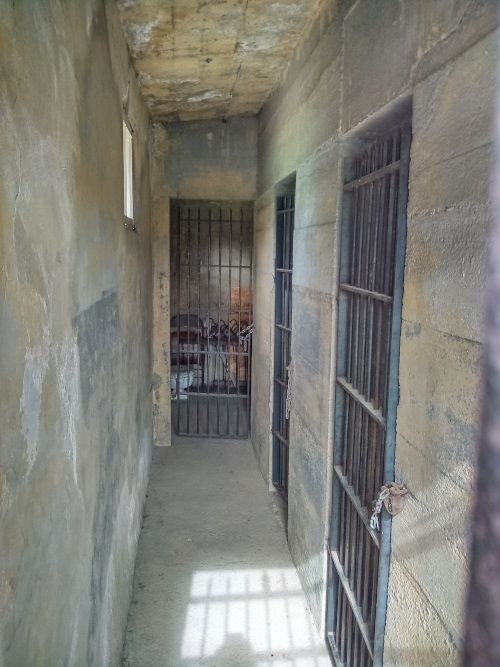
I am not sure when, but the building hosted a jail at some point. Perhaps it was the home of the local constabulary before becoming a power plant.
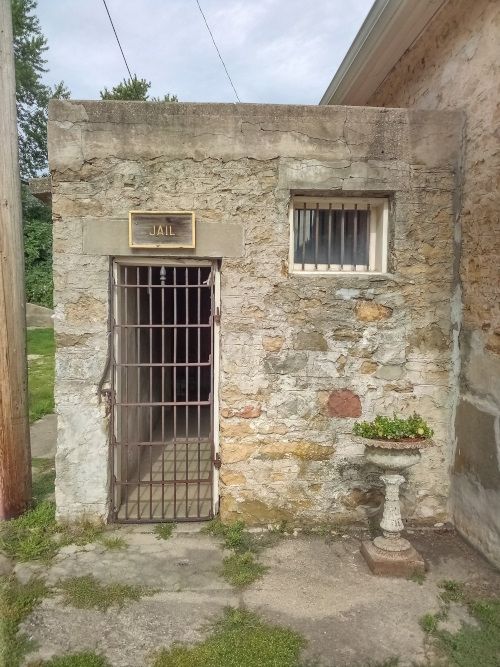
I guess things got a little rowdy back in the day.
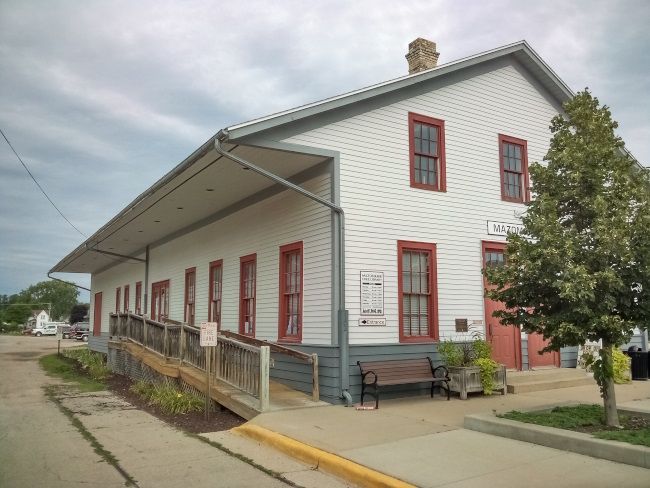
The town library is housed in a former train depot which doesn't look to have changed much since the late 19th century.
Some of the old rails were still visible in the street and you could see how they ran through what is now that slick promenade.
Unfortunately, there was no source of coffee that was open downtown. I eventually saw 3 or 4 people but, otherwise, it was dead. And so I headed out towards the highway for a gas station where I got a breakfast sandwich and more coffee before heading for home.

********

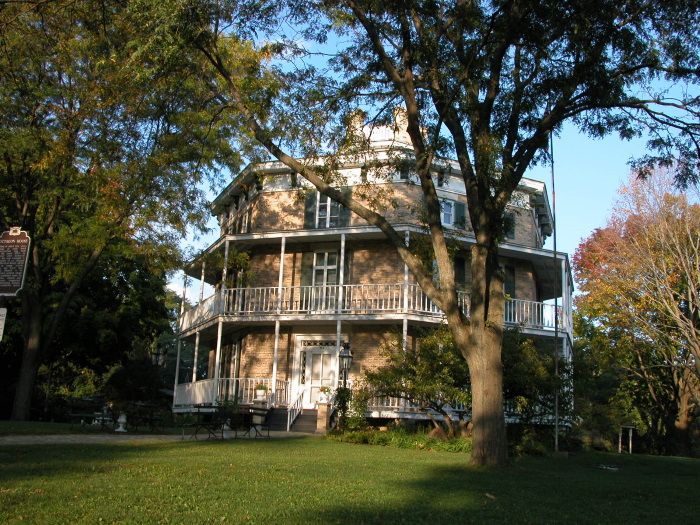
Bonus photo. It’s the octagon house in Watertown. I cannot recall the name of it but it’s a historic site.
14 September, 2023

I Said Yes

Yesterday I just said yes to Oktoberfest with The Polkaholics and my first Märzen of the season - smoky goodness from Schlenkerla.

18 October, 2022

Piwo, PÄ…czki, and Polka(holics)

Many years ago I took a journey to Iowa to bring my father's ashes home. There are several family burial plots at a cemetery down there and some kin ran a headstone business in the town. For the first time I met a cousin of my dad's and he told me a funny story about my parents' wedding. He recalled a brief chat he had with my maternal grandmother at the reception as the band was playing a polka. Approaching her, he asked if she danced the polka and she replied that she did when she was younger but, since her knees had started giving her trouble, she'd stopped. Then someone came up to her and extended the invitation, "Let's dance!" She put up no resistance whatsoever as she was led away to shake her booty, knees be damned!

I'd always known that I have relatives down there in that part of Iowa but I had never met any of them until that day. It's always neat to hear family lore, but it was especially so to hear tales about a side of the family my father never talked about.

My visit and hearing those stories sparked something inside of me - an interest in family heritage and traditions including polka. I wrote something about polka (or the lack thereof) in Madison which caught the attention of an Isthmus reporter, Isthmus being Madison's alt-weekly. Around this time I also got into the music of the Goose Island Ramblers, a Madison band from back in the day that played folk music of all sorts, including polkas. I was investigating my Central and Eastern European roots and ran into folk music that was usually not in English and did not contribute to the birth of rock and roll like the Anglo-Afro songs that spawned many an Alan Lomax compilation.

At some point I encountered The Polkaholics, a polka power trio from Chicago led by guitarist "Dandy Don" Hedeker. The band takes the basic rock formula and apply it to polka which means supercharged polka beats and lots of fuzzy guitar instead of accordion, clarinet, or trumpet. While they play traditional polkas, they also throw in originals and they are usually performed manically, always threatening to career out of control.

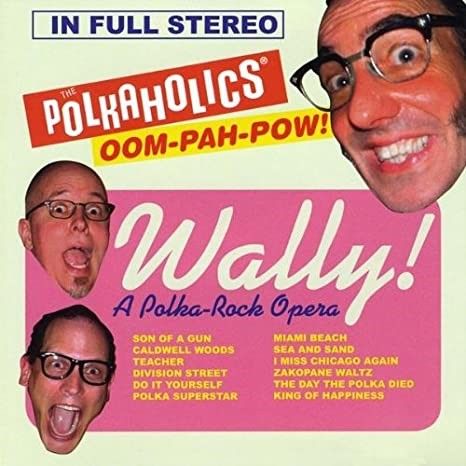
In 2009 the band release Wally!, likely the first ever polka-rock concept album, which chronicled the life of Chicago polka legend Walter "Li'l Wally" Jagiello over the course of a dozen songs. The second tune, "Caldwell Woods", describes how Jagiello and his family would take a streetcar to the titular forest preserve on Chicago's northwest side on Sundays to picnic and polka. I spent some time there as a boy and thought it was pretty hoopy to hear the place immortalized in song.

I bought the album and enjoyed it thoroughly. It was a good springboard to investigate Poles in Chicago. On a visit to my mother not long after buying the album, I told her about it and described how the songs celebrated Chicago history. For instance, "Division Street" commemorated the "Polish Broadway", an area on the city's near west (or northwest) side that was heavily Polish back in the day. The song lovingly describes the bars overflowing with polka music and ladies that couldn't dance to it enough.

After I described the lyrics to "Caldwell Woods" to her, my mother revealed that she, her parents, and various aunts & uncles made that same trek north when she was young. She related how the women cooked lunch and fried up pÄ…czki while chatting as the men drank beer and often played cards (pinochle). I thought it was incredibly cool to hear a part of my family history reflected in a song - and, quite appropriately, a polka song.

26 January, 2021

The Corona Diaries Vol.8: Guess I'll see you dancin' in the ruins

November 2020

As I type, polka music is blaring from my computer's speakers. Curiously enough, the cat doesn't seem to mind. The music is by Chicago's own Polkaholics, who merge polka with rock music. Back in old times before Covid they played every so often at the Independence Tap at Irving Park and Harding, not far from my old stomping grounds. The album of choice today is Wally!, a polka-rock opera about the life of the Chicago polka icon "Li'l Wally" Jagiello.


Over the course of an hour or so it chronicles Li'l Wally's life from growing up in Chicago to retiring to Florida and all polka points in between. Listeners are treated to some Chicago history along the way. "Division Street" celebrates life on Chicago's Polish Broadway (mainly the taverns) while "Caldwell Woods" is about family trips on Sundays to the north side for polka music, food, and fun at the titular forest preserve.

I brought up the subject of polka-laced picnics at Caldwell Woods to my mother and she told me that she used to go there on Sundays as a girl. Perhaps she heard Li'l Wally in person back in the day.

Wally! can be heard here:

This is the band here in Madison at the Essen Haus in honor of the Great Taste of the Midwest beer festival several years back.

*****

A friend of mine recently pawned some Criterion Collection blu-ray discs off on me that were duplicates in his collection. One of them was Kiss Me Deadly and the Frau and I watched it that same night. It was the first viewing for both of us although we both knew it was referenced in Repo Man and Pulp Fiction. I adored it! I loved the sound design for the ending. It complemented Detour, the 1945 Edgar G. Ulmer film that we had watched a week previously very well.


*****

In addition to fresh air, exercise, and letting me indulge a desire to simply cruise around town, my bike rides earlier this year also afforded me the opportunity to investigate things that I'd heard of or read about but had never seen with my own eyes.

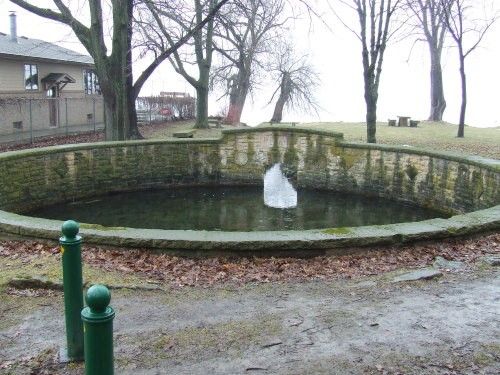
Take, for instance, this cistern on the shore of Lake Mendota.


Built in 1934 by the Wisconsin Emergency Relief Administration, it captures the waters of Merrill Springs before they run out into the lake. It's in a nice little park on the west side in a rather upscale neighborhood at the dead end of a street. I don't happen to know many upscale people so I've never really had cause to go to that area previously. And so the cistern was something that I'd heard about but had never seen until this year.

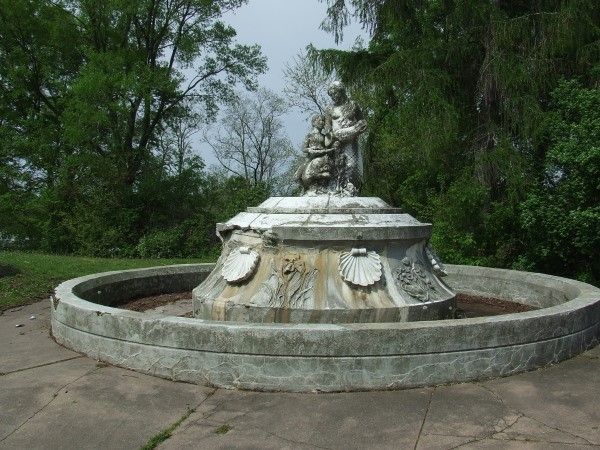
In a similar vein is the Annie C. Stewart Memorial Fountain.


Like the cistern, the fountain is in an upscale neighborhood but this neighborhood isn't in some hidden corner tucked away on the far west side at the dead end of a street. Rather it is just south of campus. Perhaps I saw the fountain at some point back in the 1990s but I don't recall doing so. This spot was the entrance to the zoo back in the day and today it's a small part of a much larger park with a Native American effigy mound nearby.

Built in 1925, it is in pretty rough shape today although I have read that a non-profit group is looking to restore it back to its former undinal glory. More or less, anyway.

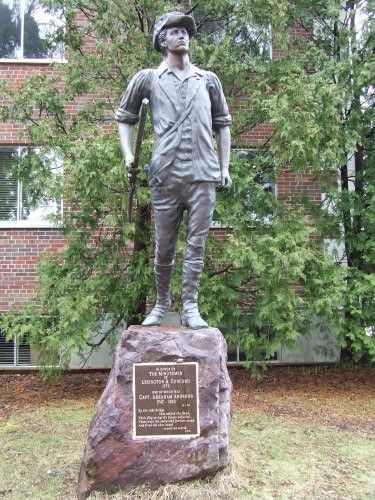
I must admit that I never thought of Wisconsin as prime Revolutionary War memorial territory. Yet just a block or two down from a popular mall stands this statue.


It is dedicated "In Honor of the Minutemen of Lexington & Concord 1775 – One of whom was Capt. Abraham Andrews." A cursory search of the Internet didn't reveal any connection between Capt. Andrews and Madison. Presumably there is or was one with a distant ancestor who lived here. It's in front of a building that I suppose is neo-colonial in style and is home to various offices.

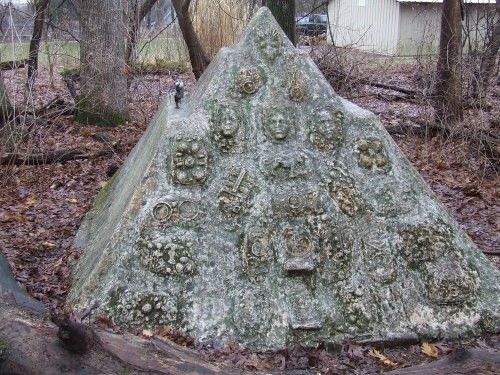
Even more enigmatic than a Revolutionary War memorial here in Madison is this concrete pyramid.


I first heard about it last year and was intrigued as its genesis remains shrouded in mystery. The pyramid sits in the woods of a park behind an elementary school and it is generally thought that it was made by a teacher and their students back in the 1970s. Apparently, however, no one knows exactly who it was, when it was built, or what, if anything, the symbols on it are supposed to mean. At least no one is stepping up and taking credit for it. Either that or I haven't searched the Internet long enough to find out more.

My hypothesis is that a teacher had read some Carlos Castaneda, taken some peyote, and came up with the idea to build a pyramid. It was the 70s, after all.

Madison is home to the 115th Fighter Wing of the Wisconsin Air National Guard. Any friends or family from Chicago reading this may have heard and/or seen some of its F-16s on 11 September 2001 as it's my understanding that they were dispatched to guard the skies over the Windy City on that day. They are stationed out at Truax Field Air National Guard Base. I've known that Truax has been open, more or less, since World War II. What I didn't know until this year is that it used to be much larger than it is today.

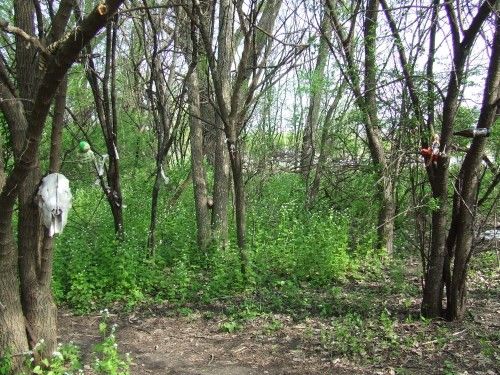
I was riding my bike to the north side – near the airport/Truax Field – when I noticed some dirt paths off of the bike path in the woods. I decided to investigate. They turned out to be trails for folks who like to do some off-road biking. I followed one to an area that I call Blair Witch Alley. It's a small clearing on the path with dolls, stuffed animals, bones, et al adorning the tree branches.


The place had a creepy vibe that brought to mind those scenes from The Blair Witch Project which feature stick figurines hanging from branches.

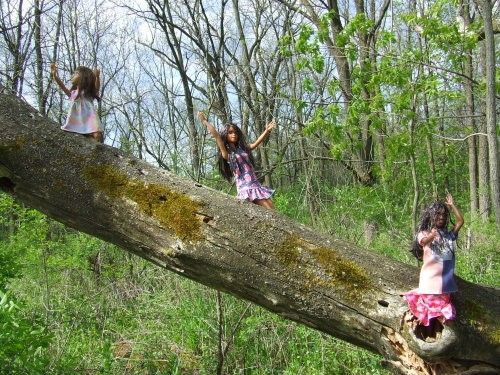
Continuing down the trail I noticed Barbie dolls on branches about every 50 feet or so.


It was all rather eerie.

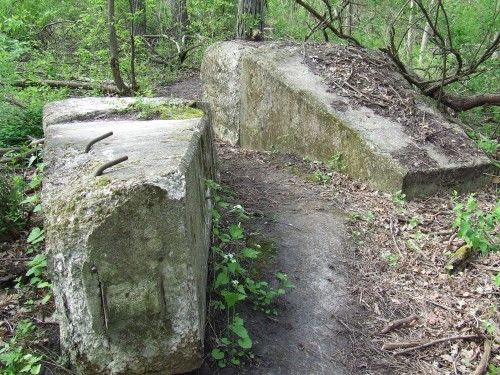
In addition to dolls, there were cement blocks with the rebar hammered flat lining some stretches of the path and hiding in the overgrown areas at others. Eventually I came upon spots that had much larger concrete bits.


Having seen these and recalling the patches of blacktop sticking out of the grass I'd seen to the south, I figured that these must the ruins of the Truax Air Force Base of yore, leftover when its mission was scaled down in the late 1960s/early 1970s and the base apparently downsized.

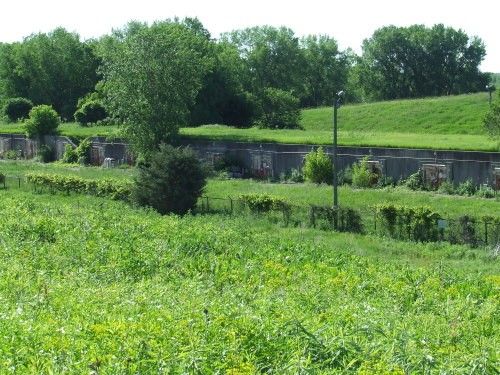
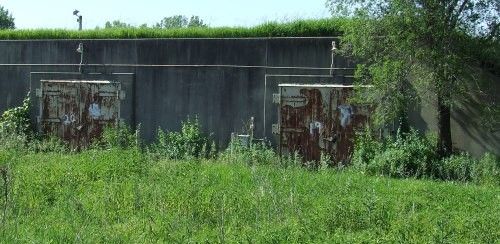
I'd heard tell of bunkers used by the Air Force to store rockets and other munitions that were long abandoned. One of my co-workers moderates a historic Madison Facebook group and he proved helpful in finding some old posts about the bunkers. With an idea of where they were, I set off to find them.

I found them just west of the concrete ruins down a small ravine in the middle of a golf course. To get at them you have to traverse one of the holes and I irritated a couple golfers the morning I went in search of the bunkers.


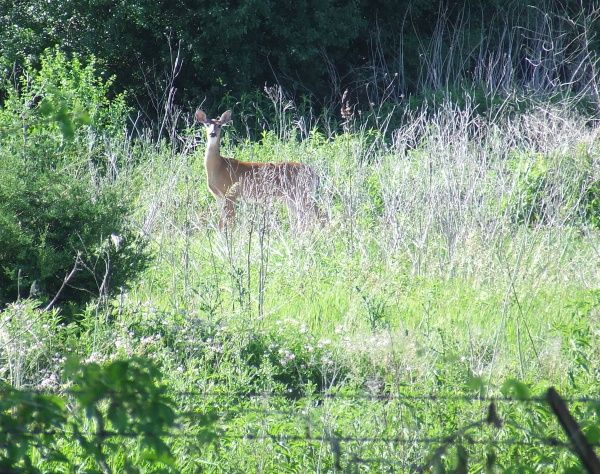
Approaching the fence, I was startled by movement. I spied a deer on the other side. It was staring at me and, because I relate everything in my life to movies, I suddenly had this weird, uncanny feeling that reminded me of the scene in Annihilation when our heroines come upon two deer that are in the process of transmogrifying into plants. Things went eerily quiet and I felt oddly alone as a chill ran down my spine.


For its part, the deer quickly tired of the intruding human and bounded away into the woods.

As for the bunkers, an Air Force vet had this to say:

Truax stored the Douglas AIR-2 Genie rockets in those bunkers (along with a lot of other types of munitions) from about 1958 when we started flying the Northrop F-89 Scorpions as a part of the Air Defense Command mission and then the supersonic Convair F-102 Delta Dagger (which carried the GAR-11/AIM-26A Nuclear Falcon missiles) up to 1974. As we know the Genie was an unguided air-to-air rocket with a 1.5 kt W25 nuclear warhead and the GAR-11/AIM-26A Nuclear Falcon missile was a semi-guided W54 nuclear, explosive with a yield 250 t TNT equivalent. So contrary to what Gene Rankin mentioned, Truax harbored 24 plus (2 squadrons) and two types of aircraft that carried nukes for a period of about 16 years and let’s not forget the Active Duty Air Force was also there during that time as well.

25 June, 2017

A Brew for Sue: Tooth & Claw by Off Color Brewing


When I think of Chicago's Field Museum, I usually think of the final scene of Damien: Omen II. That's where Damien is on the museum's stairs looking down at his chauffeur as a ride beckons and his aunt Ann's corpse burns inside. Now, when that scene doesn't come to mind then I envision what everyone else does: Sue the T-Rex. Back when I was a kid visiting the museum it didn't have a fancy bistro nor a house beer. Things have changed since then.

The story goes that when Off Color's John Leffler was at Goose Island, he sought advice on honey and befriended melittologist Megan Beckert in the process. Flash forward a few years and you find Leffler getting Off Color, well, off the ground while Beckert was at the Field Museum looking to revamp its food offerings. She approached Off Color about brewing a special beer for the museum and the result was Tooth & Claw which debuted in 2013.

Tooth & Claw is billed as a dry hopped lager/pils and as per the museum's requirements for a broad audience, there's nothing extreme or out of left field here which is sort of odd considering Off Color's reputation. My experience with their brews is devoid of lagers, as I recall, so I was keen to find out how well they could brew one. From what I've read, the beer began to be bottled and distributed outside of the museum not long after its debut. If so, I find it odd that I never ran into it until recently. I found it at a store in the city so perhaps it's not found so readily out in the suburbs.

Since I was to enjoy some Chicago beer I figured I'd also put on some Chicago music for the occasion - The Polkaholics! This was keeping with family tradition of drinking beer and dancing the polka.

Tooth & Claw pours a lovely light gold. Like a good pils it is clear and had a brilliant white head. However, I didn't get that much foam and what there was didn't last long. As expected it was plenty fizzy.

The aroma was what I expected – some biscuity malt and hoppy vapors that were grassy in the main but with a touch of spiciness. I can't find anything to indicate exactly what variety of hops was or were used in the dry hopping process (all German varieties were used) but I take it that the Hersbrucker were behind the grassy scent while the Tettnang added that peppery spiciness.

Truth be told, the taste was more or less what I figured it would be as well. The malt had a nice mellow cracker taste to it but also a slight honeyed sweetness which I presume came from the Carapils. This combo gave it a medium-light body. I could taste all that effervescence I saw in the glass and it gave the brew a bracing crispness. Overall the hops were at what I'd describe as a medium level (35 I.B.U.s) although I am sure eyepah drinkers would brush it off as being on the mild side. My notes say the hops tasted "herbal-grassy" and this is a combo I really enjoyed here. I guess the Hersbrucker and Tettnang provided these flavors while the Herkules ramped up the bitterness more generally.

The finish was rather dry with all those bubbles and the hop taste became spicier taking on more of a black pepper thing. That fizz also lent a mild acidity. Schaumhaftvermoegen was light on the ground with only a handful of spots lining my glass.

I hope that my saying that the beer turned out large to be what I expected isn't taken as a slight because this is a damn good beer. The malt was perfectly restrained yet didn't lead to a watery brew. Just enough there to aid and abet the hops. I also thoroughly enjoyed the resurgent hop spiciness at the end; it added a nice tang. But I must also say that I am really loving grassy/herbal hop flavors these days and Tooth & Claw has them in spades. There's just something about the more vegetal/green flavor that I enjoy. They can give a beer a vibrant, fresh immediacy that is simply wonderful. You almost expect to taste dirt next.

Tooth & Claw is 5% A.B.V. so you shouldn't find your museum going experience impaired at lunch.

Junk food pairing: Grab a bag of The Daily Crave's Smoked Gouda Lentil chips. They're light and crispy so they don't get in the way yet the cheese adds a nice smoothness on the tongue. And smoked foods are simply great and go well in all situations.