Showing posts with label Sierra Nevada. Show all posts

31 August, 2016

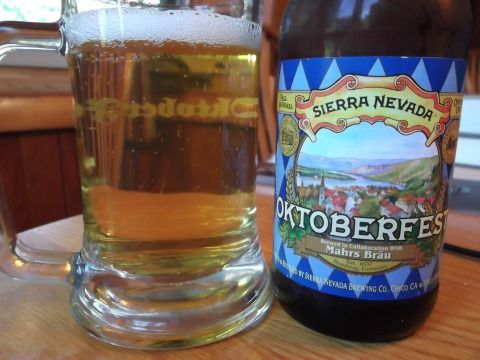
Just Say Ja to Oktoberfest: Oktoberfest by Sierra Nevada and Mahrs Bräu


You know it's July when American Oktoberfests hit store shelves. I managed to refrain from buying any until late August this year because, well, that's just how it should be.

Pretty much everyone and their mother brews an Oktoberfest here in Wisconsin these days. Lake Louie brewed their first one this year. Ale Asylum decided to finally bottle a lager this year and that lager was an Oktoberfest, Oktillion. It's surely the most resilient vestige of the state's German brewing heritage which has laregely been cast to the wayside in large measure to accommodate hoppier eyepahs and the style's attendant off-shoots. Breweries that specialize in ales even find the time to do a little lagering during the summer.

Surprisingly, to me anyway, is that Wisconsin brewers have largely avoided tinkering with the style. Milwaukee Brewing Company's Hoptoberfest, an aggressively hoppy take on the style, springs to mind as an exception. But I have yet to see Oktoberfests blitzkrieged by brettanomyces or assaulted by Citra. I am sure that there are more modifications of the styles out there than just Milwaukee Brewing's, but I don't see them. Perhaps they're at taprooms and brewpubs. Or I am oblivious to them.

My guess is that my intro to the Oktoberfest was Capital's. In fact, I think Capital tutored me in seasonal beers. And I recall when New Glarus introduced their Oktoberfest, Staghorn. It was love at first sip.

While those two beers will always be part of my late summer/autumnal drinking ritual and have special places in my heart and liver, I have to be honest and say that the Oktoberfest that I was looking forward most anxiously was Sierra Nevada's.

Last year the venerable California outfit decided to "explor[e] the roots of Germany’s famous Oktoberfest beers" by partnering with a different German brewery to produce a version of the style. The first collaboration was with Brauhaus Riegele and the resulting bier was simply fantastic. This year Sierra Nevada teamed with Bamberg's Mahrs Bräu.

Oktoberfest pours a medium yellow/light gold color which puts it in the wiesn or pale Märzen camp. From my experience, Wisconsin Oktoberfests are amber. But, from what I've read, the paler variety is what you will be served in Munich at the Oktoberfest. It was clear which made for a very pretty sight as did the loose, white head that formed atop my bier. The foam went away fairly quickly. However, there was a goodly amount of bubbles inside.

Taking my first sniff of the bier reminded me why it only took one brew last year to make it eagerly anticipated this year: bread. That lovely bread smell. There was a little honeyed sweetness, but not much. This year Sierra Nevada is advertising the use of a rare variety of Belgian hops called Record. As far as I know, this was my first encounter with them. My nose caught some grassy hoppiness but I am not sure if that was Record or not.

Just like last year's Oktoberfest, the new iteration was like a bakery in a bottle, steeped in Maillard toastiness. Simply wonderful. It was complemented by some less toasty and more yeasty bread flavor, a touch of doughy sweetness, and a very healthy dose of hops which were both spicy and herbal tasting. Was this the Record hops?

The plethora of malty mannas faded on the finish allowing a zesty, spicier hop taste to take center stage where it offered up a firm bitterness and dryness. Alas, Schaumhaftvermoegen was absent.

Ausgezeichnet! Sierra Nevada and Mahrs Bräu have created a great Oktoberfest full of the Maillard toastiness that I love. But they've also tweaked tradition by giving the bier a heftier hoppiness. Not content with that, the two breweries made sure that the hops would be of a different character at each step: grassy to my nose, herbal/spicy to the taste, and then an almost citrusy Saaz flavor at the end. Just marvelous.

The bier is 6% A.B.V. and has a light-medium body which will go very well over the next few days as temperature cools down into the low 70s.

Junk food pairing: Pair this year's Sierra Nevada-Mahrs Bräu Oktoberfest with pork rinds or some Cheetos White Cheddar Puffs. To satisfy a sweet tooth, heat up a Pillsbury Apple Toaster Strudel.

01 August, 2016

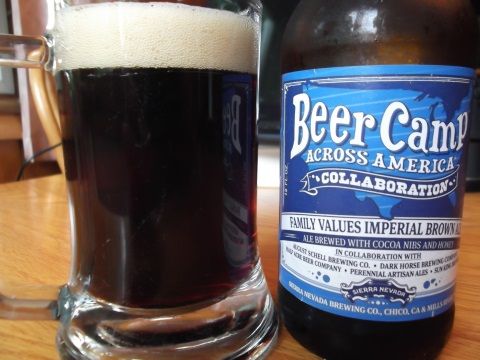
A Midwestern Affair: Family Values by Sierra Nevada, August Schell, et al


Beginning last fall I went through a phase of sampling beers from Sierra Nevada and along the way I reacquainted myself with the brewery after an absence of many years. While I consumed a fair amount of their Pale Ale in the first half of the 1990s (R.I.P. Pinckney Street Hideaway), my taste drifted and it seemed that there wasn't a day that went by that didn't see a new Wisconsin brewery to acquaint myself with.

Sierra Nevada doesn't seem to have a brew that is spoken about with the awe and reverence of, say, Pliny the Elder or Heady Topper. Regardless, the brewery, one of the micro-veterans having been founded in 1979, brews around 1 million barrels every year without that cache. A Yogi Berra-like quip is needed along the lines of "Nobody drinks them anymore. They're too popular." This revenant drinker, however, will testify that it is one of the best breweries out there. True, I don't drink their IPAs so I cannot even begin to speculate on how well or poorly they deal with that particular trend, but the fact is simply that Sierra Nevada brews several beers that appeal to my tastes and they brew them very well.

The Sierra Nevada Beer Camp Across America began in 2014 and features the venerable brewery partnering with other microbreweries around the country to brew beers and then having a party bus traverse the nation to stop at Beer Camp shindigs where beer is consumed in mass quantities. This year saw a change in the brewing process. Instead of collaborating with a single brewery, Sierra Nevada is joining forces with six clusters of brewers who are neighbors geographically. August Schell leads the Midwest brigade and it has produced Family Values.

Family Values is an Imperial Brown Ale with Cocoa. For the occasion Schell rounded up Dark Horse Brewing in Michigan, Sun King Brewing in Indiana, Perennial Artisan Ales in Missouri, and Half Acre in Chicago. These breweries were represented by "Minnesota wild rice, Indiana honey, Missouri oats, Michigan hops, and cocoa nibs from Illinois". From my experience, when brewers "collaborate" they mean that they stand around drinking and talking while someone occasionally deals with ingredients and I don't doubt for a minute that Family Values was concocted in just that manner.

My glass was topped by a large tan head that lasted a fair while. The beer was a gorgeous deep mahogany hue and was clear so I was able to see a whole mess of bubbles inside.

A luscious sweet aroma emanated from my glass. Mainly it smelled like cherries to me but the sweetness was tinged with an earthy scent which I thought was the honey mingling with the wild rice. If this is indeed the case then that is one of my favorite new combinations. Those cocoa nibs shone through as well as wonderful dark chocolate. Dark, roasted malt scents rounded out the aroma.

Carbonation was firm but not fizzy leaving the oats to more or less have their way and make the beer rather smooth. Just enough to break up any malt stranglehold. Bitter chocolate and a plum-like malt sweetness went toe to toe at the fore of the flavor. I couldn't taste the honey, sadly enough, but the wild rice made for a tasty nutty flavor in the background.

Those malt flavors do a slow fade at the end allowing some fairly bitter herbal hops that were vaguely reminiscent of a herbal cough drop (Reeeeeeecolahhhhhhh!) to add a goodly dose of bitterness as well as make a dry finish. This being an imperial brew (8.5% A.B.V.) there was an alcohol burn that you could just not miss. Certainly no Everclear but the heat grew as the beer warmed and Ralph Wiggum might be forgiven for thinking it had purple berries in it.

I don't particularly care for the name "Family Values" as it sees to be a term loaded with twee Flyover Country-esque stereotypes of the Midwest but I certainly cannot complain about the liquid itself representing the part of the country I which I live. Those cocoa nibs add a simply wonderful dark chocolate flavor that is at once bitter yet rich. The oats give a nice smoothness which accommodates the fruity malt flavors and the nutty taste from the wild rice. That fruit-nut combination here is a sheer joy for the tongue.

Junk food pairing: This is a pretty big beer rich in a myriad of flavors and requires the culinary equivalent of a Brawny paper towel for maximum enjoyment. I recommend well-salted and peppered French fries with some kind of cheese food product sauce like Velveeta. Big and bold!

10 May, 2016

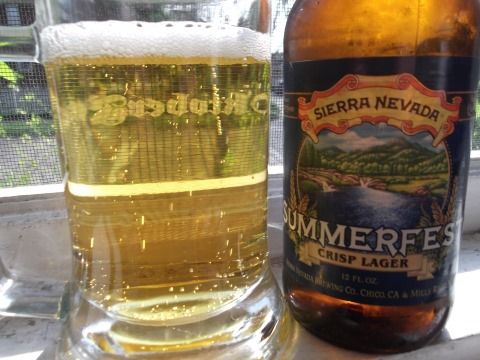
The Big Swig: Summerfest by Sierra Nevada Brewing Company


Since reintroducing myself to Sierra Nevada's beers last fall, I have been mightily impressed. I probably blathered on about this previously but it had been a long time since I'd tasted one of their brews. Their Pale Ale was a fixture of my formative microbrew years in the first half of the 1990s and it has been argued that it is the progenitor of today's IPA that all the kids go gaga for. Since that time the brewery has grown to become a macro-micro – the third largest "craft" brewery in the United States.

I'm not familiar with how well Sierra Nevada has adapted to neither the tropical fruit IPA nor the barrel aging trends as I've stuck with their renditions of German styles. And I can tell you that they've done a fantastic job whether it's sticking with tradition, tweaking it a little, or turning the Reinheitsgebot on its head with abundant New World ingredients.

The piwo at hand, Summerfest is, quite unsurprisingly, the brewery's summer seasonal and their take on the Czech pilsner – a "Czech-style lager", as they fancy it. I'm not sure how long this has been Sierra Nevada's summer seasonal but I read that it was first brewed back in 1992, which is ancient in microbrewing terms.

I was disappointed not to have my pilsner glasses at hand when I instead poured my Summerfest into my mini-Bierkrug, the only glass drinking vessel I have that remains unpacked aside from shaker pints. This piwo deserved the tall pils glass to showcase its lovey burnished straw color which was crystal clear. The pils glass would have had a nice, loose white head up top and a goodly number of bubbles moving up the height of it. If only the foam would have stuck around a bit longer.

Summerfest's aroma was essentially the antithesis of trendy tropical fruit IPAs with it's pronounced herbal and black pepper hoppiness, with an emphasis on the latter which I presume come from liberal use of the traditional Czech Saaz hops. There was also a hint of citrus too. All of this hoppy goodness was coupled with a great light crackery pale malt scent.

That cracker malt scent widened into a flaky biscuit flavor that had a slight doughy sweetness. For their part, the hops retained that big pepper character and it became more grassy and took on a greener, more leafy spiciness with a fair amount of bitterness to boot. This was perhaps the Spalter Select comingling with their Czech cousins. Overall Summerfest had a nice, clean flavor that really showcased the hops well.

For the finish, the malt did a disappearing act leaving the hops to work their spicy, peppery magic. They left a Saaz burn on my tongue and really increased the dryness. There was no lacing to be had.

Sierra Nevada did not disappoint with Summerfest – not that I expected them to, mind you. It was crisp and spicy and just full of hoppy zestiness. The pepper flavor here was unlike any that I've tasted. It was very distinct and pungent with a taste almost like Grains of Paradise. And it complemented the
biscuity pale malt taste perfectly. With its light body and bold hops, Summerfest can no doubt cut through the summer heat. It is 5% A.B.V.

Junk food pairing: Grab a bag of salt and pepper potato chips to go with your Summerfest. The salt will replace that which you lost sweating in the heat while the pepper shall complement all the spicy hops in the beer.

20 January, 2016

A Prickly Situation: Otra Vez by Sierra Nevada Brewing Co.


I reviewed several Sierra Nevada brews last year and was quite impressed with the their takes on lagers/German bier styles. Some adhered to tradition while others tweaked the tried and true. Then news came that the venerable brewery would be adding a gose to their year-round line-up. But not just any gose, a cactus grapefruit one. The gose is a light, refreshing bier – perfect for summer – so it seems odd that Sierra Nevada would choose to release it in the bowels of winter. I grant you, it's nowhere near as cold in California as it is here in Wisconsin, but it's still not exactly balmy out there.

This new brew, Otra Vez, started appearing around Madison earlier this month. And now that we are looking at sub-zero temperatures, I decided to pull out a bottle and pretend I was drinking the self-styled "perfect warm weather beer" in warm weather. It was packaged on 29 December.

The gose is a German light-bodied sour wheat bier that is traditionally flavored with salt and coriander in addition to a modicum of hops. Sierra Nevada has seemingly eschewed these flavors and instead opted for the tastes of California with grapefruit and prickly pear cactus.

Otra Vez (which apparently means "again" in Spanish) pours a straw hue. It had just the lightest haze to it. My glass was capped with a big, frothy, white head that stuck around for quite a while. (I presume the head was courtesy of the wheat proteins. Regardless, it looked really nice.) The bier was quite effervescent as I spied with my little eye many a bubble inside working its way up.

As I was ogling my glass I could smell the bier and it smelled lively and refreshing. Once I really put my nose to it I caught the grapefruit and a vegetable scent – the cactus. Now, I have had prickly cactus before in the form of nopalitos, sliced cactus pads. But it was some time ago in a dish along with many other ingredients and seasonings. Ergo I cannot recall what it tasted like. Here it tasted a lot like a cucumber with floral overtones. The grapefruit was unexpectedly subdued and not particularly tart while the carbonation was generous. Otra Vez is a bubbly brew, to be sure. While neither the Sierra Nevada website nor the bottle gives salt as an ingredient, I thought I tasted it. Not a lot and not really a taste in its own right – it was more like the cactus flavor was accented by it.

Unlike the goses I've had lately, Otra Vez did not make my lips pucker. Indeed, it had just a touch of lactic acid tartness which melded into the grapefruit's own, albeit restrained, acidic bite.

And it was these tart flavors which lingered throughout the finish. Sierra Nevada says that Otra Vez was brewed with two kinds of experimental hops but only has 5 I.B.U.s and I don't know that I could taste them. There was not much Schaumhaftvermoegen to be had with only a few spots of foam left on my glass.

Otra Vez was a definite change of pace for me as far as goses go. It has a nice light body and is 4.5% A.B.V. so this is no imperial/double/gose-on-steroids. It's not sweet and does not taste like a Jolly Rancher nor eucalyptus. I really enjoyed the grapefruit/cactus combination, although I wouldn't have minded if there was more grapefruit. But the cactus added a nice, juicy savory melon flavor which I'd bet is spectacular on hot summer days. I'd also enjoy a bit more tartness as well.

Still, I enjoyed the bier's restraint. There's nothing imperial or double about it yet Otra Vez is not a simple brew. It has a multitude of flavors that come in moderation and are placed in balance with one another. I can see myself drinking this again (and again).

Junk food pairing: Otra Vez is a light bier so pair it with similarly easy going food such as lightly-salted & thin cut potato chips. It will also go well with Oriental puffed rick cracker snack mixes that have a touch of seaweed in them.

02 December, 2015

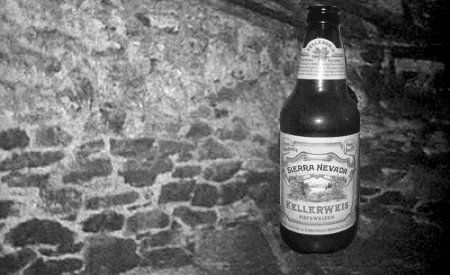
Out of the Cellar: Kellerweiss by Sierra Nevada Brewing Company


As I noted yesterday, I've been sampling some weissbiers lately in memory of my brother who passed away earlier this year and was a fan of the style. Unlike me, he enjoyed the lemon that commonly garnishes glasses of weissbier here in the States. For many years I've been under the impression that slapping some citrus onto the glass was a misbegotten practice that originated here in America where the mantra "more is better" is an almost ineluctable part of life.

I haven't found anything to indicate when or where the practice started but Michael Jackson encountered glasses adorned with lemon slices in Germany during the mid-60s so it seems unlikely that we Americans can take credit for the innovation. (After all, lemon slices also garnish schnitzel in Germany so it's not like there's a great anti-lemon sentiment over there.) However, it seems that the practice has fallen out of favor in the beer's homeland while it remains strong on this side of the Atlantic. Indeed, it is so ingrained that I was given a slice of lemon when I ordered a Schlenkerla Rauchbier Weizen a couple years ago at the Essen Haus. My brother, on the opposite end of the table, was enjoying his unsmoked weissbier mit lemon.

My foray into the world of weissbiers continues with Sierra Nevada's Kellerweiss.


Kellerweiss pours a light gold. (My photograph makes the beer appear a bit darker than it really is.) As to be expected, the brew is turbid with all the yeast having been left in. Also expected was the large white head. Wheat is laden with proteins which are dragged kicking and screaming out of suspension by the carbonation. I love the foam on weissbiers. It's rather thick – almost like meringue – and it sticks around until the last of it slides into your gaping maw. Weissbiers should be effervescent and my Kellerweiss had lots of bubbles going up the glass.

The beer's aroma was instantly appealing with a delicate lemon-citrus scent stealing through pungent banana phenolics. Underneath the fruity bouquet was also some grain that was cracker-like. Kellerweiss has a medium-light body and I was happy to find that the banana-like scent came through in the flavor. This is strictly a personal preference of fruitiness over clove-yness or bubbleguminess. There was a hint of clove, however, which is well and good and probably a necessary accent to keep the flavor from becoming overly fruity.

Also handy in keeping the taste on the straight and narrow is carbonation. One can definitely taste it in Kellerweiss. Rounding out the flavors was more cracker-like graininess. Not very strong but definitely there beneath all that the yeast had wrought.

Dryness from the carbonation overtook the lingering banana in the finish. It was abetted by a small dose of spicy/peppery hops. Schaumhaftvermoegen was plentiful with strands of it lining my glass.

I praised Saint Francis' Lust weissbier yesterday for being fairly substantial. Kellerweiss has a lighter body (4.8% A.B.V.) and slightly less intense flavors overall. This in addition to the drier finish from more piquant hops yields a beer that I can imagine would be quite easy drinking in warmer weather. Mind you, I don’t mean to imply that Kellerweiss is lacking because it isn't. It is flavorful and delicious and I'm sure my brother would have enjoyed it.

For a brewery whose reputation, as I discern it, rests on hoppy pale ales, Sierra Nevada superintends an array of fine German-style biers. They brew a wonderful pilsner, an Oktoberfest conceived with a German brewery, a great Kölsch, and a very tasty weissbier. To top things off, they are introducing a gose next month. I regularly drank Sierra Nevada Pale Ale back in the first half of the 1990s but eventually my tastebuds wandered as microbreweries sprang up. Rediscovering the brewery over the past few months has been a real treat.

Junk food pairing: On the savory side, pair Kellerweiss with some Wasabi & Soy Sauce Pringles. For dessert, pair it with dark chocolate covered pretzels.

08 October, 2015

Drinker Easy With the Beer That Really Fits You: Kölsch from Sierra Nevada Brewing Co.


Woodman's East is doing its level best to rid itself of Sierra Nevada's summer beers. The brewery's summer variety packs have been callously riven asunder so that the bottles within can be sold individually. (Perhaps tellingly, their Oktoberfest was getting the same treatment.) I've already tried the variety pack's Nooner Pilsner and now it's time to investigate the Kölsch-style brew.

Ah, the Kölsch. The official bier of Köln (Cologne), Germany. From what I've read, the Kölsch as we know and love it today originated in the early 20th century. It's a light beer brewed with a top fermenting yeast but fermented at temperature slightly lower than normal for an ale. It is also lagered, i.e. – stored for a few weeks at cold temperatures. The appellation "Kölsch" is protected and defined by the Kölsch Convention which states that, if it ain't brewed in Köln, it ain't a Kölsch.

The beer's ale-lager hybridization seems to stem from both Köln's 17th century Reinheitsgebot laws which banned bottom-fermented beer and the rise in popularity of the very same. Hence the beer has one foot in each world.

Sierra Nevada's take on the style pours a lovely light straw color and is as clear as the day is long. I got a fine, fluffy white head in my stange that would not quit. There's wheat in the beer and I do believe that there are proteins in wheat which help keep the head on your beer longer. It is my understanding that wheat is not a common ingredient in the Kölsch over in the Fatherland. My stange had a modicum of bubbles making their way up.

The aroma was at once familiar and inviting yet also novel and intriguing. As expected it had that light cracker smell as well as the distinctive fruitiness from the yeast which comes across to my nose as being a berry-apple hybrid. I was not expecting, however, the piney hop notes to be accompanied by floral and citrus ones. I presume the floral ones come from the Strisselspalt hops which I'm seeing used more often as of late, while Simcoe provided more the citrus notes.

The beer's taste just smacked of summer. It had a light body that never tasted thin. It yielded a clean cracker taste with the apple-berry yeast flavors from the aroma making a return engagement. The carbonation added some dryness and the beer had a moderate bubbly taste. The novel floral hoppiness was present on the tongue as well with no small amount of pungent flavor and paired nicely with more subtle citrus ones.

On the finish the beer proved moderately dry with more bite from the carbonation and some peppery hop bitterness joining its floral cousin. My stange was left with a goodly amount of Schaumhaftvermoegen in thick webs.

Sierra Nevada has done themselves proud with Kölsch. The floral and fruity hop aromas and flavors add a nice new twist without overshadowing the traditional grain and yeast elements. Carbonation and some more traditional German hop bitterness gave the beer some bite. On the other hand, the clean, crisp malt flavors and the floral & citrus hops made for a brisk, fresh adventure on the palate. At 5% A.B.V. the beer is deceptively quaffable so it's best drunk from the traditional stange.

I've not drank much Sierra Nevada the past several years until quite recently. I used to drink their Pale Ale quite frequently back in the early and mid-1990s and still do occasionally when it's the least hoppy offering at a party. But their recent takes on German styles have been quite impressive and I'll definitely be giving them a second look.

Junk food pairing: Pair Kölsch with Cheez-It Zingz Chipotle Cheddar. They're made with corn masa flour for authentic Mexican Crunch™ and the subtle smokiness makes for a nice counterpoint to the cheesiness of the underlying cracker and contrives to sublimate the fundamental botanical-grain dichotomy of the Kölsch.

04 October, 2015

Just Say Yes to Oktoberfest: Oktoberfest by Sierra Nevada und Brauhaus Riegele


The folks at Sierra Nevada have set themselves "on a mission to explore the roots of Germany’s festival beers" and so they will be pairing up with a different German brewer each year to brew an Oktoberfest. For the inaugural batch Sierra Nevada has collaborated with Brauhaus Riegele in Augsburg. Brauhaus Riegele was established some time ago. Indeed, at the time in 1386, the last white person to step foot on the North American continent was Leif Erikson.

About 150 years after Brauhaus Riegele came into existence the Märzen-Oktoberfestbier also came into existence. Bavaria introduced laws on at least two separate occasions in the 16th century regulating the brewing of beer during summer months. The first law or laws were put on the books in 1539 followed by a decree in 1553 which declared that beer could only be brewed from 29 September through 23 April. I'm not sure how the decree of 1553 differed from the laws on the books in 1539 nor am I exactly sure why the laws were enacted in the first place.

Some sources say brew kettle fires were too frequent in the summer months and so brewing was relegated to the other seasons during which the medieval Bavarian version of Smokey the Bear declared the fire risk to be low. Personally I think this is apocryphal. Methinks it's one of those goofy myths concerning the Middle Ages just like that one portraying medieval people as being too dumb to find potable water and so they drank beer and wine all day, every day.

More likely is the other explanation I've come across which is simply that beer spoiled in the summer's heat.

Regardless, a 16th century text refers to beer called the "Merzen" ("March") or "Sommer Byer" ("summer beer"). Brewers spent the final weeks of winter/earliest weeks of spring brewing beers that would spend months in either cellars or caves lagering away until the warmer weather hit when they'd emerge from their hibernation.

The ur-Märzens were dark beers and surely consumed during fall festivals. In the 1840s the style got a bit lighter as brewers, including Spaten's Gabriel Sedlmayr, began experimenting with new paler malts. In 1871 Spaten re-darkened the beer a bit and gave it the appellation Oktoberfestbier that we know today. There are six breweries in Munich that get to use the "Oktoberfest" appellation. Everyone else has to use Oktoberfest-style or Märzen. By the early 20th century the Oktoberfest was once again a dark beer. At some point in the 1990s the beer was considerably lightened but this version of the venerable style seems to be available at the Oktoberfest grounds exclusively. However, Paulaner did export some of the lighter brew to the States a couple years ago as Oktoberfest Wiesn.

As for how the taste of Märzens have changed over the years, I'm not sure. Ur-Märzens must have been smoky owing to malting practices in the Middle Ages. I'm sure they had a fair amount of hops in them as well to help them keep over the summer months but the hop flavors must have faded considerably by the autumn. My guess is that the style has always been malt-forward and was probably rather sweet until fairly recently. From what I can tell, American brewers today tend towards an amber-colored brew that is malty and often rather sweet. Some breweries, including Milwaukee Brewing Co., have opted to load their version of the styleup with hops.

Let's see how the Sierra Nevada/Brauhaus Riegele collaboration turned out. (Finally!)

It pours a light gold color – much more in line with Paulaner Wiesn instead of the more common amber color of American takes on the style. The beer was clear and my pour produced no head, which I found odd. Think of photos of dirndl-clad maidens carrying kurgs of bier at Oktoberfest. All the krugs have nice heads on them. I'd have thought the use of German Steffi malt would have guaranteed a big, foamy head. Must have been my poor pour. Still, the effervescence was evident with all the bubbles forming on the bottom of the glass and going up.

Oooh, the aroma was fine – it was mostly bread with a touch of sweetness in the background that was kind of like bread dough, honey, and/or stonefruit. This boded well for my dream of a malty, melanoidiny, Maillard reactionary barley nectar.

I was not disappointed by the flavor. Beer should be like this year-round. It had a nice medium body imbued with all the clean malty flavors I crave (most of them, anyway) – bread crust, toast, and yeast. While I'm not smart enough to know if I was tasting the bountiful harvest of actual Maillard reactions, I can say that I thought I was because the malt sweetness was quite subdued. Carbonation added a little acidic bite while also abetting the dryness of the spicy hops. This contrapuntal chorus made for a nice, but not overwhelming, contrast to the mellifluous malt backbone.

The beer finished dry with spicy/peppery hop bitterness lingering well after the beer had gone down into the old brooko. Alas and alack, my glass was left just a smidgen of Schaumhaftvermoegen.

Despite this beer being on the foam-challenged side of things, it was simply marvelous. It lacked the sweetness of many domestic Oktoberfests and really emphasized wonderful bready and yeasty flavors. Sierra Nevada says that it was looking to bring the "style back to its authentic roots". I suppose it depends on which roots they're talking about but the German hops and German grains, including the rather rare Steffi malt, certainly produced a fest bier that tastes much more like the Oktoberfests of Munich than most American versions of the style.

This collaboration with Brauhaus Riegele created a great beer that adhered to German tradition. It will be interesting to see with whom they partner next and if tradition will find itself tweaked a bit or perhaps even thrown out the window.

Junk food pairing: I will say it now and will say the same thing for all Oktoberfests: drink this beer with deep-fried cheese curds. There's just something about adding deep fried grains to liquid grains and how a dose of salt just brings all the grainy goodness alive in your mouth. Plus you get fat and cheese that has even more fat.

30 September, 2015

(After)Nooner Delight: Nooner Pilsner by Sierra Nevada Brewing Co.


Sierra Nevada's Nooner Pilsner is a relatively new addition to the brewery's regular line-up. There was a Nooner Session IPA early in 2014 but that gave way to Nooner Pilsner later that same year.

Nooner is Sierra Nevada's take on the German pilsner. The German pils is, at least as far as American definitions go, a slightly more diminutive take on the style than its Bohemian cousin. It's lighter in color, in body with less hop bitterness and less malt sweetness. I have no doubt people who know more than I will take exception to this definition but I'm going with it.

The German documentary Hopfen und Malz Verloren showed how the big brewing conglomerates in Germany today have watered down the pils over the years. This combined with the fact that I don't know of any German pilsners that are shipped over here with enough celerity to be considered "fresh" on Madison store shelves leads me to concede that I may never have tasted the Platonic idea of a German pils. Here in Madison the Great Dane brewpubs have Verruckte Stadt ("Mad Town"), the Dane's take on the style. I personally like Verruckte Stadt but am not in a position to judge its authenticity.

With these caveats, here's my Nooner pablum.

It pours a slightly dark straw color. No chill haze this time around as Nooner was quite clear. I got about an inch of frothy white foam atop by beer and this head lasted for quite a while. German pilsners are apparently supposed to be quite bubbly and, indeed, Nooner had lots of bubbles making their way up.

This beer was pungent. I could smell it as I shuffled around with my camera trying to get a decent shot. And it smelled F-I-N-E fine. With the glass sitting on the sill it was the malt that I smelled first with its cracker-like scent. Putting the glass to my nose I caught a bit of malt sweetness that was like honey and graham cracker. The hops were also well represented on the nose with grassy notes undergirded by hints of citrus.

Nooner tasted much like it smelled. The cracker malt scent was more like baked bread to my tongue while that honey-like sweetness was more like bread dough. The sweetness was not very pronounced but it was easily discernible. The hops were at first herbal/grassy but there were distinct floral notes too. Looking at Sierra Nevada's page, it seems the floral flavors come from French Strisselspalt hops (and that citrus scent is likely to have come from the German Saphir hops.) I'm not sure that I've ever had a beer with Strisselspalt hops previously. Combined with Saphir, Tettnanger, and Perle, you get this wonderfully piquant mélange of botanical goodness with floral and grassy flavors at the fore of the hop brigade.

Being a lager, Nooner is clean tasting as you'd expect. There's also some dryness with a bit of bite from the carbonation. It finishes quite dry with a grassy/peppery bitterness that lingers for a goodly amount of time. My glass was left with some great Schaumhaftvermoegen all around.

I was going to write that I was impressed with Nooner but that's unfair as it implies a certain set of (low) expectations for the beer that I did not have. I have a lot of respect for Sierra Nevada and drank plenty of their Pale Ale back in the early 90s. Instead I will say that I thoroughly enjoyed Nooner and its mellifluous combination of flavors. The multifaceted hop profile stood out yet always let the malt have its due. With its gentle malts, medium-light body, and hops that showcase their flavors instead of overwhelming everything else, Nooner goes down easy. Mind you, at 5.2% A.B.V. it's not a session beer.

Junk food pairing: Pair Nooner with soft pretzels smothered in melted Velveeta cheese food product mixed with ghost pepper salsa.

28 September, 2015

Good Morning Campers!: Hoppy Lager by Sierra Nevada


It's autumn now so what better time to drink the last of this year's vernal brews, right?

Sierra Nevada seems to be at the vanguard of collaborative brewing, at least as far as large microbrewers go. Their latest collaboration saw them partner with German brewery Brauhaus Riegele, founded when the most recent white visitor to North America was Leif Erikson, to produce an Oktoberfest. Subsequent iterations of the beer will feature collaborations with different German brewers. Last year Sierra Nevada began Beer Camp Across America which saw them come together with twelve other breweries across the country. Close to home they paired up with New Glarus to produce an ESB called There and Back. Farther afield they conspired with Ballast Point to brew Electric Ray, an India Pale Lager. The beer was brought back for an encore this past spring with a slightly tweaked recipe and a new nom de beer - Hoppy Lager.

I'm not sure who begat the IPL moniker but it's one of the more recent entries in the ongoing marketing atrocity that labels everything with some West Coast hops an India something-or-other. I've noticed the IPX phenomenon attacking cider now. We now have India Pressed Cider and India Wheat Cider because apples just aren't good enough, apparently. And now that winter approaches, you can have your Double IPA lip balm. Too potent for your delicate lips? Don't worry because there's session IPA lip balm too.

While the IPX moniker and the marketing abuse of hops generally (hop cigars, hop shampoo, hop bar soaps, hop air fresheners, and do any locals remember when Madison Sourdough put hops into bread?) have most certainly become a bad joke, that doesn't mean that tasty beers cannot be had with that unfortunate moniker.

Hoppy Lager pours, contra my photograph, a bright gold color. The beer was quite hazy but I suspect this was chill haze – Stone Brewing's blog has a nice explanation. The haze results when malt proteins bond with hop polyphenols at cold temperatures. Going by the blog post, I'd guess that the age of the beer is partly to blame. The haze doesn’t affect flavor and, if I'm going with the age hypothesis, I certainly can't knock Sierra Nevada. You can see the big, foamy white head for yourself. (It lasted a goodly amount of time.) But the haze obscures all of the bubbles going up the beer.

As I've come to expect from this style, the aroma was full of the requisite hoppy scents, i.e. – citrus and floral, from both Citra and Equinox varieties. But the malt was also evident here with the aroma having a very sweet component that smelled of honey and apricot.

Hoppy Lager had an intriguing mix of flavors. As hops go a dull(ish) blood orange or tangerine flavor was the first thing I noticed. A relatively new variety of hops, El Dorado, are used here and descriptions emphasize its big tropical fruit flavors so I'm assuming that they're responsible for the up front fruity flavor. There was also a floral flavor to be had and I presume that came from the Equinox hops. As in the nose, it was subservient to the fruity hop flavors.

Despite being a hop forward brew, the malt made its presence known. It tasted rather sweet to my tongue – reminding me of bread dough. But I also tasted something like plum – a fruitiness that wasn't sharp or bright like citrus. Perhaps this is the malt and the Palisade hops working in combination. The carbonation

The finish was dry with a healthy dose of spicy hops providing a lingering bitterness.

Although it had a clean flavor, Hoppy Lager was just too sweet for me. The malt flavor stood too far apart from and in too great an opposition to the fruity-floral essences of the hops. It's like there were warring factions on my tongue instead of complementary groups working together to find a zymurgylogical gestalt. The high carbonation added a bit of détente by way of dryness but not enough. As someone who is not a big fan of hop forward beers, I found that I didn't mind the 55 I.B.U.s of bitterness here. I think this is likely because of the fruity hop flavor along with the malt that refused to cede to the botanicals.

Junk food pairing: Hoppy Lager is a fairly big beer. The malty sweetness gives it a medium body and it clocks in at 7% A.B.V. Pair it with something sharp-tasting, something that will cut through the IPL miasma such as Snyder's Jalapeno Pretzel Pieces or Cheez-It Duoz Sharp Cheddar and Parmesan crackers.