Showing posts with label Stevens Point Brewery. Show all posts

26 June, 2025

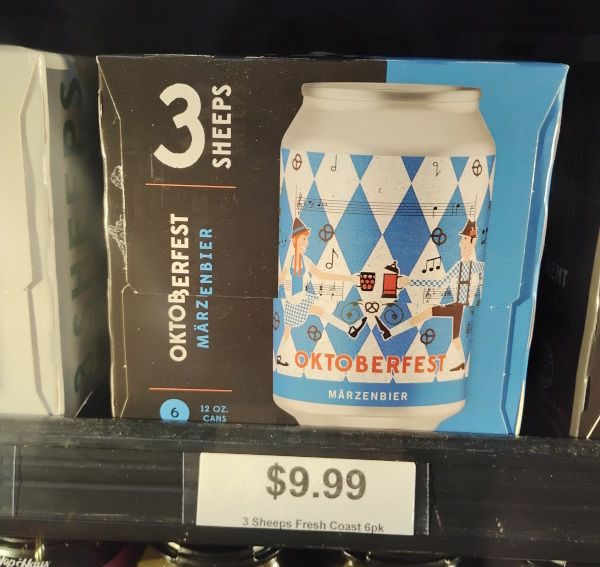
Oktoberfest season starts now

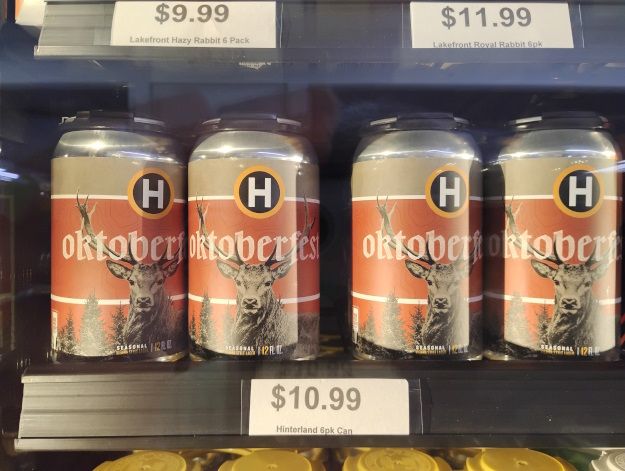
Seen yesterday, 25 June 2025:

Just in time for the summer solstice. Uff da! We're still 3 months out from Oktoberfest and horny deer running out in the middle of the road.

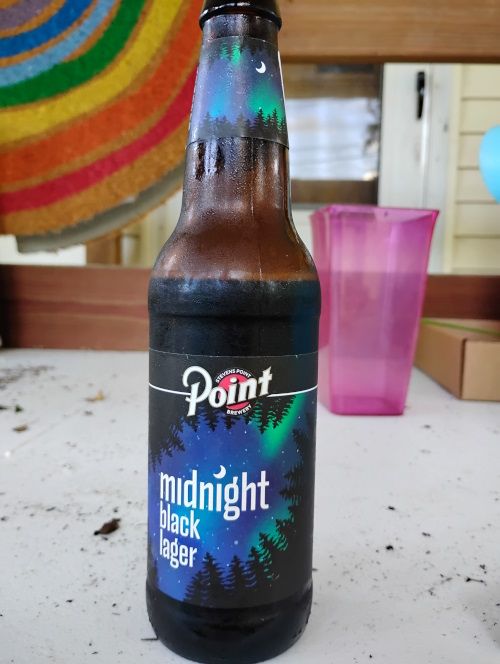
On the bright side, I tried this which I thought it was great.


A very fine blend of roasty and coffee flavors along with a little dark chocolate too. Nice green-spicy hops for balance. Light body - very reminiscent of a Schwarzbier. Highly recommended.

11 May, 2016

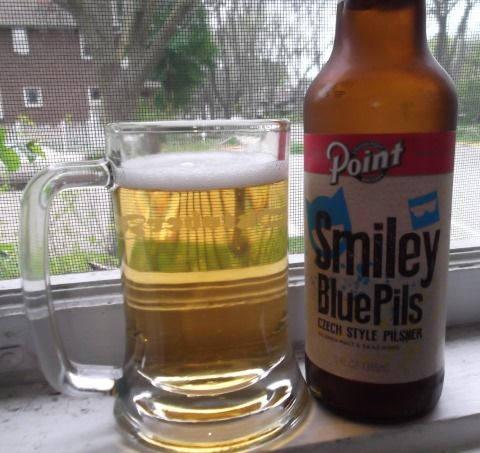
The Beer Who Came in From the Cold: Smiley Blue Pilsner by Stevens Point Brewery


It doesn't seem that long ago to me that the Stevens Point Brewery, a.k.a. – Point, was basically just its iconic blue-labeled Point Especial Lager that Mike Royko famously declared the best beer in America but little else beyond this one brew. Sure, they had Point Bock and probably other beers that have been lost in the mists of time, but Point had the reputation in my mind of being a regional brewery skating by on its American pilsner and contract brewing/energy drink production as the microbrewing revolution left it in the dust.

Now, I am not claiming that my perception mirrors reality in all respects. In fact, that is unlikely. However, Point has done quite a lot in the last 10 years to transmogrify their image from that of a regional brewer that survived Prohibition and consolidation doing what is has always done into that of a craft brewery eager to destroy your tongue with hops just as much as the next guy. And to this end they have a variety pack of IPAs in addition to its annual Beyond the Pale IPA; it also has a line of high octane brews – the Whole Hog series – which offers big, bold flavors in addition to higher A.B.V.s; the likes of St. Benedict's Winter Ale and Drop Dead Blonde were introduced and remain in the line-up while Three Kings, Kölsch-style brew, came and went; more recently a radler and citrus IPA have been introduced.

Point is certainly not afraid to branch out and try new things. Are the folks up north just throwing stuff at the wall to see what sticks? Or are they really paying attention to and embracing trends? I suppose it's some of both. Regardless, I was rather surprised when they introduced Smiley Blue Pils as a year-round brew last summer. It's not and IPA nor sour nor barrel-aged. Then again, pilsners are something of a trend in craft brewing so perhaps I should not have been surprised at all.

Smiley Blue Pils is billed as being a Czech-style pilsener and seeing the requisite Saaz hops listed on the label boded well. It poured a lovely straw color and was quite clear. Again, my pilsner glasses are all packed away so I'm stuck with a mug for a while. Getting back to the piwo, I only got a small white head but it was quite creamy. There were some bubbles in the glass heading on up but I'd expect more from a pils.

The aroma had a fairly prominent fruit scent to it which was difficult to place. It wasn't doughy or like honey so I don't think it came from the malt. Instead it was light and Kölsch-like with a delicate almost berry quality to it. This was highly unexpected though not necessarily unwelcome. A more familiar aroma of grass was also present as was a little bit of cracker.

Whatever that fruity scent was, I didn't get any of it on my tongue. Smiley Blue had a really nice light biscuity malt flavor from pilsner malt that had just a touch of sweetness but was otherwise nice and clean tasting. The grains kindly propped up some big herbal and grassy hop flavors which, along with a little bite from the carbonation, made for a rather dry taste.

The dryness increased on the finish as the Saaz's renowned peppery flavor swelled giving off a big, firm bitterness. There wasn't much lacing to speak of as the loose foam slid down into the piwo.

I was going to write something like "Smiley Blue is a surprisingly tasty pils" but realized that this sounded a bit too close to a backhanded compliment. Truth is that I really liked this beer. The gentle malt flavors were doled out perfectly here with a light touch allowing the hops their time in the spotlight. While I tend to think of Czech pilseners as having more hop flavor and bitterness than Smiley Blue, this is by no means a watered down version of the venerable style. Those Saaz really do kick in on the finish.

Smiley Blue is 4.5% A.B.V. which I think is on the low end for a Czech-style pilsener. But this matches the brew's motif of toning down an "authentic" piwo and I say this not being a Czech beer expert. Point seems to have taken a traditional approach overall but pulled their beer's peaks back out of the red. It's never as spicy or dry as the Czech imports I've had. Still, it's good Squishy.

Junk food pairing: You can't go wrong with a cold Smiley Blue and some pickled sausage with a handful of Cheez-It Sriracha Snack Mix.

26 April, 2016

I keep drinkin' malted milk, tryin' to drive my blues away: Malted Milk Shake Lager by Stevens Point Brewery


Last year Budweiser aired a commercial during the Super Bowl which mocked the perceived pretensions of craft beer brewers and drinkers alike with a narrator intoning, “Let them sip their pumpkin peach ale. We’ll be brewing some golden suds.” Part of me felt affronted by Bud's disregard for flavorful beers and brewing creativity while another part laughed because I know that I roll my eyes whenever I see a Rogue Voodoo Doughnut Lemon Chiffon Crueller Ale.

While I've never had one of those Voodoo Doughnut beers, I did have a watermelon brew this past weekend – a double IPA from Ballast Point, my first ever beer from them. It tasted like someone had brewed an IPA and then aged it on a bed of watermelon Jolly Ranchers. Not my thing, really, but I am glad that I have experienced a trendy fruit-flavored beer from a trendy brewery. Anderson Valley's Briney Melon Gose suffered from the same candy-like taste. And going back to the second half of the 1990s, I recall The Great Dane being in media res of a fruit beer binge and releasing a really awful watermelon brew. (The blueberry one was good, however.) Watermelon is just a problematic fruit when it comes to beer.

What about beers made with oysters or bull testicles? At what point does novelty lose its original Latin meaning and descend into doing something unusual for the sake of doing something unusual? This is definitely a grey area and I am loathe to think that brewers who brew novelty beers are, to paraphrase Severinus in The Name of the Rose, tempted against nature. Taking the long view, brewing a pastry-flavored beer is, to my mind, another entry in a long history of playing with foods to make them different, amusing, et al. I mean, medieval royalty were presented with whole cow skins stuffed with cooked meat, pies containing live birds (frogs, etc.) just like a certain nursery rhyme, fish prepared to look like a roast, and so on.

Admittedly, bull testicles in beer must violate various ontological categories that our brains use to understand the world. Beer is over here with grain, water, yeast, and herbs/spices while Rocky Mountain oysters are over there with tripe, pig bung, brains, and the like. Surely Pascal Boyer can enlighten us on this matter.

Which brings me to Point's Malted Milk Shake Lager. The beer was one of four in a variety pack released for the first time this past late autumn or winter called Long Nights. These are sweet beers enhanced with flavors that complement the malt. To achieve the desired effect, Malted Milk Shake Lager is brewed with malted milk powder and aged on cocoa nibs. Note that malted milk powder was invented by an English pharmacist and the company he founded with his brother, J & W Horlicks, would produce the stuff here in Wisconsin – in Racine.

Malted Milk Shake Lager pours a lovely dark copper due, no doubt, to the chocolate malt. While not as dark as some porters, it looks almost opaque in the glass. If you maneuver your vessel around, you can catch the color as well as the beer's clarity. I got a small ecru head on my pour which lasted what I think of as an average amount of time – 30 seconds or so. While not effervescent like a pils, there was a fair number of bubbles in the bier heading upwards.

Point advertises this as a sweet bier and this was confirmed by the aroma. It was sweetly scented with the evaporated milk giving it a luscious dairy air. The malted part of the malted milk was also rather prominent. Topaz and Tettnang hops are used here but in the aroma I could only detect a faint bit of grass. To be fair, I don't think this bottle was the freshest example of the bier.

This is certainly a sweet bier. A prominent sweetness was the first thing that I tasted which was a mixture of lactose and bread dough. The former helped give the bier a really smooth feel. Again, the malted part of the malted milk powdered came through loud and clear while there was a touch of bitter chocolate in the background. I tasted a little carbonation as well.

On the finish the malted milk flavor lingered a little and was joined by some of those hops that were in the aroma. While not a big flavor, they helped lay the sweetness to rest with some grassiness and a little bit of bitterness as well. There was no Schaumhaftvermoegen to be had.

Upon her first taste, my wife said, "It's not as bad as it could be." True enough. Malted Milk Shake Lager does taste disturbingly like malted milk. It has a smooth feel to it and a not-unpleasant sweetness which never became cloying. As weird as it sounds, the bier had a clean taste with the flavorings taking center stage with the malt flavors taking on a supporting role. While there's nothing wrong with lactose in beer – see the milk stout – or any of the other flavorings here, Malted Milk Shake Lager just didn't cut it for me. On the one hand, it's a nice middle-of-the-road brew. Not too sweet, no big flavors, 4.8% A.B.V. But it violated those ontological categories too blatantly. The added flavors here are nice but overshadow the natural bier taste rather than complementing it or playing off of it in some way.

Junk food pairing: Keep the dessert theme going. Try pairing Malted Milk Shake Lager with some dark chocolate malted milk balls or turtle cookies.
02 December, 2015

That's a Peach, Hon: Peach Hefeweizen by Stevens Point Brewery


This is the final entry in my late-year weissbier triptych. In my previous post I pondered the customary slice of lemon that is duly affixed by bartenders across America to weissbier glasses. For better or for worse, I skip the zitrone. It's just not my thing although I can see the appeal of it. Having said this, I am not ideologically opposed to blending a weissbier with some fruit or using your bier to steep tea or adding a floral dimension to brew.

This past summer Point introduced Peach Hefeweizen via their Whole Hog series which features various brews made in limited quantities aimed at the craft beer drinker. The pumpkin ale enjoys a glowing reputation from what I can tell. I miss the imperial pilsner which seems to have been brewed once in 2009 and then disappeared.


Peach Hefeweizen pours a light gold hue and was hazy as expected. The beer was crowned with 1"+ of nice ecru head. This was a nice effervescent brew with lots of bubbles going upwards. And I mean lots. It was bubbly like a fine pilsner. Very pretty.

On appearance, Peach Hefeweizen gets high marks. The problem started when I smelled the bier. At first I caught peach. But as my brain tried to discern some evidence of this being a weissbier such as a bit of banana or clove, it realized that it had also gotten a big dose of butter. Diacetyl! D'oh! To the best of my knowledge, and anyone reading this from G. Schneider & Sohn please correct me if I'm wrong, but there should be no diacetyl in a weissbier. I could probably live with a little but this smelled like a lethal dose.

The beer's taste matched its aroma with the peach coming first followed by the dreaded butter. I could also taste the carbonation. What I failed to taste, however, was any indication that I was drinking a weissbier. I am loathe to make any proclamations about a beer so severely compromised by diacetyl but the prominence of the peach left me with the impression that, had the diacetyl not been present, I wouldn’t have tasted much in the way of phenols anyway. The peach flavor was strong instead of being at a lower dosage where it would complement any banana or clove flavors.

My drinking experience, such as it was, finished with the buttery flavor dying out leaving the peach to linger for a short time until a nice dryness from carbonation and some grassy hops entered the scene. Schaumhaftvermoegen was oddly light. So light, in fact, that there was but a smattering of small spots.

Did anyone else out there run into diacetyl in this bier? I'd hate to think it was just me and my poor beer storing habits. Aside from the off flavor, the peach wasn't bad. The label says both "Beer with Natural Flavor Added" as well as that peaches were used. Does this mean that only peaches were used? The peach flavor of the beer didn't exactly taste like fresh fruit but nor did it taste fake.

Junk food pairing: If this bier had no diacetyl, I'd pair it with either some Kartoffelchips or pretzels with mustard and/or horseradish. You'll need something to cut through all that peach.

22 June, 2012

Three Kings Ale from Point


For reasons unknown, the label for Point's Three Kings Ale is distinctly unhelpful. It doesn't tell you much about the beer inside the bottle. Luckily there's the Internet so everyone can find out that it's a Kölsch-style brew.

Mmm... Kölsch. I drank a Three Kings earlier this week when it was 90+ degrees out. Kölsches and their American brethren are light, bubbly, and crisp and thusly perfect for hot weather. This is why Germans drink them out of a narrow cylindrical glass called a stange (see photo above) that holds only .2 liters – you want to be able to drink a serving before the beer gets warm.

Kölsch is an appellation for beers brewed in Köln, Germany and, according to the Kölsch Convention of 1985, "breweries outside municipal Cologne which acquired their vested right with the term Kölsch before this code of competition came into effect." The convention stipulates that the beer be "a blond, top-fermented, bright and hops-accentuated full-bodied beer which was brewed according to the Reinheitsgebot." The Kölsch is a Obergäriges Lagerbier, which means it is top-fermented with a special Kölsch yeast but it is set into storage for a several weeks and the temperature is slowly lowered to near freezing. You see, back in 1603 lawmakers in Köln put the kibosh on bottom-fermented brewing but lagering became all the rage in the 19th century so Rhenish brewmasters split the difference.

As you can more or less see from my less than Ansel Adamsish effort at photography, Three Kings pours a nice yellow, as per the Kölsch Convention. The beer is nice'n'bubbly so I got a good head. For the aroma, it was primarily biscuity but with a wheaty edge and some faint noble hops to boot. While there may have been some other more subtle aromas, my nose was being assailed by the stench of an algae-infested Lake Monona so, if they were present, they were lost on me. The taste is malt-forward, slightly sweet and tasting like bread dough; there's also white wheat in Three Kings in addition to barley. All those bubbles lend the brew a thinner mouthfeel than the malt profile might suggest. Grains seamlessly gave way to a moderate herbal hop bitterness at the finish along with some crispness.

I've only ever had three true Kölsches – Reissdorf, Sunner, und Gaffel – and they came in bottles from across the ocean so I'm thinking they weren't the freshest beers I've ever had. This caveat aside, I thought that Three Kings tasted most like Gaffel with its high malt profile. (Whereas Wavehopper is more like Reissdorf but hoppier.)

Junk food pairing: String cheese. Non-smoked this time around.