27 April, 2026
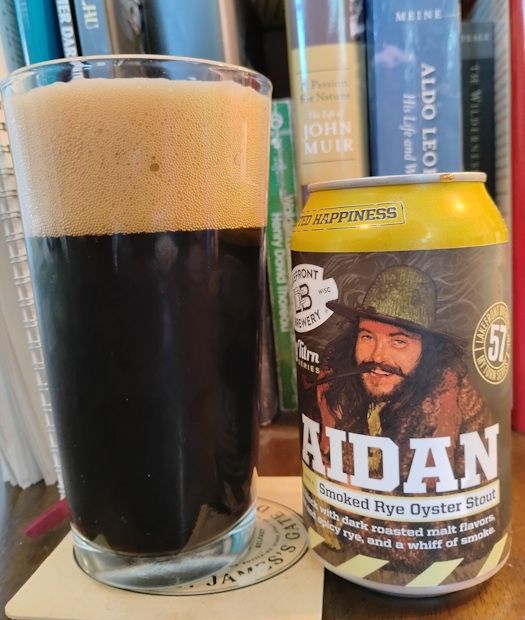
Is this oyster stout fresh?: My Turn - Aidan by Lakefront Brewery
04 February, 2026
A brace of bocks and sayonara snakes
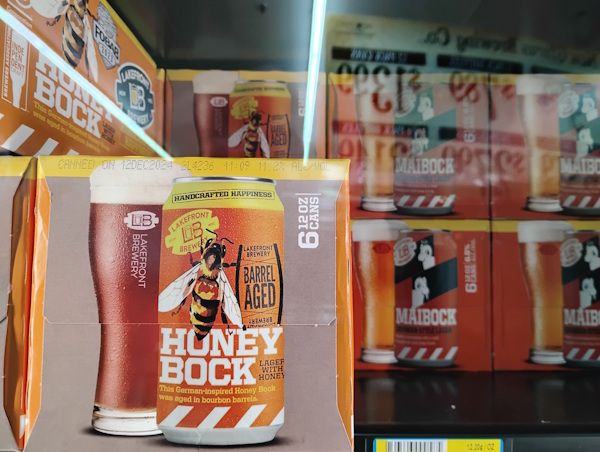
When I went to the liquor store last weekend I noticed that Lakefront is not messing around when it comes to helles bocks. They had a couple on offer.
Have they brewed the honey bock before? I cannot recall. It was just nice to see a brace of bocks to push back against the 8 gillion IPAs.
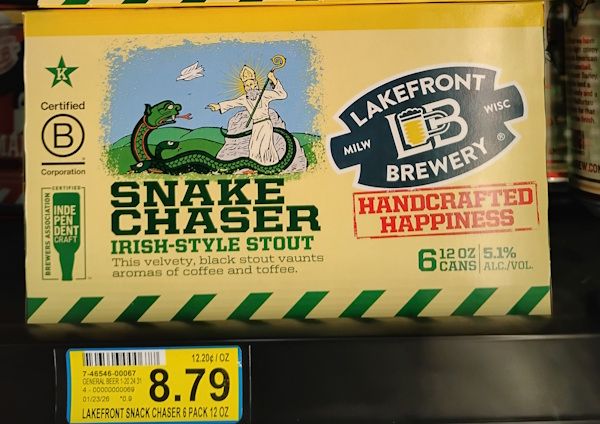
I see that they have also resurrected Snake Chaser.
05 December, 2024
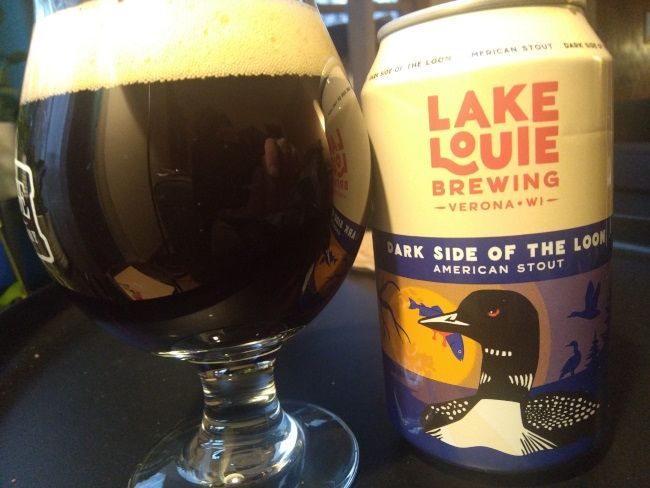
There is no dark side of the loon, really. Matter of fact, it's all dark: Dark Side of the Loon by Lake Louie Brewing
So what is the difference between Lake Louie's Li'l Louie Lager and their Wisconsin Vacation Lager?
This question came up as I was checking out their website in preparation for this very entry you have before you. They both appear to be Miller/Bud types of beers. Perhaps the former is akin to Miller Lite since it has a lower A.B.V. than the latter. Lake Louie's website is one where ad copy reigns and revealing the ingredients comes piecemeal, if at all.
This reminds me of an exchange I had on Twitter several years ago. A beer writer whose name I cannot recall (wrote for Forbes, perhaps...?) posted a tweet saying that Goose Island was coming out with a new beer, Four Star Pils. I asked him if it had been brewed with then new, fruity tasting hops or with more tried and true Nobley ones.
Bad mistake.
Almost immediately, if not in his first reply, the guy turned into a snide jagoff and began addressing me as if I was the Mrs. Grundy of the beer world. Accusations that I was an obstinate puritan unwilling to consider the new and novel came first. My retort was that I simply wanted to know the ingredients before I spent my money. I am merely a humble consumer and in no way was I opposed to the existence of pilsners with nouveau, fruity hops; I just wanted help in deciding whether to go all in with a 6-pack or to dip my toes in the water with a single bottle.
Before long, his pal Michael Kiser (the marketer behind Great Beer Hunting) waded in and went on the attack. At one point, I told the original fellow that he had changed the direction of the conversation and moved the goal posts - in order to be an even bigger jerk, in my opinion, although I didn't write that. He sneered back "I can move the goal posts if I want to." I could easily imagine the guy hunched over his keyboard writing in response to disaster victims who are short on potable water, "Let them drink Westvleteren."
What an asshole. So were they both, both assholes.
It took me years but I eventually learned my lesson and left Twitter. A few or more years ago I heard that my original interlocutor was no longer reported on beer for a living and I now see that GBH is on indefinite hiatus. I would be lying if I said I didn't feel even a smidge of schadenfreude.
So back to Lake Louie. Their site's description of the beer at hand, Dark Side of the Loon, says "This rich and complex American Stout finishes as smoothly as a majestic loon gliding across a moonlit lake in hunt of its prey." Just ad copy. Can I get a bit more than a simile, please? I don't know what makes a stout American beyond being made in America, perhaps. How does it differ from an Irish or English stout? My guess is that either it has been laced with Citra hops or it is very potent and I see that it's 7% A.B.V. Does it lean sweet or dry? Was it blended with a soured portion of IPA?
Dark Side of the Loon is a recent addition to the Lake Louie portfolio. I think heard tell of it a month ago or so. An email I received shortly thereafter features a picture labeling it as a seasonal so, once it's gone, it's gone until at least next fall. I was going to lament that a brewery that has Kirby Nelson as an employee lets an autumn go by without a doppelbock is a crime but I see that Lake Louie does now have one called Mallaggie, a Märzen doppelbock. Not sure if it's being packaged or is just available on tap. And, to be honest, I am not sure if Lake Louie operates independently of Wisconsin Brewing Company or who. Brewmaster Kirby Nelson may spend his time fulfilling brewing contracts while someone else keeps the Lake Louie lamp trimmed and burning.
Even if the Lake Louie website isn't particularly helpful, the can does note some roasty flavors in addition to the major selling point of smoothness.
How many other beer labels are there that depict nature all red in tooth and claw and bill?
This beer got brownie points right off the bat for having a head that stuck around while I fumbled with my phone's camera. It was a lovely tan hue and jiggled when I moved the glass. And the beer's name was true to its word as this stuff was positively Stygian. If I held my glass up to a light at just the right angle it appeared a deep mahogany but, for all intents and purposes, this was the kind of beer that H.P. Lovecraft would have had at his side as he chronicled the events witnessed by Randolph Carter. A strong smell of roastiness wafted into my nose as I took a whiff as did an astringent one. Was this stuff really only 7%? I caught some stone fruit too as well as faint bitter chocolate and some herbal hoppiness. No fruity hop aroma!
My first sip revealed a medium body and a decent fizziness. I tasted milk chocolate, plum, some roast, and that boozy taste. Oh, and some of that herbal hoppiness and absolutely no tropical fruit. The stone fruit and chocolate flavors faded on the finish allowing the hops to share some bitterness to make for a perfectly dry denouement. I found that the much-touted smoothness appeared as the beer warmed and indeed the stuff became positively velvety as it went down. The smoothness helped minimize the boozy astringency, which I appreciated.
Once up to temp, this is one very, very tasty beer. The chocolate/mild roasty flavors are really nice and I was happy Loon steered away from the more intense roasted flavors that lend more of a bitter/burnt taste. It's not that I don't like these flavors, it's that American brewers tend to overload dark beers with them whether they be stouts, porters, dunkels, or schwarzbiers. You don't need to use black malts in every dark beer. The hops lovingly balanced the overall taste perfectly. Plus they give just the right amount of dryness to complement the luscious, satiny finish.
Junk food pairing: Dark Side of the Loon will pair well with nutty, smoky foods such at Barbeque Nutchos or Smokehouse Nut-Thins.
17 November, 2023
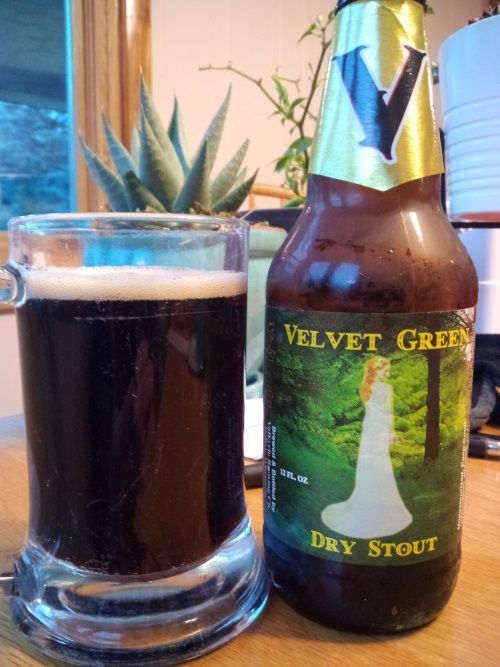
One Three and a Half Hour's Ride Up to the North: Velvet Green by Valkyrie Brewing Co.
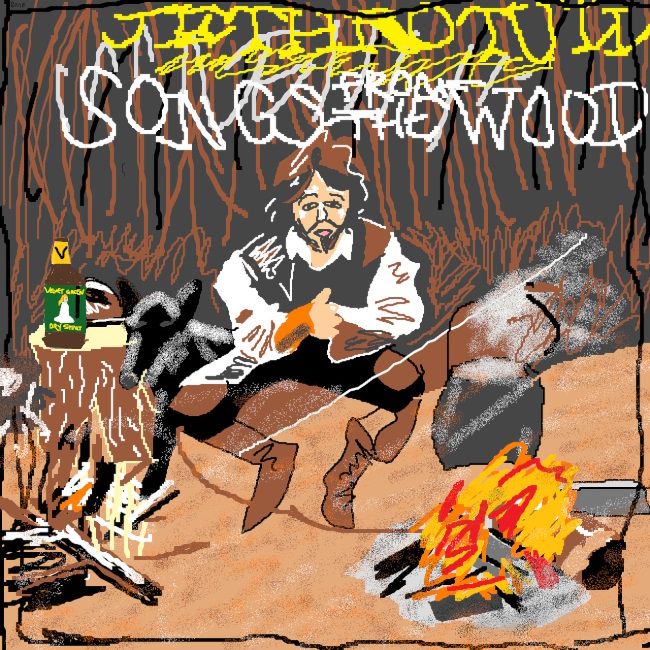
(Thanks to the Shitty Artwork blog for the great album cover.)
A recent venture (...September. Recentish.) up north included a stop at Valkyrie Brewing. I had stopped in after a very nice hike and that first Whispering Embers tasted oh so good as it gently put my aching muscles at ease. As I perused Ann Lee's artwork and gazed out the windows at the quiet streets of Dallas, I knew that the brewery was up for sale and that it was quite possible - even likely - that this would be the last time I'd step foot in the place.
I thought about how I would miss going there in the autumn after a long hike and enjoying fresh Rauchbier to relax my bones. It's become a tradition, albeit a recent one, and I shall miss it if no one steps up to keep the Valkyrie legacy alive.
During my visit last year (or was it the year before?), I asked Ann, who was behind the bar, if she and/or her husband, Randy the Brewmaster, were Jethro Tull fans as they had at least a couple of beers that seemed to be named after Tull songs. First there was Crimson Wonder, a Scotch ale, whose name seemed to have been lifted from "Cup of Wonder" from the Songs From the Wood album. And Whispering Embers, their smoked Oktoberfest, sounds not unlike a lyric from "Fires At Midnight" on that album. Also on Songs From the Wood there is a tune called "Velvet Green", a dry stout and the subject of this blog post.
I don't know what the specs are for a dry stout, a.k.a. - an Irish stout. Some extra hops, I suppose. I wonder if the Irish consider their stouts to be particularly dry.
As expected, Velvet Green was a very dark brown that looked black in the glass. I couldn't see inside and light didn't stand a chance trying to penetrate the stouty gloom. My pour produced a small tan head that, sadly, went away rather quickly. I guess I have become used to stouts on nitro that have big heads and vortices of tiny bubbles inside and don't recall if the non-nitro type is supposed to be this mellow. My nose caught mostly coffee and malty sweetness along with a little dark chocolate and a touch of grassy hops.
That small head equated to moderate fizziness. The body was medium-light and leaned towards the light side. Despite not being nitroed, it still had a lovely smooth taste that was dominated by coffee and roasty malt. Unlike American porters, though, the malt flavors were a bit restrained. The advertised dryness came on the finish when those herbal hops pushed some lingering dark chocolate notes aside and shone through.
Valkyrie says Velvet Green is 4.6% A.B.V. and I think this is just slightly higher than Guinness, the Platonic ideal of an Irish stout. I have to wonder when the stout became so un-stout. That is, I have always been under the impression that stouts are porters brewed to be bigger and stronger. You know, stouter. Maybe porters were historically somewhere around 3.5% which would make a 4-4.5%+ version stouter. I just thought that a stout stout would be 5%+ at least.
I thoroughly enjoyed Velvet Green. It had the requisite toasty-roasty malt flavors with coffee and dark chocolate and the dry finish was just tasty. The light body and the overall easy-going taste means that they'd go down perhaps too quickly on St. Patrick's Day.
Junk food pairing: Pair your Velvet Green (while you can!) with a bag of Keogh's Crinkle Cut Flame Grilled Irish Steak potato chips.
16 August, 2023
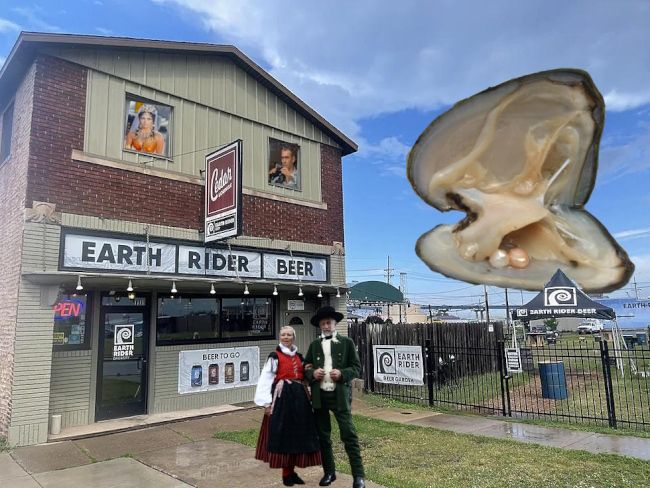
The (Lake) Superior Stout: North Tower Stout by Earth Rider Brewery
Funnily enough, this summer I've been seeing bus wraps - those ads that take up the whole of or both sides of a bus - trying to lure Madisonians on a trek up north to Superior way on the opposite side of Wisconsin in the far northwestern corner. These ads refer to the city on the Great Lake of the same name as the Paris of Wisconsin. I smile every time I see a bus with this ad drive by me.
Superior is a town of some 26,000 people and a not insignificant number of them are drunken blue-faced Finnish Americans. And I'd bet that a fair number of these folks are relaxing in a sauna plotting some kind of socialist workers revolution as I type. No wonder that Douglas County is a blue island that stands out in a sea of red up north.
I've been trying to sample the breweries of northwestern Wisconsin as they're not generally available down here and have been successful at several of them. While I was in Spooner, home of Round Man Brewing, back in June, I was there on a day when, alas, the brewpub was not open. I find it odd that brewpubs up in that part of the state aren't open every day of the week during the summer. It's tourist season with thirsty Chicagoans and Minneapolitans everywhere up north. Plus, the bars in your town are open Monday through Sunday. Maybe they're just short-handed.
Whatever the case, I've been able to sample Lazy Monk (arguably west central), K Point (ibid), Bloomer Brewing, Valkyrie, MoonRidge, Agonic, South Shore, and the Angry Minnow. One brewery from up that way that does distribute down here is Earth Rider.
While perhaps never exactly common here in Madison, I used to be able to find their brews at Woodman's with ease. Not so lately. Both east and west. Who knows. Maybe the Earth Rider supplies are always replenished the day after I do my shopping. Regardless, I managed to find their beer at Brennan's which seems to be a good source for less common brands and brews.
I know a couple folks from the northwest part of the state who have good things to say about Earth Rider so I was looking forward to putting another notch on the beer bedpost.
The brewery's website doesn't have much to say about Earth Rider history but I discovered elsewhere that it started up in 2017. Their claim of being "the first brewery in Superior, Wis. to produce beer for the region since 1967" belies the fact that Thirsty Pagan Brewing, just down the street from Earth Rider, predates them by 11 years or so. Maybe the marketing department at Earth Rider considers Thirsty Pagan to be a brewpub and pizzeria and not a brewery proper.
While it was a bit frustrating that their website didn't give me much fodder for this blog post, it was nice to not have an overly sentimental and probably half true story about how the founder's quadriplegic father gave his life so that his only begotten son could attend brewing school or some such thing. But I did learn that the brewery and its taproom are in historic buildings and that they use Lake Superior water for brewing.
While Brennan's had a mix pack thingy that would have given me a variety to choose from, I decided not to jump in and instead dip a toe into the water. Perhaps it had an IPA and/or a pale ale which didn't appeal to me. So I settled on their North Tower Stout.
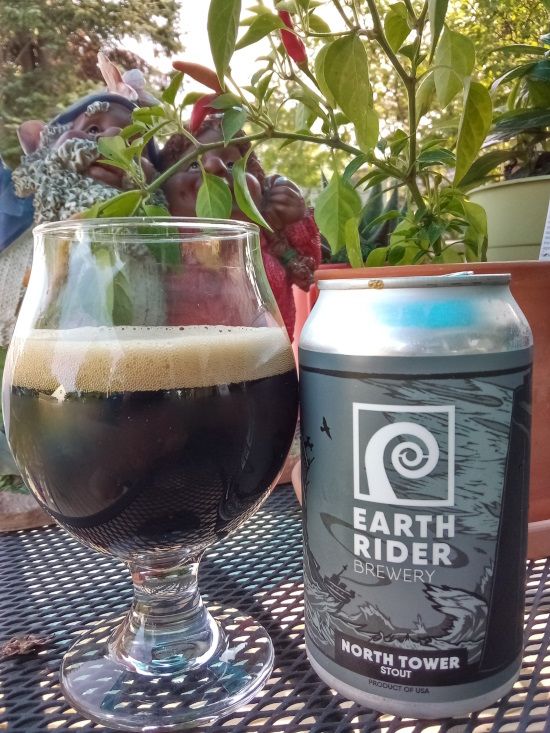
It's an oatmeal stout, I discovered, even though the label doesn't mention oats on it. The brewery is near North Tower Avenue and the label seems to picture the big grain silos behind the brewery and a cargo ship out in the choppy waters of Lake Superior.
North Tower looked oddly out of place on my deck on a sunny summer day. A lovely tan head of loose foam sat atop the positively Stygian stout. It lasted an average amount of time, in my estimation. Despite its opaque appearance, when I looked at that little dimple where the stem meets the bowl or whatever you call the part of a glass where the beer resides, I could see it was, in fact, a very deep brown color. Taking a whiff, I caught coffee, milk chocolate, plum, and just a touch of grass. Nothing unexpected but it looked beautiful, if a bit menacing, and smelled wonderful.
My first sip revealed a firm fizziness and a medium-heavy body. Milk chocolate was out front and it teamed up with a fair dose of malty sweetness. There was a bit of coffee in the back and I found that the plum that I had smelled translated to something more like cherry on my tongue. As promised with the addition of oats, this stuff was creamy and smooth. I found that, as it warmed up, the beer developed a slight smokiness which I quite liked.
The stone fruit and milk chocolatey sweetness lingered a bit on the finish. A mild herbal hoppiness offered just a modicum of bitterness and a little dryness. These provided some counterpoint to the sweetness but not enough to truly balance things out.
I am ambivalent about North Tower. Credit must be given for avoiding the typical American stout recipe of bitter coffee, dark chocolate, and heavy roastiness. Those flavors are all here but are toned down in favor of a sweeter malty flavor that ended up tasting like milk chocolate. While I liked how this paired with the cherry flavor, I found myself thinking that this was like a dessert beer. It was rather sweet, fairly heavy - just not a good choice for an 85 degree day for me personally.
North Tower is a very good beer but its sweetness means that one is enough for me. I now need to find something else from Earth Rider to follow up one of these.
Junk food pairing: Pair your North Tower with a bag of Lay's Roasted Garlic Oyster potato chips.
05 July, 2023
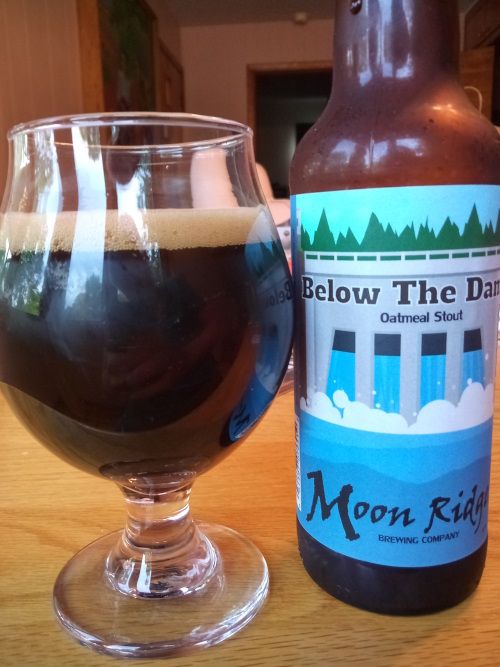
Down by the Chippewa River: Below the Dam by MoonRidge Brewing Company
Looking at a map of Wisconsin, I can imagine "Here be Bud Light" printed in the northwest part of the state, starting in Washburn County, continuing into Sawyer, and finishing off with the last couple letters in Price County.
Well, maybe it's not quite that bad but breweries, craft or otherwise, are fewer and farther between up there than in the southern part of the state as well as in the Green Bay area. The breweries that are there tend not to distribute here in Madison nor in Milwaukee so they don't garner the attention of drinkers and beer writers in the state's more populous areas. And so, when I head up north, I try my best to drink local and give these breweries that are beera incognita in these parts some love.
Last month I found myself north of Highway 29 - truly "up north" - in the northwest part of the state and, after a very nice hike, I headed to Cornell, home of MoonRidge Brewing Company, for refreshment. While it was my first time at the brewpub, it was not my first encounter with their beer.
You can get a selection of their brews at the Woodman's in Altoona and I bought a six pack of their Haymeadow, an Irish blonde ale, there 2 or 3 years ago. I don't know anything about this style. Is it just a different name for a pale ale? Perhaps the brewer is a guy named Seamus and he made a blonde ale and called it an Irish blonde ale just to mess with people like me. When I opened up a bottle of it at home, I was disappointed to find that it tasted tired. This stuff seemed to have been on a shelf for just a little too long.
I haven't bought any MoonRidge at Woodman's since. But I am pleased to be able to say that the Haymeadow I had at the brewpub last month was just swell. Perhaps tempting Fate, I brought home a mixed six pack from MoonRidge's own cooler. After all, if Winona Ryder can find redemption after getting busted for shoplifting, so too can a brewery for an outdated six pack.
The story so far:
The name refers to the Cornell Dam, originally built in 1913 to harness the Chippewa River and provide power to the local paper mill, today it seems to be owned by Northern States Power Company/Xcel Energy and generating electricity for them.
My tasting began well. No off scents upon opening the bottle. My pour produced a very nice tan head that, sadly, went away quickly. This stuff looked like motor oil going into my glass and appeared black. No light getting through that beer. The aroma seemed par for the course as American stouts go - dark chocolate, coffee roastiness, and some plum. It smelled very nice indeed.
For a stout, it had a fairly light body which I found very odd considering this beer looked like Valvoline. Fizziness was on the low end of the scale. Coffee and dark chocolate dominated the flavor while a more generic stone fruit taste held court in the background. As it warmed, that roasty bitterness took on a black licorice bent and what I thought was the oat smoothness became more noticeable.
A little bit of coffee and dark chocolate lingered on the finish as a mild grassy hoppiness entered the gustatory stage. Bitterness and dryness were minimal. Just enough to notice and to bring the malty flavors' times at center stage to a denouement.
I found Below the Dam to be too thin. I liked the coffee and dark chocolate flavors quite a bit and they came in at the right strengths and proportions too. But it was watery and needed a richer, fuller body to let those great roasty flavors reach their full potential. My bottle didn't taste old, it didn't taste like wort or skunky. There were fine flavors there just like paint on a palate. It's simply that there wasn't a suitable canvas.
A middling effort but I am not ready to give up on MoonRidge yet.
Junk food pairing: MoonRidge offers pizza at the brewpub so pair your Below the Dam with a bag of Pepperoni Pizza (flavored) Combos.
07 March, 2023
Road Slush 2023
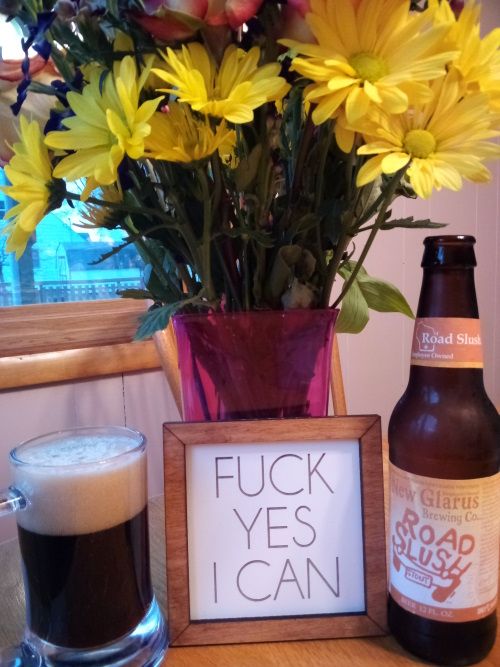
A fine stout from New Glarus.
01 March, 2023
Revolution's Repo Man Redux
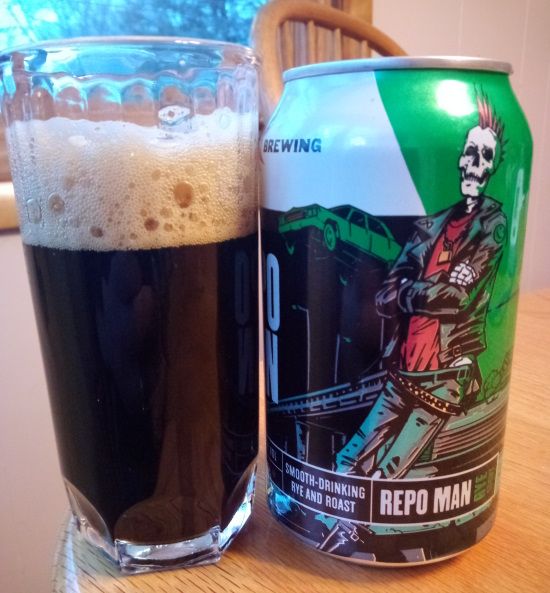
I thoroughly enjoyed Revolution Brewing's Repo Man Rye Stout last year and was happy to see it in stores again. This is a mighty tasty brew.
More rye beers are needed.
23 November, 2022
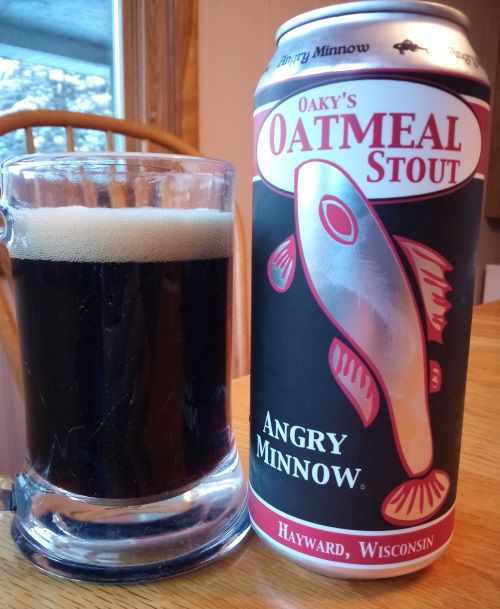
Not Too Lofty: Oaky’s Oatmeal Stout by Angry Minnow Brew Pub
https://hosting.photobucket.com/images/v99/tim_archer/angmin-oakys-1.jpg
As I was driving south on Highway 27 from Hayward, I realized that I had completely forgotten to take any pictures of the giant fiberglass muskie there at the National Fresh Water Fishing Hall of Fame.
Oops.
It had been about 17 years since I had last been to the town that I think of as the Wisconsin Dells of the northern part of the state. Not wholly apt, I grant you, but, in addition to fishing, the town celebrates the area’s logging history (it is in Sawyer County, after all) by being the home of the Lumberjack World Championships where contestants chop and saw in various way, speed climb poles, and attempt to run down a series of floating logs (a.k.a. – boom running), amongst other competitions.
In February, Hayward plays host to the Birkebeiner, the largest cross-country skiing race in the country, which attracts skiers from around the world.
Tourism just seems to be an outsized part of the town’s economy, hence my identification of it with the Dells. I suppose it just needs some kind of fall harvest festival, such as for cranberries, and Hayward will have all of the Up North bases covered.
My last visit to Hayward included a stop at the Angry Minnow Brew Pub which had been open only for a year or so. I recalled being there on that snowy night in 2005 but had completely forgotten what I had eaten and drunk. And so I have scoured the archives and found what I wrote about my stop there 17 years ago:
“I went to The Angry Minnow and had the best food of the whole trip - a grilled hunk of pork loin. I also had a pint of their stout which was also excellent.”
On my visit last month, I had come from a hike and was thirsty and needed something in my belly. I believe that I pulled into town just as the brewpub was opening as I appeared to be the first customer of the day.
The Angry Minnow is in the former offices of the Northern Wisconsin Lumber Company (and who knows what else it has been home to over the years) and is a gorgeous place. Vaulted ceilings, stained glass, and, of course, lovely wooden everything give the place a wonderful old-timey vibe. It’s not difficult to imagine a lumber baron from back in the day stopping in for lunch with his secretary on his shoulder and enjoying a cold beer from, oh, the Northern Brewing Company up in Superior or perhaps the Phoenix Brewing Company in Rice Lake.
I know nothing about Hayward’s brewing history. The northwestern part of the state gets short shrift in the brewing history books (Book. Singular. - ed) I own and, I would argue, this persists today with breweries in that part of the state playing second fiddle to ones in, well, just about any other part of Wisconsin. While some beer from the northwest is available here in the south, it is breweries in the Milwaukee, Madison, and Green Bay areas that dominate store shelves and tavern taps.
While there are, no doubt, multiple reasons for this, the main one is surely that a lot of beer from that part of the state simply isn’t distributed down here. It is the Twin Cities and not Milwaukee-Madison that is the closest big market for them. This means that a venture to that part of the state is a real treat for me as I am able to sample the tastes of a region that are, by and large, unavailable to me at home.
In a repeat of history, I sat down at the bar and promptly ordered the stout - Oaky’s Oatmeal Stout. While there were several other brews on offer, the stout had the most appeal for me. As I explained to the bartender after we’d struck up a conversation, I am not a fan of American pale ales and IPAs and barrel-aged brews tend to be too much barrel and not enough beer for me. The peach Gose was mildly interesting but I tire of fruited beers. Besides, I was keen on something heartier.
The stout on tap was laced with nitro and so my glass had a lovely bubble vortex that my cheap camera phone was not able to capture. My beer was accompanied by a bowl of chili which was very good. Before forgetting to get that snap of the giant muskie and hitting the road, I bought a mixed 4-pack that included some Oaky’s.
While my pour at home did not have the visual elan of the nitro pour up north, it did have a lovely tan head of loose foam that stuck around for a spell. The beer was a deep, deep reddish brown that repelled all light that attempted to penetrate it. My nose caught roasty grain, a dash of caramel, and a bit of grassy hops.
A medium dose of fizz greeted my tongue on the first sip which stood in stark contrast to the smaller nitro bubbles. However, the oatmeal here provided a medium-bodied smoothness underneath. Roasted grain and coffee flavors were prominent while an apple-like sweetness and some spicier hops helped out from behind. On the finish, the sweeter flavors disappeared leaving coffee to be joined by dark chocolate and increasing spicy hoppiness.
Things ended with medium levels of both dryness and bitterness.
My assessment from 2005 holds today. This is an excellent beer! The thing is, it isn’t particularly stout. While I enjoyed the roasty and coffee flavors immensely they were never in your face. There is an aura of restraint here, with the flavors lovingly choreographed to be tasty without being imposing. It proved to be a perfect accompaniment to the chili and hearty enough to make my aging joints forget the walk they had just endured. Yet I felt able to hit the trails once again after my pint had been emptied.
One of northwest Wisconsin’s finest craft beers.
Junk food pairing: you need a bag of prime rib potato chips to go with your pint of Oaky’s Oatmeal Stout. And someone needs to devise venison flavored chips.
09 February, 2022
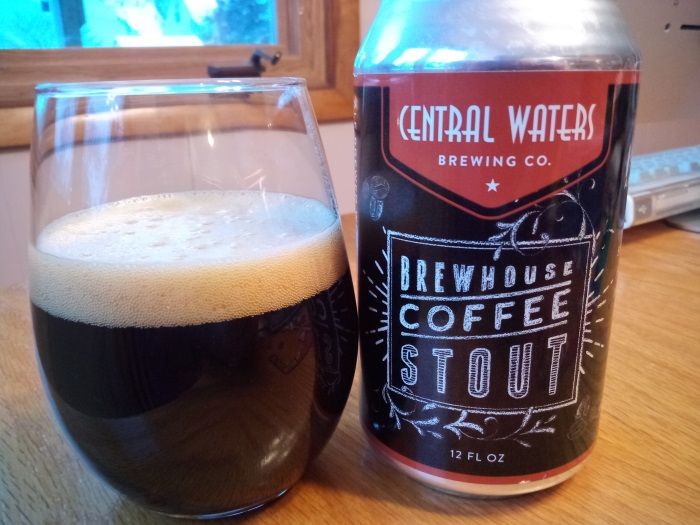
Just Like the Darkest Depths of Mordor: Brewhouse Coffee Stout by Central Waters Brewing Co.
Because I have reached that point in life when most of it is behind me and not yet to come, I often approach things through a historical lens. Such is the case here. Coffee beers always bring back a memory of drinking New Glarus' Coffee Stout on Easter '96 at the Paradise Lounge here in Madison with my roommate. The way I recall that day, the beer was new and novel to me and I had a great day drinking and shooting pool with nary a thought about some guy being nailed to a cross.
But the Internet, that ever reliable font of truth, says that New Glarus' brewmaster Dan Carey first brewed their Coffee Stout in 1994. I remember drinking their Edel Pils that year but no coffee-laced stout. Apparently the Feds were unamused that someone had put caffeine in their alcohol (or was that alcohol into their caffeine?) and put the kibosh on Coffee Stout until laws were changed and labels printed telling consumers that there was caffeine in that beer as if "Coffee Stout" didn't already get that point across.
So perhaps I was actually witnessing the resurrection (ahem) of Coffee Stout that Easter after a brief and legally mandated hiatus. Regardless of the veracity of my memories, the Interwebs say that New Glarus was the first to commercially brew a coffee beer. I think it's rather neat that the ur-coffee brew is from these parts and is still available today as New Glarus seems to make it every 2 or 3 years. I also think it's a shame that this fact is often overlooked in discussions about the brewery. The ubiquity of Spotted Cow, the awards given to Belgian Red, and their beers' availability being limited to Wisconsin tend to overshadow Dan Carey's pioneering efforts to merge barley pop and java.
Despite being groundbreaking, Coffee Stout seems to never have gone on to be considered a paragon of coffee beers generally. Even I tend to think of Founders' Breakfast Stout first when the subject of coffee brews is broached. Not far behind, though, is Central Waters Brewing located up in Amherst in the middle of Wisconsin.
I remember the early days of Central Waters, which was founded in 1998, as being filled with a variety of good brews such as Ouisconsing Red Ale and Mud Puppy Porter, a favorite of mine. I fondly recall drinking Satin Solstice, an imperial stout, with friends and all of us enjoying it immensely. They also had a pale ale or IPA with a crane or similar bird on the label. A nice variety of styles that were tasty. And then they moved towards barrel aging.
I am not sure when this was but I'd guess in the mid-2000's and it soon became their trademark. They probably had the premiere barrel aging program in all the land. (Sorry Tyranena.) One of their barrel aged offerings was Peruvian Morning, an imperial stout with coffee that was aged in bourbon barrels. Then in c. 2011 there was a bad batch of Peruvian Morning. And then again the following year. And the year after that. The upshot was that the brewery stopped making it for a while. Despite this, Central Waters became lodged in my head as one of the leading makers of coffee beer.
However, long before the troubles with infected beer, Central Waters was brewing Brewhouse Coffee Stout, Peruvian Morning minus the time spent mingling with bourbon. I am certain that I have had it in years past but am only now getting around to writing about it. My can was dated 10/20/21 and the Central Waters website lists it as a seasonal so I presume you can find this stuff every autumn.
Unless you hold the glass just right, you just see this darkness in your glass that allows no light to penetrate it. It's like Sauron brewed the stuff. But, in reality, it was of a deep chestnut hue. I got a goodly-sized tan head on top that lasted what I think of as an average amount of time. No surprise that the first whiff was dominated by coffee. Subsequent sniffing revealed dark chocolate, roasted grain, and just a touch of stone fruit – think plum.
This beer has a firm fizziness to it that complements its medium-light body. Again coffee was at the fore on my first sip. Bitter chocolate eventually came through as did roasty grain flavor. As the beer warmed, that plum made its way to the fore when I swallowed as did some mildly bitter coffee and chocolate tastes faded. There was a modicum of herbal hoppiness on the finish which lent a little bitterness and a gentle eucalyptus-like taste. It had a fairly dry ending with some astringency to boot.
I loved the coffee and chocolate flavors here. This isn't surprising as both are the result of Maillard reactions. Just as Wiccans venerate the cycles of Nature, such as the changing of the seasons, I venerate whatever it is carbohydrates and amino acids do in Maillard reactions. I am drawn to those flavors like a moth to the flame. I suppose there is an art to mixing coffee and beer. My preference is for African coffees because they have more of an earthy flavor to them vs. South American coffees which taste brighter with more of a citrus edge to them. Central Waters does not specify the type of coffee used here. Perhaps someday I can sit down and figure out how various coffees of whatever roast work in beer.
Future gustatory projects aside, that stone fruit flavor was welcome but I appreciated that it was subdued. My only gripe is that I found the beer just a tad overly astringent. Still, this was a great brew.
Junk food pairing: This is a big, bold beer with lots of Maillard reacted goodness so pair it with something from the grill such as Dutch Crunch Mesquite BBQ chips or Herr's Baby Back Ribs chips.
27 January, 2022
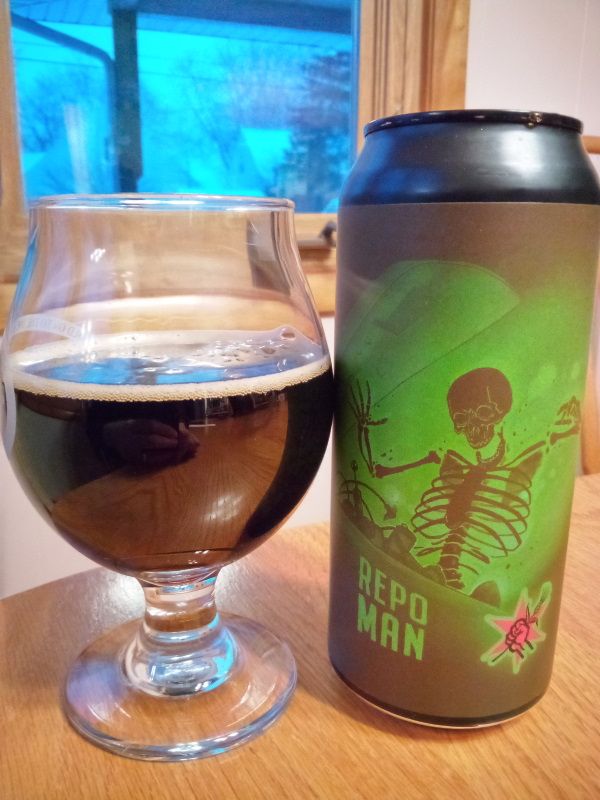
Pint or Stout, or Pint o' Stout: Repo Man by Revolution Brewing
Rye is a hardy plant. It's so stout, in fact, that you can
grow it in relatively poor soils and even as far north as the Arctic Circle. If
you go back to medieval Europe, you'll find lots of poor people eating rye
bread while those who were better off ate wheat. And the really well-heeled got
to eat white bread because they could afford flour made from wheat that was
shorn of its bran or whatever bits of the wheatberry gave a brown tint. Thusly
it's quite ironic that white bread today here in the States is cheap and
plentiful.
Today rye is most prevalent in northern and eastern Europe
with Poland and Germany, which only started growing more wheat than rye in the
1950s, being the largest producers. Now, I love rye so is it mere coincidence
that 50% of my genetic inheritance is Polish and German? Or that the great
majority of my ancestors hailed from northern and eastern Europe? I ask you.
Then we can eat
Secale cereale
Sorry there, Sting.
With my taste for rye, it is sometimes frustrating that
there are so few rye beers. I think every brewer I've ever broached this
subject with gave me the same riposte: rye is a pain in the ass to brew with. It
turns into this thick sludge like oatmeal so brewers need to be extra vigilant
and stir and stir until they can stir no more. Plus, I guess it's also a pain
to clean up. This behavior is apparently due to the pentosans, a type of
carbohydrate, in rye which can absorb a lot of water.
Today's brewers are beset with demands for ever more fruit
flavors and this, combined with rye's intractable brewing behavior, means that
there are precious few rye beers around. Not being much of an IPA drinker, I
largely avoid beers of that style including the ones made with my beloved grain
which means the precious is even rarer. So, when I heard that Chicago's
Revolution Brewing was going to release a rye stout last autumn, I made sure to
keep an eye out for it during my treks to Chicagoland during the holiday season.
I don't know much about Revolution but they seem to be the
New Glarus of Chicago. I believe they brew more beer than any other craft
brewery down there that isn't owned by AB-InBev so they're like the top dog of
the Chicagoland brewing scene. They brew a lot of IPAs and a lot of barrel-aged
stouts and their reputation is mostly based on these brews. Or so it seems to
me. Neither of these styles can accurately be called my jam so I have mostly
avoided Revolution's beers. But I've had a few of their other brews and I found
most of them to be good.
Repo Man is one of their limited release beers and was
apparently brewed back in the early days of the brewery. The name and its
funkadelic label refer to the classic 1984 film of the same name by Alex Cox
and starring Harry Dean Stanton and Emilio Estevez.
24 November, 2021
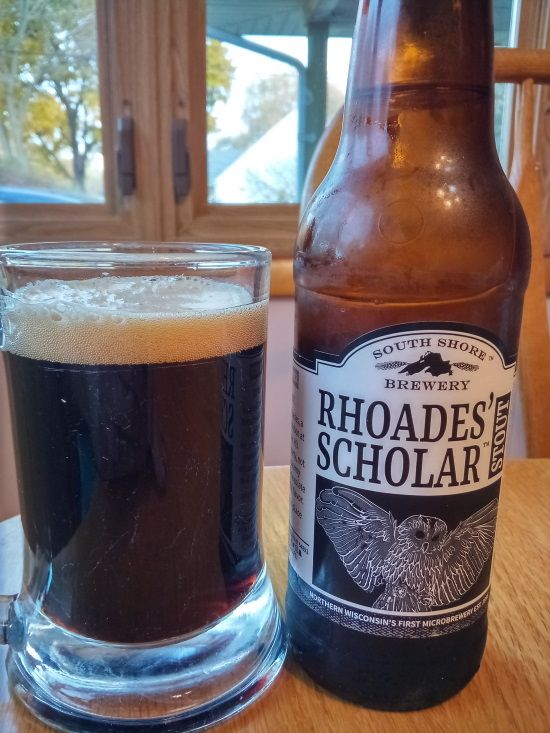
THE/OWL/BEER/IS/NOT/WHAT/IT/SEEMS: Rhoades' Scholar Stout by South Shore Brewery
The breweries of northern Wisconsin (for a discussion on how to determine if you are in northern Wisconsin, go here) don't get anywhere near the
love and attention that those in the south do. It's understandable, I suppose, as they are
in small media markets and usually have limited or no distribution to the Madison and
Milwaukee areas. They lack trendiness as well as the cachet of a New Glarus Spotted
Cow that compels countless visitors from Illinois and Minnesota to stock up on
cases of the stuff before heading home.
From my austral perspective in Madison, the biggest champion of the beers
of the northern part of Wisconsin is Ryan Urban, an/the editor at the Barron
News-Shield. He is the former host of the Beer Run Podcast which was, as far as
I can tell, the last regular news source of beer happenings up north and it
ceased activity in 2017. Today he writes about beer on the odd occasion for his
paper's The Urban Rural Column and tweets about it on his Twitter feed.
On one hand, I do wish that some of the boreal beers of Wisconsin
were more readily available down here because there are some delicious brews to be
had. On the other, I appreciate regional variety and encountering different
breweries and beers while I am traveling. Now, I grant you that you will find Spotted
Cow in every corner of this state but, as I experienced on a recent trip, there
are plenty of breweries up north with very limited distribution that basically
require you to take a trip in order to taste their suds. (Or to attend the
Great Taste of the Midwest. Still, I'd bet not all of those breweries up north are
there.)
While most northern
Wisconsin breweries see scant distribution here in the Madison area, beer from
Ashland's South Shore Brewery regularly makes its way from the shores of Lake Superior to
those of Lake Monona. South Shore began life as a brewpub in 1995 and eventually
became a fully-fledged brewery. It took several years but their beers did eventually make the journey south to
Madison in the early 2010s, if memory serves. At some point, distribution here stopped only to begin again at another time that is equally lost in the mists of time to me. Well, that's how I recall it, anyway. (I am almost certain that
the 6-pack of their Inland Sea pilsner that I had in 2015 was purchased in
Foster.)
Today I see their Nut Brown Ale and Rhoades' Scholar Stout
around town. Ever since noticing their return to store shelves, they've been on my to-buy list.
It's just that I'd always get distracted by other beers while at the store and whisper "Next time..." to myself as I grabbed a 6-pack of something
else. Recently, however, I overcame my inclination to procrastinate and bought some of that
stout.
Stouts have a reputation amongst many as being these thick,
dark, heavy beers. Like motor oil. And there's something to this. I recall
attending a Russian Imperial stout tasting back in 1994 or thereabouts here in Madison which was held in the basement
of the Italian Workingmen's Club. As best I can recall, the event was hosted by the Madison Homebrewers and Tasters Guild. It was a wonderland of potent, stygian beers made
by some of Madison's finest homebrewers. Bearded libation bearers proudly poured samples for the relatively (in contrast to any beer event today) small but eager crowd. My beer palate was rather inchoate at this point so I was not particularly familiar with
the style and remember looking at my first sample thinking, "It looks
like motor oil." I also recall thinking that these antidotes to sobriety were quite delicious. (My memories of the event get hazy after this.)
But those were the Imperial variety and your normal, workaday
stout need not be redolent of Valvoline. Indeed, South Shore tries to head off viscous
concerns at the pass with the description: "It’s everything a stout should
be: rich, hearty, not thick or overpowering, and with a creamy head."
The marketing division of the South Shore Brewery didn't
lie: this is a rich tasting beer. Some roasted graininess and a fair amount of
dark, though not particularly bitter, chocolate were most prominent. Behind
them was some coffee taste and a hint of stone fruit. (Note that plum I smelled.)
It had a touch of sweetness as well.
That coffee taste really came to the fore on the finish and,
as the grain flavors faded, a nice herbal bitterness shone through which added a
firm dryness.
The marketing division of the South Shore Brewery was also
telling the truth when they said that the beer wasn't thick or overpowering. It
had a medium body and its viscosity didn't approach that of bubblin' crude. I
found it to be quite flavorful with a firm fizziness helping keep the richness
from becoming too much and adding a mild astringency.
My notes say "Great beer" and they don't lie. This
is a wonderful treat from the North. It's jam-packed full of flavor but isn't
thick or cloying. While I probably wouldn't choose this beer on a hot day, it was
a perfect choice on a recent fall day.
To the best of my knowledge, a stout is/was simply a strong
porter. Rhoades' Scholar has the requisite flavors and is 6.3% A.B.V. which
seems stronger than a porter to me.
Junk food pairing: The marketing division of the South Shore Brewery says that Rhoades' Scholar complements desserts so pair it with a bag of Peanut Butter and Chocolate Muddy Buddies.
30 December, 2020
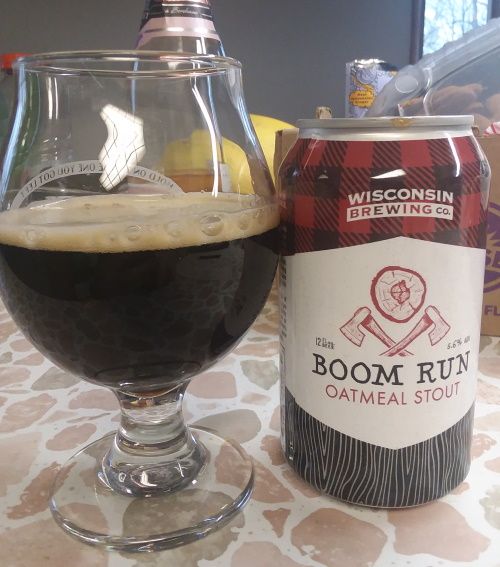
I Didn't Want To Be a Barber, Anyway: Boom Run by Wisconsin Brewing Company
As someone who was introduced to microbrews via WBC
brewmaster Kirby Nelson's Mindblock, er, Maibock back in 1991 when he was at
Capital Brewery, looking at their available beer list gives me an odd feeling.
It's a little disconcerting to see so many IPAs. Bleeding Heart was an amber
saison when first released 7 or 8 years ago. Now it's a Belgian Haze IPA which
features a "fruity, complex Belgian ale" that is "attacked with
copious amounts of hops". This description stands in such stark contrast
to Nelson's comments over the years that I've read in interviews. He's always
preferred to eschew extreme beers or ones that have a very lengthy ingredient
list and instead create brews that are balanced, approachable, and however else
you care to put "not extreme/ostentatious" across. His beers were all
about aiding and abetting GemĂĽtlichkeit and now he attacks malt with hops. What
did malt do to deserve such treatment?
Ooh! Dark Something! I liked it back in 2016 when it was first
released. A big rush of dark malty goodness that is now a barrel-aged imperial
stout. Ooh! A Gose! D'oh! It's aged in tequila barrels and is 9%. I'll never
taste any coriander through that agave miasma, if indeed any was added. Uff da.
One area that I think WBC excels in is dark beers. I really
like their porter, Chocolate Lab, and have since Kirby was test brewing it at
Vintage on the west side. Several years ago I heard a modicum of criticism of it, namely
that it wasn't a true robust porter but I've always liked it robust or not. (It
is no longer described as a robust porter, to my knowledge.) They added coffee to it and thusly Porter Joe was born. Again, I really like this beer with its nice balance of coffee and
dark malts. And then there was the original iteration of the aforementioned
Dark Something which was described to me as a porter-doppelbock mish mash, I
think by Kirby himself. If memory serves, a batch of doppelbock didn't go as
planned and it became a stygian ale with rich coffee and dark chocolate
flavors.
Last on the available beer list is Boom Run, a stout which appears to be their
winter seasonal. I first saw it last winter but didn't try it then for reasons
lost in the mists of time. But, knowing how well Kirby and Co. do dark ales, I
gave it a try this winter.
Boom Run's label features red flannel, a log, and a pair of
crossed axes and probably could only have been made more Wisconsin by adding a
blue ox. The lumber industry once ruled the northern half of Wisconsin and our
fair state can (apparently) lay claim to having invented Paul Bunyan. A
"boom" is a barrier in a river that catches logs as they float
downstream. A boom run was, as near as I can tell, a bit of sport for loggers, at least the
ones who worked on the water, in which they would run along the mass of logs trapped
in the clutches of the boom.
As for Boom Run the beer, it is an oatmeal stout which also
has lactose in it despite the WBC website not mentioning it.
The dark chocolate and coffee flavors were tasty.
Complementing them were some caramel-like sweetness from the lactose as well as
some herbal hop bitterness. I am not sure what variety of hops were used, but I
liked them immensely. No tropical fruit and no peppery spiciness. Instead, it
had a greener taste with just enough bitterness to act as a foil to the milk
sugar sweetness.
Indeed, the beer as a whole adheres to the Nelsonian Creed
of brewing balanced, approachable beers. The oats and lactose make for a smooth
beer but it's not too heavy on the tongue. Likewise, you can taste the milk
sugar but it's never cloying. No one flavor towers over the others.
While full flavored, it's a moderate 5.6% A.B.V. so this
isn't the heartiest of winter brews but it is quite tasty. Plus the chocolate notes and
lactose lend the beer a nice dessert quality. I don't think I could drink Boom
Run all night but it's nice to slip one in here and there. It certainly sits well
alongside WBC's other dark ales and is further proof that they do them right.
Junk food pairing: It being winter, bust open a seasonal tin
of Chicago mix. The magical combo of caramel and cheese popcorns is a lot like
Boom Run but in snack form. You've got your sweetness along side the savory
with dairy smoothness to boot.
14 October, 2016
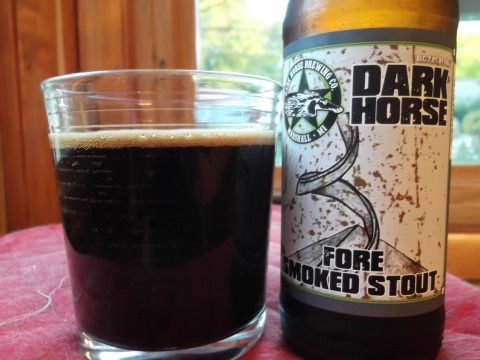
I Looked and Behold, a Dark Horse Beer: Fore Smoked Stout by Dark Horse Brewing Company

Oooh! My first rauchbier of the autumn. I believe that it is also my first Dark Horse review. I've had a collaboration brew with which they were involved and have sampled their wares at the Great Taste but I can't find any evidence that I've blessed them with a solo inspection of one of their beers.
Dark Horse hails from Marshall, Michigan – a town about the size of Portage that lies in the south central part of the lower bit of the state. I don't really know why but I always think that the brewery is in California or Colorado when I see their six packs in the cooler. And they're almost always seated next to Short's, Bell's, Founders, and whole lot of other establishments that lie east of the Mississippi so you'd think I'd get the hint. But no.
Honestly, I don't know much about Dark Horse. I presume they brew lots of IPAs because that's what breweries do to placate all those tongues wagging in Citra-fueled paroxysm. Fore Smoked Stout is the fourth entry in their Stout Series so apparently they also have a thing for stouts in addition to hoppier beers.
Fore can rightly be described as Stygian in appearance. Pouring it, the beer looked to have the color and viscosity of motor oil. Sure, it's deep brown but looking at the glass like any normal person does, it is black. It may have been clear but I couldn't say for sure. I can tell you, however, that I didn't see any flakes or chunks. As per normal, I managed only a small head here. The foam was moved beyond the realm of tan into brown, albeit one of a lighter hue. Sadly it went away rather quickly. The effervescence you ask? Stygian, I say, Stygian!
As a lover of smoke beers, I find trying a new one to be exciting because I get to find out how far a brewer is willing to go/keen on going. Are they going to throw in a just a little smoked malt simply to add to the gustatory milieu and appease a wide audience or will they use a more generous helping to emphasize the smoky taste to appeal to the hearty few?
I can usually tell by waving my beer around to look at the color and whatnot because a fairly smoky beer is discernible even when it is a foot or more away from your nose. If there's a Schlekerla even 30 cm away, you'll know it. Fore is not one of those beers. Bitter chocolate was most pronounced to my proboscis with the smoke having a definite supporting role. And no, it didn't smell like bacon. Nor of apple wood. Perhaps it was oak smoked. There was also a firm sweetness which reminded me of the Chinese haw flakes I ate as a kid.
While I am sure the history of the stout is quite lengthy and convoluted, I simply think of them as, well strong porters. Fore certainly fits that description with a lot of dark/bitter chocolate taste that was bedecked with a hint of coffee and, of course, some (non-porcine tasting) smoke. Some spicy hops added a touch of bitterness but it was really the black malts that gave that acerbic taste.
A bitter chocolate aftertaste lingered long after the last drop had descended into my gullet and was joined by the hops which became a little grassy here. This was by no means a very hoppy beer but they let your tongue know they were there. And, when the carbonation joined, it was more than a little dry. I also noticed a slight alcohol burn. Fore is only 7% but you can taste it. There wasn't much lacing here – just some small spots here and there.
Dark Horse definitely took the smoke-as-an-accent route. It doesn't jump out at you and instead has a good ol' time blending with the coffee and bitter chocolate maltiness. Fore has a definite ashen black malt taste and it is bitter. But in a good way. While I wish there was more smoke flavor – I always wish there was more smoke flavor – Fore is a really tasty combination of dark and smoked malts. It's also on the big side with a heavy-medium body and some alcohol burn. Still, I found that it went down quite smoothly.
Junk food pairing: Pair Fore Smoked Stout with some Smoked Gouda Triscuits smothered in American Flavor Easy Cheese.
25 January, 2016
Smooth Operator: Cashmere Hammer by 3 Sheeps Brewing Company
Nitrogenating beers is the latest fad in microbrewing. Instead of an arsenal of strictly carbon dioxide bubbles, nitro beers are given a shot that is mostly nitrogen with a small amount of CO2. The effect of this on a beer's taste is that your brew will be smoother on the palate because there's much less carbonic acid which is formed when CO2 is dissolved in water. Less acidity means less of that tingling sensation on your tongue and a beer that tastes much more smoove.
Guinness is famous for their nitrogenated beers and the widgets that they put at the bottom of cans that release the gassy goodness when the can is opened. Now that the fad is gaining momentum, Guinness introduced a nitro IPA last year while Sam Adams will be introducing three nitro beers shortly if they're not already in stores – a nitro white ale, IPA, and coffee stout.
Truth be known, my experience with nitro beers is basically limited to cans of Guinness stout. There are likely some one-offs nitro brews that I've had on tap but, when I read "nitro beer" I think of cans of Guinness. I've used the word "fad" here intentionally because most nitro beers I've seen to be essentially gimmicks. A large segment of American microbrew drinkers covet novelty so adding some nitrogen to the beer you have sitting around already is a relatively simple way to create something "new". This is not to deny the effect nitrogenation has on a beer's taste. But I just don't believe that everyone had their road to Damascus moment at the same time and put a ton of thought into it. Jesus, there's even a coffeehouse here in Madison that has a coffee put into kegs and nitrogenated because "The infusion of nitrogen creates a stout-like head and mouthfeel."
I blather on about this because the beer at hand is Cashmere Hammer by 3 Sheeps up in Sehboygan. It's nitro rye stout.
Cashmere Hammer pours a deep, dark sepia. It was opaque when looked at head-on but, from an angle it appeared clear. One is supposed to pour a nitro brew such as this by turning the bottle upside down and putting it in your glass. (Mouth side down, that is.) I did not come across this information until I had already poured a glass and so my initial encounter with the much-ballyhooed nitro effervescence was quite brief – a small tan head that dissipated very quickly. When I poured the remaining beer into my glass later, it did so with a bit more vigor and managed to get a larger head and more foaming action.
Epic fail. I guess.
I proceed hoping that I didn't completely thwart the brewmaster Grant Pauly's intent and still had a drinking experience that was at least a reasonable facsimile of what he intended.
The beer smelled as I expected with the dark malts giving a luscious coffee aroma that had some dark chocolate mixed in there too. Because of some stray Pavlovian conditioning, I initially thought it odd that I couldn't smell any bourbon but then quickly recalled that this was not a barrel-aged brew. The prominence of these ingredients were reversed in the taste where bitter chocolate was most evident followed by the coffee. There was also a slight malty sweetness as well as a hint of the rye which seemed to blend in with grassy hops that gave some flavor but not much bitterness.
So what about the nitro? I tasted a medium body but the mouthfeel was very smooth – "velvety" is what my notes say. It is a very different taste from your normal carbonated beer. Lacking the bite of carbonic acid, it's very silky – somewhat reminiscent of those bottled frappuccinos.
For the finish the dark malt flavors faded leaving some malty sweetness which was joined by some more of the earthy rye and a grassy/peppery hop taste that brought a slight bitterness with it. My glass was left with just a few specks of foam but no other lacing. I'm not sure if this is par for the course or if my poor pouring is to blame for this.
I really enjoyed Cashmere Hammer. The dark malt flavors were scrumdillyicious and I love rye in beer. While it was a rather subtle flavor here and I wish that there was more, it was quite welcome nonetheless. The nitro smoothness makes it exceedingly quaffable but this beer is 6.5% A.B.V. so beware. I shall endeavor to try Cashmere Hammer again and practice my inverted pouring technique. I'd like to know if getting that nitrogen out of solution adds much to the flavor or if I simply missed the aesthetics.
Junk food pairing: Cashmere Hammer may have a smooth, creamy taste but it's got a lot more going on. Don’t be afraid to pair it with bigger foods like Xtra Fiery Sweet BBQ Pringles or some kind of hamburger/cheeseburger flavored potato chip.