Back in 1994 I saw Pink Floyd here in Madison down on campus at Camp Randall Stadium. I went with my girlfriend at the time and, unfortunately, we didn't have particularly good seats. Afterwards, having sat through a show where I could barely see anyone on stage with none of them ever looking over at us in the cheapest of seats off to the side, I think I understood Roger Waters' concept of the wall a bit better. Still, there were some nice moments such as my surprise at "Astronomy Domine" opening the show (back when you could easily avoid setlist spoilers), "Take It Back", a favorite of mine from the then new album, The Division Bell, and "One of These Days", an oldie from 1971 which just plain rocks. Plus, a line from "Run Like Hell" got changed to "They're gonna send you back to Madison/In a cardboard box".**
I had high hopes that I'd get a chance to hear "Poles Apart", another new song from The Division Bell. It was played occasionally in the spring and summer so some recordings of it performed live exist but it was more or less abandoned come the autumn as the tour was coming to a close and the recording of a series of shows for the live album, Pulse, was done. During a lengthy stretch of October concerts in London, a full performance was broadcast live by BBC radio but "Poles Apart" was omitted from the setlist.
"Poles Apart" was one of the songs that I immediately took to upon first hearing The Division Bell. (I think the other was "Take It Back".) It opens with a gorgeous rolling acoustic guitar and is soon joined by some bass and keys. Before long the guitar settles into a gentle melody that reminds me of "Narnia" by Steve Hackett before the singing begins. I have always assumed the song was about Syd Barrett ("Why did we tell you then/You were always the golden boy") or Roger Waters ("Hey you/Did you ever realize what you'd become?") or perhaps both. There is a sense of regret in the song and I felt that the lyrics were those of a middle aged man looking back.
Before the last verse we are treated to a wonderful diversion. Out of nowhere comes this circus interlude, sounding something like a sullen "Being For the Benefit of Mr. Kite!" Its tone is set by bouncy organ-like keyboards that evoke lion tamers and acrobats and is completely out of place yet some somber strings mark this diversion as being improbably appropriate. Something redemptive follows with the lines "I thought of you/And the years and all the sadness fell away".
The song ends with an emotive Gilmour solo in the tradition of the one in "Comfortably Numb" and is a masterpiece in its own right. For the first year I lived with it, the solo gave the finale a wistful feel. But after the girlfriend with whom I saw Floyd sent me packing the following year, the song took on a more sentimental tone. Those final couple minutes seemed to go from a middle aged man feeling nostalgic to a post-apocalyptic scene where the last flower in existence is being plucked from the ground, a fragile beauty never to be seen again.
**Funnily enough, in another Shazam moment, until I listened a few minutes ago, I would have sworn that one of the "Hey you, out there in the..." bits from "Hey You" was changed to "out there in the rain" because it started pouring towards the end of the show. I have listened to 2 different recordings of the show and it just ain't there.
The arrival of August means that the harvest season has begun in these parts. (And that autumn is nigh.) A couple weeks ago I accompanied my Frau and her friend out to Lapacek’s Orchard which I’ve mentioned in a diary entryor 2 previously. And by “accompanied” I mean they made me drive. It was overcast, as much of the month has been, but temperate.
Lapacek’s has lots of farm cats so, before you get anywhere near an apple, you are approached by some feline friends wanting pets.
In addition to apples, they grow berries as well as various vegetables. It looked like they would have a bumper pepper crop this year.
There is also a petting zoo featuring goats aplenty.
This one got the "Three Billy Goats Gruff" thing backwards. No trolls here!
When they weren’t climbing stumps or traversing the bridge, they were jockeying for position to get petted.
And you know Black Philip was there. “Would you like to live deliciously?”
It was opening day for the season so there were only a few varieties of apples on offer.
Still, the Frau ended up buying a peck plus a jug of cider and a stash of cider doughnuts. We started the apple season out right and now have to figure out what to do with all of these pomaceous treats.
********
My latest read was Arc d’X by Steve Erickson. I cannot recall exactly where I heard of it but it was no doubt an online article about avant-garde literature.
A few (or was it several?) years back, I re-read one of my favorite novels, The Name of the Rose, and did some internet searching for books like it. My sleuthing led me to a few sites about difficult works of literature, tales that were not merely a series of linear events where Action A led to Action B and so on. These books sometimes progressed non-linearly, utilized weird or uncommon writing styles, are thematically dense, etc.
The Name of the Rose and John Dos Passos' USA Trilogy, difficult reads each, are favorites of mine so I decided to enrich my reading diet further by investigating some of these new titles.
Arc d'X begins like a straightforward historical novel as we follow the life of Sally Hemmings in the Jefferson house. At about 50 pages in, she runs away to the west where she encounters a Native American tribe that has never encountered white or black people. Not completely historically accurate, but nothing outrageous.
Then the story takes a sharp turn towards the weird. Sally goes to sleep and wakes up in an alternate early 1990s (when the book was published) universe. She’s at the scene of a murder where we meet a couple of cops, one of whom, Wade, is black. He then becomes the protagonist and we follow him around the city, called Aeonopolis, which is ruled over by a cabal of priests.
There’s a subplot about an archivist who steals a bunch of sacred texts and holds them for ransom. The story zooms around to Paris where we meet a mathematician obsessed with time and then on to Germany and a guy mysteriously named Erickson.
Throughout all of it are themes such as race, freedom, and sexual obsession.
Arc d’X wasn’t bad but it also just wasn’t my cup of tea. I failed to draw a meaningful throughline from one scenario to the next.
********
The last time I went to the supermarket, I did so at a time that I normally don’t go – early in the morning. Stockers were stocking and facing the shelves as expected. Then I walked by the cat litter aisle and saw this:
A robot was slowly creeping up the aisle, presumably taking an inventory of the shelves and logging prices. Despite its mundane duties, the thing gave me the willies as I was reminded me of The Crawler in the novel Annihilation even though it was doing shopkeeping tasks and not scrawling cryptic phrases on the shelves. There was something creepy about those blue “eyes” staring at you. I quickly hoped that it had been programmed with Asimov’s Three Laws of Robotics one of which is that robots cannot harm people.
My mind briefly jumped to a Blade Runner-like scene where I was administering the Voigt-Kampf Test to it.
Me: You’re heading down the produce aisle and you look down and see an aubergine.
Robot: An aubergine? What’s that?
Me: You know what an eggplant is?
Robot: Of course!
Me: Same thing.
Video calls, self-driving cars, pocket computer/phone/camera devices, vibrators that can be activated from the other side of the planet – I never watched 2001, Total Recall, and Sleeper thinking any of those things would be available in my lifetime and yet here we are.
********
On recent bike rides, I’ve been cruising around town taking pictures of ordinary yet interesting things. Well, interesting to me, anyway. For instance, I’ve been photographing mosaic entryways that have text on them such as this one.
This entryway to the McCarthy Building on the east side belongs to a barber shop these days and I am unsure when the storefront last housed a pharmacy. The building dates to 1907 so I would hazard a guess and say it's pre-World War II.
On my last ride, I was on a mission to take a photo of the Hobbit house out on the west side. Here it is.
In another reminder that I have reached a certain age, my first thought upon seeing it was to be jealous of the surely low heating and cooling bills the owners pay. Oddly enough, a co-worker of mine knew the guy who built the house. When he explained that the gentleman constructed it in c.1980 as a reaction to the energy crisis, I felt my envy to have been validated. Notice how the Little Free Library out front looks just like it.
Across the street I found this painting on a garage door owned, perhaps, by an adherent to panspermia.
On my way home, I walked my bike around the Capitol Square and environs peeking into entryways for more mosaics. I came across what is surely the last gaslight in town.
Sadly, the lovely 100+ year-old building to which it belongs is set to be demolished, a victim of the cruelest of ironies for a new Wisconsin Historical Society museum is to replace it. To paraphrase a certain U.S. Army major in Vietnam, it became necessary to destroy Wisconsin history to save it.
Walking by the Hovde Building, I noticed these panels placed vertically between windows that feature a lamp above a power generator and bolts of electricity zapping their way above it.
These terra cotta panels date back to when the building was home to Wisconsin Power and Light. Thankfully, this building does not have a date with the wrecking ball.
********
A couple recent movies I’ve watched at home.
Poly Styrene: I Am a Cliché is a look at the life of Poly Styrene, a.k.a. - Marianne Joan Elliott-Said. She was the leader of the punk band X-Ray Spex. It delves deeply into her life as a woman in the very male world of punk rock as well her bi-racial identity in a white culture, which is something that attracted my Frau to the movie.
Ahead of her time in many ways, Poly Styrene’s life was full of ups and downs. This interesting tale ends on a sad note. She died at the age of 53 back in 2011.
Halloween season will be here before you know it so I got a jump on things and watched The Cursed.
It begins with a French officer being shot in a battle during World War I. The doctor performing surgery finds a mysterious silver bullet inside the man in addition to the lead ones that the Germans put in him.
We then flash back to the late 19th century and an awful, malicious aristocrat who kills a group of Gypsies that have a legitimate claim to some of the land he calls his own. His children become plagued with nightmares and a beast begins to roam the countryside.
The Cursed is a spine-tingling, disturbing, yet highly fun Gothic horror tale of the old school variety. Highly recommended.
********
Bonus photo. Here are Grabby and Piper relaxing on the couch.
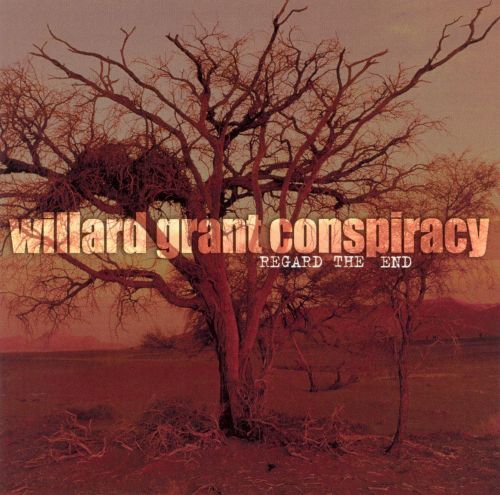
If Grant Wood were to have been a musician instead of a painter, Regard the End would be a part of his discography. It smacks of Americana with its blend of folk, country, and blues. Instead the album belongs to Willard Grant Conspiracy. The core of the band was originally Robert Fisher and Paul Austin but this, their fifth album, finds Austin nearly out of the picture as he contributes to only two songs here. The bulk of Regard the End was penned by Fisher with the occasional contribution of a co-conspirator or the appropriation of a traditional song given the WGC treatment. In this case, it is applied by Fisher and 17 other musicians, including Austin. Far from being a hastily assembled group of sidemen, several of them have appeared on previous WGC albums or toured with the band. Part of the album was recorded in Slovenia so it should come as no surprise that there is a severe shortage of sprightly tunes here.
On the album’s dour cover is a near-barren landscape with a few scattered trees sans leaves. The inside of the CD tray features a photograph of an old house in the middle of winter covered with snow and frost. These images serve as preface to the music.
But as if to contradict this, the first song is almost a waltz. Lyrically, however, “River In the Pines,” reigns in any joy and replaces it with melancholy. It is a traditional song about the death of a Wisconsin boy while working on a river. His love, Mary, is so distraught over his death that she kills herself. The first half of the album is doleful with the penumbra of Josh Hillman’s violin hanging over them. “Ghost of the Girl in the Well” is a highlight. It tells the story of a teenage slave girl who falls down a well while fleeing from her owner who was looking to rape her once more. Kristin Hersh lends her vocal talents including a mournful wail.
Halfway through the album comes “Another Man Is Gone,” Fisher’s take on the traditional “Another Man Done Gone.” The song is sparse despite a bevy of instruments coming and going. A shrieking fiddle and piano vie for the listener’s attention while the low-key guitar and slide keep the song moving. At the crescendo, Fisher really lets loose and the result is spine-tingling. Tellingly, Fisher leaves out the verse: “He had a long chain on/He killed another man/I don't know where he's gone/I'm gonna walk your log.” Originally about a convict who escapes from a chain gang, Fisher prefers to downplay the story. Although the lyrics are in the third person, I get the impression that he’s singing about himself.
Fisher has a wonderfully rich baritone which is always centerstage. “Soft Hand,” which follows, seems antithetical. It begins with a drum loop and is followed with a catchy electric guitar riff. Reminiscent of The Tragically Hip, the track is woefully out of place. This is especially evident when the “Penny Lane”-like trumpet makes its entrance. Preceded by songs about a slave girl who falls to her death and the escape of a prisoner from a chain gang, lyrics such as “There I made you smile” sounds like a bitter joke.
But the album quickly returns to the more minimal and more subtle. “Fare Thee Well” is about the end of a relationship as the man lies on the bed in a rented room contemplating love lost and where to go next. Chris Eckman’s piano is understated but quite effective here. “Day Is Past and Gone”, at under two minutes, is too short but seems to offer a glimpse of sunlight with some uplifting mandolin by Simon Alpin.
The epic dirge “The Suffering Song” closes out the album. Nearly eight minutes long, it tells the tale of a family’s dissolution because of the death of the mother. Despite this, the narrator finds strength within himself to move forward: “I know there’s life beyond this ridge.” This seems to be the silver lining. Although the songs are soaked with sadness, they still find the characters finding some kind of hope. The narrator of “Fare Thee Well” tells us: “I look to the ceiling and find a reason/To carry on.” Mary may have committed suicide to escape pain, but she also joined her love in the grave.
Taking the out-of-place “Slow Hand” from the picture, Regard the End has a nice unified feel to it. Ensemble playing is prized above soloing giving Fisher’s voice a chance to really shine. If there is a gripe to be had, it is that Fisher rarely lets go. That the music is spare – almost minimalist in spots – is fine but its cue for the vocals to take up the slack is not picked up on. He seems content most of the time to let his vocals hang like a disembodied voice. Aside from his scream on “Another Man Is Gone” and a couple other spots, Fisher fails to get inside the songs. While not great, Regard the End is a good album for aficionados of roots music.
After seeing The Black Power Mixtape 1967-1975 with my father-in-law, we discussed his involvement with the Civil Rights movement of the 1960s. I learned, amongst other things, that he had met Stokely Carmichael multiple times and had disposed of a lot of pot less than 24 hours before authorities busted down the door of the house he lived in with several others looking for any pretext to arrest "agitators".
And so it came as little surprise to me upon telling him that I bought the first album by The Last Poets that he was very familiar with them and, if memory serves, he had met them personally on the odd occasion back in the day.
The group started in Harlem in 1968 and, after reading about their history, it comes off as something of a late-80s Yes situation. There was a multitude of members and some of them apparently recorded as The Original Last Poets with the others going without the "Original". I'm not sure if the song at hand was recorded by the Yes faction or the Anderson Bruford Wakeman Howe one. The album cover reads "The Last Poets".
Their music is invariably described as being proto-rap or a precursor to hip-hop. With spoken words delivered over beats (think Gil Scott-Heron) and various rappers and hip-hip artists attesting to the group's influence, it's apt.
While most of the songs tread thematic territory such as societal change (e.g. - "When the Revolution Comes") and racial consciousness (e.g. - "Wake Up, Niggers") explicitly, there are a couple pieces here that pair these themes with matters salacious.
"Black Thighs" is one of those songs. With a bongo/conga drum beat underneath, Umar bin Hassan rhapsodizes:
Black thighs Black thighs bumping, grinding Black thighs Black thighs making me forget all pain
As he does so, his bandmates Charles Davis and Jalaluddin Mansur Nuriddin bring the scene to life with some heavy breathing and various lewd vocalizations. Before his "climax in the sky", bin Hassan veers towards the political with "Black muscles making me forget all about white thighs, white love". (This is a repudiation of the moan "White thighs, ooh, white thighs" in the previous song.)
I cannot recommend this album enough. Hypnotic rhythms and stirring speech/vocalizations in which the poets grapple with contradictions and disappointments, look within and without, and observe all around them make for a powerful, genuine experience. Plus they get between black thighs occasionally too.
Tusind Tanker is Danish for “A Thousand Thoughts” and the first thought that leapt into my mind upon hearing the lead track, “Sensommervise,” was “Why is America exporting AOR?” With its faux-jazz arrangement, “Sensommervise” (which apparently translates to “late summer song” in English) sounds like it could be a staple of adult-oriented or adult contemporary or middle-of-the-road or whatever demographers call it now radio. It was disconcerting to find myself in the land inhabited by the likes of Norah Jones and the Dave Matthews Band. However, the song does have a redeeming quality and it is the voice of Sine Lauristen. Since the vocals are in Danish I can’t be sure if she’s crooning about a lover or about a cheeseburger. Either way, with her voice at the fore of the mix, it’s hard not to be smitten with her pipes. They are powerful and rich and pull the tune along. The band’s web site claims that producer Peter Stengaard ensured that the music was done in a “modern jazzy way.” For a band that traffics in traditional folk material, this seemed a bit odd.
Fortunately, the band didn’t let the machinations of their producer distract them from their cause. “Jeg kan se på dine øjne,” which follows, is a traditional song that the band gives a very modern take on – but not jazzy. Again Lauristen steps up with her voice which is set against Steffan Søgaard Sørensen’s double bass and some stray violin from Rune Tonsgaard Sørensen. The vocal melody is blatantly catchy and gives a hint as to Lauristen’s range. But, if that wasn’t enough, the song kicks into a fantastic instrumental break. The violin becomes ecstatic and is complemented by some electric guitar from Rasmus Zeeberg. It is this blending of traditional and contemporary instruments together that gives the song a patina of the modern.
“Bøhmerdans” and “Danske reels” each pair a couple of traditional dance tunes from different parts of Denmark. Both begin with acoustic guitar before the violin plies its magic. They remind me of Fairport Convention's all-acoustic Old, New, Borrowed, Blue. The melancholy title track which relates the story of a woman who has lost her love would have sounded right at home on the second disc of Fairport alum Richard Thompson’s You Me Us.
Stengaard does occasionally have his way as with “Kælighedstræet” but the lapses are momentary. The album has the character of a palimpsest with the traditional layered over the new. There’s no mistaking Tusind Tanker for a purely revivalist affair but the band wears its collective folky heart on its sleeve.
For more on all things Zar, head over to their web site.
Eating seasonally was once a fact of life for humanity but I’d bet that most Americans can barely understand the concept today. I mean truly understand it, not just have the expectation of a plethora of products imbued with some combination of nutmeg, cinnamon, ginger, and clove come the autumn. You no longer have to wait until fall for apples because your local supermarket has them year-round. No one in Wisconsin is restricted to eating fresh strawberries in June because we can get our hands on them whenever we please. Thanks to advances in food preservation and transportation, “in season” no longer means that the fruits and vegetables in your area are ripe for the picking, but rather that they are at their cheapest and, perhaps, best quality.
As I alluded to above, I suspect that, for many, eating seasonally is about the consumption of pumpkin spice this and that in the fall. What started as a latte flavoring has spread to divers processed foods including breakfast cereals, Spam, yoghurt, candies, cookies, and so on. I became resigned to the inevitabity that potato chips would succumb to pumpkin spice madness and, when I saw the orange Kettle Brand bag and “Limited Batch” emblazoned on it just below a leaf, I figured its time had come.
But reading on, I was mighty pleased to see that these autumnal chips were not laced with nutmeg or cinnamon, but rather with apple cider vinegar. Not only had the Kettle folks defied convention by eschewing the dreaded pumpkin spice route, but they had created a salt & vinegar chip instead. Furthermore, I spied this snack during its appointed season so credit to Kettle once again for not prematurely releasing a fall seasonal around Memorial Day, an affliction of craft beer brewers.
I would have sworn that I have reviewed a salt & vinegar chip here that was made with apple cider vinegar but I cannot find any evidence of having done so.
Your basic salt & vinegar chip relies on the sharp tang of acetic acid and whatever other acids the manufacturer puts on their chips plus other flavorings such as lactose or another kind of sugar. Fairly rare are chips that use another type of vinegar.
Malt vinegar seems to be the most common alternative to the plain white stuff or pure, unadulterated acetic acid. Having been prepared from barley and perhaps other grains, it has some of the flavor of the cereals. Wine vinegars have some of the taste of the grape juice from which it was made and so cider vinegar tastes a bit like apple juice.
Apples and their juice apparently contain a lot of malic acid and so cider vinegar undergoes another type of fermentation in addition to main yeasty one. In this bonus act, Leuconostoc oenos bacteria nom on the malic acid turning it into lactic acid which is less sour. Ergo apple cider vinegar is a bit mellower than the white stuff in addition to containing appley flavors and whatever other ones Leuconostoc oenos comes up with.
Now whether any of these pomaceous subtleties will come through in a powder on a potato chip is unknown so let’s try these puppies out.
These chips are cut thicker than normal and are nicely spotted with brown giving them a more well-done appearance than usual. Sticking my nose into the bag, I find that it smells mainly of oil but with a nice dose of potato as well. Catching a whiff of vinegar requires getting all up close and personal with the chips.
As expected from the Kettle Brand brand, the chips had a big crunch to them. They went easy on the salt (Note they’re Apple Cider Vinegar, not Salt & Apple Cider Vinegar.) but there was no lack of Maillardy goodness here as the potatoes had a rich and toasty flavor plus they had a nice creaminess to them. While the apple cider vinegar was really tasty with its mellow fruity notes, I felt the Kettle folks used a light touch in applying the magic vinegar powder. More please!
Very good chips but hopefully there will be more vinegar in next year’s batch.
August began with me running into a family of turkeys on my way to the bus stop in the morning.
I wonder what brings them out of the farm fields and south of Milwaukee Street to the houses and stretches of concrete. You’d think there’d be plenty of insects and berries in the wilder, wooded part of the neighborhood. It looks like they’re growing soy at the Voit farm this year and I wonder if it’s a turkey repellent.
I hope that hen teaches those jakes and/or jennies how to cross the street. There are some real maniacs driving through the neighborhood these days. People run red lights more than they used to, it seems, and rolling stops seem to be taken at higher speeds as well.
While I am on the subject of birds, I present this little one.
I think it’s a goldfinch but don’t quote me on that. It ran into one of our windows and then held onto the screen for a while until it got recombobulated. I saw it fly off into the distance so I assume the collision caused only temporary discombobulation.
********
While I haven’t been to the movies lately, I did take the opportunity to watch one at home that was on my to-watch list.
Belladonna of Sadness is a Japanese animated feature from 1973 and is something of a cult classic. The internet says that it was based on Satanism and Witchcraft written by Jules Michelet and published in 1862. I suspect that it’s more the case that the book provided a lot of inspiration rather than anything like a plot.
It tells the tale of Jeanne and Jean, young newlyweds in medieval France. After being joined in matrimony, they approach the local lord to get his blessings. Instead of bestowing them, he asserts the right of first night and deflowers Jeanne. The story continues with Jeanne essentially making a pact with the Devil who comes to her as a small phallic creature who playfully dives underneath her clothes and whispers sweet promises.
Jeanne gains powers but her greed eventually does her in as she is burned at the stake. However, she hadn’t repented so her evil spirit escapes her body and infects the villagers. Centuries later the malignancy in the people gives rise to the French Revolution.
This is definitely a weird one. Not only is the story a strange, supernatural one but the animation alternates between scenes where everything is in motion and others in which everything is static and more like a comic book. I am not sure if this was a deliberate stylistic choice or the result of budgetary constraints. Regardless, the shifts were not obtrusive and didn’t cause to me enjoy the film any less.
It was at times fun and playful while disturbing at others. With a few rape scenes, I bet Sam Peckinpah approved. But they were done in a very psychedelic, impressionistic rather than graphic way.
I enjoyed the trip it took me on.
********
In a previous entry, I noted that I needed a new deck and had demolished the old one earlier this year. A friend of mine who was a carpenter in a former life stopped by on two consecutive weekends and now we have a new deck.
I unknowingly ordered narrow decking so we went through a lot of screws. The funny thing is that we chronically underestimated how many we’d need so I found myself making multiple trips to Menard’s one day.
“Well, 2 more boxes oughta do it,” I’d say.
And of course they only lasted for about 2 and a half rows of screws. (The boards are 16’ long with the screws spaced 16”.) So I’d go back to the store to grab another couple boxes. Repeat stoopid look on my face and another trip to store.
I ended up building the stairs with pre-cut stringers. Unsurprisingly, they came out on the half-assed side but they are still better than a single 18” drop to the lawn.
It was really nice to put the chairs back out (the Frau bought new cushions for the occasion) and enjoy a beer on the new deck.
Moving those concrete pads around required the use of muscles that I didn’t know I had. Afterwards, I felt sore in places I didn’t know it was possible to feel soreness at. Now I’ve got to figure out what to plant on either side of the stairs and what to do with a pile of dirt and sod.
The last thing left is to trim the deck boards. If you look hard, you can see that they extend slightly beyond the joist. Not a big deal and I’ll dig out my chalk line one day to get it done.
********
My Frau and I went to the Great Taste of the Midwest a few days ago. The Great Taste is a beer festival here in Madison that attracts several thousand thirsty beer lovers every year. I started going in the latter half of the 1990s before taking a lengthy break and getting on with life. And then at some point in the recent past we started going. One can stand in line at ticket outlet in May for a hours to get tickets or enter a lottery for them. (Or, if you know local brewers, you can usually get tickets from them.) This year the Frau won the lottery.
Somewhere just shy of 200 breweries attend the festival which equates to somewhere between 1,000-2,000 brews to sample. In addition to beer, there is also a smattering of cider and mead to be had.
When I started attending in 1997 or so, the festival was much smaller so wandering around and stopping in at the tables in a more or less random fashion was easy. These days, with so many drinks to sample and so many more people in attendance, I plot a course for my festival using the handy dandy program that is published a few days beforehand.
I suppose this is also a reaction to the most popular craft beer styles holding no appeal for me. IPAs that taste like Hawaiian Punch, sour beer loaded with lactose & fruit, and big stouts that have been aged in bourbon barrel are just not my thing so I scour the program for beers that provide a taste that is all too rare: smoke.
I love smoke beers so I plot a course that will take me to every brewery at the fest offering one which isn’t very many. After that I noted where I could expect to find an unfruited Gose. Gose is a sour German wheat beer traditionally brewed with water of high salinity and with some coriander added. Unfortunately, American brewers generally load their versions up with fruit.
Beyond these 2 styles, I wanted to try some meads since I’ve been drinking the stuff lately and then I’d just follow my nose and see what else was on offer that I found appealing.
It was marvelous! Tangy with a hint of salinity and a touch of coriander with no fruitiness to be had beyond the lemony taste from the lactobacillus bacteria that gives the beer is sourness. I noticed that Obscurity also had a couple braggots on offer – admixtures of beer and mead – and I love braggots so I vowed to return.
We made our way to the Vertue Cider table expecting a certain mead to be there but found that it wasn’t. Instead we came away with samples of lavender/bee pollen apple cider which was a lovely purple.
Very tasty stuff!
There were 2 or 3 breweries that had a Grodziskie on tap.
Grodziskie is a Polish beer style that is brewed with 100% smoked wheat. When done traditionally, it’s light, smoky, with a fair amount of hops, and lots of fizz. A perfect drink for a hot summer day. There were a couple this year and they were both rather tasty.
There were, of course, some beers that were rather dreadful. Another style that I love is dark lager and I sampled those I found as I meandered from tent to tent. A couple tasted like they had just finished cooking and hadn’t aged but 5 minutes instead of a minimum of 2 weeks, though 8 is best.
On our way out, we stopped in at Obscurity again where I sampled their braggots.
The hefeweizen braggot was really good with a dry honey base overlaid with a big wheaty, banana layer from the hefeweizen. To my surprise, it was their IPA braggot that I enjoyed the most. Hops provided a nice combination of pine and fruit while the dryness of the mead kept things from getting cloying.
The Great Taste was a good time and the good beers outnumbered the bad ones. I hear there were at least a couple of dill pickle sour beer that we missed so I will have to keep on the lookout for those and other such oddities next year.
********
Bonus photo. This time it’s of a chipmunk sitting on a gargoyle out on our front stoop. The gargoyle was crafted by my grandmother.
A couple years back during lockdown, a friend of mine who is much more well-versed in Internet memes and trends than I am, sent me a link to a video. The preview picture was of a bald Asian guy with his face painted white and his lips black. His gaze is off to the right and his mouth is open. Was he singing? Laughing? Vowing to crush someone?
The face belonged to Ken-ichi Suzuki, the bassist in the Japanese metal band, Ningen Isu. The video was for the song "Heartless Scat" from their 2019 album Shin Seinen (New Youth) and it achieved Internet fame with well over a million views on YouTube not too long after its release. The song is awesome and the video no less so with Suzuki strutting around in his kimono, making hilarious faces, and just doing a fine Gene Simmons impression.
Ningen Isu started in 1987 and the name means "The Human Chair" after a short story by Japanese author Edogawa Ranpo. I've seen them described as "the Japanese Black Sabbath" and it's a good starting point. Guitarist Shinji Wajima cranks out the riffs on what looks like a Gibson SG, just like Tony Iommi. But their sound seems influenced by 70s hard rock/heavy metal generally.
Like Suzucki, Wajima wears a kimono but, instead of being a tall, burly fellow with no hair and with his face covered in white grease paint, he's bit nerdy looking in contrast as he's shorter, has a slighter build, and wears glasses. Plus he sings songs about cursed villages and aliens whispering to us via telepathy. Rounding out the line-up is drummer Nobu Nakajima whom the Internet describes as looking like a Japanese gangster. I guess I can see him visiting mom & pop noodle shops to extort protection money and making offers they cannot refuse.
One of my favorite songs of theirs is "The Colour Out of Space" which is a nod to the H.P. Lovecraft story of the same name. Some vaguely sinister guitar notes begin the song but give way to slashing chords which sound like a warning klaxon. Then the song kicks into high gear and is off to the races. Nakajima propels the song forward as Wajima riffs away and sings of hideous, shapeless creatures from another world who have come to Earth and wreak havoc, death, and destruction. The band really kick into high gear for the guitar solo which is short but sweet.
The video is great as it cuts away to Suzuki who hams it up for the camera. I really wish these guys could tour the States. I think they were scheduled for a few dates here including SXSW but that mini-tour had the kibosh put on it by Covid. Let's hope they can make it here soon.
istoriya demonstrates well the dual-edged sword that is the best of compilation. On the one hand, it gives a nice overview of the band’s oeuvre and is an enhanced CD and so the buyer is given photos of the band, a tour diary of the band’s travel through Poland in early 2003, and lyrics in Ukrainian and English. On the other hand, the band succumbs to that nasty habit of including a previously unreleased track to get the faithful to shell out their lucre for a single song and the casual listener to resort to Napster.
My marketing critique aside, this is a great introduction to this band of Englishmen who play an unholy marriage of Ukrainian folk and punk. As my fellow review Earl Sellar has noted, The Ukrainians are often described as "Russian-music Pogues". But listening to the raging electric guitars on “Ty Zh Mene Pidmanula,” a more correct description might be “Russian-music Dropkick Murphies.” While the potential for a world music bastard child is great, don’t be fooled. This sampler proves that The Ukrainians’ mayhem is as fresh as vodka and lime with crushed ice.
The 20-song set culled from their four albums and a couple EPs begins with the aforementioned previously unreleased track, “Telstar.” A cover of The Tornados’ 1962 hit, it has been Ukrainianized but not enough. Unfortunately it has the feel of a novelty song. Luckily The Velvet Underground’s “Venus in Furs” doesn’t suffer that same fate. A bit less bleak than the original, it took me a while to realize what I was listening to. Venturing to the folk realm, the band put their mark on three traditional songs. One is “Ty Zh Mene Pidmanula,” which I mentioned above. Along the same lines is “Hopak.” The guitar is not distorted but the playing is just as manic.
But not all of the songs here are so noisy. “Dity Plachut’” is a solemn a cappella piece. “Ti Moyi Radoshchi,” an original from their first album, is quieter with its mandolin and violin – not that they’re played much slower than frenetically. But this doesn’t last long. It’s followed by a cover of the Sex Pistol’s “Anarchy in the UK” which is pretty faithful. Well, as faithful as one can be with a mandolin involved.
For more info about The Ukrainians and t-shirts in Cyrillic, visit their web site.
When I was a boy growing up in Chicago, my mother would occasionally take me and my brother out to Novelty Golf which was out in Lincolnwood at Devon and Lincoln. We’d play a round of mini-golf and then head over to the Bunny Hutch to fill up on ice cream before retiring to the game room where my brother and I would play video games. For my part, I used up the quarters my mother had bestowed upon me like shit through a goose because I was so bad at the games.
These are fond memories and they came back to me when I met some friends one day for lunch at the Bunny Hutch-like Michael’s Frozen Custard before heading over to NerdHaven Arcade on Madison's east side where $15 bought me hours of gaming goodness.
NerdHaven opened during the pandemic lockdown and miraculously survived. In fact, the arcade did so well that the owners decided to keep their long-term lease. This had the side effect of really irritating their landlord who was keen on selling the mall the arcade is in to an also pissed off developer who was forced to put the kibosh on a sizeable ($40 million) housing development and reformulate plans.
Those plans have been modified with a new, scaled-down development in the works. Oddly enough, the mall is undergoing something of a renaissance with vacant storefronts filling back up. I was happy to hear that Ace Hardware was moving back in so I don't have to go quite as far for home improvement supplies.
For our money, we got unlimited videogaming and a boatload of tokens for the pinball machines. Most of the pinball machines were newer with all sorts of digital doodads and often times would speak at you whether it be the bon mots of Homer Simpson or some evil villain taunting you. There were a few games where a flipper was well-hidden and I didn't notice it for a couple minutes. It came in handy when the game suddenly decided to drop 5 or 6 balls at once for me to deal with. I was busier than a one-eyed man at a burlesque show trying to keep all of them in play.
I was there with a couple friends who are a bit younger than me and were more familiar with the games of the 1990s and later than I was. I did not play much in the way of video games or pinball beyond 1991 or so. If memory serves, the arcade I frequented between classes closed and neither I nor any of my roommates had gaming systems. This is not to say that they don’t like the games from the 80s that I prefer as I teamed with one of them to win a long-time favorite of mine, Heavy Barrel. But they definitely knew the newer games much more than me.
I had flashbacks of Ollie North when I saw this one:
We ended up playing for 3 or 4 hours and I walked out of there with a blister on one hand from playing Beach-Head for much longer than was safe. I loved this game on my Commodore 64 back in the mid-80s so I had to just had to play it. The graphics and sounds have been beefed up and I think the game was set in a more modern context. Whereas the original was a World War II-Pacific Theater kind of setting, this newer arcade game was more turn of the century with modern helicopters, uniforms, etc. While it was fun, I do miss the guys I mow down with my machine gun yelling “Medic!” like they did on the original.
NerdHaven is near home – just a short bike ride away – and I look forward to stopping in there again.
********
This summer saw the release of the sixth volume in one of my favorite mystery series, The Vinyl Detective, by English author, playwright, and former Doctor Who script editor Andrew Cartmel. This time the titular hero and his girlfriend go Nordic noir in Attack and Decay.
Perhaps with a nod to Yojimbo, our protagonist is nameless. He is an audiophile, a connoisseur of fine stereo systems and a record collector with an extensive knowledge of music and the various pressings of many albums over the years, although jazz is his favorite. Usually, he is hired by someone to locate a copy of a rare album with mystery, murder, and mayhem ensuing.
This time around our hero and his girlfriend, Nevada, are sent to Sweden in search of a rare and precious death metal album by a group called Storm Dream Troopers. Soon the peace and calm of reclining on IKEA furniture while eating lingonberry pancakes is shattered when people start being killed in ways described by the songs on the album.
I adore these novels. There’s a good dose of humorous snark in the dialogue with digressions into the technology of sound reproduction as well as the history of various places and times. The discussions on the finer points of wine go over my head but each novel has cats!
********
Speaking of Yojimbo, I got to see it on the big screen!
This may have been my first time seeing it in a theater but it was certainly the first time I’d watched it in ages. It was remade as A Fistful of Dollars which launched Clint Eastwood to stardom.
It stars Toshiro Mifune as an itinerant rōnin who comes upon a town beset by rival criminal factions. Our hero inserts himself into the situation in a bid to clean up the town. I had forgotten how funny it was. I laughed aloud at the rival gangs readying for battle yet afraid to attack first, for example.
I have the sequel, Sanjuro, on bluray and now I have a good excuse to skip out on chores and spend some quality time in front of the TV.
I also recently went to see Pola X by French director Leos Carax. If memory serves, I mentioned seeing his latest film, Annette, in a previous entry.
It was based on Herman Melville’s Pierre; or, The Ambiguities, albeit rather loosely, I have read. I am completely unfamiliar with this novel, however, so cannot say just how loosely Carax’s tale adheres to the source material.
Pierre is something of a dandy who lives with his rich mother in Normandy. He is an aspiring author and is courting a childhood friend named Lucie. Along comes a woman named Isabelle claiming to be his half-sister. Pierre teams up with her and a couple of Romanian refugees that are part of Isabelle’s retinue, I guess you’d say, and they head to Paris where all kinds of adventures happen. For instance, they end up at a derelict factory inhabited by a cult that trains for war out on the shooting range when they’re not performing avant garde noise rock.
I really liked Pola X. It was a weird yet fun bildungsroman, of sorts. I kept wondering what kind of strange events would befall Pierre next and they didn’t disappoint.
********
My Frau recently made shakshouka, a Northern African dish. It’s eggs in a spicy tomato sauce.
I guess it’s something you’d find in the northwest part of the continent like Morocco and Libya. The eggs get poached in the sauce as it cooks. I cannot recall the exact spices she used but I'd wager that red pepper, cumin, and paprika were involved.
She served it with some goat cheese sprinkled on top and a few slices of flatbread on the side. It was extremely tasty! A little spicy so my nose ran but not hot enough to cause me to weep openly as with her doro wot.
********
The Frau and I recently went to nearby Middleton for dinner but not until after we had made a stop at the National Mustard Museum there. This was my idea because I had acquired a mysterious hankering for a new type of mustard and one that wasn’t available at my local supermarket. I don’t know why this should be. Perhaps it’s just a side effect of getting older to spontaneously get odd cravings like this.
Ideally, I’d get a jar of some variety of Düsseldorf mustard and something else off of the beaten track.
The museum is pretty neat. In addition to shelf upon shelf full of jars of mustard, there are all manner of mustardy things to see such as these mustard pots for times when you want to add a little class to your dining table and the maker’s jar just won’t do.
There are also mustard bath powders and a mustard plaster.
So what did I get? I came home with 2 jars. The first was medium-strength German mustard that cried out to have soft pretzels dipped in it. I do believe that Löwensenf is made in Düsseldorf but who knows. I wouldn't be surprised if it's a big company that offshores its mustard production to Vietnam or some such thing.
Gut aber nicht ausgezeichnet. I found it to be milder than medium hot. Plus the clove is fairly prominent. Not bad but I think it’ll be the full strength stuff next time.
I also got this:
Now this mustard is hot as it has been laced with ghost peppers. It bypasses full strength and goes straight to Defcon 2. I brought it to work along with some pretzel sticks to share with my co-workers who enjoy spicy foods. This act of generosity ended up accidentally causing a work stoppage when a small group of us had to leave our desks to fill our mugs with ice water. The mustard was very good and it caused me to shed a tear or 4. Plus I got a nice endorphin rush.
********
Bonus photo. Here’s an article from an issue of the Milwaukee Journal (or was it the Milwaukee Sentinel?) from circa 1914. Notice “clew”. Boys will be boys, eh?