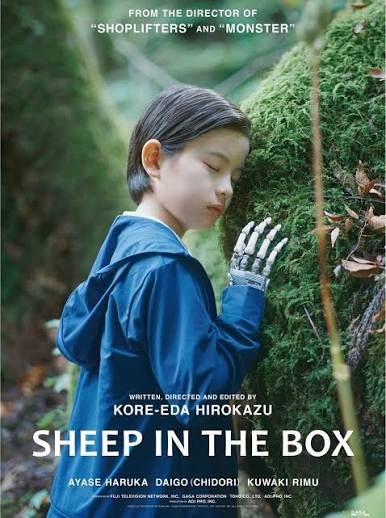
Seen at AMC Fitchburg before a screening of Sheep in the Box.
I enjoyed Sheep in the Box but felt it held back, for lack of a better way of saying it. The premise is that a couple whose son died order a life-like robotic of him to assuage their grief. I expected more conflict/discussion between the husband, Kensuke, and wife, Otone, to go deeper into their relationship as well as the question of what it means to be human.
There's fairly little discussion about how well the android fills the space left by the death of their son, Kakeru, and I struggle to recall exactly how this is treated non-verbally. If memory serves, Otone's sister verbalizes something that gets tossed around a bit: that this new simulacrum is just as good as the real thing if Otone and Kensuke think it is. This stands in sharp contrast to Otone's mother who leaves a note on the refrigerator saying she wants a real grandson.
The more I think about it, the more scenes I recall that deal with the human vs. simulacrum tension. But it feels like they were put together with bailing twine and duct tape, that they don't hold together quite right.
I did really like the gang of other androids along with the odd human being that Kakeru falls in with and, eventually, leaves his "family" for. It vaguely reminded me of the android police station in Do Androids Dream of Electric Sheep?.
Trees are a motif here. Otone's mother urges her to deracinate a tree that is associated with her dead son. Because she is an architect, Otone builds models and she includes trees with them. In the movie, she is designing a house for a couple that is to be perched upon a small hill in the middle of town. She tries to sell the design to the couple by noting how the house would be surrounded by trees. Furthermore, Otone buys a tree for Kakeru and we see them plant it in a spot chosen by the android. And, in the end, the motley, disheveled group that Kakeru falls in with leave the town and move out into the woods.
This last act shows a couple things. First it displays a desire on the part of androids to seclude themselves away from humans and their society. But I think it also demonstrates that Kakeru has learned from Otone. We know of Otone's fondness for trees already. Now, when Kakeru first encounters the group of misfits, they live in the basement of a disused church. Their leader tasks Kakeru with finding a new place for them to live and, as he eventually see, he chooses the woods, he chooses a place filled with trees. Being pro-tree, I appreciated this greatly.
Alright, onto trailers.
Man, there were a lot of them. Lots of anime and animated features, generally.
Tree!
Gojira!!
Now, this one is a part of UW Cinematheque's fall season and I would be surprised if this one actually screens at AMC. Maybe I'm just jaded because a friend saw the trailer for The Samurai and the Prisoner there and there's no sign that it will never grace their screens.
Seen at Flix before a screening of Catvideofest 2026. What can I say? I laughed aloud multiple times and drowned in cuteness overload at the sight of all those kittens. 70 minutes well spent.
Seen at Flix before a screening of Her Private Hell which I enjoyed. I liked how the fog has settled upon the neon city with no explanation. It jumps between Elle's life and the dream world(?)/flashbacks(?) of Private K and I loved how they merged towards the end on the crystal world.
Since I enjoyed Under the Silver Lake I figured that David Robert Mitchell's latest, The End of Oak Street, would have a little sumpin sumpin arty to it but, after seeing the trailer, I became convinced that it was just summer blockbuster schlock.
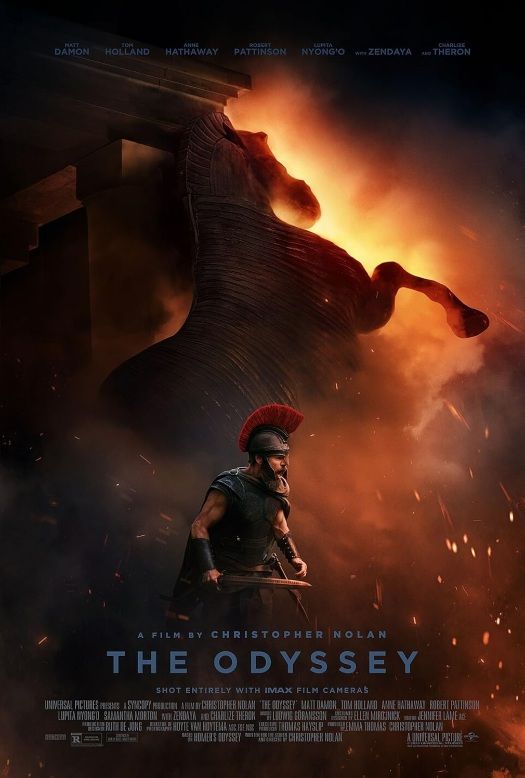
The email arrived in the morning, about 7 hours before I was to see The Odyssey on glorious 70mm IMAX.
Unfortunately I have some bad news. We encountered an issue with our film system lamp before our first show of the day today and had to cancel the show. The nature of the issue requires in depth technical repairs that will effect all further shows for today.
Dammit!
I was in Indianapolis for Gencon and decided to avail myself of the opportunity to see Christopher Nolan's latest epic on the big-big screen and on genuine film, the way he and his cinematographer, Hoyte van Hoytema, intended. Back in 2023 I saw Nolan's Oppenheimer on 70mm IMAX there and was looking forward to further Nolanian celluloid revelry. But cruel Fate intervened which meant I was relegated to seeing it projected digitally onto the IMAX screen at the Indiana State Museum which, I should add, has an exhibit going on now about cats and dogs.
Well, I will have to be content with looking forward to Nolan's next summer blockbuster on 70mm at a Gencon coming soon. (When the Signia by Hilton Indianapolis is open and I get a hotel room downtown again. Rant over.)
Truth be told, I am not a Nolan fanboy. I respect his love of film, the IMAX format, and practical effects quite a bit but his output after The Prestige - what I've seen of it - has been hit or miss. I love that he loves film but I don't necessarily love his films. Going into the theater last month my main concern was peeing as much as possible before taking my seat as The Odyssey is nearly three hours long and I wanted to see every byte of every digital frame. I am incredulous that men in middle age or older make these 3 hour epics and don't include an intermission. L-A-M-E. I get it, it's your movie and you can sit around in an editing bay and hit pause at your leisure to take a leak. However, I do not have that luxury.
Beyond prostate issues, my hope was to simply have a good time watching Homer's poem brought to life on a ginormous screen. On that count, The Odyssey delivered.
It had been several years since I'd read the poem (Robert Fagles' translation) so it was not exactly fresh in my mind as the lights went down but I recalled various plot elements from the written work that Nolan had discarded as I watched.
I want to add that there was one trailer at this screening. Well, not a trailer, really, as it was a few minutes of Dune 3 or whatever it's called. Basically a bunch of futuristic flying Higgins boats land on some planet. Ramps open and space infantry run out looking for shelter on some kind of Herbertian version of Omaha Beach. Laser cannons make mincemeat of many of them before a giant worm emerges from the ground and basically it's real shit show for the poor space infantry.
I am not someone who maintains that Nolan had any obligation to slavishly adhere to the source material but some of the things he excised disappointed me. The Odysseus in the movie wasn't as clever as Homer's hero, e.g. - where was the "nobody" subterfuge? Odysseus is supposed to be hubristic - he didn't tell the cyclops his real name in the movie, did he?
Instead it seems that Nolan crossed Homer with The Deer Hunter. Matt Damon's Odysseus is suffering from PTSD after the Trojan War and 10 years of wandering doesn't help. Speaking of the wandering, Scylla was really neat and Charybdis looked fantastically menacing on the IMAX. Those giant armored warriors - weren't they cannibals in the poem? I suppose the main point was that Odysseus lost a lot of men and was left with but one ship. Still, that scene feels incomplete, a bit random.
The Odysseus of the film is a bit one note - he's got shell shock. His cleverness doesn't get the attention it deserves, although the Trojan Horse scene is really neat. It gave you a taste of his ingenuity and a large dose of the horror of war that has so traumatized him.
The Circe sequence in the film was great fun and the transmogrification of Odysseus' men into pigs was simply fantastic. The way they gorged themselves with the stew and how she massaged them and put her hand in their mouths to mold their faces into porcine visages was at once entrancing and grotesque.
Didn't Odysseus schtup Circe and Calypso in the poem? He is oddly asexual in the film.
I recall being rather appalled at the graphic violence in the poem as Odysseus puts paid to the hopes of the suitors by terminating them with extreme prejuidice. If I recall correctly, Homer describes evisceration and a pecker or two being lopped off. Odysseus is absolutely vicious. While he is definitely out for blood in the movie, it's mostly stabs and slashes with no viscera falling out.
Robert Pattinson is a fine actor to my mind and he is generally good as the venal, arrogant jagoff of a suitor, Antinous, in the movie. Yet I had to wonder why Nolan had him verbalize what we were able to so plainly see in the scene where Odysseus returns. The weapons that line the great hall are stowed in a room upstairs so that they're inaccessible to the suitors who are locked in when Odysseus appears to take his revenge. But one of those who sought to gain entry into Penelope's knickers and purse enters the store room and busts a hole open in the floor down which he drops weapons for those confronting Odysseus. Every time he drops a spear or some kind of melee weapon, Antinous is shown in close-up urging someone to take up the newly available weapon.
A spear drops down so he says frothing at the mouth, "Get the spear!" Then a sword falls to the floor and we again cut to the suitor in close-up who shouts, "Use the sword!" It made for a weird, superfluous kind of play-by-play.
And there's Athena. Rather than a goddess of war & strategy who favors Odysseus because of his cunning and actively intervenes on his behalf, she's just this robed apparition in the movie that glumly stares at our hero for a spell before disappearing. And she's not clad in armor nor does she have a shield nor a helm nor any weapon of any kind. She appears in robes looking more like a sullen Aphrodite than a bad ass who wields an Olympian croupier stick as she plots of the fates of men. It's like having Thor appear in a suit & tie with no hammer.
OK, so Nolan's movie is missing a lot of the cool bits of the poem. But as far as spectacle goes, it was, um, spectacular.
The Trojan Horse was really neat. Rather than standing upright on all four and being on wheels, it has its two front legs up in the air with no helpful wheels. And so it's a hard slog pulling it into Troy meaning Odysseus and his men are thrown about as the horse is dragged inside the city walls and they relieve themselves in situ. The sack of Troy was exciting and visceral. And horrific too so it's no wonder that Odysseus agonizes once the war is done.
As I said before, the scene with Scylla and Charybdis was thrilling. The long shot of the whirlpool churning away amongst the rocks was gorgeous on the IMAX and made me feel the peril in my bones. The sequence where Odysseus' men are slaughtered by the giants was heartrending. This bit also benefited from the IMAX format by emphasizing the large size difference between Odysseus' men and the badass islanders. The heroes of the Trojan War are puny in contrast to the warriors who are built like Tiger tanks and you just know they're doomed from the start.
Circe was cool but I felt that the scenes with Calypso didn't get across just how long he had been there very well. But I think Nolan gets away with combining the nymph and the Lotus Eaters.
I felt that The Odyssey was an old school Hollywood epic full of beautiful actors with lots of dramatic conflict, thrilling action, and a fairly simple good vs. evil binary. Trading the wily, horny, hubristic hero of the written word for a shell shocked warrior rendered a more simplistic Odysseus. Nolan's hero is imperfect but not flawed.
I've been thinking about theme here. Zeus' Law™ is invoked multiple times during the course of the film, - the concept that people should welcome visitors and treat them well and, in turn, guests should treat their hosts with kindness. Odysseus sees the Trojan Horse episode as a violation of it in that he treated his hosts poorly. Really poorly. The sack of Troy here is a lengthy sequence full of Greeks committing atrocities. It is quite intense as we see that women and children are not spared.
And so he feels tremendous guilt - a bit like the subject of Nolan's previous film, Oppenheimer, dare I say. I'd need to watch The Odyssey again to get this straight but I think our hero sees Zeus' Law™ breaking down everywhere in his homeland and he is exiled at the end of the movie for dishonoring the ultimate law of hospitality in a scene that reminded me of the end of The Lord of Rings, like he's being sent to the Valinor Home for Naughty Kings.
Odysseus sees the Bronze Age coming to a close and a dark age, of sorts, beginning because Zeus' Law™ is being ignored. And he has contributed to this.
Does this, along with a generic "war is bad" thing count for deep thematic content? It's a general exhortation/admonition that we should be nice to one another. I suppose this is the true modernization of the tale.
Before I end, the soundtrack deserves mention. Nolan eschewed the conventional orchestral accompaniment with sweeping washes of strings for music that sounded like it had one foot in the ancient world and the other in 2026. Were replicas of ancient instruments used? Sampled? The music aimed to manipulate the audience just like a typical soundtrack would but it felt older, more period. Good stuff.
Despite some shallow characterization and missing source material I simply had a good time watching The Odyssey. It was wonderful to see so much of the epic brought to life on a very large screen. Watching Antinous get what was coming to him was extremely satisfying while seeing Argos lying on a dung heap tugged at my heart strings.
However flawed Christopher Nolan's The Odyssey may be, it is still full of thrills and a lot of fun.
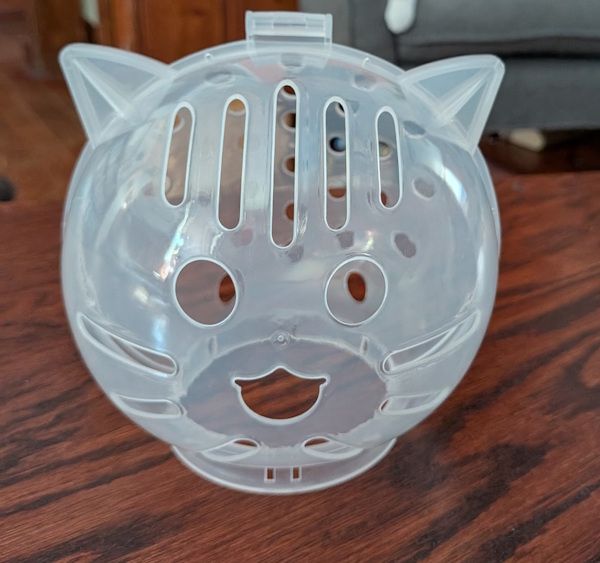
My ladyfriend recently received a rather odd gift:
Some kind of cat dome mask. To prevent cat attacks? Keep a feline friend from gnawing at a wound? Whatever it is, she didn't order it and cannot get anyone to cop to having done so.
While I am sure it has a legitimate use, we both found it rather creepy. For my part, it looked like it was meant for a feline Hannibal Lector.
I saw the trailer for this and it reminded me a lot of The Raid. The plot is fairly simple here: a mute gentleman's daughter is kidnapped and he endeavors to rescue her. He meets up with another fellow who is looking for his wife who was investigating the abductions of children and they team up as they have common cause and both are exceptional martial artists.
And so there are lots of lots of fights that seem to go on for hours. Don't get me wrong, they're fun, at first, but I get lost quickly with all those quick cuts and a bit bored as the fights reach the 10 minute mark. They're just interminable.
One fight scene takes place in a refrigerator factory and our heroes seemingly put down one of the bad guy's henchmen, Ho, who is built like a brick shithouse. Towards the end of the movie Ho quite remarkably regains consciousness and makes his way to the police station where the two heroes are locked in mortal combat with two really bad baddies. Thus we get this five-way conflagration that was chaotic fun until it wasn't.
I knew what I was getting into here and went because I wanted to spend time with my friend. And these types of movies aren't torture. The theater was, I think, the smallest at Point but it was fairly well populated.
Seen at a screening of Backrooms at Flix Brewhouse.
I enjoyed Backrooms quite a bit and intend to watch the web series it is based upon. No doubt it has led to the word "liminal" being added to the vocabularies of millions who missed Exit 8.
The movie's strength was the mystery of the backrooms and all the unheimlichy goodness therein. But I suppose it needed some kind of plot, some kind of hook so that it didn't go too far down the path of Inland Empire obscurity. And so we open with scenes demonstrating that scientists are investigating the titular spaces before we are introduced to Clark, who runs a furniture store, the basement of which has a door to the backrooms. Clark also has a failing marriage but a good relationship with the bottle, the latter much to the chagrin of his therapist.
Clark investigates the backrooms and lures a couple of his employees into helping him. As you can imagine, things go wrong and Clark descends into madness. His therapist, Mary, investigates and discovers the backrooms. She eventually finds her patient and learns that, while he may have been right about the seemingly impossible liminal space he rambled on about in his therapy sessions, he has also lost touch with reality, however weird it truly is. There's a hideously perverted Alice in Wonderland tea party type of scene in which we come to understand that Clark has completely lost it and we also learn the identity of the monster we've only heard and seen brief glimpses of until now.
Mary eventually escapes and is captured by researchers from the Async Research Institute. In a Lovecraftian type of scene ("The Statement of Mary Kline"?), Mary is seated across a table from an Async scientist who offers her some modest explanations to complement her own experiences.
The whole Async angle seemed superfluous to me. It broke the spell a bit. People wandering the (non-Euclidian?) backrooms was spooky and unnerving, their madness when confronted with such an enigma understandable. Clark's explanation of the space as a faulty copy of reality was enough. Knowing that experts are on the case takes the edge off things. Now, if, like in the Southern Reach series, the Async investigations had all ended horribly, that would preserve the mystery, maintain the enigma for me. But their investigations seem to be far-reaching and ongoing.
Still, it should be said that Backrooms kept most of the mystery alive. It, thankfully, didn't have the Async boffin offer a thorough explanation. Creepy, uncanny, some potential non-Euclidian geometry, and descent into madness when confronted with the unknowable, Backrooms has all the trappings of a Lovecraftian tale - it just moves the setting from early 20th century New England to 1990s suburbia.
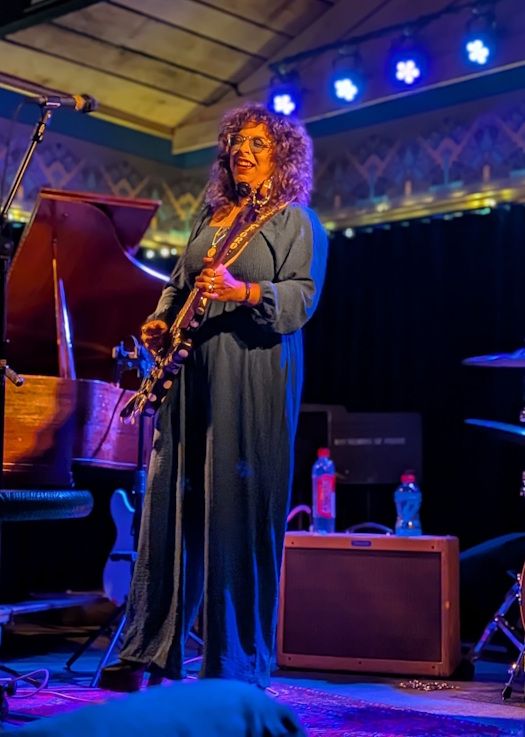
I'd been meaning to go to a show of hers for a few years after seeing her on a bill at the Red Rooster and other joints around town. She plays blues in an Albert Collins/B.B. King vein - more or less - with forays into something more like blues-inflected rock, perhaps a bit Hendrixy.
Great stuff.
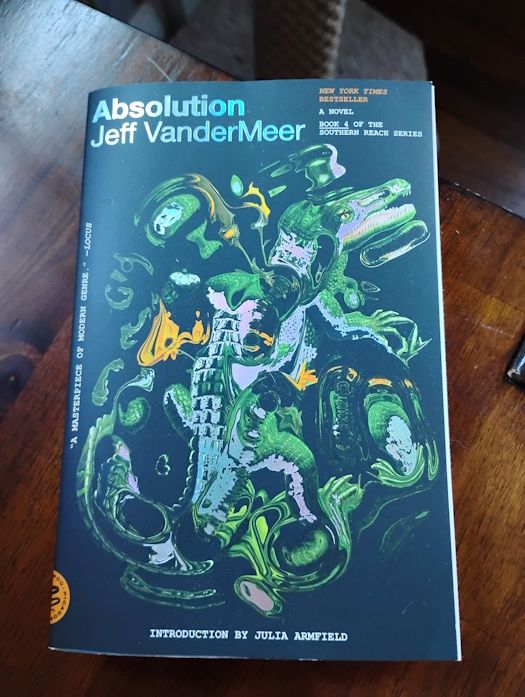
Maybe a week ago I finished reading Absolution.
The first thing I thought upon reading the final words was "I should have re-read the first three books." I think a lot of what happens here is mentioned in the original series but I have forgotten so much as it's been years since I took them in.
Absolution has 3 parts. The first section is called "Dead Town" which describes the fate of an expedition in the Forgotten Coast some 20 years prior to the formation of Area X and serves as a prelude to the horrors to come.
"Dead Town" is as chilling and uncanny as anything in the original Southern Reach books. The carnivorous rabbits made the simple act of mastication into a nightmare and were disturbing enough on their own but then they are slaughtered with ruthless efficiency via flame throwers making for a genuinely horrific scene in which I could almost smell the burning flesh and fur. Just when I thought it was safe to take a breather, we get the scene wherein the Rogue visits the biologists and it was simply disturbing and twisted - diabolical even. I could just see Jeff VanderMeer twirling his moustache and laughing as I realized that there was no going back, that I'd been beset by an uneasiness that I would not, could not shake until days after having finished the book. When that scene was done, I had to stop and think about it. Recover, in a way. I wasn't quite sure what had happened to the expedition in it but it was all bad.
The biologists had reached the white rabbits and did not care or notice that they trampled blackened corpses and living creatures both, weapons slack at their sides like a muscle memory that was amnesia, this onrushing surge toward the Rogue behind his veil of silver. Nor did the living rabbits care if they were trampled.
...
Now the Rogue kept opening his mouth wider and wider and the words came out louder and more brutal above the downpour. Those words could not be extinguished by the rain. Those words rose and permeated and cascaded outward and around the Rogue - even as the first wave of biologists surging against that "fey weaponry" crumpled, fell to their knees, slid down on gurgling mud as if they could evade the fire "that called our names"...except it kept calling and each time the desolation within became more final and complete.
The second section, "The False Daughter", concerns Old Jim, a retired(?) Central operative who is lured back into service for one last job. He is estranged from his daughter and, quite disturbingly, Central casts a younger agent to play the role of his daughter which makes for a weird plunge into Old Jim's psyche. For his part, Old Jim has been sent to the Forgotten Coast to investigate the strange happenings there which are related the expedition from "Dead Town". He is obsessed with finding the Rogue and encounters the Tyrant, an alligator that the biologists let loose nearly 20 years prior to his mission. The Tyrant has grown quite large and seems to have become sentient. The mere potential of the gator still being alive is enough to loosen the veteran agent's grip on reality.
This section ended with a Solaris (the film) vibe for me with Old Jim seeming to return to the "normal" world of the Forgotten Coast but I wasn't convinced. The camera could have pulled back and shown Old Jim at the Village as merely some twisted diorama sitting alone amid alien corn. It reiterated what "Dead Town" revealed to us: whatever alien or intelligence or force is loose in the Forgotten Coast, we humans are unable to divine its purpose or makes sense of its methods.
The book closes with "The First and the Last" which takes place a year after the border that defines Area X has descended. We witness the first expedition into Area X from the point of view of Lowry who drops hundreds, if not thousands of f-bombs. I found his dialogue to be annoying but eventually got used to it.
We know the mission failed and here we get a glimpse of madness settling in and members dying one by one as flesh melts into hazmat suits and other dreadful and bizarre happenings befall the crew.
Absolution was a great read. VanderMeer nails the cosmic horror thing perfectly as people descend into madness before an incomprehensible presence.
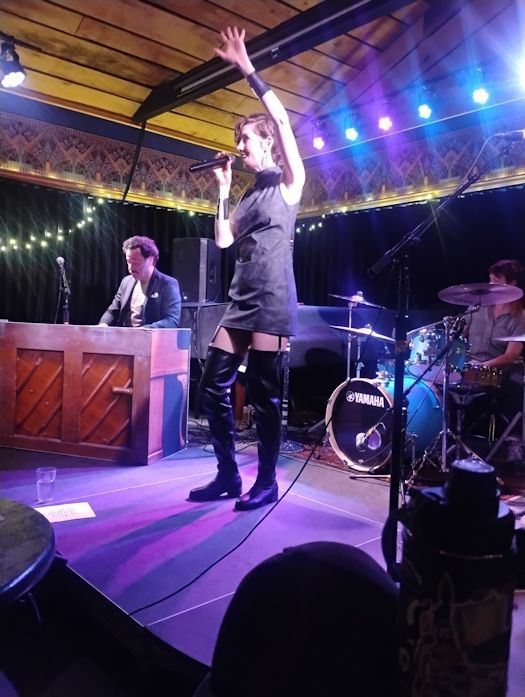
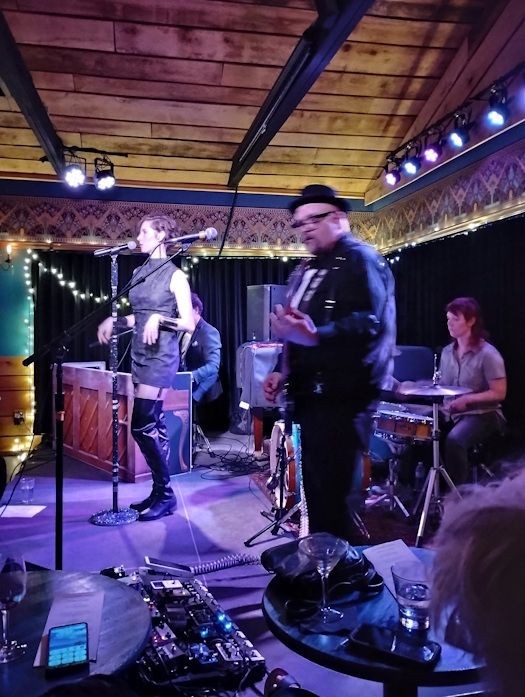
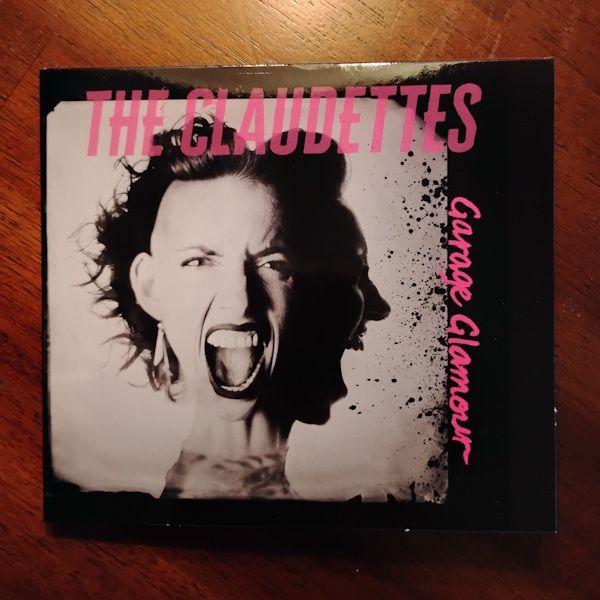
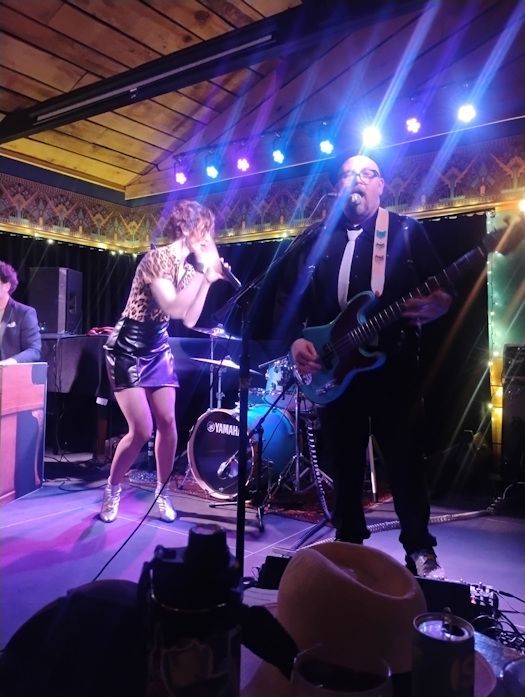
Last weekend my ladyfriend and I went to see The Claudettes, Chicago's premier band who does what The Claudettes do. It was the Madison release party for their new album Garage Glamour and the show was sold out. Also there was Hannah, The Leaf Queen, who shared her photos with me. She was seated right up front while I was off to the side and so her pics are better than mine.
Liz Ele is the new drummer having replaced Michael Caskey earlier this spring.
She seemed to be more of a rock drummer and she drove the songs forward with her steady push. She added a controlled manic energy to the music.
It had been a while since I'd seen the band perform and singer Rachel Williams has settled into being the frontwoman. Her performance that night had more energy and, for lack of a better way of saying it, she put on more of a show. When I last saw the band it was shortly after she had joined and she seemed to be reacting to the music onstage then but now she is part of it, as if the beat was emanating from the movement of her lithe figure, her singing tacking a course for the melodies.
The new album really puts her range on full display. There's the pleading of "(You Are My) Whole World", the sultry seduction of "Touch You Back", and my favorite at the moment, the Zack de la Rocha-like delivery on "Don't Give It Up to the Thieves".
Johnny Iguana's piano was as bracing and melodic as ever while Zach Verdoorn effortlessly alternated between bass and electric guitar. Plus I think he sang more that night as well.
A great show.
Also thanks to Rachel for helping me clean up a spilled beer.
Directed by Wisconsinite David Andrew Busse, it portrays colonies of bank swallows who migrate to the shores of Lake Michigan just south of Milwaukee. We witness males on the prowl for mates, the youngins hatching and growing quickly to become fledglings.
Busse was on hand for the screening and he talked about how the idea for the movie developed from observing the birds on walks and wanting to know more and to document what he was witnessing.
Not only was this a fascinating look at an animal that I knew nothing of until watching this, it was really neat to see the birds in action on the full dome of the planetarium. There's much more happening there than just stars in the night sky. (Which are really hoopy, don't get me wrong.)
More recently I was at the planetarium to take in a screening of Sounds of the Oceans.
It's not really a documentary and is more of an immersive experience. We are shown footage of orcas and whales and dolphins as they glide through the ocean waters. Their calls are mixed with music and the combination makes for a relaxing journey beneath the waves.
While there was definitely a New Age vibe to be had, I found it an interesting impressionistic ride. What were the animals' calls about? Were they having a chat or trading insults about the diver with the camera?
The movie ended with suggestions for how to be kinder to the oceans and their inhabitants. Is chilling out your audience to the graceful movements of some ocean life the best way to build empathy for them and to lead folks to action? I don't know. Nonetheless Sounds of the Oceans is a serene getaway from the workaday world that invites viewers to seek kinship with the life beneath the waves.
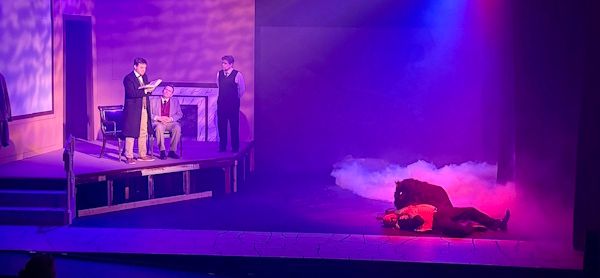
It was great fun and, truth be told, I was surprised at how old fashioned its comedic attitude was. I know nothing about the history of this play but it felt very old school to me. Its humor was for all ages and there was lots of Watson making faces at the audience and faux mistakes that let the audience know the characters knew they were in a play.
Fun was the watchword instead of grand themes.
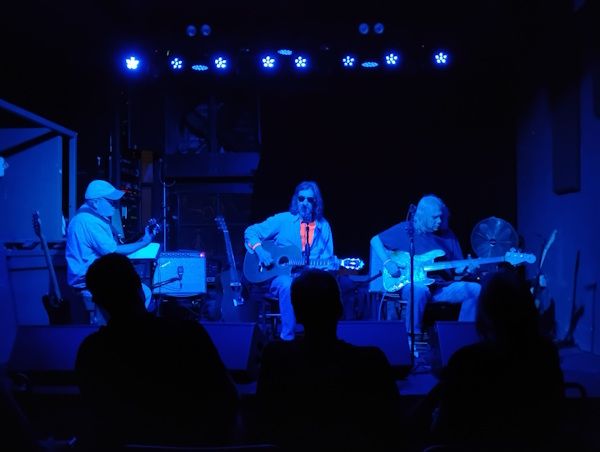
Last weekend a friend and I went to the Gamma Ray to see Souled American, a pioneering alt-country band from Chicago. I heard about them briefly on Sound Opinions shortly before seeing that they'd be stopping here in Madison and figured we had to go.
Joe Adducci and Chris Grigoroff were joined by an unknown (to me) guitarist and they proceeded to play some stripped down, country-inflected balladry.
I thought the tunes had strong Townes van Zandt vibes. (It's snowing on Elston. Ha!) They seemed to have a fatalism to them. The music may have been sparsely arranged but the bare bones aesthetic combined with gritty performances for an achingly genuine experience.
I watched Errol Morris' latest documentary, CHAOS: The Manson Murders. It was really neat for me as I knew only the barest of details of the Manson Family and their deadly exploits.
In classic Morris style, the truth behind the Manson madness and the hideous murders is called into question. Prosecutor Vincent Bugliosi (who was a resident of Hibbing, MN at the same time as Bob Zimmerman) put forth the idea that Manson wanted to start a race war in his book Helter Skelter: The True Story of The Manson Murders. Here Tom O'Neill's book, which gave the movie its title, calls that into question and throws in CIA involvement along with a mind control conspiracy.
Bugliosi's hypothesis is further brought into question by former Manson follower Bobby Beausoleil who paints a more mundane picture of Manson. It's one of a scorned wanna be musician turned maniac and not a fiend bent on bringing to fruition some crazed apocalyptic vision of interracial strife.
The movie does a good job of giving the details of Manson's life and the sordid, murderous affairs he was involved in. Plus it ponders just how a crazy man who lived on the fringes of society when he wasn't in jail could command a commune and convince his followers to commit those sadistic murders in the summer of 1969.
I also appreciated the use of Manson's music. It fits into the narrative, yes, but it had been a long time coming for me. Guns N' Roses covered one of his songs on their album "The Spaghetti Incident?" and I recall well the uproar that caused. And so it was just interesting for me to finally hear Manson performing his songs at long last.
Seen before a screening of Crouching Tiger, Hidden Dragon. It's hard to believe that it was released 26 years ago. Will Hero and House of Flying Daggers return to cinemas too? The early and mid-2000s were a good time for wuxia.
We arrived a bit late and came in during the trailer for Supergirl.
Not sure why I cannot find a non-short version of this one.
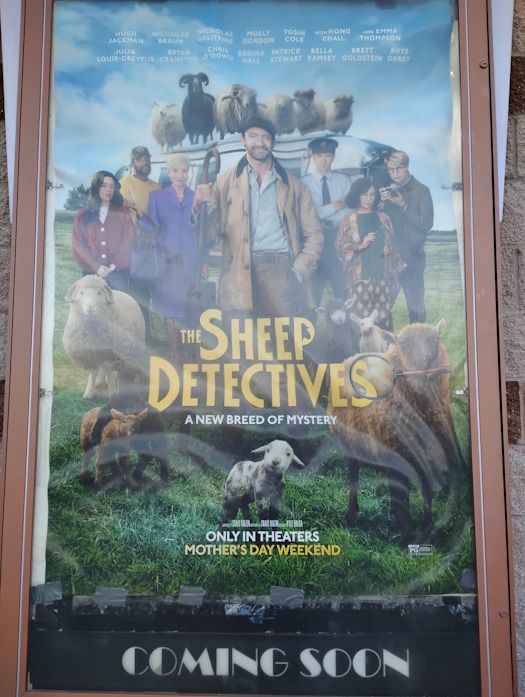
Having read the book, I was really looking forward to this one. For me the trailer left open the question of whether The Sheep Detectives was going to be aimed at children or not. Seeing the trailers below left no doubt that it was a kids flick. A bit disappointing but I still anticipated a lot of fun.
Regardless of the intended audience, the talking sheep were well rendered and a blast.
The filmmakers changed a lot in pursuit of a PG rating. For example, the shepherd, George wasn't impaled with a spade as in the book. Drug running? Gone! Etc. Again, one must accept that it's a movie for children whereas the book was for adults.
In the book, George's home - his trailer or caravan - is locked and we are introduced to the townsfolk through the sheeps' eyes when they come and try to enter the it in pursuit of what we don't know and for their own, obsure motivations, neither of which we come to understand until the end. The movie elides this method of telling us about the humans and instead introduces a new character, a reporter named Elliot Matthews, who has come to town for a cultural fair. We get all kinds of scenes involving no sheep at all, something which I believe the book eschewed completely.
The movie's primary goal is to entertain the audience with cute anthropomorphic sheep that make you laugh; the book was more interested in humanity and used the sheep to constantly comment on the townspeople, their foibles, their failings, and the mixed bag of motivations that they and we all are. Humans become more complex and contradictory when the sheep listen in on their conversations.
A little of this ovine commentary on humanity survives in the movie and I am thinking of the scene when the sheep are walking along and one of them talks about God, the name they have bestowed upon the local priest, and their incredulity at his behavior. But I missed how the sheep used their senses of smell to glean information as this is greatly downplayed in the movie. The sheep are basically humans with wool and on four legs here whereas in the book they are no doubt anthropomorphic but they have different attitudes and priorities and are constantly commenting on the contrasts between our two species. The sheep aren't non-human enough here.
While I preferred the ovine commentary of the book to the movie's more stripped-down cutesy murder mystery approach, the movie was still great fun. The sheep were cute and my heart went out to the winter lamb who was shunned by the rest of the flock, one of the very few ways the movie attempted to bring some intersheepal dynamics to the flock. I laughed, pondered the mystery, and enjoyed every second of talking sheep.
********
The first thing we saw that wasn't a Coke commercial was a trailer for Studio Ghibli Fest 2026 which starts in the summer.
Now, a nice looking rendition of the Necronomicon and baby Cthulhu I did not expect.
This looks to be something like a live action The Simpsons movie.
Last night I went to see the Iron Maiden documentary, Iron Maiden: Burning Ambition, and saw this on the way in.
I am excited to see this flick. Anthropomorphic sheep are cool. Plus it'll be interesting to see how it differs from its source material.
Iron Maiden: Burning Ambition was a fun trip back into Maiden's history despite its Behind the Music-like melodrama and wallowing in hagiography.
The concert footage was a blast to watch on the big screen and hear on the cinema's sound system. I am not the world's foremost Iron Maiden expert but I thought I recognized all of the concert footage from the time Bruce Dickinson joined through 1988. The Number of the Beast through Seventh Son of a Seventh Son. I was mildly disappointed that no live performances from this period were dragged from the vaults or found in someone's attic and dusted off.
My two main gripes are:
1) No song was ever played from beginning to end. At least I cannot recall one. This is a pet peeve of mine. I'm not asking for an entire performance of "Rime Of The Ancient Mariner" but how about something shorter like "Sanctuary" or "Aces High" or "Can I Play With Madness"?
2) The movie elided the bands adoption of keyboards in the mid-80s and their move into progressive metal wholeheartedly. I got aboard the Maiden train in 1988/89 with Seventh Son of a Seventh Son so I was disappointed that the doc basically ignored this album and its predecessor, Somewhere in Time. And this despite a scene where Dickinson tells a fan that heavy metal cannot be done with synthesizers. It was like the '86-'89 era was being setup for us and then nothing.
I feel badly for any fans who got into the band's music via any album after Brave New World because the movie had no interest in this music as it was irrelevant to the story's rise-fall-rebirth arc.
Honestly, the music generally played second fiddle to tales of band dynamics which is a shame.
On the plus side I felt the departure of Paul Di'Anno and the Blaze Bayley era were treated respectfully, if, perhaps, all too briefly. I wish that more was made of the music that Bayley made with the band. At least two songs from that era were kept in the live sets after Dickinson and Adrian Smith returned - "Sign Of the Cross" & "The Clansman" - so the band didn't write off that era as completely unworthy.
My preference is for documentaries that give pride of place to the music and the creative process that produces it and not the rise-fall-rebirth melodrama. Having said this, Iron Maiden: Burning Ambition was still a very fun watch and I learned more than a few things about the band, including the fact that Janick Gers is English. I thought he was from the Continent originally. Oops.
Seen before a showing of Normal which was a hoot. I did not expect the mayor, played by Henry Winkler, to get blown up. Hehe. I was, however, disappointed at the lack of regional Minnesota accent and dialect. No mention of hotdish at the potluck. Oh well. Still, it's always good to have a Ben Wheatley movie.
Oceans Eleven's 25th anniversary is this year so it is returning theaters.
I took a day off after going to the movies 11 days in a row. These were seen at a screening of The Drama.
On the face of it, The Drama isn't something I'd watch whether it be at the cinema or at home. But I enjoyed director Kristoffer Borgli's previous flick, the surreal Dream Scenario, and heard good things (ahem) about the movie's sound design.
Stylistically The Drama is quite interesting, at times. Emma, played by Zendaya, is deaf in one ear and the movie provides different ambient sounds depending on whether a shot is from her point of view or her beau Charlie's. However, this motif is abandoned at some point and I am unsure why. Or largely abandoned as it seems the flashbacks to Emma's youth usually have a static in the background that reminded me of the run off groove of a record and they do until the end, if memory serves.
Emma's semi-deafness is played for laughs in the opening scene, used in a tender moment in another, and given an explanation that relates to her horrific revelation given one drunken night during a session of Tell Us the Worst Thing You Ever Did. In the main though, it is ignored and she can hear just fine otherwise, even quite well through a door in one scene when she is brooding in a bathroom and overhears a conversation outside the door.
Flashbacks, dreams, and inner visions are fairly prominent although they seemed to be used less frequently as the movie went on. For instance, the morning after the big revelation, Emma wakes up to find Charlie gone. We then to cut to a shot of him with his best friend Mike in a park. Mike is telling his friend that he can in no way marry Emma and that he'll do whatever it takes to prevent it and cover for him. Charlie returns to the home he shares with Emma and we get the impression that the scene was a doomsday scenario that played out only in Emma's head.
I think Borgli is trying to comment here on the roles of stories in our lives, how they affect us, add meaning, and allow us to assemble the events that make up our existence into what we call a life. But I'd need to watch the movie again to try and make connections between this theme and the stylistic elements the director employs.
Not sure I want to do that, though, as I found Charlie to be a thoroughly unlikable character. He is just so pathetic that it was painful for me to watch. When the couple fired their wedding DJ, she called Emma a bitch (I think) and Charlie a pussy and she had him dead to rights. He is obviously older than Emma yet is bumbling and came across as being quite immature. In many instances he stumbles through conversations and is often paralyzed by indecision. Perhaps this was to make the feel-good ending feel good.
Emma is a very sympathetic character and I found her transformation from someone who just wants to crawl under a rock after her drunken revelation to being a woman prone to fits of intense anger to be realistic. I empathized with her. It's just too bad she threw her lot in with a man-child.
Onto the trailers!
The first couple were commericals with no MPAA thingy.
I cannot recall the last time I saw 2 comic book movie trailers at a screening. The first was Spider-Man.
Now this one looked good with its House of Leaves vibe.
Is this the new Bob & Carol & Ted & Alice? A red band trailer.
A heart-warming look in shallow focus at a man who has built a career out of confusing clever, pithy turns of phrase for serious engagement with the art of music. I now know why Ann Powers' work makes me nauseous.
I really enjoyed Exit 8. It's a very uncanny, unsettling, trippy Möbius strip of a story. I probably spent more time looking for anomalies onscreen than was necessary. Towards the end of the movie our hero, The Lost Man, and his young companion are beset upon by a swarm of lab rats with human body parts sewn on them or grown in them. This brought to mind the opening scene were the guy is doom scrolling a social media site on his phone while on the train. We see one of those rats - the one with the ear on its side - in the feed and I immediately struggled to recall what else we saw on his phone in that scene. I recalled posts showing flooding and so it was no surprise when the hallway floods with less than salutary looking brown water.
What else was shown on the phone that manifested in the hallway?
Ultimately this is a story about a man's internal struggle but was it all in his head? The Walking Man's story would suggest otherwise. But who knows. I thoroughly enjoyed this ride.
Tangentially, I watched a recent conversation between James Kreul and Rob Thomas in which they previewed the opening weekend of the Wisconsin Film Festival. At one point Thomas makes a cynical comment - though I cannot recall what prompted it - about frequently being in a Madison theater with only 6-8 other people or something akin to that.
While there's more than a grain of truth there, I think it should be noted that the screening of Exit 8 had somewhere around 20 people in it. The showing of The King's Warden I attended had 30+ people in it. Ginormous numbers? No. They weren't sell outs even in the small theaters they screened in. I don't know how AMC and Marcus feel about these numbers, but they don't seem too shabby for foreign language movies in a city of only 300,000 or so people.
As for the film fest, my fest starts today. I'll be attending everyday through Thursday, though I am not seeing multiple movies each day. I'll be seeing 25 Cats From Qatar because, well, cats! I was absolutely thrilled to see that Dead Mountaineer's Hotel would be screened this year because I heard about it just a few months ago after doing a spot of reading at Rachel Cordasco's Speculative Fiction in Translation site. The movie is based on Arkady and Boris Strugatsky's novel of the same name and I stumbled upon her review there and it sounded like it would be right up my Straße.
Everybody who's been attending the festival for a while has their own gripes about the current incarnation every year. Honestly, I don't have many complaints beyond missing the midnight movies at the Orpheum. I fondly remember seeing the Irish horror flick Isolation there late one Thursday night.
My fest begins at 6 tonight with Man on the Roof followed by The Spies Among Us. I will be seeing a couple flicks on Sunday with someone and a lady I know will be at the screenings of 25 Cats From Qatar and Nadja that I'll be at. I think this is first time I will be accompanied by someone at a screening in years. I used to go to the fest with other people more often back in the day. And I don't run into people I know very much anymore. I will say it was nice to find myself seated next to Lewis Peterson of Four Star Video last year at the screening of Pavements but chance meetings like that are the exception these days.
Looking back, my wife and I stopped attending the fest together several years ago and, in retrospect, this was an early sign of our marriage coming apart. So there's a lesson for everyone: keep your relationship strong by going to the Wisconsin Film Festival together!
OK. Onto the trailers!
Curiously enough, I cannot find the trailer for Bad Lieutenant: Tokyo. At first I was surprised to see a new film by Takashi Miike, he who did Audition, Ichi the Killer, 13 Assassins (which screened at the Wisconsin Film Festival back in 2011), and one of the shorts in Three... Extremes among many others. But those are the ones I recall having seen. My surprise continued when it was revealed to be a Bad Lieutenant movie. It's been a while since Werner Herzog made his contribution to the series.
Look! An Irish horror movie that would have been perfect for a midnight screening at the Orpheum for the festival.
Only 3 trailers vs a million at AMC. But we also got commercials from Eli Lilly and Company and Rolex.
I was surprised to learn that The Yeti made its debut only on 3 April at a festival in Chicago yet was playing here in Madison just a few days later. To the programmer at AMC Fitchburg, I salute you.
It was a really fun monster movie about a rescue mission seeking to find out what happened to a previous expedition into deepest, darkest Alaska in 1947. The look and style was old school and it appears there was no CGI which makes it all the more retro. The title font looks like it was from a 1950s b-movie and one scene even had a newsreel look and feel to it. We had the overreach/hubris of scientists, a horror shown largely only in shadow or as a hazy figure shrouded in fog. We'd get an arm here or a tuft of fur there but the movie smartly let the creature exist as sound for quite a bit until the end. A growl or some strange noise or the cries of terror of its victims.
A genuine creepfest full of horror as the crew of the rescue mission are picked off one by one. But the movie also mines a vein of rich thematic material as the Yeti is shown to be less evil, perhaps, than just another facet of Nature doing what creatures do. Plus 2 members of the rescue mission are the children of 2 of the missing explorers. At 90 or so minutes the movie does not mine this vein deeply, I grant you, but it did so just enough to add color and turn the story in another direction which I found to be interesting and in keeping with the movies of yore that The Yeti seeks to invoke.
I arrived to the showing late and missed a trailer or 2 or 3.
This one flummoxed me. It was very confusing and weird but I am unsure if that is actually representative of the movie or if it was a ploy. Weird is good! I just found this trailer odd and it deviated from the norm. Could be good, though.
This was, unsurprisingly, a red-band trailer. On Monday I ran into Lewis Peterson, co-owner of Four Star Video, who was attending one of the mystery movie screenings at AMC and he was eagerly anticipating it being this one.