17 March, 2023

The Yeti are roaming this abbey!

(Old Man Jamie at a table with pen in hand.)

Having reached the end of my poor sinner's life, my hair now white, I prepare to leave on this paper my testimony as to the wondrous and terrible events I witnessed in my youth. May God grant me the wisdom and grace to be the faithful chronicler of the happenings that took place in a remote abbey in the dark north of Tibet.

The TARDIS deposits the Doctor, Jamie, and Victoria somewhere in the Himalayas not too far from the Detsen Monastery. The Doctor has been there before and he has a ghanta (bell) adorned with a dragon to prove it.

Judging by the appearance and armament of Prof. Edward Travers, who is also in the area looking to trap Yeti, it would seem this story takes place in the 1920s or 1930s. Travers is like Indiana Jones but more bellicose and shouty.

Jamie and Victoria stumble upon a cave with a tetrahedral pile of glowing balls - like a pyramidal pile of cannonballs - and are accosted by a big fury thing. Meanwhile, the Doctor heads to the monastery where he finds that it is being threatened by the Yeti (monastery under siege!) who are usually peaceful and avoid people. Travers accuses the Doctor of murdering his fellow explorer, whose death we hear earlier in the episode.

I know nothing about the hierarchies of Tibetan Buddhist monasteries but the abbot in this one reports to an even higher power there - the master. It turns out that this master is Padmasambhava, someone the Doctor knew from his previous visit, and he is this old, withered Emperor Palpatine figure. As it happens, he is a puppet of The Great Intelligence.

The Great Intelligence didn't last beyond Troughton's second season but was revived for NuWho and has appeared in 3 episodes, according to Wikipedia. But the character was latched onto during the Wilderness Years and appeared in 5 novels. (Not sure about short stories, comics, and the like.) I recall reading The Quantum Archangel 20 years or so ago and thinking that The Great Intelligence rang a ghanta, but I couldn't have told you much about it.

I like the idea of a story that takes place in a monastery up in the Himalayas. A neat setting for Doctor Who. Something different, something non-Western. It took me 1 full episode plus before I realized that this story had no incidental music. I don't know if this was intentional, as if to capture the spirit of a monastery, or if there was a technical snafu, if the composer got sick, or some such thing. I wish that that Yeti robots hadn't been revealed quite so soon. But, at least, Padmasambhava, spent much of the story hidden behind a curtain that you could see through but one that didn't allow you to really discern details.

Victoria screams in horror at times while at others she is willful and nosy. Jamie must suffer from shrinkage wearing that kilt at that altitude. I adore the Doctor's fur coat. It's always fun to see him wearing something different that doesn't include a vest or tie. Or scarf. Oh, and the recorder makes a slight return. There's a vague Seventh Doctor vibe here too with Two knowing more than he's letting on.

The Great Intelligence-infested Padmasambhava was a great character. The story could have used some trimming and should have kept the robots' identities hidden a bit longer. Still, a fun tale with Troughton in fine form.

What have you gone and done to the basic underlying fabric of space/time now?

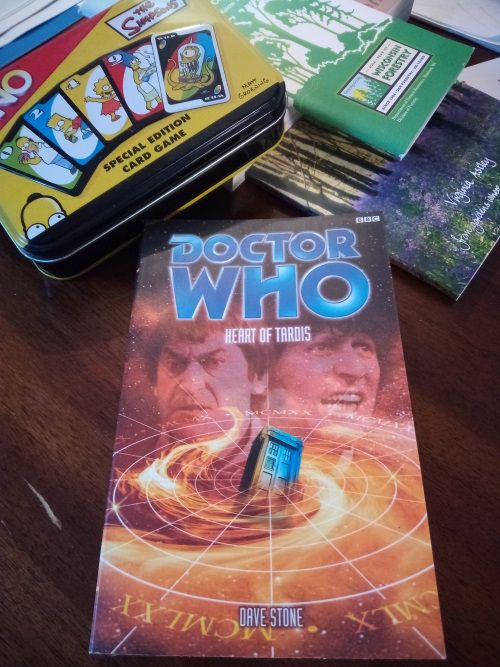
While I remember enjoying the 2 Virgin New Adventures by Dave Stone that I read, I don't recall much about them. So, I wasn't sure what to expect regarding the prose here. But, since it featured both the Second and Fourth Doctors, I expected it to be fun.

And it was.

Two is traveling with Victoria and Jamie. A failed attempt to land in 20th century London ends up depositing our TARDIS crew in the United States in an odd Midwestern town called Lychburg which bears more than a slight resemblance to Springfield from The Simpsons. It has a statue of its founder, Zebedia Lynchall, and is home to a Doctor Rick who enters a room saying, "Hello, everybody."

Meanwhile, 4 has Romana I by his side when they are confronted by a Time Lord with the vowelless name Wblk who tells the pair who should be out trying to piece together the Key to Time that a very old time machine from Gallfrey's ancient history met a controlled singularity on a populated planet. This meeting created a dimensional rift of some kind that has put the entire universe in peril.

Stone's writing is infused with jokes and casual absurdity a la Douglas Adams. In one scene, Two and his companions are enjoying some lunch while chatting. Imagining the Doctor gnawing on a chicken leg as he lectures to Jamie while the Scotsman is putting a deviled egg in his mouth made me chuckle. The Doctor mentions murder which surprises both Jamie and Victoria. The Time Lord protests that he had surely mentioned it before which prompts Victoria to say, "Possibly it would be simpler if we all pretended that you had told us, but we've forgotten, so you'll have to tell us all over again."

Four and Romana run into the Brigadier, which was a welcome surprise for me. But before that, they break into a museum to retrieve K9 in a manner that is less Mission: Impossible and more Keystone Cops. Another funny moment was when Four is confronting a bad guy and he quips, "Have you ever thought of seeing a specialist about that needlessly self-important and messianic tone?"

There's just a lot of this kind of stuff. Stone does a fine job of portraying our heroes faithfully to the TV show. For example, Romana is ever the aristocratic Time Lady: "And I really wish it was in aid of going somewhere other than Earth. I loathe Earth in that century. All those world wars and extermination camps. Things like that are always so miserable and depressing."

In addition to all of The Simpsons references, Lychburg is bursting with anachronisms, there's a drive-in playing schlocky sci-fi movies, and residents don't need much, if any, provocation, to murder one another.

"Romp" is a good, if overused, word to describe this book. I found myself smiling a lot while reading it. It has a lightheartedness to it and the familiar characters are well-drawn. Yet it has some substance too. There's weirdness and mystery to be had as well.

Wicked Snacks

Seen at a recent visit to an Indian grocery store.

We've got Bush!


12 March, 2023

Sampled: Birch Beer

Last fall I went down to the candy store on the square in Monroe to buy some candy for a friend's daughter. My Frau and I had dined with my friend and her family the previous month when we were in Milwaukee and I decided that I'd send her daughter a stocking for Saint Nicholas Day full of candy. I walked out of the store having spent a lot of money and later found that Christmas stockings can hold a lot of candy.

I also walked out of there with a bottle of Boulder Birch Beer from the Rocky Mountain Soda Co. It sounded like something kids in the Old West drank. Like in an episode of Deadwood. A father and young son walk into a saloon...

Dad: Gimme three fingers of whiskey and a water for the boy

Boy: God dammit, pa! I want a fucking birch beer!

Dad: Don't let yer ma hear you talk that way, you little shit.

It was brown and fizzy. The label revealed only "natural flavoring extracts" and I found that it tasted a lot like root beer with that sassafras, anise, and whatever else is in root beer taste. I assume there was also some birch extract too but I am unsure that tastes like. However, I presume it's birch sap that's been extractized. Plus a healthy dose of vanilla. So much that the stuff tasted like a mix of root beer and cream soda.

Tasty.

A Trio of Trachtes

Sadly, I think this one in the Tenny-Lapham neighborhood is going away soon.

Here's one in the Marquette neighborhood that I just noticed within the past month or so.

I think I first noticed this one last winter and only finally got around to photographing this winter. It's fairly well hidden by foliage from the bike path during the warmer months so it was hiding in plain sight.

Madison Then & Now, 1945/48 - 2023


11 March, 2023

They're here...

I saw my first red-winged blackbird of the year!

They were everywhere down at Starkweather Creek. All the little fellas were calling out for the ladies to hear. I wonder if they were thinking that they'd arrived just a bit too early and perhaps were a little pissed off that their homesteading territory was still snowbound.


Also saw cardinals in a bush in our yard. I think this one is cursing all of the house sparrows on the feeder.

"Every 1.5 pound loaf..."


"...weighs 10 pounds!"


10 March, 2023

We are star dust

I did not expect something new from Yes. Great snare sound here. Good song. Feels like they've caught a wave. The song just has more energy to it than most of their recent music.

March full moon, new Peter Gabriel tune

09 March, 2023

Rambutan: beware the big seed in the middle

After looking at the fruit section at a local Asian market recently and seeing all of these fruits I'd never heard of and/or tasted, I took the plunge with some rambutan.

They grow on tall trees and are native to Southeast Asia. I peeled one to reveal what looks like a large, skinless grape. So I bit in and hit the big seed in the middle. Oops.

De-seed first.

The texture and taste were a lot like green grapes. Sweet but slightly tart - less tart than grapes. They've got a taste that is kind of sprightly but tempered with something floral.

Very, very tasty!

Goodbye Fat Tire, We Hardly Knew Ya

New Belgium has reformulated Fat Tire so I figured I'd have one more of the classic version before the new stuff takes over. Very tasty.

Anyone sampled New Fat Tire? What does it taste like?


08 March, 2023

They're taking us to Marrakech

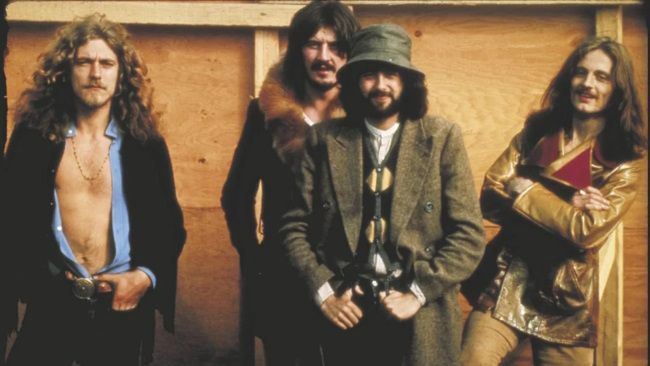
I am struggling to take my mind back to 1994 and recall my reaction to hearing that Jimmy Page and Robert Plant had reunited. Was I drooling at the chance of hearing more Led Zeppelin-esque riffing & wailing? Or did I hope for something new? Songs that didn't just mimic their work in the 1970s, but rather music that reflected where they were then, some 15 years since they'd done an album together.


As it turned out, No Quarter: Jimmy Page and Robert Plant Unledded gave us lots of Led Zeppelin, but also a few new songs. However, it was more keen on fulfilling the world music promise of "Kashmir" and the October 1972 recording sessions the 2 rockers had in Bombay, India. This was no simple hard rock album. Instead it featured songs recorded in Marrakech, Morocco with local musicians, songs recorded in London with the Egyptian Ensemble led by the legendary Hossam Ramzy, and even more tunes recorded with a group featuring members of Plant's solo band. This last configuration didn't produce straight-ahead rock, though. The usual rock instrumentation was abetted by banjo, mandolin, hurdy-gurdy, and bodhrán. The result was that some Zeppelin classics were given a Celtic makeover.

I bought the album and soon found out that various additional songs were available as b-sides to singles. But, even buying the U.S. CD singles didn't get me everything as I learned that one song was only available on versions of the album outside of North America. It's stunts like this that made me happy to see record companies scared as hell and taking a beating when Napster was introduced.

Hearing "Wah Wah" got put onto a lengthy list of other songs to seek out but was way down. As with Page's Lucifer Rising soundtrack, time went by, and the Internet became accessible and popular. But it wasn't until just a year or so ago that I decided to make a Youtube playlist of the original material on No Quarter which meant I'd be able to hear "Wah Wah" for the first time. Assuming it was actually on Youtube, of course.

Of course it was.

Although the song was not on any domestic release of the album, it was readily available on the DVD of the same name, which is where the Youtube videos I've found are sourced from.

As it turned out, a song I waited somewhere on the order of 28 years to finally listen to ended up being the best of the bunch of new songs on No Quarter. Recorded in Marrakech, it features for local musicians that contribute voice, a frame drum that looks not unlike a bodhrán, what I think are tablas, and a stringed instrument that may be a guembri. These in addition to Page's acoustic rhythm guitar and Plant's singing.

The drums provide a restrained but steady beat for the guitar to play over while the guembri doubles Page's line but in a bass register and in something akin to a lead role. The guembri has this mercurial, hollow kind of sound that is instantly alluring.

Plant sings English lyrics while the Moroccan players add what I presume is some Arabic singing, including, "wah wah", in response to his words. I don't know if "wah" means anything in Arabic or is used for its sound but their singing is a highlight of this song. I also don't know the backgrounds of the Moroccan musicians but here their playing has a homespun feel. It sounds wonderful yet ragged. Tight but loose, perhaps. I can't find anything to indicate whether these guys were street musicians that Page and Plant met or if they're some of the most accomplished recording artists in all of Morocco.

Whatever the case, this song just locks into a groove right away and doesn't let up. It even quickens towards the end for a fantastic finish.

07 March, 2023

A Pre-St. Patrick's Day treat

I am unsure what defines an Irish ale but this one from Great Lakes Brewing is rather tasty. Nice hoppy flavor to counter that caramel sweetness.

Holocat!


Before There Was Throbbing Gristle

In a previous post, I wrote about my love for a couple of Led Zeppelin songs that have endured over the years for me even though I don't care for other tunes of theirs as I once did. Here I want to talk up a Zeppelin-adjacent piece from the days of yore but one that I didn't discover until fairly recently.


As I noted earlier, I listened to a lot of Led Zeppelin in my younger days. I believe that I was in high school when I read Hammer of the Gods, Stephen Davis' notorious account of Zeppelin's career. It built up and kept alive for a whole new generation of fans all of the rock mythology surrounding the band. Salacious, if apocryphal, tales of booze, drugs, and general Dionysian debauchery were given pride of place in the history of the group. Also played up was Jimmy Page's love of the occult and his fondness for occultist, "magician", etc., Aleister Crowley.

By reading the book I learned that Page had recorded a soundtrack for the film, Lucifer Rising, directed by experimental filmmaker and fellow Crowley devotee, Kenneth Anger. However, the music was never used after Page and Anger had a falling out. My understanding is that the soundtrack emerged on a bootleg sometime in the 1980s but I never got a hold of it despite having an interest in hearing just what Page had composed to accompany a film which is an exercise in esoterica.

Years go by and Led Zeppelin drops out of my musical diet. Meanwhile, all kinds of thing happen including the rise of the Internet and the official release of Page's Lucifer Rising soundtrack and associated recordings. Then it occurs to me one day just a few years ago: I wonder if it's on Youtube.

And it was.

While I had probably read some descriptions of this music back in the day, they were long forgotten by the time I hit play on that Youtube page and I really had no idea what to expect going in.

It begins with a gently pulsing drone that is sitar-like and it slowly wends its way along for a few minutes before some indistinct, though surely blasphemous, chanting enters. A woodwind sound emerges from the scene only to slowly fade away as if it had been sucked into the void.

Onto the foundation of that sitar-like pulse are laid synthesizers that sound like they're heralding the arrival of something menacing as well some of the most ominous sounding Mellotron strings I've ever heard. As the song progresses, Page throws in some guitar effects straight out of the live "Dazed and Confused" playbook.

Just as the gloominess threatens to become oppressive, Page eases back on the sinister and slightly atonal synths by throwing in some tablas that give a stuttering rhythm for the listener to latch onto. A bit of acoustic guitar joins the hellish chorus towards the end and eases us back into the ethereal drone and the song into denouement.

What a fantastic piece of music! The drone is entrancing and Page throws all manner of sounds on top of it that evoke things esoteric and evil. There's such interesting sonic variety here and a heightened sense of drama throughout. Just great music to get lost in. I wouldn't have been surprised to see a large, hellish fiend sporting wings and tentacles around its mouth emerge outside of my window as this piece played in the background.

The video above includes, to the best of my knowledge, all of the associated recordings from the sessions that yielded the soundtrack that have been released to date. In addition to the 20 minute piece meant for the film, there's other snippets that went unused. Most sound like Page experimenting with his guitar and tape effects. Of greatest interest is "Lucifer Rising - Percussive Return" which sounds like the opening of the soundtrack but with some metallic percussion sounds that give the song a proto-industrial feel which was wholly unexpected.

I think it was all done in 1971-72 as I've read that Anger had finished shooting his film in '72. So this stuff dates to the period between Zeppelin's untitled 4th album and Houses of the Holy. Listening to it, I can't help but wish some of the ideas here found their way into Zeppelin's music beyond live versions of "Dazed and Confused". It would have been fascinating to hear them play with the metallic abrasiveness of "Percussive Return" or a pulsing drone.

I can't feel my face

That looks like some deadly pepper shake.

Road Slush 2023

A fine stout from New Glarus.

06 March, 2023

The Songs Remain the Same


I listened to Led Zeppelin quite a lot when I was a teenager and into my 20s. Nothing unusual here, nothing that countless other young men didn't indulge in as well. At some point, though, I moved on. It wasn't a falling out so much as me just finding lots of other musical rabbit holes to go down. As the years wore on Zeppelin would occasionally return to my musical diet after long periods of absence. A song of theirs might come on the radio or I would just get a hankering to hear one of their tunes.

One sad day I unceremoniously disposed of most of my tapes and records and found myself having to rebuild my music collection. I was in no hurry to buy any Led Zeppelin. At some point or other, I decided it was time to buy some of their albums but found that, in my 30s, I had become less enamored of Robert Plant's wailing and keener on listening to the blues artists that Zep had covered and been influenced by than their interpretations.

But I never lost sight of the fact that the guys were extremely talented and had a body of work that was much more eclectic than riffs and orgasmic moans. Some of their songs remain classics for me and have aged very well. Just like your humble narrator.

One Led Zeppelin song that I still love is "When the Levee Breaks". Yeah, it's a blues cover but it's really a re-working of a country blues song and not just a traditional blues tune put into overdrive with heavier guitars and a faster tempo. This is something altogether different.

I first heard this song when I was about 10 years old and loved it immediately, as I recall. I also remember thinking of it as being quite different from the rest of that album, Led Zeppelin's untitled 4th, a.k.a. - Led Zeppelin IV, a.k.a. - Zoso, a.k.a. - Four Symbols. "When the Levee Breaks" wasn't riff rock and it wasn't acoustic balladry. It was...just hypnotizing.


It opens with what is probably the most famous drum line in all of rock history. John Bonham's bass drum is drenched in reverb and right up front pounding away while his snare has a that great woody pop to it. The drums echo just enough to be readily noticeable and give the listener a sense that there's simply something different about them but not done with too heavy a hand to make them sound thoroughly unnatural.

Then harmonica, bass, and guitar come in. The guitar has a rather clean sound - no big fuzzy chords. It churns away in the background instead of being the main melodic component that your ears grasp onto immediately. The original version of the song by Memphis Minnie and Kansas Joe McCoy is a rather bouncy country blues. But Led Zeppelin transform it into a sludgy, raga-like epic.

There are no typical Jimmy Page guitar solos. In their stead we get breaks of distorted slide guitar that pay homage to the blues but don't really sound like it. The song just sounds dark and slightly surreal. If Jimi Hendrix took the blues into outer space and gave them a crazy, psychedelic sheen, then Zeppelin take them underground here, rolling them in the raw earth. That catchy drum beat and the jangly, churning guitar just don't stop and draw you in until you're lost in their rhythm.

Sometimes the guitar is clean, other times it has a wooshy effect - tape flanging, apparently. I've also heard that the tape was slowed down just a bit so the whole song steps down in key and, if you compare the released version to versions of the song that are more works-in-progress and not so adulturated, the instruments kind of meld into one another as in an alchemical blending of base elements.

No one element sticks out here with the others playing support roles like in other Zep songs where things seem to built around a guitar riff. This song feel orchestrated with everyone's contributions making a whole greater than its parts.


When I finally did buy a Led Zeppelin CD, it was Led Zeppelin III.

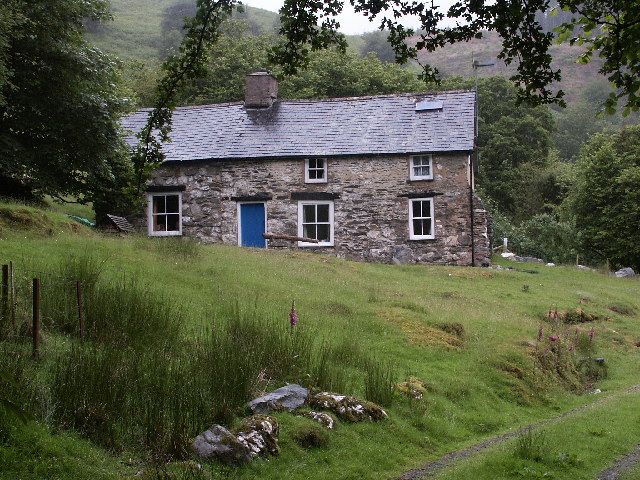
While the album has some classic riffing and more traditional takes on the blues, it's known for being the acoustic album in their catalog. They decamped from the big city (I think) and settled into a cottage in the Welsh countryside and returned to the city with several more acoustic, folky-flavored songs. That's the rock lore, anyway.

Of that bunch of softer songs, "That's the Way" stands out for me.

The gentle strum of an acoustic guitar opens the song but is quickly joined by mandolin to provide a sprightly rhythm that goes up and down with the first part ending on a high note followed by a decent into lower ones. Steel guitar adorns the acoustic instrumentation and adds a dreamy quality to the bucolic scene. Towards the end of the song as it meanders to a close, there's a little bit of a sound played backwards as you can hear delicate whooshes, as if the wind is gently lifting something up into the air. It's subtle, though and doesn't drag you off into some psychedelic landscape like the Stargate sequence in 2001: A Space Odyssey. Rather it's more like when Jessica Chastain's Mrs. O'Brien floats and glides around that big old tree in that scene from The Tree of Life.

Robert Plant eschews the wailing here, for the most part, as he takes a mellower approach to singing some rather impressionistic lyrics that only give glimpses of various scenes. The first verse begins with what appears to be the end of a childhood friendship before quickly zooming out and then in on a young man being ridiculed for having long hair, as one did in 1970. Later there are what seem to be more environmentally conscious lyrics where someone concerned with the state of environment has their concerns shrugged off - "all that lives is born to die".

The song feels like you're sitting by a window as the sun streams in and you look out at the tall grass bending in the wind as the leaves rustle and you let your mind wander, wander down the years to childhood and back up to the present with anxiety over the future. "That's the Way" is just a very pretty song with a hint of the wistful that floats along like a daydream.

Also check out the rough mix. The steel guitar is missing but it has some lovely dulcimer runs that the finished version lacks.