16 September, 2026


14 May, 2026
22 June, 2023
They need water
14 December, 2022
01 July, 2022
We still got the ball and chain

"Guantanamo" harkens back to The Who's glory days but also sounds fresh. The mix is crisp with the drums up front and the snare having a loud snap to it. Townshend is in fine form vocally as he alternates between a clean tone and a raspy one for emphasis. This is great stuff.
Townshend re-recorded the song with The Who on their 2019 album Who as "Ball and Chain". Roger Daltrey gave a bluesier vocal performance and the song has a more muscular arrangement with Townshend's trademark electric guitar. Both are worth your time but Pete's solo version is the one I heard and came to adore first.10 December, 2020
Stages Rearranging Books
I'm out here book buying without any decent restraint, totally beyond the pale of any acceptable bibliophile conduct. And I am still at home buying tomes. Well, that and I desperately want A Room of One's Own to be around once the pandemic subsides. Not being able to browse their shelves really blows. And so I recently found myself running short on bookshelf space.
One thing that exacerbated the problem is that I do not read
e-books. If that's your thing, go for it, I say. If you feel on top of the
world with a tablet full of e-books on it that are all available at the tap of
button, more power to you. It's just not for me. I enjoy the tactile quality of
books, their smell, and find it much easier to go find a section to refer to or
re-read by turning pages rather than scrolling.
My first step in addressing the crisis was to buy a new
bookcase.
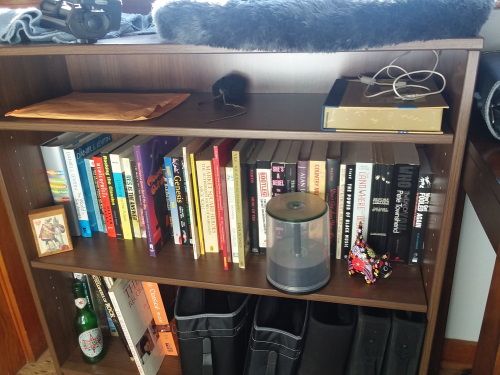
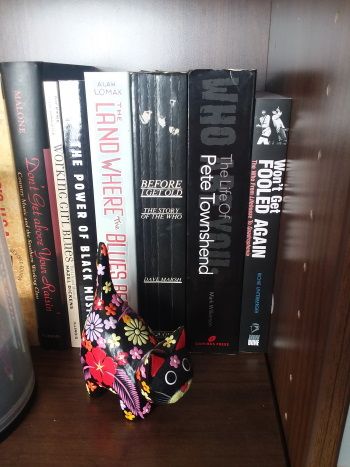
The next step in freeing up space was the hardest. I yanked
these off a shelf.
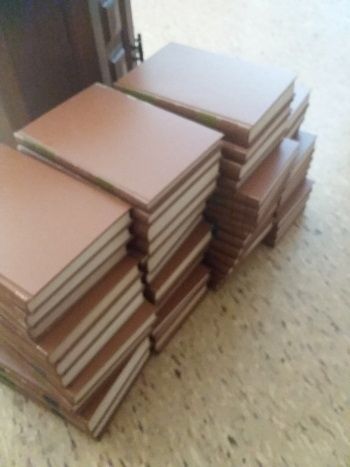
I can't quite dispose of these tomes yet. Maybe someday. For
now, I treasure their sentimental value as they belonged to my father. They are
a way to help me remember some of the good things about him.
On the other hand, I've kept these out on a shelf.
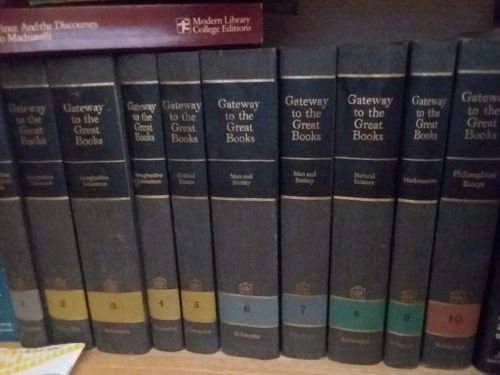
The next step was to remove a boatload of novels from a bookcase.
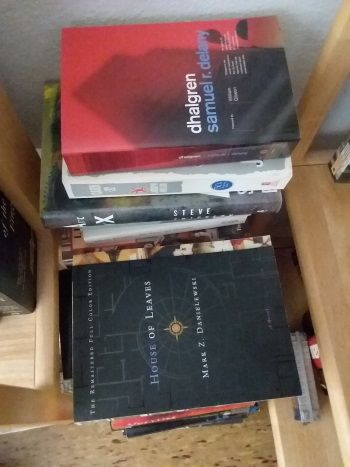
As I was doing my rearranging, I noticed how many of the
books reminded me of a particular time of my life. Here, for instance, is one
of my favorite books of my boyhood.
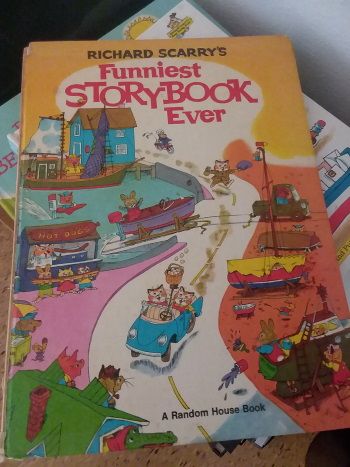
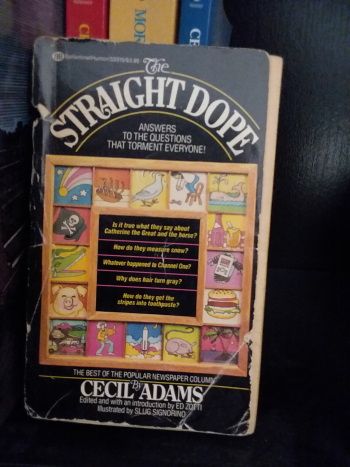
When I moved to Wisconsin from Chicago, I dearly missed
reading The Straight Dope every week.
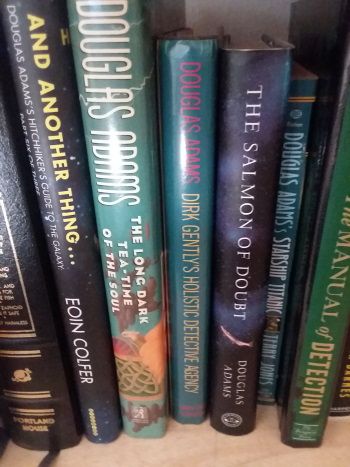
At this time we were all also reading The Hitchhiker's Guide to the Galaxy as well as playing the Infocom text adventure based on them.
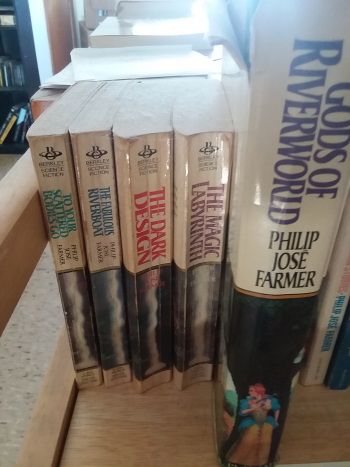
I adore the Riverworld series although it's been many years since I've read it. Truth be told, I blundered into Philip Jose Farmer's series by getting the last book first with my decision being based mostly on the cover art. (So it goes if you are into progressive rock, I guess.)
Jumping ahead to college, I've kept most, if not all of the
books for Poli Sci 4XX or whatever level it was. I took it my senior year. This
was the second of a two-part examination of liberalism. By this time, the USSR
had dissolved leaving liberalism as the dominant political ideology. I believe
the first course, which I did not take, covered the roots of the liberalism through its manifestation
in the American project. We're talking Hobbes and Locke and Rousseau and
Montesquieu and the Areopagitica and Jefferson and whatnot.
.jpg)
Also required reading are the books by my professor, Charles
W. Anderson.
I bought this book after dating a woman for a very short
time who was in love with medieval Japanese history and literature. It's likely that I would never have bought a book on this subject if not for her. A neat little reminder of that time.
.jpg)
.jpg)
.jpg)
12 November, 2007
So Sad About Us
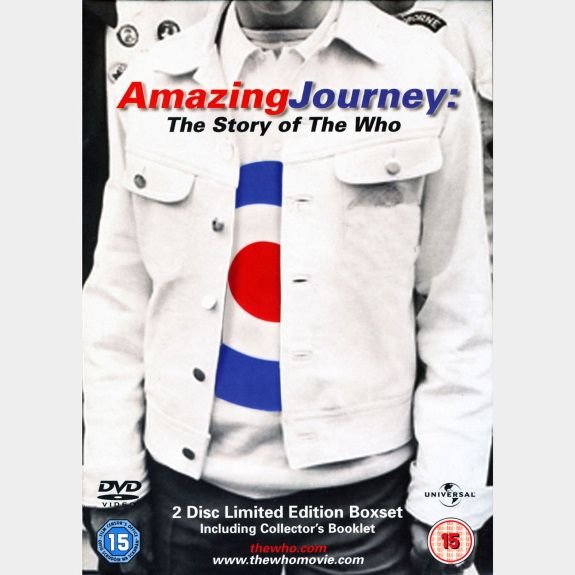
Yesterday I had the chance to watch Amazing Journey: The Story of The Who as I'd Tivo'd it when VH1 put it on. The film is, to the best of my knowledge, the first feature length look at the band since The Kids Are Alright from 1979. It came as a welcome relief since I had recorded the episode of A&E's Biography about Pete Townshend a few months ago which I erased after watching about 10 minutes of it because it featured no interview footage with the man himself. And so I was looking forward to a decent documentary about one of my favorite bands.
Amazing Journey is a straight-forward affair, unlike The Kids Are Alright. For the latter, director Jeff Stein created an impressionistic montage instead of a chronological story. Stein assembled his film almost purely from archival footage with some live performances in the fall of 1977 and spring of '78 put on for the express purpose of filming to capture some songs which were not represented in the archives. The result was a wonderful movie which captured the band's explosive live performances and their often hilarious off-stage antics. It did as good as possible of translating the manic energy of the band to film but it lacked a bio, a look behind the scenes, or much of any commentary on the music. Viewers saw that they rocked onstage and liked to have fun off but were left wondering how it all happened.
Amazing Journey takes a different tack altogether. The surviving members (Daltrey & Townshend) were interviewed especially for the project (at least the former was) which starts at the beginning and works its way up to 2007. There's a ton of archive interviews, live footage, et al to be found here. We begin with the band members' childhoods and work our way to the formation of the group with which everyone is familiar. The filmmakers are to be highly commended for their portrayal of the band's formative years. There is a fair amount of depth here which details how Daltrey recruited first Entwhistle and then the rest into The Detours which became The Who followed by The High Numbers and then The Who again. This well-crafted section is topped off by live footage from 1964 at the Railway Hotel which is a real treasure.
As the 1960s progress, however, the film gets worse as we hear a bit about the dynamics of the band and learn about their recording forays. It becomes obvious fairly quickly that we are in for a Behind the Music kind of expose with a heavy reliance on talk about the relationships of the band's members and a paucity of The Who plying their trade. The parts which document the period through the Tommy – up to 1971 – did a half-decent job of talking about the music considering how little was shown. One of the biggest problems with the movie is that, starting with the Lifehouse debacle, The Who's music gets glossed over in favor of even more attention on the personal lives of the members. Much more detail went into the music during the sections chronicling the 60s. Their blues and R&B; influences were well-noted and we learn about their early singles such as "I Can't Explain" and "My Generation" as well as the mini-opera, "A Quick One While He's Away". On the album front, we get a vintage interview with Townshend explaining his ambitions for The Who Sell Out and there's a hefty good dose of Tommy. But, starting with 1971, music takes a back seat with Lifehouse being explained away in two sentences. We then learn that Who's Next came out instead and it's off to Quadrophrenia which is similarly given short shrift. This is a real shame as Who's Next was a seminal album with Townshend's use of keyboards being a watershed moment in rock's history. Plus the whole concept is something that he continued to revisit and still does to this day. Albums subsequent to Quadrophrenia are all but ignored, unfortunately.
It's not that there aren't live concert clips but they are generally no longer than 10-15 seconds meaning that no song is represented in its entirety or anything close to it. The footage of Keith Moon being carried offstage at the Cow Palace lasts longer than do most of the songs. The only tune to get some real screentime was "My Generation" and this was mostly of Pete and Keith destroying their instruments as opposed to the band playing it. I understand that the film is trying to tell a story about people and isn't a concert video but to shortchange the live footage is ridiculous considering The Who's live reputation and that Lifehouse (i.e. – Townshend's ambitions) heavily explored the audience-musician relationship. What makes this situation unforgivable is that the filmmakers dug up some incredible footage including the holy grail for Who fans: a bit of the show at Leeds University on 14 February 1970. Live at Leeds is certainly the best document of the band in concert and arguably the best live album by any rock band ever. We get to watch a bit of "Christmas" as a teaser and then suddenly – poof! – it's over. Plus the Who's Next tour wasn't, to my recollection, represented at all. I'm no live Who archivist but the filmmakers had 200+ hours of footage to cull from yet the whole reason for The Who's existence – the music – is remarkably lacking.
Aside from the fact that there's too much talking heads and not enough concert footage, another problem is the talking heads. I appreciated the interviews with former & current managers to embellish the story but Daltrey and Townshend get the overwhelming majority of interview time from band members. Kenny Jones got as much time as Entwhistle and more than Moon which makes no sense. The Ox died in 2002 and I am incredulous of the notion that they couldn't have found enough footage to give him a more prominent and perhaps almost equal role in telling the story. Were his feelings about Moon's death never filmed? Ever? As for Moon himself, there was one interview clip that I can recall. Was every interview with him just total goofing around devoid of information? Had he never recalled how he joined the band for a camera regardless of any antics he did? We get to know Entwhistle and Moon mostly through the recollections of others as opposed to seeing for ourselves.
In a similar vein, the vast majority of interviews were vintage the past few years. There's hardly a word from anytime between 1964-2000 so we cannot know how events were perceived at the times they occurred nor how the band members expressed their feelings back in the day. We're left with the views of two old geezers reflecting upon their lives and careers. While I find them sincere, they are talking about events that, in some cases, transpired more than 40 years ago. Drug-addled memories go hazy so why not give interview footage from the times various events transpired instead of almost always having people look back decades later? For instance, how did Townshend feel about Tommy in 1968-69? Viewers are left to ponder this because all we hear about it comes from interviews done after the album's success, after the film, after the musical – after it had already achieved notoriety and become a cultural fixture.
How you will perceive Amazing Journey depends on what kind of fan you are. The dedicated will no doubt feel let down by the whole thing. They're already familiar with the stories and many have most of the concert footage in their collections so they must be disappointed that the rare stuff is so incredibly sparse. On the other hand, there's always new people just getting into the band for whom the well-worn tales of trashed hotel rooms and expensive cars being driven into pools are fresh territory. But that the live clips are so short and no song is represented in its entirety will disappoint everyone. Whether you're a new fan or an old one, the reason you like The Who is because of the music and there's just too little here. With 200+ hours of footage to wade through including stuff donated by bootleggers to the cause, it's inexcusable that there is so little music. This also leads to yet another problem which is that the events which we hear about aren't related to much – they don't get related to the times from which they sprung nor do we find out how they reflect Townshend's life. To me this signals that noting that event A was followed by event B is important but providing context and meaning isn't. For instance, a bit of "However Much I Booze" is shown with Townshend singing, "It's clear to all my friends that I habitually lie; I just bring them down" yet I don't remember the film even attempting to explain why he would be singing those lines. That his life was coming apart due to tremendous pressures relating to The Who as well as drugs & alcohol is omitted. By not showing very much music performance and by not having many interviews which actually talk about the music, viewers learn very little about how the music was a reflection of the band or its times or why it has any significance at all.
The Who demand an extended tribute as an extra two hours would have done wonders. Apparently the original cut was 3.5 hours but honed down to 2 by the studio. This "director's cut" would probably relieve us of the problem of the lack of concert footage, but I must wonder if would alleviate the problem of trying to portray the music as having some meaning to both the musicians and the audiences alike. It's important to note that Tommy was tremendously popular but it's infinitely more interesting to try to explain why it was. That the Lifehouse project yielded Who's Next is history and must be included. But to avoid explaining what Lifehouse was supposed to be, to exclude Townshend's ambitions regarding it is to fail. What was it really about and what did this say about Townshend? How did the rest of the band feel about his metaphysical aspirations? He certainly had some grandiose plans which were in line with his views on the transformative nature of music, specifically rock music.
The Who's music is important to people but this is taken for granted in Amazing Journey and so you never find out what relationship the music has to those who wrote and performed it nor to those millions of people for whom it is a part of the soundtrack of their lives. Except once. It comes at the end when the band are playing on 20 October 2001 at the tribute show for the victims of 9/11. They are doing "Won't Get Fooled Again" and is one of the few times more than 10 seconds of a performance is shown. Watching those firemen and police officers screaming out the words, I realized that it's the only moment of the film in which you get the impression that The Who's music is actually important, that it's actually meaningful to the band and audience alike. And this is exactly why Amazing Journey fails. It's a journey alright, just not that amazing.
03 January, 2004
Oh, This Is Just Rich
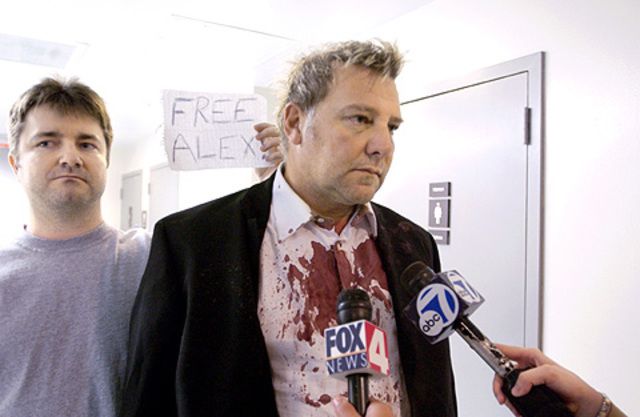
From the AP:
NAPLES, Fla. - The lead guitarist for the rock band Rush skirmished with sheriff's deputies, spat blood on one and was arrested on New Year's Eve after his son refused to leave the stage at a fancy hotel, authorities said.
Deputies said they had to use a stun gun on 50-year-old Alex Zivojinovich — known on stage as Alex Lifeson — for what they described as drunken, violent behavior at the Naples Ritz-Carlton hotel.
Christ! They had to use a stun gun - classic!! I've seen Rush a few times and Alex Lifeson is not a big guy. There's a lesson here: don't fuck with drunk Canucks in a rage.
I'm sorry I never post much about rock stars that are popular today - either they just don't interest me or I haven't any idea who the fuck they are. Britney Spears and OutKast don't appeal to me and who the fuck are Filter and Evanesence? From E!Online:
Pete Townshend says he was deadly serious about the child-pornography charges leveled against him in January.
In fact, he now says he even contemplated suicide during the heaviest media and legal onslaught following the disclosure of his name on an FBI (news - web sites) list of Internet kiddie porn suspects.
"If I had had a gun, I would have shot myself," he told London's Observer newspaper Sunday. "And if I had shot myself, it would have been fucking awful because it would have confirmed what everybody thought."
Wasn't a guy from King Missile busted on child pr0n charges? Or was it someone from Massive Attack? Too much to keep track of. Not to condone child pornography, but what the hell are the cops doing to catch the people making it? Sure, Townshend's escapade garnered a lot of press but has that sting operation actually netted any producers of the stuff he saw? And what was he looking at? Was it pictures of a 6 year-old girl or pictures of a 16 year-old girl from a country where one can give permission to be photographed in the buff at that age?
I guess it's nothing really new for Pete. Wasn't it back in '95 or so that he said something in an interview which caused everyone to point a finger at him that he was homosexual? They brought up the lyrics of "Rough Boys" and "And I Moved" as evidence. I forgot his explanation for "Rough Boys" but I do remember that "And I Moved" was originally written for Bette Midler ergo the woman's POV. It just irritates me that people make dumb arguments. But so what if he were gay or bi? In what way would this lessen the impact of his work? I guess that's what you get for having a view of sexuality that isn't black & white but a very nebulous gray and daring to tell people about it.
30 December, 2003
A Flake's Progress
Pete got a set of those new-fangled walkie talkies for Xmas and we were playing with them yesterday. Of course, the first thing we did when giving them a go for the first time was to do the Young Ones thing - you know, "Charlie, Teakettle, Barbeque - CCCCHHHHHH!!!". I've got TechTV on (go figure) and they've got this little hottie now on Fresh Gear - Stephanie Siemiller. I've got some fresh gear for her, alright.
I see that our helpful and friendly federal government is banning ephedra. What the hell are truck drivers gonna do? Plus I used it occasionally for a buzz. Pop a few of them and wash 'em down with some coffee and your scalp starts tingling in a few minutes. Bummer.
OK, here's something uninteresting. I'm in the process of writing this lengthy paper on the lyrics of Jethro Tull's music and I've gotten up to 1981. Then I go ahead and find this bit from John Watson's Behaviorism:
"Give me a dozen healthy infants, well-formed, and my own specified world to bring them up in and I'll guarantee to take any one at random and train him to become any type of specialist I might select—doctor, lawyer, artist, merchant chief, and yes, even beggar-man thief, regardless of his talents, penchants, tendencies, abilities, vocations, and race of his ancestors."
Now compare this to the lyric of Tull's "Cross-Eyed Mary":
if he had a rich man in his hand?"
...................
I put on my Live at Leeds bootleg by The Who and have been reading an interview with a guy named William Dumhoff who is a dream researcher. Quite interesting. He basically says that Freud and Jung are full of shit. So then what are dreams? "Dreams express our conceptions of ourselves and of people close to us." This is to say, dreams aren't our subconsciouses trying to sort out repressed or underdeveloped bits of our personalities, they're just reflections of ourselves, albeit in weird and convoluted forms. If I could remember any of my dreams, I would reflect upon them.
Ya know, this Who disc is fucking awesome!! If aliens came to Earth and wanted to know what rock'n'roll is, I'd give 'em a copy of this show. It's got everything: simple verse-chorus-verse pop songs and longer, more complicated pieces such as the whole of Tommy. But whatever song you're talking about, it's loud and raw. There's nothing quite like the sound of a Gibson SG turned up to 11. Something about the way "My Generation" weaves in and out of various other songs...you get "Sparks" which is raucous and full of distortion. Then a short, quiet passage and then Pete launches into a fast, heavy riff and we're off to the races again. You have some order, some melody and then decays into chaos. Feedback and distortion reign. Then the notes organize themselves again into something peaceful. And then entropy kicks in once more and the shit hits the fan. It is, as Dave Marsh noted, hallucinatory.
"Magic Bus" too is great. Formula: take a Bo Diddley beat (which he got from his grandmother's singing when he was a child) and have the band go fucking insane.
The song starts off slowly but it builds over the course of five minutes. The beat picks up and becomes faster. Townshend and Daltrey start screaming in call-and-response. ("You can have the magic bus for 100 English pounds!" --> "No! Too much!") Gradually the song swells and you can just feel that it's going to bust out at any time. Just when you think it is, they hold back. But it reaches critical mass and they let loose in a musical climax. You've got Moon all over his kit, Entwhistle's bass part fills out the bottom end and acts as a lead simultaneously, Townshend beats the shit out his guitar and he yells some more, and then there's Daltrey screaming, "I'm gonna ride her!" It is loud, distorted - it just oozes energy. It's fucking primal. It's like sex - rhythmic and raw. Tension slowly builds and then is suddenly released. The song is so hypnotic - it's so easy to lose yourself in it. That's rock'n'roll!!
Speaking of hallucinatory, I might be able to get me some psilocybin! Not sure if I really need a ¼, though. I guess I could just divy it up over a couple doses. Or, if I could find someone to go on a trip with me...