22 May, 2007

Black Book (Zwartboek)

This past weekend, The Dulcinea and I made our first trek to the shiny new Sundance 608 for a showing of Paul Verhoeven's latest, Zwartboek (Black Book). Honestly, I was surprised that The Dulcinea wanted to see it considering that she abhors violence in stories, her affection for Dexter not withstanding.

Black Book marks Verhoeven's return to his native Holland after a decade and a half of making films here in the States. His American output was heavily weighted towards (often satirical) sci-fi shoot-'em'-ups with RoboCop, Total Recall, and Starship Troopers to his credit. He also reveled in matters sexual with Sharon Stone (and her vulva) in Basic Instinct and Showgirls, now a midnight movie staple. His final film made in the States was Hollow Man which was disappointing for fans as well as the director himself. Unable to get any new projects off the ground, he returned home.

Black Book is a companion piece of sorts to his 1977 film Soldaat van Oranje (Soldier of Orange). That movie concerned the Dutch experience of World War II through the eyes of a group of young men who go from being students to resistance fighters with the occupation of Holland by the Nazis. Black Book gives us a female protagonist and takes place in the last year or so of the war.


Black Book begins in October 1956 with a tourist bus stopping at an Israeli kibbutz. One woman takes a snap of a class which prompts the teacher to approach the woman and tell her that the school is off-limits for tourists. It turns out the two know one another from the days of the war in Holland. The teacher is Rachel and the tourist is her old friend Ronnie. Their brief reunion prompts Rachel to sit on shore and recall those fateful days.

Back in Holland in 1944 Rachel Stein is hiding from the Nazis. The Tsjempkema family has given her refuge but the kindness shown to Rachel is tempered a bit by the father's grim insistence that she learn the Bible and recite passages before dinner. This is the first time the anti-Semitism of the Dutch, ostensibly the good guys here, rears its ugly head. In addition, this scene begins to lead the viewer through a labyrinth of moral ambiguity. There are good guys and bad guys but they each share some qualities of their opposite.

Rachel's safe house is destroyed accidentally by an Allied plane which was indiscriminately dropping its payload in an effort to become lighter and escape a German plane that was in pursuit. This scene takes place on a lakeshore and Karl Walter Lindenlaub's cinematography here is quite beautiful. Kudos to Sundance 608 for having a screen large enough to accommodate the widescreen photography.

Helped by a young man named Rob, Rachel flees to the city in search of a lawyer named Mr. Smaal who has secretly been helping Jews flee from Holland. He sets up an escape for her, duly noting the details in a little black book which gives the film its title. Things are looking up for Rachel as she is reunited with her family and on a boat headed for southern Holland which is held by the Allies. Suddenly the small barge is set upon by a brilliant light. A German patrol ship is before them and opens fire. Rachel watches in horror as her family is brutally mowed down. The soundtrack during the slaughter was absolutely bracing. The machine guns were very, very loud and I noticed The Dulcinea out of the corner of my eye as she covered her mouth with her hands. Rachel's survival instincts eventually kick in and she dives into the water. She escapes and makes her way to the shore where she sees that the Germans have brought the barge. Like a pack of vultures, they are looting the corpses under the self-satisfied gaze of Günther Franken, pictured here.


Gerben Kuipers, a leader in the Dutch resistance, rescues Rachel and offers her refuge. With her family having been killed, she joins Kuipers' band of fighters. Her first mission is to accompany fellow resister Hans Akkermans on a train and smuggle guns and papers. On the journey, Rachel briefly encounters Ludwig Müntze, a high-ranking German officer who is also a bit of a philatelist. (Müntze is played by Sebastian Koch and The Dulicinea now swoons at the site of his Teutonic good looks.) Their meeting would prove fortuitous after Gerben's son, Tim, is captured when the produce truck used to smuggle weapons that he is in gets involved in an accident. This prompts the elder Kuipers to convince Rachel to infiltrate the Dutch SD headquarters and help free Tim from the Nazis. (The SD was the security service.) To do so, Rachel dyes her hair blonde and gives the same treatment to her pubes. With the appropriate costume, she changes adopts the name Ellis De Vries and moves ahead with her womanly wiles.

Rachel endears herself to Müntze by bringing him a gift of stamps. Not only does she become his paramour, but he also gives her a job as a typist. She meets Ronnie here who is in the same position as her but she labors for Franken. As Rachel's relationship with Müntze goes on, we learn that he isn't a typical Nazi bad guy. The character is rather sympathetic as we find out about the death of his family and that he has been in secret contact with the resistance trying to negotiate a small peace whereby the Dutch fighters stop killing the Germans and, in turn, the Germans stop retaliating by killing innocent civilians. Plus he susses out that Rachel is a Jew when he notices the dark roots of her hair yet he continues his involvement with her, lets her keep her job, and follows his affectionate feelings towards her.

As an aside, Carice van Houten, who plays Rachel, gives a fantastic performance. I loved how she changed her facial expressions when she was at the SD HQ or at a party. For her Nazi employers it was all smiles but, turning away so that only the audience can see, she flashed sullen expressions. van Houten is not just a pretty face. She did a great job of imbuing Rachel with strength, resourcefulness, and anger. Rumor has it that she's the next Bond girl.

Getting back to the situation at SD headquarters, Franken has nary a hint of conscience. He has been profiting from a little subterfuge on the side. He learns of the attempts to smuggle Jews to Allied territory and ambushes them for their possessions, making a tidy sum for himself. By portraying the foibles and moral imperfections of everyone, Verhoeven is able to make Franken even more evil, as if just being a Nazi and a murderer wasn't bad enough. He's crooked as well.


Anti-Semitism returns powerfully during a scene in which Gerben hatches a plot to free Tim. Rachel objects that this would detract from stopping Franken and his gang who are hyper-cruelly leading lambs to the slaughter. Gerben's impassioned retort intimates he feels that, not only is his son more important than strangers, but also that Dutch people have more worth than mere Jews. It is Rachel alone that seems to have any sense of moral clarity as she keeps a vigil in a wilderness of mirrors. The confusion and betrayal deepens when it becomes apparent that it's Mr. Smaal and his little black book which give Franken the information he needs to perpetrate his misdeeds.

At one point, Rachel angrily asks, "Will it never stop, then?!" The ultimate answer comes at the end of the film when she comes back to the present (of 1956) as she sits on the shore. Her husband and family greet her and they walk back to the kibbutz. Entering the gates, they are followed by Israeli security forces who are on high alert owing to the Suez Crisis. Perhaps some things never end.

Black Book is a thriller at heart with its tight, forceful story and suspenseful twists. But it also transcends mere entertainment by being laced with more than enough food for thought. Verhoeven finds a good middle ground with Black Book. He honed his narrative skills here in America and so the film is an engaging and entertaining story. But he also returned to his homeland and explored a part of its history here that he remembers from his youth as Verhoeven was 7 in 1944. Black Book is more personal than anything he's done in many years. The story is based on true events and characters are based on real people. Plus there really was a black book. Instead of a Dutchman chewing up American culture and spitting it back at us, here the director looks back at his youth and the people and events from his own country to illustrate something bigger for the viewer something to chew on as the credits roll. Good and bad, right and wrong – they're not clear cut absolutes here. Instead these notions are more like fluctuations in a continuum of human morality. War carves out an ethical terrain that's difficult to traverse and such circumstances bring out the best in some and the worst in others but, more importantly, it brings out all points in between in everyone.

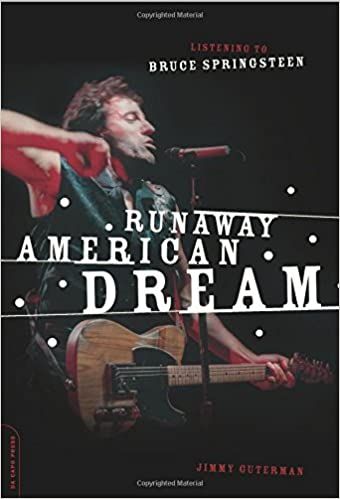
Turn the Page - "Runaway American Dream: Listening to Bruce Springsteen"


Before having read Runaway American Dream, I didn't care all that much for Bruce Springsteen's music. Now that I've finished it, I can't say that the situation has changed. However, when the final page was turned, I was tempted to download some Springsteen songs from the 'net. But it was late at night and lethargy got the better of me. Still, Guterman's book was an engaging read from cover to cover despite my lack of interest in the subject and I would recommend it to fans of rock music regardless of their feelings towards The Boss.

Guterman managed this feat by mostly ignoring biographical concerns and concentrating on the songs about which he is so passionate. He lovingly describes the music that he holds dear and he does so in a mostly even-handed way. While certain paragraphs may linger too long on drummer Max Weinberg's snare, the text never crosses into hagiography. When Springsteen produces a clunker, Guterman is forthright about the song's shortcomings. It is obvious that he has attended many a concert by The Boss over the years and listened to every one of his albums more times than is probably safe. In addition, bootlegs have proved an invaluable resource as he refers to both concert recordings as well as those which contain studio outtakes and demos. Being a collector of bootlegs myself, I found his references to performances not legitimately available to be of particular interest.

The book is divided into seven chapters which are expanded versions of essays he had written previously. First Guterman introduces us to Springsteen in October 2004 at a stop on the Vote for Change tour in support of the Democratic ticket for that year's presidential election. Despite other big names on the bill such as REM and Tom Petty, Springsteen is the big draw with everyone else standing in his shadow. The meat of the book starts in chapter two in which the analysis of The Boss' music begins. For better or for worse, his first two albums, Greetings from Asbury Park, N.J. and The Wild, the Innocent and the E Street Shuffle, are pored over here while Springsteen's early days prior to landing a recording contract are ignored. Subsequent chapters cover roughly a couple albums apiece up to early 2005 with the book having gone to press just before the release of Devils & Dust.

Guterman gives great nuance to Springsteen's music as he compares various takes of songs as they evolved during the recording process into the versions that were released. He also contrasts studio versions to live renditions and tracks how Springsteen rearranged songs for audiences over the years. Guterman makes a good case that Springsteen is at his best when he is with the E Street Band. It's not an argument of mathematical precision, but he does as good a job as can be done of translating the ineffable into words. Unfortunately, he never tries to explain why Springsteen became the massively popular figure we see him as in the first chapter. He is just somehow beset with fame. What impelled millions of fans to buy Born in the U.S.A. to make it a platinum album fifteen times over here in America? A well-placed rap on the snare drum or a particularly melodic guitar solo can only explain so much. Early in the third chapter Guterman posits that Springsteen and the E Street Band became the greatest American rock group in history. Again, he never really is able to get across just why he feels that way other than by essentially saying he loves their music. His love is proven over and over with his encyclopedic knowledge of Springsteen's music and the adoration he pours into his descriptions of the songs, but neither his boast nor Springsteen's immense popularity is given an explanation.

Another major flaw is the short shrift given to Springsteen's post-Born in the U.S.A. output, especially The Ghost of Tom Joad and The Rising. For me, this is when Springsteen gets interesting and I was disappointed that these later albums don't get the same in-depth treatment as the earlier ones. Besides the issue of personal preference, this also marks the loss of a great opportunity to fully explore the tension between Springsteen as rock star and as working class hero. After spending so much time talking about how genuine the music is and giving the reader a sense of Springsteen's music moving from the strictly personal more towards the political, he drops that line of thought for the later albums. It seems to me that the contradiction of a rich rock star singing about those less fortunate than him is at least part of the story when explaining the great stature Springsteen is accorded.

While my musical affections may lie elsewhere, I felt a certain kinship with Guterman as I read his book. Its strength is the sheer joy of reading a well-written account of one fan's love for music. The adoration drips off the page and is absolutely contagious. Everyone who is really, really into a particular musical artist or group wants to write a book like this where he or she can dissect the object of his or her love and proclaim it to the world. The book was written by one fan for all others. While I wholeheartedly endorse Guterman's well-rounded approach to analyzing the songs, one side effect is that he yanks them from any context thereby avoiding the process of teasing a larger picture from the snapshots on the ground. Despite the book's flaws, it was an enormously fun read. Arguing about whose favorite band is better as if your life depended on it is perhaps a puerile pursuit dismissed with De gustibus non est disputandum, but for music fanatics, it is lifeblood. Additionally Guterman made me want to delve into Springsteen's back catalogue to see what I was missing. And that is perhaps the highest praise of all.

Guterman kept a blog during the time he was out promoting the book. You can find corrections and more of his thoughts there.

20 May, 2007

I Lost My Sundance Virginity

My Sundance virginity was lost yesterday as The Dulcinea and I took in Paul Verhoeven's Zwartboek (Black Book). I've never exactly been a denizen of Hilldale Mall so I was a bit surprised to see how it has all come together. While no fan of malls am I, it must be said that Hilldale stands in contrast to other instances of urban blight in that the stores are packed together without vast stretches of parking lot between everything. It felt more like a cozy little town than a mall. We found the Sundance Cinema and a parking spot and headed inside. The first thing I thought of seeing the interior with my own eyes was of that Mexican resort in His Kind of Woman. I suppose they don't really have all that much in common architecturally but that's what popped into my head. If you've still not been, there are some photos of the interior accompanying this article at The Daily Page. Not horrible by any means but not really to my taste. (Although those chairs look big and comfy.) The profound lack of things film adorning the walls was a big disappointment. They went more for a Starbucks look than that of a cinema. Even Eastgate, with its horrid contemporary retrofit of an old movie palace, has posters of classic films on the walls while Hilldale Theatres had that old projector in the lobby to contrast with its rather ugly spartan lobby. It just seems odd to me that the ethos of the place has very little to do with cinema. Slap some movie posters up on the walls or some publicity stills of a director and his DP behind the camera. I don't go to the movies as a socialite wanting to be seen. Instead I go there to take in a film and attempt to get lost in the vast skein of cinema.

Next we encountered the much-maligned ticket prices which can read about here. I cannot recall how much the service charge was for our 3:30 showing but the tickets were quite a bit more than what I'd have paid at Westgate. The Sundance folks alone must be left to defend their pricing scheme but I will say that I feel confident that more obscure or esoteric foreign & art films will now make their way to Madison in a more timely manner and it's cheaper for me to go to Sundance than it is for me to drive to Chicago's Music Box Theatre or Gene Siskel Film Center. I look forward to reading reviews by New York critics and not having to pin my hopes (which were all-too often in vain) that the film would be shown here in a few months.

Next stop was the concession stand. I had eaten lunch prior to coming to the theatre so I was just looking for liquid refreshment. I noticed all manner of bottled water and various fancy organic snacks for the more culinary discerning moviegoer. But there was also the traditional popcorn and soda. I must give kudos for the fact that there was Sprecher soda available. Having decided to eschew local coffee roasters, they at least found some way to include Wisconsin comestibles. When they feature a full cheese tasting menu, then I'll be impressed. I got the largest cup of Coke they offered which cost $3.69. Seemed a bit on the cheap side to me.

Cola in hand, we made our way down the tree-lined hallway to our theatre. Sitting down, we found that it still had that smell - that new vinyl smell. Stadium seating is always a big plus and the chairs themselves were quite comfortable. And being six-foot-two, the extra leg room gets high marks in my book. There was a claymation short in media res but a problem with the sound meant that it was silent. So it goes. I wish they'd advertise when the pre-show shorts begin because I'd like to catch them. It's too bad that they're relegated to merely being a distraction to fill the screen while people find their seats instead of being shown as they should be – with the lights down after the previews and before the main attraction. An usher greeted us before the show began and said he was happy to take questions or accommodate us in any way he could. The gentleman took his leave and the curtains pulled back further to reveal a goodly sized screen which was the right size for viewing a film like Black Book with its 2.35:1 aspect ratio. I'll review the film later but must say that the absence of those annoying fucking Pepsi commercials was well worth whatever service fee I paid.

As cinema experiences go, Sundance offers a very good one. I'd still like to see more film-related bric-a-brac scattered about, though. I wish they'd promote cinema instead of some kind of Sundance lifestyle. All griping aside, the joint has only been open for little more than a week so there's plenty of tweaking to be done. Regardless of anything else, the cinema's merit will be determined by the films it shows.

Madison's cinema scene is as good as it has been in ages. We've got an IMAX, the UltraScreen at Point and now – what? – 11 or 12 commercial screens showing foreign, art, and independent films? How many does Milwaukee have? Throw in the offerings at the UW and the rooftop screenings at the Madison Museum of Contemporary Art and you've got film scene that belies our city's relatively small population. While Madison has not gone back to its halcyon days of the early 1970s when there were on the order of 22 film societies on campus, the situation for cinephiles is better now than it has been in a long, long time.

EDIT: I found blog post by UW film prof J.J. Murphy about Sundance. I never had any classes with him so I'm glad to see he now has a blog. He offers his own take and quotes someone with whom I did have classes - Prof. Jim Kreul (although he wasn't a prof back then). I was mulling over the notion that "most people (other than cinephiles) don’t go to the movies anymore". I touched on this notion with regards to Madison previously so I won't revisit my thoughts here. But I do want to mention the 15 April 2007 episode of Media Matters with former UW prof Bob McChesney. He interviewed Benjamin Barber who is out promoting his latest book Consumed:
How Markets Corrupt Children, Infantilize Adults, and Swallow Citizens Whole
. Kreul and Murhphy's comments reminded me of what Barber said about the infantilization of adults regarding film:

[in]2004 - and this is replicated every year - top grossing films worldwide amongst all populations, all tickets sold, adults, old people, young people, teens and so on: Shrek 2, Spider Man 2, the Harry Potter film of that year, and The Incredibles. Four nice films made for teenagers that in fact dominated global markets in every country in the world. For that to happen, adults have to acquire the tastes of teenagers...

Barber's assertion runs counter to that of Kreul & Murphy. The former says that the tastes in film of adults have been modified by marketing to resemble that of teenagers so they eschew "adult fare" in favor of the ilk he mentions. The latter pair assert that adults just don't go to the movies much anymore. Which is it? I honestly don't know that it's necessarily either one or the other rather than a combination of the two. I mean, Spider Man 3 has broken box office records. Is it merely teens getting money from their parents or are the parents going as well? In addition, kid's movies these days contain lots of jokes and references that go way over the heads of the children in the audience. I saw a commercial for Shrek 3 which had a couple guys stumbling out of a carriage followed by billows of smoke. That reference to Fast Times at Ridgemont High is meant for little Johnny's parents, not Johnny himself.

Reading Professor Murphy's comments, I thought about something else regarding Sundance Cinemas. In addition to promoting a Starbucks-like experience over a cinema experience, the theatre did precious little to promote upcoming films. It gave good reasons to head upstairs for a steak dinner but precious little to convince folks to return in the coming weeks for a film that might appeal to them. They need to build some anticipation of what is coming soon by means outside of trailers. It's almost as if the films are tangential to the "scene" or "community" that Sundance seeks to build. Adults will go to adult fare with enough hype and word of mouth. Lots of adults went to see Fahrenheit 9/11, for instance. The novelty of the Sundance Cinemas will eventually wear off so they've got to convince people to come back for the films and not just a bar or bistro.

19 May, 2007

Porcupine Tree @ Park West, 17 May


I left work early on Thursday and scrambled to clean out my car in preparation for a trip to Chicago's Park West to see Porcupine Tree. Any hopes of arriving earlyish and either catching up with fellow fans at a nearby restaurant or finding a spot close to the stage were dashed by traffic. It was stop-and-go from Des Plaines to about Lawrence Avenue on the Kennedy. But we eventually arrived and were $20 poorer after finding parking nearby.

We ambled into the Park West and found the merchandise stand to be mobbed. Making our way into the theatre, we stood by the mixing desk to survey the territory in search of a seat. This was rather difficult as the opening band, Three, was in the middle of their set. An usher noticed Mel's cane and immediately leapt into action. A few minutes later we were shown our way to a table and almost immediately approached by a server. Our late arrival meant that I'd not be able to find my customary spot standing a short distance from Steve Wilson and Colin Edwin but I had more company. Besides, there really isn't anywhere in the Park West that could be considered to have a bad view of the stage. The show was a sell-out and, since first seeing them in 2002, the audience had gotten a bit younger and there were many more women in attendance this time around. And not just girlfriends or wives who were being dragged along by a significant other in appeasement. The band's latest album, Fear of a Blank Planet, debuted at #59 on Billboard's Top 200 albums chart and the tour has been selling out. The Tree are no longer strictly the province of dorky older white men who can tell tales of seeing King Crimson back when Jamie Muir manically roamed the stage clad in furs.

The Park West has some of the best sound of any venue you care to name. Every instrument was clear and discernible as were the vocals. Plus the bass made our seats rumble. The Tree played the new album in its entirety and are one of the few bands to included more than one, much less any, non-LP songs into their set. That a b-side was an encore was even more extraordinary. Here's the setlist:

Fear of a Blank Planet
Lightbulb Sun
My Ashes
Anesthetize
Open Car
Gravity Eyelids
Drown with Me
Sentimental
Blackest Eyes
Half Light
Sever
Way Out of Here
Sleep Together

Encore:
Even Less
Mother and Child Divided
Halo

There were many highlights that night. The new album translated to the live scenario well. Very well indeed. The title track had the advantage of opening the show but it's a great song with a propulsive beat. I'm beginning to like "My Ashes" more and more with each listen. Although a slower song, the chorus is catchy and guest guitarist/singer John Wesley's vocals were strong. Being 17+ minutes long, "Anesthetize" obviously appeals to the prog head in me but it was a PT classic even last fall when it was previewed on a short tour. The way the drama builds throughout the first several minutes of the song is amazing. First there's the drum-heavy opening and after a few minutes, the drum pattern starts along with that sharp, chugging guitar riff. At this point Wilson joined Richard Barbieri on keys and the tension just builds and builds. Then the heavy guitars jump in and the next section starts. It didn't take long to see that Wilson was really fired up as he moved around the stage and banged his head. The tension continued to build and I knew it was coming. I felt all giddy inside awaiting the super-fast death metal bit. The hair on my neck stood up as all the instruments went silent and then all hell broke loose. Fucking classic! When the song wound down and the quiet reprieve began, the crowd let out a huge cheer. Aside from his good looks which have enchanted Mel, Gavin Harrison's drumming here was fantastic and deserves special mention. There's nary a snare drum for the first three minutes so he was up there pounding away on the toms. Fans tend to think of him as having given more oomph to the band's sound but here he really proves his mettle with a more melodic style in addition to his heavy work on the bass drum.

Also from the new album, "Sleep Together" was tremendous live. It is a bit odd to hear the vitriol that Wilson puts into his singing. Even on In Absentia with its loose theme of looking into the minds of killers, he never sang with such force. But when he sang "Let's sleep together right now", he put a lot of emphasis on the last two words. And the song isn't nearly as fast as others in the set yet he almost seemed to thrash about most intensely on this song.

Some older material that hadn't seen the light of day in a while was also played. "Lightbulb Sun" was a nice treat as I've heard precious few songs from that album live. It sat well next to "My Ashes" for a relatively quiet interlude between "Fear of a Blank Planet" and "Anesthetize". "Gravity Eyelids", on of my faves from In Absentia returned as well. A natural fit for the set with its heavy riffing in the latter half of the song, I must admit that I love the opening with its waves of that Mellotron chorus sound that just descend upon and engulf you. "Drown With Me" is a leftover from In Absentia and has found new life by being added to the setlist for the first time. Wilson remarked that it was a song that they couldn't keep in the closet any longer. I'm not sure who keeps clamoring for it, but its breezy chorus made for a nice interlude between heavier songs. The Dulcinea got all fired up for "Blackest Eyes" as she always does. Seeing her getting into a groove, I felt a sense of pride for having molded a sweet, innocent thing like her into something that resembles a prog dork. The transformation is not yet complete because I'm not quite sure how to slip the likes of Magma and Henry Cow into her musical diet without adversely affecting our relationship but I'm working on it.

The Deadwing leftover "Half Light" made an appearance. It's a slow, more psychedelic piece that resembles the band's very early work and it vied for the closing spot on Deadwing with "Glass Arm Shattering" which won out. That it contrasts with all the heavy guitars of most of the rest of the set proved to be to its advantage. While some folks no doubt went to the bathroom at this point, I gave it my full attention and it's a much better song than I remembered. It also served as a nice, mellow prelude to "Sever" which I was absolutely thrilled to hear. The song is from Signify, ostensibly the group's last "psychedelic" album and the one that got me into the band back in 1997. The guitars roared instead of buzzed as they did back in the day and Harrison's extra muscle gave the song a little extra tweaking so that it didn't seem the least bit out of place alongside the newer material with its barrage of power chords. Instead of just marching along slowly, it stomped across everything in its path. Though I have to admit that I missed the spoken word samples that litter the studio version.

With the new album being played in its entirety and some older songs being given new life, I must say that I was greatly impressed with the setlist. And it was nice that the epics from Deadwing were given a rest. Many thanks to the usher who accommodated us with a table. He recognized me on the way out and I thanked him profusely. Only another two weeks until seeing them again next month in Milwaukee.

Oh! Before I forget, I must gleefully report that Dogger bought a t-shirt for Regan, his daughter who is 3. She is being molded into a prog lover at the earliest of ages. Apparently the first song she ever danced to was "Sever"...

One intrepid fan managed to grab some video at the concert and has posted a couple clips at YouTube.

"Drown With Me"


"Sentimental"

15 May, 2007

Not Everyone Is a Professor of Theology

Lately I have been listening to the audiobook of Christopher Hitchens' latest screed God Is Not Great. Concomitant to this I've been reading reviews of the book and I've noticed a pattern in many of them. Often times the reviewers will note that Hitchens' jeremiad contains no new arguments. A rather typical example is given by Preston Jones at Christianity Today. Here he notes the paucity of new arguments not once, but twice. Firstly he says, "But if Hitchens had anything new and persuasive to tell us, I would say so." A couple paragraphs later he reiterates, "There's no question that Hitchens makes some points well, even if the points have been made by myriad others." There is certainly nothing wrong with this observation prima facie. After all, it's a legitimate statement about the book. However, the fact that Jones made it again is notable. It is also notable that this same observation made by others in different forms. Take as an example the review by Jeffrey Robbins over at The Huffington Post where he posits:

After all, is anyone really surprised to learn that the historic faiths are guilty of self-contradictions, that religious fanatics are prone to violence, and that all religions have a human origin? There was a time when these observations were truly radical and provocative. But between then and now a gulf of religious scholarship and critique have transpired, heightening our awareness and forcing any religious devotee not only to learn the truths of his or her tradition, but also to rethink the nature of religious truth.

Doesn't this come across as being incredibly solipsistic? What Mr. Robbins means is that he is not surprised by any of these things and that he is already familiar with the arguments that Hitchens puts forth. But not everyone is an assistant professor of religion and philosophy. Our public schools lack comparative religion and religious criticism courses so many people would be surprised to hear what Mr. Hitchens has to say. Indeed, we teach geography and science in our schools yet, as my peripatetic friend Dan can attest to, there are Americans who think Wisconsin is a Canadian province those who fail to grasp the elementary concepts behind the changing of the seasons. Would Mr. Robbins really be surprised that there are people ignorant of the observations he mentions? Since such criticisms are not taught in schools, each generation must become aware of them. The knowledge that the historic faiths are guilty of self-contradictions, for instance, is not innate. One must learn this, one must have it demonstrated.

Hitchens' book might not resonate with Mr. Robbins right here and now but to say that everyone is as well-educated in such matters as he merely acts to inflate his own self-importance. Right now somewhere in this country there is someone coming to the realization that he or she has no faith in the supernatural. And some of these people will find themselves faithless without the benefit of having read Bertrand Russell, David Hume, Lucretius, etc. And right now a child is being born who will eventually undergo that same process and there will be a need for someone to take up the mantle for this latest generation.

Jerry Falwell: Goodbye and Good Riddance

I say to the pagans, and the abortionists, and the feminists, and the gays and the lesbians who are actively trying to make that an alternative lifestyle, the ACLU, People For the American Way - I point my finger in your faces and say "you helped this happen."

14 May, 2007

Wisconsin's People on the Land

Yesterday The Dulcinea, her kids, and I went for a bit of Mother's Day music at the symphony. We arrived early to get some student discount seats and were left with some time to blow before the performance began. This gave us some time to check out the current exhibition at the James Watrous Gallery - "Wisconsin's People on the Land". It features the work of the following three artists.

David Lenz and his (mostly) photo-realistic paintings


Lenz's paintings (which you can see more of here) look like photographs until you move in close and witness the brushstrokes yourself. They portray a rural landscape with a traditional dairy farm belonging to Erv and Mercedes Wagner in Sauk County. The husband and wife are always in the foreground of the paintings with a field or lush valley behind them. And of course there are cows.

I wish I could recall the text accompanying Lenz's work but, alas, I cannot. I can, however, tell you what these paintings said to me. Firstly is the most obvious – rural Wisconsin is absolutely gorgeous. The renderings of the lush, verdant valleys are just incredibly beautiful. While we Cheeseheads may resent all the FIBs that clog the interstates during the summer, they at least have good taste. The second striking thing about the paintings was noticeable by its absence – kids. That it was just the Wagners, who look to be in their 60s, without anyone younger in these portraits spoke volumes to me. I kept asking myself, "Where are their children? Who will take over the farm when they can no longer work the land?" While I know neither the fate of that farm nor Lenz's intentions, I got the distinct impression that once, they retired, the farm was going to be history.

Madison photographer Tom Jones


Tom Jones is a fellow Madisonian and is of Ho-Chunk heritage. His photos capture his own family but also other members of the tribe. I recall photos of a man out picking tobacco and looking for herbs to use in traditional Native American medicine. In keeping with the theme of the exhibition, all the photos portrayed folks in relation to the land and so there were no glimpses of, say, a member of the tribe watching Oprah. Being about as pale as one can be and as about as far removed from Native American culture as I can be, these photos didn’t strike me close to home, as it were. It seems that the only time Native Americans are thought of here in Madison is when the Dejope bingo hall lobbies to become a full-fledged casino. The problem that I had was that, since I am so ignorant, my mind filled in all the blanks with bullshit.

If you're non-Native American and have little contact with such folk, what does that photo above draw into your mind? Did you have to fight off stereotypes of the American Indian as savage whether noble or not? Or perhaps that of a poor guy on the reservation drowning his sorrows with fire water? Personally, I found these photos to be a bit of a Rorschach test. I just couldn't take them for what they were and instead kept reading into them. Instead of a Freudian maze of genitalia and Oedipal complexes, I couldn't help but plugging the Noble Savage stereotype into my perceptions. We've gone from seeing Native Americans as savages to be killed by John Wayne to a more noble variation that lives in harmony with nature and sheds tears in PSAs. Whatever variety you choose, there's still this perception of them as being savages, of being "others". They live on reservations and we live in civil society.

I think it's because of these biases and stereotypes that I felt that the section with Jones' photos was incomplete. I kept wanting to see something more, some other aspect of Ho-Chunk life to complete the picture in my head so that I couldn't be accused of merely trafficking in stereotypes. But the exhibitions theme won out. As I moved on to the next set of photos, it was not how the Ho-Chunk lives in relation to the land that came most readily to my mind; instead it was my enormous ignorance.

Photographers Julie Shimon & John Lindemann from Manitowoc


Their photos were stark in their simplicity. These pictures featured dairy farmers who were much younger than the Wagners and many of them had non-traditional farms. If I recall correctly, the accompanying text mentioned the struggle to keep the farms competitive in the market. Simon and Lindemann's works were the last I looked at of the bunch. Curiously enough, I don't recall any of the photos actually portraying any of the farmers at work and I was a bit disappointed by this. I lived in rural Wisconsin for a bit over 3 years, though not on a farm. But many of my friends did live on farms and I got to help here and there. And so I lamented the lack of pictures showing just what milking cows three times a day, bailing hay, etc. is – back-breaking work. These people aren't just "on the land" – hell, we're all on the land – these people work the land. I just feel that showing farmers standing out in a field doesn't get across enough about their lives and their relation to the land. Heck, maybe the subjects of the photos I saw felt they were fine. But the farmers I've known felt that what they did was not only their vocation, but also their avocation and portraiture just isn't enough to convey that.

I walked out of the gallery thinking about those pictures hanging on the plain white walls. What would the well-heeled city slickers think of them? The grandeur of The Overture Center isn't exactly conducive to contemplating rural areas or the salt of the earth. Housed as they were in a building which bespeaks moneyed urban life, the exhibition stood out as sort of curiosity – a peek into another almost quaint world.

I once asked my friend Johnny, who is a Vietnam War vet, which Hollywood film best portrayed his experiences during the conflict. He mentioned Hamburger Hill and Platoon but he said there was one thing that no movie can ever capture – the smell. And the same goes for this exhibition. No matter how evocative those paintings and photographs were, they cannot convey the smell of a farm.

I don't mean to be overly-critical of the exhibition but I will say that, if you want to understand Wisconsin's people on the land, go live amongst them.

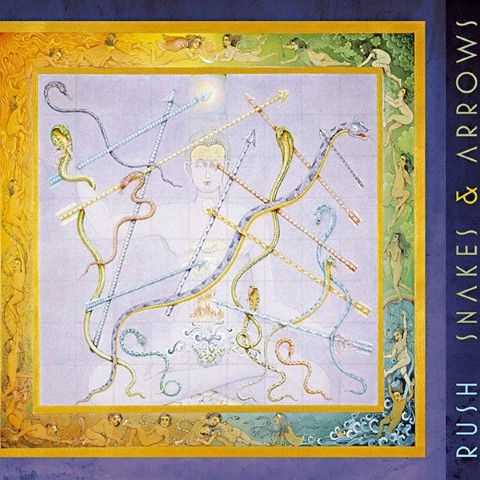
Review: Rush - Snakes and Arrows


I first really got into Rush back in 1987 or thereabouts. Hold Your Fire was released that year and I recall very well seeing the video for "Time Stand Still" which featured Aimee Mann. Until that point I knew "Tom Sawyer", "Spirit of Radio", et al – the songs you'd hear on classic rock radio. Despite being very different from their 70s/early 80s stuff, I really liked Hold Your Fire. That album's follow-up, 1989's Presto, was, in my humble opinion, was equally as strong. I first saw the band live that same year at Alpine Valley. During this time I explored the band's back catalogue and discovered their Zeppelin-esque beginnings which led them into progressive rock territory in the last half of the 70s. in 1980-81 came Permanent Waves and Moving Pictures which provided most of the fodder for classic rock radio. Then synthesizers began to really loom over the band's sound with Signals from 1982. Despite the changes in the sound, I really enjoyed every album the band had done.

Then in 1991 they released Roll the Bones. I loved the lead track, "Dreamline", and thought there were a few other songs that were good but, for the most part, I found it an uninspired effort. A couple years later Counterparts was released and I it came across to me much as its predecessor – a couple great songs with the rest being merely OK. Rush came to Madison in support of the album in the spring of '94 and I was there. (Select songs from that show can be found on a couple of my shows here - #78 and #81.) When Test for Echo came out a couple years later, I barely took notice. 2002's Vapor Trails held more interest for me as it was supposedly a return to form and, after all, it was a bit of a comeback for them after the deaths of Neil Peart's daughter and wife. I saw then that year in Milwaukee and liked most of the new material. Not super-mega-maxi fantastic, but much better than most of the material from their past 3 albums. And so I'll have to be forgiven if I approached the band's latest, Snakes and Arrows, with a bit of trepidation. Could they still make exciting music? More importantly, could they make an album's worth of it? In a word, yes.

Listening to Snakes and Arrows for the first time was a great treat. If you lost interest when Alex Lifeson turned down his amps so the synthesizers could be heard, this album is a nice return to form. If you thought Vapor Trails was a muddled heavy metal mess, you'll be pleased to know that there's plenty of slashing chords here but it's all very melodic and there's perhaps a greater diversity of sounds here than on any previous album.

The single "Far Cry" starts things off with some thundering drums hammering out a martial beat and some acoustic(!) guitar flailing away. The song soon settles in with the band's trademark guitar & bass combo. Geddy's bass isn't as high in the mix as it was 20+ years ago but you can hear it in the background going off on its own tangent. He's also not screaming like he was back in the 70s but his vocals here are very strong. Plus there's the guitar solo which is mostly feedback. To top it all off, the chorus is just blatantly catchy. "Armor and Sword" follows. I read an interview with Neil Peart a month or so ago and he remarked that he feels this album has his best drumming ever. While the dorks like me who air drum to every fill in "Tom Sawyer" in concert (or in front of the stereo at home – alone) might be disappointed that he's not all over the kit here, I believe him when says there was something about the sessions that was particular favorable to his drumming. "Armor and Sword" begins yet again with Peart thrashing away. This time he's making good use of a splash cymbal and those bass drums. Electric guitar enters and the song sounds a lot like the band in the late-80s with those guitars having a purer, less distorted sounds. Then it slows down and we're left with only acoustic guitar. After the first verse, the amps go up to 11 again. Honestly, the second verse sounds a lot like something from Moving Pictures not only with the guitar, but also with Geddy's percussive bass playing. The song is also the first to directly touch on what was hinted at in "Far Cry" – spirituality. In this case, it's Peart's lack of affection for religion:

We hold beliefs as a consolation
A way to take us out of ourselves
Meditation, or medication
A comfort, or a promised reward

"Workin' Them Angels" opens with more clean-sounding guitar which turns acoustic over some of Peart's work on his toms. For the chorus, Lerxt's tone gets heavier and there's even a (gasp!) mandolin solo thrown in as well. Bill Monroe he ain't but, oddly enough, it doesn't sound out of place. There's this kind of boastful swagger here that I've never heard in Rush's music before and it works well.

"The Larger Bowl" is the first rock song I've heard of whose lyrics are a pantoum. This is, as the Wikipedia states, where "the second and fourth lines of each stanza are repeated as the first and third lines of the next". As the lyrics question inequality in the world, the music is some of the most conventional the band has produced in a while. An acoustic guitar is strummed throughout and Lifeson adds a nice electric solo. Not really a highlight of the album but it's got a good chorus.

Some backwards looping hangs in the background while a hesitant-sounding guitar is picked to open "Spindrift". Fierce winds from the east are contrasted with waves crashing on the western shore and I get the impression that the lyrics here are about Islam and the West generally. But it's not criticism here, it's a plea for understanding.

What am I supposed to say?
Where are the words to answer you
When you talk that way?
Words that fly against the wind and waves

The boys manage to whip up some good drama here, especially in the last minute or so with some alternately crashing and howling guitar. The first of three instrumentals, "The Main Monkey Business", comes next. It resembles "La Villa Strangiato" in the way it alternates heavy and soft sections, though it's not quite as fragmented as its predecessor. Easily their best instrumental since "YYZ". Lifeson's soloing really shines and Peart's playing harkens back to the days when he used every drum in his kit in every song. The drummer can be found noodling a bit before a bluesy guitar eases us into "The Way the Wind Blows". Gears shift and the song is out of the gate as Peart's lyrics pull no punches:

Now it's come to this
It's like we're back in the Dark Ages
From the Middle East to the Middle West
It's a world of superstition

The chorus slows things down with its gentle acoustic guitar. Soon enough, the band is off and running again with more commentary on religion. While this is a great song, I have to wonder why there's the Stevie Ray Vaughn imitation thrown in at the beginning which is reprised midway as well. Observations of religion permeating our lives like "a plague that resists all science" is countered with a first for the band – a solo acoustic guitar piece called "Hope". No singing here, just some very beautiful playing that is miles away from the classically styled "Broon's Bane", which was only ever performed live. "Faithless" is lyrically a counterpart to "Freewill" for here Peart asserts his rejection of religion most directly:

I don't have faith in faith
I don't believe in belief
You can call me faithless
But I still cling to hope
And I believe in love
And that's faith enough for me

This is the chorus which sounds most like their mid-80s output with the soaring keyboards. However, I highly suspect that the keyboard here is the prog rock stalwart, the Mellotron. It sounds like they tweaked its famous string sound. "Faithless" is one of my favorites from the album. In addition to sharing the lyrics' sentiments, Geddy's singing is confident but not angry. Musically, the melody is great and, although it doesn't rock as hard as some of the previous songs, the slower pace betrays something a bit more serious, a bit more open. Where "Freewill" was assertive and defiant, "Faithless" is reflective and matter-of-fact.

After a classic slab of late-period Rush, "Bravest Face" is a bit of an anti-climax. I'm warming up to it with repeated listenings with its quiet acoustic guitar sections contrasted with ones full of heavier guitar and cymbals going off everywhere. That mysterious SRV thing reappears briefly too. The rumbling guitar rears its head again in "Good News First" along with a rather angry tone. Is that the Mellotron in background again? The penultimate song on the album is also the final instrumental – "Malignant Narcissism". Geddy's on fretless bass and it is way up front in the mix here. For his part, Alex shreds. With the brief bass and drums breaks, the song will bring "YYZ" immediately to mind. "We Hold On" closes the set. Lifeson's angular riff breeds an immediate sense of urgency which turns into barely restrained chaos amidst the raw screeching and crying of his guitar. The solo finds Lerxt curling Middle Eastern tinged notes into and over one another. And he does this as Peart finally finds a chance to use the rest of his kit. The bass drums punctuate the rhythm before he takes to the toms. Seriously, this is some of the best and most exciting music Rush has made since 1980.

Snakes and Arrows finds Rush seamlessly mixing various elements from the band's history with a renewed vigor and sense of purpose. It seems that the fun of making their EP of cover songs, Feedback, has seeped in and injected new life into the group. While there are a handful of weaker songs here, there's not a stinker amongst them and the album is littered with great melodies and there's great playing throughout. Geddy Lee's singing sounds more confident than it has in years. For too long he's sounded like he going through the motions but here he sings like he really means it. I'd like his bass up in the mix but this is a minor quibble. Peart is known for having the most melodic drum fills in all of rockdom and they're most missing here. But his playing is still fabulous and propels the songs forward just as it always has. In certain ways, it is Alex Lifeson's playing here which is the real revelation. In addition to the mandolin appearing from out of nowhere, there's heaps of acoustic guitar as never before. It's taken ages but I think he's finally figured out how to balance his riffing of days of old with the cleaner tones of his rhythm playing. These styles don't seem at odds any longer. Perhaps the best thing about Snakes and Arrows is it doesn't sound like they're struggling to integrate synthesizers into the sound nor are they worrying whether there's enough riffing. It just sounds like the band is having fun again.

Cantiones Profanae


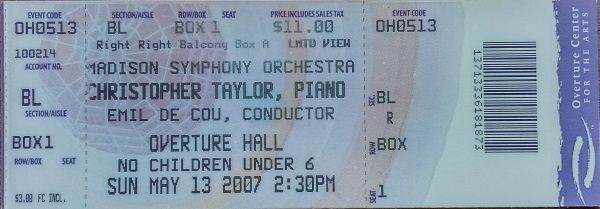
On Sunday it was off to the symphony with The Dulcinea and her sons for a little high culture. The highlight of the program was Carl Orff's Carmina Burana. The last time I saw this piece performed, I fell in love with one of the violinists. My lust was restrained this time around due in no small measure to the nosebleed box we found ourselves in. But the tickets were only $11 so one cannot complain.

The afternoon's performance began with Prokofiev's March and Scherzo from Suite from "The Love for Three Oranges," Op. 33 bis. I was familiar with his "barbaric" Scythian Suite, "Troika", and, of course, his ballet Romeo and Juliet and so it came as a wonderful surprise that I recognized this piece. It was a great little ditty (it clocked in a 4') and, come on! Who doesn't love a scherzo? This was followed by Gershwin's Concerto in F. Written in 1925 and originally entitled New York Concerto, I was thoroughly unsurprised to hear strains of jazz in the work. Their presence didn't mark this piece as being less than serious or any such thing for me but those passages seemed to sit uncomfortably in an orchestral setting. The final very agitated (Molto agitato) movement was great with its dramatic rushes and extreme dynamics. During the intermission, I felt no great need to bask in the glory of Gershwin but resolved to check out some more Prokofiev.

Ah, spring! The weather warms, everything gets all verdant. Birds are doing it, bees are doing it, and I'm doing it. And I always bust out Stravinsky's The Rite of Spring and Carmina Burana. (I am still kicking myself for having missed the MSO's performance of the former back in March.) In anticipation of the performance, I asked The Dulcinea's oldest, D., if he was familiar with it. He wasn't. I asked him if he'd seen The Omen and he hadn't. I realized that I obviously had much work to do. He's 12 years old and is the perfect age to be molded into a dork by his mom's boyfriend. No remake for him! We're going straight to the 1977 original with Gregory Peck starring, Patrick Troughton being impaled, and Orff on the soundtrack.

The history of the piece, in brief: Orff was introduced to a collection of 13th century poems that were discovered in 1803. He chose a couple dozen of the poems and wrote his piece around them. Written mostly in Latin (as well as Middle High German and Old French), the poems selected by Orff concern Fate, spring, the vulgar activities of tavern life, and courtly love.

Any performance of Carmina Burana is of a big scale. The MSO was joined by the Madison Symphony Chorus, the Madison Youth Chorus, and soprano Tonna Miller, tenor Joel Burcham, and baritone Donnie Ray Albert. You've got everything but the kitchen sink here and, when they got going, it was nice'n'loud.

"O fortuna" opened the proceedings with a blast. There's nothing quite like a whole chorus bellowing at you in your favorite dead language that Fate is monstrous and empty. As good as that was, I really wanted to hear all the naughty bits about the springtime. This section opens with a scurrying flute in "Veris leta facies" but really gets moving two sections later in "Ecce gratum". The third verse is my favorite with those hesitant first steps of "Gloriantur/et letantur/in melle dulcedinis". Fucking magic.

"Tanz (Dance)" is next. This is one of the most joyous pieces of music ever written. You've got the opening fanfare and then a roll on the snare which comes to a close with the tympani. There's also that part at the end with the brass playing the melody and the strings imitating the flight of birds and it just becomes the ultimate fanfare for ushering in the spring. So hopeful, so joyous - it sends a rush down my spine and brings tears of joy to my eyes. I found it odd having to wait for the succeeding bit, "Floret silva nobilis" because I am so used to hearing it on CD where there is virtually no gap at all. (I have the recording of the San Francisco Symphony on London.) Soon enough we're in the tavern with Mr. Albert doing his best drunken abbot imitation. What is the notation for slurring one's singing as if intoxicated?

The third section is where all the really naughty stuff happens. Thankfully neither D. or M. bothered to look at the program to find out that "Mea mecum ludit virginitas" means "My virginity makes me frisky". And I'm sure The Dulcinea would be loathe to have to explain this:

If a boy with a girl
tarries in a little room,
happy is their coupling.
Love rises up,
and between them
prudery is driven away,
an ineffable game begins
in their limbs, arms and lips.


Love rises up indeed.

Play Me My Song


The proprietor of the local blog I'm Just Sayin Is All… has a recent post bemoaning the dearth of indie rock at Summerfest in Milwaukee. While the lineup would most definitely be different if I were in charge and I agree with some of the things the author, Kyle Pfister, says, I still feel that the post is nothing but an extended self-important bout of whining.

The first item in the litany of complaints is that "the majority of the lineup has peaked". Peaked how? In popularity, I presume. Like Mr. Pfister, I have absolutely no desire to see REO Speedwagon or Def Leppard or most of the bands whom he lists. But he goes on to say:

"In order to stay relevant, a festival needs to showcase acts with new ideas who are advancing the current music scene."

Relevant to whom? What exactly is the current music scene? Is it the music scene of the Top 40 singles from the Billboard chart? The blues scene? Hip-hop? Americana? Metal? No.

We find out of which scene he speaks in his next item which notes "the indie scene is strangely absent". Elsewhere he says:

"Summerfest often seems like only one thing targeted at one type of person: A money-maker targeted at the lazy music consumer." (emphasis his.)

In other words, he wants festivals to showcase acts which advance his current music scene. This is incredibly self-centered and insulting. When did you appoint yourself the arbiter of musical taste for everyone, Mr. Pfister? Contrary to your post, indie rock is not the end-all-be-all of music. And how dare you hold yourself up as a model "music lover" in possession of the only "proper" way to consume and enjoy music. Those of us who do not partake of indie rock as your ilk do love music no less than you, Mr. Pfister.

In the guise of just sayin' that Summerfest could use a more varied lineup, what Mr. Pfister actually says is that his taste and the tastes of his fellow indie rockers are superior to all others. Thusly the post is an elaborate bout of whining about how Summerfest doesn't cater to his musical preferences. Oh poor, misunderstood indie rocker! It must be a dreadful burden to be the keeper of the knowledge that is "the art of music". And woe betide the indie rock musician who is relegated to the US Cellular stage! For it is a fate worse than death!

Hopefully someday Mr. Pfister will realize that the world does not revolve around him or his precious indie rock or, indeed, rock music. I also hope that he comes to understand that the art of music is not contingent on what is current and hip. The mostly young white men who perform indie rock and the mostly young white men who consume it do not have a lock on some mythical "pure" form of expression and consumption of music that is unsullied by commerce. Not only has the Summerfest lineup grown stale as Mr. Pfister notes, but so too the dithyrambic praise of indie rock.

12 May, 2007

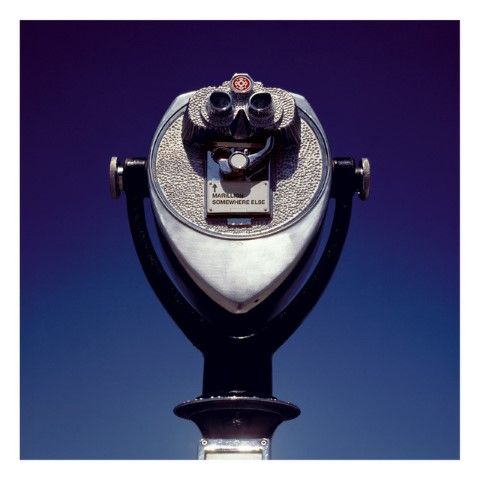
Review: Marillion - Somewhere Else


The whole Fish vs. H thing is, I think, mostly a dead issue for Marillion fans. Just as Steve Hogarth could never pull off the Beat poetry of "Bitter Suite", Fish could never handle the gentle "Brave". I've always credited the band with finding a replacement for Fish that sounded nothing like the big Scotsman. Along with a change in singer, the band's music had to move on as well. They couldn't continue in the neo-prog vein forever and everyone knew it. The first album with H, Seasons End, was largely comprised of songs written while Fish was still in the band but the new frontman made his mark. The lyrics mostly moved away from the personal and when they did address relationships, they approached them positively or at least not in the dire terms Fish was known for.

The band moved away from prog in fits and starts during the early and mid-1990s. The last album of theirs I bought on the day of its release was 1995's Afraid of Sunlight. It wasn't bad and I found that the best song was the least Marillion-like – "Cannibal Surf Babe". Much more a nod to The Tubes than early Genesis, it proved that the band could tack non-proggy seas and still create great music. But I found the album to be wildly inconsistent and I had discovered other musical paths to tread. I still kept up with them and found out that they basically severed all ties to their past with Radiation from 1998. With it, they'd chosen to make intelligent, well-crafted rock music instead of prog. While this is a gross oversimplification, the new direction was undeniably different. I thought that the next few albums suffered from the same problem as Afraid of Sunlight - they were too inconsistent. Two or three great songs and the rest sounded like either filler or good ideas that weren't able to be fleshed out well enough. 2004's Marbles offered hope. A trio of lengthier songs which stitched together various contrasting bits generally worked well. In between were pure pop songs, jazzy bits, and ballads all with a nice modern sheen that was current but not out of place on an album by a bunch of geezers. The guys are exceptionally talented musicians with guitarist Steve Rothery being able to say more with just a few notes than most guitarists can with a few dozen. (His solos on "Sugar Mice" and "Easter" are spine-tingling.) Despite this, I approached their latest effort, Somewhere Else, expecting more of the same hit-or-miss stuff and prepared to just have it linger on my shelf along with their last several albums.

It was quite a surprise to find that the album was very good and much more consistent than anything they've done lately. They're out of the gate with "The Other Half" with its skipping beat that's almost surf. Rothery's hurdy gurdy guitar grinds out something like a riff while these fluttering keyboards sound like they're from The Beatles' Revolver and the song as a whole has that same driving intensity of "Tomorrow Never Knows". Hogarth is in fine form with his voice as emotive as ever and I just love how Pete Trawavas' bass slithers in and out of the other instruments. While the song lays no claim to being prog, Rothery's solo here is classic. "See It Like a Baby" is another mid-tempo rock song with an uplifting chorus and more great work on the bass. The rim shots during the verses are vaguely reminiscent of a certain tune done while Fish was still in the band. Rothery scratches out a rather gritty solo while Mark Kelly fills in the picture with his keyboards. Again, this is a rock song as opposed to a prog song but the fine melody and catchy chorus are irresistible.

"Thankyou Whoever You Are" opens with some piano which leads into a tender pop song. Unfortunately, it all seems a bit by the numbers. Start out slow, speed up a bit, and then have a big guitar solo. Hackneyed but at least it's sincere and not overwrought. "Most Toys" is perkier and a bit grittier as it rejects today's hip nihilistic cynicism. Hogarth is nothing if not being honest when he sings "He who dies with the most toys/is still dead". The song has another strong melody and a straight-ahead rock feel with the guitar lending a loose, ragged feel to it.

The album's title track follows and it's the longest song here clocking in as it does at 7:51. It's a slow burner with H pondering "this rock-star trip" and illustrates the stripped-down aesthetic of the album. In days past, Mark Kelly would have added layers of keyboards to evoke a mood but here he is content with just some understated piano. The guitar here is classic Rothery – lots of sustained notes echoing through the rhythm. Somewhere Else as a whole has this rather bare feel.

"A Voice From the Past" follows quickly on the heels of the title track but doesn't change the mood much at all with its slow tempo led by a waltzy piano. As the lyrics get angrier, the music follows suit during an interlude which is really Marillion at its best. The band have never really been about virtuosity. Sure, there were moments but their music has always been strongest when the ensemble is playing behind and under-girding some great, expressive singing. They never needed a big guitar up in your face because they got angry as a group. The same holds true here. Guitar adds muscle but it's really H's voice that holds centerstage.

"No Such Thing" reminds one of Black Sabbath's "Planet Caravan" with the processed vocals. A simple guitar figure is plucked out and repeated while drummer Ian Mosley finds occasion to actually use his toms. And that Beach Boys theramin sound from "Cannibal Surf Babe" rears its head again. This is a nice change of pace for the album. And, when a rap of the snare gets the song moving, Rothery's playing takes on a familiar guise. I recall being in high school when a friend of mine who was also into Marillion had taken up the drums and was in a band. He was trying to get their guitarist to stop playing big chords all the time and he said to me he wanted something more like the ending of "Incubus". As that song comes to a big finish, Rothery is just playing this simple figure of like four clean notes. It's a real testament to what the guy can do. No loud chords, no distortion yet what he played (or didn't play) added so much drama to the music and that's what is happening here.

"The Wound" begins a bit like "Out of This World" with its faux R&B; beat. Again, Rothery's minimal playing serves the song well. In addition, there's some good organ work from Kelly. It eventually finds a groove, of sorts, which reminded me of Ozric Tentacles' "The Throbbe" with its pulsing bass line. "The Last Century For Man" just meanders aimlessly too long. They've gone to the start-slow-and-build-up well just too many times. Instead of essentially bifurcating the song into a slow part and a faster part with a coda, I'd rather they'd have interspersed the dynamics throughout. "Faith", which closes the proceedings, was originally from the Marbles sessions and a live version escaped as a b-side back then. This is a studio re-recording that begins with some gentle acoustic guitar as H gives a lovely, tender vocal performance that shows his affinity for Romanticism. This version lacks the slide guitar embellishments of the live rendition but, when it gets going with some drums, it takes on a breezy late-60s vibe which works well.

Somewhere Else gains strength from having shed much of the gloss of previous albums. Some recent material suffers from the band's inability to integrate the shiny and new with their traditional strengths. For instance, the slick "contemporary" drum machine of "You're Gone" just doesn't sit well beside Rothery's waves of sustained guitar notes. In 2007 the band have stripped down the arrangements and I think the music benefits from this tremendously. My first complaint is that Mark Kelly doesn't get enough time to shine. He adds subtle colors to the songs most of the time and never really steps out. The other weakness of the album is that they start too many songs off slowly. With the sparser arrangements, this eventually gets stale and the inevitable moments when things pick up are all-too predictable. At least the group doesn't get bogged down by attempting to distance themselves from their past here as they have been doing for several years. This is especially true for Rothery. One of the great things about his playing style is that it's rarely ostentatious. Marillion has never been about the big riffs and the guitar charging ahead. Rothery has always added muscle when needed but, as demonstrated here, he says more with less.

Somewhere Else isn't going to draft a whole new legion of followers for the band. Neither will it draw Fish-era fans back into the fold. Perhaps the best thing about this album is simply that the songs are their best in years. They just went out and crafted good melodies.

07 May, 2007

The Possum Trot Orchestra - The Possum Trot Orchestra


Although Going Back to Vicksburg was credited as a solo album, folklore professor John Minton was accompanied on that effort by husband and wife duo Rob & Susie Suraci. Then the couple joined Minton and his band for live performances, the idea for The Possum Trot Orchestra was born. Each member of the trio is a multi-instrumentalist and so there's a shuffling array of sounds to accommodate the album's 14 compositions, all of which are originals. Minton contributed eight with Ms. Suraci having written the remainder.

Unfortunately, this Janus-like approach to songwriting doesn't benefit the album and this is apparent with the first two songs. Minton's "The Distant Shore" is a paean to Celtic folk music. He wields an arsenal of stringed instruments while Mrs. Suraci adds her lovely voice. Mr. Suraci adds bass as well as some bodhran as the song moves to a close. While The Chieftains have nothing to fear, it's a great song which serves to remind listeners that the folk music of the British Isles formed the basis of much of the folk music of the American South. This is followed by Suraci's "Homebody" which moves the listener from the folk realm to the soft rock of the 1970's epitomized by James Taylor and his ilk. Although Minton provides a welcome accordion and some tasteful lap steel work, the song reveals itself to be rather unremarkable after the shock of transitioning from folk to 70s schlock wears off.

And so the album goes with Minton and Suraci's songs alternating with one another. Whereas the former's compositions are grounded in folk and generally slower, moody affairs, the latter's songs are like having a bucket of cold water thrown on you. Take Minton's "Been On the Job Too Long," which is almost a revelation. He trades in his normally subdued vocal style for some grit and even a hint of menace. Throw in some eerie sustained notes on the lap steel and you've got a stab at American gothic. Suraci's tender "Want Me" doesn't offer relief or a change in direction as much as make the listener wonder if he or she is listening to a different album. I waited for saccharine washes of orchestral string to suddenly emerge but, luckily, they never did. She does, however, contribute "Fever In My Veins," a wonderful bit of sultriness featuring some fine vocals atop Rob's nimble brushwork.

Minton and Suraci's playing and singing complement each other well but their songwriting styles are at loggerheads throughout. This results in an album that is erratic at best. Fans of Americana will love Minton's earnest and thoughtful tributes to American folk and shake their heads at the rest.

It Takes a Village

I have to wonder how this story would have played out had the video not been removed from YouTube.

A 17-year old girl named Du'a Khalil Aswad was stoned to death last month in Northern Iraq. While there are conflicting reports over many of the details, it seems clear that the girl, from an area populated by Yezidi (adherents of Yazidism, a minority religion) had a relationship with a Muslim boy/man. In a society where marrying outside of one's religion is blasphemy, you can imagine that this didn't go over well with her fellow Yezidi. She was given shelter by someone and it's reported that either A) the house was stormed and she was dragged out onto the street or B) her family mislead her into thinking that she had been forgiven and that it was safe to return home. Either way, she ended up like this:


The stoning, which purportedly lasted 30 minutes, was captured in-part by at least 1 cell phone and you can see the grisly footage yourself at this page at Wallyworld. Eight or nine barbaric fucks are generally thought to have done the deed while up to 1,000 others stood around watching and/or photographing it with a cell phone, including the police(!). At a couple points, someone in the crowd steps up to throw the girl's skirt back over her so that she is not exposed. As if the most horrific thing there was the sight of women's underwear.

Part of me wants to say that we should just nuke the area from orbit because it's the only way to be sure while another wants to rant about religion and patriarchy. But mostly I am just so incredibly appalled that I can't say too much at all.

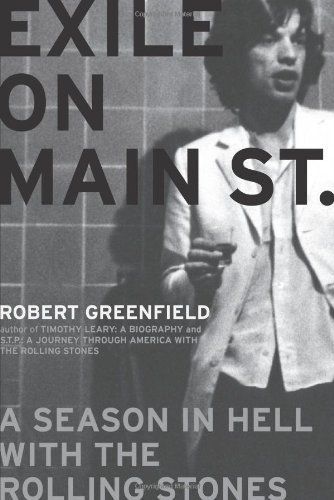
Turn the Page - Exile On Main St.: A Season in Hell With the Rolling Stones


Very late in his book, author Robert Greenfield admonishes readers that he is going to refrain from a detailed look at The Rolling Stones album which gives his tome its name. This, he contends, is the realm of the "rock critic" and not the "rock writer" which he almost arrogantly labels himself. Indeed, Greenfield seems intent on avoiding music as much as possible in this book, which is more voyeurism than writing on rock. In addition to turning his nose up at the thoughtful consideration of some of the best music ever recorded by The Rolling Stones (and perhaps in rock history), he also eschews a broad history of the band and instead focuses on the period of June-July 1971. During this time, the members of the group took up residency in the south of France to avoid paying exorbitant income taxes in the UK. The Stones convened at guitarist Keith Richards' new home, Villa Nellcôte, a mansion built in the 19th century, to record their next album after the immensely successful Sticky Fingers.

What the reader gets here is a series of half-remembered anecdotes from 30+ years on in Greenfield's indelible style that is part braggadocio and part hyperbolic grandiosity. Richards is cast as both hero and anti-hero as he lords over recording sessions where nothing ever seems to get recorded, as well as a revolving court of hangers-on seeking to bask in his heroin-fueled glow. The story details the steady flow of drugs that poured into the mansion as well as Richards' brushes with the French authorities. Reading this book, one might well wonder how any music was recorded at all. Greenfield isn't particularly interested in this. After telling us a never-ending stream of tales of hedonism and demonstrating how they impeded the recording process, Greenfield suddenly informs the reader that the band has a clutch of songs that need to be mixed.

The Stones' lead guitarist at this time was Mick Taylor and he described the events thusly: "I think it was a bunch of stoned musicians cooped up in a basement, trying to make a record." This sober assessment is countered early in the book with Greenfield's analogies to bedrock stories of Western culture. First he tells us that a passion play is to unfold; then Richards and company are the equivalent of Dante descending from one Circle of Hell to the next. This annoyance is exacerbated by Greenfield's habit of invoking lyrics from Rolling Stones songs. While I don't mean for this review to merely be a list of criticisms piled Pelion upon Ossa, I have to mention his puerile digs at other authors. For instance, Stephen Davis wrote Old Gods Almost Dead: The 40-Year Odyssey of the Rolling Stones and Greenfield chides him for mistaking Stephen Stills for Gram Parsons in one incident and then brags, "Next time you want to check a fact about the Stones, please feel free to call me in the office."

This bit of Rolling Stones history became rock mythology long ago and Greenfield seeks to write the most comprehensive version of the tale. He certainly takes to his task with aplomb by reading every book on the topic and conducting interviews with participants involved in the milieu of drugs, sex, and rock'n'roll. Unfortunately he mostly displaces his story from any larger context. Thusly almost nothing is devoted to connect the events of that summer to the songs which appeared on Exile on Main Street. And, except for a few cursory paragraphs at the beginning, he also avoids commenting on how the story he tells relates to the state of rock music in 1971 or of the larger contexts of American or English culture at the time. What's left is just debauchery.

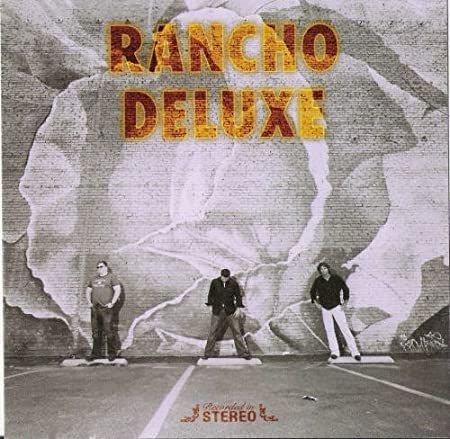
Rancho Deluxe - Rancho Duluxe


One can make an argument that country rock started in Los Angeles when Gram Parson became a hired gun for The Byrds back in 1968. One can also argue that another Los Angeles band, The Eagles, popularized country rock like no one else. And now in the 21st century another band from L.A., Rancho Deluxe, is treading down this familiar path. However, this should be no surprise considering that two-thirds of the group ­ brothers Jesse Jay and Graham Harris ­ are the sons of Greg Harris who was in Parson's Flying Burrito Brothers.

The band consists of the brothers Harris and Mark Adams. Graham holds down the bottom on bass while Jesse Jay adds guitars, mandolin, and backing vocals. Adams plays acoustic guitar as well but it's his rich baritone which takes center stage. For their self-titled debut, they got help from an all-star line-up including papa Greg Harris on banjo, JayDee Maness, formerly of the The Byrds, on pedal steel, and stalwart session drummer Don Heffington.

With enough talent for two bands, the group lays down the twang thick and heavy beginning with "Rock Bottom". If there's such a thing as a country rock frat boy anthem, this is it. If the solid beat wasn't enough, then the sing-a-long chorus seals the deal. Pedal steel and fiddle color the mid-tempo "Fall From Grace" while dobro races along in the instrumental shuffle of "On the Fence", easily the best song here. All of the songs are originals excepting a cover of Bob Dylan's "Tonight I'll Be Staying Here With You". The band updates the song, from Dylan's 1969 foray into country, Nashville Skyline, with aplomb and turns it into a chunky piece of twangy rock.

Ostensibly in the alt-country camp, Rancho Deluxe is really just a modern country band in as much as modern country music has appropriated rock music. The drums are up front in the mix and those rim shots in "Lonesome Home Security" are just too familiar. The album as a whole sounds too slick as if all the rough edges have been polished away. While Rancho Deluxe isn't off the country music assembly line in Nashville, it sure sounds like it.

Taunting French Dalek


Also check this out. It's the trailer for the second half of the current season. Will John Simm be the new Master?


05 May, 2007

Old Meanings Move in the Drift of Time

The Pope and I finally agree. Apparently he wants to bring back the Tridentine Mass. That means it's done in Latin. Now, I usually disagree with Herr Ratzinger and am absolutely repulsed by his role in sheltering pedophile priests, but I have a copy of Cattus Petasatus in my library. (i.e. - The Cat in the Hat) You see I am blessed by having had several years of Latin starting in the 4th grade. Ergo I'm all for the return of the Tridentine Mass.

The long-rumored document—said to take the form of a motu proprio, a personal initiative of the pope—would allow for broader use of the Tridentine, or, as it's commonly known, Latin Mass, by permitting any priest to celebrate it without first receiving permission from his bishop. The rite was the Catholic standard for nearly 400 years, from its codification in 1570 until the reforms of the 1960s that followed in the wake of the Second Vatican Council ushered in Masses in the local vernacular. The Latin Mass may no longer hold a place at the center of Catholic life, but some Catholics never stopped longing for its return.

I recall very well my Latin teacher (who was Jewish) from my freshman year of high school ranting and raving about how the venerable language was driven out of the Mass. Although this meant little to me at the time, I encountered an interview with Joseph Campbell many years later in which he talked about this issue. In addition to the use of vernacular, he noted the difference in how the priest worships. As Ratzinger once wrote:

"Less and less is God in the picture. … [T]he turning of the priest toward the people has turned the community into a self-enclosed circle. In its outward form, it no longer opens out on what lies ahead and above, but is closed in on itself."

In the Tridentine Mass, the priest has his back to the congregation, his head tilted upwards, and he worshiped along with his flock as opposed to looking down on them from on high. Not being one of them, I'm certainly content to let Catholics worship as they will. And what traditions to keep and which to abandon is for them to decide. But I'm all for the return of the Lingua Mater.

The author of the piece asks whether any priest could actually pull off one of these masses considering that Latin has been largely absent from Catholic schools and churches for decades. A good question. I'm sure that churches have a more pressing need to, say, have services in Spanish than to revisit its history. However, I think that Campbell's point and probably that of those in the Church seeking the Mass' return is that the reforms of the 1960s served to dislocate the Church from its roots. And, as this article in the Washington Post notes, this led to things such as "Pizza Masses" in which pizza pies replaced the communion wafer.

While I feel that the absurdity of religion generally can be summed up by this notion that pizza is transmogrified into the body of a deity, I am sympathetic to the issue of tradition here. I've always had a keen interest in how things came to be as they are. This is probably why I became enamored of James Burke's TV series Connections at a young age. Moving from the public to the personal, tradition first assumed a role of some importance in my life about 10 years ago but it became even more so after the death of my father three years ago. Perhaps that and the fact that I'm getting older. (But not old!) It is a great temptation to go living in the past but one must certainly avoid that. You have to live in the here and now but that doesn't mean that the past cannot inform your present. Everyone has to contend with the traditions that are handed down to them. When you're young, you have your whole life before you so there's little desire to look back and see where you came from. Getting older means that at some point you find yourself in that future that you formerly couldn't wait to arrive. Once you're there, you wanna know the path that led you to that point. Perhaps it's because death is just that much closer, but I think it's completely natural for people to want to connect with what came before them, to feel as if they're a part of a long chain that extends back through history.

This is illustrated well by my involvement in the Polish Heritage Club here in Madison. The membership is mostly middle-aged or older and at every event I attend, people of retirement age can often be heard giving the refrain of "This is what I did as a child" or "My grandmother taught me this". It is vitally important for many of these people to let us young folk know that we're the latest incarnations of an age-old identity and way of being. I think that it's all part of gnothi seauton - know thyself. We humans are probably the ultimate social creature and so it seems completely natural to me that we would want to not only feel a connection to others through space but also through time.

Of course not every tradition is able to be preserved or is worth preserving. Additionally, I'm not trying to argue that the modern Catholic mass is somehow flawed in the sense that it is an "improper" way to worship or that it is unable to fulfill whatever mental need people have which causes them to worship in the first place. But I think I can understand why the proponents of the Tridentine Mass feel as they do.

EDIT: I just e-mailed the Madison diocese to find out if any of the churches around here would offer a Latin mass if the Pope's wishes come to fruition. If so, my godless ass would be sorely tempted to take one in.

04 May, 2007

Hitchens on Lou Dobbs

This is from last night.


"Religion ends and philosophy begins, just as alchemy ends and chemistry begins and astrology ends, and astronomy begins."

03 May, 2007

Let's Hear It for the Google Homepage

From my friend Marv:

"The Google homepage has cut my productivity in half. They're great!"

Happy National Masturbation Month!

May is National Masturbation Month. Well, according to some folks. Others say that 7 May is National Masturbation Day while others cite the first week of May as National Masturbation Week. And so I'm not quite sure what the deal is. Personally, I celebrate my masturbatory holidays 365 days a year or thereabouts but your mileage may differ.


Mark Twain once wrote of the practice:

"to the lonely it is company; to the forsaken it is a friend; to the aged and impotent it is a benefactor; they that are penniless are yet rich, in that they still have this majestic diversion."


For further exploration of this majestic diversion, lads should check out Jackin' World for more info while lasses should head to Clitical. Here in Madison, the friendly folks at A Woman's Touch would be more than happy to give you information as well as help you select the perfect toy(s) and accessories for either laying stomach pancakes or churning the butter.

02 May, 2007

Please Forgive Me Smoky Jon

Dear Smoky Jon,

I have sinned and am writing to beg for your forgiveness. You see, I ate at another barbecue joint this evening and I feel the need to repent. I transgressed partly from my own weakness and partly from being a victim of coycimstances. I was out on the west side because I had a meeting over on that side of town at 7. I had time to blow and then I felt the hunger pangs - I wanted BBQ. But you were over on the opposite end of town and I didn't want to drive there and then back. I didn't want to use the gas and emit more exhaust fumes than I had to. So I did it for the environment, I swear. My transgression was eating at a chain BBQ place which I shall not name. (But it's right by West Towne Mall.) I sat down and ordered as my tummy was making odd noises. When the food arrived, it looked alright, "looked" being the operative word here. The ribs were...they were dry and tough. Not like yours which are always tender and falling off the bone. Like you, they smoke their ribs. But unlike yours, their smoke flavor ran contrary to the flavor of the meat, not complementary to it. They had BBQ sauce at the table but the red stuff was horrible. It tasted like ketchup with corn syrup and Liquid Smoke added to it. Yours is so good with those finely diced bits of onion floating in a spicy sea of goodness. They were St. Louis style ribs and I know I should have been weary of food from the city which makes the crappiest beer ever known to man. To make matters worse, I asked for hot sauce and they gave me this supposedly hot habanero stuff but it turned out to be girlie hot sauce that barely registered on my tongue.

I see now that you are my BBQ shepherd and that I am a member of your flock that has strayed. But I have returned! Can you, in your amazing grace, forgive a wretch like me?

Your humble patron

On the Gramophone

By request this week at my podcast, it's the Psychedelic Warlords, Hawkwind.

Fred & Wilma & Barney & Betty

Apparently our forebears back in the day were a kinky bunch. Or so says Timothy Taylor.

He may have come down from the trees, but prehistoric man did not stop swinging. New research into Stone Age humans has argued that, far from having intercourse simply to reproduce, they had sex for fun.

Practices ranging from bondage to group sex, transvestism and the use of sex toys were widespread in primitive societies as a way of building up cultural ties.


The article doesn't elaborate upon exactly how archaeologists have figured out that our distant ancestors engaged in bondage, unfortunately. There's a bit of the archaeological record I'd like to see.

How long can it be before Twisty takes Taylor to task for oppressing women by suggesting that bondage isn't merely a manifestation of the inherent violence of patriarchy?

On the Godless Front

Richard Dawkins recently released the video of the entire interview he did with the Bishop of Oxford for his The Root of All Evil?. They're buddies as Dawkins has "collaborated on several occasions to promote the proper teaching of science in UK classrooms" with the Bishop.


Also of note on the godless front is Christopher Hitchens who is out promoting his latest screed, God Is Not Great. Head to this site to watch him on a recent episode of The Daily Show. You can also watch Hitchens participate in a roundtable discussion about religion over at Book TV.

Jonathan Miller's BBC program, Brief History of Disbelief is finally making its way to American television. (I wrote about watching the first episode last fall.) You can find out more about the show's airing (mostly on PBS) by going to abriefhistoryofdisbelief.org. No news about whether the companion series, The Atheism Tapes, will be broadcast here as well.

I checked out The Science Network's webpage for the first time in a while and saw that there were several new interviews. I am especially keen on watching the conversation with neuroscientist V.S. Ramachandran. I first encountered him by watching the Beyond Belief 2006 conference and found him to be an extraordinary speaker. Just fascinating. I'll have to read me some neuroscience.