06 June, 2007

Ad Regalem Scutellum

A couple days ago I had another go at cooking Polish cuisine – medieval Polish cuisine, that is.


Last time I got all medieval was when I made chicken baked with prunes. Monday night's menu called for Szynka Duszona z Ogorkami which is ham stewed with cucumbers. The recipe dates back to sometime in the 14th century and requires cubeb vinegar. At some point in the late winter/early spring I got my cubeb vinegar a-steepin'. This was easy enough as all I had to do was add some garlic and cubebs to sherry vinegar and let is steep for 3 months. Cubebs are basically a Javanese peppercorn. They're very similar to the black peppercorns with which we're all familiar but they have a citrusy thing going for them. Cubebs were a very popular spice in Medieval Europe and recipes from the time often call for its wonderful flavor.


The recipe I followed comes from Food and Drink in Medieval Poland. The book is an adaptation of Polish scholar Maria Dembińska's 1963 doctoral dissertation called "Food Consumption in Medieval Poland". The text was changed a bit by editor William Woys Weaver for an audience of English-speaking lay-readers. As Weaver tells us in the book's preface, Dembińska's "main interest lay in defining social structure in terms of food consumption" and so the text isn't just a bunch of recipes, it's an exercise in history, anthropology, and ethnography. Reading this made me wonder what one might conclude about America's social structure here in the early 21st century by studying our food consumption. One thing that comes to mind is that, the poorer you are, the more processed foods you eat. But there's more to all of this than what people consume. How about when we take meals? Fans of The Lord of the Rings know that Hobbits took seven meals a day. Today, we Americans usually have three – breakfast, lunch, and dinner. Medieval Poles, like most of the rest of Europe at the time, took two meals a day: prandium - taken from 9-10AM and coena - which is supper, taken from 5-7PM. These are Medieval Latin terms. Prandium gives us the English word "prandial" – follow the link above – while I noted from my years of Latin that coena was cena in classical Latin. It's pronounced "kay-nuh", meaning dinner. Dembińska notes that some richer individuals in Medieval Poland broke their fasts prior to prandium, around 7AM. Generally though, breakfast was not a regular custom. Why is this? What does it say about a society when it does or does take a meal first thing in the morning? Lunch as we know it was apparently uncommon but they did take a midday break and eat something as this illustration from the Maciejowki Bible shows.


Let's get back to my Szynka Duszona z Ogorkami. Here's a photo of my assemblage of ingredients. Can you spy any anachronisms?


The recipe called for a liter of wheat beer so I grabbed a German variety because I was in Star Liquor and they didn't have a Polish one. I was unable to find rocombole garlic so I used what I had. Oh, that's my cubeb vinegar in the bottle in the center. I steeped it in an empty beer bottle. What's out of place here is the diced carrot sitting in that bowl with onion. Carrots weren't originally orange and I think that whoever bred them for the pigmentation we know today did so in the 15th century but I cannot confirm that. I also believe that the orange variety was found in Western and/or Northern Europe and not the Central/Eastern areas. Hence the recipe at hand calling for white carrot or the root of Hamburg parsley. Weaver characterizes this dish as a predecessor of what the French call "salicons" or "the chopped, cooked and bound components used as stuffings". Now, if this connection sounds odd to you, then know that it sounded odd at first to me as well. But, thinking about it for a moment, it occurred to me that diced carrot and onion is 2/3 of what we now call mirepoix.


This was a rather simple recipe, though it did take a while. You sauté the primitive mirepoix and then add the ham, garlic, and parsley – a whole cup of parsley. This cooks for a while and then you throw in the raisins, dried cranberries, and the liquid which consists of the beer as well as ham stock. Let it reduce by a third.


Once it has reduced, pitch the cucumber, honey, and cubeb vinegar and cook for 15 minutes. When done, sour cream can be added to thicken the dish in the pot or be added by each diner to his or her dish. Also, season with pepper. The dish was traditionally served over manchet rolls or bread. (Manchet rolls were small white rolls made from wheat. They were very common and found being sold be street vendors.) In my case, I had a couple sesame seed hamburger buns that needed to be used up so one of them was called to duty. In a royal dining setting, rose petals would have been used for garnish.


So how did it taste? Not to my liking, quite honestly. If you recall my attempt at making the chicken baked with prunes linked above, you'll recall the vast quantity of parsley that that recipe required. Here, the parsley flavor was overpowering and it was like eating grass. Dembińska explains:

Field peas and cabbage are most frequently mentioned, but the most popular potherb was parsley. It was more common in Poland than in Western Europe, and its known curative properties for helping digestion and "cleansing the blood" guaranteed it a prominent position in many dishes of the period. It was also eaten to kill the odor of onions which lingered on medieval Poles after every large meal. From greens during the spring and summer to roots during the fall and winter, there was not a season when parsley was absent from the daily menu.

Having said all this, I do want to note that I would probably love this dish with about 80% less parsley in it because the broth was fantastic and full of hammy goodness with precious beer overtones. It also had a slight sweetness to it owing to the honey and the dried fruits. But it was not overly so, which I appreciated. I'd also add more cubeb vinegar next time and more pepper to taste. Curiously enough, there's no call for salt in the recipe and the book doesn't even include it in the index.

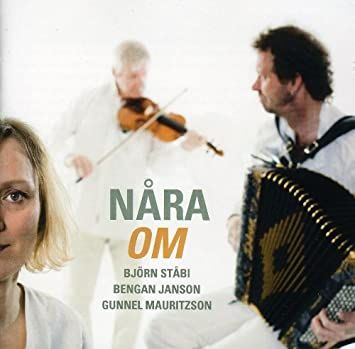
Review: Nåra - Om


I live in a state that saw a great influx of northern European immigrants in the 19th century. Today there are millions of people here who can trace their ancestry to Northern Europe, yet the concept of Nordic folk music is almost completely foreign to most of them. This is a real shame, because the genre produces some great music that is not only wonderful in and of itself, but also makes for a challenging listen to American ears.

While ABBA is Sweden's most recognizable musical export, the country is certainly not without a vibrant music scene and superstars of its own. Nåra, meaning "some" in Swedish, is something of a folk supergroup in their native land. Singer Gunnel Mauritzson is a renowned folk singer who also fronts her own band, GMB; Björn Ståbi is a master fiddler in his homeland; and Bengan Janson has played accordion with countless other Swedish musicians of note to that country's audience. This, the band's second effort, is heavy with traditional folk pieces with a few contemporary songs thrown into the mix.

"Mors vals," an instrumental, opens the album with its lilting melody that was written by a friend of the band for his mother's 60th birthday. While the song will not break any speed records, it is an uplifting tune with the fiddle and accordion playing harmony leads. After a dense wash of accordion sounding like a church organ, the great beauty of Mauritzson's voice really comes to the fore in "I himmelen," a pairing of two folk hymns. The title means "In heaven" and her voice is strong and soaring here. Another traditional piece, "Lasse Läilä Däu" is one of the highlights of the album. The accordion opens the song churning quietly in the background and finally bursts forth with a wonderful dance melody.

The second half of the album is just as strong, if not more so. "O store Gud" finds the band once again in the mood to get feet moving with a polska, a Nordic folk dance. This is followed by "Picka På Korken," a traditional song that was apparently a bit risque for its time. Here, the band rearranges it into a sprightly waltz. "Krogvisa" is a schottische and perhaps the most blatantly catchy tune on the whole album. The proceedings come to a close with another waltz, "Morfar Har Berättat."

While the sparse arrangements here ring thin at times, Gunnel Mauritzson's voice really opens up the songs and fills them in. The album manages to strike a good balance between slower, more somber pieces and those meant to get people's feet moving, which makes for an intriguing mix sure to please Nordic folk fans.

Word of the Week

prandial [pran-dee-uhl] of or pertaining to a meal, esp. dinner.

05 June, 2007

Review: Various Artists - Riga Dimd


Since 1999, the folks at the UPE Recording Company have been tapping the rich and varied vein of the folk music of one corner of the Baltic region with their Latvian Folk Music Collection. The series is a real grab bag, with certain volumes focusing on a particular instrument while others concentrate on a single style. On any given album you can find a mix of the strictly traditional sitting comfortably next to more contemporary interpretations. Riga Dimd marks the 14th volume in the series and is a musical tribute to Latvia's capital, Riga.

The listener is treated to an aural tour of the city from dawn 'til dusk with location sounds of the city churning in the background. At first the contrast of (mostly) acoustic music to the sound of a train rushing by or a printer spitting out paper is a bit distracting, but after a couple of songs, the logic behind it becomes apparent and the sounds weave themselves into the sonic tapestry. This juxtaposition is echoed in the songs themselves where age-old instruments co-exist with some of recent vintage. Riga Dimd is truly a collaborative effort with seven people contributing vocals and six playing the music.

"Got Up Early in the Morning" begins the set. Unfortunately, no translations are provided for the lyrics, although there are comments about each piece in English. This song is about a young girl who arises early in the morning and, eschewing a broom, sweeps the floors of her home with her long braid. We hear the sweeping as the music fades in. A gentle melody is plucked on kokle while a woman joyfully sings the girl's tale. Accordion flourishes punctuate the vocal melody which is stunningly beautiful in its simplicity. The squeeze box takes on a more prominent role in "Roads Big and Small," which is much more rhythm-heavy owing to traditional drums and a very modern-sounding fretless bass. Astride the beat, a chorus of men sing of all the roads that lead to Riga.

As the album makes its way towards sunset, it showcases a wide variety of instruments in songs that feature both the very traditional and the 21st century side by side. The electric bass in "The Riga Maidens Are Knitting Mittens" is a bit too prominent but the pipe playing almost makes up for it. The chiming of what sounds like a threestick gives way to a timbrel as it calls people to dance for the sprightly interlude in "The Riga Maidens." Another misstep is the fade out at the end of "When I Was a Lad." Considering that the sound of drinks being poured can be heard at the beginning, I wanted to hear the revelry at the close but the faders were applied just as the song got going.

Purists will no doubt be disappointed by the inclusion of the city sounds and modern instrumentation. "Rigan Folk Songs," an instrumental, sounds like Jethro Tull's "Velvet Green" with the English folk elements replaced by those from Latvia. Despite any concessions to today's sensibilities, the simple beauty of the songs easily penetrates the modern adornments.

04 June, 2007

State Street Family


I hate to think that this country has become so bereft of human kindness that we can ignore the fact that we have so many homeless people. It should be a basic human right that everyone has food, housing, and medical care. Instead we spend lots of money on police, prisons and the military.

Many of the people on State Street spend time, now and again, in jails and prisons. It's no coincidence that America's jails and prisons are filled with poor people. There are very few rich people in prison. I guess they don't commit any crimes.


This photo comes from State Street Family by local photographer Glenn H. Austin. I don't go to State Street much and work on the west side so I tend not to think about the homeless here in Madison. I work at a place where most of the people make pretty good money. Some very good. And now they're shipping jobs to the Philippines.

Poverty USA

First Pie of the Season

A bit over a week ago, The Dulcinea and I went over to Old Man Standiford's place and we did some harvesting. Dan's garden is looking fairly well though it needs some weeding done and, being the swell guy that I am, I volunteered to help. His horseradish plant is coming along nicely and the leaves are very aromatic. They smell like the root but much sweeter. While his tomatoes and peppers are still young, the rhubarb was ready to be snipped. Each of us took away a country ton and I made my first rhubarb pie of the season over this past weekend.

Now, I'm not a great baker. It is something I really need to practice. Still, when I do it, I try to do it right. So I gathered my ingredients together.


For some reason, The Dulcinea thinks I'm this master crustmaker but I'll admit it here and now – I ain't. My crusts aren't pretty but they taste pretty good and this is probably because I make them like my grandmother and great-grandmother – with this:


Yes, that's yummy lard. None of that trans fat-laden shortening – it's all natural, baby! Besides, lard adds a flavor that Crisco cannot touch. And, as I said above, that's how it's been done in my family for generations.

Some of you may recall how The Dulcinea asked about taking photos of food at the last MadInteractive. Well, as you can see, I love to do it. I just wish I were more skilled with the camera and knew how to unleash the potential of GIMP. (Yes, I've gone all freeware.)

So here's what it looked like before I put it in the oven:


Like I said, I have no idea why The Dulcinea thinks I'm a pie crust god when I can't even cut a straight line with a pizza cutter. Now here it is out of the oven:


It may not be all symmetrical like the Parthenon, but it tastes fantastic. Since there are fresh strawberries waiting to be picked in our garden, it's a strawberry rhubarb pie next.

Porcupine Tree @ The Rave, 2 June 2007


The Dulcinea and I hit the road on Saturday evening for Milwaukee and The Rave to catch Porcupine Tree for the second time in about 3 weeks. It would also be the last show of this leg of the tour. I was heartened to find that the band was moved up from the basement into The Rave Hall. The sound in the basement venue is total crap so it could only get better and it also meant that The Tree had gone from playing to 150-200 folks to a few hundred more. Still, nothing will beat the intimacy of seeing them for the first time at Shank Hall. Unlike the basement, The Rave Hall has a cocktail lounge off to one side which features beer other than Miller's horrid flagship products, but the prices are the same - absolutely ridiculous - $7.50 for a Leine's compared to $6.50 for High Life. Shank, by contrast, has good beer such as Sprecher on tap and a pint is quite reasonable. All bitching aside, I was pleased to find that the acoustics in The Rave Hall were considerably better than down in the dungeon.

The opening band was once again 3. Having arrived towards the end of their opening set in Chicago, I wasn't able to get a good grasp on their music then but we caught their entire performance this time around. My opinion was much the same as the one I formed a couple weeks ago - that they just don't appeal to me all that much. I really like the dual percussion thing but the singer is just too hair metal for me. After they left the stage I tried calling Tim (hi Tim), a fan from the Chicago area who haunts this site and was in attendance. I had forgotten my cell phone so I used The Dulcinea's. Unfortunately, I kept getting his voice mail. So we wandered from the lounge out onto the floor, The Dulcinea clutching her ear plugs tight. We found a spot to stand where I traditionally do at Tree shows - close to the stage in front of bassist Colin Edwin. That's where I was at Shank Hall the first time I saw them and that's where I try to be now. Looking around, I couldn't help but notice how the audience has changed over the years. It's gotten much younger, there are more women, and I even spied a few people of color. The band's move to a heavier sound has drawn in the metal crowd so there were lots of college-age guys there. As the lights went down, a woman standing on a chair to our right was yelling something I couldn't discern. Folks looked at her and, when she finished, she turned around and smiled.

The set that night was identical to that in Chicago last month excepting that "Trains" replaced "Even Less" as the first encore. The band had been mixing up the set with "Mellotron Scratch", "Hatesong", and "A Smart Kid" and I would have loved to have heard "Mellotron Scratch" again or the last of those live for the first time but, alas, it was not to be. On the upside, I got to hear and, being so close to the stage, feel "Sever" again. I first got into Porcupine Tree a bit after they had released 1996's Signify and the song was immediately one of my favorites from it. Gavin Harrison adds a bit more muscle to it than original drummer Chris Maitland and the guitar is heavier (plus Steve Wilson went crazy at the end) but the song remains a different breed than the newer stuff. The band's sound is more melodic and more metal now than it was 10 years ago but "Sever" treads a rather minimalist path. It makes for a nice change of pace in the set yet fits the zeitgeist very well. Plus it just brought back a lot of great memories of first getting into The Tree back in 1996 or 97.

As this was the final show of this leg of their tour, I'm sure the guys were exhausted but I must say that they seemed to be really fired up. Edwin was smiling most of the night which is a change from the old days; Harrison beat the skins with his usual intensity, showing why he was voted best progressive drummer of the year by the readers of Modern Drummer magazine; and Wilson was manic at times which made for a very energetic performance that rubbed off on the audience. It helps when you're standing close to the stage instead of being seated in the back somewhere. "Anesthetize" was incredibly intense and even more amazing than the Chicago gig because it was blasting in my ears. Live, the song is like a mini Gesamtkunstwerk with the music, Steve Wilson flailing about onstage, the lights, and the crowd reacting. I don't want to repeat myself too much but I must reiterate just how masterfully this tune builds up the drama. The rhythm begins on the toms and steadily becomes faster and more primitive as it's joined by the grinding 6-string menace. You can feel the tension build in your chest and spread out into your arms and legs as the guitars slash away and primal beat pulses its way into your veins and forces you to move. It all comes to climax with that burst of 24 karat chaos. Closing my eyes, I lost myself in the music as I thrashed about. When people talk about transcendental moments, well, that was one of them.

"Open Car" followed and at least one guy several feet to my left started moshing which I thought was great. The Dulcinea was very happy that they played "Blackest Eyes". Before starting, Steve Wilson commented on Arielle Daniel, a young fan of the band who died shortly after the last time the band were in Milwaukee. "Blackest Eyes" was apparently her favorite PT song and it was dedicated to her. Her death also served as inspiration for "Way Out of Here" from the new album and the video screen was turned off for the tune as some members of the girl's family were in attendance. "Sleep Together" ended the set in classic fashion. I absolutely love this song as it's great to have Richard Barbieri's keys up front for a change. The Dulcinea noted that the animation for the song is very reminiscent of a short we saw at the 2005 Wisconsin Film Festival. A wonderful set closer, I wish that it went on longer.

My ears finally stopped ringing last night. Steve Wilson noted that the band have been coming to Milwaukee ever since they began touring America. Indeed, their appearance at Shank Hall of June 1999 was only their 6th concert on American soil. The Tree are to return to the States this October so here's hoping they return to Milwaukee.

There was a trio of audience shot videos up at YouTube but they were taken down today. This is odd considering that the clips from their official DVD remain.

On the Gramophone


For the first time in a while, I've updated my podcast on a Monday. Go check out Sleater-Kinney's show from here in Madison on 13 September 2000.

02 June, 2007

Here's a Girl Who Will Never Invite Her Ancestors Around for Dinner


This is a photo of a 15 year old girl named Sheena who just can't come to terms with being a simian. The photo is by Lauren Greenfield from her photo essay Girl Culture.

I hate hair. I think it sucks. I mean, hair on your head or eyebrows or eyelashes, that's fine, that's perfectly fine. Hair on your cooch for some people is fine. Personally, I just think it's a turnoff. I shave my arms, my legs, my stomach, my back, my upper body, and my crotch. Just to be blunt from the top to the bottom, I shave it all.

Congratulations to My Fellow Hotwriter!

I know that I am quite tardy with this but I want to publicly extend congratulations to my fellow erotic writer Emily who had her first story published up at Clean Sheets Erotica. It's called "Revelations":

It Happened One Night is scrawled in lavish penmanship in the back side of the picture. Nearly eighty years old and still my favorite flick. Not only does he have a perfect ass, but outstanding taste in film.

I like to think of myself in the same way.

In Darwin's Footsteps

The Center for Inquiry sponsored a trip to the Galapagos Islands last month. The islands are, of course, where Charles Darwin did his fieldwork which led to his Theory of Evolution (and where he met The Doctor). Amused Muse, a fellow godless blogger from Minnesota, I believe, went on the trip.

It sounds like it was a blast. Not only did she get to hang out with Richard Dawkins clutching her copy of Origin of Species, but she also got to check out the amazing flora and fauna on the islands. Do check out her account of the trip.

Blake's 7 Audio Drama

The SciFi Channel in the UK is now doing a Blake's 7 audio drama. Will whomever voices Kerr Avon be able to match Paul Darrow?

A Star Wars Geek's Dream


Video of this gathering of hotties at Star Wars Celebration IV can be found here.

01 June, 2007

Whining About Movies

UW film prof David Bordwell recently made a post called "Live with it! There’ll always be movie sequels. Good thing, too." in which he and some guest commenters defend the sequel. Last weekend my friend Charles and I got into a brief debate in which I expressed my dismay at the sheer volume of shit that Hollywood releases. He responded by saying that the marketplace is big enough to accommodate an array of blockbusters and more "sophisticated" fare. I agreed with him – to a point. I then expressed my frustration with the prevalence of sequels, remakes, and movies based on comic books. "There's room for everything," he retorted.

Head over to the Star Cinema's webpage and look at the schedule for Madison, excluding the IMAX screen. I'm not sure how many screens there are there but the listing shows 20 slots. Fully half of them are occupied by a mere three films: Spider Man 3, Shrek the Third, and Pirates of the Caribbean: At World's End. Sequels them all, they are all also the third installment in a series. Returning to the IMAX screen, Spider Man 3 is playing exclusively so there's not even one of the 45 minute nature documentaries to be had. That means, of the 21 slots, three films occupy more than half the slots. If you add in Knocked Up which takes two slots, then you have four films taking up will over half the available slots. A look at Point Cinemas reveals much the same. There are 16 screens at Point and the trio of sequels above occupy 9 of them. And again, if you add Knocked Up, you find that 11 of 16 screens are given over to a mere four films.

So, is the marketplace really that big to accommodate a great variety of movies?

Just as was mentioned in Bordwell's post, I don't think that sequels are crap a priori. There's no law of physics which says that sequels have to be lousy. I'm rather sympathetic to Pirates of the Caribbean because it's less a sequel and more a serial. It is a single plotline told over the course of multiple episodes which begin immediately after its predecessor ends. Contrast this with the Die Hard series where the individual films had virtually nothing to do with one another. John McClane just happens to run into terrorists wherever he goes. Each film is made from the same template with only minor details changed.

I enjoy the James Bond films. So there's a series I like with oodles of sequels. My point, though, is that I don't want a diet of purely Bond films; I like to mix it up. Give me a series but also give me a bunch of one-offs. Sequels can be fun and tell gripping stories. But the sheer number of screen at multiplexes devoted to them is disturbing. Charles is right in a sense – this isn't really a problem – but only if you live in large city or a smaller one like Madison with multiple venues for art/foreign/indie films.

Foodie Follow-Up

As a follow-up to my previous post on the panel discussion about food blogging, I thought I'd share a couple things via the Net to further investigate how the food you eat gets to your plate.

Firstly there's the documentary Our Daily Bread which looks at corporate agriculture in Europe. It's a bit arty in the sense that there's no narration. The film looks to be playing on the Sundance Channel this month and here's their preview.


Another documentary of interest is Supermarket Secrets from Channel 4 in the UK. It was broadcast in two 50-minute episodes. Below is the first episode in 5 parts from YouTube. The second episode has been posted at Google Video and can be found here.


The Cumulative Wisdom of the Internet

Last night The Dulcinea and I attended our first MadInteractive event which concerned food blogging in Madison. We grabbed some brews (I had a Capital Fest…mmm….) and found some seats.

The proceedings were hosted by Nichole and JM of Eating Madison A to Z. The panel consisted of this bunch:


From L to R:

Linda Falkenstein of thedailypage.com
Monnie Halberg of Nutritilicious
Christopher Robin from Christopher Robin’s Fresh Foods
Irene Cash of Madison Dining Online, Cuisine Capers
Jonathan Hunter of Underground Food Collective

While a fair amount of ground was covered, it seemed that there were two main questions which were most relevant to the MadInteractive premise and brought about the most disagreement, respectively. The first involved using the Internet to promote food and food culture. Mr. Robin remarked that L'Etoile has a very good website. It has a country ton of information and it is kept up to date. Ms. Falkenstein followed this up by saying that, at a minimum, a restaurant's website should have the correct menu including the prices. To this, the woman sitting to my right nodded her head and audibly concurred. Mr. Hunter commented that it would be ideal if food producers (i.e. – farmers) had websites to give eaters a chance to understand what is happening at the first link of the food chain.

Concomitant to this was a question asked later by an audience member about the usefulness of user-submitted reviews. Mr. Robin reiterated a point he made very early on that such forum/webpages can accumulate the "collective wisdom" of the Internet. He said that 20+ reviews taken in aggregate can essentially give you a good, if broad, picture of a particular restaurant.

By far the most contentious moments of the evening came when Nichole asked if the panelists would label themselves a "foodie". Mr. Hunter answered first in the negative by noting the foodie culture has a downside which is that it doesn't promote the political aspects of food enough, if at all.


Ms. Cash's riposte noted that the positive side of the foodie culture was that better food was more readily available and that knowledge of the political aspects of food (e.g. – labor practices) trickles down from a relatively exclusive culture into the mainstream. Mr. Hunter replied that all too often, "good" food is the province of the wealthy and that people of average means or less should still have access to qulaity, affordable food.

Ms. Cash has already written about the exchange. For my part, I had no idea that "foodie" was such a loaded term or had such negative connotations. Not being a food blogger, this should be unsurprising. I've always thought of the term in the manner that Ms. Cash describes at the page linked above. It's been almost 50 years since Harvest of Shame, so just how much do we Americans know about the food we eat and how it got to our plates?


While I found Mr. Hunter's ideas noble and agreeable, I also found some of them to be a bit quixotic, at least on a large scale. Perhaps it's my memory that's hazy, but I recall him promoting the notion of eaters having some kind of relationship with food producers and I think that this is just too much to ask of most people, especially those in an urban setting. However, he also mentioned that he'd like to see a mechanism to act as a proxy between eater and producer, one that would ensure quality, affordable food and this seems to me to be much more realistic. As the conversation steered towards the inadequacy of food labeling, it was still obvious that Mr. Hunter had a very valid point which was that we need to know more about all aspects of food. And I suspect that if food education is to be a top-down thing, then the Internet can play a large role in that. Most of the audience questions which followed the panel discussion involved the mechanics of being a restaurant reviewer and this tension between the epicurean aspect of food and the political was lost.

The Dulcinea got a question in regarding taking pictures of food and there was unanimous agreement that one shouldn't feel embarrassed about it. As Mr. Hunter said, "Don't have no shame." And she won't. Look for her camera going off at a restaurant near you. The question I posed to the panel was about what they'd like to see here in Madison that isn't already or is but only in small numbers. Ms. Falkenstein responded "Burmese" while Mr. Hunter and Ms. Cash were both keen on less chains and more locally-owned affairs. Mr. Robin longed for better service at high-end restaurants while Ms. Halberg spoke for me when she expressed her desire for a larger variety of restaurants on the east side.

Afterwards The Dulcinea and I chatted outside with JM, Nichole, and Monnie Halberg. I was pleasantly surprised to find that JM and Nichole were dorks like myself who enjoy getting wood for sheep in a nice game of Settlers of Catan. We blathered on about various meals and restaurants for some time. I wish I could have had Monnie's ear for a while as I think that talking to her would have been very interesting with all my questions about the science of food and how our bodies deal with what we eat. Perhaps I'll have the opportunity in the future.

I noted yesterday that Leinenkugel has a new brew out – Big Eddy Imperial IPA. After leaving the High Noon, we headed to The Echo Tap as it was rumored that the new beer could be found there. Sure enough it was on tap and I ordered a couple pints. "Big" is the right word because it had a very strong hop profile with grapefruit overtones being the most prominent. It was a very, very tasty beer and I hope that the Leinenkugel folks keep brewing small batches of high quality stuff such as Big Eddy. Even better, I hope that they bottle it.

31 May, 2007

Chastity Dickums' Fine Pirate Booty

If I could only draw...

Star Wars: The Clone Wars Preview

Thanks to S.J. Barlament for pointing this out. A trailer for the new animated series, Star Wars: The Clone Wars, is now available. The series is scheduled to hit small screens next year.

Aestival Brews

As spring winds down and summer approaches, we Wisconsonians can look forward to hot, humid days plagued by mosquitoes. But fret not! The brewers of Wisconsin shall provide liquid refreshment to quench your thirst and some social lubrication for those countless summer parties. To wit:


I'll start things off with Capital's Fest Beer. It is available now as I spied it at Star Liquor on Willy Street last weekend and will be through July. A lot of people I know turn to IPAs and pale ales for the warmer months. I often do so myself but Fest is a nice departure from this routine with its malty goodness.


Furthermore released its second seasonal this spring - Fatty Boombalatty, which is a Belgian-style ale. I've had it a few times now and I found it eminently drinkable. It has a nice estery aroma and the flavor is much lighter than a true Belgian but there's this great wheat-yeast combo going for it.

Down in New Glarus, brewmaster Dan Carey is giving us a couple fine seasonal brews that buck the IPA trend.


First off, Totally Naked, a lager, is returning. It is a light, crisp beer that is, to my palate, unremarkable. A thirst quencher for those hazy days of summer, to be sure, but I think it's aimed more at folks who turn to Miller or Bud when given the chance. The second beer is much more exciting - Hometown Blonde. I hope that this pilsner becomes a regular seasonal because I'd love to drink it again next year and the year after that and the year after that…Shit, this should become a year-round brew. It pours a deep amber. Tasting starts with a nice burst of yeast flavor and then a small army of hops comes rushing in. This is the beer I've been waiting for after Dan decommissioned Edel Pils. It's nice to see something that a bit on the back-to-basics side with microbrewers trying to outdo each other in making the bitterest IPA or aging everything in a bourbon barrel these days.


The folks at the Viking Brewing Co. currently offers their Lime Twist, a wheat beer with lime. I don't think I've ever had it. Since June begins tomorrow, I'll mention that it will see the coming of Queen Victoria's Secret, an IPA. I still have designs on visiting the brewery…


There is a lot of activity over at Tyranena. Their summer seasonal, Fargo Brothers Hefeweizen, is now available. In addition, the next installment of brewer Rob Larson's Brewers Gone Wild! series is released today – Stickin' It to the Man! Extra IPA. Check your store shelves. Also note that Larson brewed his first ever "interpretation of a Belgian-style Wit" just a couple days ago. He notes that he added his own "twist" to the style and that it should be ready in a couple weeks. Stay tuned.

The big news from Leinenkugel came this spring when they began distributing a new brew called Big Eddy Imperial IPA. Leinenkugel is basically a middle-of-the-road brewery. They generally brew beer that is much better than the flavored water made by its parent company but not really premium quality microbrew either. But the word on the street is that this stuff is the real deal and not some attempt to put a microbrew face to a semi-macrobrew. Seriously, I've read some rave reviews. It is available only on tap at a limited number of establishments. If you're in Madison, check at the following locations:

Genna’s
Wonder’s Pub
The Echo Tap
The Angelic
Great Dane (Hilldale Mall location)
The Ivory Room
Concourse Hotel
Edgewater Hotel
Paul’s Club

Please let me know of any sightings outside of this clutch of taverns. Big Eddy is supposedly the first of a series of such limited edition beers with the next rumored to be an Imperial stout.


It's been too long since I've stepped foot in the Ale Asylum, especially considering I live quite close to it. Their summer seasonals are Hatha-Weizen, a German wheat beer and Tripel Nova, a Belgian tripel. Hopefully they'll start bottling more of their beers soon. My friend Dogger is currently addicted to Ambergeddon and, with his fickle tastes, he'll need more variety by the time the solstice rolls around.

Over in Milwaukee at Lakefront Brewery, May's beer of the month is Lakefront Cherry Lager. Starting tomorrow, get your lips around one of their White Beers, a Belgian Wit.

Other beer notes around town:

Check out the newly revamped website for the Great Dane. The beer menu for each location (excepting the one out at the airport) is now posted separately.

Also check out the beer menu for J.T. Whitney's brewpub. I've never had anything there that's gotten me super-mega-maxi excited but I do appreciate that they seem to always have a Rauchbier on tap.

Has anyone been to the Granite City out by West Towne? With all the good local brew, it's been at the bottom of my to-try list for months now.

The Hinterland Brewery and Restaurant is going to open a brewpub in Milwaukee at 222 E. Erie St. It's slated to open by August.

Next up for me is a trek to Lake Mills for the 5th Annual Patricia's Crawfish Boil at the Tyranena Brewery on 14 June. I've gotta find something to cook and pass around that includes some of their beer.

A fellow Madisonian recently gave some summer microbrew recommendations and so will I.

New Glarus Hometown Blonde – I raved about it above and will again. This stuff is fantastic! No, it's not made by virgins with 40 kinds of hops found only in a small region of Luxembourg and water from Antarctic glaciers and aged in bourbon barrels made of wood from the Tree of Knowledge. Just a solid, great tasting beer.

Tyranena's Bitter Woman IPA – with the strong citrus flavors of the hop mix, this is the champagne of IPAs. 'Nuff said.

Founder's Red's Rye - I bought a bottle of this stuff last year at Steve's on University. A strong, yet somehow mellow hoppiness is complemented by a slight peppery taste.

Chicago may be populated with FIBs and Goose Island may have had a large chunk of its stock bought by Anheuser-Busch, but their Summertime and 312 Urban Wheat beers are both excellent. The former is a kölsch while the latter is, obviously, a wheat beer.

Mbege Ale and Shakapro Ale from Sprecher. I've had the latter and it was really good. I am not sure about the availability of these beers right now so keep your eyes peeled.

Lastly for beer, I want to try Samuel Adams' Summer Ale. It is made with Grains of Paradise, a spice often used in Medieval cooking.

Moving away from beer, another great summer drink is any of the melomels (mead made with fruit) from White Winter Winery. I can personally vouch for their high tastiness quotients.

Lastly, there's the summer staple, the gin and tonic.

Food Blogging in Madison

I am not sure what's on my social calendar this evening but, if I have the time, I'd like to check out the latest MadInteractive event:

MadInteractive 3rd Event Invitation

Madison Interactive, a group for people who work on public websites – both for work and for play – in the Madison area – is hosting its third free event. Whether you’re uploading articles to a local media website or just tending a personal blog, we want you to join us and share your experiences. And to make it all even more interesting, we’ll also be having a brief panel discussion with some local online folks who focus on writing about dining in Madison.

Panel Discussion Details:
MadInteractive Panel No. 3 - Food Blogging in Madison

Location:
The High Noon Saloon

Event Time/Date:
5 – 7pm on May 31, 2007

Panel Time:
5:30 to 6pm

Details:
(Panelists, please show up at 5:20 at the very latest.)

Topic: Food Blogging in Madison
The discussion will center around the various writers in town covering the food scene.

Moderators:
JM and Nichole of Eating in Madison A to Z

Panelists:

* Christopher Robin from Christopher Robin’s Fresh Foods

* Jonathan Hunter of Underground Food Collective

* Irene Cash of Madison Dining Online, Cuisine Capers

* Monnie Halberg of Nutritilicious

* Linda Falkenstein of thedailypage.com


I am not much of a food blogger but I still think it would be interesting. However, I will mention that my cubeb vinegar has finished steeping which means that I can now try to recreate some Medieval Polish recipes which require it. Stay tuned for notes on how the ham stewed with cucumbers recipe from the 14th century turns out.

26 May, 2007

Here Comes the Sun

After a weeks delay due the Eurovision contest, Doctor Who returned last weekend with "42". The title may or may not be a play on the TV show 24 or a reference to the answer to life, the universe, and everything.


"42" opens in the TARDIS as The Doctor puts the finishing touches on Martha's cell phone so she can call anyone anywhere – "universal roaming". Suddenly a distress signal is received and the TARDIS lands. Our heroes find themselves in the engine room of a ship and it's sweltering in there. They begin to make their way around but are confronted by three crew members immediately upon exiting the room. The ship belongs to McDonnell who informs them that the engines are dead and that the ship is spiraling towards a nearby sun. Impact is in 42 minutes.

The Doctor finds himself unable to rescue everyone in the TARDIS as the room it landed in has gotten up to 3000 degrees. Instead he gives the crew a pep talk and organizes them. Martha and one crew member go about opening the series of hatches that lead to the control room while the rest go to the engine room to assess the damage which turns out to be pretty bad. The engines have been sabotaged. A call from the medical room finds Korwin, McDonnell's husband, in a bad way. Rushing to aid, Korwin is found writhing in pain with his eyes clenched shut. "It's burning me!" he screams. He is sedated and Abi, the medic, goes about trying to find out what's wrong while the others head back to work on getting the ship running again.

A short time later, Abi gets on the comm to update everyone on Korwin's condition when she screams. Korwin has arisen. His closed eyes and calm demeanor belie his menacing intentions. Abi backs up against a wall as Korwin opens his eyes which now emit a bright, intense light. Satisfied, he dons a rather eerie looking helmet which has a sun visor. The Doctor and McDonnell rush to Abi's aid but it's too late. All that's left of the medic is her shadow burnt into the wall.

Meanwhile Martha and Riley are hard at work opening the doors by answering a series of questions which the crew set during a bout with John Barleycorn. One of the questions prompts Martha to use her newly-tweaked cell phone to call her mum to have her find the answer on the Internet.

McDonnell dismisses The Doctor's theory that Korwin has sabotaged the ship and is somehow able to vaporize people but she eventually comes around. Back in the engine room, Ashton is hard at work and he send Erina for some tools where she runs into Korwin and meets her doom.


Korwin then heads to the engine room where he finds Ashton. But instead of killing him, Korwin converts him by clutching the sides of his head. With two of these vaporizing zombies running around, things are looking bleak. Ashton stumbles upon Martha and Riley and they flee to an escape pod for refuge. Riley and Ashton now engage in a battle of computer skills as the former seeks to halt the ejection of the pod while the latter manipulates a touchpad in the corridor to launch it into the sun. Ashton eventually relents and puts his fist through the controls which once more activates the launch sequence. The Doctor arrives shortly after he's left only to witness the pod slowly drifting away from the ship with Martha banging on the window.


This scene is a bit of a featherweight version of the one in last season's finale where The Doctor screams as he loses Rose. The Dulcinea teared up as we watched it and, indeed, it was a very touching scene which was made all the more effective by the absence of incidental music. The Doctor's shouts of "I will save you!" are lost in the ominous silence of space as the pod slowly drifts towards oblivion.

The Doctor conceives a plan whereby he would reconfigure the magnetic pull off system to bring the pod back and he dons a familiar looking space suit that I'd swear we saw in "The Satan Pit" from last season. In the capsule Martha urges Riley to have faith in The Doctor. She calls her mum to speak with her one last time. Back on earth, Francine has company. As she speaks with her emotional daughter, a sinister woman is sitting in the background in front of a device of some kind, presumably recording or tracing the call.

The Doctor succeeds and, climbing back into the ship, he stands in awe of the threatening sun. Staring at it he has a Solaris moment and realizes that the star is alive. The pod docks and Martha and Riley are ecstatic to be alive. The Doctor, however, is on the floor in sheer agony with his eyes eerily clenched shut. McDonnell appears and The Doctor explains that the sun is alive and that, like Korwin, he too has become infected. We find out that McDonnell had illegally scooped matter from the star for fuel and that this injured the creature.

Martha takes The Doctor back to the medical room wherein lies a stasis chamber which he hopes can put the kibosh on the process which seeks to turn him into a vaporizing zombie. The freezing process goes well until Korwin discovers the power surge being sent to the stasis chamber and promptly cuts it off. This forces The Doctor to battle the force inside of him alone so he sends Martha off to the control room at the front of the ship to get the crew to jettison the fuel taken from the sun. McDonnell confronts what remains of her husband and confesses her sin of having taken fuel from the sun. Luring him into an airlock, she opens it and the couple are sucked into the vacuum of space.

Reaching the control room, Martha uses the comm to tell the crew to jettison the infected fuel. They manage to do so just as time runs out. The remaining fuel is enough to get the ship's course corrected and away from the star.

With the room holding the TARDIS back to normal temperatures, our travelers bid the remaining crew adieu. After they take off, The Doctor presents Martha with her very own key to TARDIS – she is now a more or less permanent member of the crew. Martha joyously phones her mother again. Francine notes that it's Election Day in England and invites her daughter 'round for tea that evening. Martha accepts the invitation and hangs up. Francine turns around and we see the sinister woman flanked by two men in suits. The woman takes the phone that Francine had been using and informs her that "Mr. Saxon will be very grateful".

When I began watching "42" the first thing that leapt to mind was how it reminded me of "The Impossible Planet/The Satan Pit". In both cases, the TARDIS lands and becomes lost; the metallic, utilitarian rooms and corridors have a similar feel; and there's an infected crew member running around killing in both stories as well. At first I found this annoying but eventually got over it and just immersed myself in the story. With the timer here counting down until the moment of impact, "42" is played out more or less in real time just like the show 24. This worked to the episode's advantage. There are times when I feel that the new series' 45-minute format adversely affects the show by forcing revelations to come too soon. Some themes don't get enough play and suspense is sometimes sacrificed by the need to fit the story in an allotted time. The real time plot device mostly rids "42" of this problem and provides explanation for the barrage of action and paucity of elaboration.

But for all the plot devices, the true star here is Martha. We see a plethora of sides to her character in a short time. Her faith in The Doctor was demonstrated in the escape pod and her loyalty by her unwillingness to leave him as he struggled to fight the creature inside of him as he lay helplessly in the deactivated stasis chamber. But she's also a woman of action. Martha volunteers to help get the doors open at the beginning and makes the mad dash to the control room at the end. For his part, The Doctor seems to have turned a corner and come to some kind of peace over his loss of Rose by giving Martha a key to the TARDIS.

Getting back to Martha, I think she's finally started to differentiate herself from Rose. While they both have family issues, Martha seems less conflicted internally. After all, she's older than Rose and has shed all that teenage anxiety. While it's not that adults don't have anxieties of their own, Martha seems to have much more self-confidence. She seems to be traveling with The Doctor less to escape her family and more to experience adventure and to learn, to grow. Her family is more of an annoyance than something to escape from.

While I wouldn't label "42" as throwaway, I do think that, in retrospect, it draws a bit too much from previous episodes, especially "The Impossible Planet". But it does manage to further the Mr. Saxon story arc and, more importantly, it solidifies the relationship between Martha and The Doctor.

I Think He's Become One of the Hollow Men

After a rousing two-parter featuring the Daleks, "The Lazarus Experiment" is a bit anti-climactic.

The story opens with the TARDIS landing in Martha's apartment about 12 hours since they left. A tense goodbye is broken by the ringing of a phone. Martha neglects to pick it up but the answering machine blurts out her mother's voice saying that her sister, Tish, is on the tele. Turing on the idiot box, we see Tish standing with the elderly Professor Lazarus who proudly proclaims that he "will change what it means to be human". With that, The Doctor and Martha say their goodbyes and the TARDIS dematerializes only to return a few seconds later. Poking his head out the door he says, "No, I'm sorry, did he say he was going to change what it meant to be human?"


Meanwhile over at Lazarus Labs, Lazarus is chatting with Lady Thaw who is about his age. Much is riding on the experiment and the enigmatic Mr. Saxon will be watching as he is bankrolling the project. Tish comes into Lazarus' office and finds the old man to be flirtatious.

We then cut to later that evening with The Doctor and Martha all gussied up for the experiment and its attendant reception. Also attending are Martha's brother, Leo, and her mom, Francine, who lays out all her motherly suspicions. There are fans out there who didn't care to see Rose's family and feel similarly about Martha's kin. I don't mind it much and give the producers credit for giving background to the new companions and providing some of their motivations. Did we really need to have Martha's family be the vehicle for this? Maybe not, but I think it's great that both Rose and Martha get fleshed out instead of being simple props to receive information from The Doctor cum Irving the Explainer and to scream when imperiled.

Back at the reception, Lazarus enters the chamber of his contraption and it is activated. As the columns whirl around in bathed in bright light, the professor is being transformed by some kind of sonic bombardment as the audience is wowed. But something goes wrong and the machine threatens to overload but The Doctor saves the day. Lazarus steps out of the machine looking half his age. Ignoring one of The Doctor's patented you-don't-know-what-you're-messing-with admonishments, the professor schmoozes with the astonished crowd, even giving Tish's hand a gentlemanly kiss. His saliva, however, gives The Doctor a DNA sample which he tests. The results show that Lazarus' DNA has been sonically altered and is unstable. Worse is the fact that it's mutating.


Back in his office with Lady Thaw, the new young version of Lazarus rejects her desire to be the next person to undergo the process. When she threatens to approach Mr. Saxon, Lazarus transforms into a hideous monster that resembles a scorpion but has his face. Needless to say, Thaw meets her doom. Sporting a new suit, our mutant returns to the reception and lures Tish away. Poking their noses around, The Doctor and Martha find Lady Thaw's body which is a shriveled corpse of dust. Her energy has been sapped to feed Lazarus' frenzied mutation. They rush back downstairs to warn the others only to discover that Tish has accompanied Lazarus back upstairs.

The pair are on the roof overlooking Southwark Cathedral. Just as he readies his transformation so he can feed, The Doctor and Martha appear and snatch Tish from the immediate path of harm's way. A chase ensues which sees Lazarus as monster making his way to the main floor and scaring the bejeezus out of everyone. Martha sees her family to safety before returning to aid The Doctor. Outside, as Francine, Tish, and Leo debate the identity of The Doctor, a man approaches and whispers to Francine that there are things about our hero that she should know.

Back upstairs, The Doctor lures the Lazarus monster into a lab which is filled with gas normally reserved for bunsen burners and lets it rip. Unfortunately, the explosion doesn't kill the creature and this forces him and Martha to seek refuge in Lazarus' machine under the notion that Lazarus won't destroy his own creation. The compartment is meant for one person so it's a bit cramped with the two of them in there making for some fun, if rather subdued sexual tension. In his usual improbable way, The Doctor reverses the polarity of the machine so that the energy is projected outwards into the room rather than into the compartment. Exiting, they find the youthful Lazarus' body sprawled on the floor.

After an ambulance takes Lazarus' body away, Francine gives The Doctor the first degree and, after slapping him, issue a warning to stay away from her daughter. The Doctor's treatment at Francine's hands is disrupted when a crash is heard in the distance. Rushing to the scene, the ambulance is found with the paramedics having become victims of Lazarus. Rushing into Southwark Cathedral, they find him there in human form and he remarks that he took refuge there as a child during the Blitz. The Doctor replies that he too experienced those terrible days but Lazarus disbelieves him saying that he is much too young to have been alive in 1940. They argue about longevity/immortality and this harkens back to last season's "School Reunion" in which The Doctor called it a curse. Here The Doctor is speaking from experience. But being a dork, I have to admit that the first thing I thought of while watching this scene was the final scene of "The Five Doctors" when Borusa discovers that immortality is no blessing and to achieve it is to lose.

But Lazarus will hear none of it and proceeds to turn back into a monster. The Doctor hatches a plan which involves luring him up to the bell tower. They succeed as The Doctor uses his sonic screwdriver to give the church organ a turbo boost. The music is amplified by the conic bell tower and thusly affects creature's DNA. In pain, it falls to the floor below where Lazarus' body is found looking its correct age.

The scene shifts back to Martha's apartment where she gleefully rejoins the crew of the TARDIS. As it dematerializes, the phone rings and it's Francine once again. She warns Martha that The Doctor is dangerous and that this tidbit of info comes from Mr. Saxon himself.

When I said that "The Lazarus Experiment" was anti-climactic, I hope no one thought that I didn’t like it because I did. But the episode was average being another take on Frankenstein and using genetic manipulation again right after another story involving it. Although fun to watch, it felt like it was a retread of just too much familiar ground. The Dulcinea and I both like Martha quite a bit but I'm disappointed that she seems to be developing along lines too close to Rose. She has gained the courage to rush in where angels fear to tread when it comes to big bad monsters yet is still not wholly comfortable confronting her own mother. This perhaps mirrors Rose too much. At least Francine is quite a bit different from Jackie which changes the mother-daughter dynamic.

The mysterious Mr. Saxon is also mentioned a few times. A clue as to his identity can probably be found in The Doctor's comments comparing the effects of Lazarus' machine to Timelord regeneration. This certainly lends credence to the rumor that Saxon is The Master. And it makes me wish the episode were longer so more time could be given to the whole issue of longevity. Despite having explained himself at the end of "Gridlock", Martha still seems to view The Doctor with doe-eyed wonderment and I think she still lacks anything approaching a real comprehension of his situation. It isn't all going around saving people – there's still a big hole in his hearts. I don't say this meaning that this story was fatally flawed or anything like that. I say the above in the same spirit as horror movie fans yelling at the young woman on the screen not to go into a particular room. It's all part of the game of being a fan. Unlike the writers, I know neither the big climax ahead this season nor where the writers are taking Martha's character. So perhaps they're revealing things piecemeal for the season finale. And so my ranting is more about personal preference than any objective criticism of the narrative.

25 May, 2007

A Tangled Bank of Daleks

"Evolution of the Daleks" picks up where "Daleks in Manhattan" left off. Dalek Sec has transmogrified into a Dalek-human hybrid. The Doctor steps out from the crowd to confront it. Daleks Caan and Thay move to exterminate their race's archenemy but Sec stops them. Sec and The Doctor have one of those classic exchanges that the show has had throughout its history with The Doctor and the villain arguing over the morals of latter's grand plan. Our hero tells Sec that The Final Experiment has essentially been an exercise in futility before using his sonic screwdriver to cause a distraction allowing everyone to escape.


The Doctor and the latest batch of would-be hybrids make it back to the Hooverville in the dark of night. It isn't long before a sentry sees one of the pig-men and the whole camp is under attack. The pig-men are joined by Daleks Caan and Jast who have flown to the camp and they open fire. Solomon steps up and attempts to negotiate a peace. Watching from the Empire State Building, Sec witnesses as he is viciously exterminated. This scene too has been repeated in the show's history several times so one can't really be surprised at Solomon's death. However, I thought that maybe for just a moment the Daleks would just capture everyone but Daleks do what Daleks do.. That Sec had taken on some human qualities gave me a sense of false hope. Solomon's death provokes The Doctor to step forward and yell to Caan and Jast to kill him but to spare everyone else in the camp. Just as they ready themselves to finally do away with the Timelord that has pestered their race since its inception, Sec demands that they bring The Doctor back to the lab.

Once there, The Doctor lashes into Sec for all the killing that has taken place and the hybrid admits regret for the slaughter. Sec elaborates on his plan for hybridization which involves using a gamma strike from the sun (harnessed by the antenna atop the Empire State Building) to be used as the energy source for The Final Experiment which would create a race of Dalek-human hybrids that would combine the intelligence of the former and the emotions of the latter. In addition, the Dalek's naked spirit of aggression would become history.

As you can imagine, this plan doesn't go over too well with the rest of the Cult of Skaro. The Dalek Praetorian guard put the kibosh on the proceedings proclaiming that Sec is no longer a Dalek and take him and The Doctor hostage. They replace the hybrid gene solution formulated by Sec and replace it with one that retains all the nastiest traits of their vile race. In the chaos, The Doctor and Laszlo escape.

Back at the Empire State Building, Martha, Frank and Tallulah have gained entry and make their way to the top floor. They discover the blueprints and note the antenna changes. An elevator arrives carrying The Doctor and Laszlo. After being shown the designs, The Doctor heads up to the roof to dismantle the antenna while the others prepare for an elevator of pig-men to arrive any minute. Up top, The Doctor is able to remove one strip of the Dalekanium before he drops his sonic screwdriver. Meanwhile, Martha has created a large electric conductor from pipes which funnels a lightning strike at the elevator killing the pig-men as they arrive.

Below in the lab, an army of hybrids has awoken with Dalek Caan as their self-appointed leader. They arm themselves and head into the sewers. At the same time, The Doctor, Martha, Tallulah, Frank and Laszlo head back to the theatre. There, The Doctor uses his sonic screwdriver to emit a signal which would be picked up by the Daleks and, sure enough, the hybrid army appears along with Thay and Jast who have a chained Sec in tow. The Doctor reads them the riot act and, for the billionth time, the Daleks think they've finally defeated their mortal enemy. But Sec steps up to the plate and takes a laser bolt intended for The Doctor. He then reveals that he had hung onto the antenna during the lightning strike and that this infused freedom-loving DNA into the army of hybrids. Thay and Jast then open up on the supposedly inferior hybrids who return fire. The sheer volume of firepower overwhelms the pepper pots. Caan, however, has been observing and engages a destruct mechanism built into the hybrids, killing them all.

The Doctor returns to the lab and confronts Caan. Just as the Fourth Doctor was unable to commit genocide in "Genesis of the Daleks" by exterminating the nascent race, so too is his eleventh incarnation. He offers some compassion to Caan, the last Dalek, saying he doesn't want to be responsible for killing of the last of its race. But just as with last season's finale, the Dalek initates an "emergency temporal shift" and disappears.

As Martha and The Doctor prepare to leave, she asks if they'll ever seen Caan again and he replies, "Oh yes... one day".

When Terry Nation created the Daleks back in the 1960s, he infused his villains with a hefty dose of reality – the Nazis. And just as the Nazis are for us the ultimate in evil, the mere mention of which can arouse heated vitriol, the Daleks are for the same for Doctor Who. Thusly the most profound moral quandaries for The Doctor arise out of his confrontations with The Daleks. As I noted above, Tom Baker's Doctor had to wrestle with moral culpability in choosing whether or not to set off some explosives and deny life to the Daleks. Similarly, Peter Davison as the Fifth Doctor is unable to kill their creator, Davros, in cold blood. The Daleks are basically amoral whereas The Doctor is, perhaps über-moral so one question that our hero has been unable to answer over the several hundred years of his life is whether or not amoral creatures should be treated in a morally good way.

The new series has benefited from the Doctor Who audio dramas greatly. I certainly don't want to minimize what Russell T. Davies and his crew have done with the series, but, when they decided to bring back The Doctor's pepper pot nemesis in "Dalek", they used the audio drama "Jubilee" as the basis of the story. Whether you consider the audio dramas to be canon or not, the fact remains that the folks at Big Finish have added layers of nuance to the Doctor Who world unthinkable in the classic series or, indeed, the new one. For instance, the character of Davros is really fleshed out in "The Juggernauts" and "Davros", which find the evil genius having bouts of (gasp!) introspection. Davies and the new series have emphasized the Dalek-human dichotomy by showing human DNA being infused with that of Daleks. This began with "Dalek" when some of Rose's DNA is absorbed by the captured Dalek. At the end of Christopher Eccelston's tenure as The Doctor, he confronts a vast Dalek army built from humans, although our best qualities were rooted out. And so the transmogrification/evolution of Sec in "Daleks in Manhattan" bridges these previous storylines. I would also point out that, while the classic series saw warring Dalek factions, I am pretty sure it was in the audio drama "The Mutant Phase" that we first hear of Dalek DNA mixing with that of another race.

Getting back to the episode at hand, I thought this two-part story was a hoot. The show doesn't portray America often so it was fun to have a story take place on these shores. And after all these years of seeing Daleks as ruthless robotic killers, it was genuinely weird seeing Sec and hearing him echo regret and admiration. I enjoyed how these elements of the story stand in stark contrast to the established traditions of the show. Watching these episodes made me wish that Christopher Eccelston had stuck around for a season or two more. His more, well, ruthless fuck-the-Daleks attitude was a welcome change from the classic series. One got the notion that he'd have little compunction about wiping them out once and for all. David Tennant's Doctor, however, gives a more traditional response to the Daleks and he sees in Sec a chance to rid the universe of the Dalek threat by working with instead of eliminating them.

While The Doctor has to choose whether to commit genocide or not, over on the other side of the aisle the Daleks are forced whether or not to commit what I believe to be their first act of mutiny on the show. Instead of being a unified front of murder and mayhem, internal squabbles arise and intra-clan conflict is an issue.

At the risk of sounding like one of those people who finds profundity and meaningful subtexts everywhere in popular culture, I do want to note that this story was really quite rich in circumstances in which people or characters have to decide on how to treat the "other". Aside from The Doctor vs. the Daleks and Sec vs. the rest of the clan, we see the wealthy build a skyscraper as the poor huddle in a Hooverville; Diagoras is white while Solomon is black; are the pig-men human enough to mourn their deaths? And what about Laszlo? He looks different but is still human on the inside. How should he be treated? I'm not saying that "Daleks in Manhattan/Evolution of the Daleks" is a grand morality play or anything but I appreciate how these situations out on the periphery of the story echo the central conflicts.

24 May, 2007

Sundance 608 Redux

J.J. Murphy has some more commentary on Sundance 608's pricing scheme. He says:

Some people have suggested that the added surcharge is a brilliant business strategy, but I now disagree, as evidenced by the negative publicity the policy is generating within the community.

My friend Buke mentioned on Tuesday something really obvious that I had overlooked. The theatre gets a relatively small percentage of the ticket price with the rest going back up the food chain to the distributor, etc. But, as he observed, a service fee is probably pure profit for Sundance.

If you go to Westgate and pay $8.75 for a ticket, Marcus keeps, let's say, 25%. (It's been so long since I've had any of Tino Balio's classes so I'm not really sure how much a theatre normally keeps.) That means they pocket about $2.19 a ticket. If the base ticket price at Sundance were the same, they'd pocket that $2.19 plus the fee. So, for one of those prime time weekend showings, they'll get $5.19 per ticket.

Will this scheme backfire by generating a groundswell of negative publicity?

We Sow the Seeds

It's that time of the year again - time to sow the seeds. Becca and Stevie have been working hard in the yard, especially Becca. She really busted her ass last weekend in the flower department. As far as the garden goes, the precious berries of straw are coming in slowly but surely.


Now, as for the flowers, I'm not really sure which flavors they are but they sure do look and smell very pretty.


This is all a bit ironic for me because my father was into macro photography of flowers and I never gave a rat's ass about it until recently. Now here I am with his camera doing what he loved. I certainly don't have his green thumb, however.

Hey Old Man! I hope all is well down there.

22 May, 2007

Beer Tycoon

Now here's a videogame for all us aspiring homebrewers - Beer Tycoon.

In Beer Tycoon you build, staff and manage your very own brewery. Invent new beer recipes from dozens of available ingredients, set them into production, create market leading brands and distribute them to your customers.

Starting with limited funds, build a micro-brewery and learn the craft of the brewer from the ground up in one of three European countries; Germany, the UK or Belgium. Eventually you'll be confident enough to run a high tech industrial scale brewery on a truly massive scale.


I can have my dream brewery nestled in Bavaria where I can brew my cubeb lager! I wonder if there are virutal blonde big-breasted servers...?

Some screenshots:


"If you gave Falwell an enema, he could be buried in a matchbox."