Showing posts with label Parched Eagle Brewpub. Show all posts

16 November, 2023

And then there were fewer

News came out recently that a couple of Wisconsin breweries are closing or changing owners, at least.

Last week Robin Shepard reported in Isthmus that Madison's Parched Eagle was for sale. 

Co-owner and brewmaster Jim Goronson says he’s had a good run “but it’s time to move on.”

Goronson took a full-time job outside of brewing in August and has since been brewing periodically while looking for a buyer. He’s hoping a new owner will take over the brewery and continue the Parched Eagle brands; however he’s open to selling off equipment as a last resort.

A real shame. The tap room was the coziest in town.

And then yesterday I read that Valkyrie Brewing up in the northwest part of the state was closing in January.

The owners of Valkyrie Brewing Company in Dallas have announced their retirement and closure of the brewery in January.

This message was posted on the Valkyrie Facebook page on Monday: “As we have entered our 30th year in business, it is with heavy heart that we have to announce that Randy and I (Ann Lee) are going to retire and will suspend operations at the brewery while we wait for a buyer.”


It'll be sad to see these places go, if that is their fate. I will miss going on hikes and having a couple fine muscle relaxants at the brewery in the great Nordic/Viking atmosphere.

19 January, 2022

Drinkin' Ryewine, Spo-Dee-O-Dee: Ryme & Punishment by Parched Eagle Brew Pub


Last year, when it was much warmer than it is now, I saw that the Parched Eagle here in Madison had a ryewine, a cousin of the English barleywine, on offer. I love rye so of course I headed over there and bought some. But, if brewmaster/ proprietor Jim Goronson thinks I am going to drink a big (10%), treacly, maltfest of a brew in the baking heat of a Wisconsin summer, he is out of his mind. The brave(/crazy) English explorers saved the big brews like Allsopp's Arctic Ale for when they were up in the godforsaken wastes of northern Canada. At home they surely drank the milds, bitters, or whatever brews of lesser potency as they argued in drawing rooms about the location of the Northwest Passage, shot random footmen for sport, and other such activities favored by the English aristocracy at the time. So I cellared a bomber of the stuff to be retrieved when the Fimbulwinter had settled upon us. On a recent winter's day, the high never reached double digits and so it was the perfect weather for the heady, rye-laced elixir.

In addition to ryewines, there is the aforementioned barleywine, but I have also seen wheatwines.
 
"So," you're thinking, "how can a beer be a wine?"

I recall being similarly perplexed back in c. 1992 when I encountered my first barleywine, Old Nick. But I was intrigued as well. And how can you go wrong with a picture of the Devil (or was it Machiavelli?) himself on the label? The explanation I was offered then and continue to labor under now is that these grain-wines are simply very strong ales that have alcohol levels approaching that of wine. Now, exactly how much wheat or rye is required to be branded a wheat- or ryewine is unknown to me. I suppose as much as the brewer wants.

To the best of my knowledge, the barleywine is English in origin but it's more of a marketing term and not a distinct style per se like the double dry hopped barrel aged milkshake IPA with vanilla and cocoa nibs is. I suppose there's a whole taxonomic rabbit hole to go down regarding what exactly constitutes a "strong ale". English beer historians such as Martyn Cornell will no doubt offer a definition that differs from that given by ignorant bloggers like me. I generally think of these grain-wines as being 10%+ A.B.V. and brownish in color. Yeah, not exactly a model of precision here, I know. Oh, and American versions - quelle surprise! - are usually hoppier than English ones.

About 30 seconds of internet searching revealed that the wheatwine is supposedly an invention of the late 1980s and hails from California. I find the idea that British brewers never made a strong ale with wheat unlikely but, then again, I am no Martyn Cornell. I found nothing on the question of the genesis of the ryewine. With rye being much more prevalent and desirable in northern and eastern Europe, I am doubtful that the ryewine originated in Ol' Blighty and find it likely to be another American invention. But stranger things have happened.
 

It was a chilly afternoon indeed when I poured the first glass of Ryme & Punishment. There was no head to speak of which I suppose wasn't surprising considering this was an English-style brew or English-style-adjacent, at least. But my glass was filled with an absolutely gorgeous elixir that was a deep amber and clear. Watching the beer flow, it just looked thick and viscous and by its appearance alone one could tell it was a heady brew. Taking a whiff, I caught a prominent raisin smell along with big malty sweetness and slightly less of a generic grainy scent.

Remember how I said above that this stuff looked thick as it flowed into my snifter? Well, it tasted that way. This beer had a heavy body - just as expected - almost syrupy. Despite the paucity of bubbles, I still tasted a light fizziness but it was unable to hold its own against the rich, grainy sugariness that had a plum-like flavor to it. There was also that spicy rye to be had. Mmmm...great stuff. I was unsurprised when that sweetness lingered after I swallowed but a measure of herbal/spicy hops added welcome dryness. It was this point that some boozy heat kicked in and wrapped my tongue in its burning folds for a bracing conclusion.

What a fantastic winter warmer/strong ale/whatever you call these kinds of beers! It was thick and sweet yet the hops and booze (10% A.B.V.) kept it from being cloying. I should add that this was a pleasantly smooth beer. However, I didn't taste Ryme & Punishment fresh so I am unsure how much of this was inherent in the brew and how much, if any, can be attributed to my mad cellaring skillz.

Sadly, we will likely have to wait until the coming warmer months for another batch of this stuff. But, when it's on offer, do avail yourself of the opportunity to get some to stow away until next winter.

Junk food pairing: I am a believer in pairing locally so grab some jalapeno cheddar potato chips from Madison's finest chip purveyor, Slide.

17 March, 2021

I trust the sight of the ESB refreshes you: Grainne's Special Bitter by Parched Eagle Brewpub


With Covid still on the loose, the Frau and I are forced to push any plans for a trip to London back further. I may be trying to make up for this by drinking more Extra Special Bitter, a.k.a. – ESB. Last time it was Working Draft's take on the style and this time we have Grainne's Special Bitter from Parched Eagle here in Madison.

The Grainne in Grainne's Special Bitter is a friend of Parched Eagle proprietor Jim Goronson. Both of them have a fondness for the ur-ESB, Fuller's, and the beer was named after her. There is a bit more to this story and, in an act of blatant synergizing, I will direct you to the episode of the podcast I do with my pal Old Man Schuck, Time Enough At Last, which features Goronson as our guest where you can hear the man himself give you all of the details.

When I bought my bottle of GSB, it was the last one they had, tucked away in the back of the cooler forcing the bartender to move bottles around and really dig for it. If it's not on tap, you may have to wait for the next batch to be brewed in order to taste it. But do so. I really enjoy the Parched Eagle taproom. It's got koselig, hygge, and coziness in spades. There's no brewing equipment visible so it lacks that sterile industrial chic that is prevalent today and is all the better for it. The room is fairly small and has a warm, welcoming feel to it that many taprooms lack.

The ESB is a bigger, stronger bitter beer. The strength of a bitter seems to vary widely – from 3.X% to 5.0% A.B.V. The ESB is naturally a headier brew but nothing outrageous – think 5.5% - 6.5% A.B.V. With Grainne's Special Bitter at 6.6%, it's on the upper end of the scale.


On my first pour of GSB, my glass had no head. A second pour produced a small off-white head that went away quickly. This seemed in line with my expectation that the ESB should have only a little fizz to it. While the first two pours were clear, the beer at the bottom of the bottle was hazy.

I was surprised at the beer's smell which was kind of meager. Maybe it was my nose but I could only smell a berry-like fruitiness and a little floral hoppiness. While I loved both scents, I simply expected more smells to be smelled.

On the first sip, my fizz detector discerned just a hint of the stuff and GSB lacked the astringent quality of Working Draft's ESB, Elbow Patches. There was some leather flavor, a bit of honeyed malt sweetness, and a touch of that berry from the nose. Everything was nicely balanced.

That leather taste remained after I swallowed and was joined by a nice woody flavor and moderate herbal hoppy bitterness.

Exactly how closely Grainne's Special Bitter adheres to the Fuller's ESB template remains to be tasted and awaits a trip to London for confirmation. But I found GSB to be excellent. Having had Working Draft's ESB recently, I cannot help but compare and contrast.

Going easy on the fizz gave Parched Eagle's take on the style a gentle mellowness that Elbow Patched lacked. They have similar flavors in their respective mixes, though Elbow Patches is a bit nuttier, while GSB is more balanced. Both beers finished with a tasty herbal hop bitterness. GSB is boozier but it doesn't taste like a big, strong brew. Instead, it is a gentle giant.

Personally, I prefer Grainne's Special Bitter but I hold out hope that Working Draft can forego some fizz in the next batch of Elbow Patches. The more ESBs, the merrier.

Junk food pairing: Pair your Grainne's Special Bitter with a fine English cheddar like Extra Cheesy Cheez-Its.

While I am on the subject of English beer styles, WorkingDraft recently brewed a British style lager – no idea what that entails – and there may still be some on shelves around town. Also, Karben4's mild, ChampagneTortoise, is listed as a spring seasonal on their website so it will theoretically be available soon.

31 December, 2020

2020: A Year in Beer


As 2021 approaches, there are many Best of 2020 lists going around. A fellow Cheesehead who started a beer blog just this week made sure his first post was a list of his favorites from this year. I too thought I'd take a look back at some of the best suds I've had in 2020.

I drank many beers that I really enjoyed over the past 12 months. Certain brews, such as Tippy Toboggan, a Roggenbier by Vintage Brewing here in Madison, would make my list every year. It's just that tasty. I have sung its praises here previously so, while I drank my fill this year, I excluded it from the list. Looking back at the beers I drank from 2020, I see many that I've had in years past. They're good so I return to them. I even had a Sierra Nevada Pale Ale for the first time in ages.

New Glarus' Coffee Stout, one of, if not the, first of its kind remained highly tasty in 2020 as did Rocky's Revenge from Tyranena which is one of the first barrel aged beers I ever had and it remains a favorite. As a lover of smoked beers, I have to say Karben4's smoked porter, Night Call, is really great even if it is merely lightly smoked. I could go on in this vein for a while. But I won't.

Before I get to the list, let me add a few random observations:

1) The only Madison-area brewery that went out of business this year (due to Covid) was Rockhound. (To my knowledge, anyway.) I'd been there only a few times but I enjoyed their hefeweizen and thought they had good food. R.I.P.

2) Sprecher's Maibock and Oktoberfest stand out from those of other Wisconsin breweries because they have wonderful bready flavors instead of letting malt sweetness run amok. The new owners don't appear to have changed things too much out there in Glendale but they have brewed an NEIPA and it looks like they're continuing Sprecher's move towards being a beverage company as opposed to a brewery.

3) Breweries in the northern half of Wisconsin get too little coverage down here in the southern part of the state. While it's to be expected that they don't dominate beer chatter in the 608, it nevertheless sometimes feels like there are no indigenous breweries outside of the Milwaukee and Madison areas. To be fair, some joints up nort have limited or no distribution here. And I'm ambivalent about this. On one hand, I'd love to have some more boreal beers available here on Madison shelves. On the other, it's nice to be presented with something new and different when I travel north.

Now, on with the show.

I have both kinds of beer on my list: pale and dark. We will start with the former.

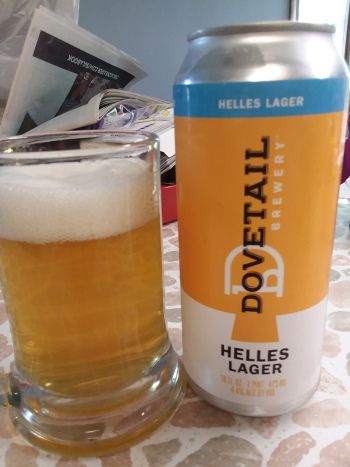
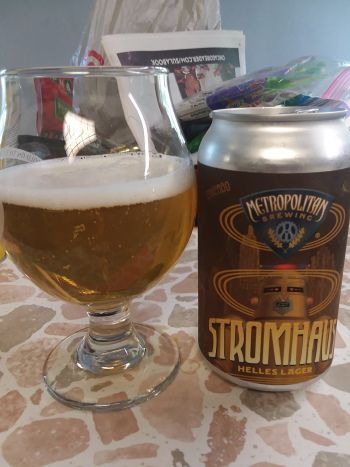
On a summer trek to Chicago I picked up Helles by Dovetail and Metropolitan, Windy City breweries both.


Helles is a fairly rare style these days for Wisconsin breweries, as far as I can tell. Capital stopped brewing their Bavarian Lager in 2010, or thereabouts and its replacement, Lake House, just isn't the same to my taste as it lacks the toasty malt flavor. Wisconsin Brewing Company had one called Ol' Reliable that went the way of the dodo. I see one from various breweries every so often but they generally taste like the amateur zymurgological experiments of a novice cicerone.

Two of our neighbors to the south each have a Helles that just oozes melanoidin-y goodness. These are the best Helleses I've had from American breweries and, if I didn't have to travel to buy them, they'd (mostly) obviate the need for those Paulaner Lager purchases I make. But, pursuant to #3 above, they do make for a nice treat when I go to Chicagoland.

Now onto the dark side.

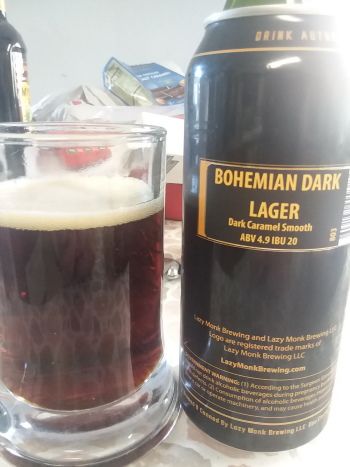
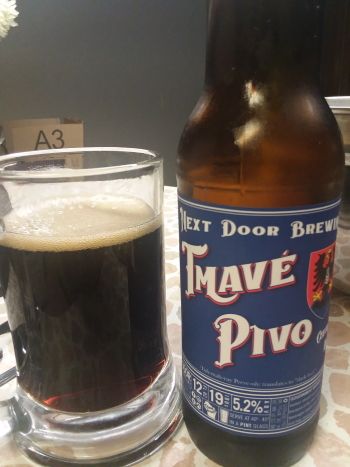
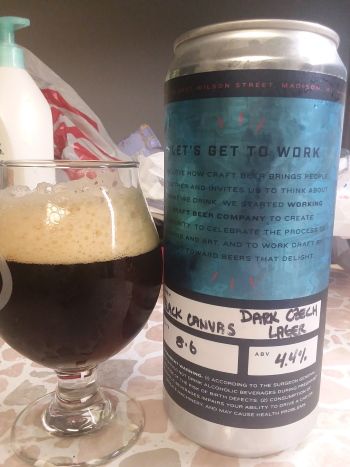
I cannot honestly claim to know much about Czech beer styles. And beyond a Bohemian or Czech-style pilsner, the Czech Republic, sadly, doesn't seem to inspire American brewers the way Carmen Miranda's hats do. Reading Evan Rail's descriptions of Czech brews makes me thirsty but those beers have been very much a mystery to me. This year, however, I got to sample three different breweries' takes on Tmavé Pivo, or Czech dark lager.


Now, whether any of these tasted like something I'll find in Bohemia when I visit, I cannot say. Leos Frank of Lazy Monk Brewing up in Eau Claire is Czech by birth so I have some reason to believe his brew has a measure of authenticity. And, truthfully, Next Door and Working Draft's piwos were very similar to Frank's with highly roasted malt flavors that ranged from coffee and chocolate to slightly burnt/fuliginous.

As a dark beer lover, this near cornucopia of piwos of a style new to me was sheer delight.

These brews stood out, not only for their sheer deliciousness, but also because they are rare or rarish styles. I certainly consumed other beers that were very delicious, but I have chosen to observe some brevity for this post.

And so that's my list proper. However, I do want to mention a couple runners up from smaller, lesser known breweries.


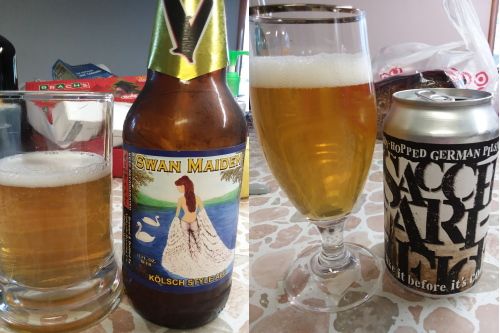
Valkyrie's Swan Maiden is a Kölsch-style beer and was really good. Located up in Dallas, brewmaster Randy Lee still brews on converted dairy equipment, to the best of my knowledge. When I visited the brewery there were no computers nor automated grain hoppers. Just Lee dumping sacks of grain into vats before grabbing a paddle to stir. Homebrewing writ large? Perhaps. But Swan Maiden was a wonderful beer with a delicate malt flavor and a light fruitiness from the yeast. Indeed, it was better than most examples of this style from American brewers who have much larger and more heavily automated facilities. Valkyrie's beers are a great bonus when I am in the northwest part of the state.

And then we have Saccharifice, a German Pilsner from Parched Eagle here in Madison. Brewmaster Jim Goronson has a small brewhouse in the basement of the building he rents that must surely qualify as nano. Lacking the space for extended lagering, Goronson still managed to produce a really good pils with a light malt touch accented by the fruity flavors of Hüll Melon and Mandarina Bavaria hops. The fruit taste is not overpowering and there's still some bitterness to be had.

(My podcasting partner and I interviewed Jim and you can find that episode here.)

There are some of my highlights of 2020. 2021 begins soon and we shall see what it brings. I predict lots of alfresco quaffing welcome in the spring.

25 July, 2016

It's All Greek to Me: Westporter Weisse by Parched Eagle Brewpub


Last month when I stopped in at the Parched Eagle Brewpub to try out their ESB, proprietor Jim Goronson was putting the finishing touches on a Berliner Weisse. It took me a few weeks but I eventually made a return trek to try out the bier which had been christened Westporter Weisse.

Little did I know that day in June that Goronson was back in his brewhouse wielding Greek yoghurt. I guess this makes Westporter Weisse probiotic or some such thing. Apparently yoghurt is blessed with multiple strains of lactobacillus, the bacteria that gives the Berliner Weisse (and other sour brews), their distinct citrusy tartness. With Athens Gyros next door to his building, Greek yoghurt must have been a no-brainer for Jim.

While I neglected to ask him exactly how he soured his bier, my understanding is that you put a dash of yoghurt into some warm wort which is the lacto equivalent of the back seat of a car - an ideal breeding ground for little critters. After a honeymoon of a few days at the right temperature, you have a colony of lactobacillus ready and waiting for the right kettle souring opportunity.

When I received my pint of Westporter, I was surprised at how turbid it was. The brew looked like one of those New England eyepahs that I hear are taking the world by storm. This is stuff looked like a whiteout in a glass. Well, except it was light yellow. The small white head didn't stick around very long and I was unable to see through the lemon haze to check on effervescence.

Things returned to normality as my nose hovered over the glass taking in wheat and sourness. The sour smell was lacking the usual lemon bit at first but it became more citrusy as the bier warmed. While the mildewy, wet blanket aroma of brettanomyces yeast has a long history with the Berliner Weisse, none was introduced here. And so some strain of lactobacillus was responsible for the faint, yet very pleasant, funky smell here.

While Destihl's Berliner Weisse has a lock on the Best Beer for Making Voltaic Piles category, Westporter has a good, firm tartness. Cold, the tartness flies solo but is joined by the expected lemon-citrus taste as the bier warms. The wheat poked through a little bit as did a mineral water flavor but I didn't taste much carbonation.

The tartness slowly faded on the finish and left my mouth with a slight citrus tang and the aforementioned mineral tastes. Schaumhaftvermoegen consisted of a few scattered spots of foam.

Key to enjoying a Westerporter Weisse is letting the bier warm up a tad so that the lemon scent and taste from the bacteria comes through to really bring the tartness to life. It falls in the middle of the pack as far as the acidic taste and sourness goes. It won't dissolve metal but it may be something of a challenge for those new to sour brews. (This can be remediated with the strawberry syrup on offer at the bar.) Westporter has a light body perfect for this heatwave – it's only; 3.5% A.B.V. - but I wish it had more carbonation. There's also a mineral aftertaste that, although not strong, challenged my tastebuds to figure out what to make of it. It seemed more out of place than bad tasting.

All in all, not bad. Westporter Weisse was, to the best of my knowledge, the first beer I've had soured using yoghurt and it'll take more tasting to figure out if the process lends anything unique to a brew.

Junk food tasting: Keep the Greek theme going. With a Westporter Weisse in one hand, put a pile of Shearer's Rosemary and Feta Kettle Chips in the other. For dessert, pair Westporter with a Hostess Greek Yogurt Swirl cake.

05 June, 2016

Go to Westport young man and drink up the Grainne's: Grainne's Special Bitter by Parched Eagle Brewpub


Not long after having a flat, warm, and very tasty ESB out at Wisconsin Brewing Company, I noticed that the Parched Eagle Brewpub in Westport also had an ESB on tap – Grainne's Special Bitter. How fortuitous! A fine opportunity to expand my extremely limited ESB horizons.

The Dulcinea and I were rather hungry so we stopped at Athens Gyros next door for some victuals before visiting the brewpub. We both had chicken souvlaki and I discovered that proprietor Gus Kyriakopoulos and his minions do not skimp on onion. I think they have figured out how to overcome Van der Waals force and fit a whole onion in a single piece of pita bread and yet leave room for a generous portions of tomato and chicken.

Having filled our bellies, we moseyed next door. Proprietor Jim Goronson was there training a new minion. Soon enough I had a pint of Grainne's Special Bitter before me. I neglected to ask who Grainne is or was and it's a mystery to this day...

Whoever this person is or was, their eponymous ESB was a light copper hue and clear. My pour had a small white head which was gone in a flash. I should note that the beer was served from a regular tap and not a beer engine as was WBC's ESB. However, Grainne's was put on tap on a beer engine at The Malt House.

The aroma was quite inviting with caramel and estery banana scents wafting up my nostrils. Still, it was odd not to smell any hops. Does eating a lot of raw onion mess up one's ability to smell hops or some such thing?

Despite having a fondness for the dunkles und schwarzbier and thusly knowing full well that a beer's color doesn't necessarily correspond to its body, I think I took my first sip of Grainne's thinking it would have a fair bit of heft to it. I mean, I saw the big board and it listed the brew at 7%. But it turned out to be surprisingly nimble on the tongue with a medium-light body. Fruitiness came first with the banana from the aroma making a return engagement. There was also clove, which was strange. I later asked someone who knows much more about beer than I ever will and was told that this flavor was not to style.

This is not to say, however, that it tasted bad. The clove was not very strong and certainly didn't interfere with the other tastes here that are more "proper" for an ESB. For instance, there was some toffee as well as a bready flavor from the malt. While MIA from my nose, my tongue got to enjoy a prominent hoppy bitterness which tasted a lot like grass with some black pepper thrown in for good measure.

At the finish the malt flavors were off like a prom dress leaving a light fruity taste and the clove to duke it out with the hops. And the hops won hands down with their grass-pepper 1-2 punch accompanied by a healthy bitterness which made for a rather dry finale.

As I noted above, my pint of Grainne's was served from a regular tap so it was cold. It really benefited from warming up as this brought out the hops which had a grassy flavor that I really enjoyed. One thing about the ESB that appeals to me is that it does this malt balancing act where you have sweet toffee or caramel flavors as well as more savory bread-like ones. Grainne's did a nice job of this, to my taste. Clove be damned! This was a tasty beer.

Junk food pairing: Crisps! Pair Grainne's Special Bitter with a bag of Herr's Steak & Worcestershire potato chips.