14 December, 2023
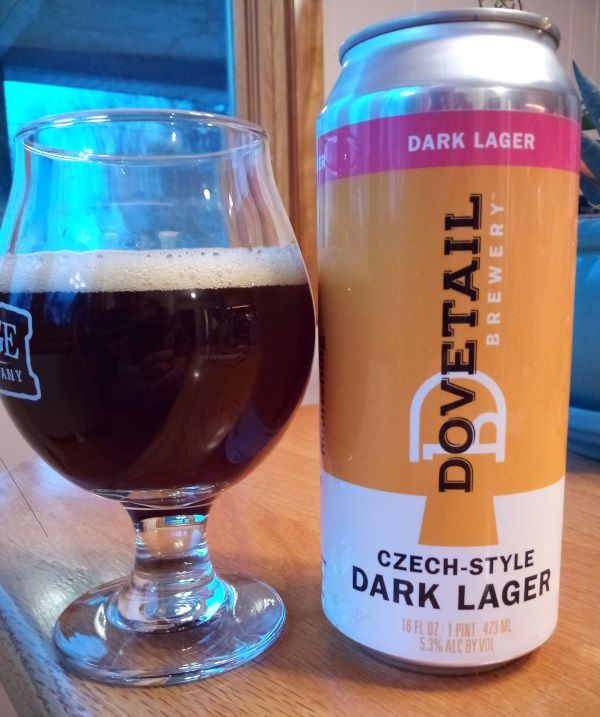
Another Ravenswood Brewery Morning: Czech-Style Dark Lager by Dovetail Brewery
27 April, 2022
Doing the Numbers: Musical Couches by Starkweather Brewing Company, et al
On a Saturday afternoon last month, I made my initial visit to Starkweather Brewing. It was about 12:15, methinks, so the place had only been open for a quarter of an hour. Yet the bar area had zero empty seats while the other part of the brewpub with the larger communal tables had a smattering of folks enjoying a cold one, perhaps even carousing. Despite having changed owners and gotten a new name, the tavern at 2439 Atwood Avenue seems to have retained its neighborhood vibe.
Last summer it was still home to Next Door Brewing but the pandemic and a desire to spend more time with their families nudged the owners into accepting an offer for the business. Peter Schroder, who used to brew at One Barrel down the street, amongst other places, and his partners Tom McVary, Michael Chronister, and Tom Gosse bought out Next Door and rechristened the joint Starkweather Brewing Company.
Starkweather, named after the nearby creek, is my local brewpub so I was excited to hear of its opening which was on 10 February, if memory serves. The initial beer list was posted online and it was both impressive and worrying simultaneously. Impressive in that there were 15-20 beers on it. Worrying in that I could have been looking at a case of quantity over quality. I suppose Schroder had time to blow waiting on walls to be painted and bureaucrats to approve licenses so why not brew? Still, it came across as an attempt to dazzle with the sheer number of offerings.
Hell, maybe Schroder is a beer demigod with 18/00 brewing skills and they were all top notch. But I'd feel more confident if there were 4 or 5 brews, a more reasonable number of styles for someone to master. Heck, maybe most folks are content to be dazzled by a lengthy beer list and brews that are simply good enough. But I'm not a brewpub owner.
Despite some skepticism, I went to Starkweather excited to try their rye brown ale because, well, rye is a very tasty grain and tasty grains make for tasty beers. This would be the third or fourth rye beer I've had this year. A bumper crop! In addition, Starkweather is my local brewery. I want delicious rye beers to be available a healthy walk, short bike ride, or shorter bus ride away.
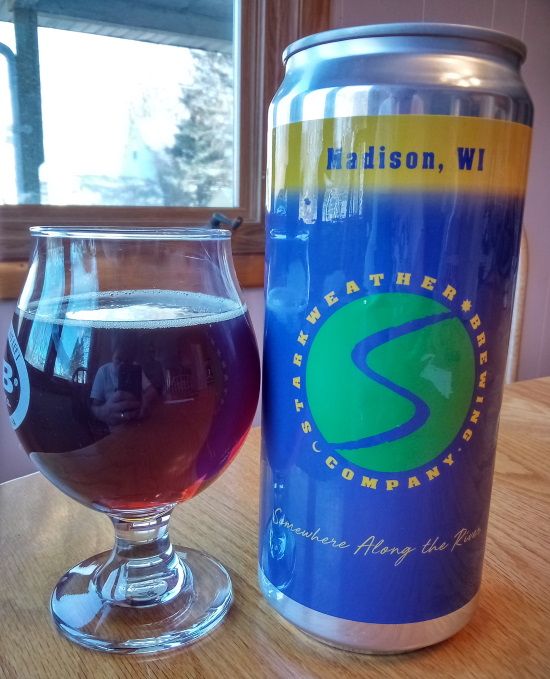
The rye brown ale is called Musical Couches. For this brew, Starkweather collaborated with not only the former occupants of the brewhouse, Next Door, but also Adventure Club Brewing Company up in Bayfield which I'd never heard of until I read the beer's description.
This beer looked magnificent with a lovely clarity and a deep brownish red hue. My pour produced a small off-white patch of foam that was off in a hurry. I couldn't see any bubbles inside. It was sweetly scented with a berry-laced honey aroma being most prominent followed by a dash of caramel and a pinch of grassy hops.
A light body was accompanied by an equally delicate fizz. I tasted berry and a little roasty grain on my first couple sips. Subsequent quaffing revealed traces of milk chocolate and my precious earthy rye. That berry-like taste faded shortly after swallowing leaving behind a mild dose of herbal hops that provided a modicum of dryness. A vaguely minty taste settled on my tongue as well.
While Musical Couches looks great, I found that it tasted watery with too much of that berry flavor. Maybe it's me because it seems like I am tasting that flavor a lot lately. Is my palate to blame? Is there a certain malt variety that's readily available in these days of shortages that's going around? I love the hops here but this beer tasted like a mess to me otherwise.
It looks like there's been a little turnover on their beer menu so I hope to try another Starkweather flavor soon.
Junk food pairing: as I type, Starkweather's kitchen is not yet open so, if you're drinking a Musical Couches there, run down the street to the gas station and grab a bag of Turtle Flavored Chex Mix.
14 June, 2021
It's Not Just All Windmills and Tulips Over There: Dutch Kuit by Next Door Brewing
In his paper "'Ale for an Englishman is a natural drink':
the Dutch and the origins of beer brewing in late medieval England", Milan
Pajic argues that the Dutch introduced beer to the English back in the middle
of the 14th century. This doesn't mean that the Brits at that time
weren't having piss ups at their local Ye Olde Taverns but rather that they
were doing so with copious amounts of ale, the fermented grain drink without hops.
I'd bet this new-fangled brew was welcomed heartily as the country was
recovering from The Great Mortality which had abated in late 1349. No doubt they were drinking a lot to celebrate their survival (and newly rising wages) but also to mourn the loss of roughly a couple million of their compatriots.
Today Dutch beer usually means Heineken for most Americans but back then they were
brewing up ever increasing amounts of Kuit (or Koyt, Kuyt, Keut or Keute). Within
a century the Hanseatic League was doing brisk business shipping it outside of its homeland. Kuit is
notable for the large amount of oats used in brewing it. Oats were a very
popular beer ingredient back then. They grew well in northern Europe, for
one thing. Perhaps the availability of other grains was shakier 700 years ago.
A drought may have put the barley supply in doubt during some years or the bakers guilds may have
had really good lobbyists resulting in laws dictating that most wheat must be
made into bread.
I don't really know; I am just spitballin' here. But I have
made oatmeal before and can only imagine that brewing with oats is a real pain
the ass. You don't see them listed on cans and bottles all that much here today. When they are, it's usually on the labels of stouts where they give the beer a rich smoothness because of the oaty proteins and/or starches. However, it seems that oats are used more often than their appearance in oatmeal stouts would lead one to believe. The proteins in oats are highly coveted for use in NE IPAs as they help give the beer it's murky appearance. If you're brewing Kuit with 40-50% oats, how the heck
do you keep it from becoming porridge? Some older brews had even more oats –
like 80%. That's a helluva lot of stirring. And cursing too, no doubt.
My guess is that this is one, if not the main, reason why
modern day craft brewers have been slow to resurrect the Kuit. You've gotta spend
all day wringing beer out of oatmeal and then clean up the mess so that another
batch of IPA is in the hopper before the dawn.
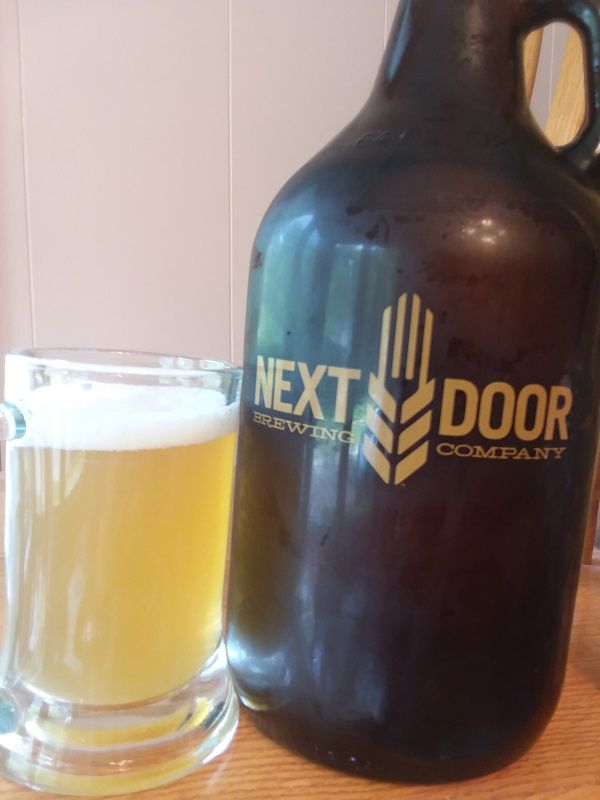
Well, thankfully some masochist at Next Door Brewing decided to try their hand at brewing a Kuit. It became available in the latter half of May, methinks. And of course I had to try this take on a historical brew. Having never encountered a Kuit before - or at least having no recollection of it if I had - I wasn't sure what to expect beyond it tasting heavily of grain. Oh, and I figured it had a boat load of oats in it so it'd be rich and smooth. But we're talking a brew from the Middle Ages here. Likely it would be dark and smoky and have bits of insects in it with a couple newt eyes as well, right?
24 March, 2021
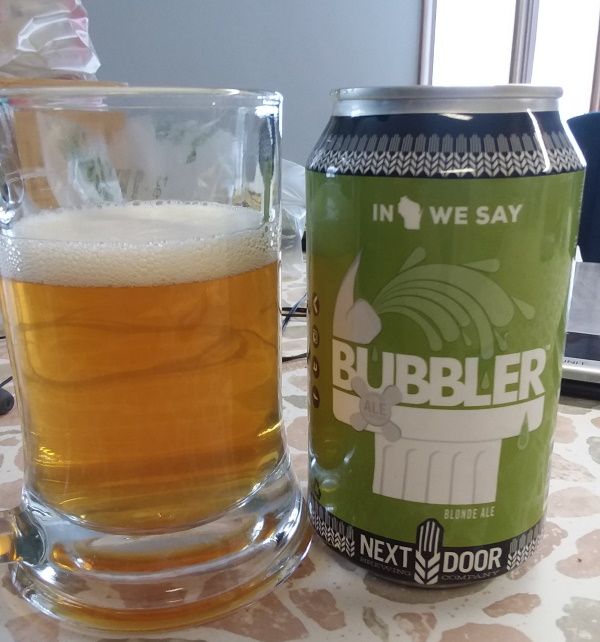
My Blonde Period: Bubbler by Next Door Brewing
There are times when I get the feeling that the blonde ale gets a bad rap. Sometimes labeled Kölsch-style, golden ale, or summer ale, it is a frequent denizen of craft brewery taprooms. But blonde ales are dismissed too often as the beer for non-beer drinkers who find themselves stuck at a brewpub or for macro lager drinkers who end up at a Bud-free joint with friends who are there to get lost in a juicy haze.
You taste some malt, a little fruitiness from the yeast, and
some hops with a bit of bitterness. There's balance with no flavor dominating
the others and it's light, not only to the eye, but also on the tongue. While I
am sure that some American craft brewers somewhere have barrel aged them and even
made them dark so as to have a black blonde ale, they generally seem to be left
to themselves, thankfully. However, I do recall Vintage Brewing here in Madison
steeping sumac in their Sister Golden several years back and Sam Adams has used/uses
Grains of Paradise in their Summer Ale so the style is not additive proof by
any means.
This time around we have Bubbler from Next Door Brewing.
While not next door, Next Door is only about a mile and half from my house so
it is my local brewery. (Well, until that person in my dreams opens a zoigl
brewery when the Voit Farm property is developed and it assumes the title.) I
don't frequent Next Door that often but they have always had good food when
I've eaten there and you can take your meal in the company of total strangers
as they offer communal seating. I have enjoyed the beers of theirs I've had and
I like to go there during the summer to order a Berliner Weisse sampler with a
variety of syrups. I'm a Waldmeister man at heart, but a little mango
and whatever the blue flavor is makes for a nice summer treat.
About five years ago there was a trio of Wisconsin brewed
beers called "Bubbler", including this one. Considering the
Wisconsinness of the term, I am surprised it took so long for the name to appear.
Bubbler is a classic example of regional English. It refers
to a drinking fountain that has the water bubble up from a spout instead of
shoot out towards a drain. Having grown up in Chicago, I always said drinking
fountain as opposed to the decorative kind like Buckingham Fountain down in
Grant Park. "Bubbler" is a Milwaukee-area word owing to Kohler fountains
(made in Kohler, WI, just north of Milwaukee) that bubbled the water and
Milwaukeeans taking a shine to the word.
And so at one time we had a blonde ale from tiny Plymouth Brewing, a hefeweizen from New Glarus Brewing, and Next Door's blonde ale all
having this name. I have no idea how that shook out trademark-wise but I
haven't seen a New Glarus Bubbler in a while, Plymouth either doesn't can/bottle
its beer or distributes in a very small area, and Next Door's Bubbler is a
common sight in beer coolers around town.
With smells of biscuit and straw, it was not totally unlike,
say, a Miller High Life. My nose also caught a bit of fruit – like apricot.
In a 180 from my last beer review, Grainne's Special Bitter, Bubbler had a firm
fizz to it. I tasted cracker and a touch of white raisin sweetness. It had a
smoothness to it as well and I caught some berry in there on subsequent sips. A
grassy and slightly spicy bitterness came out on the finish which was fairly
dry.
Of my recent encounters with blonde ales, I must admit my
preference for Bubbler. It's got a really nice cracker taste with restrained
sweetness and fruitiness. The carbonation and judicious hopping keep things on
the dry and crisp side but not overly so. Balance is the watchword. There's simply
a tasty harmony amongst the malt, hops, and yeast here. A little bit of
everything but never too much.
Junk food pairing: Bubbler will pair well with Ruffles Poutine Potato Chips.
31 December, 2020
2020: A Year in Beer
I drank many beers that I really enjoyed over the past 12
months. Certain brews, such as Tippy Toboggan, a Roggenbier by Vintage Brewing here in Madison,
would make my list every year. It's just that tasty. I have sung its praises
here previously so, while I drank my fill this year, I excluded it from the
list. Looking back at the beers I drank from 2020, I see many that I've had in
years past. They're good so I return to them. I even had a Sierra Nevada Pale
Ale for the first time in ages.
New Glarus' Coffee Stout, one of, if not the, first of its
kind remained highly tasty in 2020 as did Rocky's Revenge from Tyranena which
is one of the first barrel aged beers I ever had and it remains a favorite. As
a lover of smoked beers, I have to say Karben4's smoked porter, Night Call, is
really great even if it is merely lightly smoked. I could go on in this vein
for a while. But I won't.
Before I get to the list, let me add a few random
observations:
1) The only Madison-area brewery that went out of business
this year (due to Covid) was Rockhound. (To my knowledge, anyway.) I'd been there only a few times but I enjoyed their hefeweizen and thought they had good
food. R.I.P.
2) Sprecher's Maibock and Oktoberfest stand out from those
of other Wisconsin breweries because they have wonderful bready flavors instead
of letting malt sweetness run amok. The new owners don't appear to have changed
things too much out there in Glendale but they have brewed an NEIPA and it looks
like they're continuing Sprecher's move towards being a beverage company as opposed
to a brewery.
3) Breweries in the northern half of Wisconsin get too
little coverage down here in the southern part of the state. While it's to be
expected that they don't dominate beer chatter in the 608, it nevertheless
sometimes feels like there are no indigenous breweries outside of the Milwaukee
and Madison areas. To be fair, some joints up nort have limited or no distribution
here. And I'm ambivalent about this. On one hand, I'd love to have some more boreal
beers available here on Madison shelves. On the other, it's nice to be
presented with something new and different when I travel north.
Now, on with the show.
I have both kinds of beer on my list: pale and dark. We will start
with the former.
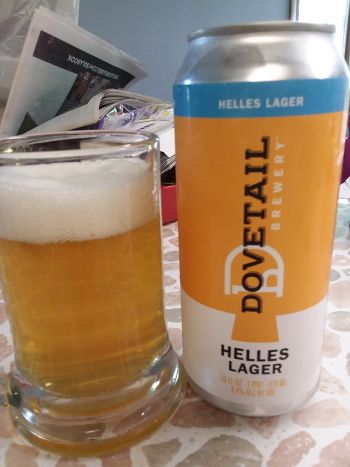
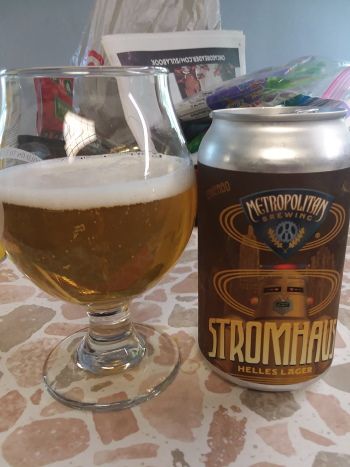
On a summer trek to Chicago I picked up Helles by Dovetail
and Metropolitan, Windy City breweries both.
Two of our neighbors to the south each have a Helles that just
oozes melanoidin-y goodness. These are the best Helleses I've had from American
breweries and, if I didn't have to travel to buy them, they'd (mostly) obviate
the need for those Paulaner Lager purchases I make. But, pursuant to #3 above,
they do make for a nice treat when I go to Chicagoland.
Now onto the dark side.
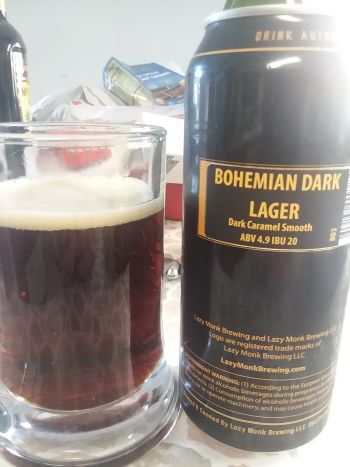
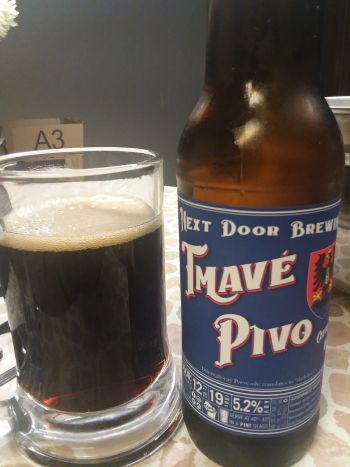
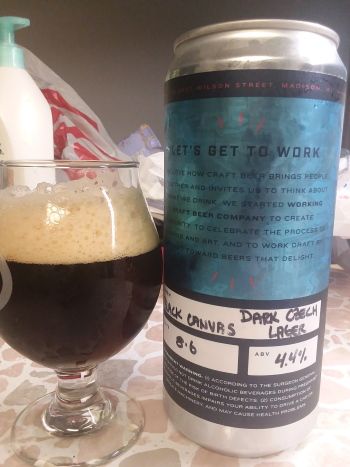
I cannot honestly claim to know much about Czech beer
styles. And beyond a Bohemian or Czech-style pilsner, the Czech Republic, sadly,
doesn't seem to inspire American brewers the way Carmen Miranda's hats do. Reading Evan Rail's descriptions of Czech brews makes me
thirsty but those beers have been very much a mystery to me. This year,
however, I got to sample three different breweries' takes on Tmavé Pivo, or
Czech dark lager.
As a dark beer lover, this near cornucopia of piwos of a style
new to me was sheer delight.
These brews stood out, not only for their sheer deliciousness,
but also because they are rare or rarish styles. I certainly consumed other
beers that were very delicious, but I have chosen to observe some brevity for this post.
And so that's my list proper. However, I do want to mention
a couple runners up from smaller, lesser known breweries.
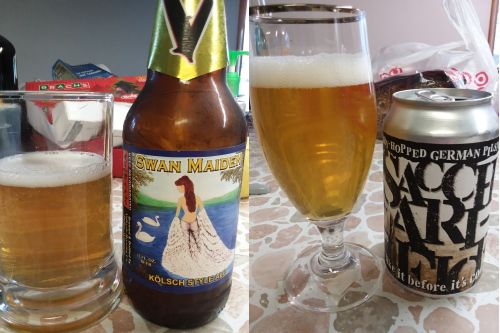
And then we have Saccharifice, a German Pilsner from Parched Eagle here in Madison. Brewmaster Jim Goronson has a small brewhouse in the
basement of the building he rents that must surely qualify as nano. Lacking the
space for extended lagering, Goronson still managed to produce a really good
pils with a light malt touch accented by the fruity flavors of Hüll Melon and
Mandarina Bavaria hops. The fruit taste is not overpowering and there's still
some bitterness to be had.
(My podcasting partner and I interviewed Jim and you can find that episode here.)
There are some of my highlights of 2020. 2021 begins soon and we shall see what it brings. I predict lots of alfresco quaffing welcome in the spring.
10 April, 2016
She Comes in Colors Everywhere: Berliner Weisse from Next Door Brewing Company (With Bonus Content!)
The wife and I made a trek over to Next Door Brewing over the weekend. I needed a beer after agreeing to bid rather more than I had wanted on a house. Id' heard tell that there was a Berliner Weisse available along with a trio of flavored syrups. It was barely above freezing outside so it was not exactly optimal weather for a light, low-alcohol, high-quaffability brew but occasio praeceps.
At its most popular, there were reputed to be several hundred breweries making Berliner Weisse. But the ever-increasing popularity of lagers, the spread of the formerly Bavarian-only Reinheitsgebot, and various wars led to the style's decline. Today I believe there are only one or two larger breweries still making the bier along with a smattering of microbreweries doing their level best to revive the indigenous style.
I have read that the practice of adding a shot of syrup ("mit Schuss") originated sometime during the bier's heyday, the 19th century, and was common by 1900. Traditionally drinkers are given the choice between raspberry (Himbeere) or woodruff (Waldmeister). Next Door, however, offers raspberry, mango, and Blue Curaçao. While there, we looked up just what the heck Blue Curaçao was and discovered that it was the flavor of the peel of the laraha, a citrus fruit found on the island of Curaçao. Why the liqueur is colored blue remains a mystery.
I ordered a flight of four samples: the straight Berliner Weisse and one each of every syrup.
The unadulterated bier was a hazy light yellow. There was no head but I could see a goodly number of bubbles inside the glass. Taking a whiff, I caught the expected citrus sourness characteristic of the Lactobacillus-laced style. Unexpected, however, was a rather strong floral scent that was slightly sweet. I was reminded of rose hip jelly. The beer menu noted that the bier was dry-hopped with Huell Melon hops, a newer German variety, and I presume that was what I was smelling.
That sweet floral scent was also found in the flavor along with a strong lactic tartness which gave a nice acidulousness. Despite a big hop flavor, the bier was not bitter and I could discern little grain flavor. (I'm not sure how much wheat Next Door used.) But it had a nice light body that made me yearn for a summer day.
Mit Schuss: Raspberry. A nice light red color and the bier tasted like fresh raspberry juice. The syrup definitely added a touch of sweetness but it also lent a really nice tart flavor as well. All in all, it didn't dull the bier's natural tartness very much and instead added more. Well played, Next Door. That floral hop flavor lingered in the background and complemented the fruitiness very well.
Mit Schuss: Mango. Hard to tell that it had any syrup in it by sight as it looked very similar to the unadulterated bier. Again, it had a nice fresh, fruity flavor but this was sweeter than the raspberry. But it had a somewhat restrained sweetness; this did not taste like sugar water by any means. The mango worked really well with the floral hop flavor again.
Mit Schuss: Blue Curaçao. It had that turquoise hue that made it look like mouthwash. This syrup was much more subdued than the other two. The bitter orange flavor was really mellow while the syrup generally was not very sweet. I really enjoyed the gentle bitterness here. This one seemed to dull the floral hop flavor more than the others but it was still delightfully present.
The addition of Huell Melon was a stroke of genius. I thoroughly enjoyed the sweet floral aroma and flavor it provided. It added another dimension to the traditionally light, tart, and fizzy bier. (It comes in at 3.8% A.B.V.) I adored the fresh fruit flavors of the syrups as well as their restrained sweetness. Each added something different to the mix – tartness, a heightened (yet still fairly restrained) sweetness, and bitterness. I am really looking forward to the warmer weather as Next Door promises a rotating selection of syrups. Personally I am keen on tasting their take on woodruff syrup.
Junk food pairing: I recommend a hearty plate of poutine with your Berliner Weisse from Next Door. It's tartness and acidity make for a nice contrast to the food's smooth fattiness as will any fruit syrup you choose.
BONUS CONTENT!!
Next Door gets credit from me for serving half-pints. This allows for more sampling and accommodates those times when a full beer is too much. Less waste. And so, in addition to my Berliner Weisse flight, I also got to check out Pilot Pils #2.
It featured New Zealand Moteuka hops which lent a rather nice citrus flavor and bitterness. I felt it had the hoppiness more like a Czech pils than a German one but it was not as hoppy as a full-on version of the former. It had a nice bready flavor but felt that it should have been more like cracker. It just tasted heavier than I expect from a pils. And it needed more carbonation. Not many bubbles to be found and precious little of the fizzy taste. It should have been a bit drier, to my taste. On the other hand, I really liked the hops and the level of hoppiness here.
EVEN MORE BONUS CONTENT!!
My wife ordered a pint of the Märzen and I had a sip. It was tasty. Very tasty indeed. I really liked the malt flavor which was nice'n'toasty, full of Maillard reactiony goodness.
31 July, 2015
MIA - NaCl and Coriandrum sativum: Egon's Revenge from Next Door Brewing
I emailed Next Door Brewing a few months ago asking if they were going to brew Egon's Revenge again this year. Head Brewer Bryan Kreiter replied that he was intent on doing so and that he may switch from the use of acidulated malt to create the tartness to actually culturing some bacteria from raw grain for the job. This was good news indeed as I thoroughly enjoyed last year's batch. It was a bit heavier than I'd expect from a gose – an imperial gose, perhaps? – but it was refreshing and had goodly amounts of salt and coriander. A very tasty brew.
The gose seems to be gaining in popularity these days. Leipziger Gose is available at Riley's these days in small bottles. (I'm not sure if they are .331 liter or 12 ounces.) And U.S. craft brewers are brewing it more often. Dexter's had some Widmer Brothers Marionberry Hibiscus Gose a few years back which was exceptionally tasty and I've seen cans of gose by Destihl and Anderson Valley on Madison shelves lately. Sure, the IPA is not fearful of the competition but the gose is much more prominent now than it was just a few years ago.
When I finally saw that Egon's Revenge was again on tap I made my way to Next Door with all due haste and purchased a growler. How did this year's batch compare to last year's?
This year's Egon's Revenge pours a dark blond. (It's a beauty, eh.) Because of the wheat the beer is hazy. I believe that gose is traditionally unfiltered as well. My pour produced a lovely big, pillowy white head which lasted quite a while. There was a fair amount of effervescence with a goodly number of bubbles heading upwards.
As expected, a lemony tartness was the first thing that caught my nose. This was joined by a bit of grain or biscuit aroma and just the faintest hint of some kind of spiciness which I took to be coriander since it didn't resemble a Noble hop. It didn't have that grassy-herbal component. Also unsurprising was that the tartness was the first thing that jumped out at my tongue. No lemon taste, though, like one would get with lactic bacteria in, say, a Berliner Weisse. I thought that this year's batch was more tart than last year's which I appreciated. ER has a nice smooth medium-light body which means that I was able to catch plenty of grainy notes plus some sweeter notes akin to corn (not creamed corn). There may have been a hint of salinity in there but I suspect it might have been wishful thinking. Last year's batch was so wonderful because, unlike the ER from 2013, I could taste the salt and coriander. I struggled but could taste no coriander and I'll say there was a 50/50 chance of a patina of salt. What a disappointment.
Egon's Revenge finished smoothly with a bit of dryness from a smidge of herbal hoppiness. I believe it has somewhere in the neighborhood of 10 I.B.U.s.
What a let down. I was looking forward to some saline-coriander goodness but struggled and failed to taste it***. (See comments below.) Even as the beer warmed I couldn’t taste it. Tis a shame. Still, ER clocks in at 4.6% A.B.V. is rather light, and has some fine tartness. Ergo it really is quite refreshing. Disappointing but refreshing. Like a Berliner Weisse, it's not uncommon to drink it mit Schuss (with syrup) in Germany. While there will be no tear in my beer, there will probably be some Waldmeister in there.
Junk food pairing: Quaff your stange of Egon's Revenge with a bowl of chiwda which is Indian snack mix. This will likely have the missing coriander and salt and be very tasty to boot.
31 August, 2013
Next Door Brewing Is Now Fully Armed and Operational
Unfortunately, The D forgot her camera so no photos.
Next Door's layout was very open and spacious. The bar and dining areas are separate yet connected via an expansive opening in the wall. It was well-populated and the brewhouse was off of the bar's seating area. Communal seating is the order of the day in the dining room with a couple long tables and one very large raised one. There were also a couple smaller tables for those parties not feeling particularly social or perhaps not wanting to inflict a small child onto undeserving strangers.
We were seating at the raised table and were soon joined by a friendly older couple. The ladies were denizens of the neighborhood and keen to check out the newest addition to the area. The crowd here was mostly older and seemed to be comprised of locals. There was also a smattering of families with young children. The D remarked on how different the atmosphere was in contrast to that of Karben4's opening night. A lot fewer 20 and 30-somethings looking to overdose on hops. There was no music playing and televisions were locked in cabinets awaiting a sporting event. Less of a bacchanalia vibe and more of a sense of people wanting to relax and usher out the work week.
We had originally planned to sample Next Door's beer and then head out for a repeat performance at La Taguara but opted to sample the gastro-grub. I'm a complete sucker for onion soup and so ordered the white version on offer. It was a bit lighter than the more familiar version made with beef stock but still tasty. The D began her meal with the sauerkraut sausage balls which were comprised of pork sausage and Stalzy's kraut. The nuggets of porcine goodness were then breaded with what appeared to be panko and then fried. Very tasty stuff. The kraut added just a touch of tartness.
The pork shoulder sandwich had an Asian twist with kimchi sauce while the chicken sandwich looked to North Africa for inspiration with housemade harissa. Both were delicious. For dessert Next Door offers Calliope Ice Cream and we went with the Hot Peanut Butter which was tastilicious.
The menu isn't staggeringly huge by any means but is goodly-sized and offers a fair variety of dishes. Bonus points for using dark meat chicken in the Chicken and Tarragon salad. Samara Kalk Derby will no doubt be disappointed. More bonus points for not offering pizza or deep-fried chicken strips.
The beer list featured four brews: a cream ale with oats, a pale ale, a mild, and a golden ale. The D went with Wilbur!, the cream ale, while I had, Les, the mild. Wilbur! was similar to Spotted Cow although a bit smoother and less fruity. Les was a real treat. Smooth and malt forward yet with English hops accenting the whole affair. I was impressed because A) it was a wonderful change of pace to taste earthier English hop varieties instead of the ubiquitous citrus/pine resin flavors in fashion and B) it was a true session beer at 3.8% ABV, if memory serves. It was a hot day, I was eating a meal, and Les was not bashing me across the tongue clamoring for attention. Brewmaster Keith Symonds gets kudos from me for not coming out of the gate with a beer menu that is the equivalent of a Zak Snyder movie. There were no C-hops lying in wait to drown you in alpha acids nor was there a Belgian quintuple Pan Galactic Gargle Blaster. Instead the brews were light and easy going - wholly appropriate for the weather - and complemented the communal ethos of the place which Symonds says is about chatting with people you don't know. Who wants to sit next to and try to strike up a conversation with someone getting shit-faced after a few sips of bourbon barrel imperial barleywine?
From food to beer to ambience, Next Door is carving out its own niche in the both the food and beer scenes. With opening day apparently having gone off without too many problems, we can now look forward to finding out how well breastfeeding fits in with the communal atmosphere.