21 February, 2008

Up and Ride to the Burpee

I awoke from my slumbers on Monday morning quite happy because my girlfriend was lying next to me on a huge bed and I didn't have to go to work. Instead the plan was to spend some time at the Burpee Museum of Natural History. I'd been meaning to make a visit for a while. About six and a half years ago my friend Jeffrey informed me that his father had discovered a dinosaur out in Montana and that it would be put on display at the Burpee. I had to go see.


The Burpee is on Main Street right on the Rock River. It is a beautiful building as you can see. While dwarfed by The Field Museum in Chicago, I found the Burpee to be very cozy and a very interesting place. The unimposing façade betrays the rather large space inside which holds three levels of exhibits. It's not huge but you won't see everything in 10 minutes either. We spent about three hours there and began the afternoon on the first floor by learning that Rockford was once underneath the Ordovician Sea and by looking at fossils including this fish…


…and this rather eldritch looking thing which rather resembled a baby Old One.


Unfortunately my photos of the coprolites (fossilized feces) aren't in focus. And no, there weren't any 5-foot mounds of hardened dinosaur poop on display. Nevertheless, I was awestruck by looking at the remains of creatures that lived millions of years ago – long before our ancestors had decided that the Quaternary Age would be a good time to improve their posture for a night of hunting and gathering on the plains. It was at this time as my imagination was roaring back to the Primordial Soup that The D revealed to me that she is a young earth Creationist type.


Moving along, we found a miniature replica of the skeletal system of an ancient sea creature. It was rather like a Terminator in that it had plate armor on the inside. The creature was vicious yet had no teeth. Instead the bits of the armor around the mouth were shaped like them. The description noted it was one bad-ass predator in its day and that it essentially ate whatever the hell it could get its mouth around. This last statement amused The D and found that it reminded her of me. Hence this portrait:


I remain unsure as to whether being compared to an ancient eating machine 25 feet in length is a sign of her love or whether I should take offense.

The exhibit on Jane was quite nice. The area we entered had a video installation which featured a computerized reenactment of Jane's death. It is theorized that she was killed by a predator along a shoreline some 66 million years ago. I'm not sure how her death throes were recorded, but they were rather disturbing.


Jane's corpse laid there as the Cretaceous Period gave way to the Paleogene which, in turn, gave way to the Neogene. In the late Quaternary Age (i.e. – summer 2001) Jeffrey's father, Bill Harrison, a professor of Latin American Studies at Northern Illinois University, was working on his PhD in archeology when he took the highway to Hell Creek (Montana) to dig for bones. It was there and then that he and the rest of the team from the Burpee stumbled upon Jane.

Jane herself stands in the middle of the room surrounded by a fence which has a series of small but interactive video displays. Using a touch screen, you can learn about how a doctor at the nearby hospital was enlisted to determine what a mysterious bulbous outcrop on one of Jane's bones was. If memory serves, they recovered about 50% of the skeleton which, to this non-archeologist, is amazing. As Jane was being pieced together, there was a debate as to whether she was a tweener T.rex or a nanotyrannus which is a genus similar to the T.rex but, for anyone not familiar with prefixes derived from Greek, smaller. A meticulous comparison was made and it was determined that Jane was the former. Regardless of species, she was much bigger than any homo sapiens sapiens. Here's a rendering of what her head looked like:


Whether or not she had a taste for long pig, I'd still rather not meet this visage in a back alley. A documentary about the discovery and identification of Jane called The Mystery Dinosaur was made and shown on cable (Science Channel, Discovery Channel) in 2006 and 2007. Presumably it will be re-run but I took the initiative and TiVo'd it. I've been waiting to visit the Burpee before watching it so let the viewing commence! Even if you don’t get a chance to watch it, you can watch a couple short videos at the museum about the discovery and how the remains were excavated.

Wandering past a mock-up of a Carboniferous Coal Forest, we ascended the stairs and went from paleontology to geology. This meant memories of grade school science came flooding back as I was reintroduced to the terms igneous, metamorphic, and sedimentary. Plus there were lots of neat rocks to look at.


There were also displays about this stuff:


Coal. I had no idea that Illinois had the "largest reserves of Bituminous coal in the world". (Bituminous is the mid-grade variety.) It had been a long, long time since I'd been to see the mineshaft at the Museum of Science and Industry.


Looking at the mannequin, I was reminded of the Uncle Tupelo version of the song "Coalminers" by Sarah Ogan Gunning:

Mining is the most dangerous work
in our land today
Plenty of dirty, slaving work
for very little pay


It also made me think of my great-grandfather, Kuzma. He and my great-grandmother, Parsaka, immigrated from Galicia which was, I believe, part of the Austro-Hungarian Empire at the time they came over. I presume they were part of Galicia's Great Economic Migration. They came here speaking Ruthenian, though Kuzma learned English while Parsaka did not. They eventually made their way to Buckner, Illinois where Kuzma worked as a coalminer. My great-grandparents had a boarder at their house named Theodore Urkovich and he too mined coal. Considering that there were 6 kids there as well, it must have been exceptionally crowded.

I stood there for a bit imagining what life must have been like for a great-grandfather whom I never met – what it must have been like for him to come to a new country and to dig coal to support his family.

The third floor of the Burpee is dedicated to the flora and fauna of Illinois as well as to the state's original Native American inhabitants. I realized that I had forgotten every bird call I ever learned while living in the country. Not that I knew many, but I could easily recognize a few common ones. But the exhibit on birds and their calls had me flummoxed. Pointing out that there are deer and squirrels living in northern Illinois isn't news so I'll move on to the Native American displays.

The first one I checked out noted the competing claims of how peoples got from what is Siberia today to Illinois. There was the old Bering Land Bridge theory but also a newer one which posits that those people sailed along its coast. Continuing, I learned about the Mississippian/Cahokian culture and that there were effigy mounds in Rockford, just down the river from the museum. Here you can see The D checking out a wigwam.


And what did they eat? Gourds, amongst other things.


There was also a dugout canoe which, to this 21st centurion, was incredibly small. Not a cat in hell's chance of me fitting in there. Part of it is because I am a typical overweight American but it's also because we are just bigger these days. I'm about the same height as Thomas Jefferson – around 6'2" – and he was a giant in his day. Me? I'm just about 3" taller than the average man. So I can only imagine just how much smaller than me the Illinois natives were.

The D loved this:


The owls are not what they seem…

On the way out we passed by The Shrunken Head with the Andy Warhol haircut.


Leaving the Burpee, The D got a hankering for custard so it was off to Culver's for a gourmet meal and the flavor of the day. I have to admit that my first visit to the Burpee left me mighty impressed. It was much larger than I thought it would be, had some neat interactive bits, and I found the emphasis on local history to be extremely interesting. Plus I got to see fossilized poop.

While I cannot pledge to make Rockford a yearly vacation site, I can see myself going back. The Burpee made for a fascinating few hours and, if there are kids around for the next trip, there are other sites to be seen such as the Discovery Center Museum. There is more to Rockford than can be seen from a quick breeze by it on the interstate.

Wandering Rockford on a Snowy Evening

Rockford, Illinois probably isn't at the top of any tourist's list of places to go. Nothing against the town, but it's always been a fairly nondescript city in my eyes that I drove through to get to Chicago or home from there. Thusly I was a bit surprised to enter the city limits and find that it had a population of around 150,000 which makes it the third largest city in the state. The population distribution of Illinois is very different than here in the Land of Cheese. In Wisconsin, we have about 5.5-6 million people with the two largest metro areas (Milwaukee and Madison) accounting for less than half of that. Illinois, on the other hand, has 12-13 million people with 9-10 million of them living in the Chicagoland area. Hence anything outside of the Chicago metro doesn't get much attention. Sure, Springfield and Champanabana do, but, generally, there's Chicago and then there's the rest of the state. And so I tend to think of areas outside of the city as being little burgs like Eau Claire.

The Dulcinea and I pulled into the hotel parking lot Sunday evening and checked into our room. After relaxing for a tad, we headed out for dinner. I discovered that Rockford had much in common with Madison. For instance, the interstate runs along Rockford's eastern perimeter as it does here. Does anyone know why the interstate runs so far from the center of Madison or Rockford? Granted, running it through downtown Madison would be highly impractical because of the lakes, but why so far away? Was the idea to encourage growth towards the freeway? Or perhaps to keep the noise and pollution away from the city?

Our hotel was next to the Highway 20 (State Street) exit and we took it west in search of food, bound and determined not to eat at a chain restaurant. This meant a fair amount of driving as the east side of Rockford was a disaster area of nothing but hotels, malls, parking lots, and chain stores & restaurants that stretched as far as the eye could see. It was just like area here where 151 and the interstate meet – a wasteland of malls where minimally-paid purveyors of fast food turn their eyes and backs upward from deep-fat fryers at the violet hour and head home. No Ionian white and gold to be had – just pre-fab big boxes.

As we approached the Rock River, nice old homes started appearing. I'd been to downtown Rockford several years ago to attend a show at the lovely Coronado Theater but didn’t take a grand tour of the area. We found it deserted that chilly Sunday night. The D was finicky but finally settled on this joint:


This is the Irish Rose Saloon. (Yes, I horked the photo from their website.) The place was absolutely gorgeous – a genuine saloon with pressed tin ceilings and lots of wood. I think the only thing that was missing was a duo of spittoons bookending the bar. By the door were some free papers and I grabbed copies of Rockford's alternative weekly, The Rock River Times as well as the latest Chicago Reader. Seeing the Reader there served to reinforce my notions of Chicago having great gravitas in Illinois. Here we were some 80 miles from the city yet its main alternative weekly was right in front of me. That being said, the cover of The Rock River Times featured a review of Richard Thompson's recent show at the Coronado.

The Irish Rose was a slightly upscale place with most entrees being around $13 and including a $25 rib eye. Our waiter was a nice gentleman who spoke just like Jim Belushi and even resembled him a little. The D ordered Chicken En Croute which had cheese and minced mushrooms tucked inside while I got the Chicken Breast Stuffed with Prosciutto & Chevre. Both were tasty although bits of the prosciutto were like shoe leather by the time they arrived at my table. Despite this and that the waiter had neglected to put in our order for a Fresh Tomato and Four Cheese focaccia hoolie on time for us to have it as an appetizer, our meal was tasty overall and it was nice to be able to support a locally-owned business.

Wandering out into the cold once more, we started our post-prandial trek with miles to go before we could sleep.

20 February, 2008

Total Eclipse of the Heart Moon

There is going to be a total lunar eclipse tonight. Unfortunately, I have to be at a meeting from around 7 until 9:30 so I'm not sure how much I'll actually get to see. I shall have to bring my camera to the meeting with me. I'll be up on a hill so I could get a decent view. Here's the skinny:


I think the eclipse presages Jupiter being in the 9th house which, in turn, leads to a harmonic convergence as Pluto deflects the energy from the Photon Belt due to arrive here on earth in 2012. Ergo I am going to win the lottery.

Brides and Evil Brothers

Last weekend The Dulcinea and I made our way south for the wedding of a cousin of mine. The ceremony and reception were in Des Plaines. With nearly 200 people in attendance, it provided the opportunity to see family new and old as well as for The D to plot against me with my brother. I wish I had a photo of the look on my mom's face when she saw my brother in a suit as the mixture of shock and delight was priceless. However much he says that I am the milkman's son, his claims are belied by our undeniable similarities. Among them are a common fondness for progressive rock (we have duetted to Genesis' "Squonk"), predilections for RPGs and things Cthulhu, and a shared taste for bacon that some might label preternatural. We also have similar sartorial inclinations, namely that our standard uniforms consist of jeans and t-shirts.


Consider the above photo. The D and I spent last Friday night at JC Penny with her playing the role of Patton and I but a shell-shocked soldier. The result was the outfit above. My brother's appearance amused me because I knew that he and a haberdasher would go 'round in circles like a couple mutes in the Tower of Babel. If nothing else, my brother is honest and he revealed that his suit was picked out by his friend Helena. This made sense.


Notice the violence towards me yet the loving sweetness directed at our cousin. Older brothers are evil.

Girlfriends must be as well because The D spent more time talking to my family than I did. I was greeted with "Hello" and "How are you?" while she got all the enthusiastic hugs and "Wonderful to see you agains".

The ceremony was really nice with the best part being its brevity. My cousin must have given up on Christianity because officiating the affair was an honorable cousin of ours who was a circuit court judge in Illinois. The reception started shortly thereafter and featured much merriment. I found myself on The D's dance card even though I have two left feet. It was the first time I had shook my booty to Madonna.

After a decent night of sleep, we checked the weather forecast only to find that Madison was in media res of a storm that promised rain, sleet, and snow. Hence we decided to hang around the land of Lincoln for a day. We decided to get a room in Rockford and ride the storm out in a jacuzzi. Before trekking north, we decided to stop at the newlywed's (fairly) new home. I'd never been there before so, after The D eschewed a stop at Ikea which could have been costly, we headed to Border's where I could get my hands on a map and she could do a spot of homework due that night. While she toiled away, I got directions from my uncle and looked at some books about Chicago architecture including the Rookery where my maternal grandfather had worked. The city has some wonderful buildings. It made me feel bad that Madison is so keen on replacing old buildings with bland condos and making the outer areas of the city limits into McSuburbs that are indistinguishable from subdivided areas anywhere else in this country.

Sprawling on the fringes of the city…


Speaking of suburbs, the happy couple live in Schaumburg. Their house probably wasn't even 10 minutes from Woodfield Mall. Alas, my cousin is a suburbanite. At least she doesn't like in an exurb. Truth be told, my brother is looking at becoming one as well. While he wants to buy a house, he can't afford anything in the city so he's looking at burbs like Forest Park or Berwyn. (Anyone remember Son of Svengoolie?) At least they're nice places and are closer to and have more in common with the city than places like Schaumburg.
Despite my dislike of suburbs, the visit was fun. Besides the happy couple, my uncle and his wife were there as well. Our visit included photo albums being busted out for The D's benefit and she was able to gaze at the long, shiny blonde locks of hair I had as a wee lad. We were also told a humorous little story by my uncle which concerned my dear departed dad at a tavern and some rather potent horseradish.

As evening settled upon us, The D & I bid farewell and hit the road for Rockford.

Here Comes the Ban on Plastic Bags

The ban on plastic bags is coming.

Rep. Mark Pocan, D-Madison, and Sen. Bob Jauch, D-Poplar, have introduced a bill that would ban retail stores from providing non-biodegradable plastic bags to consumers.

I knew it was only a matter of time before this happened. According to the article, Mark Pocan says:

Moreover, because plastic bags are made with petroleum, they increase the United States' reliance on foreign crude oil, Pocan said. Biodegradable bags, in contrast, are made with the starch from corn and other agricultural products.

I find Pocan's statement disingenuous as it's the cars in the parking lots of grocery stores that undergird our reliance on foreign crude oil, not plastic bags. As I noted at the post linked above: "Plastic bags are extraordinarily energy-efficient to manufacture. Eighty percent of the plastic used to make plastic bags in the U.S. comes from North American Natural Gas, not oil. Less than .05% of a barrel of oil goes into making all the plastic bags used in the US while 93% - 95% of every barrel of crude oil is burned for fuel and heating purposes. Although they are made from natural gas or oil, plastic bags actually consume less fossil fuels during their lifetime than do compostable plastic and paper bags."

Newsflash: corn starch and other agricultural products take dead dinosaurs to be made into shopping bags. Trucks burn the same amount of diesel hauling bags here whether they're made of plastic or corn starch or paper. Instead of wrapping oneself in green and banning plastic bags to reduce our dependence on foreign oil, let's instead work on those cars in the parking lots of retail shops and grocery stores. According to the Wisconsin Department of Transportation, Wisconsonians are driving more trucks (PDF) these days.

If it seems a bit more crowded on state roadways, here’s a couple reasons why: the number of vehicles registered in Wisconsin now totals about 5.5 million, up over 2% from last year. The popularity of trucks continues to increase with autos now outnumbering trucks by a mere 4,745 vehicles. Meanwhile, the number of licensed drivers in Wisconsin is also edging upward to just over 4 million. Male drivers slightly outnumber female drivers by about 1%.

Again, compostable plastic and paper bags use more fossil fuels during their lifetimes than plastic bags; and it's all those trucks (and vehicles generally) that represent our reliance on foreign oil.

If reducing fuel consumption is your thing, how about bolstering public transportation instead of futzing around with grocery bags? Contact your representatives in Washington and ask them to get Amtrak into the federal transportation bill because, as of now, it isn't. Perhaps Mr. Pocan can start looking at reducing traffic in the southeast corner of our state by investigating a bistate commission to oversee the Amtrak Hiawatha line which runs between Milwaukee and Chicago. I think the Midwest High Speed Rail Association makes a good case for one.

The Cap Times article is a great example of the crappy journalistic standards these days where a reporter can give the opinions of two opposing sides and assume everything has been covered and done fairly. One side says X and the other Y - what more do you need? Why can't Davidoff do something more than he said-she said with evil industry on one side and green politico on the other? How about finding out if Pocan's or Scholz's statements are true. Why not find out how much foreign crude goes into plastic bags or how recycling efforts are going? When was the statistic Pocan quoted from? Is he citing one from 1990? How long will it take a biodegradable bag to biodegrade in a landfill where it is not exposed to air or sunlight? Are any greenhouse gases released when biodegradable bags break down?

Sure there are competing sides to the issue but that doesn't mean that there isn't truth in between them somewhere. Would Davidoff and the Cap Times write an article about someone who claims the earth is flat by merely getting a round-earther's opinion and saying that there was a controversy?

Use a little skepticism and give us some data too - give us readers something to work with instead of simple he said-she said.

19 February, 2008

Ite Magna Aut Ite Domum

Around 5:00 this evening I cast my vote. I was #487 at the AmFam polling place over here in Ward 8. A trio of women who were speaking (gasp!) what sounded like a Slavic language were leaving as I was entering along with a couple other women who were not registered there. Considering that the parking lot dedicated to voters was packed, I figured there'd be more folks at the polls.

Now, where is Pat Buchanan when I need him to bitch about feriners voting?

13 February, 2008

The Gene Genie is Back!


A year ago I fell for the BBC show Life on Mars and was disheartened when it ended. Then I heard that a sequel was being made - Ashes to Ashes, which has some of the same characters and transports them to 1981.

Gene turns his attentions to taking on the "southern nancy" criminal scum and flanked by his faithful sidekicks DS Ray Carling and DC Chris Skelton, he transfers down South to the London Met.

But Gene gets a surprise when he is thrown together with a sexy, ambitious and intelligent officer in the shape of single mother DI Alex Drake.

Alex has risen rapidly through the ranks of the Met and in the modern world of 2008 is renowned for using her skills as a psychological profiler to capture suspects.

But Alex is ripped from her current world of equality and respect when she and her daughter are kidnapped. She is shot while making a bid for freedom and wakes up in a brothel in 1981, surrounded by men who look like something out of Miami Vice and is confused, to say the least.


I had neglected to pay attention and found out last week that the show is on the air. Thanks to torrents, I quickly acquired a copy of episode 1. Methinks The Dulcinea is looking forward to watching it as well because she has the hots for Ray.


This fall was a real bummer with no good TV on. Last month I got Lost and Torchwood and now I have the Gene Genie. Life is good.

Snow, Snow Everywhere

Earlier today I spoke with my cousin down in suburban Chicago. Our conversation meandered from her impending wedding to the weather. She was surprised to hear that we have had the snowiest winter in Madison's history. We got a big push from last week's storm which let loose 13.3 inches of the white stuff. This was Madison's second biggest storm with the snowiest having been on 3 December 1990 when we got 17.1 inches.

Anyone remember that one? I was a freshman at UW living in Witte Hall. When the announcement came over the PA system, there was much rejoicing. A group of us grabbed a fellow student from Hong Kong who had never experienced snow before and headed outside for a snowball fight. This revelry eventually spilled onto the street in front of Ogg (which still sucks) & Sellery. Any car that dared traverse that stretch of University Avenue was greeted with a barrage of snowballs from dozens of college kids, many of us not sober. Eventually cars turning onto University from Park Street started reversing once they saw what was happening. And woe betide the Women's Transit authority safe ride car that entered our realm. The poor co-ed in that car. She tried to escape potential muggers and rapists only to happen upon a horde of dormrats engaged in a bit of mayhem. One driver stopped and got out of his car and began throwing snowballs back in fun when someone walked up behind him, leaned into the car, and put it in gear. It took the police a while to get there but arrive they did.

While that was a doozy of a snowstorm, I've seen worse. The winter of 1978/79 was bad in Madison but worse in Chicago where I was a wee lad. I still recall the Blizzard of 1979 when the city was blasted one weekend.


The Blizzard of 1979 started on Friday night January 12 and lasted until 2 a.m. Sunday January 14. On top of 7-10 inches left over from a New Year's Eve storm, 20.3 inches of new snow fell--setting a record for total snow on the ground… And by the end of January, there was an accumulation of more than 47" on the ground, most of which was compacted ice!

What a glorious weekend of fun in the snow that was. Here is a shot of my winter wonderland.


Of course, I didn't have to shovel and, instead just had fun while nearby the El struggled and much of the city was paralyzed. About a month and a half later, Mayor Bilandic lost his bid for re-election in the primary. Locals will tell you that they were all disgruntled over the city's handling of the blizzard when walked in the voting booth and pulled the lever for Jane Byrne.

We should be able to beat Chicago's total from that season of 88.4 inches. 100" here we come!

12 February, 2008

Happy Darwin Day

Today is Darwin Day. Uncle Charles was born 199 years ago.


Unfortunately, the Darwin Day activities here in Madison all seem to have transpired this past Saturday. However, there's still a celebration to be had at UW-Whitewater.

08 February, 2008

The Hare Who Lost His Spectacles

A nice little story for a Friday night. Featuring the music of Jethro Tull and some great homemade claymation.

Ban the Ban on Plastic Bags


Earlier this week I asked What Makes a Ban Progressive?" and had a nice exchange with Emily Mills. I had linked to a post she had written in favor of banning plastic bags. Just before my post above I started listening to a BBC radio documentary called Driven By Oil and it is alarming. With the information I heard there and Emily's comments & post in mind, I decided to investigate plastic bags just a bit more.

The result? Get yourself canvas or cloth bags.

Emily said what I think a lot of people here in Madison feel:

As you can see from the above list, a plastic bag and bottle reduction plan wouldn't be as bizarre and infeasible as some of those in the opposing camp might have us believe. It would be part of the very welcome and much needed green revolution that's slowly but surely taking hold worldwide.

There is little doubt in my mind that Madison will ban plastic bags. I honestly don't know if this will mean more paper bags, the prevalence of some kind of biodegradable bag made out of corn starch usage, or whether everyone will go cloth. As this article in the San Francisco Chronicle notes, however, grocers there are heading towards more paper bags since they're cheaper and more readily available than other alternatives. With more paper bags being used, what does this mean for the environment? Is Emily right? Would banning plastic bags be more "green"?

Plastic bags don't biodegrade – we all know this. And they make for unsightly litter. But do Emily and supporters of the ban on plastic bags know that paper bags "generate 70 percent more air pollutants and 50 times more water pollutants than plastic bags"? Paper bags take up "a lot more landfill space" as well. (See above link.) The Institute for Lifecycle Environmental Assessment concluded:

Through a lifecycle energy analysis, plastic is the better bag. At current recycling rates two plastic bags use less energy and produce less solid, atmospheric, and waterborne waste than a single paper bag. Moreover future improvements only increase preference in plastic bags. Increasing recycling rates and reducing the 2-to-1 ratio through proper bagging techniques would further the energy preference for plastic bags.

Check out these Top 10 Myths About Plastic Grocery Bags:

Myth #2:
Paper grocery bags are a better environmental choice than plastic bags.

Fact:
Plastic bags are 100% recyclable and for all environmental impacts related to air emissions, water emissions and solid waste – those of paper bags are significantly greater than that of plastic grocery bags:

~~Plastic bags use 40% less energy to produce and generate 80% less solid waste than paper.
~~Paper bags generate 70% more emissions, and 50 times more water pollutants than plastic bags.
~~Even paper bags made from 100% recycled fiber use more fossil fuels than plastic bags.

Myth #5:
Plastic bags feed America’s addiction to oil.

Fact:
Plastic bags are extraordinarily energy-efficient to manufacture. Eighty percent of the plastic used to make plastic bags in the U.S. comes from North American Natural Gas, not oil. Less than .05% of a barrel of oil goes into making all the plastic bags used in the US while 93% - 95% of every barrel of crude oil is burned for fuel and heating purposes. Although they are made from natural gas or oil, plastic bags actually consume less fossil fuels during their lifetime than do compostable plastic and paper bags.
(Emphasis mine.)

Folks are pointing to San Francisco and saying, "Well, they banned plastic bags". According to the above site, "San Francisco is requiring that larger grocery stores and larger chain pharmacies use paper bags or compostable plastic bags instead of 100% recyclable bags." In other words, the city of San Francisco is requiring that more energy be used, not less. Instead of immediately jumping on the Plastic is Evil bandwagon, perhaps we can consider potential outcomes. None of the blog posts I've read in support of the ban spent any words considering an increase in the use of paper and compostable bags and the attendant pollution and energy usage associated with them. It was just assumed that plastic bags are a pox upon our house and that ridding ourselves of them would automatically bestow benefits.

And what about banning the sale of bottled water at public events? If someone wants water, are they turned away if they haven't brought a drinking container with them? Whatever we do, let's think twice before we hand out paper cups. A chemist at the University of Victoria named Martin Hocking studied paper cups and here are some of his findings:

Hocking calculates that paper cups contain six times as much raw material by weight. On average, paper cups weigh 10.1 grams; a polystyrene cup weighs only 1.5 grams. 'The paper cup consumes about 12 times as much steam, 36 times as much electricity and twice as much cooling water. About 580 times the volume of waste water is produced for the pulp required for the paper cup,' says Hocking.

The effluent from paper making contains 10 to 100 times the amount of contaminants produced in the manufacture of polystyrene foam. For each tonne of bleached pulp, 22.7 kilograms of air pollutants are generated, compared with 53 kilograms for each tonne of polystyrene. But cup for cup the polystyrene generates less air pollution.

According to Hocking, paper cups cannot be recycled because they contain chemical additives. Contrary to popular belief, the polystyrene ones can. Nor do paper cups break down quickly if buried. Even if they did, the breakdown of just 2 per cent of the paper in the cup would give off methane to match the greenhouse warming potential produced by all the pentane gas used to 'blow' the foam of a polystyrene cup.


Demonizing plastic containers and calling for a ban doesn't seem particularly green to me in light of the above statistics. If any of these are wrong or need to be updated to reflect 2008 technology, please let me know. Banning evil plastics and going with "natural" alternatives sure sounds nice but can anyone here in Madison that is in favor of banning plastic bags point me to any evidence that doing so actually saving energy? I'd love to see it. Ditto for bottled water at public events. Because, unless the city can do something to stop the use of paper bags concomitant to stopping the use of plastic ones, then merely banning those handy, collapsible, water-resistant white containers is nothing but a feel good measure. The problem isn't the inside your grocery store in the form of plastic bags. The problem is outside in the parking lot.

If grocery bags are to be the next environmental battleground, then let us forego a ban on 100% recyclable plastic bags and start recycling them. Perhaps we can tax paper and plastic and use that money to provide cloth or canvas bags. Or maybe we can use that lucre to have those bags turned into diesel fuel.

So, as Madison begins deliberating the above bans with all good intentions, can we take off our green blinders and set aside biases against the petrochemical industry for a moment and try to consider all aspects of the path we're paving? I suspect that won't happen.

For your consideration: Cloth bags made in the U.S.A.

07 February, 2008

Want a Nickname?


Does the green-eyed monster rear its head when Sawyer calls Hurley "Pillsbury" or when he refers to Locke as "Mr. Clean"? Well, fret no longer because ABC now has a Sawyer Nickname Generator.

I'm Brainpan.

06 February, 2008

kaniktshaq moritlkatsio atsuniartoq '08

Day had broken cold and gray, exceedingly cold and gray...


...when I turned aside from the main road, where a dim and little-travelled trail led northward through the subdivided backyards.


It is bloody windy out too. I am thankful that I didn't have to go to work today. Some of the drift patterns are pretty neat.

Winterfesting


To answer Emily's question, why yes more of us were downtown last weekend for WinterFest. The Dulcinea, M, and myself met up with Dogger and Miss Regan to explore the winter wonderland. We began by locating the hot dog and coffee stands before heading over to watch a guy making an ice sculpture. In the process I think I stepped in from of Ms. Mills as she was attempting to take photos of her own. Oops!


A Makita?! Why is he not using a Husqvarna?!


I wasn't really aware that there was a WinterFest. Presumably I've been at trivia competitions or elsewhere in early February. M wasn't keen on doing much other than playing in snow mounds, so it was up to Miss Regan to give things a go.


There was also snow sculpting but it seems the sculptors were disallowed the use of the nice white fluffy stuff that had fallen that morning. Instead they were apparently left to forage for whatever was at the curb. Still, their creations were pretty neat.


I had no idea that one of the sculptors was an insane cultist who reveled in creating likenesses of eldritch gods.

After some hot dogs, we then made our inaugural trip to Fromagination.


While a French-speaking woman ahead of me ordered some brie and thereby became a living stereotype for this ignorant American, I got a chance to drool over cheese with cocoa rubbed into the rind as well as take an in-depth look at some Swiss.


The store also carried wines, crackers, and other companions with which cheese is found. This includes the largest selection of Vosges Chocolates that I've seen in town. Much to my disappointment, the Bacon Bar was not to be had. I procured some Maytag bleu and a wedge of Winsleydale Cheddar with Caramelised Onion. I've had the Maytag before as my father was a bleu cheese addict and he used to buy a wheel once a year or so. But the Winsleydale was fantastic as well.

At $20/pound or thereabouts for these cheeses, Fromagination is not going to be a regular destination for me. They have lunch kits with cheese, nuts, et al that go for $9. I hope the condo owners, Capitol big whigs, and turophiles go for that stuff because I'd like to have Fromagination around on those odd occasions when I can afford the good stuff.

04 February, 2008

What Makes a Ban "Progressive"?

Last month Jesse Russell, editor of Dane101, implored us to learn from our neighbors, i.e. – to enact laws that other states already have on the books. In this spirit, a ban on bottled water at public events is being bandied about as is one to make plastic bags illegal in one circumstance or another. If you follow the plastic bags link, you'll also find that the author of the post, Emily Mills, notes "Madison calls itself a progressive city, and this move would help us live up to the name." Very often these days the term "progressive" is invoked when abrogating negative liberties, i.e. – bans. Charlie Sykes takes issue and notes the slippery slope of this view of "progressivism". However, if Emily is correct, then what does it mean to be "progressive"?

Let's say you want to fight obesity in this country so you decide that you want to prohibit obese people from being served at restaurants. Having them turned away at the door of McDonalds or denied service at Burger King is for the better, you wax progressively.

Is such legislation progressive? If so, why? If not, why not?

If you think this is far-fetched then think again because a bill recently introduced in Mississippi would do just that. It is by State Rep. W.T. Mayhall, Jr. and it would prohibit "restaurants and food establishments from serving food to anyone who is obese (as defined by the State)". The state would determine an acceptable Body Mass Index and restaurants would then be given the burden of determining the BMI of customers and be directed to turn any away that don't meet the standard.

Mayhall's bill certainly brings up many an issue. For instance, what's the difference between restaurants discriminating against customers with a certain physical attribute relating to weights vs. discriminating against customers with a certain physical attribute relating to skin color? This bill doesn't prohibit "obese" people from obtaining fat-laden foods from grocery stores so, in the name of the fight against obesity, does it not also follow that such a prohibition should be enacted? If not, what's the qualitative difference between barring certain people from restaurants and barring them from purchasing certain foods at a grocery store? Another if to consider is a genetic basis of obesity. Does the government have the right to discriminate against the obese and prescribe a lifestyle to them which would help to counteract their genetic predisposition? Imagine being assigned a case worker who makes sure you go to the gym everyday. How much micromanagement by the government is too much in the fight against obesity? Is there such a thing?

There's little doubt in my mind that the obese in our society suffer at the hands of stigma and discrimination. It is acceptable to jeer at the overweight person in ways that, if these comments were directed at someone of color, would be totally unacceptable. Why should this be? What is it about the obese that produces such socially-acceptable reactions? Does obesity break your leg? I think not and, instead, think that a war on obesity is motivated by the notion that it picks your pocket because of health care costs. Just as Steven Pinker pointed out that smoking has gone from a preference to a moral issue, so too it would seem has obesity. Being obese is morally wrong because it imposes financial costs on those who are not. (A corollary of this is that obesity is a lifestyle choice over which individuals have complete control. That should sound familiar.) Going back to the ban on plastic bottles, Sykes wrote:

Brilliant. By shifting the focus to the energy used to create the bottles, the nannies have opened vast new worlds of possibilities for environmental posturing. After all, just about everything takes “energy and resources” to make them, so why stop with grocery store bags and water bottles?

None of this will make an iota of difference to the planetary ecosystem, but any time the frisson of smugness starts to wear thin, Madison can now roll out jihads against everything from yogurt containers to Styrofoam and egg cartons. How about bans on straws, margarine tubs, and shampoo bottles, and shower curtains?


The question "paper or plastic" also seems to have become a moral one rather than a choice. Given that everything takes energy and resources to be produced and given that nearly everything we do has some externalities associated with it, then essentially every choice we make is a moral one. And most choices we make end up coming down on the side of evil. So, when nearly everything we do has a moral component, how are we to know when enough bans have been enacted? If using energy and resources to produce plastic is bad, then is it morally permissible to ban hospitals from using plastics? Are the lives saved in medical facilities a good enough trade-off for the pollution, the wars over resources, etc.? If smoking tobacco in public places is to be banned, should the burning of incense not also be banned as it too is a carcinogen?

So what makes a particular ban "progressive"? And how should we discriminate amongst the various items/behaviors to be banned?

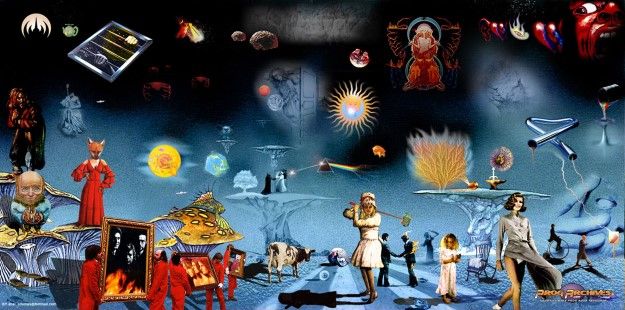
Prog Rock Album Covers: The Good, the Bad, and the Ugly


My buddy Arch Stanton sent me a link to an article in The Onion about 18 particularly ridiculous prog-rock album covers. There's some good humor to be had but I feel their commentary missed a few things.


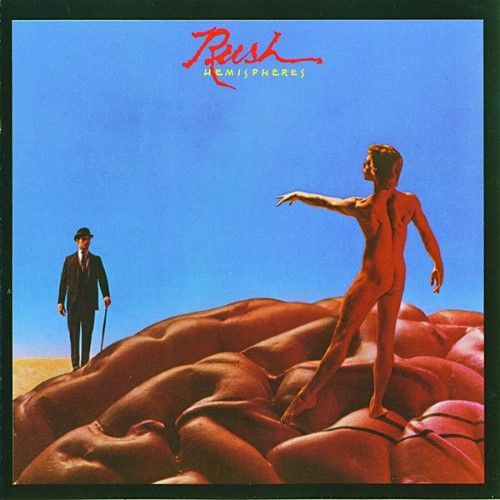
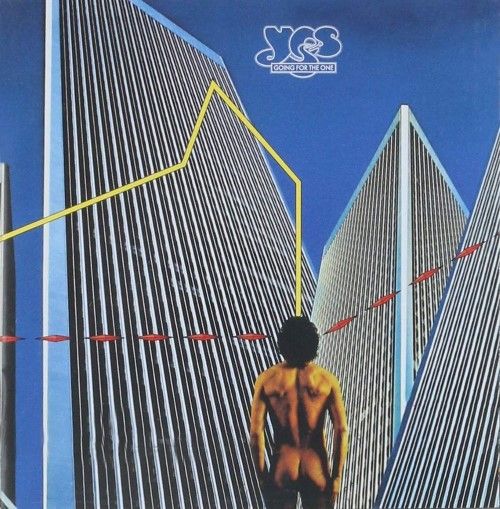
Hemispheres by Rush is surely one of the worst. But in their defense, it ought to be pointed out that they were beaten by a year in the man's firm, bare ass category. That honor goes to Yes with the cover for Going For the One.


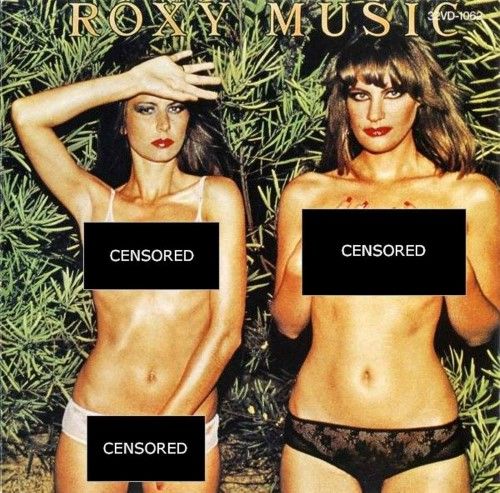
And before anyone thinks that prog rock album covers only features naked men, I think it's only fair to point out that Roxy Music, at least, did their best to appeal to their audience's predilections by featuring near-naked frauleins.


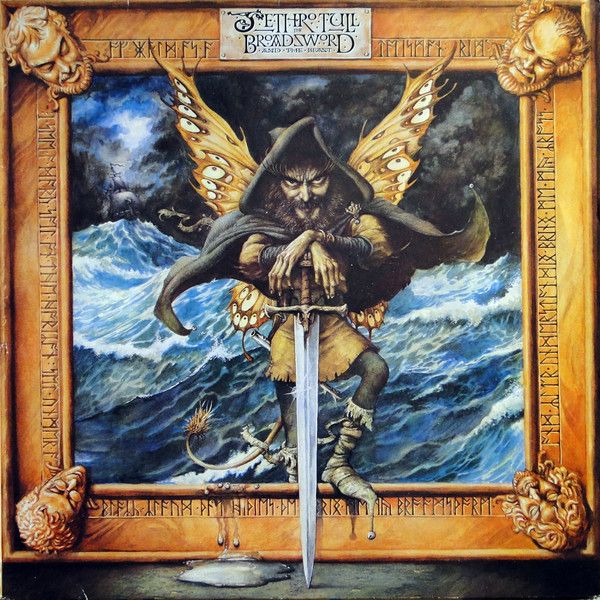
One of my favorite Jethro Tull album covers came in for a thrashing – that of The Broadsword and the Beast.


If nothing else, the cover could help explain why the album was Tull's fastest-selling and biggest album in Germany. Nothing like a Viking long boat and some runes to get that Teutonic blood flowing.

Yes' Tormato is justly criticized but it can be forgiven since Roger Dean created so many other great album covers for the band. However, one thing that can't be forgiven is the cover of their 1987 album Big Generator.


Was the graphic designer afraid of pushing the limits of the video card in his Commodore 64?

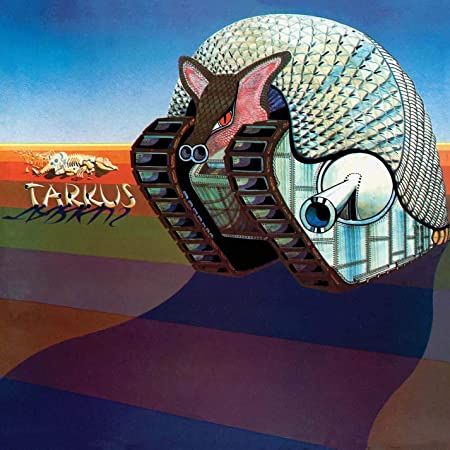
The pole position in this hideous race goes to ELP's Tarkus.


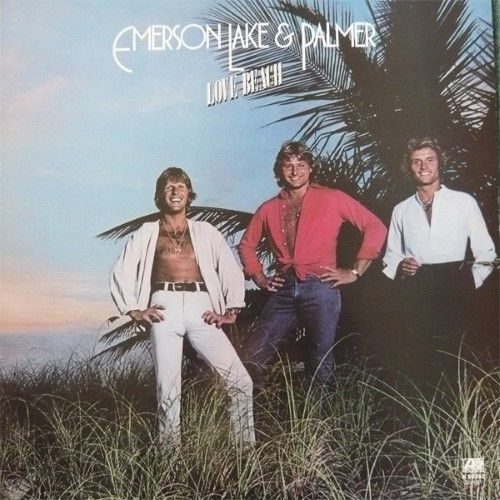
This astounds me. I'm not the biggest fan of that particular cover but it's surely better than Trilogy's. And it's positively fantastic when contrasted with that of Love Beach.

Casualties of the Loudness Wars

(Photo found here.)

There's a recent post up at the Britannica Blog called "1948 and the Birth of Rock and Roll Music". It focuses various technological innovations from that year as well as one great social change.

To begin with, author Gregory McNamee notes that the Second Great Migration was underway which meant and people with background in different musical styles were coming together and sharing. This spawned new musical styles, including rock'n'roll.

On the technological front, 1948 was the year Leo Fender started selling his Broadcaster, the first mass-produced electric guitar. This was the same year that the LP (long-playing record) was invented and would begin to supplant the 78. The final innovation that McNamee mentions is the transistor which gave us portable radios.

About a month prior to McNamee's post the relationship between technology and rock music was examined by Robert Levine in an article at Rolling Stone which described the Loudness Wars.

David Bendeth, a producer who works with rock bands like Hawthorne Heights and Paramore, knows that the albums he makes are often played through tiny computer speakers by fans who are busy surfing the Internet. So he's not surprised when record labels ask the mastering engineers who work on his CDs to crank up the sound levels so high that even the soft parts sound loud.

Over the past decade and a half, a revolution in recording technology has changed the way albums are produced, mixed and mastered — almost always for the worse. "They make it loud to get [listeners'] attention," Bendeth says. Engineers do that by applying dynamic range compression, which reduces the difference between the loudest and softest sounds in a song. Like many of his peers, Bendeth believes that relying too much on this effect can obscure sonic detail, rob music of its emotional power and leave listeners with what engineers call ear fatigue. "I think most everything is mastered a little too loud," Bendeth says. "The industry decided that it's a volume contest."


Producers and engineers call this "the loudness war," and it has changed the way almost every new pop and rock album sounds.

Although I was aware that albums were getting louder with each passing year, that they had started sounding like shit really hit home a bit over five years ago when I listened to Rush's then-new album Vapor Trails. The opening track, "One Little Victory", came blaring at me from the get-go and never stopped. I eventually discovered an article called "Over the Limit" at a site aimed at recording professionals. The author, Rip Rowan, is a huge Rush fan (and a drummer to boot) and he analyzed various Rush albums and shows how Vapor Trails was a casualty of the Loudness War. It's a very interesting article as it gives a bit of the history of peak limiting (the technique used to make CDs louder) and graphs showing just how loud Vapor Trails is. Rowan writes:

WHY IS THE LOUDER IS BETTER APPROACH THE WRONG APPROACH? BECAUSE WHEN ALL OF THE SIGNAL IS AT THE MAXIMUM LEVEL, THEN THERE IS NO WAY FOR THE SIGNAL TO HAVE ANY PUNCH. THE WHOLE THING COMES SCREAMING AT YOU LIKE A MESSAGE IN ALL CAPITAL LETTERS. AS WE ALL KNOW, WHEN YOU TYPE IN ALL CAPITAL LETTERS THERE ARE NO CUES TO HELP THE BRAIN MAKE SENSE OF THE SIGNAL, AND THE MIND TIRES QUICKLY OF TRYING TO PROCESS WHAT IS, BASICALLY, WHITE NOISE. LIKEWISE, A SIGNAL THAT JUST PEGS THE METERS CAUSES THE BRAIN TO REACT AS THOUGH IT IS BEING FED WHITE NOISE. WE SIMPLY FILTER IT OUT AND QUIT TRYING TO PROCESS IT.

Here's a video demonstrating what's happening.


So why all the loudness? Going back to the Rolling Stone article:

"In the Seventies and Eighties, you were expected to pay attention," says Matt Serletic, the former chief executive of Virgin Records USA, who also produced albums by Matchbox Twenty and Collective Soul. "Modern music should be able to get your attention."

Just as CDs supplanted vinyl and cassettes, MP3 and other digital-music formats are quickly replacing CDs as the most popular way to listen to music. That means more convenience but worse sound. To create an MP3, a computer samples the music on a CD and compresses it into a smaller file by excluding the musical information that the human ear is less likely to notice. Much of the information left out is at the very high and low ends, which is why some MP3s sound flat. Cavallo says that MP3s don't reproduce reverb well, and the lack of high-end detail makes them sound brittle. Without enough low end, he says, "you don't get the punch anymore. It decreases the punch of the kick drum and how the speaker gets pushed when the guitarist plays a power chord."

Producers also now alter the way they mix albums to compensate for the limitations of MP3 sound. "You have to be aware of how people will hear music, and pretty much everyone is listening to MP3," says producer Butch Vig, a member of Garbage and the producer of Nirvana's Never- mind. "Some of the effects get lost. So you sometimes have to over-exaggerate things." Other producers believe that intensely compressed CDs make for better MP3s, since the loudness of the music will compensate for the flatness of the digital format.


So, as people fill up their iPods to listen to MP3s that don't sound very good on ear buds that that have comparably limited sound reproduction capabilities, folks who take quality over quantity suffer because lots of CDs today are peak limited to hell and sound like shit.

Tangentially, the RS article also mentions the "artificial perfection" of much of today's music:

As technological shifts have changed the way sounds are recorded, they have encouraged an artificial perfection in music itself. Analog tape has been replaced in most studios by Pro Tools, making edits that once required splicing tape together easily done with the click of a mouse. Programs like Auto-Tune can make weak singers sound pitch-perfect, and Beat Detective does the same thing for wobbly drummers.

Stumbling on this article was fortuitous timing as this past weekend I watched the movie Before the Music Dies which examined the current state of the music industry. In one sequence, an audio engineer demonstrates how Auto-Tune works.


When I was making this year's first podcast which was a Genesis show from 1982, my mind traveled back to that year. I was just getting into the band and would listen to Abacab constantly. But there were no iPods back in 1982 nor MP3s. Instead I would get home from school, and put the album on a nice stereo system. But, perhaps more importantly, I sat there and listened to the music. No multitasking. The music received my undivided attention. I felt bad because I haven't done that in ages. To be sure, I've given an album my attention recently but I haven't done that and listened to it on an actual stereo as opposed to headphones or computer speakers. And so I've resolved to try and devote time this year to sitting down with an album in front of my stereo system and just listening without distracting myself.

How do you listen to music? Portable device? Computer? Stereo? Do you care if CDs have no dynamics? Do you ever take the time to simply listen to music instead of using it as background noise for other activities?