New Glarus has released the first part of their 2012 release schedule.
I am thrilled to see that Two Women is returning next year. Road Slush, an oatmeal stout, and Hop Hearty IPA are back as well after a hiatus. That means Coffee Stout is taking a rest. Not sure what Hop Hearty is replacing. I am also glad that Cabin Fever Honey Bock shall make another appearance as I really like having the year bookended with bocks. (Please let Back 40 return...)
The first Thumbprint brew is a barley wine and the second will be Cherry Stout. I still have 3 bottles of the last barley wine they brewed and two of the Iced Barley Wine in my cellar. I'll have to give those a try when winter really settles in.
23 December, 2011


No Sundance Film Festival U.S.A. for Madison?
The Sundance Film Festival U.S.A. is set for 26 January. This is when filmmakers and their films leave Utah and roadshow their movies at select theatres around the country. Sundance Cinemas - Madison has been participating the past couple years (since it started?) so I find it odd that we've been left out for 2012. The Sundance theatres in San Francisco and Houston are a go, so why not Madison?
In other film news, both Cinematheque and the WUD Film Committee have released their spring semester schedules.
In other film news, both Cinematheque and the WUD Film Committee have released their spring semester schedules.
21 December, 2011
Oh Herr Sedlmayr, What Have They Done? Hoptoberfest by Milwaukee Brewing Company
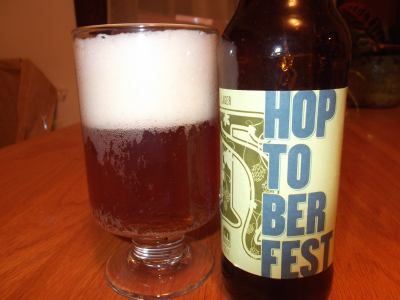
It's December so now is the time to clear out the Oktoberfests, right?
Hoptoberfest is a Märzen from Milwaukee Brewing Company and, as the name implies, it has more hops than your average Oktoberfest.
In your glass, it has a nice reddish amber color and I got a nice, foamy head that lingered when I poured it. Taking a whiff, the malt came across as both caramel and biscuit, slightly more of the former. You can catch the hops in the nose too with it being herbally inclined.
Hoptoberfest has a medium body but it tasted a bit lighter than I'm used to in a Märzen. It has a moderate malt sweetness with some nutty overtones. So far, so good. The hop flavor is moderately high in general and very high for the style. You get a good dose here of grassy hops with a liminal floral accent underneath to boot.
When I bought this beer I was a bit nervous because I wasn't sure if the HOP bit meant tilting the scales away from the malt sweetness which typically gets the nod with Oktoberfests or if it was going to be a Märzen with the hops really jacked up. It's towards the latter here. A lot more hops (and more alcohol too with its 6% ABV being just above the high end of the range for the style.) While I'm not a purist who thinks tradition shouldn't be tampered with, Hoptoberfest just didn't do it for me. Either it needs a bigger malt backbone or the hops should be dialed back a little bit. Almost everything about this beer was clean like a good lager should be, but the bitterness simply overpowered the malt and got in the way of a nice dry finish.
Junk food pairing: I'd go with a good Indian snack mix. Let the curry leaves, coriander, and other aromatic spices balance out the bitterness.
20 December, 2011
Overheard
Man #1: How old are you?
Man #2: 38.
Man #1: Just wait til you're 40.
Man #2: (inaudbile)
Man #1: Yeah, well just wait because the other alternative isn't that good either.
Man #2: 38.
Man #1: Just wait til you're 40.
Man #2: (inaudbile)
Man #1: Yeah, well just wait because the other alternative isn't that good either.
Across the Great Divide: Hoss Rye Lager
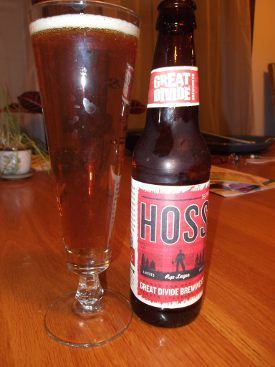
Unfortunately Denver's Great Divide Brewing doesn't distribute here in Wisconsin. If they did, I would certainly be buying more off their Hoss, a rye lager. And so would a couple friends of mine to whom I gave some and thoroughly enjoyed it.
Hoss is based on the Märzen style which, to my mind, means a malty lager with a goodly amount of hops thrown in to keep it from being very sweet and giving the beer a dry finish. This brew is very much in line with this definition excepting the presence of rye in the grist. I personally love rye in my bread – liquid and solid.
This stuff pours a nice copper color with a good head which disappears rather quickly. The aroma is part caramel from the malt and part sharp rye graininess. Drinking it, I first tasted the malt. It was caramely with a slight fruitiness to it – like plum. This was quickly joined by the rye spiciness and made for a great pairing with a medium body. Hoss finishes with on a dry note with a moderate grassy hop bitterness which melds with the zesty rye very well.
As far as I can recall, this is the first rye lager I've ever had and it was a fantastic first experience with the style. I appreciated that it was prominent in the flavor profile instead of lurking in the background while the other flavors took center stage. The barley, rye, and hops make for a wonderfully tasty triumvirate of gustatory goodness. The interplay among them makes for a crisp, refreshing beer that also has some heft. This is one of my favorite beers of the year. Unfortunately I have but one remaining bottle and I fear that I am going to start acting like Gollum around it.
Junk food pairing: Grab a handful of Jay's Barbecue potato chips to go with this beer. I betcha can't eat nor drink just one.
Since Hoss is unavailable in Wisconsin, I will recommend a trio of brews for anyone who likes rye bier or may want to try one out.
First I will note that Scotty, the brewmaster over at Vintage on Madison's west side, has his Tippy Toboggan Roggenbier on tap now. This is an ale. (Roggenbier is German for rye beer.) I had some of this for the first time at the Great Taste this past summer and it got my Teutonic heart all a-flutter.
Founders brews Red's Rye PA and this is another great brew. Very hoppy yet the rye shines through.
Page over at House of Brews has a rye Kölsch which I love. The rye is subtle here, though.
Surly also has a rye Märzen called SurlyFest but I've never had it. But it sounds great.
19 December, 2011
No End for War in Iraq
I am very happy that our troops have finally left Iraq. My fellow blogger Gregory Humphrey is as well and he wrote a post expressing relief that our soldiers are leaving Iraq and that the war has had some horrible consequences. He lists many of them including dead and wounded American soldiers, the riches of Croesus having been spent, a serious blow to the United States' reputation, and the moral failing of the American people.
What's missing from his account, however, is any notion that 100,000+ Iraqi civilians died in the conflict. According to Iraq Body Count, we're looking at 104,122-113,770 dead Iraqis and that's a highly conservative estimate. Nearly three years ago some estimates gave us these gruesome statistics: about 1 million killed, 4.5 million displaced, 1-2 million widows, 5 million orphans.
So, while Humphrey points out many tragedies, he neglects the extremely heavy toll inflicted on the Iraqi people and opts to lament, "Woe is us!" a shameful and solipsism display on his part.
The problem is that we are not leaving Iraq. As Spencer Ackerman of Wired notes, we have a mega-embassy there with some 18,000 people and there will be 3,500-5,500 "armed private security contractors". Security contractors? Soldiers? A distinction without a difference. I'm sure the Iraqi people simply see Americans with guns. And let's not forget that our troops are leaving because of the insistence of the Iraqi government, not because President Obama was ready to bring the boys back home.
If you were an Iraqi or an Iranian or just any average citizen of a Middle Eastern country, how would you take Obama's statement that "our strong presence in the Middle East endures"? (That's where the oil is, after all.) Does it instill confidence that Big Daddy Obama is looking out for you or do you take it as a threat? The Authorization for Use of Military Force is still intact so our government stands ready to send troops back to Iraq or anywhere else there are people considered to be terrorists. Plus no boots on the ground are required to start the Drone Wars in Iraq.
There are still lots of people in the Islamic world who recall with extreme embarrassment the ass-kicking that Muslims suffered at the hands of the Mongols in the 13th century (Hulagu Khan, for instance, laid waste to Baghdad in 1258.) yet the Obama administration sounds like it wants everyone to forget the millions of Iraqis who were killed, maimed, displaced, widowed, orphaned, or otherwise had their lives upset by our invasion. To add insult to injury, we are keeping a mega-embassy there along with thousands of security contractors and a promise to maintain a warlike posture in the region. I certainly wouldn't blame anyone over there for taking Obama's comment as a threat and think that we should be prepared for more blowback. End of the war my ass.
What's missing from his account, however, is any notion that 100,000+ Iraqi civilians died in the conflict. According to Iraq Body Count, we're looking at 104,122-113,770 dead Iraqis and that's a highly conservative estimate. Nearly three years ago some estimates gave us these gruesome statistics: about 1 million killed, 4.5 million displaced, 1-2 million widows, 5 million orphans.
So, while Humphrey points out many tragedies, he neglects the extremely heavy toll inflicted on the Iraqi people and opts to lament, "Woe is us!" a shameful and solipsism display on his part.
The problem is that we are not leaving Iraq. As Spencer Ackerman of Wired notes, we have a mega-embassy there with some 18,000 people and there will be 3,500-5,500 "armed private security contractors". Security contractors? Soldiers? A distinction without a difference. I'm sure the Iraqi people simply see Americans with guns. And let's not forget that our troops are leaving because of the insistence of the Iraqi government, not because President Obama was ready to bring the boys back home.
If you were an Iraqi or an Iranian or just any average citizen of a Middle Eastern country, how would you take Obama's statement that "our strong presence in the Middle East endures"? (That's where the oil is, after all.) Does it instill confidence that Big Daddy Obama is looking out for you or do you take it as a threat? The Authorization for Use of Military Force is still intact so our government stands ready to send troops back to Iraq or anywhere else there are people considered to be terrorists. Plus no boots on the ground are required to start the Drone Wars in Iraq.
There are still lots of people in the Islamic world who recall with extreme embarrassment the ass-kicking that Muslims suffered at the hands of the Mongols in the 13th century (Hulagu Khan, for instance, laid waste to Baghdad in 1258.) yet the Obama administration sounds like it wants everyone to forget the millions of Iraqis who were killed, maimed, displaced, widowed, orphaned, or otherwise had their lives upset by our invasion. To add insult to injury, we are keeping a mega-embassy there along with thousands of security contractors and a promise to maintain a warlike posture in the region. I certainly wouldn't blame anyone over there for taking Obama's comment as a threat and think that we should be prepared for more blowback. End of the war my ass.
Doctor Who: The Hollow Men by Keith Topping and Martin Day

The Hollow Men is a sequel to one of my favorite stories from the classic series, The Awakening. This isn't immediately evident, however. There are two prologues and the first concerns “the most evil man on God's earth”, one George Jeffreys who proceeds to turn the village of Hexen Bridge into a charnel house. It is one of the most hideous episodes to be featured in a Doctor Who story.
Fast forward to the dawn of the 21st century. The TARDIS lands just outside of the accursed Hexen Bridge with The Doctor intent on attending a reunion at the village's school where he is on the board of governors, which I take to be the equivalent of our school board. The village is not dissimilar to the one in Grave Matter - an insulated community populated by a bunch of suspicious locals and a tavern where information is to be had. However, it turns out that Hexen Bridge is less like the village on the Dorsill island and more like Innsmouth.
Instead of an Innsmouth look, the population of Hexen Bridge remains preternaturally steady, although the suicide rates of the school's alumni is very high and people who leave the village discover that they are either barren or sterile. Zadok Allen is replaced by the Reverend Thomas Baber. And instead of fishmen, we get scarecrows.
The Doctor and his companions are usually separated but Seven and Ace seem to remain apart for longer than is normal here. The Doctor is kidnapped and taken to Liverpool while Ace remains in Hexen Bridge where she sneaks about looking for clues and dodging the mulitifoliate menaces. For his part, The Doctor uncovers the scheming of Hexen Bridge alumni Matthew Hatch and Kenny Shanks. Gun-running is minor compared with aiding and abetting the thing underneath the village green in their hometown which is a cousin of the Malus from The Awakening. It also turns out that Hexen Bridge is close to that story's Little Hodcombe.
Just as in Illegal Alien the lilywhite setting is disrupted by colored folk. Instead of a black American ex-pat we have the Chens, a Chinese family. These perpetual outsiders moved to Hexen Bridge and opened a restaurant. They provide a target for hatred as well as allies for our heroes. Plus they can cook a meal fit for a Time Lord. I'm not sure why authors Keith Topping and Martin Day included them. Were they just useful for providing a contrast to the creepy consanguineous white people or were the authors commenting upon English villages or, at least, the portrayal of them in fiction?
Although the cover says this story takes place between The Curse of Fenric and Survival which places it in the show's last season on the air, there isn't much in the way of the Cartmel Masterplan to be had. The Doctor and Ace's relationship doesn't involve the former trying to get the latter to acknowledge and understand her past instead of running away from it. Furthermore there are no hints that The Doctor is something more than your average Time Lord gone incommunicado in a Type 40 TARDIS.
This certainly is no problem; it's just that I'm curious as to whether the BBC 7th Doctor books follow in what I am told are the footsteps of the Virgin New Adventures in portraying Seven as being darker and more mysterious than he was generally portrayed on TV. So far that's not the case. All three Seventh Doctor books in the series that I have read/am reading take place on Earth. Again, not a problem but I am looking forward to some off-world adventures.
The Hollow Men has the spirit of the Classic Series and, as these book tend to do, it expands on the formula of the TV show. A couple more subsidiary characters get some space above and beyond what the show would have done, there is more blood and guts, and there are more locales than the television version's budget would have allowed. Oh, and there's some nudity and sexual references as well.
Quite simply, a fun read.
The Trials and Tribulations of a Urophilic
Considering the plot - about a woman's difficulty in getting her boyfriend to give her a golden shower - this is a funny and dare I say cute little movie.
17 December, 2011
Beware the Bock
I bought some Novi Bock from the Woodman Brewery tonight. It was skunk. Someone on Rate Beer had the same experience a few days ago. I don't know if we're talking a bad batch or if it has just been on the shelf too long/was handled improperly.
What a waste because I think there was a tasty helles bock hidden in there.
What a waste because I think there was a tasty helles bock hidden in there.
Iron Works Alt from Metropolitan
The altbier is the official bier of Düsseldorf. From what I've read, the volk there are quite proud of the city's standard-bearer and a good way to get a Teutonic smackdown is to wander into a local tavern and order a Kölsch. I have never been there and my memory comports with that of a commenter who says that no alts from Düsseldorf have been seen in Madison for ages. The moral of this story is that, when it comes to judging domestic altbiers on their conformity to the “real” thing, I am not your man.
Altbiers don't seem to get a lot of love here in Wisconsin, as near as I can tell. Tyranena brews one as does BluCreek. New Glarus and Rush River both had limited release alts that were more like stickes, i.e. - a bigger, stronger altbier. And that's about it as far as breweries that bottle go. (Any others that I have missed?)
At the risk of pissing off sticklers for style, I'll say that altbiers are a hybrid in that they are brewed with top-fermenting yeast but are cold conditioned. They're a brown ale on one hand and a lager on the other.

Metropolitan Brewing in Chicago brews German-style biers and their latest annual is Iron Works Alt.
Iron Works pours a deep copper color and you get a fairly substantial head that lingers. It being winter, my nose is often stuffy so I wasn't able to an optimal whiff but the aroma was of caramel along – almost fruity - with a grassy hop scent to boot.
Unlike other domestic altbiers that I've had, this stuff has a comparatively light body. BluCreek's version is a good example of one that is heavy, syrupy on the tongue. The caramel aroma returns in the flavor but it is balanced by the spiciness of the hops as well as the lager crispness. This is not a very hoppy beer, although I suppose that's relative in this day and age of 100+ IBU brews.
In addition to be a hybrid style-wise, I find that Iron Works is a hybrid in terms of servability. I have been drinking this stuff the latter half of this year and find that the light body and dry finish make it very refreshing in warmer weather but that the high malt aspect of the profile also makes it eminently drinkable in colder weather.
Junk food pairing: During a recent Packer game I found that Iron Works goes great with nuts freshly cracked from the shell, especially pecans and hazelnuts. And last night I discovered that it is just swell with a some chunks of Musa's Hot Albanian Sausage. Who knew that someone made Albanian sausage here in Madison?
I also want to note the existence of the altbier glass or Becher.

I do so for the sake of completeness and that it allows me to go off on a rant.
These are like Kölsch glasses in that they are cylindrical with straight sides but they're shorter and wider. And I'd bet that the only alt glasses in Madison are in the bottom of a locked filing cabinet stuck in a disused lavatory with a sign on the door saying “Beware of the Leopard”. Belgian beers always seem to get the correct tulip glass or chalice yet my Kölsch and altbiers come in pints instead of a stange or Becher. Until alts get more popular I won't expect the proper glass, but times are tough so at least give me my Kölsch in the correct glass so it doesn't get warm while I'm drinking it and you can hire Köbes to keep it filled and help the unemployment situation. It's a win-win proposition.
Altbiers don't seem to get a lot of love here in Wisconsin, as near as I can tell. Tyranena brews one as does BluCreek. New Glarus and Rush River both had limited release alts that were more like stickes, i.e. - a bigger, stronger altbier. And that's about it as far as breweries that bottle go. (Any others that I have missed?)
At the risk of pissing off sticklers for style, I'll say that altbiers are a hybrid in that they are brewed with top-fermenting yeast but are cold conditioned. They're a brown ale on one hand and a lager on the other.
Metropolitan Brewing in Chicago brews German-style biers and their latest annual is Iron Works Alt.
Iron Works pours a deep copper color and you get a fairly substantial head that lingers. It being winter, my nose is often stuffy so I wasn't able to an optimal whiff but the aroma was of caramel along – almost fruity - with a grassy hop scent to boot.
Unlike other domestic altbiers that I've had, this stuff has a comparatively light body. BluCreek's version is a good example of one that is heavy, syrupy on the tongue. The caramel aroma returns in the flavor but it is balanced by the spiciness of the hops as well as the lager crispness. This is not a very hoppy beer, although I suppose that's relative in this day and age of 100+ IBU brews.
In addition to be a hybrid style-wise, I find that Iron Works is a hybrid in terms of servability. I have been drinking this stuff the latter half of this year and find that the light body and dry finish make it very refreshing in warmer weather but that the high malt aspect of the profile also makes it eminently drinkable in colder weather.
Junk food pairing: During a recent Packer game I found that Iron Works goes great with nuts freshly cracked from the shell, especially pecans and hazelnuts. And last night I discovered that it is just swell with a some chunks of Musa's Hot Albanian Sausage. Who knew that someone made Albanian sausage here in Madison?
I also want to note the existence of the altbier glass or Becher.
I do so for the sake of completeness and that it allows me to go off on a rant.
These are like Kölsch glasses in that they are cylindrical with straight sides but they're shorter and wider. And I'd bet that the only alt glasses in Madison are in the bottom of a locked filing cabinet stuck in a disused lavatory with a sign on the door saying “Beware of the Leopard”. Belgian beers always seem to get the correct tulip glass or chalice yet my Kölsch and altbiers come in pints instead of a stange or Becher. Until alts get more popular I won't expect the proper glass, but times are tough so at least give me my Kölsch in the correct glass so it doesn't get warm while I'm drinking it and you can hire Köbes to keep it filled and help the unemployment situation. It's a win-win proposition.
16 December, 2011
Goodbye Christopher Hitchens
Christopher Hitchens succumbed to esophageal cancer yesterday.
Vanity Fair's editor Graydon Carter has a nice memoriam while Slate has some of his greatest hits.
I'll be raising a glass of Johnny Walker Black at some point this weekend.

Vanity Fair's editor Graydon Carter has a nice memoriam while Slate has some of his greatest hits.
I'll be raising a glass of Johnny Walker Black at some point this weekend.
15 December, 2011
Sprecher's Silver Anniversary Brew: Kriek Lambic

I don't recall seeing Sprecher's 25th Anniversary Kriek on Madison's store shelves in 2010, the actual anniversary year, so I was surprised to see some at Woodman's last weekend. It also surprises me that the brewery would celebrate the quarter century mark by brewing a kriek instead of a German style brew considering the brewery's name and the fact that it has earned its reputation with its lagers. I suppose Belgian ales are all the rage now and there's nothing wrong with Sprecher brewing one up.
When I poured, I got a small, fleeting head. But it's highly carbonated and tiny bubbles clung to the side of the glass. It's a nice deep ruby color but looks even darker when sitting in your favorite flagon. Cherry growers in Door County must be happy these days because every Wisconsin brewer that uses the fruit seems eager to say they're from Door County on the label. And so it is here. Thusly it's not surprising to find out that you can really smell those cherries in this beer. Plus you get a whiff of what I presume are the Brettanomyces. Overall there's a woody bent to the aroma.
Since this stuff is well-carbonated, you get that bright effervescent feeling on your tongue along with the cherry goodness and a hint of malt. I suspect that, without all those bubbles, this stuff would be on the syrupy side. It isn't long before the sour kicks in. While I liked the sour flavor here, it overpowered the cherry. The fruit and malt flavors dissipated quickly and I was left with this flat sour flavor which stayed in my mouth. This stands in contrast to New Glarus' Belgian Red. In that brew, the flavors are like an old married couple - they fight but they will always be together. The fruit and sour do this pas de deux on your tongue instead of one following the other.
I am willing to concede that I was just drinking old beer. Did anyone taste it last year? But, as it stands, I feel that the Wisconsin Fresh Hop Special Amber would have been a better choice to celebrate the brewery's silver anniversary. It pays homage to the Sprecher tradition while adding a new twist and is, quite frankly, a much better beer.
Junk food pairing: Pair this stuff with Garlic Plantain Chips. I got a bag at Woodman's and they should be available at any of the numerous Mexican grocery stores here in Madison.
14 December, 2011
Melancholia

Lars von Trier's Melancholia is the second film I've seen in the past several days that features a mysterious planet making its way to Earth, the first being Another Earth. (It is also the second film I've seen this fall featuring a Pieter Bruegel painting. See also The Mill and the Cross.) Instead of being a carbon copy of Earth, the planet here is different and called Melancholia. We first encounter it in an opening prelude which also introduces us to sisters Justine and Claire as well some foreshadowing of events that unfold later.
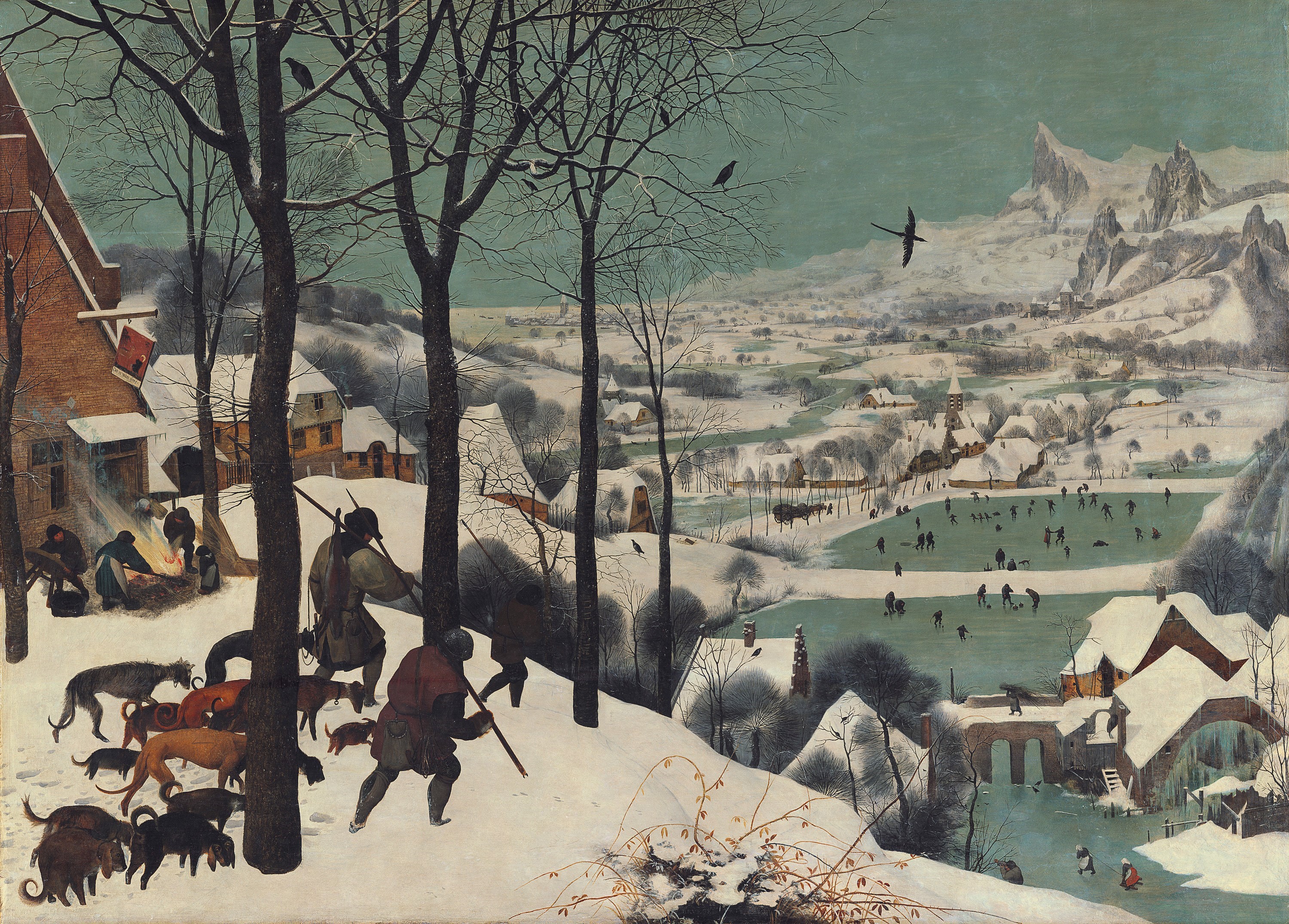
The screen fades in from darkness as a prelude from Wagner's Tristan und Isolde plays and Justine's (Kirsten Dunst) face appears. Her eyes slowly open revealing a doleful visage that glares back at you while birds tumble lifelessly from the sky. We cut to other images including Justine clad in her wedding gown lying in a stream and staring up into the sky and Claire (Charlotte Gainsbourg), a boy, and Justine all standing in a row with a mansion behind them with the sun, moon, and the new planet above. One rather harrowing image is of Claire carrying a child in her arms as she runs across a golf course in the rain. With each step her boots sink several inches into the grass. Another features Justine in profile walking along grass as tendrils emanating from off screen curl round her ankles turning a leisurely stroll into a hard slog. Amidst these scenes are shots of the eponymous planet slowly making its way to Earth. The final shot here is of Pieter Bruegel's 1565 painting The Hunters in the Snow which is consumed by fire.
Part I of the film is called "Justine" and chronicles her wedding reception. It begins with her and the groom, Michael, in the back of a stretch limousine that is unable to tack a sharp curve on a gravel road. This is an immediate link to the prelude and a recurring theme – impediments making it difficult, if not impossible, to move forward. They are able to laugh this off but things get much more serious when they finally arrive and are chastised by Claire who ushers them inside the mansion holding the program for the evening which was, no doubt, devised by a very expensive wedding planner.
This first part of the movie chronicles Justine's decent into despair and her mostly dysfunctional family. As the night wears on, it proves more and more difficult for her to keep a smile on her face. Justine escapes the reception several times which only serves to anger her family, especially brother-in-law John who reminds everyone that he spent a lot of money on it. Justine and Claire's parents verbally spar at dinner with their mother denouncing the institution of marriage. The father is rather indifferent to it all. As her depression worsens through the night, Justine looks to her parents for help but is turned away. Claire and Michael are sympathetic to her plight but don't know how to help. Sis is too preoccupied with trying to make sure John's money is well-spent while hubby can only offer an apple orchard as a gift to ward off the melancholia.
Dunst gives a great performance here. As someone who has been in Michael's shoes, Justine felt real to me. The sleeping, wanting to be alone one minute and then asking for help the next – it was all eerily familiar to me. (And yes, some depressed people really do wander off to go practice smiling alone before returning to crowds.) It was also very sad to see so many people not understand her predicament or even try to.
While Justine dealt with her melancholia, she is also the first to notice the planet of the same name. John, who knows something of the heavens, dismisses it by saying that it is simply the star Antares. Justine is oddly attracted to it - she even leaves the reception to take a stroll outside to view it – but the planet figures most prominently in the second half of the film.
Yet there is a scene worth noting from the first half. Justine has left the party and gone into a study that has these shelves with elastic bands stretching across the front that are meant to display open books. On the shelves are art book displaying more modern paintings and Claire replaces them with those showing older pieces. One of those is Bruegel's The Hunters in the Snow along with his The Land of Cockaigne and John Everett Millais' Ophelia, which features the subject lying in a stream on her back looking upwards. (Recall that she did not make it out of Hamlet alive.) Ophelia may have inspired one of the shots in the prelude but it is The Hunters in the Snow that is shown to us directly in it and which draws it to a close. Its muted colors surely provided a template for the look of the prelude and its disappointed, empty-handed hunters mirror Justine, if not most of her family.
The painting figures in Andrei Tarkovsky's Solaris and this is echoed in part 2 when we are given shots of Melancholia as it draws nearer to the Earth.

Part II of the film is entitled "Claire". Sometime after the wedding, Claire, John, and their son, Leo, are living their lives in the mansion they call home. But Justine is not well and she takes a taxi out to join them. She has gotten worse. She won't eat nor bathe and sleep takes up most of her time. Since the wedding, the planet Melancholia has drawn ever closer to Earth and Claire is disturbed by the possibility that it will collide with the Earth. John tries to calm her fears but she feeds them by looking at the websites of doomsayers who claim that Melancholia will miss on its initial pass but will slingshot around in a "dance of death" and hit our blue ball.
Eventually Justine begins to emerge from her torpor. One night she wanders out and lies naked by the side of a river as she basks in the Melancholia's glow. On another day she and Claire take horses out for a ride. It is foggy outside and we see them ride down a long road in a rare aerial shot. Justine's steed, Abraham, refuses to cross a bridge no matter how she urges him on. (Again we have the notion of not being able to move forward.) Justine looks up and sees Melancholia hanging in the sky. This scene is notable for a couple reasons. First is that Wagner's music returns. Outside of the prelude, it has eschewed diagetic music until this point. The second reason is that, after this, Justine changes. She doesn't become happy but she sheds her sluggishness. At the dinner table she no longer looks like she is trying to retreat from world. She eats but looks on with a dispassionate curiosity with an anger bubbling underneath which comes to the surface on a second ride. The sisters are once again at the bridge and Abraham refuses to cross. Justine's anger is unleashed as she beats the horse mercilessly with her crop. It suffers the blows and then squats down defeated. (This is also a reflection of the prelude which shows the horse alone at night squatting down in extreme slow motion.) Eventually this anger morphs into a calm resignation. "The Earth is evil," she says. "We don't need to grieve for it. Nobody will miss it."
Without wanting to give away the ending I will defend von Trier's conceit of naming the new planet Melancholia. It is an apt metaphor. John tells us that no one noticed it before because it was hidden behind the sun just as people suffering from depression hide their sorrows behind forced smiles and fake sunny dispositions. The scenes with Melancholia looming in the sky are a wonderful visual metaphor for just how imposing and all-consuming a problem depression is (and recall Solaris as well). Claire is fearful of the planet and this perhaps mirrors her feelings towards Justine. At a couple points in the film when Justine can't put on her sunny face Claire cries out "Sometimes I hate you so much!" She fears her sister's inability to keep a happy face and thusly destroy her own plans for a neat, orderly bourgeois life.
Melancholia is a difficult film and that seeing it again may help me make more connections between the prologue and the rest of it. I would pay attention more closely to when we hear Wagner on the soundtrack. There are also unanswered questions such as why Leo calls Justine "Auntie Steelbreaker", why he wants to make caves with her, and what Justine means when she says "I know things." But I suspect there are no concrete explanations to be had.
13 December, 2011
Doctor Who: Illegal Alien by Mike Tucker and Robert Perry

Illegal Alien was originally submitted as a story idea for the Seventh Doctor while the show was still on the air. However, its cancellation put the kibosh on that idea and it was instead turned into a novel for the BBC's Past Doctor Adventures several years later. It probably would have worked well on the TV show although some of the gore would have been removed in addition to things being pared down for time.
It is November 1940 and the Blitz is on. Irish-American Cody McBride has fled trouble and his life, more generally, back in Chicago for the friendly confines of London where he tortures his liver and eeks out a living as a private dick. In addition to the Luftwaffe, the city's denizens have to contend with a serial killer dubbed The Limehouse Lurker. One night McBride sees an odd light in the sky and tracks down the location where it crashed. There he discovers a silver orb. Opening, it emits a blinding light causing McBride to fall unconscious.
He awakes to find that Major Lazonby of British Intelligence had the sphere hauled away while he has the same done to him by Inspector Mullen of the London police. Lazonby is all business and military procedure in the name of the queen and country. For his part, Mullen is simply trying to keep a little order amidst the Blitz and sees McBride as an impediment. Our detective returns to his office where The Doctor and Ace drop in for a visit. Meanwhile a businessman named Peddler gets a visit from a gentleman named Wall and his very tall preternatural tough guys. Soon after Wall and his associates leave unsatisfied, our captain of industry meets his maker in a most gruesome manner.
And thusly are most of the major players introduced. The cover of the book has a Cyberman on it –Second Doctor Era – so the orb is a dead giveaway. However, Tucker and Perry do a fine job of having them lie low – but in the open. Cybermen usually stay out of sight underground somewhere and bide their time until the right moment arrives. Here, though, they are in (relatively) plain view. Wall's tough guys turn out to be Cybermen in disguise and The Limehouse Lurker is really a damaged Cyberleader crushing its victims and rubbing their blood on itself to keep the remaining organic bits in working order. In addition to this bit of hideousness, there is a rather disturbing scene where The Doctor is poking around a laboratory where victims are being transmogrified into Cybermen and he finds a baby that is nearly a newborn Cybermat.
Illegal Alien makes many an overture to noir with McBride and a London during the blackouts that provides plenty of darkness. Missing, however, is a femme fatale. This really isn't a problem as the noir business is an added flavor not the main dish here. McBride isn't the most interesting character but he's a good person underneath the stoic exterior and behind the booze. His contacts in the London crime underworld lead us to George Limb, an elderly gentleman with even more contacts - even some highly placed ones in government. I appreciated how Tucker and Perry portray him as a kindly old man but always with a hint of mystery and menace. You're never really sure what side he's on until the end.
McBride is also friends with "Mama", the proprietor of a tavern of the same name. He too is an American ex-pat only he is an African-American. This was an interesting little touch. Firstly, it led to a neat little conversation about baseball in which The Doctor reminisces about having seen Babe Ruth in action as well as having attended many Negro League games. The injection of some American culture, including the Pittsburgh Crawfords which will be obscure to most readers, was a nice contrast to an otherwise very English setting with mostly very English (white) characters. Secondly, having a black character was neat in that it just went outside of expectations. Although not developed on TV, a defining moment of Ace's life was when her black friend Manisha was killed after some racist bastards firebombed her home. While Mama didn't have a large role, I am hoping that it foreshadows a more colorful future.
Illegal Alien takes place sometime after the terminal episode of the Seventh Doctor's run on television. While it was the first Eighth Doctor PDA to be published, it is the third of that series chronologically. So I'm not exactly sure how these novels attempt to build on Ace's character when we last saw her on TV. However, here she is portrayed as having matured. OK, Ace would not be Ace if she weren't impetuous and she most definitely is here as illustrated during the scene where Wall and his Cyber-cronies are getting away in a truck only to have our heroine give chase and stow away on the truck's frame underneath. But she also spends some time looking back and reevaluating as when she thinks of her grandmother and puts herself in her shoes in an attempt to understand how living through the horrors of war shape a person. Ace is still young – she can never get barkeeps to serve her – and foolish but she's turning a corner.
All in all Illegal Alien was a boatload of fun. The Cybermen were appropriately menacing and of course there were Nazis. I'm sure there are tons of references to previous stories both from TV and novels but I only managed to pick up on a few. For example, The Doctor mentions the Daleks invading Earth as they did in "The Dalek Invasion of Earth" while Ace refers to her grandmother whom we met in "The Curse of Fenric" as well as her friends from her hometown of Perivale who featured in "Survival".
However, there's no Nitro 9 here as per The Doctor's effort to cut down on anachronisms. Bummer.
12 December, 2011
Another Earth

What if you looked up in the sky one day and saw a beautiful blue ball that looked exactly like the one on which we live. And then you learned that it is inhabited with doppelgängers of everyone on your Earth. What would think? How would you feel?
This should have been the premise of Another Earth.
The movie introduces us to Rhoda, as played by the lovely Brit Marling. She is on the cusp of adulthood and is looking forward to beginning the next phase of her life at MIT where she will study astrophysics. Rhoda is driving home after a party when it is blared over the radio that a new planet which looks a lot like Earth is newly visible in the sky. She looks out her window to catch a glimpse of the orb. Distracted, she misses a stop sign and her car collides with another that is stopped at the intersection. In this car is John (William Mapother), a music professor and conductor, along with his wife and young son. Rhoda emerges from the wreckage in a daze and discovers that the boy was thrown from the car, through the windshield, and out onto the curb.
Rhoda does her time in jail and, upon release, moves back in with her parents. She finds work as a janitor at a local school. One day she gets the courage to go to John's home and apologize. The problem is that he is in a bad state, letting John Barleycorn wash his blues away. John answers the door in a grumpy state which throws Rhoda off. Instead of apologizing, she says that she's with a cleaning agency and is offering a free trial of their services. Struggling with grief, John's house is surely in need of cleaning. Rhoda does a good job and John hires her to tidy up once a week. Eventually, Rhoda and John develop feelings for one another.
Concomitant to Rhoda's Lady Macbeth routine, that orb in the sky is moving closer. Astronomers have determined that its landmasses are exact copies of those on Earth. In a rather disturbing yet touching scene, a scientist attempts to make radio contact with the planet and discovers that she is talking to her own doppelgänger who recalls memories from their collective past. Rhoda spends some of her free time staring up longingly at the other Earth as it moves closer and looms larger in the sky. She enters a contest to win a flight to the new planet and wins. I won't spoil the ending (not much, anyway) but will say the Rhoda's plan to escape doesn't, well, go exactly as planned.
While Rhoda and John's relationship was endearing, the problem with Another Earth is that it takes a situation (the approach of Earth's clone) with an interesting metaphysical aspect and relegates it to the background where it and its consequences hang around until they're picked when the story requires more metaphor. Rhoda seeks out redemption while John looks to be reborn. Unfortunately this new planet laden with clones of everyone basically provides a metaphor of Rhoda seeking escape and seeking herself but little else. The movie spends too much time showing close-ups of her face. While Marling is a beautiful woman, it got old looking at her visage with its attendant look of despondency fixed upon it. Since Rhoda and John are the only characters who get developed here, I was hoping for a bit more recognition on their parts that, not only was there another Earth above, but also another them. "Wow! That's crazy!" and a few questions were thin gruel for me.
As I said before, I don't want to give away the ending but I will say that I think it suffered because of this. It was nice to see a resolution that didn't resolve anything but its impact was lessened because of the film's refusal to consider the above.
Still, I give the filmmakers tons of credit for making an intelligent exercise in my beloved sci-fi genre instead of a brainless CGI-laden action flick.
Sprecher's Bier und Restaurant & Mehr Bier
Last Friday I took the family over to Sprecher's Restaurant und Pub. We were celebrating The Dulcinea's record of acing exams and the end of the workweek. In addition to sustenance, I lucked out as they had some of Sprecher's Wisconsin Fresh Hop Amber Lager. It's their Special Amber aged on a bed of Wisconsin Cascade hops.
We didn't have a camera and the lighting in the restaurant was dim and yellow so I can't give a great description of its appearance. However, it looked nice and amber as the beer usually does but was a bit hazy. It tasted a lot like your normal Special Amber at first with the lager crispness and complementary hop bitterness but, as the beer goes back, you get this wonderful floral hop rush. More on the sweet side like honeysuckle than, say, a rose. I really enjoyed it.
As for the food, I had schnitzel while The D and the kid had the fish fry. It was schweineschnitzel (pork, not veal) and it was serviceable. It is served with a creamy lemon sauce with capers and I take this as to explain why the breading was so bland. While it had the requisite amount of salt, I felt it could have used some pepper, dry mustard, and maybe some thyme. I guess everyone seasons their schnitzel breading differently. Still, a little would have been good as I prefer to go with straight lemon juice on my schnitzel instead of a sauce. The fish was nice'n'crispy. The cheesy mashed potatoes were good and I like the cole slaw as well. However, my seasonal vegetables (broccoli and cauliflower) were mush as if they'd been sitting in a steam tray for hours.
The food won't bring me back but it's nice that they carry limited edition Sprecher beers and that I can stop there and get a growler. They also have a seasonal red apple soda as well.
I've noticed that the Whistle Stop now bottles their beer and have seen it at Woodman's. Their Kölsch-style brew is made with pistachios and sounds intriguing but the only brew of theirs I've had is the New Zealand Pilsner, a "lager featuring the grains and hops from Down Under".
I don't know what type of hops are in this beer nor if there are any adjunct grains. But I liked it as did my friend with whom I shared a bottle. It certainly isn't your typical pilsner. It basically tasted like one at first but the crispness is overcome by some malt sweetness followed by a hoppy aftertaste. It was like all the components of a pils were there just not in the right order and/or proportions. The usual malt-hops balancing act was weighted in favor of the former. It was odd, but I liked it.
My last tidbit of beer news is this:
This is a promo for Tap X: Nelson Sauvin by German brewer Schneider Weisse. SW is perhaps the premier brewer of weiss bier. They've been doing it for 100+ years and their Avenitus, a wheat doppelbock, is considered by many to be the ne plus ultra of its style.
Tap X refers to a new line of limited edition annual brews and the inaugural edition is a weiss bier with Nelson Sauvin hops from New Zealand and Belgian yeast. I've read that limited shipments are going to the East Coast and California only so we apparently won't be getting any here in flyover country.
The video is interesting. Brewmaster Hans-Peter Drexler says that the Reinheitsgebot isn't really limiting as there are countless varieties of hops and yeasts out there. And those are some mega (open) fermentation tanks.
We didn't have a camera and the lighting in the restaurant was dim and yellow so I can't give a great description of its appearance. However, it looked nice and amber as the beer usually does but was a bit hazy. It tasted a lot like your normal Special Amber at first with the lager crispness and complementary hop bitterness but, as the beer goes back, you get this wonderful floral hop rush. More on the sweet side like honeysuckle than, say, a rose. I really enjoyed it.
As for the food, I had schnitzel while The D and the kid had the fish fry. It was schweineschnitzel (pork, not veal) and it was serviceable. It is served with a creamy lemon sauce with capers and I take this as to explain why the breading was so bland. While it had the requisite amount of salt, I felt it could have used some pepper, dry mustard, and maybe some thyme. I guess everyone seasons their schnitzel breading differently. Still, a little would have been good as I prefer to go with straight lemon juice on my schnitzel instead of a sauce. The fish was nice'n'crispy. The cheesy mashed potatoes were good and I like the cole slaw as well. However, my seasonal vegetables (broccoli and cauliflower) were mush as if they'd been sitting in a steam tray for hours.
The food won't bring me back but it's nice that they carry limited edition Sprecher beers and that I can stop there and get a growler. They also have a seasonal red apple soda as well.
I've noticed that the Whistle Stop now bottles their beer and have seen it at Woodman's. Their Kölsch-style brew is made with pistachios and sounds intriguing but the only brew of theirs I've had is the New Zealand Pilsner, a "lager featuring the grains and hops from Down Under".
I don't know what type of hops are in this beer nor if there are any adjunct grains. But I liked it as did my friend with whom I shared a bottle. It certainly isn't your typical pilsner. It basically tasted like one at first but the crispness is overcome by some malt sweetness followed by a hoppy aftertaste. It was like all the components of a pils were there just not in the right order and/or proportions. The usual malt-hops balancing act was weighted in favor of the former. It was odd, but I liked it.
My last tidbit of beer news is this:
Introducing TAP X: Nelson Sauvin from Schneider USA on Vimeo.
This is a promo for Tap X: Nelson Sauvin by German brewer Schneider Weisse. SW is perhaps the premier brewer of weiss bier. They've been doing it for 100+ years and their Avenitus, a wheat doppelbock, is considered by many to be the ne plus ultra of its style.
Tap X refers to a new line of limited edition annual brews and the inaugural edition is a weiss bier with Nelson Sauvin hops from New Zealand and Belgian yeast. I've read that limited shipments are going to the East Coast and California only so we apparently won't be getting any here in flyover country.
The video is interesting. Brewmaster Hans-Peter Drexler says that the Reinheitsgebot isn't really limiting as there are countless varieties of hops and yeasts out there. And those are some mega (open) fermentation tanks.
09 December, 2011
The Black Power Mixtape 1967-1975

I saw The Black Power Mixtape 1967-1975 with my father-in-law, Henry, this week. He was involved in the Civil Rights movement and even knew Stokely Carmichael back in the mid-60s when they were both involved with the Student Nonviolent Coordinating Committee. This past summer Henry pointed out the street corner where he was arrested by a white cop who didn't appreciate a black man trying to get other blacks registered to vote. I knew it was going to be interesting.
The film, as the title suggests, is a compilation of footage recorded 1967-1975 by Swedish television crews who were dispatched to America to report on the Civil Rights movement and the ongoing racial strife. A disclaimer is given to audiences straight away saying that the film doesn't purport to tell the whole story of the Black Power Movement but merely how those Swedish reporters saw it at the time. One can also argue that it also relates how the editors in the 21st century view what happened.
It follows a narrative which shows a view of the Black Power Movement and then proceeds to chronicle its demise as internal strife, harassment from the Federal government, and rugs all take their toll. We start at a diner in Hallandale, Florida. The patrons are all white and the owner is being interviewed. He says that America is a place of freedom where anyone can earn a living if they just put their mind to it. The crew then travels down the road to the poorer black side of town where a couple veterans confess to how difficult it is to find a job because of the color of their skin. Stokely Carmichael makes an appearance early on where he is giving a speech in which he labels the non-violent approach of Martin Luther King, Jr. as ineffective because white America has no conscience to which blacks can appeal.
Soon enough MLK and RFK are assassinated and the Black Power Movement gains more steam. There is some great footage shot at the Black Panther headquarters in Oakland. One disturbing scene is a room full of children singing, "Pick up a gun, put the pig on the run." However, it is also noted that the Black Panthers gave out free breakfasts and free medical care. That the Federal government started its own breakfast programs at schools was noted as a legacy of the Black Panthers.
In 1969 Carmichael fled FBI harassment for Africa. The following year Angela Davis was arrested after Jonathan Jackson took hostages in a California courthouse using guns registered to her. An interview with Davis from jail is one of the most powerful moments in the film. The interviewer asks her about the use of violence by the Black Power Movement and she goes into a lengthy rant beginning with "When someone asks me about violence, I find it incredible. A person asking that can have no idea about what black people have gone through in this country." Davis is furious and looks like she's about to burst as she talks about her childhood in Birmingham, Alabama and the city's Commissioner of Public Safety, Bull Connor, who was infamous for having his police use fire hoses to disperse peaceful protestors. Like Carmichael, Davis is charismatic, well-spoken, and a very powerful speaker.
As the film moves into the 1970s, it gets terribly depressing and the situation begins to look very contemporary. The sections on Harlem show the tragedy of drug addiction on a personal level as well as on the community. More than one person voices the opinion that, not only did drugs tear apart black unity, but also that the drugs were introduced by the government. An interview with a prostitute looking to better her life brings a glimmer of hope as does one with Lewis Michaux at his bookstore where he extols the virtue of knowledge. But, for me, it was just too sad to see a community wracked by drugs and violence and know that many black communities today are still in that quagmire.
Director Göran Olsson utilizes voiceover narration in the film but he wisely doesn't show us any talking heads. Instead the person's name is shown in the upper left-hand corner as they speak over the archival footage. It's done like a DVD commentary track with some of the speakers referring to images on the screen or to reactions they had seeing this footage for the first time. Relative youngsters like Erykah Badu and Talib Kweli talk about what they get out of looking back at history while the likes of Harry Belafonte and Angela Davis reminisce about the history that they made. Kweli remarks that he was once pulled off a plane and questioned by authorities for listening to a speech by Carmichael, which in this post-9/11 era is not surprising but is still disturbing.
This kind of voiceover had a meta flavor to it and this was enhanced during a scene in which the film crew interviews the editor of TV Guide who had written critically of Swedish television saying that their coverage of the United States was anti-American because it didn't showcase all the good things here. I appreciated these little instances of metaness rearing their head because it chipped away at conventional views of documentary. The Black Power Mixtape 1967-1975 took the old convention of talking heads espousing the objective truth and made things more personal, more subjective.
When the lights came up there was this look on Henry's face. During the film I occasionally heard a "mmm hmmm" from his direction and I asked him if it had brought back a lot of memories. He said it had and that it made him laugh, feel sad & angry, and even made him want to cry. We went to dinner so we could chat some more. He told me stories of working for civil rights in Tennessee, of how awful things were in Birmingham, of living in New York during the late 60s, and what it was like in Montgomery during the Bus Boycott.
The last thing he told to me before our conversation turned to family matters was that he could never get behind armed resistance a la the Black Panthers because there was no chance for an armed minority against a majority with even more guns. But, he added, he did live for a spell armed with a rifle and pistol for protection.
08 December, 2011
Why Does Rob Thomas Ignore the Madison Polish Film Festival?
The Madison Polish Film Festival is a bifurcated affair this year with the first round of films being shown 19-20 November. In his weekly "What's playing in Madison theaters this week" blog post dated 17 November Rob Thomas of 77 Square neglected to mention the festival. I emailed him at the time asking about the omission but never heard back.
And so it's not totally surprising that in his blog today there is yet again no mention of part 2 of the festival. Now that I look, I see no mention of it in Isthmus either. (Wait, I see it on their webpage in the Critics Choice spot but nothing in the Movies section.)
Harumph.
Here are the details:
SATURDAY, DECEMBER 10
MARQUEE THEATER; Union South
3:00 pm
Wonderful Summer directed by Ryszard Brylski (2011)
83 min, Polish with English subtitles
The plot follows the typical outline of a romantic comedy but the setting of funeral homes and cemeteries gives it a dark atmosphere. The lead character Kika has a peculiar gift: she can communicate with the ghost of her dead mother. The mother visits her on a mission to make sure her daughter does not miss out on true love for the boy next door.
SUNDAY, DECEMBER 11
MARQUEE THEATER; Union South
7:00 pm Winner directed by Wiesław Saniewski (2011)
111min, English and Polish with English subtitles
Oliver is a talented young pianist of Polish American heritage. After breaking off his European tournée, he is forced to repay the tour organizers 250 thousand Euros. An accidental meeting with his former math teacher and avid horse track gambler helps him find his way in life.
And so it's not totally surprising that in his blog today there is yet again no mention of part 2 of the festival. Now that I look, I see no mention of it in Isthmus either. (Wait, I see it on their webpage in the Critics Choice spot but nothing in the Movies section.)
Harumph.
Here are the details:
SATURDAY, DECEMBER 10
MARQUEE THEATER; Union South
3:00 pm
Wonderful Summer directed by Ryszard Brylski (2011)
83 min, Polish with English subtitles
The plot follows the typical outline of a romantic comedy but the setting of funeral homes and cemeteries gives it a dark atmosphere. The lead character Kika has a peculiar gift: she can communicate with the ghost of her dead mother. The mother visits her on a mission to make sure her daughter does not miss out on true love for the boy next door.
SUNDAY, DECEMBER 11
MARQUEE THEATER; Union South
7:00 pm Winner directed by Wiesław Saniewski (2011)
111min, English and Polish with English subtitles
Oliver is a talented young pianist of Polish American heritage. After breaking off his European tournée, he is forced to repay the tour organizers 250 thousand Euros. An accidental meeting with his former math teacher and avid horse track gambler helps him find his way in life.
Atheists Apparently Can't Handle the Truth
Speaking of contempt for non-believers on the part of Christians, there's a revealing letter to the editor in the new Isthmus.
The past few weeks have seen a mole hill being made into a mountain in the Letters section over Kenneth Burns' review of Higher Ground with some people disputing Psalm 137:9. Burns was critical of the film for how it utilized that particular passage which it quotes. In today's issue one Warren Brown of Menasha steps up to the soap box.
His exegetical powers are limitless and his contempt for non-believers is seemingly without end as well as he states that atheists can't understand the Bible.
This is the trouble that arises when someone who can read but does not believe tries to read the Bible. You may understand the words, but you don't understand the message.
What a maroon. Why is it that, if only believers are smart enough to bypass the Biblical encryption to understand the message, Christians take away different messages from the Bible?
I am reminded of a spat Jerry Coyne had with Andrew Sullivan. It related to the above and an earlier bit of Brown's letter where he writes:
Yes, we Christians do consider the Bible the word of God, but we are not so absurd as to think that every saying in the Bible is God's truth.
Really? What about Ken Ham and other Biblical literalists who go around insisting that, not only was there a guy named Noah who built an arc, but that there were dinosaurs on the arc?
So how do people like Andrew Sullivan and Warren Brown actually go about deciding what is Yahweh's "truth" and what isn't?
Take passages from, say, Deuteronomy, where Yahweh is in a genocidal mood. You have apologists like Paul Copan who seem to share Brown's attitude of "atheists just don't understand" but you also have theologians like William Lane Craig who take the pro-genocide stance. Who is "right" here? Who has comprehended Yahweh's "truth"?
Brown's letter is the height of conceit. Only believers can understand the Bible and, furthermore, they have this additional super-power that allows them to cherry pick what is true and what isn't from the Bible.
Burns replies to Brown and says that his priest taught that "Christians should take troubling Bible passages seriously." What does this mean? Leviticus has its famous invectives against homosexuality. What does taking "If a man also lie with mankind, as he lieth with a woman, both of them have committed an abomination: they shall surely be put to death; their blood shall be upon them" seriously involve? Should Christians take the admonition to not covet thy neighbor's ox seriously?
I feel like the woodcutter in Rashomon.
The past few weeks have seen a mole hill being made into a mountain in the Letters section over Kenneth Burns' review of Higher Ground with some people disputing Psalm 137:9. Burns was critical of the film for how it utilized that particular passage which it quotes. In today's issue one Warren Brown of Menasha steps up to the soap box.
His exegetical powers are limitless and his contempt for non-believers is seemingly without end as well as he states that atheists can't understand the Bible.
This is the trouble that arises when someone who can read but does not believe tries to read the Bible. You may understand the words, but you don't understand the message.
What a maroon. Why is it that, if only believers are smart enough to bypass the Biblical encryption to understand the message, Christians take away different messages from the Bible?
I am reminded of a spat Jerry Coyne had with Andrew Sullivan. It related to the above and an earlier bit of Brown's letter where he writes:
Yes, we Christians do consider the Bible the word of God, but we are not so absurd as to think that every saying in the Bible is God's truth.
Really? What about Ken Ham and other Biblical literalists who go around insisting that, not only was there a guy named Noah who built an arc, but that there were dinosaurs on the arc?
So how do people like Andrew Sullivan and Warren Brown actually go about deciding what is Yahweh's "truth" and what isn't?
Take passages from, say, Deuteronomy, where Yahweh is in a genocidal mood. You have apologists like Paul Copan who seem to share Brown's attitude of "atheists just don't understand" but you also have theologians like William Lane Craig who take the pro-genocide stance. Who is "right" here? Who has comprehended Yahweh's "truth"?
Brown's letter is the height of conceit. Only believers can understand the Bible and, furthermore, they have this additional super-power that allows them to cherry pick what is true and what isn't from the Bible.
Burns replies to Brown and says that his priest taught that "Christians should take troubling Bible passages seriously." What does this mean? Leviticus has its famous invectives against homosexuality. What does taking "If a man also lie with mankind, as he lieth with a woman, both of them have committed an abomination: they shall surely be put to death; their blood shall be upon them" seriously involve? Should Christians take the admonition to not covet thy neighbor's ox seriously?
I feel like the woodcutter in Rashomon.
Subscribe to:
Posts (Atom)