14 November, 2026


19 August, 2026
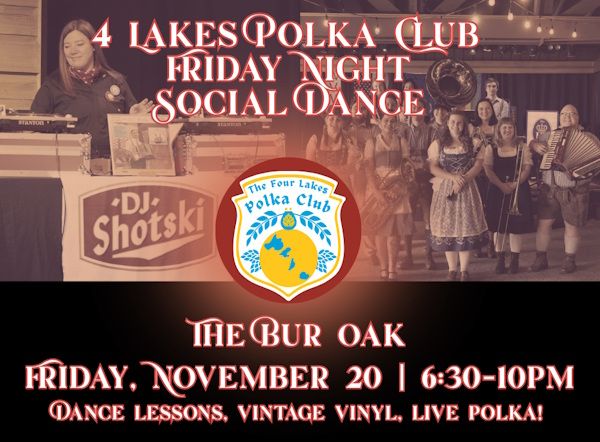
22 January, 2026
Learn to polka
Listen and dance to polkas (and waltzes, & schottisches) at The Bur Oak on 22 February! Oh, and drink some beer too.
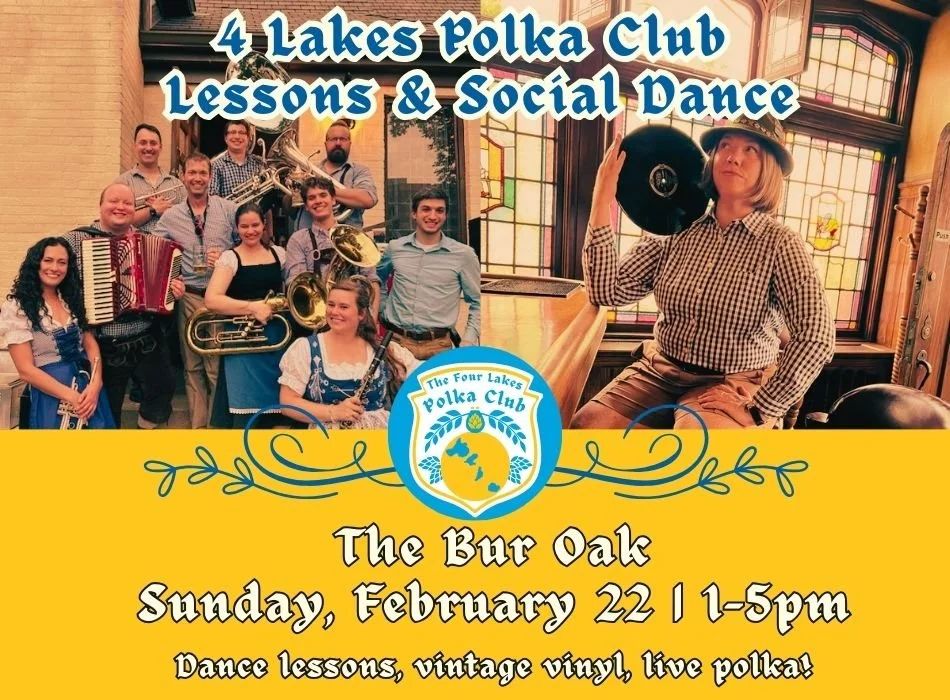
21 March, 2025
Polka on a Sunday afternoon

Next month on the 27th The Bur Oak will host an afternoon of polka - music and dancing.
DJ Shotski kicks things off at 1 with classic polka on vinyl and the dance lessons begin at 2. And then you can put your lesson to the test at 2:30 with The DB Polka Express.
19 February, 2025
On the Stereo, February 2025
I've been listening to some tunes by Chicago's Horsegirl. They play what I suppose would be called indie rock with its lo-fi aesthetics that are gussied up a bit with some great melodic vocals. Their latest album, Phonetics On and On, came out a few days ago and I find that I really like "Switch Over". It has a vague Pavement vibe and reminds me a bit of "Box Elder".
They play in Madison at the High Noon Saloon on 4 August.
Also from Chicago are Cabeza De Chivo and their tropical psychedelia. I cannot find any studio recordings but check out this live set from the Cactus Club in Milwaukee from last spring.
To complete the Chicago trifecta, there's The Claudettes who should have a new album out soon. Or soonish, anyway. They'll be at the North Street Cabaret on 1 March.
Valerie June has a new album out or coming out soon called Owls, Omens, and Oracles (Look at that serial comma!) and she'll be here in Madison on 30 May which means I won't have to go to Iowa to see her.
Last weekend some friends and I went to see the Faroese superstar Eivør. We weren't particularly familiar with her work but we're suckers for Nordic music and just anything that sounds interesting. It was a great show! I really loved "Enn" which, if I recall correctly means still or yet. The drumming was very powerful live.
21 June, 2024
Prost! Sommerfest Block Party
Prost! Beer Hall is throwing a party - Sommerfest - tomorrow. German beer, food, and polka music, including some tunes spun by DJ Shotski and live music from The DB Polka Express.

26 April, 2024
Our Canadian friends celebrate Wisconsin polka
The polka became the official dance of Wisconsin 30 years ago this month. This article notes that the push to make it the state dance "started as a class project by local educator Violet Bergum and her second-grade class at Lindbergh Elementary School in Madison. The class approached a state senator, who drafted the bill."
That was news to me. I was under the impression that Wisconsin folklorist Prof. Jim Leary was the impetus for it. Still, he did testify before the state Legislature in favor of it. You learn something new everyday.
It is nice to see Bruce Triggs celebrating the anniversary on his radio show, Accordion Noir, this week. Check it out here.
22 January, 2024
The Corona Diaries Vol. 104: Mazomanie Needs a Coffeehouse
(mid-August 2023)
(Dance to the prelude.)
A few days ago thirsty beer geeks from around the country descended upon Madison for the Great Taste of the Midwest, the best beer festival in all the land. Although I didn’t attend, I did go to the Essen Haus, a German restaurant, the evening before as The Polkaholics, Chicago’s renowned polka-rock band, were playing.
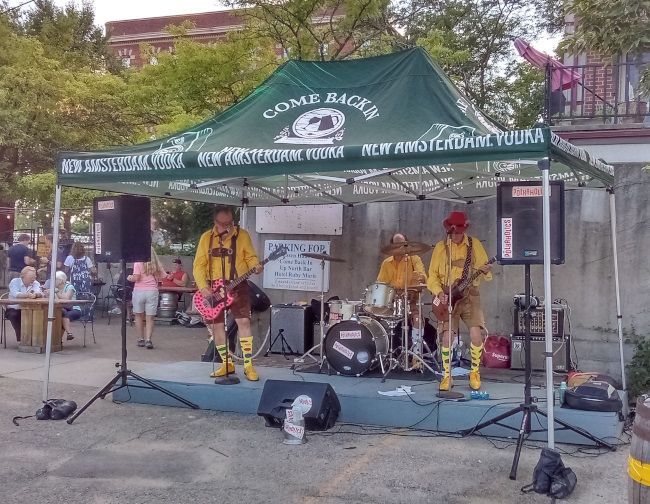
As usual, they put the crowd to shame with their haberdashery as they were dressed in the finest Lederhosen complemented by the sexiest socks of any band, polka or otherwise. I had my Polkaholics t-shirt on and Dandy Don, the guitarist/singer, spotted me right away in my stylish outfit. I’d made a music mix for the road trip to Gencon which featured a couple Polkaholics tunes and I was hoping to hear them live. I found that “Paul Konrad Polka”, a tribute to the WGN weatherman in Chicago, was already on the setlist and so I requested the other song, “Sound (of the Beer) Garden Polka”. This one is a musical chimera worthy of Victor Frankenstein himself which fuses the alternative rock of 90's stalwarts Soundgarden with a steady 1-2 polka beat to great melodic (and humorous) effect.
When the sun is a black hole
The beer will be ice cold
Classic stuff. Ooh! And they had a new album out too – Say Yes to Oktoberfest. It is a Dionysian ditty, a concept album, of sorts, about beer, drinking, and Oktoberfest revelry. You bet I bought the CD.
I ran into a fellow whom I knew via Twitter and had met in-person a couple of times. We chatted about craft beer, camping, the sorry state of Twitter, and whatever else came to mind. It was nice to see him again and to meet his wife whose existence I’d learned of online but had never encountered in real life.
********
A few (or is it several?) entries ago, I wrote about walking around Morton Woods. I’d randomly chosen it as a destination for a hike after looking at a map of county parks. Now, if I hadn’t gone there, I would have instead headed to Walking Iron County Park, just north of Mazomanie which is 25 miles west of Madison. A full week of work after spending 5 days down in Indianapolis on vacation at Gencon was sheer hell so, when the weekend finally rolled around, I needed a hike out in nature and headed west to Walking Iron.
For the drive there, I traveled much the same route as I did going out to Morton Woods. Taking the back roads meant I would not feel compelled to drive 55+ and instead cruise along at 35-40 so I could enjoy the scenery from the tops of the many rolling hills out in the Driftless Area.
One advantage of a nice, leisurely pace is that, if I spot a deer in a field, I can actually pull over to take a photograph rather easily as I did on this occasion.
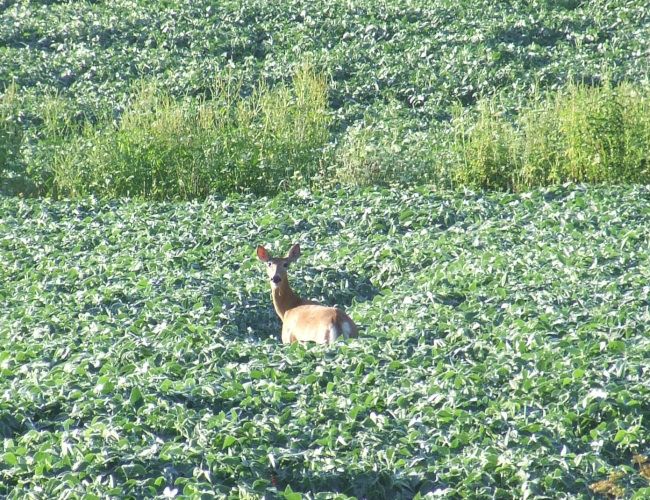
I drove through a little of Black Earth before turning onto another scenic county road which would take me to Mazomanie. Mazo isn’t very large and, before long, I was outside of town and at the park. It was a lovely, sunny morning.
The initial section of the trail ran along the edge of some woods on one side with prairie on the other.
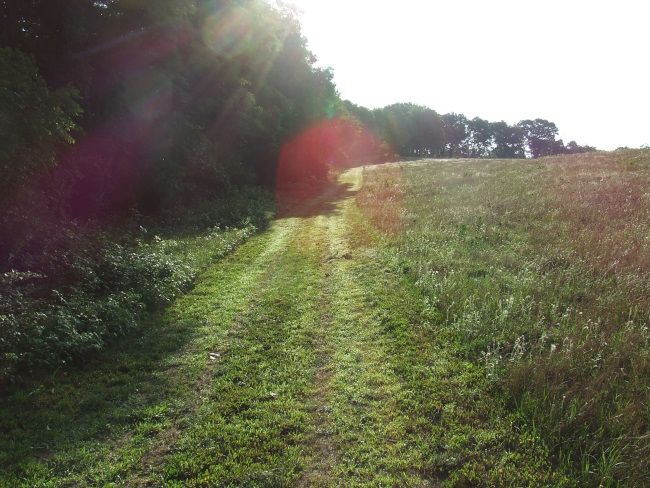
There was birdsong coming from all sides – it was avian surround sound. I would occasionally catch a glimpse of the tiny members of the chorus but that was about it. There were many calls and songs that were completely unfamiliar to me. This shouldn’t be surprising, though, as I only know the basic city slicker repertoire – robins, cardinals, and red-winged black birds. Oh, and red-bellied woodpecker too.
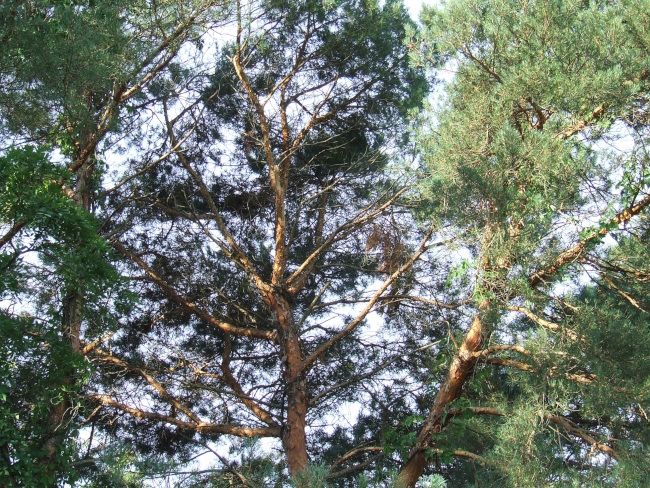
At one point, I came to a spot with some pine trees which scented the air quite nicely.
Soon I came upon a trail that led off into the woods.
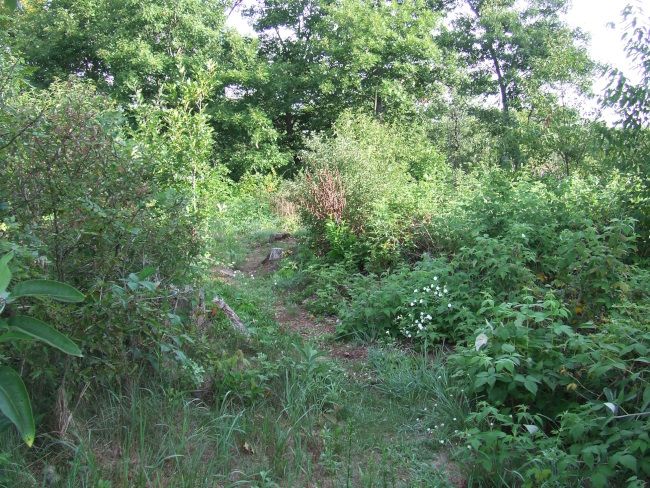
Despite knowing this is exactly the kind of thing that got Hansel & Gretel into trouble, I followed the path into the trees where I discovered that it wended its way down to a creek and ran along side it for a stretch.
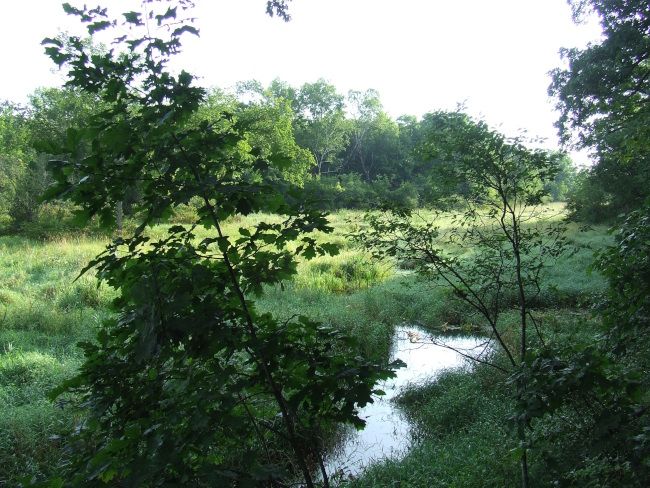
The trail through the trees was pleasantly cool but all-too short and soon enough I was back on the path that straddled woods and prairie.
Some parts of the trail straddled farm fields.
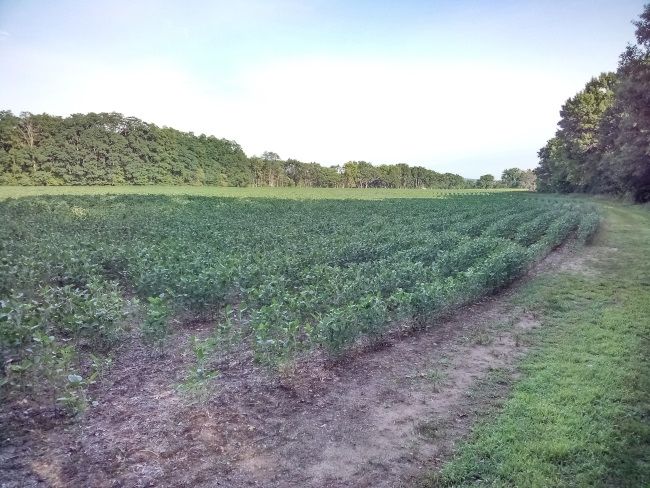
The scent on these stretches was all fresh & verdant, to start, and I took in the air thinking to myself how wonderful the countryside is. As I traipsed further along, however, that other scent of the countryside began to creep in: manure. Now, I can handle cow manure just fine. (Chicken shit is a whole different matter, though.) But then the noxious smell of chemical fertilizer kicked in and the combination was really quite bad. I hastened onwards to escape the miasma.
Towards the end of my hike, I found myself at the Pasque Flower Prairie where birds were zipping around from ground to tree, tree to tree - just everywhere.
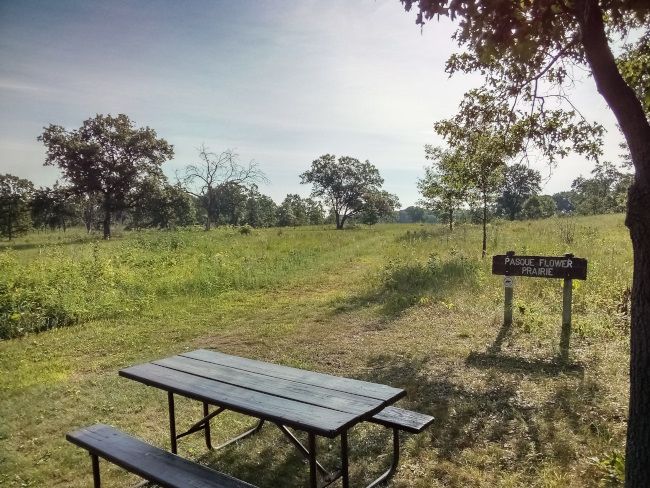
They wisely kept a good distance between themselves and the human so I wasn’t able to get a decent photograph. However, I was able to see that many of them were blue on top, though they had white or tan bellies.
These weren’t blue jays and the only other bird of that hue that I know of in these parts is the indigo bunting but I thought they were of a deeper blue color and were completely blue, belly and all. After consulting that handy Birds of Wisconsin, my best guess is that they were Eastern Bluebirds.
The walk being done, I headed into Mazomanie for something to eat as I was famished. And maybe a refill on my coffee too.
I hadn’t been there since 2002, when I accompanied the woman whom I was dating at that time to a dance studio in the old part of town. This was where Madison’s Cycropia Aerial Dance had a rehearsal space and my girlfriend was intent on spending some time hanging from ropes, spinning in circles, and learning a little about aerial dancing. Think Julianne Moore in The Big Lebowski but without the paintbrush.
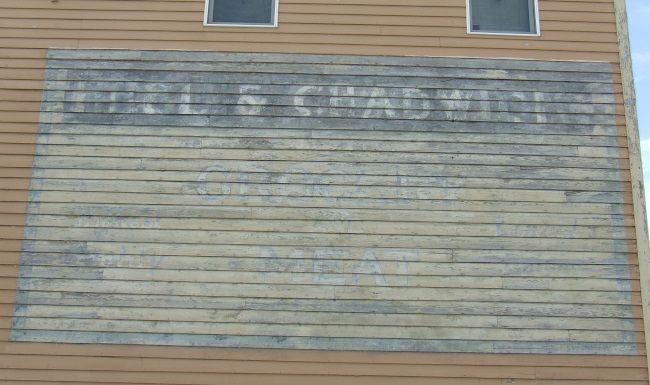
In addition to not immediately finding a coffeehouse as I cruised into Mazo, I also didn't find anyone out and about. It was a bit spooky, as if I was in that episode of The Twilight Zone where the guy wanders around the town only to find it abandoned. I chose a parking spot largely based on its proximity to this neat ghost sign for what appears to have been a grocery store from back in the day.
Wandering around town on foot, I ran into an old blacksmith shop that was now home to the Midwest Micro Car Museum.
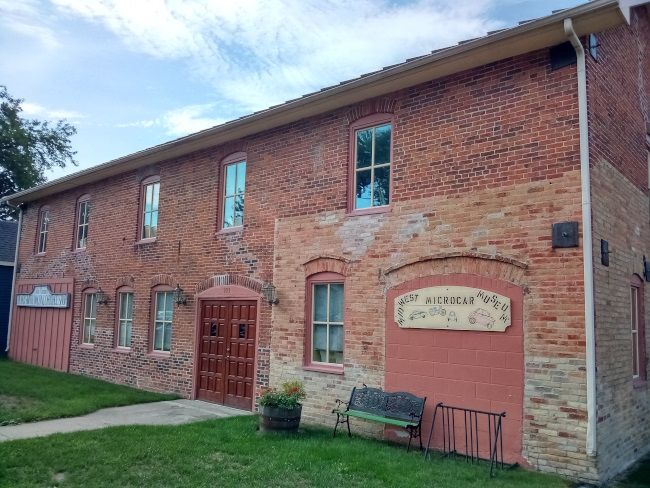
I don’t know if it is dedicated to those very small cars like the one Mr. Bean drives or just a very large collection of Matchboxes.
An area where rail tracks ran through town was rather neat. The old freight and coal buildings still stood but, in the field abutting them was a bandshell.
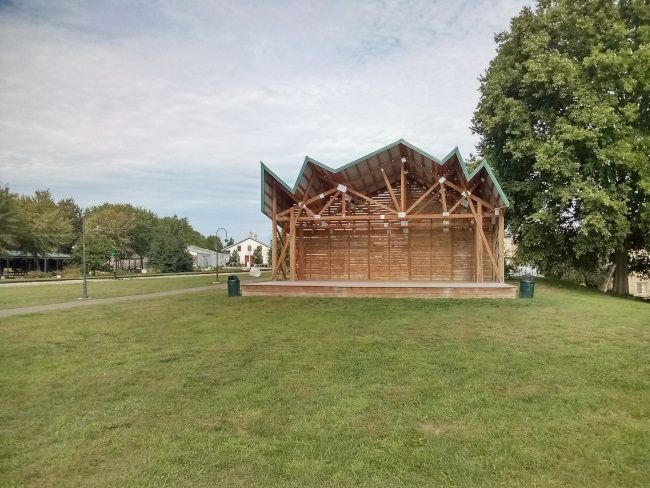
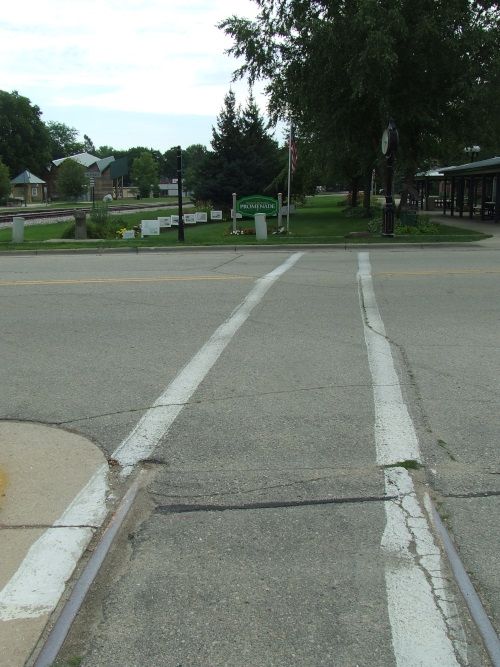
And across the remaining track was a promenade.
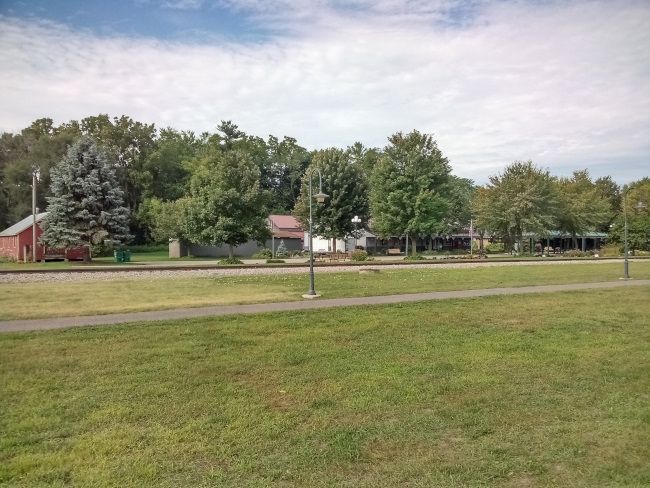
The old feed mill was now a fancy restaurant while various other buildings that would have served the trains and/or passengers had been converted into stores along with covered seating areas for music and other festivities.
From the remaining buildings and the layout of the area by the tracks, it seems that Mazo was something of a rail hub back in the day.
Continuing my walk, I discovered that the town’s historical museum was in an old electric power plant.
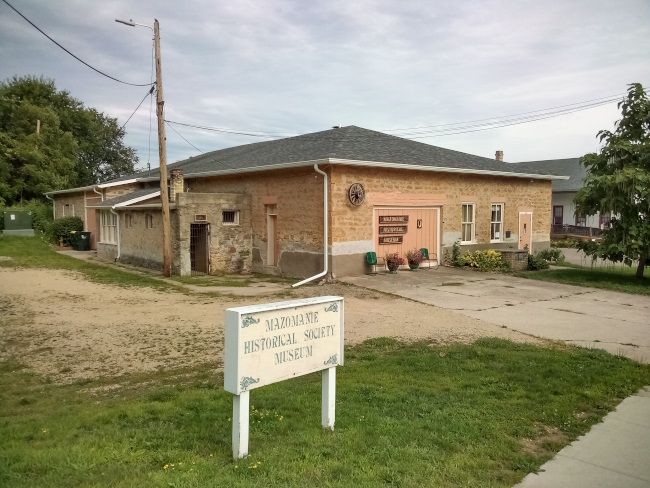
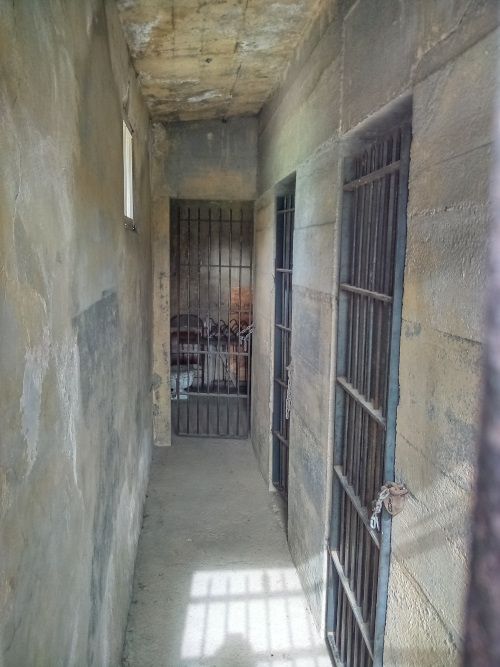
I am not sure when, but the building hosted a jail at some point. Perhaps it was the home of the local constabulary before becoming a power plant.
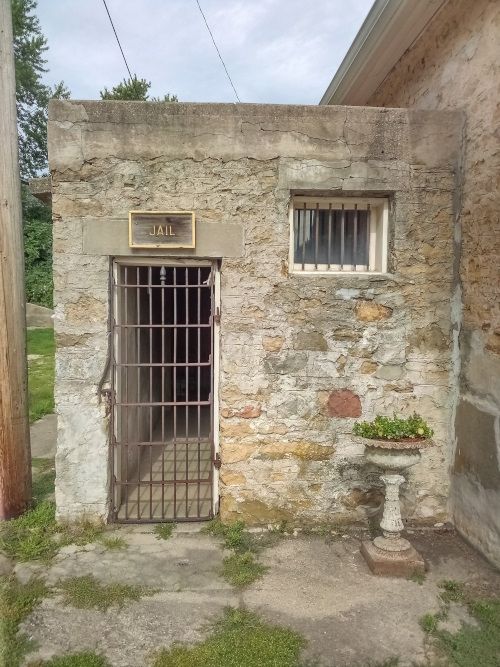
I guess things got a little rowdy back in the day.
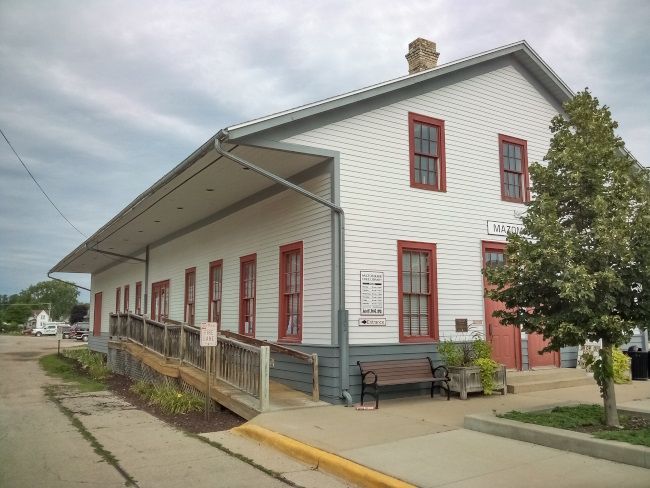
The town library is housed in a former train depot which doesn't look to have changed much since the late 19th century.
Some of the old rails were still visible in the street and you could see how they ran through what is now that slick promenade.
Unfortunately, there was no source of coffee that was open downtown. I eventually saw 3 or 4 people but, otherwise, it was dead. And so I headed out towards the highway for a gas station where I got a breakfast sandwich and more coffee before heading for home.
********
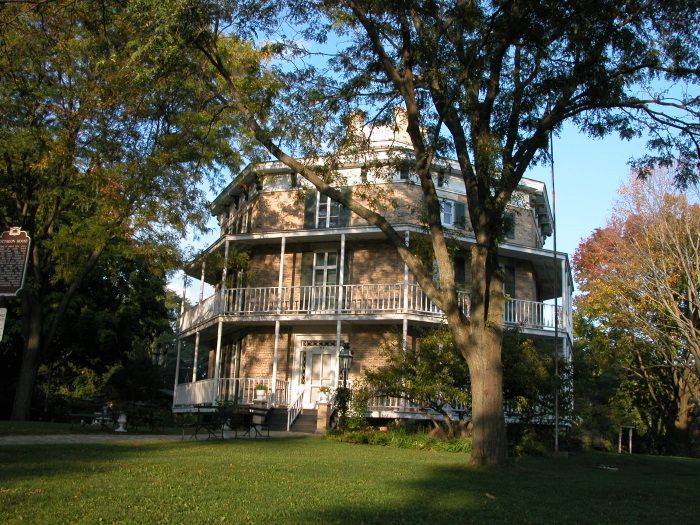
Bonus photo. It’s the octagon house in Watertown. I cannot recall the name of it but it’s a historic site.
14 January, 2024
22 January, 2023
There's Gonna Be a Polka Riot Going On

The Madison Polka Riot will be held on 5 February at the High Noon Saloon.
It will feature:
02 January, 2023
23 December, 2022
18 October, 2022
Piwo, Pączki, and Polka(holics)
Many years ago I took a journey to Iowa to bring my father's ashes home. There are several family burial plots at a cemetery down there and some kin ran a headstone business in the town. For the first time I met a cousin of my dad's and he told me a funny story about my parents' wedding. He recalled a brief chat he had with my maternal grandmother at the reception as the band was playing a polka. Approaching her, he asked if she danced the polka and she replied that she did when she was younger but, since her knees had started giving her trouble, she'd stopped. Then someone came up to her and extended the invitation, "Let's dance!" She put up no resistance whatsoever as she was led away to shake her booty, knees be damned!
I'd always known that I have relatives down there in that part of Iowa but I had never met any of them until that day. It's always neat to hear family lore, but it was especially so to hear tales about a side of the family my father never talked about.
My visit and hearing those stories sparked something inside of me - an interest in family heritage and traditions including polka. I wrote something about polka (or the lack thereof) in Madison which caught the attention of an Isthmus reporter, Isthmus being Madison's alt-weekly. Around this time I also got into the music of the Goose Island Ramblers, a Madison band from back in the day that played folk music of all sorts, including polkas. I was investigating my Central and Eastern European roots and ran into folk music that was usually not in English and did not contribute to the birth of rock and roll like the Anglo-Afro songs that spawned many an Alan Lomax compilation.
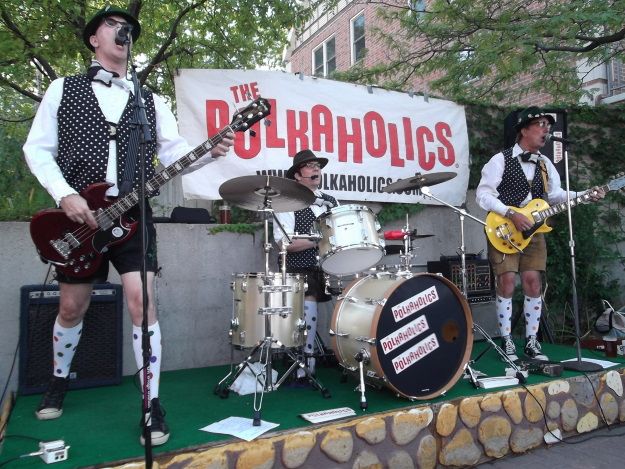
At some point I encountered The Polkaholics, a polka power trio from Chicago led by guitarist "Dandy Don" Hedeker. The band takes the basic rock formula and apply it to polka which means supercharged polka beats and lots of fuzzy guitar instead of accordion, clarinet, or trumpet. While they play traditional polkas, they also throw in originals and they are usually performed manically, always threatening to career out of control.
In 2009 the band release Wally!, likely the first ever polka-rock concept album, which chronicled the life of Chicago polka legend Walter "Li'l Wally" Jagiello over the course of a dozen songs. The second tune, "Caldwell Woods", describes how Jagiello and his family would take a streetcar to the titular forest preserve on Chicago's northwest side on Sundays to picnic and polka. I spent some time there as a boy and thought it was pretty hoopy to hear the place immortalized in song.
I bought the album and enjoyed it thoroughly. It was a good springboard to investigate Poles in Chicago. On a visit to my mother not long after buying the album, I told her about it and described how the songs celebrated Chicago history. For instance, "Division Street" commemorated the "Polish Broadway", an area on the city's near west (or northwest) side that was heavily Polish back in the day. The song lovingly describes the bars overflowing with polka music and ladies that couldn't dance to it enough.
After I described the lyrics to "Caldwell Woods" to her, my mother revealed that she, her parents, and various aunts & uncles made that same trek north when she was young. She related how the women cooked lunch and fried up pączki while chatting as the men drank beer and often played cards (pinochle). I thought it was incredibly cool to hear a part of my family history reflected in a song - and, quite appropriately, a polka song.
14 April, 2007
It's Happiness: A Polka Documentary

After stopping for Nepali food and some ice cream from the Chocolate Shoppe, it was off to the Historical Society on Saturday night for the first of two music-related films - It's Happiness: A Polka Documentary. It had been almost a year since I first wrote about the film and I was fired up to finally see it. The lecture hall was jam-packed and there were several folks clad in the yellow t-shirts emblazoned with the film's logo. No doubt some of them were featured in the film. I was reminded of seeing another documentary about Wisconsin at last year's festival - Triviatown. That screening too had a joyous atmosphere as a group of cheeseheads were going to witness their own at play. The filmmakers gave a brief intro and the lights went down.
Our eyes were assaulted with scenes from an instructional video on how to dance the polka which brought many a laugh. Interspersed with the opening credits were shots of people laughing, drinking, and dancing as well as commentary from folks such as polka legend Jimmy Sturr. Amidst the scenes of happiness was more sober commentary about how many consider polka to be a joke and that the accordion just isn't sexy. The struggle to get this musical embodiment of happiness into the public consciousness is one of the core elements of the film.
With the credits done, the scene shifts to Milwaukee and Art's Concertina Bar. We see shelves lined with concertinas and a crowd enjoying some live music. The owner, Art Altenburg, gets in on the action by lining up a row of liquor bottles and playing along with a pair of drum sticks. Watching the bar's patrons laugh and dance, the sense of communal revelry drips off the screen.
A couple familiar faces (familiar to me, anyway) make an appearance here too. UW folklore professor Jim Leary chimes in humorously and says that the polka was a Czech misinterpretation of a Polish folk dance. Rick March, the Traditional and Ethnic Arts Coordinator of the Wisconsin Arts Board, is also given some screentime. (Leary and March collaborated on the radio series "Down Home Dairyland".) The pair were used sparingly in the film giving the focus over to non-academic fans. But don't be fooled. I've met Prof. Leary and heard him speak and he's anything but a dispassionate observer of Wisconsin folk culture – it runs in his veins.
We briefly meet Greg Durst, a record collector with the largest collection of vinyl in the state and a huge polka fan, before being whisked off to meet John Pinter and the Wisconsin Polka Boosters. At a membership meeting, Pinter notes the group's low membership numbers and that most of the members are retired folks. The film perhaps lingers on Pinter's absentmindedness a bit too long, such as when he pulls his minivan out of his driveway with the side door still open. But it's his single-mindedness in promoting polka which is given centerstage. We also meet Vi Bergum, who lobbies to get polka taught in Wisconsin's schools.
With Milwaukee's ethnic neighborhoods changing, polka has moved out of taverns and into festivals such as Polish Fest and Pulaski Polka Days. Here we meet younger polka enthusiasts as well as some older, rowdier party people. We're also introduced to the invention of one woman, the Shot Ski. It's a ski with holes drilled into it to accommodate shot glasses so that multiple people can swig at the same time. The film introduces us to many colorful characters who are all out having fun in their own quirky ways. And there's a polka mass too.
While most of the interviewees were in common agreement about the film's subject, there were a couple instances of difference of opinion. The first that I recall was when LynnMarie, who combines polka with pop music, commented that, while she longs to be able to play her beloved Slovenian-style polka music, younger people have no interest in it and so she has to "compromise" to reach a wider audience. Hot on the heels of these comments come those of Ms. Bergum, methinks, who says that there is absolutely no reason that "purer" polka cannot find mass acceptance. It was quite a change from the norm to hear age being hopeful & optimistic while youth was more pragmatic. The other instance was when someone (Willie Nelson?) remarked upon Jimmy Sturr as basically being the living embodiment of polka while another person then said that Sturr really isn't polka. I personally am inclined towards the latter opinion as I find his style to be overly slick and too polished. But that's me.
The low point that evening was during a scene when Pinter is sitting at his computer pecking away at the keyboard with two fingers. In his voice-over, he relates the massive amount of time he puts into getting the WI Polka Boosters newsletter together each week. The audience laughed heartily and that seemed inappropriate. It really irritated me that most people saw this scene as a cue to mock someone's inability to type as opposed to seeing it as an illustration of a man's love of and dedication to polka.
The filmmakers returned for a brief Q&A session after the screening. One question was why there wasn't more polka featured in the film. DiBiase answered by saying that earlier cuts had more music but it was decided to focus on the people involved rather than the music/dance. Honestly, this question never occurred to me. Even if the film leaned towards character study, there was no paucity of the music. In his review for Isthmus, Kenneth Burns takes the film to task by asking "Why not try to convey what makes it so irresistible?" The filmmakers answer the question of what makes polka irresistible to its fans with the film's title – it's happiness. And so I have to wonder just exactly how much footage of people dancing and smiling one needs in order to understand that. Does a neuroscientist have to come on and explain how a 2/4 beat induces chemical reactions in the brain that make us happy? The question is not why do all the happy people on the screen love polka, it's why the number of people like that is so small. The film touches on the issue mainly with comments from Prof. Leary when he describes polka as a form of ethnic identity and how it was booted from the hit parade by rock'n'roll.
Another person asked the filmmakers if they knew how to dance the polka and producer/director Craig DiBiase replied, "Of course we do." Vi Bergum came out of the audience and ambled onto the stage with DiBiase which prompted the audience to burst into "Beer Barrel Polka".
It's happiness indeed.
I interviewed producer/director Craig DiBiase after the screening and you can download an mp3 of our chat here.
(Originally from April 2007)
15 January, 2007
Polka Documentary to Screen in Wisconsin
When I noted last year that Madison is not a polka town, I also noted a new polka documentary called It's Happiness, which was partly (mostly?) filmed here in Wisconsin. After hitting the festival circuit, the film is finally going to be shown here in the Land of Cheese. Here are the venues and dates:
Milwaukee:
January 31st, 7 pm,Oriental Theatre
Tickets available 1/12/07 at box office.
Call 414-276-8711 for information.
Music beforehand by Riverwest Accordion Club and party to follow at Art's Concertina Bar.
Hartford:
February 1st, 7 pm
Schauer Center
Tickets available now at www.schauercenter.org or by calling 262-670-0560.
Music beforehand by The Goodtime Dutchmen and party to follow.
Pulaski:
February 3rd, 7 pm
Pulaski Middle School
Click here for contact information.
Music beforehand by 4 year old Zac Brzeckowski and party afterwards.
09 October, 2006
An Evening With the Goose Island Ramblers

The group started out in the early 1960s playing at a tavern called Glen and Ann's, which is now the Nitty Gritty. "Uncle Windy" Whitford, "Smokey George" Gilbertsen, and Bruce Bollerud entertained audiences for years playing a mix of hillbilly and Wisconsin folk music. Windy passed away in 2000 so the night was George and Bruce playing fiddle and accordion, respectively.
I pulled into town and found the Prairie Bookstore. It was small but warm and the children's book area in back was setup with chairs. Walking in, I found that Bruce and George were tuning up. Bruce had his accordion and George turned to me and joked that he was their first accordionist. Professor Leary was chatting with a couple folks and a couple guys were setting up a video camera and a mic to record the night. A mostly older crowed slowly drifted in and it became clear very early that a lot of these people knew Bruce and George. Folks chatted with the band and a line formed to get copies of Polkabilly signed as well as to buy cassettes and videotapes. I mentioned to Professor Leary that my polka ramblings led to the article in Isthmus and he remarked that he enjoyed my writing. Perhaps there is a career for me in folklore! At one point, an old high school classmate of Bruce's came up and said hello. Everyone seemed to know one another from back in the day and it felt almost like a family gathering.


With a few stragglers still in line for autographs, Professor Leary began the evening by telling us why he wrote the book. He talked about growing up in Rice Lake. For those unfamiliar with Wisconsin, Rice Lake is a small town in the upper northwest part of the state. As a kid, Leary listened to WJMC, a local radio station, and heard lots of different kinds of music. In addition to pop standards, there was much that was representative of the upper Midwest: Scandinavian dance music, the Polish Barn dance, a bit of yodeling, et al. This was the folk music of the largest ethnic groups that settled Wisconsin – Germans, Poles, and Scandinavians. But there was also plenty of music to be had around town and he lovingly recalled the Buckhorn tavern where fiddlers would gather to play on the familiar 4-string variety as well as the Norwegian Hardanger fiddle. Leary noted the wonderful musical mixing up nort. Not only did the whites learn from other whites but there was also a 2-way influence between the Native Americans and the white folk. All of these people trading techniques and songs created quite a heady musical brew.
Despite the diversity of cultures contributing their music to the brew, Leary noted how academia has largely ignored the folk music of the upper Midwest. Long ago the definition of American folk music became that of the music derived from the British Isles and later from former slaves. The sound of American folk is normally thought of as the sound of Appalachia and the Mississippi Delta. Leary thinks this is a tragic state of affairs and his book is an attempt to show the wonderful diversity of the equally American folk music found in the upper Midwest and perhaps start a process where the music will get the respect it deserves. And, for him, the Goose Island Ramblers epitomize the variety of styles to be found here. With his introduction over, he handed the reins over to George and Bruce.
They played a spirited, if short, set and told stories in between songs. Bruce talked about how he grew up on a farm and that many of the farmhands were from Norway. One of them told him that, if he wanted to learn how to yodel, he had to eat grass. And so, much to his mother's chagrin, Bruce ate grass. He also told us how he inherited a massive collection of 78s from a neighbor. George recalled playing at schoolhouses in a trio when he was 8 or 9. Later on, he left the area and traveled the world - Asia and the Pacific Rim during World II – playing music.

They played a number of songs including their most famous tune, "No Norwegians in Dickeyville". If I recall correctly, they opened their set with "Going to Mt. Horeb For a Beer or Two". There was a polka in there as well.
07 June, 2006
Polka Redux
The polka festival has been a tradition for over 15 years in the little Swiss town and attracts polka fans from all over the Midwest. Organizer Mike Nevil said that they decided to shake things up in order to appeal to a wider selection of fans.
"We've mixed it up a bit -- it's not 100 percent polka," Nevil said. "Maybe we'll attract a bigger crowd and some different people..."
The festival will switch gears on Saturday with the country sound of the Eric Nofsinger Band, followed by Copper Box's unique blend of zydeco, swamp blues and Cajun rock described as "accordion swamp rock."
So a polka festival is now a music festival that has polka bands (admittedly, a goodly amount) in addition to other types of music.
I would also draw readers' attentions to a thread in The Daily Page forum. An annoucement was made regarding the 3rd Annual Sugar Maple Traditional Music Festival. I asked one of the organizers why there was no polka to be found at this year's event while a cajun band was to perform twice. (There was 1 polka band last year.) The answer was quite revealing:
On our post-festival evaluations, patrons have most requested more Cajun/Zydeco music. Meanwhile, the entertainment committee was interested in having a band perform and workshop both days. Lost Bayou Ramblers were able to fit the bill best.
I then asked about the general attitude of the Four Lakes Traditional Music Collective (the folks who put on the festival) towards traditional music from places other than the American South. Looking at the line-ups of the three festivals and at the bands & musical styles/traditions promoted at their webpage, virtually everything is from the American South. Here's a good chunk of the reply I received from the group's president, Evan Murdock:
We're very interested in representing a broad spectrum of traditional music, and are certainly looking for more ideas for bands and styles to represent. We hope to increase our diversity over time, and actively welcome your input... Please understand that booking bands is the single most difficult thing we do (as well as the most enjoyable). So the lineup in no way reflects a lack of interest in any particular style or region, but simply a balance of schedule, budget, and, frankly, our own experience. We have worked with Rick March, the state folklorist, who is well versed in the traditional styles of the area; he turned us on to Norm Dombroski, and a number of other styles from the area we'd like to feature.
That said, I think it's true that on both a regional and national level the traditions of the Midwest are underrepresented, and it's utterly appropriate for you to suggest that we should work to address that.
I certainly have nothing against the FLTMC or the Sugar Maple festival. The organization promotes great music and all three festival line-ups look fantastic to me. I'd attend the festival on the strength of Guy Davis' appearance alone. The point is that a small, young organization isn't going to establish itself by heading out into left field by promoting the folk music of the Upper Midwest. And this is because of what was said in the first response by "Jeb" - people don't want it. The attendees wanted more Cajun music.
I commend the FLTMC for at least being amenable to the idea of exploring and promoting the music of the American Midwest. It is no doubt a difficult task. Some folks may be familiar with the term "Americana" with reference to music. Americana means "American roots music based on the traditions of country". Just look at the PBS series American Roots Music. It explores blues, country, bluegrass, gospel, cajun, zydeco, tejano, and Native American. Perhaps excepting the contributions of Native Americans, the program promotes the widely-held view that equates American music with the music of the American South. However, it should be noted that the producers of the program recently approached the International Polka Association in Chicago:
Paul Lovelace of New York visited to Chicago in May, 2006, to do research for the "American Roots" television show on PBS, expected to be broadcast in the Fall.. He conferred with International Polka Association President Ken Gill (center) and Chet Schafer, known as the Dean of polka DJs, in the Polka Hall of Fame and Museum.
Later, IPA Director T. Ron Jasinski-Herbert was advised that excerpts from remote broadcasts of his "Polonia Today" TV show at the 1985 IPA Festival of Polka Bands and IPA Festival may be used as part of the program.
I presume this is the same show and that PBS is producing more episodes. So while the traditional music of the American South flourishes, that of the Upper Midwest is left to flounder.
So what of polka? How is it doing outside of Madison? While I think that a thorough examination would need to be done by the Center for the Study of Upper Midwestern Cultures or a similar group, I did find this article in the Milwaukee Journal Sentinel called "Polka still has a few twirls left". The subtitle reads: "Despite losing ground in major cities, music still thriving in rural areas". So there is some hope. I personally don't expect polka to ever become popular again. But it would be nice if our state dance could at least gain a little respectability here in Wisconsin generally and Madison specifically.
05 June, 2006
Madison Is Not a Polka Town
A couple months ago I bought Wisconsin Folklore, a book edited by UW professor James Leary. He first came to my attention last year at a lecture he gave at the Overture Center about Alan Lomax and Wisconsin. At about this time, I started listening to the Goose Island Ramblers. This fostered a desire for me to find out more about Wisconsin folk culture, something I was dreadfully ignorant of beyond beer, brats, fishing, dairy farming, and cheese. Regular readers have witnessed my odd foray into this realm and probably get a general sense that I value tradition. Although I've only read the odd bit here and there, the book is packed full of tradition and lore. There are articles about the Milwaukee dialect and apple-picking terms; ghost stories and Paul Bunyan legends; magic and the Oneida wake; there's a profile of a wooden shoe hewer and a look at tobacco farming; and there's music.
An article by Leary himself caught my eye. It was called "Polka Music in a Polka State". Leary explains that the polka is a couple dance in 2/4 time and that it originated around 1820 in a Czech village which was situated so that it drew up Polish & German influences. During the 1840s, the polka emigrated to America. (If any reader is not from Wisconsin, then note that the state has a large Polish population and an enormous German one.) The first section of the article continues by explaining how it permeated the state.
Besides families, certain Wisconsin communities have spawned a disproportionate number of polka musicians. While Memphis, Tennessee, has nurtured rock and roll and Nashville has its homegrown country pickers, certain Wisconsin communities have been veritable hothouses for polka virtuosi. The squeezebox has long been king in Milwaukee's ethnic neighborhoods, while a noted Wisconsin Polish song proclaims "Pulaski is a Polka Town." The Lake Michigan shore communities between Manitowoc and Kewaunee – settled in the mid-nineteenth century by Czechs and German-Bohemians from the Old World cradle of polka music – have produced an astounding number of polka musicians.
Leary recounts people's tales of how polka was played at weddings and at parties.
Informal house parties in both rural and urban neighborhoods – vital through the 1940s and occasional today – were training grounds for young musicians and dancers, places to learn old-time songs, tunes, and steps from performers of the immigrant generation. Vera Dvorak Schultz grew up in an Ashland neighborhood where such gatherings flourished:
"During the Depression nobody could afford to hire things done. Eleventh Avenue East was called 'Bohemian Boulevard' and everybody would get together and help each other. They would get together on Sunday. The women would fix potato salad, homemade rye bread, dill pickles from the crock. And they'd either lay a sidewalk or dig a basement…and then they'd sit around and sing. In our yard we had two big willow trees and this is where they sat. You could hear 'em all over the block."
Old-time weddings too have been traditional musical affairs that required marches, bride dances, and songs of admonition and bawdy celebration. Greg Zurawski recalls Portage County weddings:
"See, the old Polish style weddings – which had even Czech or German bands playing years ago – you had a two day wedding, sometimes a four day wedding. If you wanted to have a wedding that was out on the farm, there was no problem. All you had to do was have your wedding done at the church, then you come out to the farm home, bride's parents' home. They put up a big tent for the people to dance, put up a big wooden floor…And normally you started Friday night and sometimes you were lucky if you got done Monday night."
Wisconsin also boasted a number of radio stations (WAUN of Kewaunee, WTKM of Hartford, and WIBU of Pynette among them) and record labels that specialized in the music such as Milwaukee's Pfau, Sauk City's Cuca, Willard's RY, and Frankville's HD.
According to Leary, ethnic identity has always played a large role in shaping polka bands. He notes:
Austrians, Belgians, Croatians, Finns, the Irish, Italians, Mexicans, Norwegians, Swedes, and Swiss have all made contributions. Bohemians (Czechs), Germans, Slovenians, and Poles, however, have done the most to shape Wisconsin's polka music.
He proceeds to give brief accounts of the styles by these four ethnic groups. The ethnic/stylistic distinctions made in the article were illustrated very nicely by a video I took out of the library called Polka From Cuca. Celebrating the polka having been made the official state dance in 1994, polka legends gathered in Sauk City to play and there were camera present to capture the moment. Syl Groeschl got the dancers going with his German style of polka while Alvin Styczynski showed the Polish side. Verne & Steve Meisner represented the Slovenian style. Martha Bernet & Bbetty Vetterli of Monroe demonstrated their unique blend of polka and Swiss yodeling. To round things out, the Goose Island Ramblers (who recorded for Cuca) played their patented mix of just about every kind of Wisconsin folk music, including the polka. Interspersed between music segments were interviews of the band leaders as well as Professor Leary, who was the emcee, giving short introductions to the bands and their styles.
I found all of this quite interesting as I am a music lover. And, having been born & raised in Chicago, which has an exceptionally large Polish population, and having a Polish grandmother, about whose ability to dance the polka I'd heard stories, the tales and the music struck a personal chord with me. One thing I noticed, however, was that Madison was never mentioned outside of the Goose Island Ramblers having had a regular gig here during the 1960s & 70s at a couple taverns. This prompted me to do a little investigating as to the status of the polka here in Madison.
The most recent stats I could find indicated that the two largest ethnic groups in Wisconsin are German and Polish. This is hardly surprising. I then tried to find information on the Internet specific to Madison and came up with two sites. (here and here) According to them, people of German and/or Polish ancestry make up somewhere between 33% - 40% of the city's population. Then add in 1% of folks with Czech ancestry and you can see that a large percentage of the city's population is ethnically tied to the polka.
The first place to look for polka in Madison is at the Essen Haus, a German restaurant and drinking hall. During the week, either Brian Erickson or Bob Junceau provide the music while regional polka bands play on Saturdays and Sundays. Unfortunately, the more I looked, it seemed like the Essen Haus was the first and last place to look for polka in this town. While fans of blues and bluegrass have multiple venues from which to choose for regular performances, as near as I can tell, polka aficionados have but one. Looking through various music rags, I cannot find a single place in town outside of the Essen Haus that features polka music whether it be on a regular or irregular basis. Rick's Café is one such rag and it has a band register of regional groups. The May issue has not a single band that has the word "polka" next to it in the genre column. Perusing the Wisconsin Polka Music webpage reveals no bands from the Madison area; no dances nor festivals here; no Madison radio stations that play polka; and no organizations dedicated to the music. The lone Madison entry is for the Essen Haus in the Halls & Ballrooms section.
In all honesty, I didn't find any of this surprising. The only place I've ever seen a polka musician in this town has been at the Essen Haus. And the general attitude of my fellow Madisonians towards polka is embodied by a comment in a recent issue of Isthmus, our weekly paper. In the 31 March issue, Eric F. Lipton relates the work of various UW researchers as they study the effect that music has upon us. He relates the work of Jenny Saffran who says, "What's important is that kids learn to enjoy music because it's good in and of itself." Lipton ends the article with derision by writing: "Except, of course, for polka." (He also makes a less disparaging comment about polka earlier in the article.) My experience has generally been that folks in Madison find polka to be a novelty, at best, or, like Lipton, a joke, at worst. (I would also opine that this attitude prevails here in Madison for any kind of folk music that is not associated with the British Isles or the American South. Madison has a Norwegian population of 8%-12% yet the band register mentioned above has only one Norwegian folks musician - Inna Larsen. But this is another topic for another day.)
In addition to the live aspect of polka here in Madison, I surveyed some of the music stores to find out how much polka music they carried. Over the course of a month or so, I stopped in at various stores which sold primarily new CDs and checked out their polka sections. N.B. - I did not survey used CD stores nor every music store in town. Still, I think I got a good enough sample to say that the results are a good representation of Madison as a whole, at least for the spring of 2006. Here are the results:
Mad City Music
None. There were no new CDs of polka nor could I find any used. Dave Zero did say, however, that they do often times have a title or two by an artist whose name I cannot recall.
B-Side
None.
Best Buy (East)
None.
Border's (East)
I initially found 3 albums. All were low-priced, generic "Songs for Oktoberfest" compilations. I then did a search on their computer on the keyword "polka" and got about 1,000 results. Going through the first 333, I found that none were in-stock. I then asked the clerk and he indicated to me that he has to lobby for the store to have polka in stock, saying, "It is Wisconsin, after all." He then directed me to shelf where I found 3 more polka albums: Frankie Yankovic's Greatest Hits; a various artists compilation called 16 Most Requested Polkas; and Myron Floren's 22 of the Greatest Polkas. There was a German but no Polish sections.
Barnes & Noble (East)
5 albums. Like Borders, everything was lumped in a German music section whether or not it was German. Selections:
Myron Floren - 22 of the Greatest Polkas
Lawrence Welk & Myron Floren - World's Greatest Polkas
Frankie Yankovic - Greatest Hits
Frankie Yankovic - Greatest Polka Hits
Frankie Yankovic - The All-Time Greatest Polkas
Strictly Discs
1 CD. The Smithsonian collection, Deep Polka. The CD was in the "Various Folk & Bluegrass" bin and was in the back with no divider card.
Exclusive Company (West)
None.
Barnes & Noble (West)
The polka bin here was in the "Pop Standards" section instead of the folk section. There were 7 albums in all.
Various Artists - 16 Most Requested Polkas
Smithsonian compilation - Deep Polka
Smithsonian compilation - Deeper Polka
Smithsonian compilation - Deeper Polka
V.A. - European Polka Hits
Lawrence Welk & Myron Floren - World's Greatest Polkas
Myron Floren - 22 of the Greatest Polkas
Brave Combo - Polkas for a Gloomy World
I found:
12 different albums.
6 albums featured various artists.
All but 1 album was a compilation or "greatest hits" package.
Only 1 album was contemporary. (Polkas For a Gloomy World)
The four small, locally-owned stores which were dedicated to music alone had 1 polka album between them.
Large, big box chain bookstores ruled the day.
The Barnes & Noble on the west side had the best selection in both number of CDs and albums.
Conclusion: Madison is NOT a polka town.
Why? Not being an anthropologist for folklorist, I really don't know. And I'm not really sure if Madison ever was a polka town. My intuition tells me that the answer is that Madison is a college town. Looking at the folk music that is popular – bluegrass, "old-timey", and blues – one sees that it is these kinds of music that gave birth to rock'n'roll. It is not the folk music of Germans, Poles, Norwegians, or Italians that led to rock music. Instead it was the folk music of American South drawing on traditions from the British Isles and Africa. (Generalizations, I know.) The image of a black sharecropper playing a guitar and singing about his life is iconic in our culture whereas that of a lumberjack sitting around a fire doing the same thing isn't. As I noted above, the polka CDs at one store were in the Pop Standards bin instead of the Folk bin. At another store, the polka albums were in a Miscellaneous bin along with spoken word and comedy albums. Such is the reputation of polka music here in Madison. Rather than being considered "the vernacular music of rural and working class people whose ancestry immigrated from Europe to labor on farms, in lumber camps, and in factories", as Leary described it, polka is an afterthought instead of folk music. It is, for most people, music one's grandparents listened to on the Lawrence Welk Show and something to be avoided at all costs.
For Further Info:
Wisconsin Polka Music
Essen Haus' entertainment schedule (Includes links to polka bands' webpages)
Cuca Records
It's Happiness - a documentary film about polka shot in, among other places, Janesville & Pulaski, Wisconsin. An update from yesterday indicates that the film is finished and is being shopped around to film festivals. I think it would be great for it to be shown next spring at the Wisconsin Film Festival. If you'd like it to be shown, let the festival's organizer, Meg Hamel, know:
Meg Hamel
Wisconsin Film Festival
6038 Vilas Hall
262-6578
meg@wifilmfest.org
mphamel@wisc.edu