15 December, 2023

Civility in Threes: A trio of ales by Civil Life Brewing

In a previous post, I noted that, even if I could not go to St. Louis, I at least could enjoy a Dunkel from that fair town.

However, a friend of mine could go to St. Louis and, indeed he did recently. In addition to eating at Pappy's Smokehouse to his stomach's content, he made a stop at Civil Life Brewing. They don't distribute here nor to Chicagoland so their beer is something of a treat since it can only be obtained after a 5 hour drive south-southwest and I hadn't done that in several years.
 

Shortly after my friend's return to this side of the Cheddar Curtain, I was gifted with about half of a sampler case. My refrigerator was full of porter and brown ale and more porter and ESB and so on. Civil Life tends to brew English-style beers and some American interpretations of them. I had not delved deeply into their offerings until I received my gift.

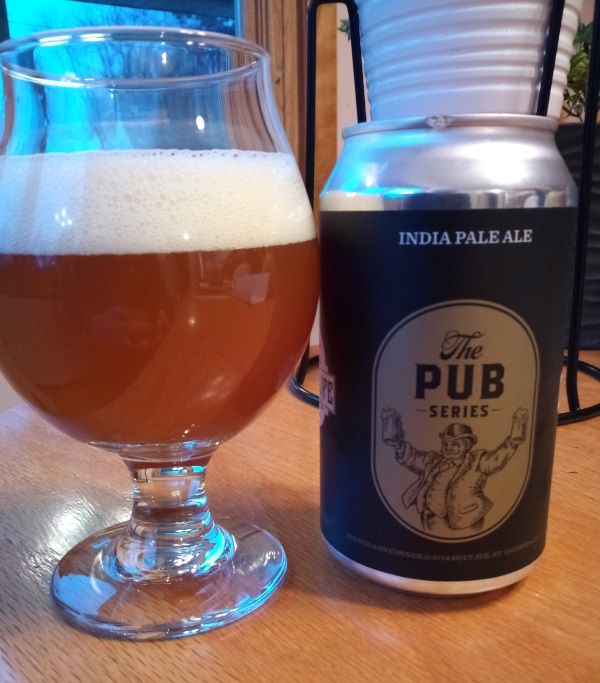
The first brew I sampled was the IPA. My reasoning was two-fold: 1) if it wasn't an English IPA then I would get it done and out of the way as American ones, generally speaking, are not my cup of tea and 2) it had been a while since I'd had an English IPA and, since I liked the one I'd tasted, it'd be hoopy to have another.
 

I was quite surprised when I poured some and found that it wasn't just hazy, it was turbid. Was this really a hazy-juicy IPA? From Civil Life?

"Well, they've gotta keep the lights on somehow," I reasoned.

The mega-haze dulled what I think would have been a very pretty gold beer. On the plus side, the head was this big dollop of just off-white foam that lingered. I took solace in the fact that I didn't smell Hawaiian Punch as I inspected the glass. Taking a big whiff, my nose was greeted by pine, something like mango, and a malty sweetness. The mango wasn't unpleasant and it was in the background behind the pine.

My first sip found a medium-light body that leaned towards the former. Instead of being a hazy IPA, it was more like a West Coast one with the pine and some grapefruit being the prominent flavors. I appreciated that the malt was a bit restrained and didn't have that syrupy sweetness in the background trying to be the hops' foil.

I was pleasantly reminded of Sierra Nevada's Pale Ale with this one.

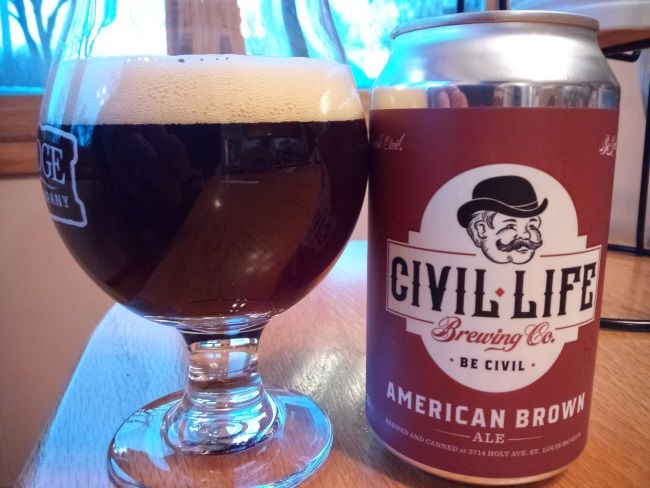
Next I tried Civil Life's American Brown Ale.


A lovely deep amber with a big, light tan head. Looked scrumptious. It had an aroma that I've smelled in beer before but I don't know what it is and can best describe it as musty plum, but in a good way. Also, a little spicy hoppiness and some leather.

Every beer I've been drinking lately seems to have a medium-light body and this one did too. Some milk chocolate was joined by coffee flavors and caramel too, though the beer wasn't particularly sweet.

If I recall correctly, this is Civil Life's best-seller. No wonder as it's very, very tasty. If their IPA brought back memories from the mid-90s of drinking Sierra Nevada Pale Ale, this did the same only for Pete's Wicked Ale. Does this stuff taste like that pioneering beer? I don't recall. But it is decidedly retro to have a brown ale as your best selling brew.

I enjoyed how easy drinking this was despite having a fuller malt flavor. Astringency was mild, sweetness was kept at bay. It was malty without being cloying and it had just the perfect amount of hops for balance with a pleasing bitterness at the end.

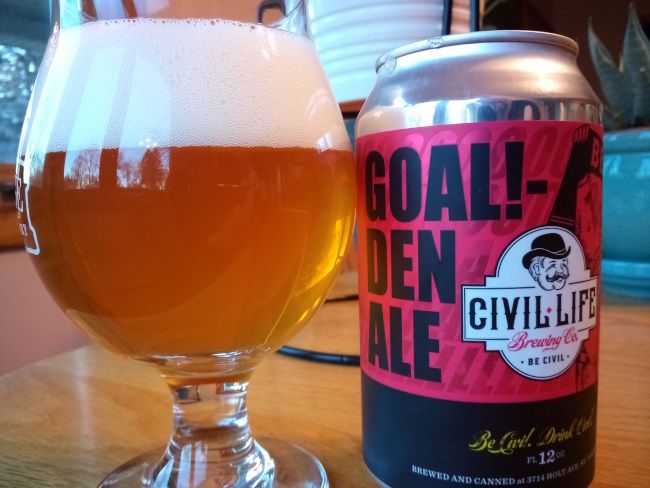
This trio of Civil Life brews will be rounded out with their Goal!den Ale.


The goofy name comes from the fact that this beer was originally brewed for the Amsterdam Tavern in St. Louis, a place where folks like to gather to watch soccer. Er, football.

A very pretty beer with a big white head and light gold color. It was hazy, but only just. Smelled great too with notes of biscuit and honey as well as a faint bit of grass.

This one was light-medium - ha! A slight sweetness along with the taste of biscuit and something else. Just as there was that scent in the brown ale that was familiar yet undefinable, this stuff had a flavor that made me think there was corn in it. (The brewery disabused me of this idea via email.) It had a vague resemblance to Corona. When your beer's malty taste doesn't have a clear baked good analogue such as a biscuit or a cracker or bread and instead has more of a muddy, doughy taste - well, this is it. There was also a hint of lemon and some gentle herbal-peppery hops.

There are times when the lines between a golden/blonde ale and an American light lager are thrown into sharp relief. This is not one of those times. Goal!den Ale is crisp and clean with everything about it light and easy going. OK, I'll cop to it having a fuller malt taste than most American light lagers meaning it's not the same species or even genus, but definitely the same family.

A fine lawnmower+ beer.

Down on Ole's farm: Kornøl Norwegian-Style Ale by Giant Jones Brewing

 
Ole and Sven walk into a bar and they order some beers. After drinking his, Ole looks into his shirt pocket. They order another round and Ole looks into his shirt pocket again. This goes on for a few more rounds.

Sven is curious, “Ole, why do you look in your pocket after each beer? Whatcha got in der?"

Ole confesses, "I have a picture of my Lena in der, and when she starts ta look good, I go home."

When it comes to beer, Norway's is not exactly near the top of most people's lists. And I don't mean that their beer is regarded as being low quality; it's that people outside of Norway don't seem to know it exists.
 
"They brew beer in the land of the midnight sun? I didn't think you could grow barley on a glacier."
 
Norway is about a-ha and Ole and Sven/Lena jokes. Their culinary traditions consist of lefse and lutefisk, right? I suppose I can say that, when I think of Norway, I also think of the biathlon (I got pretty good at it playing Winter Games on my Commodore 64) and a bunch of guys on skis blowing up a heavy water factory.

People in the American Upper Midwest, such as myself, might throw in rosemaling and sandbakkels at Christmas but that exhausts most Americans' knowledge of Norwegian culture.

Actual Norwegians know a bit more, though, I suppose. But how much about their indigenous beer styles to they know?

One Norwegian who knows about the brews of his homeland is Lars Marius Garshol. He literally wrote the book as his tome Tradisjonsbrygging av øl goes in-depth into the farmhouse ales of his homeland. Unfortunately, it's in Norwegian. On the other hand, his Historical Brewing Techniques: The Lost Art of Farmhouse Brewing is in English and it covers the farmhouse brews of Norway, as well other Northern European countries. It sounds like an interesting book that would shed a lot of light on the beer at hand. But I wouldn't know since I've never read it.

At some point in the fall, I spied Kornøl by Giant Jones Brewing in a beer cooler and was intrigued. I searched my memories for a time when I'd sampled a Norwegian style of beer but found none and so I eagerly bought a bottle. While I haven't read Garshol's book, I have heard an interview with him. He notes that kornøl is a beer style associated with the northwestern part of the country and has the following characteristics:

- wort is not boiled
- pale grist is used
- a juniper infusion mash
- very little hops
- kveik for fermentation
- very low carbonation

Of course it has juniper in it. It's a standard ingredient in more boreal brews.
 
Was Giant Jones' Kornøl brewed to these standards? Will it taste like it's "supposed to"?
 
 
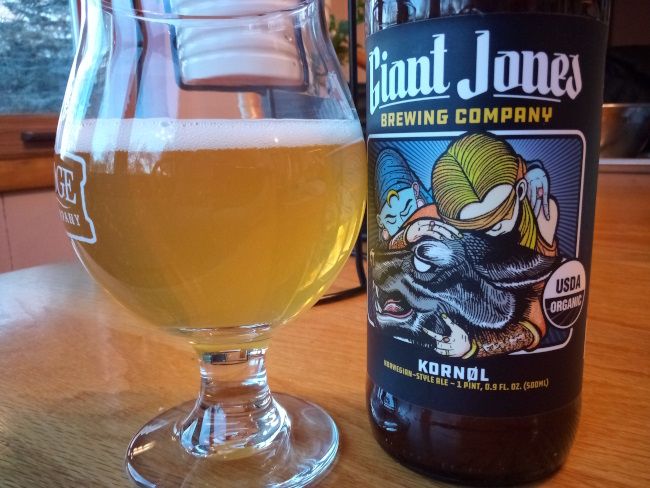
Since I'd never had kornøl previously, I found myself enchanted with novelty at every turn. I had no idea what it looked like and was pleasantly surprised at a lovely light yellow liquid which was in start contract to the dark lagers and bracketts I'd been consuming lately. There was a slight haze to it. Despite my best(?) efforts, my pour produced only a small head of lively foam. Like the stuff in soda. It didn't last. With that haze being on the light side, I was able to see some bubbles inside. I was surprised by a lemony smell, as if it was a kettle sour. Was it? For all I knew, it was a sour beer, laden with lactic. I also smelled grain - yeasty, crackery - and a hint of pine. The label did mention local spruce.

The label mentioned that it wasn't boiled and was fermented with kveik so, along with the juniper, pale color, and small head, it seemed we were more or less in the kornøl ball park here.

When I tipple a stronger beer, and this stuff is 7.4%, I tend to go in thinking that it's going to be thick and sweet and really provide sustenance for the Fimbulwinter. But I found Kornøl merely had a medium body. It was a bit on the sweet side with a kind of sprightly honey taste but there was enough fizz to keep it from being cloying. The spruce was definitely there but it was not taiga in a glass. You couldn't miss it but it didn't dominate. I think I also caught a smidge of herbal hops in addition to that airy cracker taste.

The sweetness faded on the swallow which allowed a combination of the spruce and some herbal-spicy hops to finish things off with a prominent dryness and a firm bitterness.

For about half a glass I found myself pondering the mysteries of this beer. What was I tasting that was the result of the wort not having been boiled? Was I able to truly discern the hops from the spruce?

In the end, I never found any answers and, instead, just enjoyed the ride. The spruce was just the right amount for me (and may have been bolstered - the aroma, anyway - by the fact that I had hung a wreath in the same room just the day before) and while the brew had a little heft, it was never cloying nor ever tasted like liquid bread. There was a smooth sweetness to it but it wasn't like drinking syrup. Whatever the ratio of spruce to hops was, their combination was bracing and a fine antidote to the sweetness.

I thoroughly enjoyed Kornøl and only wished that I'd had someone to share my bottle with. Even if Giant Jones and brewmaster Jessica Jones deviate from tradition, they deserve a lot of credit, in my book, for brewing a plethora of more obscure styles, including this one. And this is just one of a couple farmhouse ales of Northern Europe in their catalogue. There's also a Finnish sahti to be had which I hope to try soon.

Junk food pairing: Pair Kornøl with some of Norway's finest: Sørlandschips Havsalt og Eplekjekk Eddik potato chips - salt & vinegar!

14 December, 2023

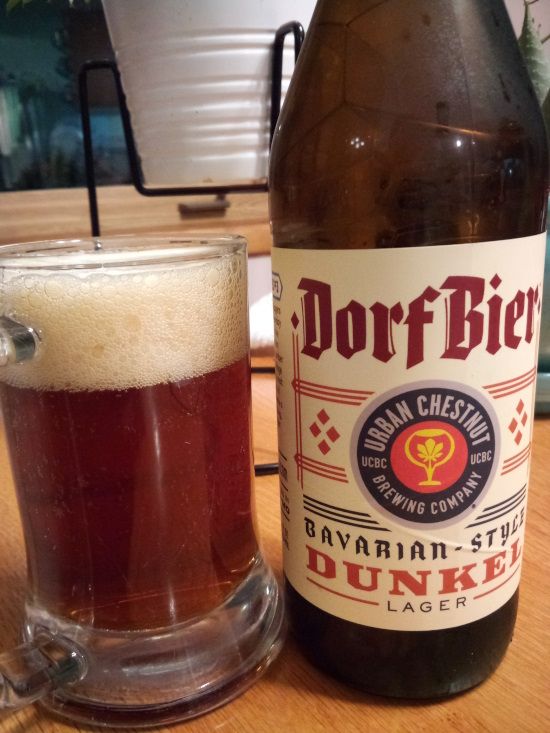
It Takes a Village: DorfBier by Urban Chestnut Brewing


Trips to liquor stores in Chicagoland involve not only investigating what the brewers of that region have been up to, but also some of those from St. Louis, namely Schlafly and Urban Chestnut. I suspect there are other breweries' beers from the Gateway to the West at Binny's but the only other brewery whose brews I'd be interested in (that I know of, anyway) come from Civil Life. Alas, they don't seem to distribute to Downers Grove. My autumnal trek to Binny's this year yielded, amongst others, DorfBier, a Bavarian-style Dunkel, from Urban Chestnut. Another member of the Axis of Darkness!

Their brewmaster, Florian Kuplent, hails from Bavaria and keeps the taps flowing with brews that would be right at home at a biergarten in his Heimat. These are in addition to various IPAs and other non-Bavarian styles that no doubt help keep the lights on.

The label for DorfBier - "village beer" - notes that it is the third entry in the brewery's Reverence series which I presume is reserved for Bavarian-style biers brewed using (more or less) Old World methods. And, to the best of my knowledge, Urban Chestnut does brew using decoction so I don't think it's a stretch to assume that this stuff saw some decoction action.

I visited their Midtown outpost several years back on a trip to St. Louis and sampled their Dunkel. It was tasty. But I don't recall having run into it since then and, as my blog entry covering my visit to the taproom says nothing beyond the Dunkel being good, I figure it's time to revisit this brew - even if I cannot revisit St. Louis.


I got a big, light tan head in my glass that lasted. Beneath it the liquid showed off its light amber hue with crystal clarity revealing a modicum of bubbles inside. A toasty-roasty smell reached my nose first and was followed by some caramel and milk chocolate. These scents were topped off with a hint of grassy hops.

A nice fizziness set the stage for a medium-light bodied beer with a lovely bread flavor along with that toasty-roasty thing, caramel, and milk chocolate. Despite using ingredients found in candy bars here, DorfBier had only a mild sweetness. The fizz wasn't Berliner Weisse strength but enough for a gentle astringency. There was a hint of peppery hops loitering in the background. A little milk chocolate sweetness lingered on the front of my tongue on the finish but was soon swept away by a combination of fizzy acidity and a moderate dose of herbal-peppery hops which took my palate down the middle path of dryness and bitterness.

Considering the brewmaster is from Bavaria and apprenticed there, I'd have been shocked if this bier was anything less than extremely reverent and tasty. And it was. It has a nice bread taste to it - decocted? - along with malty flavors from the Dark Side that I just love. Its lightish body and moderate strength - 4.8% A.B.V. - make it an everyday workhorse of a brew. Whether you're at the biergarten, eating a meal, relaxing after work, or in need of refreshment after laboring out in the back 40, DorfBier has got you covered.

Junk food pairing: DorfBier will pair well with many junk foods but I prefer Mrs. Fisher's Dark Potato Chip. Their extra Maillard reactions will complement the dark malt flavors of your DorfBier perfectly.

Another Ravenswood Brewery Morning: Czech-Style Dark Lager by Dovetail Brewery

 
Czech beers are having their moment in the sun or had it recently, anyway. Breweries happy to churn out IPA after IPA suddenly had to figure out how to put diacritical marks on their labels. Tmavé pivo seemed to be everywhere. OK, not really but it did pop up in places both predictable and unexpected in a nano-trend. Here in Madison, I don't think a genuine Czech dark lager has ever been on a store shelf. It's Pilsner Urquell and maybe Staropramen but that's it and I think that's the case in most of this country. Heck, the style is fairly rare in its homeland. I guess all those craft brewers went to The Czech Republic and learned the mad tmavé pivo brewing skillz.

If, as Evan Rail claims (see link above), "[tmavé pivo] should be brewed with a traditional decoction mash", then most American takes on it lack a big chunk of authenticity. However, I think we've been lucky here in Madison as both Next Door and Working Draft have brewed the style and, to the best of my knowledge, both breweries also decocted, at least while Next Door wasn't just a brand. Personally, I thoroughly enjoyed their takes on the style. Same for Lazy Monk's. Brewmaster Leos Frank is Czech so he may have had some first-hand experience with tmavé pivo back in its homeland to bring to his brew kettle.

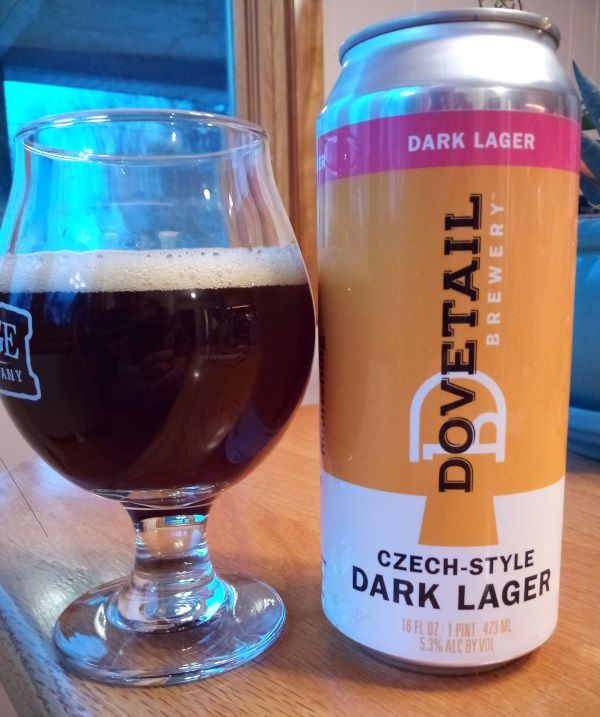
When I was down in Chicagoland last month, I made my annual autumnal stop at Binny's and found a Czech-style dark lager from Chicago's Dovetail Brewery. Those people - I don't think there's an Old World brewing technique they don't practice. From what I've heard, Dovetail's brewers have weird dreams involving old brewhouses. My undercover contact there surreptitiously recorded the following, a recounting of one of these dreams by brewer Jenny Pfäfflin:

I was in a brewery I did not know, which had two storeys.  It was "my brewery".  I found myself in the upper storey, where there were sacks of Citra and Simcoe. On the walls hung a number of charts about hopping rates.  I wondered if this was really my brewery and thought, "Ewww!" But then it occurred to me that I did not know what the lower floor looked like. Descending the stairs, I reached the ground floor. There everything was much older. I realized that this part of the brewery must date from the 19th century. There were piles of malt scattered around, the floors were of red brick. Everywhere it was rather dark. I went from one room to another, thinking, "Now I really must explore the whole brewery." I came upon a heavy door and opened it. Beyond it, I discovered a stone stairway that led down into a cellar. Descending again, I found myself in a beautifully vaulted room. There were several copper kettles - more than enough for decoction - and horizontal lagering tanks. I looked behind a mash tun and discovered two steinkrugs, obviously very old, and half disintegrated. Then I awoke.

A beer hall
Some barley malt
It joins all
Dovetail Brewery

Dovetail lists their Czech-Style Dark Lager as a seasonal but they don't note which season. I hope it's a fall seasonal for goodness sake. The brewery's seasonals are not easy to find here in Madison. Or maybe they are and I just always miss them as if I were Gordon to their Mr. Snuffleupagus. Ms. Pfäfflin and the rest of the Dovetail Brewers probably decoct in their spare time for fun so I presumed Czech Dark Lager got the treatment. Every Dovetail brew I've had has been exceptional and I expected no less with this brew.


My pour produced a small head of loose, tan foam that didn't stick around. Putting my glass up to the light, I saw that the brew was amber hued and looked clear, from what I could tell, with a smattering of bubbles inside. Never having had a genuine tmavé pivo, I am unsure if this is what the style is supposed to look like or not. Regardless, it was pretty. Taking a whiff, I smelled some caramel, a general roastiness, a dash of dark chocolate, and a plum-like fruitiness.

That first sip revealed a medium-light body that perhaps was a bit more on the light side. A healthy level of fizz oversaw a medley a fine flavors - roastiness, coffee, bread, and a touch of caramel or more, if I was tasting from the back of my tongue. For all of the malt taste here, it wasn't very sweet. All of those roasty/coffee flavors faded on the swallow leaving some spicy hops to step to the fore. My tongue was not inundated with a flood of Saaz or anything but the hops dried things out and added a firm bitterness.

Is this beer anything like the tmavé pivo you get in the Czech Republic? I dunno. But this stuff is excellent. I love how the coffee and bread flavors lead the charge here and I also adore how that brisk wave of hops acts both in counterpoint to the bread/caramel flavors yet complements that vaguely bitter coffee taste. Plus, this pivo has a fairly light body yet is chock full of malty goodness.

As a big fan of the Dunkel and Schwarzbier, I suppose it's time to add the tmavé pivo to this Axis of Darkness. The only thing left is for Dovetail to make this stuff in a Rauchbier version or whatever you call a smoke beer in Czech.

Junk food pairing: With all the malty flavors here you'll need to pair it with something that is up to the task of being able to cut through them to stand on its own yet also harmonize with the pivo. That food, ladies and gentlemen, is Jays Hot Stuff potato chips. With roots in Chicago, their spicy paprika flavor lends an earthy, Central European goodness that complements both the roastiness of the malt but also the sprightly taste of the hops.

13 December, 2023

They're lining up at Whole Foods

They were prepping free hot drinks and it looks like a DJ was getting ready to spin some tunes for the grand opening of the new Whole Foods. There was already a person in line at the "Line starts here sign".


What will the DJ play?


12 December, 2023

The Corona Diaries Vol. 101 - Prelude: Slender Man

 
 (Take me to entry #101.)

Madison's Unkalung Choir(?!)

"Madison Wisconsin seems like a strange place for a choir celebrating the Unkalunch, a bamboo instrument native to Thailand, but here it is."

New Ningen Isu

I see that Ningen Isu, surely Japan's foremost metal band, had a new album come out recently. Here's the single, "Farewell to the World". Bassist Ken-ichi Suzuki is in fine form here. I wish they'd tour the States.

10 December, 2023

The Corona Diaries Vol. 100: Meet Me at the Omni

(early-August 2023)

(Listen to the Hoosiery prelude.)

For the first time in a few years, I made the trek to Indianapolis with some friends for Gencon, the largest gaming convention on the continent. For most of us, it was our first time there since the pandemic made everything all topsy-turvy. We arrived the day before the con officially began and checked into our hotel which was just off of the lovely Monument Circle.

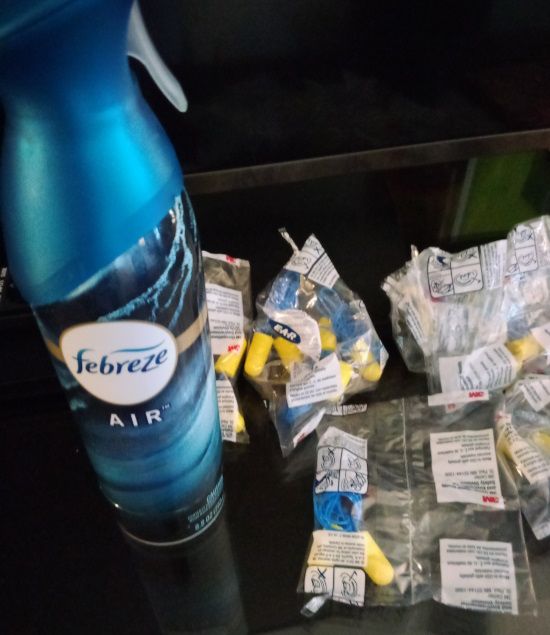
There would be 4 of us sharing a room and so we came prepared with air freshener and ear plugs.

My group decided to meet up at our usual gathering spot, The Claddagh Irish Pub. We had a hard time finding it, though.

"Isn't it this way? Like a block over?"

We all looked around and then at our phones and then at the street signs a few times before coming to the sad conclusion that it was gone.

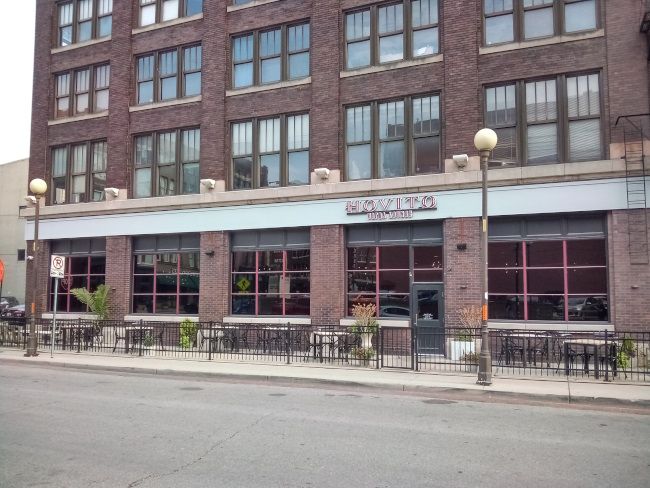
It had been replaced by Hovito Ultra Lounge, which sounded like a place from A Clockwork Orange where Alex and his droogs would hang out after some ultraviolence. We ducked inside to see if it would perhaps suit our needs anyway. Gone was the instant sense of bonhomie along with the nice wooden bar, the cozy booths, and the more atmospheric lighting, shall we say. The Claddagh felt like a third space, a living room away from your living room where The Clancy Brothers would have felt at home. The well-worn and welcoming had been replaced by an IKEA showroom aesthetic, sleek and minimal. It had a vague 60s Space Age kind of feel for me, as if George and Jane Jetson might have frequented the place while they were courting.

We went elsewhere for some dinner and liquid refreshment. Then it was off to our secondary-now-made-primary gathering spot: the lobby/bar of the Omni Severin Hotel. It is where our pals in the Novus Ordo Seclorum group stay and run their Call of Cthulhu games every year. The Omni is over 100 years old and is a lovely Beaux Arts building with charm and character, unlike most hotels in downtown Indy. Being just across the street from Union Station, it surely hosted politicians, sports players, and actors needing a break on their whistle-stop tours back in the day. I can see Greta Garbo and John Barrymore strolling through the lobby. She checks in at the front desk while he stubs out a cigarette in one of the countless ashtrays before going to a phone booth and calling David Sarnoff to ask who this Katharine Hepburn dame is.

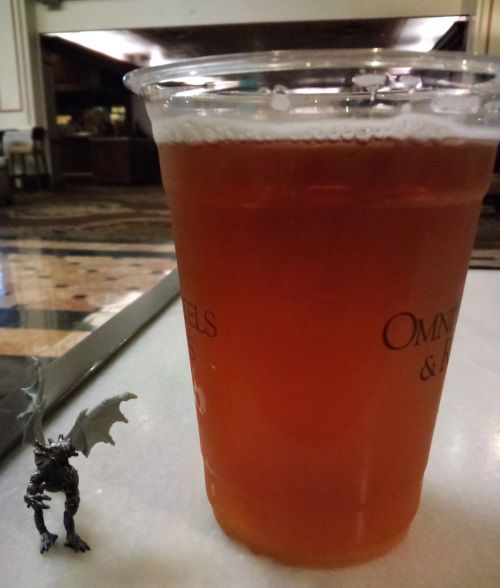
At the bar, I ordered a pint of the official beer of the convention, Hive Mind from Indy’s Sun King Brewing, which was an English mild with honey. Every glass came with a small dragon figure.

It was OK. A bit too sweet, a bit too much honey obscuring the expected leathery and caramel flavors from the malt. But the company was stellar. We chatted until the wee hours before hoofing it a few blocks to our hotel.

Oddly enough for a room of 4 middle-aged fellows, the snoring was quite minimal. I was up early - not long after dawn - and out the door before long.

While I was ostensibly there for a gaming convention, I had various other things planned. As I’ve gotten older, I’ve come to realize the value of getting away from the madness of the convention and tens of thousands of gamers, many of whom eschew soap & water. And so I decided to investigate more of Indy this trip.

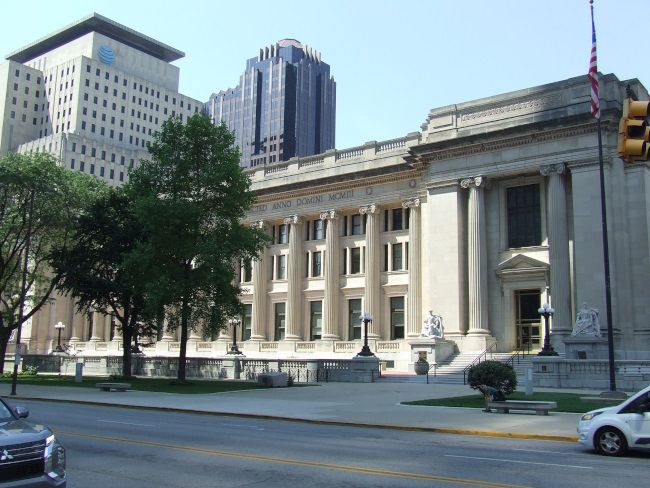
Not even a block from our hotel was the classically-inspired courthouse and post office.

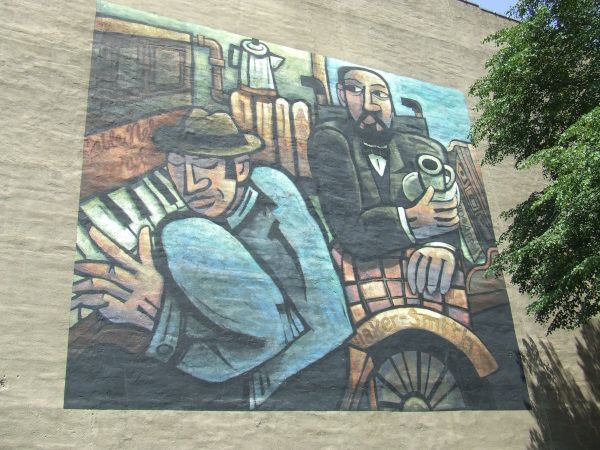
Just a block or so away from there was a neat mural.

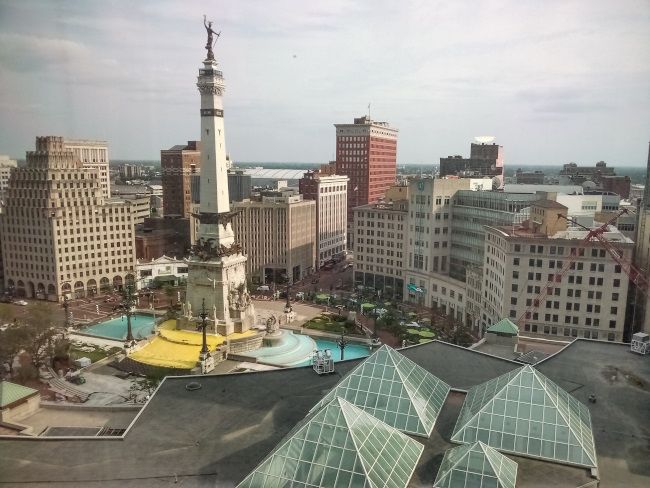
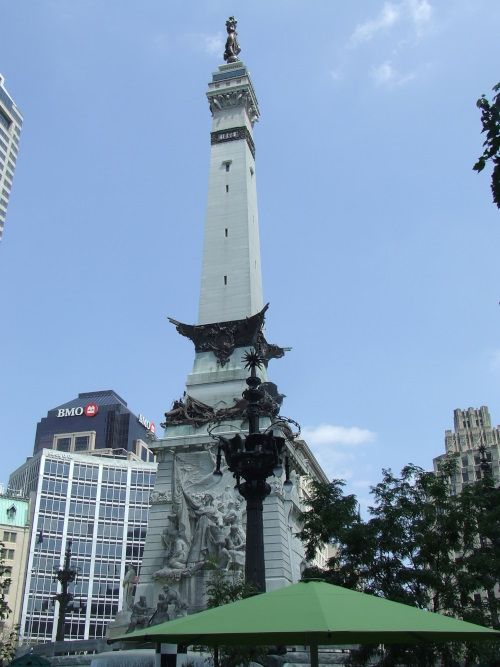
As I noted above, our hotel was right by Monument Circle with the Soldiers & Sailors Monument in the middle.

This lovely, ornate obelisk is the state’s tribute to its own that served in the Revolutionary War, the War of 1812, the Mexican War, the Civil War, the Frontier Wars, and the Spanish-American War. There was work going on at the base of the memorial – I think the fountains and pool were undergoing maintenance – and some of Monument Circle the street was closed off. This allowed some of it to be transformed into a makeshift park featuring ice cream, ping pong, and space to lounge.

The whole weekend I encountered these things which were everywhere downtown.

They all have a sticker saying “Do not ride on sidewalk” but many people did. And at breakneck speeds too. Sorry to sound like an old man.

Get off my lawn, you kids!!

As I wandered the downtown, I found some nice ghost signs such as this one.

I cannot tell what it says. Maybe the name of a local department store from back in the day.

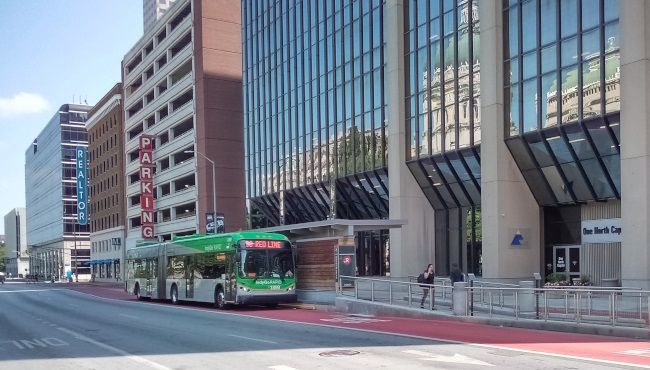
As the noon hour approached, I began feeling a bit hungry. At some point in the past, I learned from Aaron Renn (a native Indianan) that the pork tenderloin sandwich is the unofficial state sandwich of Indiana and I have fallen into the habit of sampling one at a different place each trip to Indy. My highly scientific selection process begins with googling “best pork tenderloin sandwiches Indianapolis” followed by some rigorous sifting and winnowing. This time I chose the Aristocrat Pub, some 6 miles north of downtown. I would ride Indy’s newish Bus Rapid Transit bus, the Red Line. We’re getting BRT next year here in Madison and I thought it would be interesting to try it out. That and I had absolutely no desire to drive.

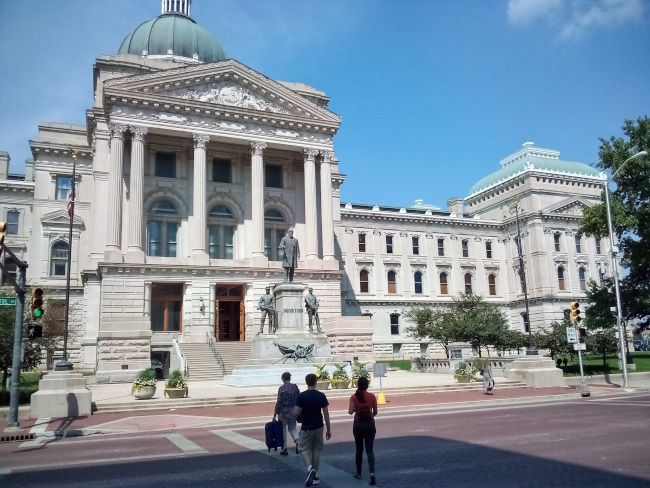
My stop was near the Capitol, a gorgeous building.

BRT utilizes elements from light rail but transposes them onto streets. Buses are often articulated – i.e. have those accordion bits in the middle and the stops are dedicated platforms that are spaced at greater distances than ordinary bus stops. The platforms have payment kiosks on them so you buy or scan your pass and just hop aboard. Red Line buses come every 15 minutes.

Here was my stop:

I found that the payment kiosk here was not working so I hoofed it up to the next stop. Now, I most likely could have just gotten on the next bus and ridden for free – what were the odds of a fare collector being on board? – but I wanted the full experience.  At the Vermont Street stop I found that the kiosk there was in working order. The northbound bus had a smattering of people on it when I stepped aboard and the air conditioning seemed to be busted. Oh well.

The first stretch north of downtown seemed to generally be gentrified or gentrifying neighborhoods. A quick jog east to Meridian Street and you are in a more ritzy part of the city with very large, old homes on big lots set back from the street quite a way. An old money part of town, I guess. Also, it’s a much greener area than parts south with acres of lawns and well-manicured hedgerows .

Another turn to the east takes us down 38th Street for several blocks. There are many boarded up buildings along this stretch and the businesses tend towards fast food, check cashing places, and others aimed at lower/working class folks.

We turn north onto College Avenue and the McDonalds give way to well-kept single family homes as we enter more middle class neighborhoods. The houses are nice, but not huge, and there are more trees and lawns, though more modest than was seen on Meridian Street.

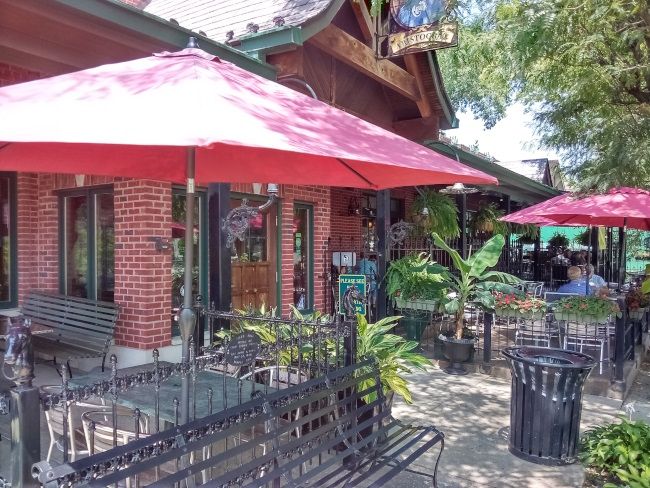
I got off the bus at 52nd Street in a nice, quiet area. More of those single family homes with shops scattered about, including the Aristorcrat which was tucked away amongst some trees at the north end of an older building that housed 2 or 3 other joints.

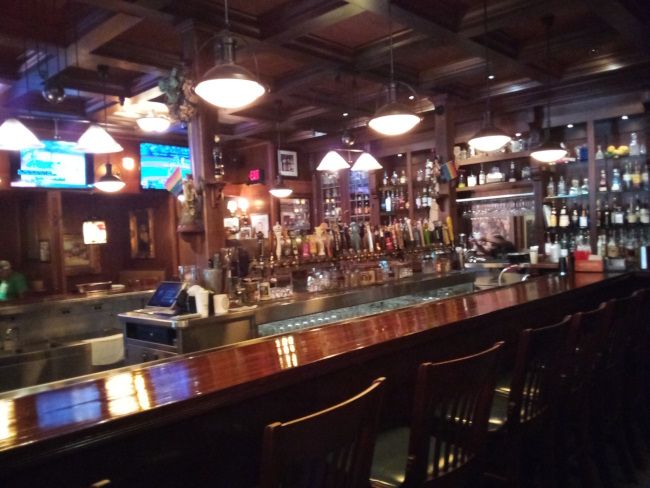
The inside was just as charming as everything was wood giving it an old-timey kind of feel - everything the Hovito Ultra Lounge was missing.

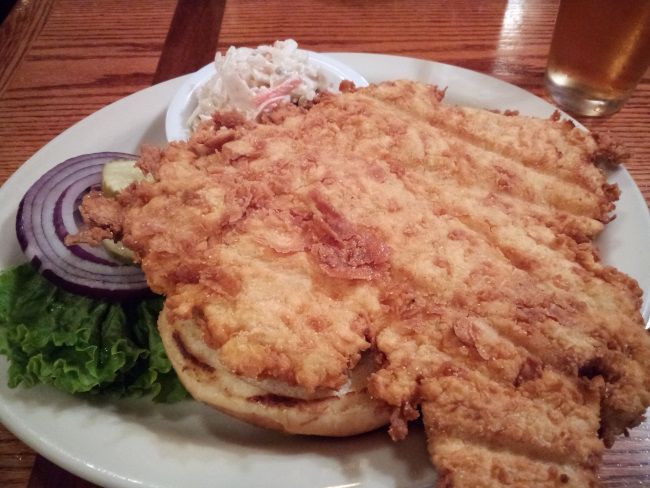
I ordered the pork tenderloin sandwich which was called The Hoosier Tenderloin and a fine pilsner beer from Indy’s Metazoa Brewing called Mortal Wombat. By the time my sandwich arrived, I was very hungry but found that I had enough food for an army.

The pork tenderloin sandwich is basically Schweineschnitzel served on a bun. A slice of pork loin is pounded thin, breaded, and then fried. I had lettuce, onion, and pickle on mine. It was very tasty. The breading was lightly seasoned and the bun was toasted, which is a big plus for me. As someone who loves that taste of Maillard reactions, the more, the merrier, I say! The cole slaw was good as well.

This was the 3rd, I think, pork tenderloin sandwich I’ve had in Indianapolis and I am working on formulating the Platonic ideal of it. How much breading? How should the breading be seasoned? What kind of bun to use? What else should go on it? Red or white or yellow onion? Tomato?

I don’t doubt that, if I thought about this long enough, I’d come up with a version for every season. Perhaps something like a hearty rye bread for winter and fresh jalapenos in the summer. Now that I think about it, a rye bun and fresh jalapeno sound good year-round. Anyway, I have come up with this:

Breading as thin as possible and seasoned well, including white pepper and marjoram. Serve it on kaiser roll – crispy on the outside and fluffy inside. I like the lettuce, onion, pickle combination. The Aristocrat had yellow mustard on the table and I didn’t ask if they had another variety. Under optimal conditions, I’d go with a brown mustard, something earthier tasting than yellow and with a mellower taste – not so sharp.

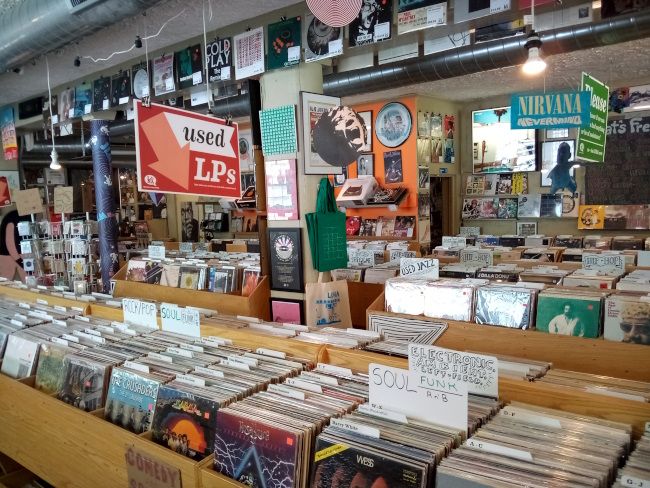
I decided it was best to keep moving after lunch so I didn’t fall asleep on the bus only to wake up on the south side of town completely lost. A couple storefronts down from The Aristocrat was a record store called Luna Music so I stopped in.

The place had a bit of a High Fidelity vibe.

Most of the space was dedicated to vinyl but I don’t own a turntable nor do I have the space for a lot of records so I stick with CDs. I ended up buying a couple albums: Kick by INXS because it’s good pop music. I like to sing “Devil Inside” but insert our very curious and often times naughty cat Grabby’s (a.k.a. - Marilyn) name.

The Grabber inside, the Grabber inside
Every single one of us
The Grabber inside

Well, it makes my Frau laugh, anyway.

The other album was Secret South by alternative country band 16 Horsepower. My understanding is that their lead singer and bandleader, David Eugene Edwards, was (is?) a practicing Christian and he was not afraid to sing about topics near and dear to that religion's heart such as suffering and redemption. While The Louvin Brothers warned us that Satan is real and that the atomic bomb would be the end of humanity, their songs are mere nursery rhymes in contrast the gloom that 16 Horsepower conjured. On Secret South, there's “Clogger”, a great tune that moves along at a good clip but has some sinister overtones as Edwards warns:

You ride a faithless steed
Took you down the wrong road
Ye' in word an' in deed

Their version of the traditional folk song “Wayfaring Stranger” takes a melodic lamentation and makes it into an all-out dirge laced with churning waves of what sounds like distorted electric guitar meant to evoke going to the other side. It's moody and it's weird yet never abandons the hauntingly beautiful old folk melody.

The guy behind the counter was extremely friendly. With my purchase I got a sticker and a postcard to boot.

I had a game in a couple hours and figured that it’d be best to grab a cup of coffee. And I had a sweet tooth to satisfy. Luckily there was a coffeehouse just across the street from the record store – Prufrock Coffee Co.

The place turned out to be cozy little spot with a literary bent. One wall featured shelves full of books and there was also one of those rotating wire display thingies with even more. It was only later that Prufrock rang a bell but I couldn’t place it. One internet search later and I learned that the coffee joint was surely named after “The Love Song of J. Alfred Prufrock”, a poem by T. S. Eliot. I’ve never read it. The only thing by Eliot I have ever read is “The Waste Land”. Oh, and "The Hollow Men".

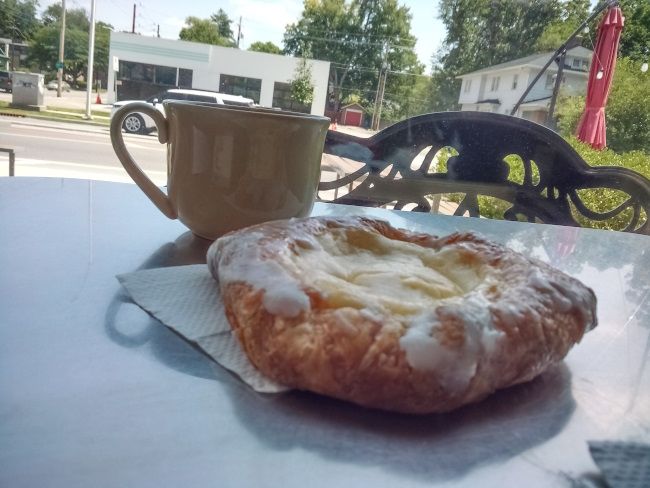
The coffee was very tasty and I threw in a Danish because, well, I was on vacation.

With some caffeine and dessert now inside me, I was truly a stuffed man when I walked 100’ to the bus stop and waited about 10 minutes for the next Red Line. Thankfully, the air conditioning worked on this bus and it was quite a bit more populated than the one I had taken earlier, with some folks wearing blue Gencon polo shirts which meant they were going to work. I felt a bit bad for them and hoped that they had safe jobs like working the concession stands or changing trash can liners and not cleaning the restrooms. Those men's rooms at the convention center can veer awfully close to EPA superfund sites, at times.

I got back downtown with a little time to spare so I met up with a friend and we walked through the con’s vending area which is huge and always packed with people cheek by jowl. It is surely is a major fire hazard but gamer folks need to buy rulebooks, t-shirts, and plush 20 sided dice . I’d hate to be in there if a fire broke out. There’d be more deaths from the ensuing stampede than from smoke or actual fire.

Countless vendors hawk their wares with close to every game and gaming accessory available to willing buyers. Need a deluxe $10,000 bespoke table to play Dungeons & Dragons on? Someone there has got you covered. Want to fill in your D&D rules collection with first editions worth the mortgage of your house? Done!

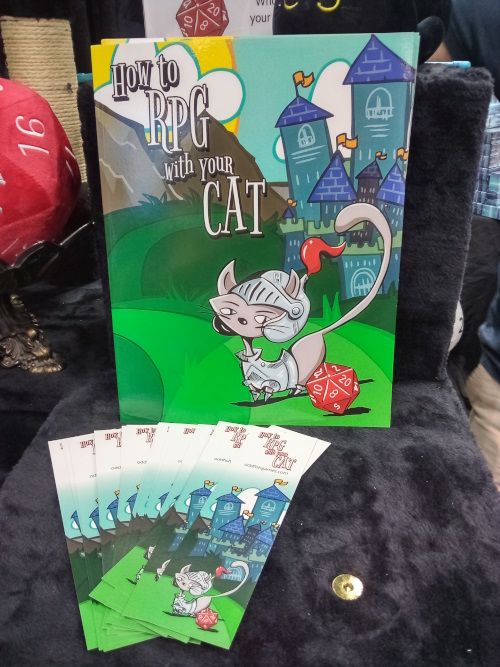
Are you a cat lover who wants to game with your cat? No problem! There’s a game for you.

Does your cat need a suit of armor for the adventure? They’ve got you covered.

We wandered over to the H.P. Lovecraft Historical Society booth. Lovecraft, an early 20th century author, invented the Cthulhu mythos, a family of betentacled deities, the mere sight of which frays our fragile sanity. To them, we humans are not even pimples on the ass of The Great Old One, Cthulhu. The Society makes gaming aids for Cthulhu role-playing games, movie adaptations of Lovecraft’s tales, and audio drama adaptations of his stories and those of other, related horror authors. I always buy a CD of one of their audio dramas at Gencon and this year it was their adaptation of Robert E. Howard's The Black Stone.

Howard is known for having created Conan the Barbarian but he also wrote “weird” horror tales a la Lovecraft. My version came with props including a postcard sent by one of the characters, a map, and a page from the Chicago Examiner which, I have discovered, was a real newspaper.

HPLHS productions are of high quality with great voice acting and sound effects. Their shows mimic the radio dramas of the 1920 but add an occasional 21st century touch. They are just a lot of fun to listen to.

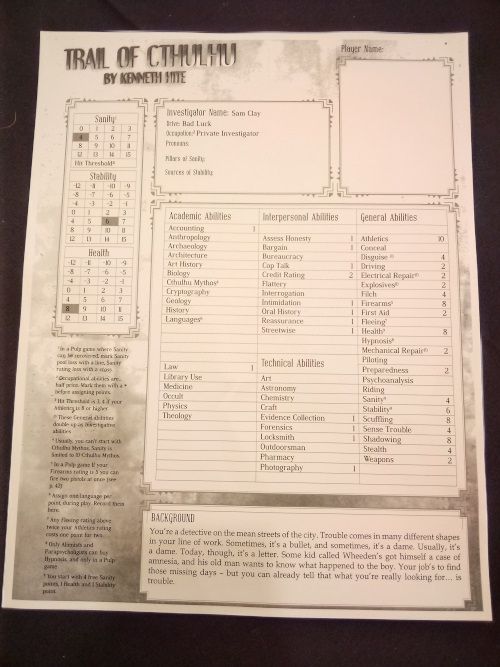
After showing some restraint and not buying anything else, we ducked out and I headed over to Lucas Oil Stadium for a game of Trail of Cthulhu. A role-playing game, Trail was created by Chicagoan Kenneth Hite. The scenario was called “The Case of Ernest Wheeden” and I played a private dick named Sam Clay.

I was a member of a group hired by the wealthy Wheeden family to figure out what happened to their son, Ernest, who had mysteriously disappeared about a month ago only to even more mysteriously reappear a week ago on a train unable to recall exactly what happened to him.

Well, it turns out he had been investigating family lore and dug a little too deeply into the occult studies of his grandfather. The usual kind of thing in any Cthulhu game.

Somehow we survived an encounter with the hideous, eldritch forces of the universe. Now, I am not going to claim none of our characters lost any sanity along the way, but we remained alive.

The game being done, it was off to find my friends which wasn’t too hard. More beer and good company in the Omni lobby until the wee hours of the morning.

********

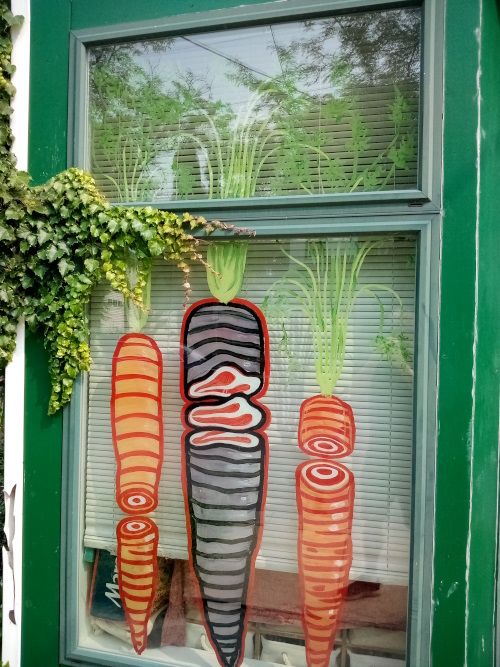
Bonus photo. Seen while out buying cat food. Someone painted colorful carrots in their windows.

08 December, 2023

Unternehmen Herbstnebel

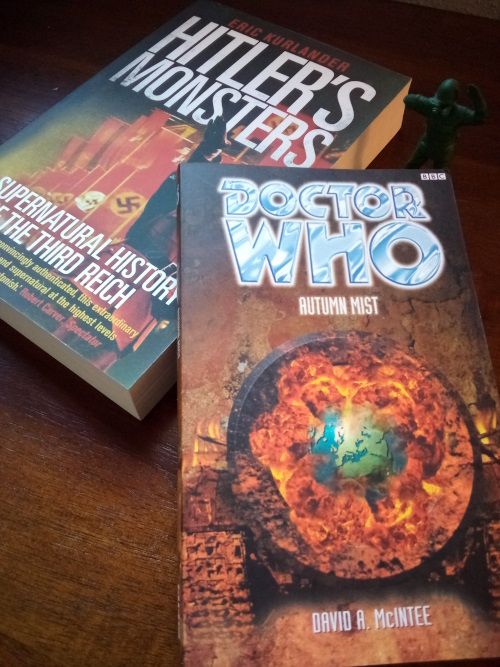
It's too bad David McIntee didn't have this story take place a week or so later than it did so we could have General George S. Patton as a character. Can you imagine the barbs he and Sam would trade? Woo boy! Old Blood and Guts would demean the Doctor as an effeminate dandy but they would come together after finding common ground in the maxim about making plans that fit the circumstances.

But McIntee didn't.
Instead it's 15 December 1944 and Patton's Third Army are still in Germany. Here in the Ardennes, beleagured American forces are doing their best to hold out against a desperate last push by the Germans into Belgium and France. Into the waning days of the war and on a bridge in the the Ardennes forest lands the TARDIS. Our heroes go wandering when suddenly the bridge is destroyed. The TARDIS falls to the bottom of the river and Sam ends up on the far side separated from her friends. Eventually the Doctor and Fitz get split apart as well when the latter ends up in the river just like the ship and is swept downstream.

Oh, and weird things are happening in the forest, namely, bodies are disappearing...

Sam runs into an American soldier named Kovacs who gets her a lift farther back from the front lines. That convoy is attacked by the Germans and everyone is captured. In retaliation for the Allied bombing of cities - I think the fire bombing of Dresden was still a couple months off but Hamburg had been turned into an inferno the previous year - the German soldiers decide to take no prisoners and shoot them instead. I was shocked when our beloved Sam was shot point blank in the heart.

Fitz eventually extracts himself from the water and finds some shelter in a small town. Unfortunately, the Germans move in and Fitz is forced to grab the uniform of a dead paratrooper. Although unterwasser, the TARDIS translation circuit works just fine and Fitz is able to integrate himself into the Wehrmacht unit that has occupied the town. His Spidey sense is activated when a trio of armored vehicles appear with strange-looking antennae that seem out of place in this time period. Ooh! The Ahnenerbe!

After having lost Fitz, the Doctor meets up with a Polish-American G.I. named Wiesniewski who is out of sorts and is mumbling something about a "Leshy in mist..." with a Leshy being a Polish spirit of the forest. The Doctor gets him to the town of Bastogne for medical care where a doctor of the medical kind named Garcia treats him. The Americans there are under a Colonel Lewis who is a bit of an odd duck. He appears to make a reference to the Philadelphia Experiment and seemingly has an invisible companion that he talks to.

Just as there was a scarred rip in the fabric of space-time in Unnatural History, there is a rift here in the Ardennes. This rift has exposed our world to that of the Sidhe, creatures that we ostensibly share the Earth with but who also exist in the rest of the 11 dimensions and out of phase from us and our limited perceptions. Thusly it's like we can kinda see them out of the corner of our eyes, but when we turn to get a better look, they're gone. If we were able to see them, they'd appear somewhat elven to our eyes. Lewis and the local Ahnenerbe rep on the ground with those armored vehicles donning strange antennae, Sturmbannfuhrer Leitz, have a pact. They will penetrate the rift with some tanks and troops and duke it out as an experiment.

I didn't think Sam's time had come and indeed it hadn't. Not unlike Richard Francis Burton in Riverworld, Sam wakes up in the land of the Sidhe. Alive. I was going to write that she'd dodged a bullet but she did no such thing. Sam meets Titania, queen of the Sidhe. The king is named Oberon and is her equal and opposite. Whereas Titania represents order, Oberon revels in chaos - vague shades of the Faction Paradox here. We learn that Lewis' invisible friend is Oberon who is meddling in human affairs.

OK, done with the synopsis.

McIntee does a really nice job here. The first chapters give you a good picture of the scene and build up mystery well. I was not expecting Sam to get shot and killed. That scene was done very well with people dying horribly and Sam trying to feign that she's dead so that the Germans wandering the bodies looking for any survivors to dispatch don't come to her. A very tense scene that left me incredulous.

The Wehrmacht soldiers are definitely the bad guys but they aren't cartoonishly evil devils while the G.I.'s come across as your average Joe put in a predicament they don't want to be in but must. OK, there's a dash of John Wayne heroics at the end when just a handful of them take on German infantry and heavy armor but that's fine, really. Even Lewis und Leitz aren't over the top.

McIntee treads well-worn ground here with his "war is hell" theme, but he does a good job and never gets preachy. The battle scenes were well drawn with tension filling the air as grenades are lobbed and bullets fly overhead. McIntee appears to have done his homework as his descriptions of military equipment seemed legit and I don't think the differences between Panzers and Tigers have ever elucidated upon before or since in Doctor Who.

Some things I noticed: Fitz worries about whether this Sam is the same one he slept with in Unnatural History. And, as in that novel, the Doctor here does not cast a shadow. I smiled when Fitz did his imitation of Sean Connery in Dr. No. It was a nice bit of fun when, needing a couple thousand tones of ferrous metal to close the rift, the Doctor heads to Philadelphia intending to snag the U.S.S. Eldridge. When told he cannot just steal a ship, he retorts, "Famous for disappearing, isn’t it?" And thusly he makes the Philadelphia Experiment come true.

At one point, Oberon takes on Sam's appearance (or, rather, alters everyone's perceptions so that they think they're seeing Sam) and heads off in the TARDIS with the Doctor and Fitz. The real Sam seems rather unperturbed when she is told that she was seen entering the TARDIS which promptly took off. You'd think she'd be a bit more worried about the Doctor and her lover boy stuck with a fake poseur Sam.

At the end, Sam declares that she is through traveling with the Doctor and wishes to resign her commission as a member of the TARDIS crew. "I don’t need to do this anymore...I don’t need to follow someone else to know who I am, now. I feel like I’ve been pulled apart and put back together again – literally – more times than anyone should have to put up with..." I guess Sam will leave at some point in one of the Interference books. We shall see.

Autumn Mist was a hoot. The action scenes were tense, the story didn't bog down when Sam ends up going to another dimension as in Dominion, the characters were well-drawn, and, overall, it was just fun. No big continuity issues to keep in mind; just bad guys to deal with.

We may get an Amtrak stop yet

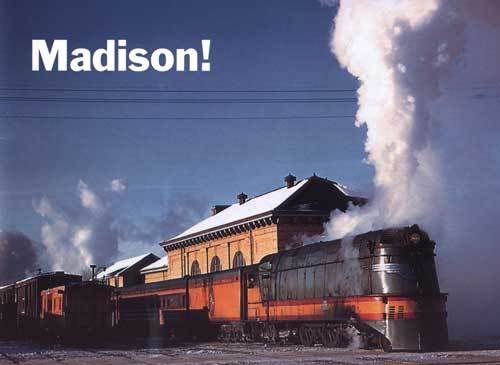
I was happy to read that the Federal Railroad Administration has bestowed $2.5 million on the Wisconsin Department of Transportation to investigate the expansion of passenger rail in the state. It sounds like $500,000 of it will be used to plan for extending Amtrak's Hiawatha line to Madison from Milwaukee.

As of now, Amtrak projects the initial trip times from Madison to Milwaukee will take one hour and 48 minutes, while the ride from Madison to Chicago will take three hours and 18 minutes.

The article notes that the city has selected 6 sites as possible locations for a train station:

The city is considering six potential areas: near the University of Wisconsin–Madison campus, downtown near Monona Terrace, on First Street and East Washington Avenue, on the near east side to the west of Fair Oaks Avenue, the site of the former Oscar Mayer plant, and lastly, near the Dane County Regional Airport.

I don't know what conventional wisdom says about locating your intercity train station. I'd bet most people using the train to come to Madison would be heading downtown or to campus. They may catch a cab or shuttle to the Epic campus in Verona, but they'll likely not want to get dropped off on the north side. Just a guess.

Should the station be in close proximity to other transit? Should it go to the airport? I can't see many people taking the train just to get to the airport. The new intercity bus depot, if there is going to be one, looks like it's to be built at the development taking over the Lake Street Ramp. No rails near that place. I'm thinking that the station should be downtown or near campus in close proximity to the forthcoming BRT lines.

Personally, I'd like the station to be downtown - in the DOA building as was planned back in 2010 or whenever it was. I have a friend who lives in downtown Chicago about a 15 minute walk from Union Station. I'd love to be able to jump on a C bus, get dropped off outside the train station, take the Hiawatha to Chicago, get my ass kicked at a war game of miniatures where I lose the Battle of Stalingrad despite cheating and having the atomic bomb, and then take the train home.

With the Republicans at the statehouse hostile to Madison getting passenger rail and a tight budget, I won't hold my breath for Madison to get an Amtrak stop in my lifetime. But hope springs eternal.

07 December, 2023

Catch as we look and use the passions that flow

Not only is it Pearl Harbor Day but also the 50th birthday of Yes' Tales From Topographic Oceans. While it is certainly imperfect, "Ritual" kicks ass. Here is it from Milwaukee on the band's 2001 tour.

The Discomfited Doctor

At the end of the previous story, Dominion, the Doctor announces that there's an anomaly in San Francisco, the site of his last regeneration, that must be investigated.

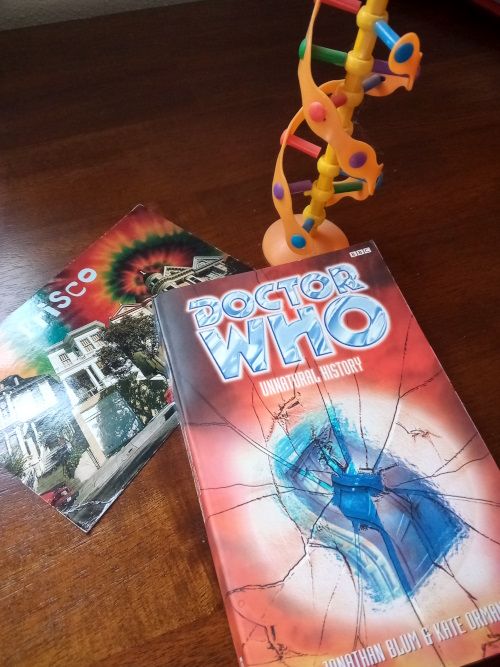
Unnatural History was a surprising tale for me and it has a rather complicated plot that I am not qualified to synopsize easily. It begins with the Doctor in London trying to convince Sam to come with him. But this is not our Sam, it's Dark Sam, the alternate version of the much-maligned companion that was first mentioned 16 books ago in Lawrence Miles' Alien Bodies. I don't know why no one investigated this avenue until Jonathan Blum and Kate Orman did here. Were the other authors not interested? Perhaps they figured Miles would take his own baton and run with it.

Then we find out that the events of the TV movie left a scar in the fabric of Time-Space that never fully healed. Various creatures are drawn to the portal such as Mandelbrot turtles and unicorns and a Kraken thingy which sleeps in the bay. Now let me see if I have this right. When our crew initially encounters the scar, the OG Sam falls into it and Dark Sam is created. The TARDIS seals the scar to keep it from getting ever more dangerous and preserve any possibility of getting blonde Sam back.

There's this unnatural historian, Griffin, who is trying to collect the odd creatures that have started to appear in San Francisco. He's a being from higher dimensions and quite mysterious. And he has these ominous henchmen. Griffin reminded me of Light in "Ghost Light" in that he wanted to collect and preserve. Light couldn't comprehend that beings changed and, similarly, Griffin is really big on taxonomy and seeks to simplify creatures so that they fit into but a single category.

Also, in perhaps a nod to "Remembrance of the Daleks", there's a boy running around who is not all that he seems. He is, in fact, with the Faction Paradox and he messes with the Doctor's head.

Griffin proves a very capable foe who is able to thwart the Doctor's plans pretty much up until the end. I liked that he was so enigmatic. We get some background but it's really a bunch of hints at this and possibilities of that. He collects his specimens and puts them into this transdimensional box. At the end, Sam opens the drawers of the box freeing the specimens who push Griffin into the scar. Will he survive? Boba Fett, after all, is supposed to have been able to escape the sarlacc.

With the TARDIS doing its bit as transdimensional duct tape to seal the scar, the Doctor is lost, not himself in certain ways. Detached from his anchor, he is not whole. At one point, he creates a pan-dimensional force field to contain Griffin, but it proves no match for the wiley collector who simply steps out from the field and kills a pagan hippie lady whom Fitz had enlisted to help the cause. In another scene, he sends one of those messenger cubes to the Time Lords only to discover later that the Faction Paradox kid has it. Blum and Orman really knock the Doctor off his pedastal here. Better than torturing him like the latter did in Seeing I, at least.

And then there's the mysterious professor at UC-Berkeley who says, "I’m Professor Daniel Joyce these days..." I thought he was a Time Lord at first, but he denies it at some point. He's obviously not human but I dunno what species he is a member of. And I was really thrown when he and Griffin have a little confab where Joyce seems to have some authority in a group that Griffin is ostensibly working for and so he can order the unnatural historian around. Or so he thinks, anyway.

Finally, there is biodata everywhere. Biodata are like DNA molecules but crossed with a computer program so you can modify it and thusly change the person - even their past. The events of the TV movie have spilled the Doctor's biodata all over San Francisco. The scar is full of it and there are whispy strands of the stuff dotting the cityscape. Joyce is tinkering with it, Griffin has some, the Faction Paradox...Well, if you're just going to leave your biodata lying around, you can't expect it to remain unmolested.

Unnatural History has a lot of threads running through it. There's the whole Sam vs. Dark Sam quandary, people tinkering with the Doctor's biodata, having to defeat Griffin, the Faction Paradox lurking in the background and occasionally making nebulous threats, etc. Lawrence Miles sowed the seeds in Alien Bodies and here Blum and Orman reap the harvest of twisty, paradoxical goodness.

While I appreciated all the timey-wimey uncertainties and wonder if it will be another 16 books before someone picks up on the threads here, the tone of Unnatural History put me off. It feels very 90s and has a slick casualness to it that doesn't do much for me. The tone is like what I think Joss Whedon's TV shows are like. The new Sam does drugs so she's "dark"; Griffin is more than a match for our hero but is he really all that interesting a villain? I really liked that he was such an enigma but he came across as rather a one note character.

I am having a hard time explaining it.

I won't say that I am against a flailing, helpless Doctor per se, but you have to do it right. Falls the Shadow felt like pure sadism to me. When you take away the Doctor's ability to help people and to overcome evil for too long, then the quirks and charm of the character tend to erode quickly. He just runs to point A where his plan fails so he drives his VW Beetle to point B where is next plain is foiled.

Perhaps the biggest contribution to Doctor Who lore and continuity is the way Blum and Orman tinker with the Doctor's identity. There's various chatter about our hero being half human and his biodata is littered around San Francisco with various groups tinkering with it. Are they changing his past? Are they modifying him? He was loomed yet had a human mother; he is The Other yet also just some Time Lord whose dissatisfaction with his society convinced him to bail on it just like a Gallifreyan Prince Harry. The book seems to take the whole concept of the origin story by the scruff of its neck and throws it out the window.

I should probably re-read Unnatural History at some point. Blum and Orman are fine writers with more neat ideas than you can shake a stick at. But there's just this ineffable problem I have with the tone. It feels American, it feels like the TV movie.

The fact that I have written much more about this story than I intended speaks to the fact that it is, at the very least, noteworthy - that it is worth considering and discussing.

I will end with this: Fitz gets into Dark Sam's pants in this story and I have to wonder how that's handled in the tales that follow.

Down the wormhole

It is fortunate that I decided to re-read Revolution Man because it is referred to here, albeit briefly. Fitz feels guilty for, well, all of his failings in the previous novel such as forcing the Doctor to get all medieval on Ed Hill, carrying pictures of Chairman Mao, etc. He wanders over to Sam's room with his tail between is legs when suddenly it is beset by this swirling vortex hole to another world and Sam is sucked in as of by some vorticial vacuum.

Meanwhile it's 1999 here on Earth and near the Swedish town of Strängnäs, the young, lithe Kerstin is spending some time at a cabin with her boyfriend Johan. (Curiously enough, Strängnäs is a genuine location in Sweden.) One night a big chunk of the cabin and a large swathe of the surrounding earth is suddenly gone. Just poof! Vanished. It turns out others in the area have also disappeared under similarly mysterious circumstances.

We meet a local farmer named Björn who finds a hideous reptilian creature attacking his pigs and chases the squamous beast away with his shotgun. Kerstin, in shock and with only half a cabin, goes to Björn's farm seeking shelter. He is reluctant at first but, being a widower, he can relate to her situation and so he relents and takes her in.

Sam is absent for something like the first half of the story which leaves The Doctor and Fitz to do the heavy lifting. They stumble upon a dead creature out in the woods that appears no less hideous than the one Björn encountered in his barn before being shooed away by hazmat suit clad folks claiming the authority of the State Biohazard Protection Unit, which, of course, doesn't exist. Instead they are UNIT and have a real nice underground bunker nearby where one Professor Jennifer Nagle has taken some alien technology and come up with a telecongruency warp generator. But instead of being able to teleport people and things between two points (I thought of Miss Kelly from "The Seeds of Death" here), she has created a wormhole between our world and another one.

It is unstable and threatens Earth's very existence! And just as chunks of the Swedish countryside and its inhabitants are being sent through the wormhole, inhabitants of that other world, the T’hiili, Bane, and the Ruin are brought here.

Sam is at that other world and has to figure out who is who and how to survive the menacing black Blight which threatens to overtake that world. The Doctor is in even more precarious position as he is tasked with dealing with Major Gareth Wolstencroft of UNIT who has a military mind even worse than the Brigadier's! He heedlessly attempts to deal with the threat to Earth as his training dictates, ignoring the Doctor's admonitions all the while.

Eventually the fecal matter hits the fan on both sides of the wormhole with the Blight joined by the threat of the Ruin on the other side while here on Earth, Ruin make their way into Nagle's lab. Things get dicey but the Doctor saves the day.

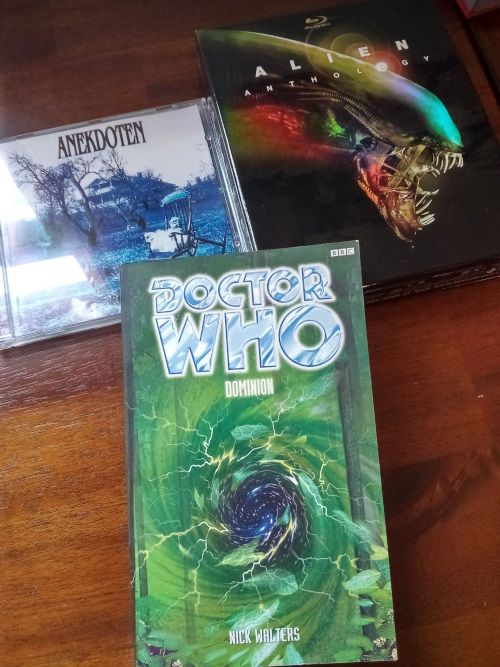
The first 40% or so of Dominion was excellent. Sam was on the far side of the wormhole so we get to witness the relationship between the Doctor and Fitz develop a bit. Plus Nick Walters does a very nice job of building up mystery in Strängnäs. Weird things are happening and nothing is as it seems. Plus we have no idea where Sam is or what she is up to. There's even a point where Johan mysteriously turns up again only to suffer the same fate as Kane and has a baby Bane burst forth from his chest in a scene full of disgusting glory.

I credit Walters for not simply having Kerstin brush this off to get on with the business of helping the Doctor save the world. But it's too bad Björn was killed so prematurely instead of being someone with whom Kerstin could commiserate. Walters didn't have to go full-blown Forbrydelsen here but I think he missed some opportunities to show that not everyone can just leave their traumas behind in an instant. On the other hand, Fitz thinks twice about hitting on her.

While I really enjoyed the scenes in Sweden - even if they tread some well-worn Third Doctor ground - the scenes with Sam on the other side of the wormhole, Dominion, were less interesting for me. Sam basically wakes up in a cave and is a stranger in a strange land. She's trying to grok where she is and what's going on with the help of a local named Itharquell. Itharquell is a bit pathetic at times, just resigned to die at the hands of the Blight without so much as putting up a fight. 

I liked the idea of the Dominion - a pocket universe with the Blight threatening its very existence being our universe creeping in and taking over - to be rather neat. But it all seemed a bit undercooked in the end. The Dominion's inhabitants seemed rather one dimensional in order to make Sam look heroic. But I will admit that the situation in Dominion is given a genuine sense of threat, of urgency.

Nagle's telecongruency hoolie punched a hole in the TARDIS that sucked Sam out and this damaged the our beloved ship severely. We are told it reverted to its original form, a grey slab, in order to use power that would normally be used to project an outer shell (or whatever) to fix itself. A nice dash of basic Doctor Who lore. I liked the appeals here to the UNIT-laden earthbound Third Doctor era. Here the Doctor has a mechanical blood drawing mosquito gadget. I also liked the evil UNIT. Instead of venerating the Doctor and seeking his help, they ignore and try to suppress him as they use a blunt instrument to fix the problem instead of something with a bit more finesse.

Despite the Dominion scenes being weaker, this was still a very fun tale. It ends with the Doctor announcing that there is some kind of dimensional anomaly in San Francisco that must be investigated...

You say want a Revolution Man

I recently finished a moderately dense history book that was made all the more complex by the fact that it concerned a place and time that were almost wholly unfamiliar to me. We're talking Japan in 950 C.E.-1050 C.E. or so and, while the text that was ostensibly written for a lay audience, methinks it was for one rather more educated than me. But it was a book that I'd been meaning to read for nearly 25 years and I figured that I had procrastinated long enough.

Having gotten it under my belt and indulged myself in some warm memories of the person who recommended it to me, I decided my next read would be something more easy going and, unsurprisingly, it was Doctor Who. I returned to the Eighth Doctor Adventures and Paul Leonard's Revolution Man.

I eagerly dug into the book but ere long got a feeling of déjà vu. Had I read it already? It would have been very easy to determine this but instead I continued reading thinking that I'd figure it out soon enough. Well, soon enough ended up being something on the order of 3 chapters before I was fully convinced that I had, in fact, already read it.

"In for an inch, in for a mile," I said. And so I plowed on reasoning that refreshing myself on the events here might come in handy when reading the next book.

It is the Summer of Love in London when the TARDIS crew land and find that some pseudonymous Banksy-like anarchist who goes by "Revolution Man" is taking responsibility for graffiti being carved into monuments around the world. Our heroes go meet Jean-Pierre Rex, a local anarchist, for coffee but he's all talk and Sam is appalled when he hits on her. For his part, Fitz has no luck hitting on the waitress there, Maddie, but he is invited back to the flat she shares with her boyfriend to crash.

Maddie's significant other is a musician named Ed Hill who just happens to have a stash of this funkadelic drug called Om-Tsor. It turns out that Om-Tsor is better known outside of Earth as Rubasdpofiaew, a telekinetic drug from Tau Ceti Minor where locals use it to catch their prey. The stash on Earth originated in Tibet and Maddie and Fitz have an adventure there - but not before a brief stop in Nepal - which results in Fitz being captured by the Chinese. There he becomes a Manchurian Candidate and sent back to England to see if he can retrieve more Om-Tsor.

Well, it turns out that Jean-Pierre Rex had indeed been the Revolution Man but forsook the title when he realized that Om-Tsor just wasn't the right tool for him to bring about change. The title then reverted to Ed Hill who had had an accident which left him paralyzed. But instead of becoming a kindly, avuncular rock music figure like Robert Wyatt, Hill turned to the dark side.

As the tale wound to an end, Fitz ends up shooting Hill, who has become deranged by the drug, onstage at a rock concert. It doesn't quite do the trick so the Doctor does his best Nathan Gale and shoots Hill to finally put an end to the dangerous predicament.

I think that Revolution Man is better than my inability to recall having read it last year would indicate. While I won't say it's great, I did like the portrayal of revolution as something that's perhaps not as obviously good as we've seen previously in Doctor Who and that revolutionaries are imperfect and sometimes not particularly nice, however worthy their cause. It was neat that Fitz ended up in China for a couple years doing struggle sessions and getting brainwashed.

The Doctor's rather uncharacteristic use of firearms and the sad fate that befell Maddie at the end made for a real downer. No happy ever after here. Will the events here temper Sam's idealism? Had it already been tempered in a previous novel and I just cannot recall?

It was disturbing to have the Doctor blast Hill to his demise after Fitz was unable to complete the job. The whole thing seemed so primitive and ungentlemanly. It came down to a bullet rather than application of intellect. The Doctor didn't lead a revolution leading to the poor and down-trodden finding dignity and freedom but rather a revolutionary spirit proved to be nothing more than Thanatos. Common Doctor Who conventions are inverted and twisted here.

I liked all that but found the plot lacking. The stuff between the good scenes just wasn't all that good. The non-TARDIS crew characters weren't all great either. Maddie especially came across as uncompelling despite the interesting milieu that she finds herself in. She's a puppet with the strings being manipulated by others.

Not great but certainly not bad. I have decided that this bout of EDA's will take me up to Interference - Book One.

The Corona Diaries Vol. 100 - Prelude: Indianapolis

Shame on you Kentucky!

The Claudettes have a new song out called "No Matter How Much". I simply adore the expressionistic bits in the video. It's The Claudettes meet The Cabinet of Doctor Caligari. They'll be here at the North Street Cabaret on the 16th.

06 December, 2023

New tunes, December 2023

Steve Hackett has released a song from his forthcoming album, The Circus and the Nightwhale. It's called "People of the Smoke". He's coming to Madison in March and hope that a new song or 2 is in the setlist.

The wonderful Valerie June has released a cover of Duran Duran's "Ordinary World". The original is great and June does a fantastic job here.

A song from Bruce Dickinson's forthcoming album, The Mandrake Project, is out - "Afterglow of Ragnarok".

Geddy Lee has released a couple of outtakes from the sessions for his solo album, My Favourite Headache. They are "Gone" (sounds sad after the death of Neil Peart) and "I Am…You Are".


Although now new, this is new to me. I recently heard about Daniel Bachman, a guitarist from Virginia. This song dates back to 2010 (I think) when he went under the moniker Sacred Harp. Simply beautiful and I love the drony bits that give it an Appalachian raga feel.

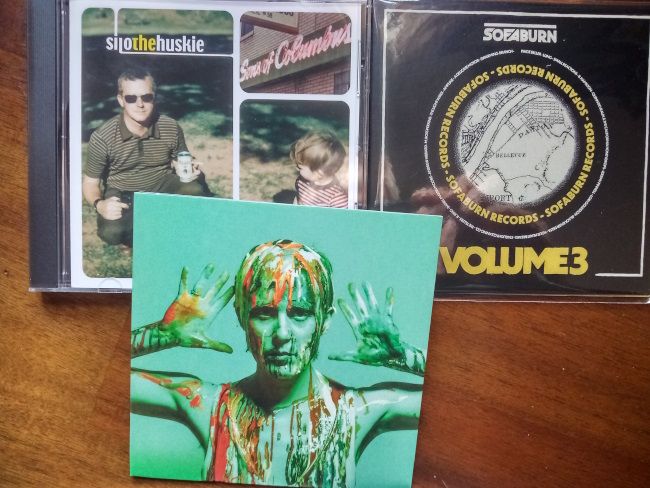
Lastly, I finally went out and bought an album, Come Clean Right Now, by Lung, whom I saw open for Mac Sabbath last year. When the package arrived, I thought it was rather thicker than 1 CD. It turned out I got 3! The records label, SofaBurn, sent me a sampler disc and Sons of Columbus by a band I'd never heard of, Silo the Huskie. When I look them up on the internet, I see sites saying they're a lot like a bunch of other bands I've never heard of. Adventure awaits!

01 December, 2023

Relayer turns 49

Wikipedia says Yes' Relayer turned 49 a couple days ago. Here is the side-long epic "Gates of Delirium" from that album recorded live in Milwaukee on 15 August 2001. I'm not sure why I didn't go to that show. Perhaps I was moving.

Who is Number One? You are Number Three.: Polish Pils #3 by Goldfinger Brewing Co.

Last year I stopped in at Goldfinger Brewing Co. on a chilly night looking for a palate cleanser after a chance encounter with some pickle beer. We found that their House and Vienna lagers were superlative and wonderful showcases for the power of a fully armed and operational decoction brewhouse.

While Downers Grove, Illinois is a long way from Poland, the brewery's owner and brewmaster, Thomas Beckmann, is a descendant of one Markus Goldfinger who started a mini-brewing empire in Krakow, Poland back in the 19th century so the fellow has the art/business in his veins. Beckmann looks to pay tribute to his ancestors by crafting lagers using time-honored methods such as decoction. He may also use horizontal lagering tanks (I thought so but cannot recall), which are apparently the bee's knees when it comes to vessels where your beer can slumber at 30 some-odd degrees for a while.

Polish beer seems to largely consist of an array of pale lagers dotted with some Baltic porters. However, I do see some of their brews that are made with honey for a local touch and have also heard tell of Baltic Porters brewed with smoked plums which sounds simply delightful. Plus, there's the grodziskie, which is absolutely delicious.

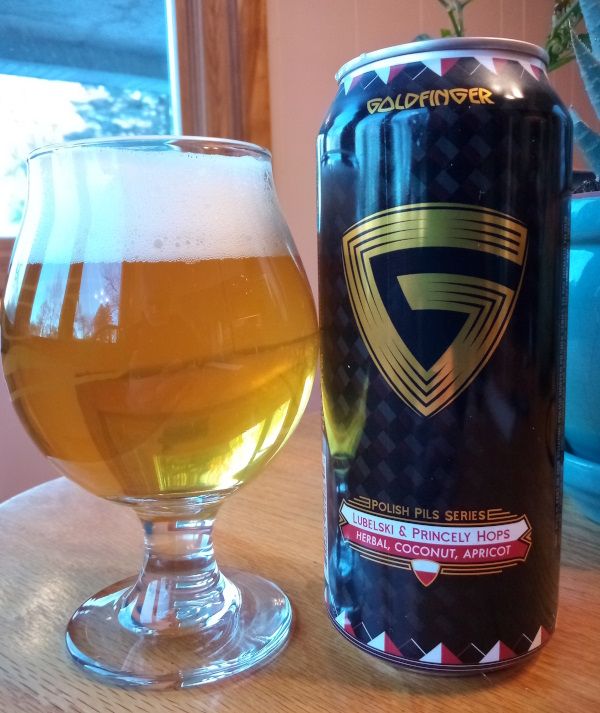
Into this cozy, shall we say, milieu of Polish brews Beckmann has made his own contribution - a series of Polish pilsners that showcase blends of Polish hops. I snagged a pack of the latest entry last month during my annual autumn pilgrimage to Binny's. This is #3 in the series and features Lubelski and Princely (Ksiażęcy) hops. I've heard of Lubelski before as I think that's the most common Polish hop variety, at least to Americans. Princely was new to me and it is apparently new to the scene as well. For better or for worse, it was bred to provide fruity flavors a la most American varieties these days. The can advertises coconut and apricot and I assume they come from the Princely as Lubelski, I do believe, is more herbal - more Noble and less fruity.

Honestly, I went in hoping that the fruit flavors were subdued and that this wasn't one of those Hawaiian Punch beers. I didn't think that Goldfinger, a brewery that adheres to tradition otherwise fairly rigidly, as far as I can tell, would make one of those but maybe the novelty factor was just too great for Beckmann to overcome. That and my trips to the liquor store have got me seeing tropical fruit overload everywhere.

The beer poured a lovely yellow color that veered to light gold at the right angle which set off the categorization cogs in the beer enjoyment part of my brain and I thought, "Kinda more on the German side of things." I would expect a German pils to be perhaps a touch lighter but Pilsner Urquell is definitely darker. So, it's in that liminal pilsner SRM space...woooo...A big dollop of white foam sat atop the aureate liquid and it had staying power. There was a modicum of bubbles inside. I don't know what aromas to expect from Princely hops but I assume the fresh herbal-grassy scent here was courtesy of the Lebelski ones. There was also something fruity but it was indistinct to my nose. It was more stonefruit than tropical, though.

My first sip revealed a nice medium-light body which seemed to fit in the middle of my German-Czech pils dichotomy just like the color. Fizziness was middling, i.e. - I'd have been happy with a touch more but the beer still had a pleasant bite. A great cracker taste was accompanied by a nice touch of herbal hoppiness and this allayed my misbegotten fears of an overly fruity brew. There was something fruity in there, however, but it was like Winston in Ghostbusters and stayed in the background by-and-large.

The power of suggestion is, um, powerful and I'm not sure if I was tasting a fruit flavor that kinda sorta tasted like coconut because the label said so or not. It was more like apricot on the finish when the cracker taste yielded to a firm dose of herbal hoppiness which, in turn, faded slightly andlet that fruity taste seep through more.

Polish Pils #3 was excellent! For the most part, it tasted like a traditional pils of some stripe with the fruity tastes never taking over. Instead, they were a really nice accent. I loved the fresh grassy hop scent and the light, cracker malt taste. Really delicate flavors handled adroitly by Beckmann and Co.

Junk food pairing: Get some of Goldfinger's Polish Pils quick because I believe it's a limited edition brew. It will pair well with onion and sour cream potato chips but I highly recommend going with a dill snack and your babcia would no doubt approve of Herr's Creamy Dill Pickle chips where every bite is full of mizeria goodness.

I see shades of the Slipperman everywhere