Showing posts with label Bock. Show all posts

04 February, 2026

A brace of bocks and sayonara snakes

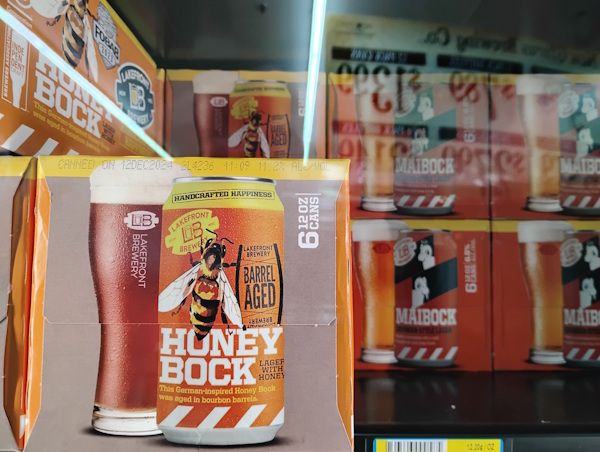
When I went to the liquor store last weekend I noticed that Lakefront is not messing around when it comes to helles bocks. They had a couple on offer.

Have they brewed the honey bock before? I cannot recall. It was just nice to see a brace of bocks to push back against the 8 gillion IPAs.

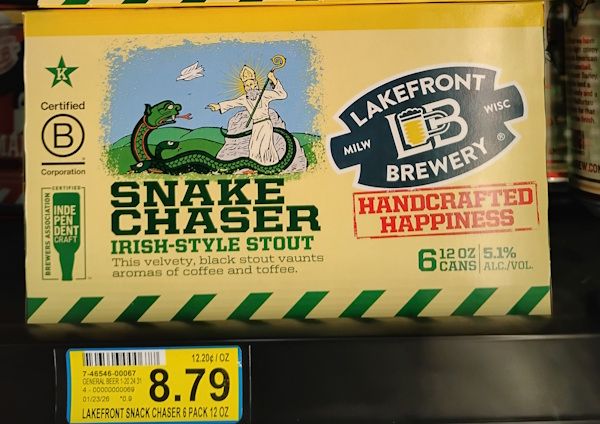
I see that they have also resurrected Snake Chaser. 

 
When did this go away? Was it around last year? Not sure when this came back. Regardless, it's good to have it back for a little St. Patrick's Day cheer.

22 December, 2024

How do you say "bummer" in Polish?

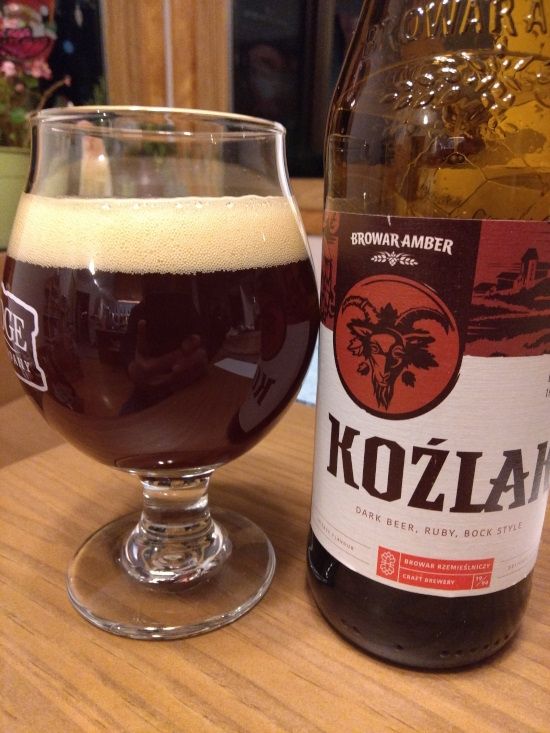
I had a Polish bock beer and was all excited to find succor in it after wandering in the cold and write a review of it as a companion piece to the one of Giant Jones' version and then I find that the beer was bad. Long past its life expectancy with that worty-vermouthy taste. Bummer.

But I remain undeterred. As Douglas MacArthur once said, I shall return with a fresh bottle...

25 November, 2024

Biały Filip: Koźlak by Giant Jones Brewing Co.

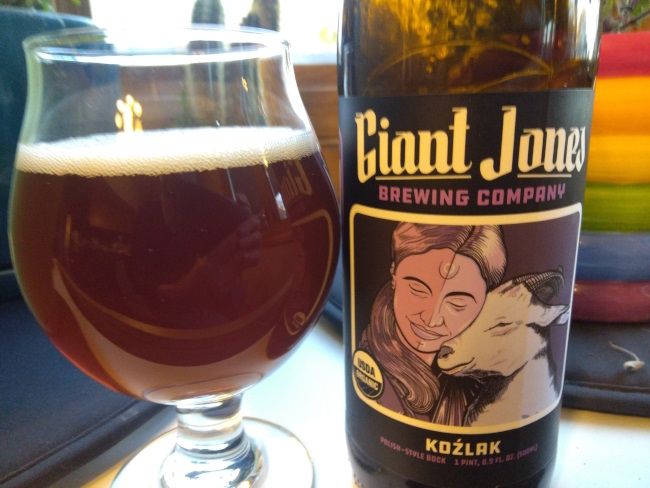
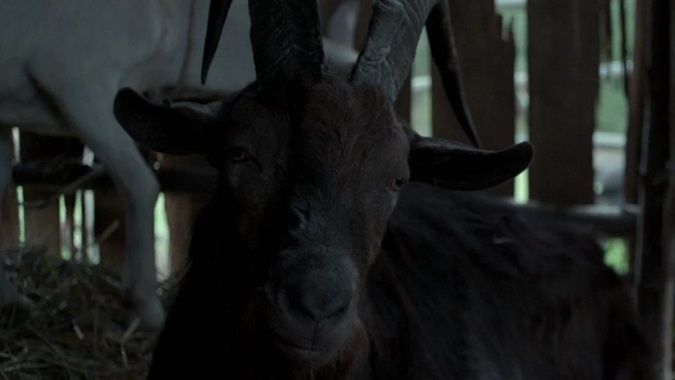
After seeing Black Philip on a can of hard apple cider leading us into dark temptation, we now have a label featuring a white goat snuggling contentedly with a young Polish gal beckoning us into inter-species conviviality. This comes courtesy of Giant Jones Brewing here in Madison.

The beer is called Koźlak and it conjures in my mind images of a detective, likely because it is close to Kolchak and Kojak. While "Koźlak" may look mysterious with its exotic diacritical mark, it is, as I have just discovered, a rather mundane word and simply means bock. Giant Jones calls it a Polish-style bock as it was brewed with Marynka hops.

I don't know if Polish brewers actually brew their bocks with Marynka hops or not. Since Giant Jones' brews are organic, this variety must be fairly common, at least in Poland, if there's an organic version. My knowledge of Polish hops extends no further than Lublin/Lubelska.

My assumption here is that, since my bottle was filled back in April, that this was meant to be a spring bock. I am not sure how long it was lagered but it sat around for 6+ months after bottling. Hopefully it was taken good care of during this time.

My pour produced a rather nice loose, tan head but it went away quickly and I fumbled with my camera so I wasn't able to get a decent photo of it. And, as you can see, I wasn't able to get a decent photograph of even just a tad of foam. The brew was a lovely amber color, which seems only fitting for a Polish beer, and was quite clear allowing me to spy a goodly number of bubbles inside. My initial sniff caught caramel and a fruitiness that I can best describe as a generic berry scent - something akin to Boo Berry cereal. My mind may have caught this latter smell because there was a box of that very cereal atop the refrigerator when I pulled the bottle out. Beneath all that was a hint of lemon and a dash of hay. That green aroma grew as the beer warmed.

Seeing all of those bubbles made me think my mouth was in for some nice fizz and indeed it was. Good thing too as the body was medium-heavy. I was surprised that it wasn't very sweet, though caramel and stone fruit were prominent flavors. The hops added something herbal. On the swallow, those malty flavors faded allowing a moderately potent hoppiness to emerge. Marynka must be a bittering hop as the finish was quite brisk with hefty doses of both bitterness and dryness.

Koźlak was a fine brew. Those hops surely added the lemon and hay scents, which I really liked, and their bitterness made for a very nice contrast to the big malt flavors. I am left to wonder what this beer tasted like fresh. As it was, Koźlak's 7.9% A.B.V. left me feeling nice'n'warm on a chilly fall evening. Maybe I can try it again next spring.

Junk food pairing: Pair your Koźlak with a bag of potato chips. I find that Jays Hot Stuff with its bold paprika heat stands up to the big bock.  Plus Old Dutch Dill Pickle chips provide a nice contrast to the mega-maltiness.

14 November, 2024

New and winter brews

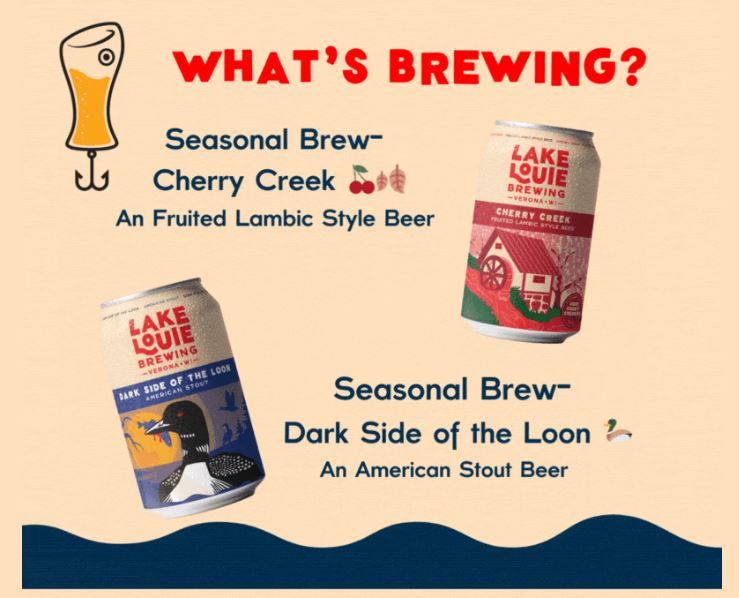
Lake Louie (nee Wisconsin Brewing Company) has a couple new brews:

It isn't clear to me if these are autumn seasonals or winter or who. I have a Dark Side of the Loon and am looking forward to sampling it.

Also, I want to say thanks to Lake Louie for making a change so that they now actually list their brews on tap at their website instead of lamely linking to a blatantly unhelpful Untappd.

~ ~ ~ ~ ~ ~ ~ ~

Winter brews are trickling in. Capital's Winter Skål is available and Scottie at Vintage now has 30 Point Bock available over on the west side. Tiggy Toboggan cannot be far behind. I am not sure if Sprecher will release their Winter Brew or not. I wish New Glarus brewed Uff-Da bock every year. Regular bocks are a bit rare as it seems brewers prefer doppelbocks. Though New Glarus will have Cabin Fever out next month. I like it but prefer Back 40, if Uff-Da is unavailable.

I rather like Sam Adams' winter seasonals - I've had Winter Lager and Cold Snap. Ooh! Hofbräu has Winterzwickl and that sounds delicious. Not sure if any of it makes its way to these shores.

Too bad Lakefront no longer brews their Holiday Spice Lager. Well, they have a barrel-aged version but not your regular one.

Well, there will be plenty of good winter brews, I am sure. A Baltic porter here, a bock there.

23 February, 2024

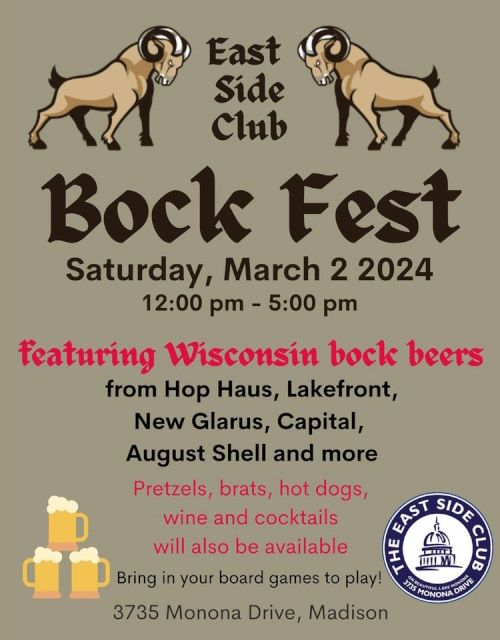
East Side Club Bockfest '24

The East Side Club's Bock Fest is set for 2 March.

 
Despite August Schell being from Wisconsin, I hope to be able to sample their bock(s?) there.

19 January, 2024

Uff-da, it's cold out!

My survey of winter beers continues. 

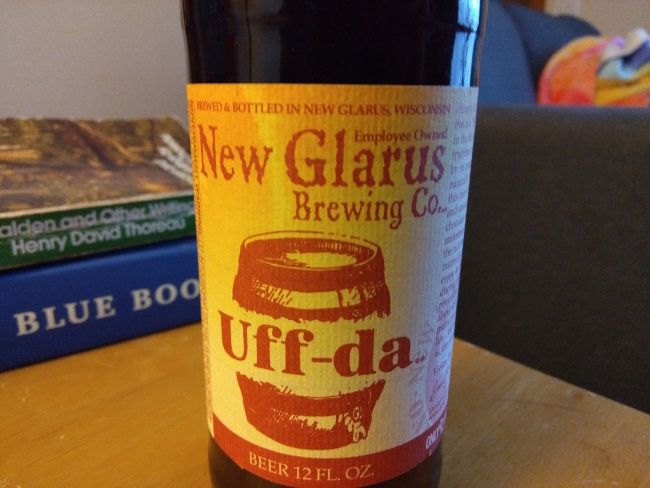
I was happy to hear that Uff-da has returned. It's been a favorite of mine ever since New Glarus brewed it for the first time back in - what? - the mid-90s? That malty goodness kept back the chill on a recent evening.

06 July, 2023

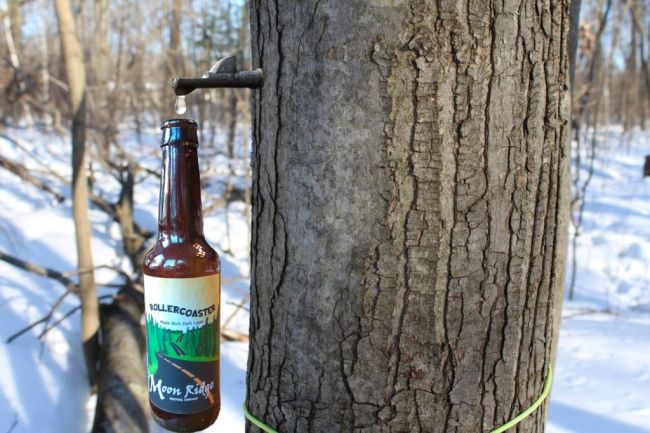
Your beer is like a rollercoaster baby, baby: Rollercoaster by MoonRidge Brewing Company

Last time, I wrote about MoonRidge's Below the Dam and noted that I had brought a mixed six pack of their brews home with me from the brewpub up on Cornell. The next beer in line for tasting is Rollercoaster, a "maple bock dark lager".

The brewmaster at MoonRidge sure loves sweet, sticky stuff as there were 3 or 4 beers on tap when I was there that had honey in them. Rollercoaster wasn't on tap and my craft beer nerd instincts told me that this brew was likely a winter (being a bock) or spring (that's when maple syrup is made) beer and so not overly fresh which has been a problem for me with MoonRidge beers. In addition, MoonRidge is a very small operation. Did they have the capacity to lager a beer properly?

I made up those excuses and probably more to boot to not grab a Rollercoaster despite it being right up my strasse. A dark beer. A lager. With maple syrup, a very tasty Wisconsin flavor addition. I threw caution to the wind and grabbed a bottle.

When it came to tasting it, I had low expectations, truth be known. I was certainly hoping for it to be a real gustatory treat but wasn't going to bet my house on it. Quite aside from freshness issues, lagers from small breweries that brew mostly ales is very much a hit or miss proposition with misses being much more common, from my experience. But hope springs eternal.

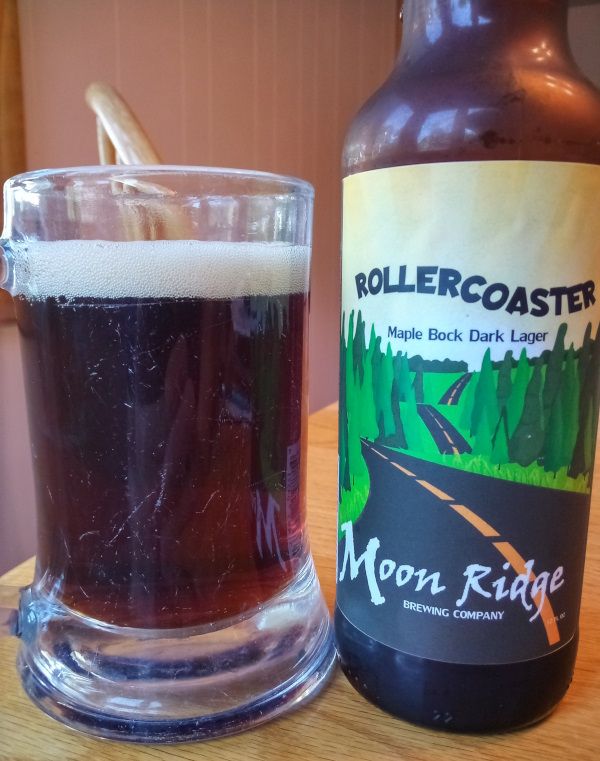
My mug was graced with a good, light tan head. The frothy foam had what I think of as an average lifespan. The liquid was a gorgeous dark amber, not unlike maple syrup, and clear which allowed me to see some bubbles running upwards. The aroma was very nice with some maple, caramel, and a faint grassy scent hiding behind all the sweetness.

It was well-fizzed with a medium body that leaned a bit to the light side. Maple and caramel were up front but I didn't find the beer cloying. That fizz no doubt helped out here. I tasted a very faint smokiness, a little roasty grain, and some welcome grassy/herbal hops which surely abetted the hops in keeping the sweetness in check.

The sweet flavors faded as I swallowed leaving a hoppiness that had become more herbal tasting to provide a modicum of bitterness and dryness. Through it all, a hint of dark chocolate poked its slightly bitter head out.

My expectations were totally upended - this was a good beer. Perhaps on the homebrew writ large side, but tasty nonetheless. I appreciated that the sweetness was not overpowering yet the caramelized, woody, vanillay flavor of the maple syrup was out front. I've had maple beers that are sticky, cloying messes that seemed to have been brewed by Mrs. Butterworth as well as those that have so little maple syrup in them, that you'd never know it was an ingredient if the label didn't say so and even then I didn't believe it. Rollercoaster hit that sweet spot (pun intended) right in the middle.

Junk food pairing: You can't go wrong with pizza flavored fare and MoonRidge brews. Ergo, I recommend Pizza Pringles to accompany your Rollercoaster.

18 January, 2023

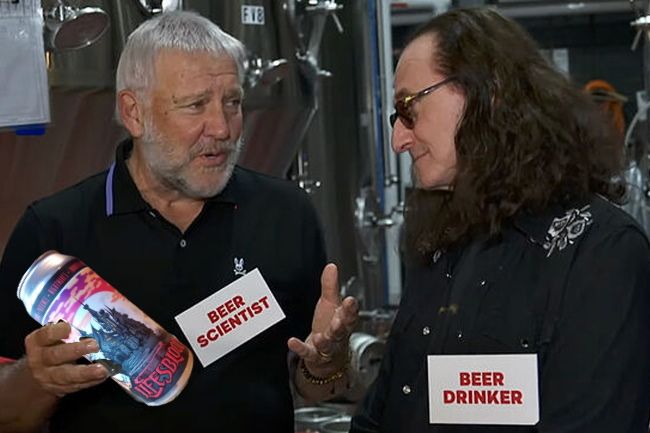
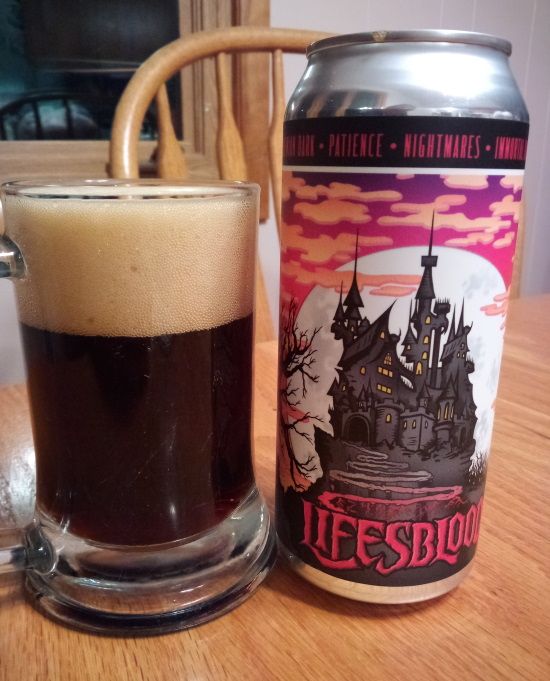
A Beer Fit for Carl Schurz Himself: Lifesblood by Old Irving Brewing Company

When Old Irving Brewing Company opened in 2016, I was elated. Well, not elated. But I did think it was rather neat as I grew up in Irving Park, the larger community area of which the Old Irving Park neighborhood is a part of. I still have family in Old Irving and it is a neighborhood dear to my heart. Besides being famous as my old stomping grounds, I believe Irving Park is home to Wilco’s recording studio, The Loft. And so the neighborhood deserves a nice brewery.

Trying their beer was put on my Chicago to-do list – along with more than a few other things that are still on that list. The way I recall it, whenever I saw their brews for sale, it was always an IPA or a fruited sour. And, truthfully, I just couldn’t care less about these styles. Do you think Gustave Brand was supping on beer that tasted like fruit punch when he was painting the murals at Schurz?! Of course he wasn’t. He quenched his thirst from a hard day of laying portraiture on the library’s spandrels with a beer that tasted of malt and Noble hops.

And so I bided my time until I could find something from Old Irving that was less trendy and less fruity. Now, while it may have taken 6 years, I can finally say that I have sampled one of their brews.

I found it at a suburban Binny’s, Binny’s being a Chicagoland chain of gigantic warehouse liquor stores. Their local beer selection is enormous as there are a lot of breweries down there. Perusing the shelves gets very tedious very quickly. It’s IPA after IPA after fruited sour after fruited sour. Occasionally you run into a farmhouse ale whose label is adorned with an apocryphal tale about the style’s history replete with idyllic imagery of the French countryside and the farmers’ daughters who wander the fields running their hands along the top of the grass like in a Terrance Malick movie pining for a bearded hipster from the American Midwest.

I then run into the Dovetail section and find that it’s all the stuff that I can get here in Madison.

Recommence scanning.

Metropolitan. Ooh! Arc Welder! Ooh! Grab a six pack of that.

After a few dozen more variations from the Simcoe-Citra-Mosaic Empire, I stumbled upon Old Irving’s Lifesblood, a dark bock. It was late November. Bock weather. Perfect because not many breweries in these parts brew a bock. Sure, they have a doppelbock ready in January with some clever pun-ator name, but a regular bock for late fall instead of Arctic vortex weather is a bit hard to come by. New Glarus brews one off and on – Honey Bock, Back 40, or Uff Da. You’d think Capital would have more than one (Mindblock) but they favor doppelbocks. (Capital did have another regular bock bock back in 2020 but that was taproom only.)

So I grabbed a 4-pack of Lifesblood and sat down one chilly night to sample.


I was dumbfounded that I actually got a decent pour as my glass was blessed with a big head of firm, tan foam that had staying power. Lifesblood was a deep reddish brown and clear. I spied a goodly number of bubbles inside. Caramel and roasty grain aromas were strong but I also smelled a little honey, some milk chocolate, and a hint of hop spiciness.

On my first sip, I noticed the beer's medium body along with a nice, mellow fizziness pulsing through its veins. While I tasted sweet things such as plum, milk chocolate, and caramel, it wasn’t extremely sweet, which I appreciated. There was a bit of bread hiding in the background too. Grassy hops helped keep the flavors in balance.

After swallowing, I found that the sweetness faded slowly out while the grassy hops slowly faded in allowing for some medium-light bitterness and dryness.

This is a very good beer. I really liked the milk chocolate flavor and how the moderate fizz allowed for a nice smoothness. Although it had plenty of flavors associated with sweetness, Lifesblood wasn’t cloying. The emphasis was squarely on the malt but it had certain lightness to it that kept it from becoming a big, heavy brew. Perfect for a chilly, but not freezing late fall night.

Junk food pairing: Lifesblood is a fine dunkel bock and should be paired with hearty junk food. I recommend a bag of Lay’s Kobe Beef potato chips.

16 January, 2023

A New Bock Fest on the Block

The East Side Club will be having a Bock Fest on Saturday, 4 March. I have it on good authority that a helles bock has been brewed especially for this event and drinkers who want to live deliciously.

31 December, 2021

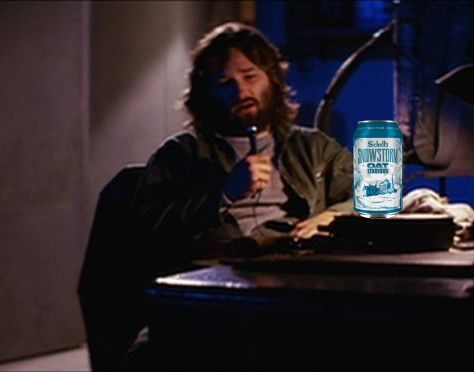
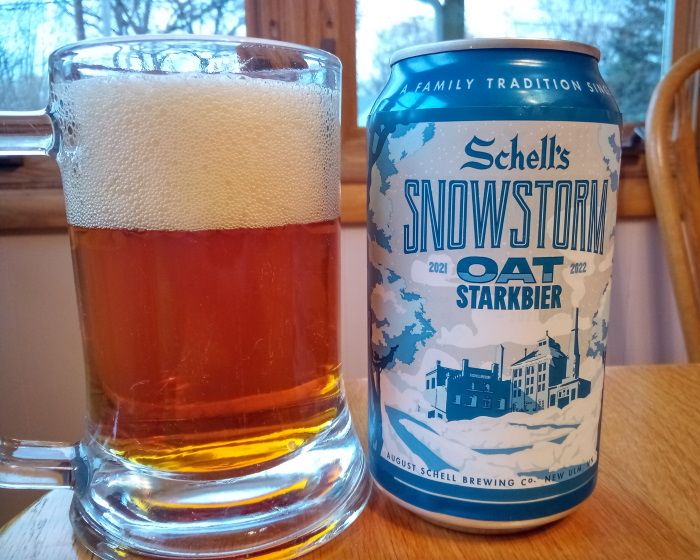
Nobody trusts anybody now, and we're all very thirsty: Snowstorm '21 - Oat Starkbier by August Schell Brewing


Back in November I made a trek up north and stopped in at a small-town liquor store which proudly proclaimed that it had a fine selection of craft beers. Maybe the finest in all of Barron County. This seemed ideal for my purposes which were simply to find some kind of boreal beer to help keep the soreness in my legs at bay after a long and strenuous (for an office drone) hike. I don't know if those IPAs on the shelves were meant for Twin Cities/Chicago tourists and were novelties for the locals or if the folks up north are into those beers. For my part, I rolled my eyes at all the hazy juicy thingies. Just not interested.

And so Schell's latest Snowstorm was a very welcome sight. I don't see much Schell's beer down here in Madison these days so it was a bit like running into an old friend. "Snowstorm" is the name of their winter seasonal but the actual style of the beer varies from year to year. Oats seem to be the watchword of the brewery these days as last year's Snowstorm was an oat stout while this year's is an oat Starkbier. In fact, if you pull a Scooby Doo maneuver and peel the label off of a 2021 can, you'll see that it's an oat stout 2020 can underneath. 

Everyone knows what oats are but what is a Starkbier?

I think it's a now-defunct German beer tax category but I am not sure if the term was ever used outside of levying taxes on brewers. It means "strong beer" but, again, I am unclear on just how strong it had to be to be classified as such. Was it equivalent to a bock? Doppelbock?

So, after some internet sleuthing it seems that my memory served me well. Starkbier was indeed a tax category for German bier. My cursory search didn't yield firm results on just how strong it had to be, however. By "strong" here we're talking the OG, i.e. – the amount of malty sugar goodness in the liquid in its pre-beer state. Still, exactly which styles fell under this umbrella remains a mystery. A couple sources here include all bocks while another over there limits it to doppelbocks.

I suppose it's moot as the tax category is long gone and Schell instead uses the term to invoke all the good things that come to mind when you see a German beer word. You know, like the image of some blond guys in Lederhosen gathered around a copper kettle in an orderly manner using precise techniques honed over the centuries in pursuit of brewing perfection within the constrictions of the Purity Law. Or perhaps it's more along the lines of comely blonde women clad in dirndls carrying numerous steins of beer as their generous bosoms threaten to spill out of their costumes.

My can says that Snowstorm has an A.B.V. of 6.1% so we have an oat bock on our hands. Interesting. I don't know that I've ever had one before.

Beer lore tells us that the genesis of the bock goes back several hundred years to Einbeck, Germany. Initially a big, malty ale, it eventually made its way south where Bavarian brewers gave it the lager treatment. This same body of lore purports that the style's name comes from the way Bavarians pronounced the bier's hometown. Instead of a short -e, they said it like "ah" – "ein Bock". "Bock" being the word for billy goat, someone back in the day decided that goats would be standard on the labels of such beers.

I wouldn’t be surprised if any or all of the above is merely a tall tale that's been passed down through the ages. But it sounds good.

Oddly enough, the marketing team at a brewery that has a German name, brews many German styles, and has (or had) the motto "German craft beer" decided to remove the goat from their bock's label. Harumph.


Things started off very well – I mean, just look at it. The beer was a clear, deep amber upon which sat a big, light tan crown of firm foam. I spied a fair number of bubbles inside. Quite pretty. As expected, there were sweet scents – caramel and little honey. There was also the anticipated roasty grain smell. But what I really enjoyed was the hop aroma which was grassy. Those hops gave a really fresh, green aroma. Simply wonderful.

All those bubbles provided a good fizziness that was set against a rich maltiness that provided, as on the nose, caramel, honey, and roasted grain flavors. The oats did their job as a luscious smoothness lurked beneath the bubbles. The malty sweetness faded fast as I swallowed leaving my tongue to wallow in the dryness of some hops that were peppery and grassy. My sips each ended on rather dry note.

Despite a panoply of grains, the beer wasn't as sweet as I thought it would be. I think the fizz and the hops kept those flavors from getting out of hand. In addition, the malt flavor wasn't just sweetness that needed to be tamed. There was, after all, that earthy honey taste as well as the roasted grain flavor so it was a really nice mix on the malt side of things. Dryness prevailed on the finish as the hops provided a bracing contrast to the grains.

While sipping this stuff, I was reminded of one of my favorite winter brews, Winter Skål, from Capital. Oat Starkbier is akin to a bigger, oatier version of that fine beer. I really enjoyed this brew and how the fizz and hops took the grains head-on to produce a crisp contrast.

The final couple months of 2021 were good for bocks that marched to the beat of a different drummer. In addition to this oat-laden version, Wisconsin Brewing Company gave us a wild rice one while Vintage Brewing blessed us again this year with their rye weizenbock, Tippy Toboggan. Perhaps next year someone will use a heritage barley or something out of left field like quinoa.

Junk food pairing: For the true Minnesota experience, bust open a bag of Uffda! Seasoned Salt Lefse Chips to go with your Snowstorm.
15 December, 2021

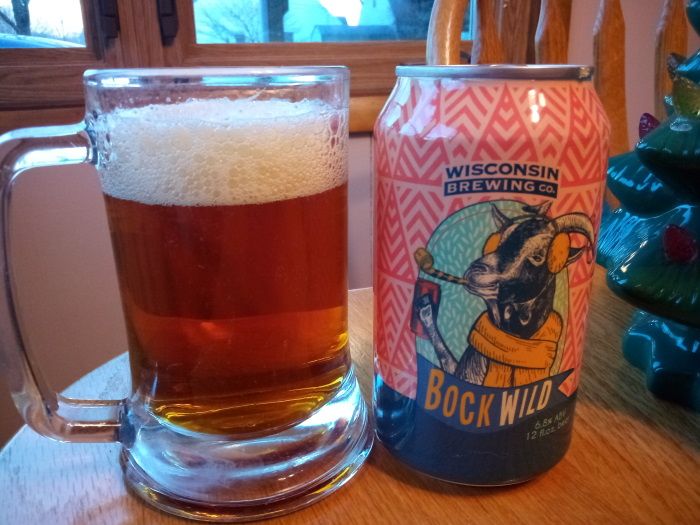
When your beer wanna get bock-wild: Bock Wild by Wisconsin Brewing Company


I recently discovered that The Beer Temple Insiders Roundtable podcast had been resurrected as The Beer Temple Podcast. Roundtabling has taken a back seat in this pandemic age, I guess. Instead of assembling a coterie of industry pros every week, Chris Quinn and Mike Schallau hold court and pontificate on various craft beer topics although guests do join them now & then. One episode features an extended discussion on IPA (well, a lot of them seem to, actually) and Quinn was talking about the evolution of the style during which he mentioned West Coast and New England varieties before mentioning the Midwest IPA.

What's a Midwest IPA?

While I think it had to do with the style's maltiness, I don't recall exactly.

Now, I realize that there are people on the coasts who think of everything between California and New York as this big, nebulous wasteland that is "Flyover Country". With such an attitude, I suspect that a fair number of journalists would be on the dole if unable to pen articles for all the sophistos that read the New York Times about their surprise at discovering we Midwesterners have coffee shops, fancy restaurants, hot yoga studios, and the other hallmarks of civilization.

But the Midwest is a sizable chunk of land. Chicago is a metropolis that dwarfs any other city in the region (and most others in the country) while elsewhere vast tracts of land are given over to corn. Surely being in close proximity to a Great Lake makes for a different ortgeist than what you find if you're smack dab in the middle of the Great Plains. Thinking (yet again) about regional beer specialties, I have to wonder if the Midwest is just too large for there to be a Midwestern style of beer.

Whether or not there is such a thing, I do feel that it's easier to make a case for Upper Midwestern beer specialties. And since I live in Wisconsin, I approach this issue with a distinct bias and people in Minnesota and Michigan and whatever else counts as the Upper Midwest will likely have some areas of disagreement with me. For my tongue, there are a few types of beers that just seem emblematic of the Upper Midwest generally and very Wisconsinesque specifically.

First there are cranberry beers. To the best of my knowledge, Wisconsin still leads the nation in cranberry production which gives New Glarus' Cran-bic and Cranberry Gose by Third Space a rather distinct Wisconsin identity and authenticity. Next are beers made with maple syrup. Yeah, those folks in the Northeast boil a lot more sap than we do but Wisconsin and Michigan still produce a fair amount of the arboreal treat. These brews seem to come and go and I am unaware of any Wisconsin breweries that produce a maple syrup beer with any regularity. The only brew of this kind that comes readily to mind is Lake Louie's Maple Surple, a brown ale with maple syrup. However, I recall O'so having brewed something with maple sap at some point in the not too distant past.

A hundred years ago Wisconsin led the nation in hemp production and so I think of hemp beers as being something of a regional specialty. Smokin' Hemp Porter by La Crosse's Pearl Street Brewery is the only one that I have encountered but it's tasty. I would suggest that there should be more hemp beer brewed in Wisconsin.

Lastly and most relevant to this post is wild rice beer. While some wild rice is produced here in Wisconsin, Minnesota rules the roost when it comes to cultivating this food. Wild rice it is not really rice, but rather a distant cousin of the stuff that we get in mass quantities when we order Chinese food. Botanists call it Zizania palustris and tell me that it is native to the Great Lakes area of the Upper Midwest. You just can't get any more regional specialty than that.

When I was developing a taste for microbrews back in the day, Capital brewmaster Kirby Nelson would make a wild rice lager every so often and I immediately adored this brew from the first sip. And then it seemed that ever more time would go by between appearances of this tasty elixir. He brewed it in 2009 and within a few short years he was at Wisconsin Brewing Company and I never heard of him brewing with wild rice at his new home until just recently. Doing a bit of internet sleuthing reveals that WBC has, in fact, brewed at least a couple wild rice beers - including a bock with Working Draft Brewing - but they appear to have been very limited releases and were never canned/bottled.

In November, WBC released their Bock Wild, a wild rice bock. This, as you can see, was canned but I have only seen it at one retail outlet – Brennan's Market. Perhaps it is slowly making its way through distribution channels as I haven't seen it Woodman's East and a friend saw neither hide nor hair of it at Woodman's West. Harumph.


Bock Wild is a lovely beer. It's a clear amber and my glass had a big head of loose, off-white foam atop it that lasted quite a while. There was a good smattering of bubbles inside. I could smell this stuff from several inches away which I believe is due to all of that effervescence. And it smelled just dandy! There was a large dose of that nuttiness that is the hallmark of wild rice plus sweet malt and an indistinct berry aroma.

The can's label notes that this fruity component comes from the additive here. I don't recall any of Capital's wild rice beers having a fruitiness like this nor any other such beers I've drunk having it either. Wild rice is known for its nutty aroma and flavor which are created during the parching (i.e. – roasting) process. The freshly harvested seeds are also left in piles to ripen and they are also cured so between these three processes, I suppose various aromas and flavors can be brought out of the rice including ones that are redolent of berries. Who knows. Perhaps the flavor here is just the result of some fine Minnesota terroir.

My tongue was greeted by a nice, medium fizziness upon first sip. There was a big berry-like flavor right up front with a herbal/peppery kind of hop taste there too. That nutty flavor that I crave so much came in mid-palate, I guess you'd say. (i.e. - I didn't notice it right away.) Some malt sweetness lurked underneath everything and gave it a medium body. And the fizz produced a moderate astringency.

The malt and wild rice flavors faded at the end leaving a not insignificant herbal hoppiness which lent the finish a firm bitterness and similar dose of dryness.

This is a really tasty beer. That berry fruitiness threw me off, at first, because I simply adore the nutty flavor of the wild rice so much and expect it to stand out. But as I continued to sip, the berry mixed with the malty tastes letting that toasted, nutty flavor stand out more. The rather dry finish made for a nice contrast with the grain and grass.

Junk food pairing: Bock Wild is a special treat for this season so pair it with something equally special. Grab some Nut-Thins and apply Cheddar Easy Cheese liberally.

28 March, 2016

Sure to Please Beer and Goat Lovers Alike: Heirloom Bock by August Schell Brewing Co.


Spring is now upon us and there is no shortage of bocks in the stores these days. Back in January Schell Brewing next door in Minnesota released a bock sampler 12-pack which was sure to please both beer and goat lovers alike. The only place in Madison that I saw the packs was at Woodman's on the west side. I was quite happy to find it as I was disappointed that New Glarus had decided not to brew Cabin Fever this spring and I believe that they skipped over Back 40 last year too.

Legend has it that "bock" is a Bavarian corruption of Einbeck, a northern German city which developed a reputation for brewing fine biers back in the High Middle Ages that were dark and strong. Moving ahead a few hundred years to the Renaissance, Bavarian brewers in Munich were busying themselves with adopting the style. Eventually the southern brewers adapted the traditional bockbier to trendy new lagering techniques producing the bock that we know and enjoy today.

Bock is what Germans call a starkbier or strong beer. I'm not sure if this more of a brewing term or more of a taxing term. My understanding is that bier was taxed (is?) in Germany by strength. Regardless, bocks are generally 6-7% A.B.V. and there are stronger doppelbocks (these are where fasting monks come in) and even more potent eisbocks. I can't find anything indicating what the proto-bock brewed back when von Eschenbach was writing Parzival tasted like but the modern bock is a bastion of malty goodness with varying levels of hoppiness, depending on the type of bock you're drinking. Generally speaking, lighter-colored maibocks are hoppier than their darker cousins that abound in the depths of winter. And, also generally speaking, American brewers seem quite keen on making any kind of bock quite hoppy with plenty of New World greens.

Schell's 12-pronged celebration of winter includes four different bocks: their current bock available as a winter seasonal, a doppelbock, a bock made with from a pre-Prohibition formula, and Heirloom Bock that is brewed with wheat and spelt, which is also wheat. A few German brewers still brew dinkelbier with dinkel being an heirloom variety of spelt so this is yet another instance of Schell's "German craft beer" mantra in action.

I began with the Heirloom Bock for no particular reason and it poured a lovely deep amber color that was crystal clear. It was topped with about a goodly sized head of frothy tan foam that proved in no hurry to go anywhere. There were plenty of bubbles inside the glass going upwards.

The aroma was a nice mix of malty scents along with a small dose of hops. Sweeter smells came first with a bit of caramel followed by plum. Roasted grains came next. And buried in there amongst the wheat, the other wheat, and the barley was a dash of grassy hop.

From what I've read, spelt is best suited for baking because it is very high in protein – hence the nice head, I would imagine. In brewing the surfeit protein can lead to haziness. Furthermore spelt apparently has a more husk than your run of the mill modern wheat varieties and the husk is loaded with tannins. I can't think of another brew I've had that contains spelt so I wasn't sure what flavors I'd be getting from it. (Do cicerones get tested on spelt in beer?)

What I discovered was that the bier tasted a lot like it smelled. There was a bit of caramel along with roasted grain and – quelle surprise – wheat. I also tasted a slight sweetness that wasn't like caramel or toffee but also not fruity. Just a grainy sweetness. This bier had a nice smooth, medium body. It just felt good on the tongue. A hint of carbonation helped keep the sweetness in line with the more savory malt flavors.

For the finish, the hops stepped up with a grassy flavor accented by a little spiciness. They were moderately bitter and lent some dryness as well. My glass was left with some large sheets of Schaumhaftvermoegen. Wheat beers are always some of the prettiest.

Heirloom Bock is awash in malt flavors but the sweetness is kept at bay. Instead gentle waves of grainy goodness wash over your tongue. This is not to say that it is thin or watery – it isn't – but it's also not chewy. You know how Led Zeppelin was "tight but loose"? Heirloom Bock is full-bodied but nimble.

Junk food pairing: Grab a bag of Kettle Brand Cheddar Beer potato chips to go along with your Heirloom bock. In addition to being meta, they're tasty.

25 November, 2015

Taurus to the Left of Me, Cancer to the Right: The Twins by Lake Louie Brewing


Last year Lake Louie Brewing overhauled its line-up. Beers were shuffled around into various series and new brews were introduced as well. The transformation continued into 2015 and included the introduction of a maibock back in the spring called The Twins. The name is a reference to Gemini, a sign in the zodiac, but both the beer and Lake Louie gained a measure of infamy back in April when a Madison Craft Beer Week event featuring the brew was held at the Silk Exotic strip club and promoted with the catchphrase, "Grab hold of a pair."

Puerile humor aside, the maibock is a potent pale lager. Brewed and lagered over the winter, it's tapped in the spring and serves as a liquid transition between the dead of winter and the rebirth of life in the spring. Although associated with Munich these days, the bock was invented in the north-central German city of Einbeck. The brewers of Einbeck were renowned for their quality beers and legend has it that Duke Maximillian of Bavaria recruited an Einbeckian brewer by the name of Elias Pilcher in and brought him to Munich in 1614 to demonstrate his mad skills for the poor, backwards southerners who took the northern style like a junkie to the needle. They are the ones who bestowed the name "bock" onto the beer as a corruption of Einbeck.

The modern maibock came about in the mid-19th century when Hofbräuhaus took advantage of then-new malting techniques which allowed for paler malts. The result was the pale (helles) bock we enjoy today each spring. I've never traipsed around Munich in the springtime so I am unsure of what an authentic maibock tastes like. These lighter bocks are generally hoppier than other iterations of the style but there is disagreement as to the malt character. Should it be sweet or more bready? At the end of the day I suppose it's irrelevant and that there is likely a fair amount of variation.

Although released back in the spring, it is once again Starkbierzeit (strong beer time) and it seemed appropriate to pull a bottle of The Twins out from my cellar last week.

The Twins pours a lovely golden hue. I got a small off-white head that went away all-too quickly. Being clear, I could see that there were many a bubble going up inside the beer. The aroma was distinctively sweet with honey and apricot scents standing out. As befitting a style that is hoppier than your average bock, there was also some grassy hop aroma to be had which became more pronounced as the beer warmed.

Whatever may or may not be the "authentic" taste of a maibock, sweetness prevails here. It's a clean sweetness, though, with it coming from malt. I tasted a stonefruity flavor primarily, although there was also a bit of toffee in there. Those grassy hops made a welcome return from the nose into the taste. While not a particularly hoppy beer, the hops were definitely more pronounced that in other types of bocks. All those bubbles I saw translated into some bite. Not enough to really challenge the malt sweetness but, in tandem with the hops, the carbonation made for a nice little distraction.

The one thing which did throw down the gauntlet before the sweetness was the alcohol burn. The Twins is around 8% A.B.V. but it tasted even headier. While Galen would have lauded the sanguine properties of The Twins, Matt Kenseth would recognize this beer's ability to fuel his car. I suspect that one's interest in feeling the burn on the tongue is going to go a long way in determining whether you enjoy this beer or not.

At the finish the malt sweetness gives way to some hop spiciness and its attendant dryness. And there's the omnipresent vital heat from the alcohol as well. Schaumhaftvermoegen was sparse with only a few dots around my glass.

As I noted above, this is a boozy-tasting beer and I was surprised by the heat. Once my tongue became acclimated, I enjoyed it quite a bit. I am not a hophead. My preference for malt-forward beers was certainly satisfied here but I appreciated the extra hops too. Bocks are usually quite lean on them but I thoroughly enjoyed the additional bitterness and the grassy/spicy flavors in The Twins.

One of, if not the, first microbrews I ever had was Capital's Maibock. Not only did it serve as an introduction to quality beer but also to the concept of seasonal suds. And so I have to admit that the style has a special place in my heart. It's nice to have another local maibock to indulge in come spring.

Junk food pairing: The Twins is a big beer with very intense flavors. With such brews I prefer not to try and counter the beer but to complement it with other intense flavors. Bleu cheese and chilies are favorites. Dip some Buffalo Blue Cheese Pretzel Combos in a blue cheese dips. Or find a nice spicy potato chip like the Spicy Thai ones from Kettle Brand. This mélange of flavors is guaranteed to keep away the chill.

27 April, 2015

Mutatis Mutandis: Betray Ale by Wisconsin Brewing Company


I recall the spring of 1991 when I walked into my dorm room and found my roommate proudly brandishing a bottle of Capital Maibock or as he referred to it, Mindblock. If memory serves, this incident was my introduction to seasonal beer drinking and also when I became enchanted by Kirby Nelson's bock-brewing diablerie. You had Maibock in the spring as the air began to become more temperate and then, as the leaves withered, there was Autumnal Fire followed by dark and blonde doppelbocks to stave off Jack Frost.

As the craft beer scene matured and an unremitting hop assault on the tongues of drinkers began, Nelson largely stayed out of the fray preferring to remain at the helm of a "Wisconsin lager" brewhouse. In 2012 Nelson left Capital to join the new Wisconsin Brewing Company and promptly shocked longtime Capital fans by brewing two IPAs out of the gates. But there was a collective sigh of relief from these folks when WBC released a maibock called Big Sweet Life last spring.

It wasn't long before a draught-only India Pale Pale Bock, a helles bock, hit taps around town. And this year it has been christened Betray Ale and bottled to replace Big Sweet Life.

The maibock ("May bock") hails from Munich in southern Germany and is the lighter-colored member of the bock family having a golden hue that can wander into amber territory. Like other bocks, this style has a rich malt flavor but is often more hoppy than its cousins. It is brewed in the winter and brought out to celebrate its departure in the spring.

Betray Ale is billed as being an "India Pale Pale Bock" so you know that Nelson has taken the greater hop flavor of the style to heart. Nothing seems out of place, however, when you poor the beer into a glass. It is clear with a nice deep yellow color. Bubbles galore run up from the bottom of the glass to a nice white head that stuck around for a while.

The first indication that this isn't the bock of springs past comes in the nose. I was taken by surprise when I smelled grapefruit. There was a little bit of a bread-like scent in the background but the citrus/grapefruit fragrance dominated. After taking my first whiff I was rather ambivalent. On the one hand, I was not amused at smelling 20+ years of drinking Nelson's maibocks go down the drain because many people have lost sight of the fact that beer is a malt beverage, not merely a vehicle for hops. On the other hand, it simply had an alluring aroma.

I was unsurprised to find that grapefruit was not to be found solely in the nose. It was the first thing I tasted. While very prominent on the tongue, this hop flavor was not bitter. In fact, I think that the malt comingled with it to make a very sweet, fruity flavor akin to a pink grapefruit juice cocktail. While I inquired of WBC as to what kind of hops are in Betray Ale, I have not yet received a response. WBC advertises the beer as being dry hopped so I presume the grapefruit aroma and flavor come from that addition of hops. Simcoe?

There was also just a touch of spicy hop flavor underneath all the citrus. Once the hoppiness recedes, you get a brief flash of malt sweetness that was a mix of stone fruit and corn. (Not creamed corn, by the way.) Betray Ale is 6.5% A.B.V. so, while it is a good strength for a spring night, it's not super-potent and you cannot taste the alcohol. Considering all of the sweetness, Betray Ale has a medium body that befits a maibock. I found the finish to be smooth yet slightly dry with lingering citrus hop flavor.

To be blunt, I drank about half the bottle and gave the rest to my significant other. If she hadn't been around, it would have been poured down the drain. Kirby Nelson can brew a damn fine maibock so why hide that behind all the lupuline macquillage? If Betray Ale had about a quarter of the citrus flavor, then I suspect I'd like it more. A quarter of the citrus plus a bit more Noble hop spiciness. Use the grapefruit flavor as an accent and not the main attraction. As it is, the brew just tastes too syrupy, too much like grapefruit juice cut with sugar to dull the tartness. While I hate to see tradition suddenly disappear, I am not opposed to change and the creation of new traditions. But Betray Ale is Old World tradition ruined by New World novelty.

On the plus side, my glass was left with some really nice Schaumhaftvermoegen.

Junk food pairing: Drink Betray Ale along with cheese curds, preferably those made with a beer batter that tastes like beer instead of grapefruit. The salt and fat should help counter the cloying fruit punchiness of the beer.

06 January, 2014

This Beer Has Not Aged Well: Appleanche from Capital


I first tasted Capital's Appleanche last year at a pre-Great Taste event. Appleanche is an apfel (apple) doppelbock and it sounded like a tasty preview of autumn. I didn't really care for it all that much on that hot summer day but on a chilly winter night, I revisited it.

One of our cats photobombed my picture but I think that she did it in a rather artistic way by framing herself in the glass. A very naughty katze. Her presence and my shoddy photography don't do justice to the beer's wonderful gold-light amber color. Appleanche is clear and my gentle pour produced only the slightest head. The Schaumhaftvermoegen was minimal with a bit of foam clinging to the sides of the glass only briefly before sliding into the beer.When I opened the bottle, I caught a big whiff of fresh apfel. Sweet but no overly so. More like a Granny Smith than a Red Delicious. This brew smells great. After putting the glass to my nose I caught that sweet apfel scent again plus a little bit of bready malt.

The predominance of the fruit carried into the flavor. Immediately upon hitting my tongue I tasted the apfel. Mostly sweet but there was some tartness there as well for balance. But it isn't long before the bottom falls out and the apfel flavor disappears and it replaced by that warm alcohol flavor. While 7.7% A.B.V. makes for a fairly hearty brew, I wouldn't think I'd taste the booze. Almost as soon as that slight burning flavor arrives it dissolves into a herbal hop taste which lingers on the palate giving a dry, slightly bitter finish. Mouthfeel is smooth although the carbonation and the hops keep it from being syrupy.

Sadly, Appleanche was exactly how I remembered it from back in August - disappointing. While the fresh apfel aroma and luscious counterpoint of sweet-tart flavor are truly wonderful, I failed to taste any of the malt which was present in the nose. I drank half a bottle of it trying to discern the defining flavor of the doppelbock but failed. Perhaps it's part of the sweetness at the front end of the sip but the apfel was dominant. Quite aside from that boozy middle act, the flavors here just don't meld and instead come in waves. I just failed to taste the apfel und malt pas de deux and the hops were left on their own at the finish instead of balancing the expected sweetness.

Capital's webpage gives me the impression that Appleanche is to be a permanent late-summer fixture in their line-up. Hopefully this August's batch will do a better job of letting the bready sweetness of the style shine through and integrate it with the fruit and hops. A failure, perhaps, but a beer certainly worth getting right.

Junk food pairing: I suspect Appleanche would go well with Lay's Barbeque Ham potato chips. The smoky, porky goodness would surely be tasty along with the apfel flavor in the brew.

09 February, 2013

Sam Adams Winter Lager


Having heard about this stuff, I was keen to give it a go and I guess I lucked out because there were only a few singles left on the store shelf. This is because it's still winter which means that now is the time for summer seasonals. From what I've read, the dastardly phenomenon of seasonals coming out a season or two early is due to Sam Adams so thank you Sam Adams. (He says sarcastically.) On the other hand, SA makes some good beers and they make lagers to boot.

Winter Lager is a wheat bock brewed with spices, namely cinnamon, ginger, and orange peel. N.B. - this is a bock brewed with wheat as opposed to a Weizenbock which is 1) a strong version of a weizen and 2) an ale. So were not talking that tasty clove-like flavor given by the yeast used in weizens. At 5.6% ABV, Winter Lager will not warm you up on booze alone but is certainly hardier fare than your typical pale lager.

It's a very pretty beer with a deep amber color. The head was moderate and dissipated quickly. On the nose there was a warm, caramelly aroma with just a hint of fruit which may have been the orange peel. While the beer smelled pretty tasty, the aroma was, overall, rather faint. I thought it was be a bit more pungent considering the color and the spices.

On the tongue, Winter Lager has a subdued sweetness akin to milk chocolate along with roasted grain flavors. I was very surprised that I couldn't taste any of the spices. This is perhaps simply due to it being the middle of winter and my stuffy nose. Still, I let the beer warm up just a tad yet I couldn't discern any cinnamon or ginger. There is, however, an earthy taste which rounded off the malt sweetness before the hops hit my tongue and I presume this is where the spices come into play.

The beer had a great mouthfeel. It was stout enough to provide some midwinter sustenance yet not thick and filling. Very quaffable and refreshing after a bout of snow shovelling. It finished with a moderately low lingering hop bitterness that was herbal/grassy. I'd swear that I could also taste the orange peel, but only just.

Winter Lager is a good beer but I was disapponted that the spices were hidden. Coney Island's Albino Python used a similar clutch of spices in a paler lager which worked very well and I was keen to taste how they'd work in a maltier beer. It was not to be. Nonetheless, WL was tasty. It goes down easily yet is heady enough to fend off the chill. New Glarus' Back 40 is still tops as far as winter bocks go for me, but Winter Lager is not a bad substitute.

Junk food pairing: grab a handful of garlic cracker nuts.