Showing posts with label Kölsch. Show all posts

22 August, 2016

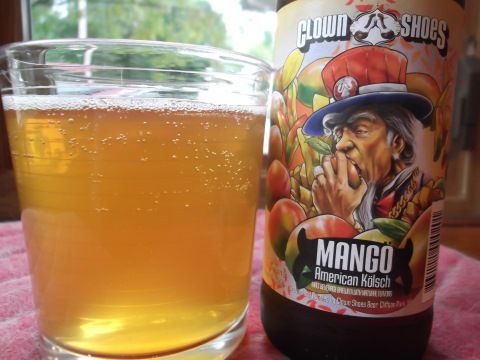
I meet Raquel Welch. I buy a nice mango American Kölsch.: Mangö by Clown Shoes Beer


This being my first encounter with a brew by Clown Shoes I sought out some info about them on the Internet. I discovered that all of their beers are contract brewed – as is Heady Topper. Clown Shoes began back in 2009 when Gregg Berman, then a wine distributor, decided to start a career in the glamorous brewing industry. He contracted with Mercury Brewing in Ipswich, Massachusetts and seems to be with them today.

The article I found noted "In fact, some of the most sought after brands like Heady Topper and Clown Shoes are widely known to be contract brewed." Not only did I not know that Clown Shoes was contract brewed but I was also blissfully unaware that their beer was amongst the most sought after. (I guess in Rumsfeldian language this was an unknown known. Or would that be a known unknown?) I suppose I read an element of rarity into "sought after" although I suppose that is not necessarily so. One could understand that sense of being hard to get if Clown Shoes was only distributed in areas that have place names out of H.P. Lovecraft stories. But I can buy it here in Madison so it cannot be scarce in the same way I understand Heady Topper to be.

Truth be known, I tend to think of Clown Shoes as the brewery that made Tramp Stamp and features brown-skinned women in various states of undress on their labels. (On the other hand, I do not recall a blonde ale with a skinny, blond woman in a bikini on the label.) This is perhaps unfair but they created labels to catch my attention and succeeded. Yet another pale ale, however, failed to catch my interest. It was, I believe, back in the spring that I heard about Mangö, Clown Shoes' mango American Kölsch and this did, however, catch my interest.

Clown Shoes has some distribution here in Madison but I have never seen Mangö in these parts. Instead I found it in suburban Chicago. It is billed as an "American Kölsch" but I am not sure what this means. Perhaps they just didn't want to slap "Kölsch-style" on the label.

Regardless, Mangö pours an inviting light gold color. It was hazy which makes me wonder if American Kölsches have wheat in them. My guess is that the very small white head that my pour begat would have been larger had I been using a stange. Alas, mine remain unpacked. The foam proved fleeting although the beer was quite effervescent with all kinds of bubbles inside.

The aroma featured the dual attack of the titular fruit as well as some cracker. The mango was up front, though not super pungent, while the grain came around the back in a pincer movement.

My guess was that the light berry-like taste of a traditional Kölsch (from the yeast) would be overpowered by the assault of the tropical fruit. While the customary fruity taste was indeed M.I.A., the mango's assault was really more like an extrovert at a meeting of Marcel Marceau Appreciation Society. It was never a cloying onrush but rather stood out because of the company. Still, the beer's clean, crisp taste come through. There was a light grain taste as the base and some grassy tasting hops that added contrast to the mango.

The M ingredients faded at the finish allowing those hops to take over. Everything about Mangö is an exercise in restraint so we're not talking a big hoppy blast but certainly enough for satisfyingly dry finish.

From what I can tell Mangö was introduced last year and I'm sorry I never stumbled upon it sooner because this is one tasty brew. A fellow from ancient Greece once opined "everything in moderation" and Clown Shoes have taken this to heart. This is simply a nice, light brew with a slight emphasis on the mango that doesn't drown out the tasty, light grain and hop flavors.

I know crafty brewers want me quaffing their Oktoberfests but I am still in the mood for beers like this.

Junk food pairing: Mangö's core philosophy is one of moderation/restraint and this should carry into your food pairing. Get some El Rey lemon flavored Tostaditas Chips. They are thin, light, and crispy. On the other hand, you can throw convention out the windows and double down on the fruit with mango snack cakes. Check your local Asian grocery store for these.

16 August, 2016

Farm to Glass: Honey Kolsch by Rogue Ales


I have not exactly plumbed the depths of Rogue Ale's (and Spirits) catalogue of brews. It seems that I've reviewed only two of their beers and one wasn't even really a beer. Sadly, when I hear Rogue's name mentioned or see their logo, I still think of "novelty" beers first. You know, that Voodoo Doughnut beer – whatever it's really called, the one they brewed using yeast from the brewmaster's beard, et al.

This is quite unfair and Rogue offers more than quirky novelty beers and they should be judged on their own merits instead of standing in the shadows of a Sriracha beer (which is pretty tasty, if I do say so myself). I would think that I'd be more into Rogue as a brewery, more interested in delving into their portfolio because I've come to think of it as the consummation of much of the promise of microbrewing. Allow me to explain although I will probably over-romanticize by filtering my hazy memories through rose tinted glasses

In the first half of the 1990s when I was developing my new-found taste for quality beers, the microbrewing movement was, in my opinion, much more aligned with the Slow Food movement than it is today. Back then small breweries – they were micro, after all – that were local was an ideal valued much more 20+ years ago, to my memory. It was understood that there could be variation amongst batches of the same beer because microbreweries weren't like Bud or Miller or Coors. Their production facilities weren't based on Taylorism. Microbrewers were like cobblers with their pegs and awls, not Nike factories.

As time went on microbrews became craft beer and that sense of drinking beer deliberately, drinking beer as an act akin to buying organic carrot from a local farm has faded. I am thinking of a quote from a brewer I heard on a recent episode of The Beer Temple Insiders Roundtable. Sadly I cannot quote it verbatim but it stated that refraining from brewing an IPA was like throwing money away. It was an irrational act.

I feel that locality, understanding where ingredients come from, and the like have taken a back seat to satisfying a hop fetish. People want their Citra and don't seem to really care where it comes from or what else may be in the beer. However, I have to concede the fact that people can name a hop variety and seek it out is to be counted as a victory for the Slow Food Movement. After all, how many friends of Spuds Mckenzie could name the hops used in Bud?

To bring this back to Rogue, the brewery/distillery/cidery/soft drink maker has farms. I don't know if Rogue owns them outright or who but they're called Rogue Farms and they supply the brewery with some of the ingredients used in their brews. And so I give Rogue credit for making good on the promise that the mingling of the microbrewing and Slow Food movements held back when the two were more aligned. Farm-to-brew was the logical endpoint when the two movements were combined.

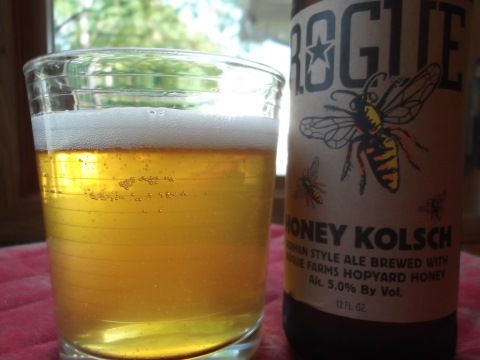
Rogue Honey Kolsch is made with malt and hops grown on Rogue Farms and honey made by Rogue bees. I liked the idea of this combination from the moment I read about it and was keen on trying it. I found a six pack at Steve's on University Avenue and haven't seen it anywhere else in Madison.

It pours a medium yellow and was definitely on the hazy side. Rogue uses some wheat in the brew which I presume is producing the haze. A traditional German Kölsch, however, would be clear. I got roughly an inch of loose white foam atop my glass (I still need to unpack my stangen) while there were bubbles galore inside the bier.

That distinctive floral, sweet-yet-savory smell of honey shone through on the nose. I'm no honey expert nor do I know where Rogue's bees were getting their nectar but it was less floral to me and more earthy, for lack of a better description. There was also a little bit of lemony citrus and a touch of grain.

All those bubbles translated into some healthy carbonation. I was really happy add the honey flavor. It seems that most of the honey beers I've had don't use much. And so it becomes a minor accent in both the aroma and taste. Here the flavor is rather prominent and leans more to earthy and maybe woody than floral yet it also gave a sweetness like apple. The malt tasted dual-layered with both lighter biscuit as well as a sweeter, more doughy flavor.

If the bier's smell and taste were decidedly not traditional because of the honey, then at least the finish was more like the German import. It was moderately dry with grassy and spicy hop flavor pushing any lingering malt out of the picture. The bitterness was not big but was abetted by the carbonation. Rogue's in-house Alluvial hops are very Noble-like. My glass finished all gussied up with lots of Schaumhaftvermoegen. There were thin streaks almost everywhere and specks of foam in between.

A really tasty brew. The honey is perfectly toothsome and was used judiciously. Not too much nor too little but rather just the right amount. The bier tasted clean and fairly crisp as if it were lagered for a while. On the malt side, there was a bit more doughy flavor and less of that light, crackery taste that I prefer in a Kölsch. Still, the bier managed a fine light body. If I have a realcomplaint it is that it didn't taste very much like a Kölsch. But perhaps there's a tradeoff to be made: you can have your typical fruity yeast flavors or you can have a moderate big honey taste but not both at the same time. Or maybe that apple sweetness I tasted wasn't all honey but was rather the yeast as well.

Regardless of how well or how poorly Honey Kölsch adheres to German or stylistic tradition, it is a tasty brew that goes especially well in the heat.

Junk food pairing: Having a light sweetness and a splendid honey flavor means Honey Kölsch will go well with other honeyed foods. Try Lay's Honey Barbeque potato chips or some Snyder's Honey Mustard & Onion Pretzel Pieces.

28 April, 2016

Maybe you'd like it back in your cell, your Highness: Escape Route by Sam Adams


The Boston Beer Company, brewers of Sam Adams beers (and other adult beverage brands), made the news recently for all the wrong reasons: sales, profits, revenues – the whole shootin' match, basically, went down in the first quarter of this year. No doubt there is a goodly amount of schadenfreude in some circles over this news. I have read various people unleash streams of invective against the company, its beers, and its founder, Jim Koch, and I just don't understand the ill will.

While I am certainly not inviting anyone to feel sorry for Boston Beer Company, I must admit that I have something of a soft spot for Sam Adams. Having been formed in 1984, Boston Lager was a prominent fixture of my formative microbrew landscape back in the early 90s and I still enjoy it today, though not often. But there are times when I'm at a chain restaurant or perhaps in a city that isn't overly attached to microbrews yet Sam Adams is there.

Beyond earnings statements, Sam Adams has been in the brewing news as of late for its Rebel IPA series and its line of nitro brews in cans. I've not tried any of these beers and, as you see from the photo above, I have been drinking a rather different Sam Adams beer - Escape Route, an unfiltered Kölsch-style bier. Sam Adams bills it as being a "Limited Release" but, for a company that brews 2+ million barrels of beer annually and distributes nationwide, how limited could it be? I suppose it refers to the bier not being available year-round and instead released only in the depths of winter. Presumably the release of a light, easily quaffable brew when it is cold and dark outside in Boston and most of the rest of the country is simply Sam Adams getting a jump on seasonal releases.

As I said, Escape Route is a Kölsch-style bier that is unfiltered. My understanding is that such a bier in Cologne, the style's home, could not legally use the "Kölsch" appellation. And so, while Escape Route's lovely brilliant gold is quite Kölsch-like, its slight haze is most certainly not. Sadly, I had no stange for this review as mine are all packed away. I think that if I'd have had one, my ¼" head would have become a bit taller. Still, my glass had a respectable loose white topping of foam that hung around for a little while. On the other hand, with all those bubbles in the bier, a stange would have gussied up the presentation a little bit.

Escape Route's aroma was delightful and had everything that I expected. There was a really nice crackery maltiness to it that was accented by that characteristic fruity aroma from the yeast which was berry-like but with a touch of citrus. A faint bit of grassy hop lingered in the background.

The bier was light-bodied with a fairly delicate biscuit flavor that nonetheless managed to be big and up front. I absolutely adore this flavor and it's one that golden ales that try to pass themselves off as Kölsches usually don't have. The bubbles I spied earlier added a fizzy bite yet it was not so harsh as to obscure the rather subtle fruitiness from the yeast. It had a nice crispness to it too which complemented the mostly clean flavor.

Those biscuity malt flavors lingered on the finish until they were greeted by a moderate dose of hoppy flavor of the grassy/herbal kind and their attendant bitterness.

This is a very tasty bier. I believe that Sam Adams says the name refers to an escape from winter to spring. But it's also an escape from trendy barrel-aged sour double IPAs. This is not a big bier however you approach it. 5% A.B.V. is a moderate strength; the Strisselspalt and Aramis hops don’t assault you with tropical fruit tastes and are not particularly bitter; the malts give a light, biscuity flavor just as the yeast gives a light fruitiness to the proceedings. My bottle indicated that it was best buy June but I think the hops suffered a bit due to age. They just seemed a bit flat and lacked a fresh sprightly character which would have been nice to have tasted.

Still, Escape Route was, for me, a solid, flavorful Kölsch. It hit the right notes and just needs to be available fresh in the summer.

Junk food pairing: Because the Kölsch is not a big, bold brew, try something lighter with Escape Route such as Classic Ranch Fritos.

21 January, 2016

The Wrong Yeast for the Right Job: Commuter by One Barrel Brewing


One Barrel Brewing opened up in the summer of 2012 on Madison's near east side. It was a very hot day – 90°+F, if memory serves – and the joint was hopping when I arrived there after work. The air conditioning struggled to keep the joint cool as dozens of patrons, including local politico Tammy Baldwin, eagerly emptied pints of beer from the newest purveyor of micro, nay nanobrews.

I began the evening with a pint of Commuter, a Kölsch-style ale. It tasted more like a golden ale to me than a proper Kölsch that had spent time lagering. I didn't find this surprising as proprietor Peter Gentry had only a one barrel brewing system. Regardless of how well the bier adhered to convention, it was tasty and really hit the spot on a tropical summer evening.

Since that day One Barrel went on to brew beer at House of Brews on the east side for draught accounts. And then last fall Octopi Brewing, a contract brewery who counts One Barrel as its first customer, opened in Waunakee. The beer brewed at Octopi, well some of it anyway, is being bottled and sold around town with the six packs appearing on shelves in November.

I recently picked up some Commuter to taste if it had changed since I first sampled it a few years back.

It poured a slightly dark straw color and was a touch hazy. My stange was topped with a nice big, shiny white head that took half a minute or so to dissipate. There were more than a few bubbles inside making their way up. In the early afternoon sunlight my glass looked as a thing of beauty.

The aroma was most odd. I took a whiff and then struggled for a split second. Was I smelling what I thought I was smelling? Indeed, my nose was taking in banana. A strong, pleasant banana smell but in a Kölsch? How blatantly odd. I also caught some faint grassy hop in there too. And I could taste the banana as well. Had the wrong yeast been used? Why was I tasting a hefeweizen? Some crackery graininess was underneath the slighty sweet fruitiness as was a corn flavor. Subsequent sips revealed a bubble gum taste along with the banana. Above it all was some nice carbonation keeping things from getting out of hand.

Commuter finished with that banana flavor lingering as the grassy hops grew in intensity a little bit bringing with them a mild bitterness that gave some dryness to contrast with the fruity flavor. Just as my glass started out looking pretty so too did it finish with lots of Schaumhaftvermoegen. There was webbing all around.

I have absolutely no idea why I was tasting those banana and bubble gum flavors. It was as if someone had used weissbier yeast instead of the Kölsch variety. Very different indeed from my initial encounter with Commuter. Beyond this totally out of place taste, this is a fine bier. It's light and fizzy (4.8% A.B.V.) – perfect for those lazy, hazy days of summer. The restrained grain flavor let the yeasty flavor assume control, although it was the wrong one. And the hops were done perfectly, to my taste with a little grass flavor that blossomed with more bitterness at the finish.

Junk food pairing: Stick with lighter and less boisterous food when quaffing Commuter. Try some guacamole flavored tortilla chips or a stack of honey mustard Pringles.

15 December, 2015

Spröcketbier Black Rye Kölsch by Stone Brewing Company


Stone helpfully put the words "DRINK FRESH" on this bottle in nice, friendly letters. Sadly, I did not heed their admonishment and I thank my lucky stars that there was no enjoy by date on the bottle to really induce a guilt trip. I gave my beer cellar a thorough sorting this past weekend and came across several beers that shouldn't have been cellaring. Alas, some were too far gone and met a less than dignified fate. Thankfully, some of the beers, while past their primes, were still drinkable. This is one such brew and here is its story.

Spröcketbier won the first Stone Spotlight Series competition. I am not exactly sure what this competition entailed but, since the architects of this brew are both employees of Stone, I presume it was some kind of intramural thing. The beer was released in the spring of 2014. I honestly am not sure when I purchased it but I can say that it has been in my basement ever since hidden away from the damaging rays of the refulgent orb in the sky.


Spröcketbier is a black rye Kölsch the likes of which I am sure would throw the signatories to The Kölsch Convention into apoplectic fits. It's bad enough to add rye to the bier but to compound the horror by making it black is surely beyond the pale, so to speak. Personally I think it sounds amazing even if I am to sample but a shadow of the beer's former glory.

The stuff appears as the Stygian gloom of an H.P. Lovecraft story in a glass. Sure, if you hold it to the light just right you can see that it's a deep chestnut but, if approached like a normal person, the bier is black and opaque like the heart of Cthulhu himself. My unsuspecting stange, accustomed to white, pillowy heads instead got about a quarter inch of tan foam. It dissipated rather quickly. I saw no bubbles inside the bier. On the other hand, my vision was unable to penetrate the murk. It seemed so very odd to think that this was a Kölsch and not a schwarzbier or stout. But it was in a stange so it had to be a Kölsch, right?

Before I proceed I'd like to remind the reader that this bier was from 2014 and beyond its prime. How would this bier have tasted if I had heeded Stone's advice and drank it fresh? I'll never know. Thusly I am like a beer archaeologist, uncovering old beer and trying to piece together how it tasted when it was young all those years ago.

Spröcketbier's aroma was redolent of a stout with roasted grain smells most prominent including coffee. There were also some hops here that were mild and grassy. It seems likely that, when fresh, these hops would have been much more pungent. Although Spröcketbier looks not unlike motor oil, it has a medium body that leaned towards the lighter side. The roasted grain and coffee from the aroma were present in the taste as was a slight smokiness. I could taste the spiciness offered by the rye as well, though it was the flavors of the darker malts that carried the day. Kölsch biers are known for a certain fruitiness from the unique yeast used in fermentation. I taste it as being berry-like and I was happily surprised to be able to taste it amongst all the grain flavors. It was a mild flavor but it was there. Rounding things out were a bit more of those grassy hops, which were not very bitter, and some carbonation.

The coffee flavor faded on the finish to a moderate bitterness courtesy of the carbonation and the hops which had some spiciness added to the grassy flavor. My stange was left with only a few specks of Schaumhaftvermoegen.

Despite this bier's age, it didn't taste oxidized. Stone says it has 40 I.B.U.s, well had, which would put it in the range of a Czech pilsner. My bier certainly wasn't that bitter as one would expect. Nonetheless I very much enjoyed Spröcketbier as I love the flavors of rye as well as darker malts. To best of my knowledge, the rye flavor wouldn’t have diminished with age so I will opine that even more spicy rye goodness would have been optimal. On the other hand, I would guess that the fruitiness of a Kölsch fades as the bier ages. I suspect that fresh Spröcketbier would have been a fairly intense brew with some big roasted grain flavors taking on a liberal dose of hop bitterness as the rye and yeast fruitiness did their best to accommodate them.

Junk food pairing: Normally the Kölsch is a bright, crisp bier with delicate malt and fruity yeast flavors. Spröcketbier is more like that bier's darker, Falstaffian cousin. Ergo it can stand up to heartier fare such as Flame Grilled Steak Ruffles or Herr's Baby Back Ribs chips.

11 December, 2015

The Still Waters of Colgone Run Deep: Ottekolong by Freigeist Bierkultur


Sadly, my basement will soon be bereft of biers from the free-spirited brewers of Freigeist Bierkultur in whose mission is to liberate the German palate from the chains of industrial brewing conglomerates. They do this by mining Germany's rich brewing history and devising brews that at times respect lost traditions and embrace the microbrewing revolution at others. Sometimes their biers do both at once.

Today we have Ottekolong ("Eau de Cologne"), an unfiltered Kölsch. Since Freigeist is located in Köln (Cologne), it was their destiny to brew one, the city's official bier style. I wonder how this bier is marketed in its hometown, if indeed it is. "Kölsch" is an appellation reserved for biers from a select group of breweries in and around Köln. Since Ottekolong does not conform to the specifications of the style and is not brewed by a signatory to The Kölsch Convention , they must label it in such a way to escape the scrutiny of the bier polizei. Wie sagt man "Kölsch-style" auf Deutsch?


Ottekolong pours a lovely gold hue. In a violation of The Kölsch Convention it is unfiltered and therefore a bit hazy. My stange had a small ivory head that dissipated quickly while there was a fair amount of bubbly action inside the glass.

As one would expect, the aroma had abundant cracker and toasted grains smells along with the style's characteristic fruitiness from its unique yeast strain. But there was a Noble hop presence as well that was grassy and slightly peppery too. Although Ottekolong has a light body, the clean, grainy taste was a bit richer here than in the Reissdorf, Früh, and Gaffel that I've had. This was balanced by some carbonation and those hops which were also grassy and peppery to my taste. The fruitiness was quite subdued here with the hops looming over it, especially the peppery notes.

Those hops became a little spicier on the finish which, along with the carbonation, made for a nice, moderately dry ending. Most of the Schaumhaftvermoegen slid into the bier leaving behind just a few dots of foam.

Ottekolong was basically everything you could want in a Kölsch. It was very refreshing with its light body (4.8% A.B.V.) and some nice bubbliness. Still, it was not short on flavor. The malt was substantial enough for a good, solid cracker flavor yet it didn't weigh on my tongue. I'd have loved it if there was a bit more fruitiness but, as it was, I thoroughly enjoyed the peppery hop flavor. It wasn't overpowering but rather it turned Ottekolong into a more spicy/savory take on the Kölsch than I am used to. The real shame is that I drank this bier in December instead of June.

Junk food pairing: Ottekolong is light yet hearty enough to take on a variety of junk foods. For example, it will pair well with the sweet heat of Pringles Xtra Fiery Sweet BBQ or the savory goodness of their Cheeseburger chips.

26 October, 2015

Now let's show them what our Spectra beer can really do!: Spectra Trifecta by Founders Brewing Co.


I don't believe I've ever reviewed a beer by Founders before. This is probably because I don't drink much of their beer although Red's Rye is probably my favorite IPA. Sadly, that beer went draft only back in the spring of 2013.

At about the same time that Red's Rye bottles began to go unfilled, Founders became a sponsor of ArtPrize, an annual art competition in Grand Rapids, MI, Founders' hometown. Each year the brewery brews a special beer in honor of ArtPrize with proceeds from sales going to the competition. This year the brewery gives up Spectra Trifecta, a Kölsch brewed with chamomile, lemongrass, and ginger.

The Kölsch is a rather underutilized brewing canvas, if you will. The style is not about big, domineering flavors wrecking your palate; it's about trying to find some kind of balance amongst a bit of cracker flavor from the malt, some fruitiness from the yeast, and hops. It just has a certain simplicity that lends itself well to running roughshod over Reinheitsgebot. In theory, anyway. Flat 12 Bierwerks has a Cucumber Kölsch (which I rather liked) and didn't Vintage Brewing here in Madison add some sumac to Sister Golden Ale a year or two ago?

Spectra Trifecta is a bit darker than your average Kölsch being a slightly deeper yellow than most I've come across. It was hazy and, curiously enough, had an abundance of particulate matter – lots of small white flecks. Up top it had a nice, foamy white head that lasted only a short time. However, there were many a bubble making its way up the glass.

The beer had a potent aroma as I could smell it when the glass was nowhere near my nose. I caught the pleasing mélange of sweet, floral chamomile and spicy ginger. The botanicals were also quite prominent in the taste. The chamomile tasted less sweet than it smelled and so its floral flavor was highlighted. The ginger tasted raw and pungent while the lemongrass played a more supporting role with its sharp, citrus taste being rather subdued. Carbonation added a little bite. Underneath all of that I could discern some cracker-like malt flavor along with a hint of the fruitiness from the yeast. Not much in the way of hops to be had. It was crisp and clean, having been fermented at cold temperatures and had a nice light body.

At the finish the lemongrass came out from behind the shadow of its botanical brethren to take a much more prominent place while the ginger and chamomile slowly faded. There was also some bitterness here that was reminiscent of strong black tea. It was like mix of herbal hops and chamomile. There was just a minimal amount of Schaumhaftvermoegen left on the sides of my glass.

Where was this beer over the summer? At 5.9% A.B.V. it's not a session beer but the piquant botanicals here add a rich, zestiness to the beer that would have been perfect in the sun. Chamomile adds wonderful floral taste while ginger and lemongrass add sharper, citrusy flavors. Spectra Trifecta is more gruit than Kölsch, I suppose, as the malt, hops, and yeast flavors are all rather subdued. Having been lagered, the botanicals are a bit more distinctive here than in more traditional-minded gruits I've had.

Junk food pairing: Spectra Trifecta goes well with guacamole, especially if you scoop it up with lime flavored tortilla chips.


08 October, 2015

Drinker Easy With the Beer That Really Fits You: Kölsch from Sierra Nevada Brewing Co.


Woodman's East is doing its level best to rid itself of Sierra Nevada's summer beers. The brewery's summer variety packs have been callously riven asunder so that the bottles within can be sold individually. (Perhaps tellingly, their Oktoberfest was getting the same treatment.) I've already tried the variety pack's Nooner Pilsner and now it's time to investigate the Kölsch-style brew.

Ah, the Kölsch. The official bier of Köln (Cologne), Germany. From what I've read, the Kölsch as we know and love it today originated in the early 20th century. It's a light beer brewed with a top fermenting yeast but fermented at temperature slightly lower than normal for an ale. It is also lagered, i.e. – stored for a few weeks at cold temperatures. The appellation "Kölsch" is protected and defined by the Kölsch Convention which states that, if it ain't brewed in Köln, it ain't a Kölsch.

The beer's ale-lager hybridization seems to stem from both Köln's 17th century Reinheitsgebot laws which banned bottom-fermented beer and the rise in popularity of the very same. Hence the beer has one foot in each world.

Sierra Nevada's take on the style pours a lovely light straw color and is as clear as the day is long. I got a fine, fluffy white head in my stange that would not quit. There's wheat in the beer and I do believe that there are proteins in wheat which help keep the head on your beer longer. It is my understanding that wheat is not a common ingredient in the Kölsch over in the Fatherland. My stange had a modicum of bubbles making their way up.

The aroma was at once familiar and inviting yet also novel and intriguing. As expected it had that light cracker smell as well as the distinctive fruitiness from the yeast which comes across to my nose as being a berry-apple hybrid. I was not expecting, however, the piney hop notes to be accompanied by floral and citrus ones. I presume the floral ones come from the Strisselspalt hops which I'm seeing used more often as of late, while Simcoe provided more the citrus notes.

The beer's taste just smacked of summer. It had a light body that never tasted thin. It yielded a clean cracker taste with the apple-berry yeast flavors from the aroma making a return engagement. The carbonation added some dryness and the beer had a moderate bubbly taste. The novel floral hoppiness was present on the tongue as well with no small amount of pungent flavor and paired nicely with more subtle citrus ones.

On the finish the beer proved moderately dry with more bite from the carbonation and some peppery hop bitterness joining its floral cousin. My stange was left with a goodly amount of Schaumhaftvermoegen in thick webs.

Sierra Nevada has done themselves proud with Kölsch. The floral and fruity hop aromas and flavors add a nice new twist without overshadowing the traditional grain and yeast elements. Carbonation and some more traditional German hop bitterness gave the beer some bite. On the other hand, the clean, crisp malt flavors and the floral & citrus hops made for a brisk, fresh adventure on the palate. At 5% A.B.V. the beer is deceptively quaffable so it's best drunk from the traditional stange.

I've not drank much Sierra Nevada the past several years until quite recently. I used to drink their Pale Ale quite frequently back in the early and mid-1990s and still do occasionally when it's the least hoppy offering at a party. But their recent takes on German styles have been quite impressive and I'll definitely be giving them a second look.

Junk food pairing: Pair Kölsch with Cheez-It Zingz Chipotle Cheddar. They're made with corn masa flour for authentic Mexican Crunch™ and the subtle smokiness makes for a nice counterpoint to the cheesiness of the underlying cracker and contrives to sublimate the fundamental botanical-grain dichotomy of the Kölsch.

02 August, 2015

Stange, Stange on the Wall, Who's Kölsch is Fairest of Them All?: Schlafly Kölsch (-style)?


Summer has become truly hot here in Madison which means I am quaffing ever lighter brews here in the sun as I await August's welcome corn. On a fairly recently trip to Chicago I purchased some aestival-ready brews from St. Louis. One of them was Schlafly Kölsch-style beer (I don't want the keepers of the Kölsch Convention coming down on me for implying that this brew was made in Köln.)

Ah, the Kölsch. The style does a delicate balancing act with the trio of grain, fruitiness, and hops. No mere golden ale, this beer must be lagered!

My Schlafly Kölsch poured a deep straw color and was slightly hazy. I presume the haze came from the wheat. My understanding is that the style is traditionally all barley so this is a deviation from the norm. My pour produced a fine pillowy white head which stuck around for a while. There was a fair amount of effervescence with bubbles aplenty moving on up.

The aroma was lovely with cracker and that unique Kölsch fruitiness vying for my nose's attention. That fruitiness comes from the yeast and Schlafly brags that theirs comes from the Gaffel Brewery. Being in Köln, Gaffel brews a true Kölsch. After smelling the beer I think that I started drooling in anticipation of what was to come. Disappointed I was not. It was crisp with that cracker aroma translating to the taste. Plus there was that trademark fruitiness which is mellow and berry-like to my tongue. Lagering takes the edge off those esters. That light graininess eventually gives way to a bit of malty sweetness which I tend to think of as tasting a bit like corn, though not creamed corn, mind you.

The brew finishes fairly dry with biscuit flavors fading and giving way to a moderate spiciness courtesy of Perle and Hallertau hops. Most of the Schaumhaftvermoegen slid down the side of the glass but I did have a couple sizeable patches of foam that clung.

I loved this brew. It may be the best take on the Kölsch style this side of Köln, where Reissdorf rules from what I can taste. My tongue was happy to let the grainy flavors battle it out with the fruity ones for supremacy. The light, unassuming cracker flavor is one of the main reasons I drink beer. This is not to damn the fruitiness because it too is great here and in perfect proportion to the malty flavors. Once a stalemate is reached, the hops come in and clean up. This balance of flavors, a light body, and a moderate alcohol content of 4.8% A.B.V. make Schlafly Kölsch a thoroughly satisfying summer brew.

Junk food pairing: I like to pair Kölsch with milder junk foods so enjoy Schlafly with some plain potato chips or regular Cheez Its.

04 May, 2015

Getting Better With Age: Terrance by Lakefront Brewing


Lakefront's My Turn series began in 2011. These limited edition beers showcase the potatory predilections of the brewery's employees and not just those who specialize in zymurgy. Front office folks also get to proclaim their tastes.

Terrance came out in 2013, if memory serves, and is a Kölsch. Sadly, I recall bottles of it languishing on the shelves of Jenifer Street Market. Apparently most Madison microbrew drinkers are like Madison Craft Beer Week co-founder Jeff Glazer who craves "weird or exciting or creative" brews. If it's not laced with an exorbitant amount of hops, isn't soured with bacteria from the brewmasater's toilet, or isn't aged in a Malort barrel, well, why bother? On the other hand, this left plenty for me and perhaps a few others who don't prize novelty above all else in beer.

The Kölsch is a specialty brew of Köln (Cologne), Germany. The beer we know today goes back to around the turn of the 19th century. Lagering (i.e. – storing the beer in temperatures that approach freezing for a couple of months) was quite hip and trendy at the end of the 19th century time yet Köln was still under the influence of its own Reinheitsbegot laws which outlawed bottom-fermenting beer. Not wanting to miss out on the trend of the day, brewers there used top-fermenting yeast but lagered their beer. The term "Kölsch" (or "Koelsch") is a protected appellation so only beers of this style brewed in the Köln area can rightly use the name. Hence the use of "Kölsch-style" on Terrance and other American iterations.

By all appearances, Terrance adheres to the conventions of the style. It is clear and straw-colored and looked mighty fine in my stange. Kölsches are supposed to be well-carbonated and my pour had lots of bubbles making their way up to a nice, fluffy white head. The beer had a slightly fruity aroma with yeast and bread smells also being prominent.

Like the color, the Kölsch is supposed to be light-bodied and Terrance hits the mark. It had the perfect biscuit/cracker flavor from the pale malts that was just slightly sweet but there was also a vaguely berry-like fruitiness to it, a flavor derived from the yeast. Hops were faint here but I could taste a subtle Noble spiciness underneath everything. The carbonation gave my tongue a little zing as well. That spicy hoppiness returns in the finish and made it fairly dry.

My glass was decorated with an abundance of Schaumhaftvermoegen.

As I noted above, Terrance was released in 2013 which means that the bottle reviewed here has been sitting in my cellar for a stretch. I recall drinking this beer fresh, however, and I think that it has improved greatly with age. Back in 2013 Terrance had a heavier mouthfeel with a bit more sweetness and it tasted more of dough than my preferred clean, biscuit flavor. The doughy taste seems very common in Wisconsin Kölsches with Point's Three Kings Ale, Leinenkugel's Canoe Paddler, Sand Creek's Groovy Brew, House of Brews' Prairie Rye, and the new Parched Eagle's Golden Ale all having this taste. Exceptions to this rule include Big Bay's Wavehopper and Vintage's Sister Golden Ale (the reformulated one). Not knowing exactly how all of these beers are brewed, I will say from my little experiment here that, generally speaking, more lagering seems to be needed for Kölsches.

My aged Terrance was extremely tasty. It had a clean taste in which the fruity flavors from the yeast and the biscuity ones from the malt are allowed to come to the fore. The hops were subdued and I wouldn't have minded just a bit more of them. Terrance's 4.2% A.B.V. paired with its crisp flavor makes for a fine brew on a hot day.

Junk food pairing: The Kölsch style is all about subtlety and so I recommend a junk food on the mild side. Pair (aged) Terrance with Monterey Jack Cheez Its.

25 March, 2013

Leinenkugel Tries Its Hand at a Kölsch


Leine's new midwinter/spring/summer seasonal is Canoe Paddler, a Kölsch-style brew with rye. This is the third rye Kölsch I know of from Wisconsin with House of Brews and Woodman already having brewed the style. Canoe Paddler is a "Kölsch-style" beer because Kölsch is a trademarked appellation. The Kölsch Convention says that a Kölsch isn't a Kölsch unless (the whole issue of rye being set aside) it's brewed in its "area of origin" which it defines as "municipal Cologne plus all the breweries outside municipal Cologne which acquired their vested right with the term Kölsch before this code of competition came into effect." Basically, if it doesn't come from the Cologne metro area, it can only be a "Kölsch-style" beer. The convention also dictates that a Kölsch be Reinheitsgebot complaint and I would guess that the rye adjunct isn't.

Kölsch is, in German brewing parlance, an Obergäriges Lagerbier, i.e. - a top-fermenting lagerbier. To my mind, if it's not lagered it's not a Kölsch nor a Kölsch-style. If that bad boy hasn't been sitting around in low temperatures for a spell then you've got a golden ale brewed with Kölsch yeast. Apparently Cologne had laws that banned bottom-fermenting beers and the Kölsch grew out of that brewing environment.

My photo this time isn't too horrible though I've got to go for a lower angle shot the next go round. Canoe Paddler is straw colored and very clear. I got a nice foamy head on my pour which stuck around for a while but was low in the Schaumhaftvermoegen department. And there are bubbles. Lots of bubbles. The stange is a fine glass in which to show this fine looking beer off. Giving it a whiff, I found that it smelled like crackers with a hint of pear fruitiness. Perfect. So far, so good.

The first thing I noticed when I took a sip was how effervescent Canoe Paddler is. It was like drinking champagne. Once the bubbles had done their work, I could then taste the malt. Rather than having a clean, cracker kind of flavor that the aroma hinted at, it had more of a gentle, squishy bread dough taste. Never having been to Köln, I have to admit I don't know what a true Kölsch tastes like fresh from the teat. From the imports I've had, I will cop to a preference for Reissdorf over Sunner und Gaffel. Canoe Paddler tastes like the latter two. I like Reissdorf because it has a smooth cracker-like flavor. This beer has a much chewier mouthfeel. (Is this because of the fermentation temperature?) There's enough malt/bread flavor here but my tongue was kept waiting for a bit of sweetness that never came. I think part of the problem was that Canoe Paddler is over carbonated and that mellow dryness interfered with my tongue's ability to enjoy those flavors. It finished well, though, with a dry crispness that has a little hop bitterness and some spiciness from the rye.

Junk food pairing: I paired my Canoe Paddler with some Bold Chex Mix and it was just jimdandy.

22 June, 2012

Three Kings Ale from Point


For reasons unknown, the label for Point's Three Kings Ale is distinctly unhelpful. It doesn't tell you much about the beer inside the bottle. Luckily there's the Internet so everyone can find out that it's a Kölsch-style brew.

Mmm... Kölsch. I drank a Three Kings earlier this week when it was 90+ degrees out. Kölsches and their American brethren are light, bubbly, and crisp and thusly perfect for hot weather. This is why Germans drink them out of a narrow cylindrical glass called a stange (see photo above) that holds only .2 liters – you want to be able to drink a serving before the beer gets warm.

Kölsch is an appellation for beers brewed in Köln, Germany and, according to the Kölsch Convention of 1985, "breweries outside municipal Cologne which acquired their vested right with the term Kölsch before this code of competition came into effect." The convention stipulates that the beer be "a blond, top-fermented, bright and hops-accentuated full-bodied beer which was brewed according to the Reinheitsgebot." The Kölsch is a Obergäriges Lagerbier, which means it is top-fermented with a special Kölsch yeast but it is set into storage for a several weeks and the temperature is slowly lowered to near freezing. You see, back in 1603 lawmakers in Köln put the kibosh on bottom-fermented brewing but lagering became all the rage in the 19th century so Rhenish brewmasters split the difference.

As you can more or less see from my less than Ansel Adamsish effort at photography, Three Kings pours a nice yellow, as per the Kölsch Convention. The beer is nice'n'bubbly so I got a good head. For the aroma, it was primarily biscuity but with a wheaty edge and some faint noble hops to boot. While there may have been some other more subtle aromas, my nose was being assailed by the stench of an algae-infested Lake Monona so, if they were present, they were lost on me. The taste is malt-forward, slightly sweet and tasting like bread dough; there's also white wheat in Three Kings in addition to barley. All those bubbles lend the brew a thinner mouthfeel than the malt profile might suggest. Grains seamlessly gave way to a moderate herbal hop bitterness at the finish along with some crispness.

I've only ever had three true Kölsches – Reissdorf, Sunner, und Gaffel – and they came in bottles from across the ocean so I'm thinking they weren't the freshest beers I've ever had. This caveat aside, I thought that Three Kings tasted most like Gaffel with its high malt profile. (Whereas Wavehopper is more like Reissdorf but hoppier.)

Junk food pairing: String cheese. Non-smoked this time around.

19 March, 2012

It Puts the Kölsch in the Stange

My stangen arrived on Friday so now I can drink Kölsches from the proper vessel. And this weekend I did: Wavehopper and Reissdorf.


02 September, 2011

House of Brews Debuts Prairie Rye

Yesterday evening brewmaster Page Buchanan debuted the first House of Brews brew - Prairie Rye, a Kölsch. Having had it at Page's house before several times, it wasn't new to me, but it was good to see his nascent business take its first steps. There were two barrels there and the first sold out in 90 minutes. The House of Brews taproom should be fully armed and operational by the end of month which is good news since a friend of mine has made me responsible for filling growlers for game days.

I heard from Joe Walts that this year's batch of Mercy Grand Cru is coming along swimmingly as apparently is a book about Wisconsin taverns and breweries by Jim Draeger who was also there. Plus I got to chat with Jeff Glazer of Madison Beer Review. A very nice fellow despite being a Cleveland Browns fan.