27 July, 2016

If You Go to New Orleans, You Ought to Drink the Abita: Strawberry Lager by Abita Brewing Company


With the closing of The Bayou, Madison has lost one of, it not its only, bars that reliably served Abita beers.

Abita, I have just learned, is not, as I previously thought, in New Orleans despite all of the NOLA/Mardi Gras imagery on the labels. It is, in fact, in – quelle surprise - Abita Springs which lies 30 miles north of New Orleans. In Madison-area terms, Abita is about the same size as New Glarus Brewing and resides in a town about the same distance away from New Orleans as New Glarus is from Madison.

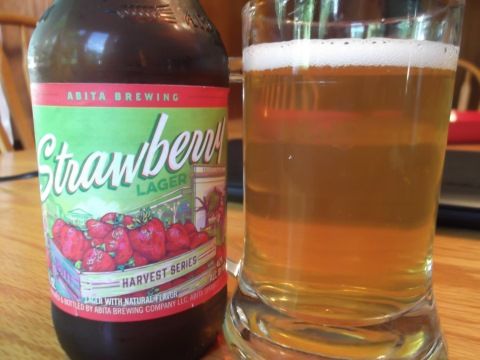
According to Wikipedia, the brewery distributes in 46 states and Puerto Rico. They even ship some of their brews to Germany. For a brewery with such reach and no small renown, I have to ask myself why I've sampled so little of their beer. I recall having one at The Bayou a few years back and just not being impressed. Since that experience, I have – unfairly – avoided their beers. Until recently, that is. It was a very hot summer day and my wife was keen on some strawberry beer. I was hesitant at first because the label has those dreaded words "natural flavoring" on them but the Abita webpage says that they use strawberry juice. So I took the plunge.

Strawberry lager pours a lovely light gold color and has a haze to it that the Abita notes is from the strawberry juice. Although I was not able to capture it with my camera, my glass had about one inch of white foam atop it. The beer was fizzy too with lots of bubbles inside.

As I expected, there was plenty of sweet strawberry aroma and I was pleasantly surprised that it didn't smell like candy. Not that it was like fresh strawberries, mind you, but instead I was reminded of the cans of strawberry nectar, I believe from Libby's, that I drank as a kid. There was also a little toasted grain.

On the hot day that I sampled this beer, its light body and plentiful carbonation were most welcome. The strawberry tasted a little less sweet than it smelled – like strawberry juice. The pilsner malt came across as a lightly toasted grain and the wheat as, well, wheat. It had that clean lager taste too which allowed a little grassy hop bitterness to come through.

Abita uses Vanguard hops with which I am not familiar. In addition to a little bitterness that you get while drinking the beer, you get even more of it on the finish. The strawberry lingers a bit but it's really the hops here with a nice grassy flavor and some mild bitterness which makes for a fairly fry denouement. The lacing in my glass was, as Darth Vader once opined, impressive with white streaks and splotches everywhere.

Considering that I was rather skeptical going in, Abita surprised me here with a great summer quencher. The beer has a light body and plenty of fizz. It's clean and crisp letting the tasty flavors shine. And those flavors provide a great example of restraint. The grains are light and toasty while the strawberry is a fine accent and not a big, sweet candy simulacrum.

Junk food pairing: Strawberry Lager will complement light summer fare such as 7 Layer Dip Tortilla Combos.

26 July, 2016

A Chimeric Brew: Pilsner by Wisconsin Brewing Company


Earlier this week I made a trek out to Verona where the Wisconsin Brewing Company was debuting one of their Forward brews – the Forward series being limited trial runs of beers that are perhaps sometimes brewed simply to placate the desires of a brewer. Other times they seem to be pilot batches of brews in contention for bigger and better things.

This week there was a pilsner on offer, one that the brewery described as "a hybrid of Bohemian and German varieties". Upon reading this I thought back to the beginning of the year when a brew schedule showed that a new annual would be entering WBC's line-up apparently called Czech Pilsner and that it was due in July. The best laid plans, as they say. Apparently things changed and it remains to be seen whether a pilsner enters WBC's line-up or not. Maybe things have simply been delayed and the Forward beer is a prototype for a revamped pils to enter the fray. We shall see.

The taproom in Verona was doing a fairly brisk business when we arrived. I had invited a friend who is my usual companion to WBC on Wednesdays but he was unable to make it. In addition, he expressed fear in his e-mail to me that it would abandon tradition and be hopped with lupulin nouveau, teeming with tropical fruit flavor like a stick of Juicy Fruit. And so it was quite ironic to see that Golden Amber Lager was now being flavored with Cascade hops instead of Willamette(?). People can't get enough of those C-hops with their F-flavors, I guess.

Would the pils suffer the same fate?

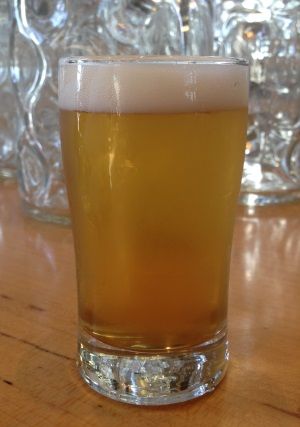
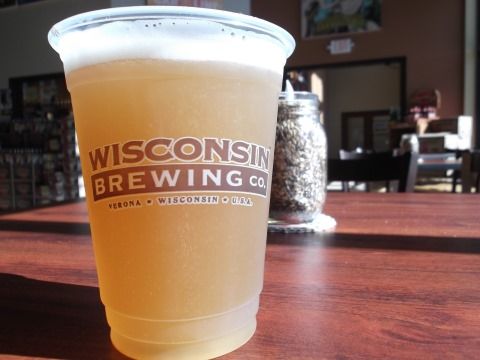
I asked for a pils and was taken aback when I saw the gentleman behind the bar grab a couple sample glasses when I suddenly recalled that you get a free sample of the Forward brews. Thus my photo.

Pils was a medium straw color and, curiously enough, hazy. I even wiped my glass a second time to be sure my eyes weren't being deceived. They weren't. It appeared that I had another keller pils on my hands. My sampler glass came with a fairly sizable white crown of loose foam which lasted a fair while. Long enough for me to get the glass to a table, fumble with an iPhone, and get a passable photograph. Keeping in line with the style, it was plenty fizzy on the inside.

The beer's aroma was quite simply fascinating or rather it's lack of aroma. I think water has more of a scent than this beer. At one point after several sniffs, I think I caught a hint of cracker, but I don't know if this was my incredulous brain doing a poor job filling in the massive blank or if there were genuinely a few malt particles wafting into my nostrils. Nothing like some philosophical skepticism to go with your beer. On the other hand, at least it didn't smell like violets violently mashed together with passion fruit.

Tasting the beer I realized what WBC meant by a German-Czech hybrid. Initially it tasted Teutonic with prominent grassy hops laid over a light biscuit flavor. The carbonation added a little bite and dryness while the hop bitterness was fairly restrained. Things took a turn towards the Bohemian on the finish when the grain flavor faded allowing a more spicy/peppery hop flavor to come to the fore. I'm not sure if this come courtesy of Saaz hops or a similar variety. Things got pretty bitter and dry here, although not as much as a true Czech pils.

My little glass was left with a whole lotta Schaumhaftvermoegen - streaks of foam everywhere.

This was a good pils although "pils" may not be the most fitting term to describe a turbid beer with an aroma that may not be grounded in reality. Hell, maybe someone had too much double eyepah and forgot to add some hops. Whatever the case, this beer is pretty tasty. It's got a nice light body and a fine clean malt taste that's complemented by a goodly amount of fizz. The hops are forward – no pun intended – but not overwhelming. And I like how they went from grassy to spicy.

This pils is surely a beta, if not alpha brew. While it would be nice if it were tweaked and refined and finally put into regular rotation, I just don't see that happening with its Noble hop flavors.

Junk food pairing: If you head to the brewery to give the pils a taste, be sure to bring some snacks with you. Try some Jays Sour'n Dill potato chips or Buffalo Blue Cheese Pretzel Combos.

25 July, 2016

It's All Greek to Me: Westporter Weisse by Parched Eagle Brewpub


Last month when I stopped in at the Parched Eagle Brewpub to try out their ESB, proprietor Jim Goronson was putting the finishing touches on a Berliner Weisse. It took me a few weeks but I eventually made a return trek to try out the bier which had been christened Westporter Weisse.

Little did I know that day in June that Goronson was back in his brewhouse wielding Greek yoghurt. I guess this makes Westporter Weisse probiotic or some such thing. Apparently yoghurt is blessed with multiple strains of lactobacillus, the bacteria that gives the Berliner Weisse (and other sour brews), their distinct citrusy tartness. With Athens Gyros next door to his building, Greek yoghurt must have been a no-brainer for Jim.

While I neglected to ask him exactly how he soured his bier, my understanding is that you put a dash of yoghurt into some warm wort which is the lacto equivalent of the back seat of a car - an ideal breeding ground for little critters. After a honeymoon of a few days at the right temperature, you have a colony of lactobacillus ready and waiting for the right kettle souring opportunity.

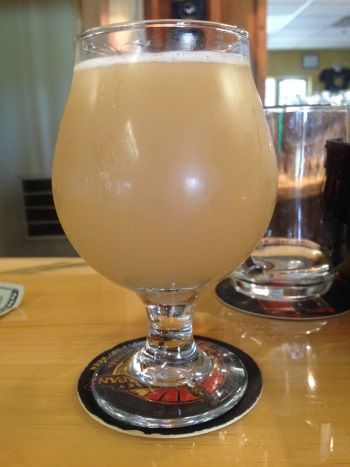
When I received my pint of Westporter, I was surprised at how turbid it was. The brew looked like one of those New England eyepahs that I hear are taking the world by storm. This is stuff looked like a whiteout in a glass. Well, except it was light yellow. The small white head didn't stick around very long and I was unable to see through the lemon haze to check on effervescence.

Things returned to normality as my nose hovered over the glass taking in wheat and sourness. The sour smell was lacking the usual lemon bit at first but it became more citrusy as the bier warmed. While the mildewy, wet blanket aroma of brettanomyces yeast has a long history with the Berliner Weisse, none was introduced here. And so some strain of lactobacillus was responsible for the faint, yet very pleasant, funky smell here.

While Destihl's Berliner Weisse has a lock on the Best Beer for Making Voltaic Piles category, Westporter has a good, firm tartness. Cold, the tartness flies solo but is joined by the expected lemon-citrus taste as the bier warms. The wheat poked through a little bit as did a mineral water flavor but I didn't taste much carbonation.

The tartness slowly faded on the finish and left my mouth with a slight citrus tang and the aforementioned mineral tastes. Schaumhaftvermoegen consisted of a few scattered spots of foam.

Key to enjoying a Westerporter Weisse is letting the bier warm up a tad so that the lemon scent and taste from the bacteria comes through to really bring the tartness to life. It falls in the middle of the pack as far as the acidic taste and sourness goes. It won't dissolve metal but it may be something of a challenge for those new to sour brews. (This can be remediated with the strawberry syrup on offer at the bar.) Westporter has a light body perfect for this heatwave – it's only; 3.5% A.B.V. - but I wish it had more carbonation. There's also a mineral aftertaste that, although not strong, challenged my tastebuds to figure out what to make of it. It seemed more out of place than bad tasting.

All in all, not bad. Westporter Weisse was, to the best of my knowledge, the first beer I've had soured using yoghurt and it'll take more tasting to figure out if the process lends anything unique to a brew.

Junk food tasting: Keep the Greek theme going. With a Westporter Weisse in one hand, put a pile of Shearer's Rosemary and Feta Kettle Chips in the other. For dessert, pair Westporter with a Hostess Greek Yogurt Swirl cake.

22 July, 2016

Your Brewer Was a Hamster: Berliner Weisse with Elderflower by Victory Brewing Company


I'd bet a dollar to a doughnut that most people who laughed at the scene in Monty Python and the Holy Grail where the French guard insults King Arthur by saying, "Your mother was a hamster and your father smelt of elderberries!" hadn't the faintest notion of what elderberries smell like. We laughed anyway not because of any inherent quality of the elderberry but because of the sheer absurdity of the scene.

I'd also wager that most people who see a bottle of Victory's Berliner Weisse with Elderflower will have never tasted elderflowers and that a sizable chunk of drinkers will, like me, have Monty Python and the Holy Grail spring to mind.

Late last year Victory announced its Blackboard series, an annual run of four limited edition brews. The beers are alternately draft-only and bottled. Berliner Weisse with Elderflower is the third entry this year having been preceded by an Agave Eyepah with Grapefruit and a Dry-Hopped Brett Pils. (Oatmeal Porter with Hazelnut will close out 2016.) Thankfully the Berliner Weisse was bottled because there's no way I'd be able to make it out to sub(ex?)urban Philadelphia to try it.

Now that we're firmly entrenched in the dog days of summer, the Berliner Weisse is a fine style to indulge in with its light body, abundance of carbonation, and tangy tartness. And hell, who knows what additional delectations the elderflower may bring to repulse the positively plutonian heat.

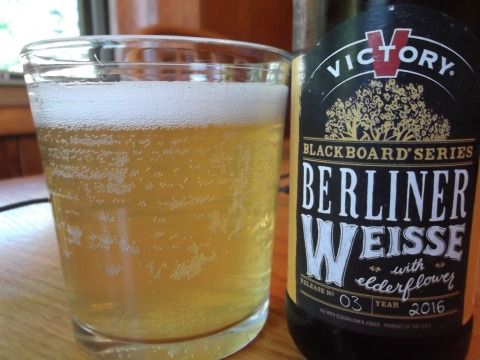
Berliner Weisse with Elderflower pours a pale yellow with the characteristic haze that wheat brings to beer from its proteins. (I wonder when we'll have Kristall Berliner Weisses.) I got a half inch or so of frothy, white foamy goodness that lasted about half a minute. As expected, this is an effervescent brew with bubbles aplenty inside.

There was a big lacto-lemony sour scent along with a floral/herbal aroma that leant towards the sweet. This was my first encounter with the elderflower in the beer and quite pleasant it was. New Belgium's Gruit also had elderflowers and it too had a nice floral smell.

That lemon did double duty and made for a bracing, sour salutation for my tongue. The lactic acidity along with the firm carbonation gave the bier a really nice bite. Wheat was hinted at while the elderflower added a floral touch that was on the earthy side and another layer of tartness. I presume this latter taste was the elderflower, anyway. It was a bit like the child of a tart, baking variety of apple and a quince.

This may not be the most tart Berliner Weisse I've ever had but it has a good, sturdy sour taste and it should not be surprising that it lingers well after the liquid has left my mouth. Oddly enough, the wheat then comes on strongly followed by a little berry fruitiness and a hint of sweetness. A most unexpected, though welcome, finish. Alas, my glass was left with no Schaumhaftvermoegen.

Fantastisch! Even ohne the elderflower this is a great Berliner Weisse. The tartness is strong but not deadly as you with a Destihl brew and it has the requisite light body and plentiful carbonation. At 5.2% A.B.V., it's a bit more potent than usual. Adding in the elderflower laces an already wonderful brew with shades of sweet botanical joy.

Junk food pairing: The Berliner Weisse pairs well with lighter fare such as thinly cut potato chips. Plain ones will allow you tease out the elderflower accents. On the other hand, you may want to play up the lemony-citrus flavors of Berliner Weisse with Elderflower and so get your hands on a bag of Lemon Oreos.

20 July, 2016

Out of the Keller: Keller Pils by Summit Brewing Company


While Surly over in Minneapolis is perhaps the trendiest brewery in the Twin Cities, Summit Brewing in neighboring St. Paul is the stalwart veteran of the scene. Having been formed in 1986 the brewery is celebrating its 30th anniversary this year with a quartet of special beers. The first, a double eyepah, was released late last winter. Then, just before the heat of summer, they unleashed Keller Pils, an unfiltered German-style pils.

Despite my perception of them being the unfashionable old-timer of the Twin Cities (though not as old as fellow Minnesotans August Schell which is 155+ years old), I just looked them up and Summit brews somewhere on the order of 120,000-130,000 barrels a year so someone is drinking their brews. It's just not usually me, I guess.

It's not that I'm anti-Summit. I suppose it's because stores tend to display their Sága Eyepah most prominently and then there's another eyepah and another and I then begin to get eyepah fatigue and my eyes wander to the Schell section. The truth is that they brew a fine pilsener and it's on store shelves year round. My parochial taste in beer no doubt also plays a role. Their year-round line-up looks to be mostly pale ales and so I tend to turn away. Finally there's Summit's Maibock and Oktoberfest. While I enjoy both, they tend to get lost in a sea of such beers every spring and autumn.

That I have failed to adequately support this neighbor to the west in the past is beyond a doubt. In my defense, however, I did purchase a six pack of their anniversary Keller Pils last weekend and have gone a long way towards guilt tripping myself with my writing thus far.

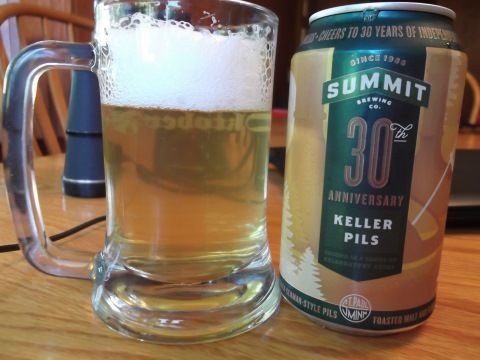
Keller Pils pours a hazy straw color. This being an anniversary brew, it put its best foot forward with a large, fluffy yet firm, white head that remained for quite a while until I greedily slurped it down. The bier was highly effervescent with bubbles aplenty inside going upwards.

"Keller" is German for cellar and implies a couple things to me. First is that the bier is unfiltered which I saw with the haze. But I also associate keller biers with freshness. It's fresh from the lager tanks downstairs. So fresh, the brewery didn't even bother to filter it. My can of Keller Pils had "10/10/16" printed on the bottom. Do they give consumers six months to quaff it?

Regardless of the fact that the bier in my glass was not pumped fresh from Summit's lagering tanks promptly upon hitting peak tastiness, it did have a really nice, pungent hop aroma that was floral and herbal just like spring itself when the flora once again comes to life. I can just imagine how it would have smelled earlier in the year. There was also a great cracker graininess here too.

Summit states that their Pilsener is brewed using a decoction mash and although I don't know if the process was utilized in brewing Keller Pils, it has those wonderfully rich malty flavors associated with decoction mashing. The bier is awash in seas of biscuit, toasted grain, and yeasty bread. The hops are no slouches either with a herbal taste above a floral one like I smelled earlier. Summit declares Keller Pils to be a German pilsner. And so while the hops give a fairly strong taste they are not as assertive as the Saaz you'd find in a Czech pilsener. Bitterness was moderate.

Keller Pils finishes with a spicy, almost minty, hop flavor overtaking the melanoidin maltiness. The bitterness is bumped up a couple notches making for a dry conclusion.

Decoction or not, Keller Pils is chock full of wonderful toasted grain and bread flavors and being a nice, clean lager, they really shine. A light body and a healthy level of carbonation means the bier isn't cloying and instead has a fairly bracing crispness. The hops are wonderful as well and I just love the floral freshness. But the greens aren't overpowering.

For anyone keen on taxonomic correctness, I'd bet that Keller Pils should lose the "Pils" and be happy being a kellerbier. I mean, can a pils not be clear? Regardless, Keller Pils ist ausgezeichnet!

Junk food pairing: As long as you're drinking bier from St. Paul, you should pair it with junk food from St. Paul. While quaffing your Keller Pils, snack on some Old Dutch Ripples Onion Blossom potato chips.

18 July, 2016

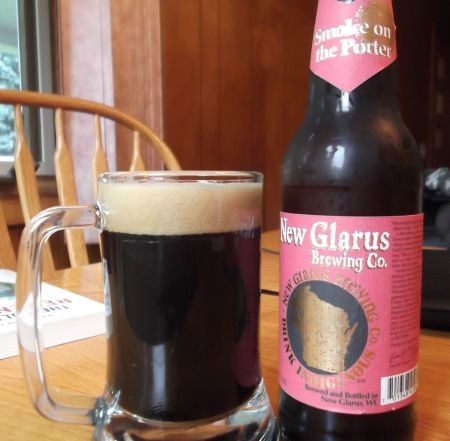
On the Sugar River Shoreline: Smoke on the Porter by New Glarus Brewing


After having inveigled Scott Manning out at Vintage Brewing to brew me up a rauch helles – the extremely tasty Kindled Spirits - I was contented to have another smoke beer added to the rather short list of those available to me.

And then all at once the gates of brewing were thrown wide open and the aestival beer drinking season was transformed into the Summer of Rauch.

Earlier this month I read that the fine folks at New Glarus Brewing had resurrected Smoke on the Porter which hadn't been brewed in many moons. Was I dreaming? Would a Citra bomb shake me from my smoky reverie? No, it was true. Smoke on the Porter had indeed returned after an absence of, from what I can gather, almost nine years.

As I hinted at when I reviewed Kindled Spirits, the smoke beer has, in my opinion, been the victim of ill-considered commentary and, if I may be blunt, outright calumny. It suffers from the stereotype that all smoke beers take like bacon. While there certainly are meaty flavors to be had in some smoke beers, the tastes in a beer brewed with smoked malts are dependent on the wood used in the drying process. Beech seems to be the most common wood used in malt preparation and it also seems to be the one that imparts the most smokiness that has a taste that people associate with bacon.

Smoke on the Porter deviates from the norm and uses malt smoked with Cherry wood and provides a great chance for tasting something new and to discover how Cherry wood contrasts with Beech. Having smoked bratwurst – including cherry brats from Jim's Meat Market - with Cherry wood, I poured my Smoke on the Porter with an inkling of an idea of how the smokiness would taste.

This is a dark beer. While I understand that describing a porter as dark is tautological, it is remarkable just how stygian this stuff is. Its deep, deep copper color makes it a worthy challenger to Dark Something for the title of darkest, most opaque beer ever. The beer appeared to be clear but I wouldn't bet my life on it. As you can see from the photograph, my glass had about an inch of frothy, tan head on it that proved to be in no hurry to go anywhere. The contrast of the tan and the near black makes for a handsome, inviting appearance.

The aroma was equally alluring with wisps of smoky goodness wafting into my nose. As I suspected, the smoke here was essentially bereft of bacon and more akin to a campfire. While definitely the primary scent, it was not extremely pungent. Beside it was a little bitter chocolate.

On my tongue the smoke was again lacking the porcine flavor that unfairly stereotypes the style and proved to be rather moderate in strength. It melded your grandfather's pipe smoke with the wood's namesake fruit. Although moderate, you won't soon confuse this with a non-smoke beer but the taste isn't overpowering and is happy to mingle like a good hostess with the other ingredients.

I have a friend who dislikes porter because of the fuliginous flavors characteristic of black malt and Smoke on the Porter has a fine line to walk with the smoke and those almost ashy flavors. And it succeeds. The smoke complements the coffee and dark chocolate from black malt as well as a more lightly roasted grainy flavor. The dark malts give a little bitterness that is contrasted with some sweetness which is like plum and sweet chocolate. The carbonation is tamped down revealing a luscious creaminess to the beer.

The smoke and dark malt flavors linger for quite some time on the finish and are joined by a refreshing burst of hops. Not a lot but enough to put a grassy taste on the tongue for contrast along with a moderate dose of bitterness. There were a few small patches of lacing but that was it.

This beer is a real treat. The Cherry wood smoked malt has a really nice fruity accent to its baconless smoke profile. And it goes well with the coffee and chocolate tastes from the dark malts. It has a rather nimble medium to medium-light body that belies the misapprehension that dark beers are thick and heavy. As the beer warms it adds a little sweetness and a creamier texture to the myriad of flavors.

As Single Malt And Single Hop brews slowly become more popular, it is becoming easier for drinkers to acquaint themselves with the qualities of certain malts and hops in a way you cannot when they are working in concert with several other varieties. Smoke on the Porter gives Wisconsin smoke beer fans (and those of surrounding states) a similar opportunity. Here is the rare chance to taste Cherry wood smoked malt and compare and contrast it with the much more common Beech wood smoked malts.

Smoke on the Porter is a great way to continue the Summer of Rauch in 2016.

Junk food pairing: I tend to favor the savory over the sweet when pairing food with beer but Snyder's Sweet & Salty S'Mores Pretzel Pieces are the ideal accompaniment for Smoke on the Porter. The marshmallow sweetness is toned down allowing the dark chocolate dust to take pride of place.

15 July, 2016

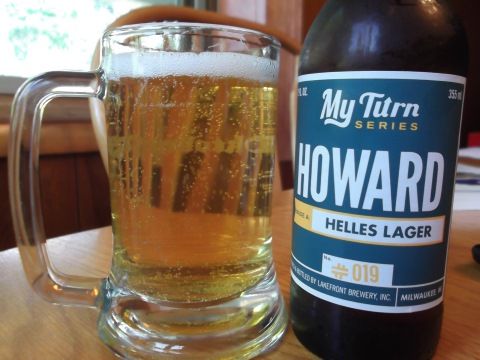
(My) Turn It On Again: Howard by Lakefront Brewery


Howard, surname unknown, is the Maintenance Manager at Lakefront Brewery and I'd bet he is one of the unsung heroes of the brewery. Presumably he's not dictating Citra hopping schedules and so gets none of the glory from the eyepah addicts but he has probably fixed the brewing equipment on more than one occasion, jury rigged the bottling line, and any number of things to make sure Lakefront's brew gets into its customers mouths.

The brewery's My Turn series is a chance for everyone at Lakefront, including non-brewing types like Howard, to choose a beer to be made. It all began back in 2011 and here in 2016 Howard's namesake beer is #19. The bier he has vouchsafed we non-hopheads is a helles.

The helles is a pale lager that originated in Bavaria in the late 19th century. Apparently the brewers of Spaten in Munich decided to engage in a little counter-brewing in order to challenge the escalating popularity of the pale pilseners from Bohemia. Exactly how that ur-helles tasted is perhaps lost to the ages so I'm not sure if its descendant, Spaten Lager, is at all as the style was conceived or not. But they came up with a pale lager that was light colored like the pilseners being concocted across the border but less hoppy.

Yeah, that's probably more than a bit of an oversimplification but the deemphasis of hops is the important bit. I personally like the helles because of this and because its corollary is that the malts step to the fore – melanoidin-laced malts forged by Maillard reactions to give that rich, toasted, bready flavor. It is, perhaps, the apotheosis of grist.

I've had brewers tell me and tell me that decoction – taking some of the grain/water mixture that brewers heat and boiling it separately before returning it to the original mix – is the only way to produce that melanoidin malt taste. Others say that it's all in the malt. I have a toe or two in the decoction camp mainly because I generally taste The Taste in beers that have had decoction mashes. It could be psychological in that my brain tastes what it desires after having read the word "decoction" on a label. Another possibility is that I have had beers that would traditionally have The Taste but were brewed by folks who just aren't good at brewing lagers. Or perhaps the brewers intentionally brewed a beer that would traditionally have The Taste but avoided it purposefully. I certainly need to do more research into this topic, preferably at a bier garten in Bavaria.

Howard gave a bright, cheerful salutation with its light gold/medium yellow hue and brilliant clarity. My pour may have simply been poor but I managed only a small white head of very loose foam which was gone in a New York minute. However, the bier was quite effervescent with bubbles aplenty inside the liquid making their way upwards.

The aroma was as heavenly as it was simple: bread. It smelled like bread. There may have been other aromas to be had but I smelled fresh bread when I first inhaled and I think I just got excited and fixated on it.

As befitting a helles, Howard shown a spotlight on the malt. There was fresh bread along with some toasted grain, and even a little doughy sweetness, but just a smidgen. The Taste in spades. Behind it lay some herbal hoppiness that added some botanical contrast and a faint bitterness.

All of those bready flavors lingered on the finish as a grassy hop flavor slowly ascended. The lupulin never became very strong, but strong enough to give the remain grainy tastes a run for their money and even add a mild bitterness with its attendant dryness. Sadly, There was no Schaumhaftvermoegen to be had. It all slid down the side of the glass and into the nectar to be subsumed by The Taste.

This is one tasty bier! Howard has a light body which makes it instantly quaffable, a "lawnmower" beer, if you like. But it also has a slightly heavier mouthfeel (I'm looking at you, Beer Baron) which challenges the drinker to discern all of the malt flavors and to savor them as well. I don't know if Lakefront did a decoction mash here or not. Regardless, Howard has a great clean taste is chock full of those rich, toasty bread flavors that come courtesy of Maillard reactions.

While the hops have a lesser role, I really liked the herbal and grassy flavors they added. They provide contrast and make an attempt at balance but they also complement the malt flavors in a way that peppery/spicy hops could not.

Ausgezeichnet!

Junk food: Howard is a straightforward rendition of a traditional style and as such deserves to be paired with simpler, more traditional German-esque fare. I recommend a bag of Lay’s Beer ’n Brats or one of Herr's Classic American Hot Dog potato chips. Root vegetable and meat stuffed into a casing. Teutonic and perfect for summer.

12 July, 2016

A Taste of Wallonia. But Different.: Cucumber Farmhouse by Uinta Brewing


First I discovered Goose Island's Calm Radler, made with cucumbers. More recently I heard about Uinta's Cucumber Farmhouse and I wondered if perhaps there was a trend underway. Were cucumbers, in fact, the new black?

Looking around I couldn't find any other brews on Madison store shelves featuring the green, cylindrical vegetable. While I didn't undertake the most exhaustive search possible, I feel that I would have found evidence of it at the trio of stores I went to. And then I bought a Sam Adams Summer Variety Pack and discovered that the gose, Got to Gose, had cucumber. Still, three does not a trend make. Although we're talking order of magnitude more beers with cuke than five years ago, the raw numbers are still very small. No New York Times trend piece needed quite yet.

There are certainly worse flavors to become trendy in beer than cucumber. I really like their taste and have warm memories of eating Mizeria z Ogórków (cucumber salad with sour cream) made by my Polish grandmother. So I get this warm feeling inside when I spy a cucumber beer on the shelf that predisposes me to giving it due consideration when pondering something new to try.

Cucumber Farmhouse benefited from the warmth of nostalgia but also from the impression Uinta's Baba Black Lager left on me that those folks out in Utah knew what they were doing.

To be honest, I don't really know what a farmhouse ale is and highly suspect that the term was invented by a BJCP judge well within the living memory of some of the kids I see running around my neighborhood. I suppose to a farmer back in the day it meant the beer you brewed down on the farm with whatever ingredients you could get a hold of at brew time. But what does it mean today? A beer like those brewed on farms? Where and when were these farms?

When I initially encountered the word "farmhouse" in relation to beer it was in reference to New Glarus' Spotted Cow. If memory serves, the idea behind the brew was to, if not exactly replicate, to approximate an ale that Wisconsin farmers would have brewed in the days of yore. And then the term "saison" started to get bandied about and equated to the farmhouse ale. And so the bucolic brews of southern Belgium fell under the shadow of craft brewers. Today it seems like you have a saison/farmhouse ale if you use a Gallic yeast.

Perhaps farmhouse lagers are right around the corner. Take a landbier like, say, New Glarus' Two Women, and slap "Farmhouse Lager" on it and you'll be in like Flynn.

Uinta's Cucumber Farmhouse is "a blend of rye saison and a saison aged in gin barrels". I'm not exactly sure where the cucumbers enter the picture but I've gotta say: beer, rye, cucumbers, and gin are all foods I like.

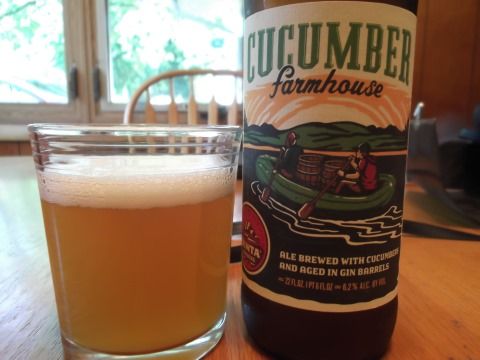
Cucumber Farmhouse poured a lovely light gold color and was very cloudy. (Are there Clair Farmhouse ales yet? It'll be the next big style modifier after hazy IPAs.) My glass had about one inch of loose white head that lasted a looong time. It was highly effervescent with bubbles all around.

The aroma wasn't as strong as I thought it would be considering all of the ingredients here. I mean, yeasts that give fruity and/or spicy notes, gin, and the titular cucumbers – each can give a pungent bouquet individually. Here, though, they were all pretty mild but with the cucumber at the fore. Bringing up the rear was a little crackery grain and a touch of fruitiness that reminded me of Kölsch.

And those cucumbers were also right up front on the taste. Not nearly as strong as in the Calm Radler but no single flavor here was. Intermingled with the veg was a really nice floral taste as well as that Kölsch fruitiness which is reminiscent of berries and pear. The beer was smooth tasting overall but there was a touch of tartness here and carbonation was not lacking so the smoothness was cut at times with a mild acidic bite.

When the beer was cold the gin was mostly tasted on the finish after the lingering floral/cuke combo faded. As it warmed, a gentle pine and pepper could be tasted earlier. It was also at the end that I was able to to taste the hops. There was a solid bitterness on the finish along with generous grass & herbal hop flavors which made for a dry end to the proceedings. Not much lacing to report but there were a few streaks scattered amongst some clusters of foamy spots.

Not knowing what to expect going in, Cucumber Farmhouse was a pleasant surprise. While the cucumber is the primary flavor, it did not stick out like a sore thumb. Instead the flavors seemed to find harmony with one another. I really enjoyed the floral taste along with the tartness and fruity flavors. They provided a nice base for the cucumber but also stood on their own very well. The gin on the finish was no slouch and, when combined with the hops, made for a nice, dry contrast to the rest of the beer.

Cucumber Farmhouse has a medium-light body and plenty of bright, summer flavors. It is, however, 6.2% A.B.V. so you probably won't be quaffing it after mowing the lawn.

Junk food pairing: Try some Steakhouse Onion Funyons with your Cucumber Farmhouse. They have a nice light texture that won't interfere with the beer. The onion flavor will complement the cucumber while the hearty steakhouse flavors lend a mildly smoky, fake meat complexion to your gastronomic experience.

11 July, 2016

Back in Bat Country: Ancho Lime Paradise Lager by Flying Dog Brewery


My initial foray into bat country was fruitful. I learned that Flying Dog's founder, George Stranahan, had been friends with Hunter S. Thompson and that Thompson's erstwhile illustrator, Ralph Steadman, has been designing Flying Dog's labels for over 20 years. On top of these revelations, I also discovered a rather tasty summer cerveza teeming with tart citrus and succulent succulence.

The fine folks at the Jenifer Street Market also carry (or carried) Ancho Lime Paradise Lager, a limited edition brew in Flying Dog's Heat series which I presume features beers that challenge drinkers to count Scoville units in addition to, or perhaps instead of, I.B.U.s. I am generally weary of chili beers, I shall admit, as my experiences with them have been hit or miss. Normally consumed at the Great Taste, most have been golden ales laced with enough jalapeño to send me into a capsaicin-induced St. Vitus dance aimed at the water tubs.

And so I was, to be honest, I was a bit leery going in. But I didn't see the words "natural flavoring" anywhere on the label. I am avoiding "natural flavoring" in beer like the Plague these days because I grew tired of naturally flavored fruit beers that taste like candy. Just because a brewer uses "natural flavors" doesn't mean she is adding a few eyedroppers of concentrated ester aldehyde or some such thing. It's just that I've just been burned too much lately with beers that are delectable going by the label but end up being nothing but liquid Jolly Ranchers when actually exposed to the tongue.

I'll also cop to being biased here. When I began drinking microbrews in the first half of the 1990s, the microbrewing industry was growing concomitant to the organic/"natural"/local/slow food movement(s). And so the idea of using, say, fruit flavoring in a beer as opposed to the fruit itself or at least the juice of the fruit just doesn't sit well with me. There are FDA labeling laws to contend with here so it's quite possible that a beer with natural flavoring may simply be laced with some fruit juice.

Besides the absence of "natural flavoring" the label also indicates the presence of Grains of Paradise. Grains of Paradise are the tasty seeds of a particular plant and I like their mellow woody/citrusy/piney kind of taste.

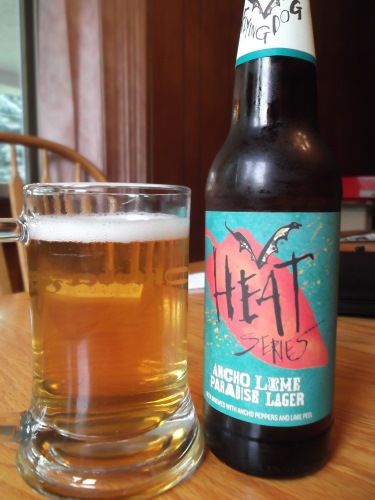
Ancho Lime Paradise is a lovely light gold hue and was clear as day. I got about one inch of loose, white foam atop the brew which lasted a shortish time – maybe 20 seconds. There were lots of bubbles in the beer which topped off the visual bits here and made for a really pretty brew. Flying Dog doesn't say anything about the type of lager that is ALP and instead emphasizes all the ingredients that send Reinheitsgebot purists running to their keyboards to protect Bavaria's virtue. Judging by the fizzy yellowness, ALP radiates New World pale lager.

The ancho is simply a dried poblano chili and it is first and foremost in the aroma. Not that the aroma was particularly pungent. There was also a hint of citrus lurking in the background. On the one hand I was disappointed as one normally likes a food's smell to be fuller to whet the appetite. On the other hand, it could portend a brew where the flavoring wouldn't be overpowering.

It was the lime that I tasted first. Not big but zesty enough. And then there was the earthy and slightly smoky flavor of the chilies. But this was no frisson of fire. Their taste was on the restrained side and there was a little heat at first. Each successive sip, however, kindled the flames so that the burn grew slowly on my tongue. A devious little stratagem on the part of the brewmaster.

And before the capsaicin could reach its crescendo, I was able to catch a light grain flavor.

I was able to discern the Grains of Paradise on the finish where they lingered along with the lime. As those flavors faded, the heat at the back of my mouth became impossible to ignore. There was no lacing left on my glass.

ALP will no doubt be a divisive brew for a majority of drinkers. It has a light body with generous carbonation giving it a nice fizziness. The lime adds a little tang but never gets in the way of anything while the Grains of Paradise complement the citrus well. Those anchos have a nice mellow earthy flavor and I really liked how the heat slowly built up instead of assaulting my tongue right away. As someone who liked spicy foods I felt that it gave a nice burn although folks less acclimated to the heat will no doubt find that it, as Ralph Wiggum famously said, tastes like burning.

Still, I found that one bottle was enough. And not because of the heat.

I didn't dislike ALP but it reinforced my idea that chili beers should go beyond yellow and fizzy. They need more body than ALP offers for repeated drinking, at least at the level of chili flavor here. The flavor of chilies works best for me when it's set against a taste that isn't as sharp, isn't as sprightly.

On a side note, if you go to Flying Dog's ALP webpage, you'll see a photo of a beer that is much darker than what I found in my glass and, well, not yellow. It also lists ALP as being 5.3% A.B.V. whereas my bottle says 6%. It seems as if the brew has been reformulated at some point.

Junk food pairing: Have a bag of Pepperoni Pizza Cracker flavored Combos on hand when drinking Ancho Lime Paradise Lager. While not a very big beer, it is 6% so you'll need a little something in your gut and the creamy pepperoni filling contrasts well against the chili.

05 July, 2016

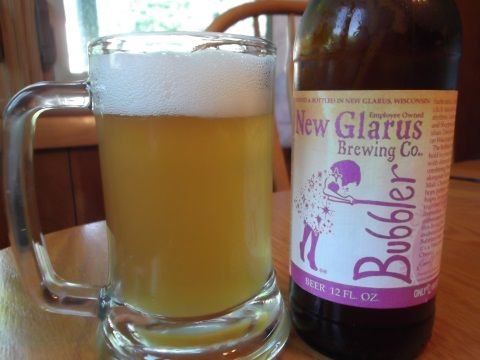
The Bubbler from Green County: Bubbler by New Glarus Brewing Company


Quite frankly I'm surprised it has taken until 2016 for this to happen. Wisconsin beer drinkers are confronted with no less than three different brews with the name "Bubbler".

A bubbler, for non-Cheeseheads, is a drinking fountain and the term is southeastern Wisconsin one, from my experience. The original trademarked Bubbler from the Kohler Company (in Kohler, Wisconsin) shot the water directly upwards about an inch. But health concerns prompted designers back to the drawing board where they overhauled the Bubbler so that the water came out in an arc instead of straight upwards - the design we see today.

Why such a beloved bit of regional language took decades to become a microbrewing moniker in these parts is beyond me. Well, I wouldn't be surprised if the name was used previously but so long ago – like the mid-90s – that it has long since been long in the mists of time.

Plymouth Brewing Company, a brewpub in Plymouth (not far from Kohler), seems to have capitalized on the idea first in this modern age of craft brewing with their blonde ale emerging a few years ago. N.B. - Plymouth does not package their beer.

This past winter Madison's Next Door Brewing piloted a blonde ale which would capture the hearts and livers of Next Door denizens and eventually be christened Bubbler. Not only did it become a regular offering on tap at the brewpub but it also became available in bottles late this spring.

Lastly there is the bier from New Glarus Brewing in (gasp!) New Glarus. Debuting last month, the Bubbler from Green County is a hefeweizen, a German wheat bier. I was really happy to hear about it because I missed Laughing Fox, a wonderful light Kristallweizen that came and went. Brewmaster Dan Carey and his crew make fantasic weissbiers and Dancing Man Wheat is still around but it is just too big of a bier for July. And so I was happy to hear of a hefeweizen on the lighter side for hot weather quaffing.

Bubbler pours a lovely light yellow that takes on a gold tint from the right angle. It was quite turbid – no Kristall here – with proteins from the large amount of wheat making the bier cloudy. As expected for the style, my mug found itself with a big, pillowy, white head that lasted a fair stretch. And Bubbler is quite effervescent with lots of bubbles inside. A beautiful, refulgent bier.

I was quite pleased with the aroma. The hefeweizen is known for the scents and tastes provided by its particular strain of yeast. My own preference is for banana to be primary followed by clove and whatever else you may get such as bubble gum. Here I caught a rather nice banana scent followed by a touch of clove. And with 50%+ wheat, you couldn't help but smell the grain.

For the taste it was banana again at the forefront followed by some clove and some bubble gum too. But there was also a hint of vanilla. A distinct breadiness rounded out the flavors while a generous portion of carbonation made for a fizzy experience on the tongue.

The hefeweizen is not a hoppy bier, generally speaking, but some nice grassy and spicy hop flavors came out on the finish after the wheat and yeasty ones faded. The hops made for a little dryness in concert with all those bubbles but there was also a mild citrus-like tartness here too. My glass looked really nice after the first pour and it looked nice again empty with thick webs of Schaumhaftvermoegen lining the inside.

Fantastisch! Bubbler is light and fizzy making it perfect for the dog days of summer. I appreciated the banana flavor from the yeast being up front while the clove and bubble gum trailed behind. And the vanilla was unexpected but quite willkommen. It added a little extra smoothness to the bier. Underneath the carbonation Bubbler is a very smooth bier and I liked the interplay between that feel and the bite that the bubbles provide. It's like the duality of man - that Jungian thing.

Bubbler is a great little brew that keeps a variety of flavors in balance while never taking anything to an extreme. Another brew for your summer thirst quenching toolkit.

Junk food pairing: Bust out a bag of Jays Krunchers! Sriracha potato chips. They add a little zing but are not five alarm hot and they complement Bubbler perfectly.

04 July, 2016

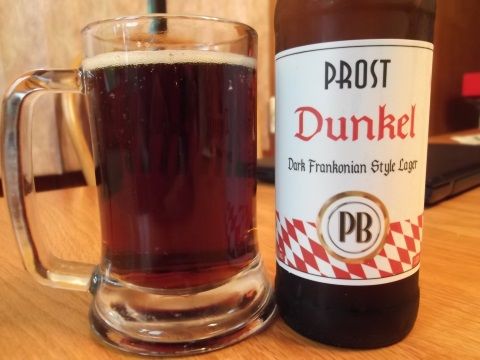
Frankenbier: Dunkel by Prost Brewing Company


Denver's Prost Brewing is an anomaly in the microbrewing world. There's no IPx in their line-up nor any bier that is understood today to be "hop forward", as far as I can tell, and their packaging is certainly on the utilitarian side. Scantily clad women do not adorn blonde lagers while their doppelbock does not intimate that consuming it will put the drinker in extremis. Then again, their taproom may have a Citra-laced IPL on tap between Dirndl Ripper Helles and a barrel aged doppelbock called Me 262.

But I rather doubt it.

Seeing Prost on store shelves makes me kind of sad. Sad in that I feel my state pride deflated a little bit. Wisconsin was once the epicenter of American brewing led by companies started by German immigrants. Somewhere around 30% of the people in the state claim some German ancestry even today. Bratwurst is ubiquitous and towns and cities around the state have Oktoberfests in the autumn. Milwaukee was once known as "the German Athens" and today its major league baseball team is called the Brewers and games features a sausage race. It does not seem wrong for an outside observer to assume that somewhere in Wisconsin there is an all-lager or all-German style microbrewery.

Well, if there is one, I do not know about it. Sprecher and Capital, the twin pillars of our state's microbrewing industry that began by brewing German styles, abandoned that kind of obeisance long ago. Don't get me wrong, I am not arguing that Wisconsin breweries should slavishly adhere to tradition. But where they could have built on Wisconsin's German brewing traditions and melded them with the new, they instead moved away from it. The only breweries on our shelves now that I am aware of that adhere completely to lagers/German bier styles are Chicago's Metropolitan and Prost.

End of jeremiad.

Prost is one of those few breweries that cleaves to German tradition, if their website is any indication. I've already tried three of their biers and they were all quite common German styles brewed sans Citra hops, barrel aging, or souring. Today I have their dunkel which the brewery advertises as being in the "Frankonian Style". Franconia is a region in southeastern Germany. I don't believe that it's a state or legal municipal entity but rather more like the Midwest here in the States. Prost contrasts Franconian dunkels to their Bavarians cousins by saying that they are "slightly stronger and drier". And is their wont, the bier has a typically austere name – "Dunkel".

Dunkel pours a lovely copper color and was perfectly clear. My glass had a loose, light tan head on the small side that lasted only a short time. There was a smattering of bubbles inside the brew moving on up.

The aroma was full of roasted grain scents, but not of the highly roasted chocolate malts of the last dark lager I tried. Behind them was a hint of stone fruit sweetness.

There was, however, a bit of chocolate to be had in the flavor. Not near as much as was in Baba from a few days ago or a porter/stout, but it was there. Those roasted grains were here and I shouldn't be surprised as Prost practices decoction mashing which some swear gives bier that fine Maillard reaction toasty maltiness which we have here. A slightly doughy sweetness rounds out the malty trifecta. The carbonation was great adding a little fizzy bite but not enough to detract from the grainy goodness. Lastly, there was some spicy hop lingering in the background.

For the finish all those malts ceded my tongue rather hastily leaving the Hallertau hops and their herbal/spicy taste free rein to help dry out the finish with a healthy dose of bitterness. Sadly and surprisingly, there was no Schaumhaftvermoegen. It all slid down my glass to be subsumed by the last remaining liquid.

If it is indeed true that decoction mashing will give you toasty malt flavors that you just can't get any other way, then Dunkel benefits immensely from it. The roasted grain taste, including the chocolate, was fantastisch but I wish it was just a bit richer, a bit fuller. The carbonation was perfect, adding the right amount of dryness and bite. And the hops on the finish were on target with their botanical bitterness. Dunkel is 5.2% A.B.V. which I suppose is just a bit stronger than your average dunkel but it did not taste particularly drier than the Bavarian versions of the style I've had. Surely something to investigate further. In Franconia.

Junk food pairing: Dunkel pairs well with Kettle Brand Maple Bacon potato chips. I mean, German biers just demand to be consumed with pork or pork-flavored foods.

30 June, 2016

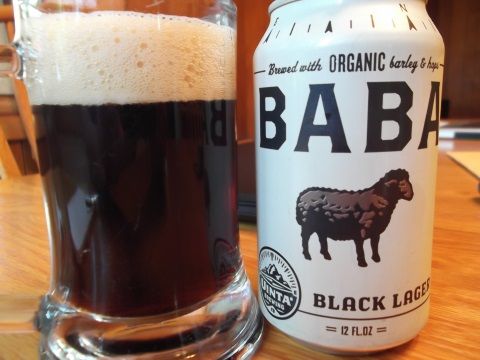
The Black Sheep of the Family: Baba Black Lager by Uinta Brewing Company


If you look at the December 28-29, 1996 issue of The Capital Times you will see me mentioned briefly. I was innocently enjoying the Badgers beating Utah in the Copper Bowl at Babe's sports bar with some friends. One of them, Dan, disappeared at some point and returned a short while later saying that he had been approached by a local representative of the Fourth Estate and had chatted with the gentleman for a spell. The next day I got namechecked while Dan was quoted in the paper as saying, "It wasn't much of a game. You know, it's Utah. Mormons. They can't put a football team together."

That is not a bad analogy to how I've felt about Utah with regards to brewing for quite some time. "Mormons don't drink. They either don't have microbreweries or, if they do, they can't be any good." And then word trickled in from out west that there was a beer from out in the land of Mormons called "Polygamy Porter". "Well I'll be. There was microbrew out there. And they had a sense of humor too."

But that brewery, Wasatch, was out in Park City which is chock full of Richard Florida's vaunted creative class types who hang out and do things like attend the Sundance Film Festival. Of course you'd have craft brews out in a tourist trap like that. But then in 2014 Epic Brewing came to Wisconsin store shelves. They are out of Salt Lake City, the heart of Mormon country. The blasphemers even specialize in strong brews. No doubt Joseph Smith and his wives are still rolling in their graves. And then last year Uinta Brewing, also in Salt Lake City, began appearing at my local bottle shops.

Their Tinder, a rauchbier, caught my eye as did Baba, a black lager brewed with organic barley and hops. Although the brewery lists Baba as a year-round beer, it is rather elusive in Madison. Or at least at the joints I frequent, anyway. Perhaps the Jenifer Street Market carries it ex gratia for us dark lager lovers.

Baba is a dark bier. Very dark. I think it's about as dark as copper can get before becoming pitch. I held the glass up to a quintet of light bulbs and even their 4,000 lumens struggled to penetrate the gloom, the likes of which I hadn't seen since April. But they did enough for me to see the color. I could also see that Baba was clear and that there was a gaggle of bubbles moving on up to a generous light tan head. The foam was firm and lasted a good long time.

Dark chocolate was the first thing that my nose caught with coffee and highly roasted grain trailing right behind. They smelled slightly bitter but were mostly delectable bursts of Maillard reactiony goodness.

Baba has a nice clean malt flavor and it was dark chocolate hit my tongue immediately as I took my first sip. It was joined by that dark roast grain flavor just as with the smell but coffee was fainter here and there was just a touch of smokiness too. These dark grain flavors had a mild bitterness which was complemented by some grassy hops but, overall, the bitterness was restrained. Joining in on the fun was a slight sweetness which was like plum or cherry. I think that latter is the result of me savoring the chocolate flavor here and having a chocolate malt suddenly appear in my mind's eye. The carbonation was like the drummer in this group, keeping all of the flavors in check and in balance.

For the finish – and I know this is going to be difficult to believe – that dark/bitter chocolate flavor stuck around as it was joined by some of those organic Hallertau hops which gave a tasty bit of spiciness and also a goodly dose of bitterness for a dry finale. I was left with some fine Schaumhaftvermoegen on my glass with rather thick streaks all around.

For a bier that is only 4% A.B.V., Baba will not leave you wanting for taste. Someone described Led Zeppelin's music as being "tight but loose" and I'd opine that Baba is light but full. It has a fairly light body but all of those dark malts with their chocolate and coffee goodness lend the bier fullness of flavor. As someone who thoroughly enjoys everything that darker malts bring to a beer, Baba hit all the right buttons for me. However, there's more going on here than simply chocolate malt. In addition to the roasted grain tastes, some low-level sweetness along with a dash of hops add to the circus of flavors all being kept in harmonious order by the carbonation.

Baba puts the lie to the common misconceptions that low alcohol beers are low in flavor and that dark beers are heavy. This should be in everyone's arsenal of summer brews.

Junk food pairing: Baba pairs well with complementary foods such as Hostess Ho Hos and Dark Chocolate Crunch Pretzel Crisps.

29 June, 2016

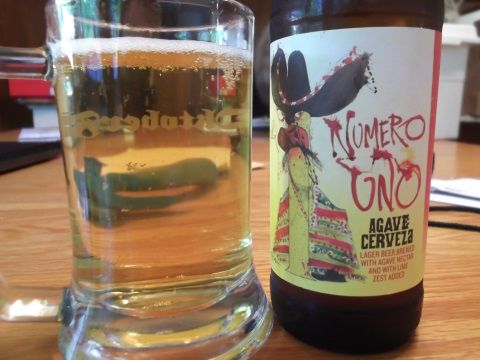
Buy the beer, take the ride: Numero Uno by Flying Dog Brewery


Preparing for this review has been a real learning experience. Firstly, I've always thought that Flying Dog's labels looked like they were drawn by the guy who did illustrations for Hunter S. Thompson's books and sure as shit, I discovered, they were. But let me step back for a moment and admit that I can't honestly say I've had a Flying Dog brew prior to this one. My guess is that I have at some point but that it has been a while and I don't recall the quaffing. While I don't know when Flying Dog began distributing in Wisconsin, the brewery has been around for a long time. Well, as microbreweries go.

Flying Dog began as a brewpub opened by George Stranahan in Woody Creek, Colorado (sound familiar?) in 1990. The name came from an adventure Stranahan had back in 1983 when he and some friends attempted to climb K2. It failed (they "totally ran out of booze") and the crew retreated back to a hotel which featured a large painting of a flying dog that captured Stranahan's attention. The brewpub eventually grew into a full-fledged brewery in 1994 which opened in Denver. The Denver facility couldn't accommodate the growth they were experiencing so another move was made, this time to Frederick, Maryland in 2008.

Stranahan had become friends with Thompson, a denizen of Woody Creek, prior to opening the brewpub as they had shared interests in "explosives, high-powered weapons, politics, football, whiskey, and beer." Thompson would go on to introduce Stranahan to Ralph Steadman, the man whose portraiture of Raoul Duke and a certain Samoan attorney is legendary. Steadman began applying his signature style to Flying Dog's labels in 1995 and has apparently been doing so ever since.

I had no idea Flying Dog had such a gonzo pedigree.

Numero Uno is an agave cerveza. Agave is well-known as being the taproot of tequila but the sap of the succulent native of the Americas is also used to make agave nectar (or syrup), a potent sweetener, which is used here. I don't recall having tasted agave nectar before so this was going to be interesting. Numero Uno's recipe also includes lime zest.

One thing that attracted me to Numero Uno was that, being a flavored lager, it was a relative rarity. While not as uncommon as a Lichtenhainer, for example, lagers tend to be treated as "classic" styles – something simpler and more traditional that brewers slap together when they want to take a break from a prolonged bout of concocting novel ales with THX1138 hops, a fruit found only on Guam, krill, and yeast from the brewmaster's beard after having performed cunnilingus on his significant other.

This cerveza interested me not only because of its novelty but also because I didn't see the words "natural flavors/flavoring" on the label. After drinking some unfortunate radlers with those very words on their labels in type of varying sizes, I was happy with their absence. I suppose another factor was a simple desire to try Flying Dog and I don't often see lagers by them.

Numero Uno poured a bright yellow which was clear as day. Sadly, the head was small and the loose white foam dissipated rather quickly. I had a fairly clean glass so there were few bubbles clinging to the side and more heading up from the bottom.

The cerveza had surprisingly little aroma. In fact, it was slightly disturbing. There was a mild graininess and what I take to have been the agave which I can only describe as being like botanical honey.

Before taking my first sip I pondered whether this would a Mexican-style brew or if the word "cerveza" was simply being used because of the tropical/desert ingredients. I suppose it was the former as I could clearly taste maize and a lot of it. The lime zest was in the background though not hidden and it added a little zestiness. There was some sweetness which I presume was the agave. Although a very sweet nectar, this cerveza was too low in alcohol (4.9% A.B.V.) for all of the sugars to have been eaten by the yeast. That was my hypothesis, anyway. The agave added a honey-like flavor but it was less floral/fruity and instead a brighter, more botanical/cactusy taste.

That corn flavor and the zesty lime lingered onto the finish. There was no lacing left on my glass.

Numero Uno was a pleasant surprise. The lime zest and agave were not overpowering and they complemented one another very well. It was light and fairly bubbly. I think the agave nectar took the edge off of the lagery crispness and mellowed the overall taste a little bit but the cerveza still had that clean lager flavor for the most part. I drank some of this last Saturday outside in the 90° heat and it was fantastic. No big flavors to impede its refreshment capabilities.

Junk food pairing: Get yourself a bag of Lay's Limón potato chips or, for a sweet treat, bust open a box of Little Debbie Zebra Cake Rolls.

28 June, 2016

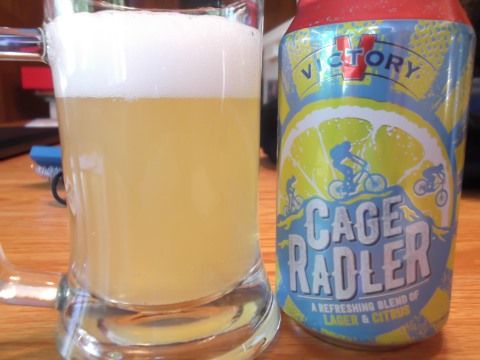
I've Got Sunshine in My Stomach: Cage Radler by Victory Brewing Company


I am going to bring my radler mini-marathon to a close today with Cage Radler from Pennsylvania's Victory Brewing.

Victory is a veteran of a thousand craft wars having been formed in 1996. They made the news recently when they became part of Artisinal Brewing Ventures, a holding company that, um, holds, Southern Tier as well. Beyond this, I rarely hear about Victory. I suppose that's misleading. Their Prima Pils is highly regarded but I just don't see their other beers getting mentioned very often. I've not had many of their brews, admittedly, but will attest that Prima Pils is very tasty and they also make a mean Kirsch gose.

I just don't hear about people eagerly awaiting the arrival of a new Victory IPA. Then again, this may just be my narrow window on the microbrewing world. And my understanding is that the brewery does not have a rep in Madison which I'd imagine would limit promotional efforts such as tap takeovers.

My perceptions, however misguided, aside, I was happy to hear earlier this year that Victory would be releasing a radler. I drink a fair amount of them during the summer and finding a good one at a better price than Stiegl would be great. The brewery has a good mix of lagers and German styles and trendier ones such as Citra-laced IPAs and I was confident that they would do a good job.

Completely tangentially, a couple friends came over this past weekend and we sat out on my deck in the 90° heat. I was drinking lagers when a my friend opened a New Glarus variety pack. I decided to give a Moon Man (an APA, I suppose) a shot. It surprised me just how much of a chore it was to drink it. But drink it I did and I even finished the bottle. I immediately grabbed a Cage Radler afterwards to get the taste of all those hops out of my mouth and just to have something better suited to my hot weather quaffing taste.

Victory describes Cage Radler as a blend of lager and citrus. At 3% A.B.V. it seemed to be a real radler instead of a lighter beer with flavoring added. But the fine print says "Beer with lemon extract". D'oh! The bier was a bright, light yellow and, strangely enough, very cloudy. Is the base bier some kind of wheat pils? Or perhaps they just decided to forgo filtering/centrifuging. Regardless this stuff was almost opaque.

To complement the sunny yellow hue, my glass got a big white head on it. It was on the firm side and lasted a while. Again, my mug was dirty and so was lined with bubbles. The first pour cleaned it, however, and it looked much better after that. There was a goodly amount of bubbles inside heading on up.

The aroma was lemomy, as in lemon juice from concentrate. My mind envisioned those green ReaLemon bottles. It has a slight tartness to it. The taste had that same reconstituted lemon juice flavor to it. Citrusy tartness was moderate and there was sweetness which was just a tad stronger than the tartness. The carbonation was bright and tingly and the brew as a whole had a tangy acidity to it.

For the finish the lemony tartness and the sweetness lingered. My mouth was also left with a mild acidic tang. Schaumhaftvermoegen was minimal with just a few spots of foam left clinging.

Cage was by far the best brew to call itself a radler in my recent radler/shandy binge. It was light-bodied and bubbly plus it had relatively little alcohol. However, the lemon extract was disappointing. It didn't taste bad but reconstituted lemon juice has a flavor to me that lacks the bright zestiness of the fresh stuff while also tasting too real to be soda. It doesn't clearly occupy a neat, tidy category. It's juice queer, if you will. Beyond this, though, I really liked how it balanced tartness and sweetness.

I will also mentioned that I did not taste any bier in Cage. This made me dock it a few points but this is not a big deal for me. Sure, it does mean that Cage, had it a better lemon flavor, could not have entered the hallowed upper echelon of radler goodness currently occupied by Stiegl, but first things first.

Junk food pairing: Cage goes well with more traditional junk foods. Try some Lay's Beer 'n Brats potato chips or a bag of white cheddar popcorn.

27 June, 2016

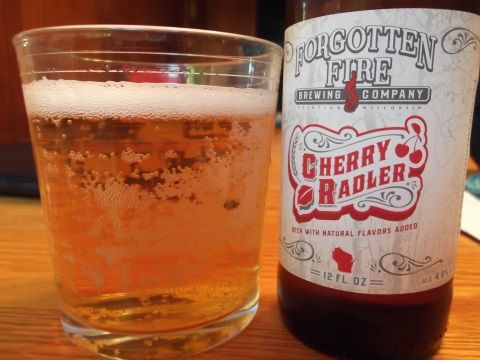
Meanwhile in Peshtigo: Cherry Radler by Forgotten Fire Brewing Company


My initial encounter with Forgotten Fire was not particularly thrilling. But, like many Americans, I like to root for the underdog. I want this company up in Peshtigo (although the beer is brewed in Stevens Point) to succeed. And so I was eager to give the brewery a second chance and did so recently when I saw their Cherry Radler for sale. It's summer and I'm in media res of a multi-radler expose à la Woodward and Bernstein so the timing was perfect.

To reiterate something I wrote earlier, Stiegl Grapefruit Radler is, to my taste, the apotheosis of the radler. It is a 60-40 mix of grapefruit soda and Stiegl-Goldbräu, a helles lager, and it is fizzy, moderately sweet, and a bit tart. The beer alone is 4.9% A.B.V. while the radler is 2%. So when I saw that Cherry Radler was 4.8% and described on the label as being "beer with natural flavors added", I did not get my hopes up. A radler is, for me, a mixed drink – a cocktail, if you will. Just as one does not distill a martini, one does not brew a radler. Beer meet soda.

If you're not mixing soda and beer at a rate of 50/50 or thereabouts, it's not a radler to me. Sure, you can, say, take a beer and add a splash or two of soda for a refreshing treat. Just don't try to pawn that off as a radler. If you add extract to your beer, it's not a radler. If you age your beer in the barrel that your fruit-flavored extract came in, it's not a radler. Soda meet beer.

Cherry Radler pours a light gold hue that is quite clear. My glass ended up with a pillowy white head of about half a centimeter that last 30 seconds or so. There were lots of bubbles inside my glass apart from the ones clinging to the side. I am going to try a different brand of dishwasher rinse aid hoolie to see if I can get a glass without stuff on the side to attract bubbles. Even if your radler is really an extract-laden beer, it still deserves to at least look pretty as I denounce it as an impostor.

The aroma here was mostly cherry candy. Cherry candy that is bereft of anything resembling a cherry, that is. It reminded me of cherry Twizzlers but less sweet. I also caught just a hint of grain in the smell too.

I must admit to not being surprised that this stuff tasted like a combination of cherry candy and cherry cough syrup. It was fairly sweet but not cloyingly so.

The more medicinal cherry flavor persisted on the finish. There were a few specks of scattered Schaumhaftvermoegen.

If this brew didn't taste like cough syrup, it wouldn't be half bad. It was light and fizzy so it's not without any merit.

According to Robin Shepard of Isthmus, Forgotten Fire is going to be tweaking their recipes in the near future. If and when I receive confirmation of this I will try their brews again. Until then I'm off of Forgotten Fire because the Cherry Radler I drank was just bad. Remember the Sacred Radler Credo: Mix the beer with the soda. How would Buffalo Bill put it? It puts the soda into the beer.

Junk food pairing: Pair Cherry Radler with Jays Hot Stuff potato chips. The faux stone fruit goes well with the earthy, paprika flavor of the chips.

23 June, 2016

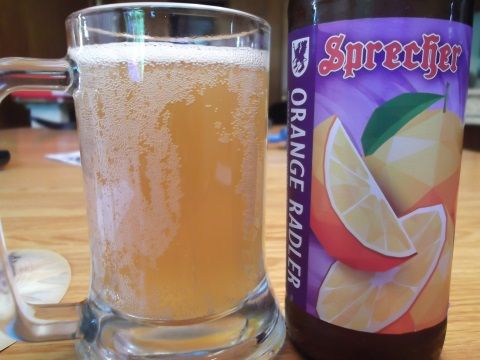
Orange is the New @!$#: Orange Radler by Sprecher Brewing Co.


Glendale's (Milwaukee) Sprecher Brewery is one of the founding fathers of Wisconsin's microbrew scene having been established in 1985. Chris Welch of Trixie's Liquor here in Madison noted last month that the venerable brewery derived 70% of its sales from soda. I don't know where he got that number from but I've heard for some time that Sprecher sells more soda than beer.

This is a real shame considering that Sprecher makes some mighty tasty brews. There are the stalwart Amber (one of my all-time favorites) and Black Bavarian (another classic) plus their seasonals are great too including the current one, Summer Pils.

But for better or for worse – OK, for the worse, in my opinion – Sprecher has seemingly put more effort lately into malternatives than into beer. I am referring to their series of "Hard Craft Soda(s)" which began with root beer – what else? - and has now expanded to six flavors including Hard Apple Pie. And more recently Sprecher has released a line of radlers. It certainly fits the brewery's German image and the radler would seem to be the perfect marriage of libations for a brewery that excels at lagers as well as sodas.

And so I recently purchased some of Sprecher's Orange Radler with grapefruit, peach, and mango rounding out the host of flavors on offer.

Orange Radler poured a lovely light gold hue and was extremely cloudy. The haze was no doubt from the wheat. Yes, Sprecher's radlers are wheat ales with "natural flavoring". Well, the orange one was, anyway. It had a very soda-like head in that it wasn't very foamy and it disappeared quite quickly. There was a fairly large number of bubbles inside heading on up.

As I was diligently examining my glass and the liquid therein visually, I could not miss the brew's aroma. It must have been what John Glenn smelled while orbiting the Earth in a Mercury capsule and needing to quench his thirst – Tang. Nothing says craft thirst quenching goodness like 1950s convenience food.

I was not looking forward to drinking this stuff but I had committed myself to a run of radler reviews so I had to. And actually it could have been worse. Orange Radler was light on the tongue and had a nice fizziness. At first there was the Tang drink mix flavor but it was followed up by a more natural orange juice taste. There was also a bit of tartness that, along with the carbonation and the cold serving temperature, took the edge off the sweetness which was not cloying to begin with. Once the natural flavoring had had its say, it was the beer's turn. A relatively prominent grassy/spicy hop flavor took me by surprise. I mean, any recognizable hop flavor amidst a sea of orange flavoring and juice would stick out like a sore thumb. Lastly there was a little bit of grain to be had as well.

For the finish a mild hop bitterness mingled with the mix of orange for a drier finish than one had any right to expect.

It both saddens and flummoxes me that a brewery which makes such great lagers and great sodas would play against their strengths and come up with this. A grand disappointment. There are some good things here, however, such as the tingly carbonation, the way the beer slyly sneaks into the picture just as the orange flavors think they've got the place to themselves, and that it's not overly sweet. But I should not be tasting instant drink mix here! Sprecher brews a fine orange cream soda already; why do I not taste the orange half of that drink here? Or even better, an orange soda that utilizes juice and tastes more natural. Surely they can brew a fine helles and mix it with their fine soda. Instead they add natural flavoring to a nondescript wheat ale for a brew that comes to 4.5% A.B.V. when it should be much lower, to my mind.

Junk food pairing: When consuming Sprecher Orange Radler, get a bag of Fritos Scoops and fill them with generous amounts of Dean's Sriracha dip.

21 June, 2016

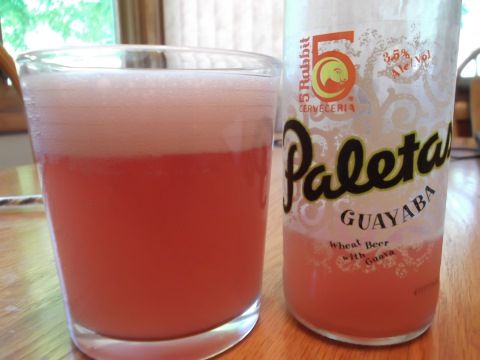
By the Way, This One's Pink: Paletas Guayaba by 5 Rabbit Cervecería


I am going to continue the aestival brew theme and even stick around my hometown of Chicago for today's review. Yesterday I started things off with Goose Island's Calm Radler and am going to continue today with 5 Rabbit's Paletas Guayaba. "Paletas", the bottle helpfully informed me, are named after the Spanish word for "popsicle".

This is 5 Rabbit putting their characteristic Latin American spin on the radler/shandy epidemic and in this case we have a guava flavored brew. I was pleased to see that it comes in at 3.5%, a wonderfully summery sessionable strength.

Paletas Guayaba is a glorious shocking pastel pink color. It is a wheat cerveza and so I was not surprised that it was quite turbid. I did my level best to pour the Paletas so as to produce a nice head and I was generously rewarded for my effort with a glass adorned with 1"+ of pure cloud white foam. And it lasted as long as the Duracell bunny. The combination of the pink cerveza and white head makes it the Sonny Crockett of brews. (Jan Hammer music is optional.) The brew was so cloudy that I couldn't see inside it so it may have a modicum of effervescence or it might not have had much to speak of.

The aroma smelled of tropical fruit, quite unsurprisingly, but it was not very strong. There was also a really nice fruity tartness, which I appreciated as I had been hoping for something less sweet than Calm. Surprisingly, I caught a little sour funk. No, "brett" was not plastered across the label nor was the scent particularly potent. But it was pleasant and added another layer to the perfumatory profile.

I had to drink my way through the head to get to the cerveza and the foam turned out to be luscious and creamy. The cerveza itself was no slouch in the mouthfeel category either and was quite smooth with the silkiness cut a little bit by a fair touch of carbonic bite. Would you believe me if I told you that guava was the order of the day on the flavor? It was moderately sweet but there was also an equal dose of tartness too.

On the finish the guava sweetness faded to a lingering tartness which brought the proceedings to a fairly dry close. Lacing abounded with big streaks and patches lining my glass.

I am a big fan of 5 Rabbit Cervecería and their use of coffee, chilies, spices, and, yes, tropical fruits. And they deliver here. Paletas Guayaba is light-bodied making it perfect for the dog days of summer. It also has a great blend of sweet fruitiness and tangy tartness along with a heaping dash of carbonation to make it even lighter and fizzy to boot. A perfect summer refresher.

Junk food pairing: Paletas Guayaba goes very well with Kettle Chips Avocado Oil Lime Ranch potato chips. The lime adds a nice tang while the ranch flavoring and fat complement the cerveza's smooth body.

20 June, 2016

One From the Vine: Calm Radler by Goose Island Beer Company


Now that the temperatures outside have begun to resemble Hades, I tend to look for lighter brews and so often indulge in radlers (and shandies too). The radler is, to my mind, a 50/50isih mix of a light lager and citrus-flavored soda. The legend has it that one Franz Xaver Kugler, a Bavarian innkeeper was beset upon by a horde of bicyclists one June day in 1922 and he began to cut his bier with lemon soda to quench the thirsts of the sweaty, unwashed masses. The German Beer Institute says of the incident, "...some 13,000 cyclists descended upon the Kugleralm and demanded beer. They almost depleted Franz Xaver's stock of brew."

If 13,000 thirsty cyclists couldn't drink Herr Kugler out of bier – even cutting it with soda – just how much bier did this guy have on hand? We're talking the population of Stoughton. He must have had a billion hectoliters. This guy could literally have supplied an army with bier.

Ever since Leinenkugel hit the jackpot with Summer Shandy, many microbrewers have jumped on the bandwagon. I recall asking bartenders at the High Noon and Glass Nickel to mix me a radler on hot summer days 4-5 years ago and was met with a blank look each time. My guess is that things are different today and that the radler is not quite the unknown quantity that it was at that time.

The problem is that American brewers tend to add some flavoring to a light beer whether it be a helles lager or a wheat ale and call it a shandy or radler. (To me, a shandy is beer with ginger beer.) But you mix a shandy/radler, you don't brew it – like a beer cocktail. If your shandy/radler is 4%+ A.B.V. and you have "natural flavor", you're doing it wrong.

The gold standard for radlers to my taste is Stiegl's Grapefruit Radler. It is light, fizzy, and has a great balance of grainy lager goodness and tart-sweet grapefruit soda. And it's 2% A.B.V.

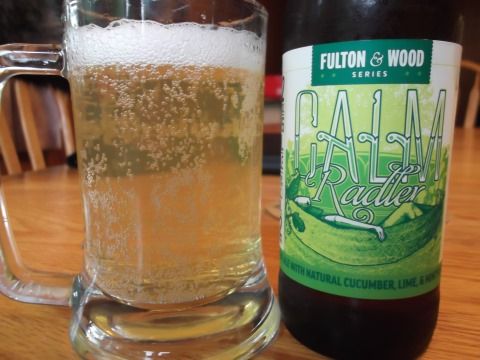
Which brings me to Goose Island's Calm Radler. Calm Radler is the second beer in Goose Island's Fulton & Wood series of limited edition brews this year. (To be bottled?) The first was the excellent Rasselbock. Now, it comes in at a very radler-like 3.0% A.B.V. but it is described as a wheat ale with "natural flavors" added. In this case there is cucumber, mint, and lime. Quite a variation on the traditional radler.

Calm poured a slightly hazy light yellow. I suppose the haze comes from the wheat. Sadly my glass was again afflicted with dishwasheritis or some such thing because bubbles again clung to the side of my glass. The pisser is that I washed it by hand in an apparently vain attempt to avoid this. Curses! Foiled!

I got a medium-sized head that was pure white and faded quickly. In addition to the accursed bubbles on the side of my glass, there were quite a few further in making their way up.

After having had a cucumber Kölsch from Flat12 Bierwerks in Indy a few years back at the Great Taste, I became of fan of cucumber in beer. Here the aroma was of cucumber, mint, and lime and in that order of strength. It certainly smelled refreshing.

As on the nose, so in the taste. Calm has a big cucumber taste while the mint was no slouch either. And the lime trailed in a rather distant third. It was nice'n'fizzy with a soda-like level of carbonation. But it was also endowed with a lot of sweetness – to the point of being cloying. There was so much sugar here that what must have been a very light beer ended up with a medium body.

Calm finished with the sweetness deciding not to go anywhere and instead keep a slowly fading mix of cucumber and mint company. There was no Schaumhaftvermoegen.

The bottle said that there were "hints" of cucumber, mint, and lime. While the lime have been available in hints, the cucumber and mint most certainly were not. They were not accents - they were up front and in your face. I am not a huge fan of mint, but it did complement the cucumber well. It also helps that all of these flavors tasted fairly fresh and real as opposed to some kind of extract. But there is just too much sweetness here. Drink this stuff very cold to cut down on the syrupy taste.

Junk food pairing: Pair Calm Radler with some junk food from the Orient like an Oriental/Asian snack mix. The puffed rice bits will keep your mouth from being mired down in heavy textures while the flecks of seaweed go well with the mint. Another option is wasabi/soy sauce almonds. The wasabi is sharp enough to cut through the sugar while the soy adds a hearty dose of umami.

15 June, 2016

Smokin' in the Barroom: Kindled Spirits by Vintage Brewing Company


The helles is one of my favorite bier styles and also one that has largely been forgotten in today's microbrew milieu. It is neither hop-forward nor extreme. Instead it relies on subtlety of flavor – a gentle maltiness accented by hops. Being a lager, the malts take pride of place and brewing up a clean, understated bit of malty liquid gold must be no small feat.

I am also a fan of the rauch or smoked helles and the way they balance the bready malt flavors of the traditional helles and the smoky goodness. There are precious few of these around and I have been able to review only two - Luther from Milwaukee's Lakefront Brewery and Helles Schlenkerla Lagerbier from Schlenkerla in the motherland of the rauchbier, Bamberg, Germany.

Over the course of a few months earlier this year I politely asked Vintage Brewing's brewmaster Scott Manning to brew me a rauch helles a few times. (He, however, maintains that I "pestered" him for "several" months. We find ourselves at a Rashomon-like impasse.) And then one day last month I received a missive which began "Brewed yer damn Rauch Helles today."

Christmas came early this year.

I helpfully suggested the name "This Beer Kills IPAs" but this was rejected for reasons unknown. Later I was told that the bier had been christened "Kindled Spirits". The brewmaster himself most kindly brought over a couple of crowlers. These, however, did not last long. And so I made a trek out to Vintage to fill up a growler. My plastic vessel was rejected on the grounds that it wouldn't survive the heat of a plastic hoolie being shrink wrapped on the cap. Vintage kindly gave one of theirs free of charge. Now that's customer service.

I poured my Kindled Spirits into a mug and was surprised to see the sides of the glass covered in bubbles. This is a tell-tale sign that your glass is dirty. In my case it was my first time using my new dishwasher and so I'm going to blame it for improperly rinsing the mug. Still, Kindled Spirits' lovely light gold hue and brilliant clarity were obvious. Behind all those bubbles on the side of the glass I spied a goodly number of bubbles going upwards.

The bier's aroma was smoky. It is common to describe rauchbiers as smelling and tasting like bacon. While I don't feel that this is totally off the mark, I have to say that, the more I drink rauchbiers, the less they taste like bacon and the more they taste like, well, smoke. Now hold that thought. I think that the bacon/smoked meat comes across more in the smell – from a compound called syrnigol. Kindled Spirits had a fairly prominent smoke aroma endowed with some of that smoked meat scent.

Where does smoke flavor come from? In large measure from a compound called guaiacol, apparently. As I said above, the more I drink rauchbiers, the more they taste like smoke. My hypothesis is that the bacony aroma and reading/hearing the piety that rauchbiers are like bacon have made people predisposed to tasting bacon in them. When people eat smoked chicken or turkey they taste fowl, not bacon; and when people eat smoked beef brisket, they taste smoke and beef; when they eat smoked cheese, they taste smoked cheese, not bacon. Because there's some smoked meat in the aroma, I'd expect the taste to have some of it but I think the whole bacon taste is exaggerated.

Kindled Spirits has a really nice smoky flavor that isn't particularly bacony and neither is it very strong – at least compared to a Schlenkerla Märzen or Ur-Bock. Scott used beech-smoked malt imported from Heidelberg. You can't miss the smoke flavor but it strikes a nice balance with the unsmoked varieties here. There's North American pilsner malt und Vienna malt from Bamberg and the bier has a wonderful bready flavor underscored by a little doughy sweetness. There's even a touch of fruitiness here – stone fruit, that is. Yes, this is a malt fest but there's also some grassy hop hovering just below the surface.

A wisp of smoke remains on the finish as that grassy taste, courtesy of Tettnang hops, takes on a little spiciness, also courtesy of the Tettnang, leading to a mild dryness on the end. There wasn't much Schaumhaftvermoegen to be had aside from a few spots.

While I am biased to be sure, I love Kindled Spirits. It has a medium-light body with a touch of carbonation which lends itself well to the warmer weather we are now experiencing. Being a helles, the malts are up front with the gentle smoke and grainy flavors living together in malted harmony. (Side by side in my gla-ass, vom fass, why don't we?) There's nothing extreme here – just a nice, easy going dose of smoky nectar of the gods. If you are not a rauchbier fan, give this bier a shot. Try to taste the smoke instead of simply tasting bacon as a self-fulfilling prophecy.

Junk food pairing: Sadly, Cheez Its Smoked Cheddar and Monterey Jack crackers are now a thing of the past. Luckily smoked gouda potato chips are a trend, however minor and Cape Cod's are quite tasty. But the trend appears to be ephemeral. If you cannot find some of these limited edition chips, grab some Chipotle Cheddar Pretzel Crisps instead. And don't be afraid to dip them in bacon & horseradish dip.

06 June, 2016

The Two Gentlemen Return to Verona: Hefeweizen by Wisconsin Brewing Company


I once read an interview with Wisconsin Brewing Company's brewmaster Kirby Nelson in which he described his beers as not being about extreme flavors or chasing trends but rather he wanted them to be the perfect accompaniment to the pursuit of happiness. Sitting around with friends and family, enjoying their company, laughing, and sipping a cold one. A cold one at the time of the interview was a Capital brew and Nelson has since taken to brewing extreme beers at his current gig but WBC retains the laid-back Gemuchlikeit of the Capital biergarten.

And so it is always a pleasure for me to visit WBC and pass the time with good company while sitting on an Adirondack chair overlooking the pond with a cold one. The brewery's Forward! series, consisting of very small batches of trial brews, featured an ESB a couple of weeks ago which drew me and a friend out to Verona and a hefeweizen last week which did the same.

Kirby brewed a fine hefeweizen when he was with Capital – Kloster Weizen. I believe it went into hibernation around 2006. It reemerged in 2012 as Weizen and Kirby left for WBC shortly thereafter. To the best of my knowledge WBC has not brewed this style until now – certainly not bottled one – although there could have been one earlier in the Forward! series. Truth be known, I don't know that the current weissbier was even brewed by Kirby or if it was done by one of his minions.

The placard at the bar described the bier as having "notes of banana, clove and bubblegum". And yes, the sign lacked a serial comma. (Long live the serial comma!) Now, these flavors are all well and good but which one would be most prominent? The sign had it in the correct order as far as I am concerned. My preference is for banana accented by a little clove with a hint of bubblegum being optional.

Hefeweizen was a lovely light gold color that shimmered in the evening sun. Being unfiltered, the bier was quite cloudy. My glass (plastic?!) had a decent-sized white head that was very creamy and lasted a good while. There were plenty of bubbles inside the bier heading upwards.

I was slightly disappointed to smell a pretty big bubblegum bouquet. Banana followed while the wheat hovered in the background. Let me clarify my tastes and say that I don't dislike that bubblegum flavor in a hefeweizen but rather it is the least desirable of the flavors that the bier's yeast produces.

The taste followed suit with bubblegum at the fore trailed by the banana and a succinct bit of clove too. The bier had a light body with a nice mild wheat/grainy flavor beneath the trifecta of yeasty tastes. It was well-carbonated which made for a very refreshing bier out in the sun.

On the finish there was some lingering maltiness which was slightly sweet. This was joined by some grassy hop flavor and a modicum of bitterness – just enough for a slight dryness. There was also some lemony-citrus here which added a little zesty sharpness to complement the hop bitterness.

Hefeweizen is, if I may quote from the Supper Club can, not bad. Banana esters are my preference for the style. Not only for their taste but also because they add body. While it can certainly be overdone, I do like just enough to give my weissbier a little chewiness. Now, having given an account of my Platonic ideal of a weissbier, I will say that I enjoyed Hefeweizen. Its light body and fizziness definitely made it refreshing while sitting out in the sun. (It's 4.8% A.B.V.) Even if the bubblegum isn't my preferred flavor, it tasted fine and, besides, there was banana too. And the little bit of lemon on the finish was just perfect.

Junk food pairing: WBC's Hefeweizen goes well with lighter foods. I suggest guacamole flavored tortilla chips as well as Cape Cod Sweet Red Chili potato chips.